

Key Takeaways
Buy durable businesses that compound cash, not stories about tomorrow
The central wager. Terry Smith’s method begins with a simple preference: own shares in strong businesses, not bets on economic forecasts or fashionable themes. He looks for companies with enduring customer demand, strong market positions, high profitability, cash generation, and room to reinvest. The book’s three-step process is to buy good companies, avoid paying an unjustifiable price, and then trade as little as possible.
A record, not a promise. Fundsmith’s T-class shares rose 425% from launch through August 2020, compared with 193.5% for the MSCI World Index. Smith argues that quality businesses, rather than lucky timing or a passing sector trend, explain the approach. Those figures document one fund’s history, however. They do not establish that every investor can identify the same companies or reproduce the result.
What's striking is how the method shifts attention from prediction to business ownership. That resembles engineering: instead of forecasting every disturbance, build a system robust enough to withstand many of them. The approach also gives investors a practical test: can the business generate cash and reinvest it at attractive rates? Its track record is persuasive evidence that the strategy worked for this manager over this period, not proof that quality selection guarantees outperformance. A disciplined process can still be misapplied, and strong historical results can reflect both skill and favorable circumstances.
Judge companies by capital returns and cash, not earnings-per-share headlines
Measure the economics. Return on capital employed, or ROCE, compares a company’s operating returns with the capital used to produce them. Smith values businesses that consistently earn more than their cost of capital, convert profits into cash, and can reinvest at similarly strong rates. Earnings per share can rise even while the business uses more capital to earn less, so EPS alone can create a flattering but incomplete picture.
Tesco’s warning. Smith points to Tesco’s rising EPS alongside falling ROCE, repeated changes to its ROCE definition, and years when cash after investment failed to cover dividends. Borrowing helped bridge the gap, with gross debt rising from £894 million when Terry Leahy became chief executive to nearly £15.9 billion in 2009. The lesson is to inspect cash flow, capital employed, debt, and accounting definitions together.
This is a practical defense against principal-agent problems, where managers benefit from hitting a headline target even when owners lose economic value. A ratio such as ROCE can expose that gap, while cash flow tests whether reported profit is becoming spendable money. Yet no single metric is self-interpreting: accounting conventions, acquisitions, and industry structure can distort comparisons. The strongest analysis uses several years of evidence and asks what changed in both the numerator and denominator, rather than treating a high ratio as a verdict.
A low P/E can hide a failing business; growth can make high prices reasonable
Price is not value. A low price-to-earnings ratio does not make a share a bargain if the company’s earnings are collapsing. Smith compares businesses labelled cheap in 2015, including Exxon, GE, HSBC, Marks & Spencer, and Vodafone, with higher-priced growth companies such as Adobe, Amazon, Facebook, Netflix, and PayPal. By 2020, earnings at many of the first group had fallen sharply, while the latter companies had grown earnings substantially.
Compounding changes the arithmetic. Looking back at 1973 to 2019, Smith calculated that investors could have paid very high starting P/E ratios for companies such as L’Oréal, Colgate, and Coca-Cola and still beaten the market, because their growth compounded over decades. This does not mean any high valuation is safe. It means valuation must be considered alongside the durability and reinvestment potential of the business.
The distinction between a cheap price and a good value is central to sound investing, but historical winners can make the point look easier than it is. Investors in 1973 did not know which companies would sustain growth for decades. The challenge is forecasting business durability without pretending to know the future precisely. This is where valuation still matters: it sets the margin for error if growth disappoints. The useful lesson is not to ignore price, but to refuse to let a low multiple substitute for an analysis of earnings quality and prospects.
Study what customers buy, then ask whether rivals can copy it
Start with the customer. Smith favors businesses that sell valued products or services, often through repeat purchases, strong brands, distribution, or an installed base that makes customers reluctant to switch. Pet food illustrates the appeal: it is a relatively small, recurring purchase, and Del Monte’s focus on pet food was overlooked by investors who associated the company with canned produce. A mistaken news report about a different Del Monte briefly added to the confusion, creating a buying opportunity.
Product beats presentation. Domino’s publicly acknowledged harsh customer criticism of its pizza and changed the product; its shares later rose from about $8.50 to $68. Smith contrasts that customer focus with management language that obscures whether a company is actually improving its offering. For emerging markets, he favors exposure to consumer growth through businesses with strong returns and defensible positions, rather than assuming a country’s rapid GDP growth automatically benefits shareholders.
The customer-first lens connects investment analysis to strategy research: durable profits usually require some reason customers keep choosing the same provider and competitors cannot easily erase its advantage. Repeat purchases can stabilize revenue, but they do not guarantee a moat; tastes, technology, regulation, or distribution can change. Domino’s turnaround shows that candid feedback matters only when a company acts on it. Investors should therefore test the business’s advantage against observable behavior, not accept brand reputation or executive confidence as evidence.
Ignore market forecasts and give a sound strategy a full cycle
Markets require two guesses. To profit from a forecast, an investor must predict both what will happen and what the market already expects. Smith calls markets second-order systems for this reason. Even a correct economic prediction may not help if investors anticipated it or prices react differently than expected. Brexit, the Trump election, and the pandemic all produced confident but inaccurate forecasts in the book’s examples.
Missing good days is costly. In one historical comparison, a $10,000 investment in the S&P 500 from 1994 to 2004 grew to $31,260 if fully invested. Missing just the ten best days reduced the ending value to $19,476. Smith also compares investing to the Tour de France: a successful rider need not win every stage, and a sound strategy need not lead every short reporting period. Judge it over a full cycle.
The behavioral insight is powerful: losses make investors crave action precisely when uncertainty is greatest, while rising prices make them feel safer after much of the gain has occurred. This is a classic mismatch between emotional salience and long-term arithmetic. Still, the example of missed best days does not show that every investor should hold every asset indefinitely. It illustrates how difficult timing is, not that risk management is pointless. A sensible horizon must also reflect when the money is needed and whether the investor can withstand a drawdown.
Trade less, because hidden costs turn activity into a return leak
Fees compound against you. Investors may pay an adviser, a platform, a fund manager, and dealing costs inside the fund. Smith estimated that these layers could add up to 1.75% to 3% a year before hidden trading expenses. A regulator’s estimate found the average UK mutual fund turned over about 80% of its portfolio annually, adding an estimated 1.0% to 1.4% in commissions, spreads, and stamp duty.
Count the whole bill. The ongoing charges figure does not include every trading cost. Smith calls the fuller measure the total cost of investment, which adds transaction expenses to fund charges. He also criticizes performance fees: in his example, a $1,000 investment compounding at Warren Buffett’s historical rate would have grown to $4.3 million, but a hypothetical 2% annual fee plus 20% of gains would leave the investor about $300,000.
Costs are unusually important because they are one of the few parts of investing investors can control in advance. Their compounding effect makes a seemingly small annual charge consequential over long periods. The focus on turnover also exposes a structural incentive: frequent activity can generate revenue for intermediaries without adding value for clients. Low cost alone, however, is not a complete investment objective. A cheap product that does not fit the investor’s needs can still be a poor choice, so costs belong beside strategy, risk, and after-fee performance.
Choose a plain index fund unless your active strategy earns its extra complexity
Know the wrapper. Smith repeatedly argues that many investors are better served by a low-cost index fund than by an expensive active fund that largely imitates its benchmark. He distinguishes a conventional index fund from an exchange-traded fund, or ETF, which can be traded during the day and may use different structures. A synthetic ETF relies on swaps with a counterparty rather than directly holding the assets it tracks, adding counterparty risk.
Some ETFs behave unexpectedly. Leveraged and inverse ETFs reset daily. In Smith’s example, a volatile index ended a four-day period up 3%, while a two-times leveraged ETF lost 15%. He argues that these products are trading tools, not simple long-term index substitutes. The broader rule is plain: if the structure, risks, or source of returns are unclear, do not buy it just because the label sounds familiar.
This advice joins two useful ideas: default to simplicity, and treat financial packaging as part of the investment rather than as neutral plumbing. Behavioral finance supports caution around products whose short-term design conflicts with how investors expect them to behave. The specific risks vary by ETF, however, and not every ETF is synthetic, leveraged, or unsuitable for long-term use. Investors need to distinguish product types instead of treating the category as one thing. Simplicity is a decision rule, not a reason to stop reading the documents.
Diversify enough to control risk, but know what your portfolio owns
Diminishing protection. Diversification reduces the damage a single company can cause, but its benefits taper as holdings accumulate. Smith cites research suggesting that a portfolio of just over 20 stocks can capture about 90% of the diversification benefit available in many markets. Beyond that, investors may know less about each company while moving closer to index-like performance, especially after active-management fees and trading costs.
Returns are concentrated. Research by Hendrik Bessembinder found that, from 1926 to 2016, only 42.6% of individual US stocks beat Treasury bills over their full listed lives. Just over 4% of companies accounted for all net wealth creation in the study. This supports both sides of the argument: stock picking can be rewarding if it finds rare winners, but investors who cannot do that reliably may be better served by broad index exposure.
The tension here is real. Concentration makes meaningful research possible and lets a few exceptional companies matter, but it also raises company-specific risk. Broad diversification reduces that risk while guaranteeing ownership of many mediocre businesses. Bessembinder’s result is a warning about stock selection, not an instruction to bet heavily on a handful of names. It also reflects historical survivorship and market structure, so it cannot identify tomorrow’s winners. The practical choice depends on an investor’s skill, time, and capacity to tolerate a permanent loss.
Treat buybacks and acquisitions as investments, not automatic shareholder rewards
Capital has alternatives. A company can reinvest in its business, acquire another business, pay a dividend, or repurchase its own shares. A buyback creates value for remaining shareholders only when shares are bought below intrinsic value and the cash has no better use. A higher EPS after a buyback may simply reflect fewer shares, not stronger underlying economics.
Targets can distort decisions. Smith criticizes IBM’s plan to raise EPS through a mix of acquisitions, cost reductions, and large buybacks, arguing that these levers can obscure weak business performance. He also warns that activists may push for breakups, debt-funded buybacks, or sales that lift the near-term share price but leave long-term owners with a weaker company. The proper test is whether management’s choices improve durable returns on capital, not whether they produce an appealing announcement.
Capital allocation is where corporate strategy and investor returns meet. A buyback can be an intelligent use of surplus cash, but it can also reward exiting shareholders at the expense of those who remain. The same action can create or destroy value depending on price, opportunity cost, and balance-sheet resilience. This is why evaluating management incentives matters: when compensation tracks EPS, managers may prefer actions that improve the metric quickly. A careful investor asks what the company could have done with the money and who benefits from the chosen alternative.
Optimize total return instead of chasing a dividend yield
Reinvestment drives growth. Dividends matter to investors who need cash, but the key question is what happens to earnings that are retained or paid out. If a strong company can reinvest profits at high returns, retaining them may compound value more efficiently than paying a dividend that investors reinvest after tax. Smith uses Berkshire Hathaway, which paid no dividend under Buffett, to illustrate the case for retaining earnings when reinvestment opportunities are attractive.
Income labels can mislead. A high yield may signal a struggling business, and some funds can emphasize income while drawing charges from capital or paying dividends that are difficult to sustain. Smith recommends measuring total return, then selling a suitable amount of units when spending money is needed. Retained earnings are not automatically good, though: management must have profitable uses for them, or returning the cash may be wiser.
This reframes retirement income as a spending decision rather than a hunt for a particular kind of stock. In financial terms, dividends and planned sales can both provide cash, though taxes, fees, and investor behavior affect the comparison. The psychological barrier is substantial: a dividend feels like income earned, while selling shares can feel like consuming principal. That feeling can lead to yield chasing and concentration in fragile companies. A total-return approach is more flexible, but it requires disciplined withdrawals and a realistic plan for market downturns.
Prepare for crises by owning resilient firms, not by guessing the next headline
Focus on controllables. Smith separates what investors know from what they cannot reliably predict, such as interest rates, elections, recessions, or the shape of a post-crisis recovery. His response is to scrutinize a company’s finances, competitive position, and ability to survive rather than build a portfolio around a macro forecast. During the 2020 pandemic, he emphasized operational continuity, cash conservation, and access to liquidity for businesses facing a sudden shutdown.
Survival comes first. The crisis exposed the danger of companies that had borrowed heavily to repurchase shares. Smith notes that five large US airlines had bought back $47 billion of stock over the preceding decade, while estimates suggested they needed about $50 billion to survive. A company that preserves cash and remains solvent can recover; one that runs out of money cannot benefit from its long-term prospects.
The resilience frame connects investing to stress testing: the crucial question is not whether a shock can be forecast, but whether the firm can absorb one. Liquidity, manageable debt, and operational flexibility are especially valuable when revenues suddenly disappear. Yet resilience is not identical to quality, and firms in travel or hospitality can face severe losses despite sound management. Nor is every crisis an opportunity to buy. The strongest use of the framework is to separate unknowable scenarios from concrete vulnerabilities that can be assessed before a shock arrives.
Analysis
This anthology turns a decade of commentary into a coherent argument: invest in businesses whose economics are strong enough to compound, then resist the urge to trade around every change in sentiment. Its most useful contribution is the repeated separation of business performance from share-price movement. ROCE, cash conversion, reinvestment, and balance-sheet strength provide a more substantive picture than EPS targets, fashionable labels, or confident forecasts. Smith also makes an important distinction between low valuation and genuine value, and between passive investing as a sensible default and active investing that actually differs from an index.
The collection’s essay format is both strength and weakness. Repetition makes the core principles memorable, while examples such as Tesco, IBM, and Domino’s show how the tests work in practice. But the same companies and conclusions recur, and the author’s sharp polemical style can make debated claims sound more settled than they are. His discussion of macroeconomics, policy, and historical causes is less central to the investment method and sometimes depends on contestable interpretations. Readers should distinguish those opinions from the more durable analytical tools.
The central tension is quality versus price. A superior business can justify a higher valuation when it sustains strong returns and reinvests well, but no investor can know in advance how long that advantage will last. High returns attract competition, and technology, regulation, or management error can erode them. The book recognizes these threats but its own successful fund history can make the identification task appear more reproducible than it is. Its strongest practical lesson is therefore not that quality always wins, but that investors should demand evidence of business durability, evaluate the price paid, account for costs, and choose a strategy they can maintain through periods of underperformance. For readers without a reliable method for selecting exceptional companies, Smith’s own case for low-cost index investing remains an important counterweight to his active approach.
Review Summary
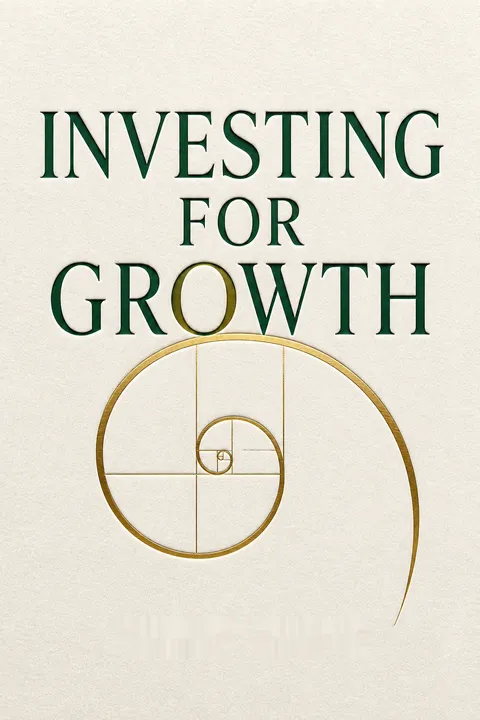
Investing for Growth receives mostly positive reviews for its clear investment philosophy: buy quality companies, don't overpay, and do nothing. Readers appreciate Smith's direct writing style and insights on return on capital employed. However, some criticize the book's repetitive nature, as it's a collection of articles and letters. Many find value in Smith's focus on long-term investing in high-quality businesses, though a few desire more detailed company analyses. Overall, it's recommended for both novice and experienced investors seeking a sound approach to sustainable wealth building.
People Also Read





Glossary
ROCE
Return on employed capitalReturn on capital employed measures a company's operating returns relative to the capital used to generate them. Smith treats persistently high ROCE, especially when it exceeds the company's cost of capital, as evidence that the business is creating value. It should be read alongside cash flow, debt, and the quality of the accounting.
FCF yield
Cash flow relative to priceFree cash flow yield is a company's free cash flow divided by its market value. It expresses the cash generated by the business in relation to the price investors pay for its shares. Smith uses it as a key valuation measure, comparing it with alternatives such as market yields and expected long-term bond yields.
Three steps to heaven
Buy, price, holdSmith's name for Fundsmith's investment process: invest in good companies, avoid overpaying, and trade infrequently. The sequence emphasizes that business quality comes first, valuation still matters, and restraint can preserve returns by avoiding unnecessary transaction costs and ill-timed decisions.
second-order system
Markets react to expectationsSmith uses this term to explain why forecasting an event is not enough to make money from it. Investors must also know what the market already expects, how prices may respond, and when that response will occur. An accurate prediction can still be unprofitable if the event is already reflected in prices.
bond proxy
Predictable shares resembling bondsA bond proxy is a share in a company with relatively stable, predictable profits or dividends, often viewed as an alternative to bonds. Unlike a bond's fixed coupon, the company's cash flow and dividend can grow, but the share price and distributions remain uncertain. Smith argues that interest-rate fears alone are not enough to judge these businesses.
total cost of investment
All fund costs combinedSmith's measure of the full cost of owning a fund, including its ongoing charges and transaction expenses such as commissions, bid-offer spreads, and applicable taxes. It is intended to reveal costs that may not appear in a fund's standard ongoing charges figure, making comparisons between investment products more complete.
Smith's Law
Test suspicious phrasingSmith's language test for management and investment commentary: be wary of an expression when its opposite would sound nonsensical or would never be used. He applies it to phrases such as forward guidance and selective acquisitions, arguing that inflated or illogical language can conceal weak thinking or divert attention from business results.
Return-free risk
Risk without better returnsSmith's phrase for taking on volatility or complexity without receiving a compensating return. He uses it to challenge the assumption that higher-risk shares necessarily deliver higher returns, citing research on low-volatility stocks and arguing that predictable, high-quality companies can offer better long-term outcomes than speculative or fragile businesses.
diworsification
Diversification that weakens resultsA term Smith borrows from investor Peter Lynch for diversification that adds holdings without meaningfully reducing risk. Beyond a point, a larger portfolio can dilute attention, introduce lower-quality investments, and approach index-like returns while still carrying active-management costs. Smith argues that investors should understand the holdings rather than equate a longer list with better protection.
FAQ
1. What is Investing for Growth by Terry Smith about?
- Quality investing focus: The book centers on investing only in the best companies in the world—those with high returns on capital, strong cash flow, and durable competitive advantages.
- Long-term compounding: Terry Smith advocates a buy-and-hold strategy, emphasizing the power of compounding returns over time rather than chasing short-term gains.
- Avoiding speculation: The author discourages market timing and speculative trading, instead promoting patience and discipline in building wealth.
- Simple investment philosophy: Smith’s approach is distilled into three steps: buy good companies, don’t overpay, and do nothing.
2. Why should I read Investing for Growth by Terry Smith?
- Proven track record: Terry Smith’s Fundsmith Equity Fund has significantly outperformed major indices, demonstrating the effectiveness of his strategy.
- Clear, actionable advice: The book demystifies investing, offering practical principles that are easy to understand and apply.
- Critical industry insights: Smith exposes common pitfalls in fund management, such as excessive fees, over-diversification, and misleading financial products.
- Real-world examples: The book uses case studies of well-known companies to illustrate key concepts and investment lessons.
3. What are the key takeaways from Investing for Growth by Terry Smith?
- Invest in quality: Prioritize companies with high returns on capital, strong market positions, and the ability to reinvest earnings at attractive rates.
- Valuation matters: Don’t overpay for even the best companies; buying at a fair price is crucial for long-term success.
- Masterly inactivity: Avoid frequent trading to minimize costs and taxes, letting compounding work in your favor.
- Ignore market noise: Focus on company fundamentals and long-term growth rather than short-term market movements or macroeconomic predictions.
4. What are the main investment principles in Terry Smith’s method from Investing for Growth?
- Buy good companies: Seek businesses with strong profitability, resilience, and the ability to generate cash over economic cycles.
- Don’t overpay: Ensure valuations are reasonable; paying too much can erode future returns.
- Do nothing: Hold investments for the long term, resisting the urge to trade based on market fluctuations.
- Minimize costs: Keep fees and trading expenses low to maximize net returns.
5. How does Terry Smith define a “good company” in Investing for Growth?
- High return on capital employed (ROCE): Good companies consistently generate returns above their cost of capital, creating real shareholder value.
- Strong cash conversion: They efficiently turn profits into cash, supporting dividends, buybacks, or reinvestment.
- Resilience and longevity: These businesses have proven their ability to survive downturns and competitive threats over decades.
- Sustainable growth: They possess durable competitive advantages and the ability to reinvest at high rates.
6. What is Terry Smith’s view on market timing and macroeconomic predictions in Investing for Growth?
- Market timing is futile: Smith argues that predicting market moves or macro events is nearly impossible and often leads to poor outcomes.
- Focus on fundamentals: Long-term returns are driven by company quality and business performance, not by guessing economic trends.
- Ignore short-term noise: Investors should adopt a marathon mindset, holding quality companies through cycles rather than reacting to headlines.
- Missed gains risk: Attempts at timing often result in missing out on compounding returns.
7. How does Investing for Growth by Terry Smith address the importance of fees and costs in fund management?
- High fees erode returns: Excessive management charges and hidden costs can consume a significant portion of investment gains.
- Hidden costs matter: Dealing costs like commissions, bid-offer spreads, and stamp duty further reduce net returns.
- Minimize intermediation: Investing directly and avoiding unnecessary layers helps keep costs low.
- Trade infrequently: Reducing trading activity minimizes both explicit and implicit costs.
8. What does Terry Smith say about exchange-traded funds (ETFs) and other financial products in Investing for Growth?
- Not all ETFs are equal: Many ETFs are synthetic, using swaps rather than holding physical assets, which introduces counterparty risk.
- Risks of leveraged/inverse ETFs: These products can diverge significantly from their underlying indices due to daily compounding.
- Mis-selling concerns: Retail investors may misunderstand the risks, treating complex ETFs as simple index trackers.
- Transparency issues: Smith calls for greater clarity about what investors actually own and the risks involved.
9. How does Terry Smith explain the difference between value investing and quality/growth investing in Investing for Growth?
- Value investing misconceptions: Traditional value investing focused on buying below intrinsic value, but modern practice often equates value with low price alone.
- Quality investing focus: Smith’s approach is to buy high-quality companies with strong returns and growth prospects, even if they appear expensive.
- Performance evidence: Many low-valuation stocks underperform due to poor fundamentals, while quality stocks justify higher valuations through earnings growth.
- Long-term returns: The business’s ability to compound value is more important than initial valuation metrics.
10. What are some of the “Ten Golden Rules of Investment” according to Terry Smith in Investing for Growth?
- Understand your investment: Avoid complexity and only invest in businesses you truly understand.
- Avoid market timing: Trying to buy low and sell high usually fails; focus on long-term holding.
- Minimize fees and trading: High costs and frequent dealing reduce returns; keep both to a minimum.
- Avoid over-diversification: Owning too many stocks dilutes performance and knowledge; about 20 stocks can suffice.
- Don’t invest just to avoid tax: Tax-driven investments often have poor returns and high fees.
11. How does Terry Smith use real-world examples and accounting analysis in Investing for Growth?
- Company case studies: Smith analyzes companies like McDonald’s, Domino’s Pizza, AstraZeneca, and Nestlé to illustrate investment principles.
- Accounting skepticism: He warns against relying on “core” or “adjusted” earnings that exclude recurring costs, advocating for GAAP earnings and cash flow analysis.
- Management decisions matter: The book shows how leadership focus and product quality impact long-term performance.
- Learning from history: Smith references historical examples like the Nifty Fifty to caution against overpaying for perceived safety.
12. What are Terry Smith’s views on ESG, sustainable investing, and “bond proxies” in Investing for Growth?
- ESG metrics skepticism: Smith argues that many ESG funds do not truly exclude controversial sectors and often invest in the “best of a bad bunch.”
- Business sustainability focus: He believes real sustainability is measured by R&D, capital expenditure, and returns on invested capital, not just ESG labels.
- Bond proxies defined: Stocks like consumer staples and utilities are often used as bond substitutes, but Smith warns against overpaying for perceived safety.
- Performance trade-offs: Sustainable and bond proxy funds have sometimes underperformed, and investors should be wary of sacrificing returns for labels.
Download PDF
Download EPUB
.epub digital book format is ideal for reading ebooks on phones, tablets, and e-readers.








