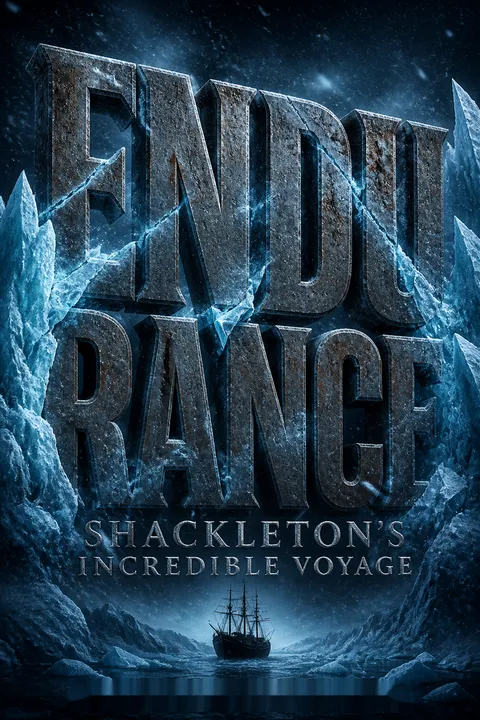


Key Takeaways
When the ship vanished, survival became the expedition's only meaningful objective
The mission collapsed first. In 1914, Ernest Shackleton set out to lead a party across Antarctica, a journey that would require support from a second expedition on the far side of the continent. In January 1915, the Endurance became trapped in the Weddell Sea ice. The crew waited through winter, hoping the ship would break free. Instead, pressure crushed her, and on October 27 the 28 men abandoned ship onto the ice.
The goal changed completely. With no radio transmitter and no nearby settlement, rescue depended on the men themselves. Over the next months they drifted, attempted a punishing march, escaped by boat to Elephant Island, and sent a small crew across the ocean to South Georgia. The original crossing never happened. All 28 men survived.
The book's central reversal is more revealing than a conventional tale of exploration. The expedition's stated achievement disappears, but a more urgent measure of success takes its place: keeping every person alive. This distinction matters in organizations as well as emergencies. A mission can become obsolete when conditions change, while the underlying obligation to people remains. The story also resists a tidy triumph narrative. Survival depended on persistence, but the men were not masters of their environment. Ice, wind, and currents repeatedly decided what actions were possible.
Project confidence, but let evidence overrule your optimism
Confidence held the group together. Shackleton knew that visible despair could spread, so he worked to keep the men occupied and their shared purpose alive. He enforced routines, joined ordinary chores, and tried to prevent disagreements from becoming factional. His optimism helped the crew face a situation with no outside help in sight.
Confidence also had a cost. Shackleton sometimes treated caution as disloyalty to the plan. When seals were available, he rejected suggestions to store more meat, expecting supplies and circumstances to improve. Later, food shortages forced the party to kill their dogs for food. His leadership was extraordinary, but it was not infallible: the same certainty that steadied the crew could make it harder to prepare for a bad outcome.
A crisis leader must regulate both personal emotion and the group's interpretation of events. Shackleton's composure helped people keep working when fear offered no useful instructions. But confidence is not a substitute for contingency planning. In risk management, the strongest optimism is conditional: expect a good outcome, while preserving options if it fails. The distinction is especially important when a leader's identity is tied to success. If disagreement feels like an attack on authority, useful warnings may be mistaken for disloyalty.
Build routines and shared jokes before isolation makes them lifelines
Ordinary rituals kept time meaningful. Aboard the Endurance, the crew held music nights, listened to lectures, marked special occasions, and invented practical jokes. In the Antarctic winter, these habits gave a diverse group something to do besides watch the darkness and worry. They shaved one another's heads, staged comic trials, and celebrated Midwinter's Day with performances.
The rituals travelled with them. On the ice, they kept watches, shared meals, read aloud, played cards, and maintained small social traditions despite cramped tents and unreliable food. Humor did not erase danger or prevent every quarrel. It gave irritation somewhere to go and kept the men connected as individuals, rather than reducing them to a hungry crowd waiting for rescue.
Routine is often treated as the opposite of adventure, but here it functions as psychological infrastructure. Predictable meals, duties, and social occasions create small units of control when the larger situation is uncontrollable. Group psychology offers a useful parallel: shared rituals help people recognize themselves as a group, especially under stress. Yet humor works only when it remains socially legible. The crew's teasing helped release tension because relationships had already formed; in a less cohesive group, the same jokes could just as easily humiliate or divide.
Stop forcing progress when the terrain makes movement more dangerous
Effort did not guarantee progress. After abandoning the ship, Shackleton's party tried hauling boats and supplies across the ice toward land. The loads were immense, the floes were broken, and after five days the men had covered only about nine miles. The route ahead looked worse. Shackleton called off the march and moved the party back to safer ice rather than spend strength on a journey unlikely to succeed.
Waiting became a deliberate choice. The men camped on the drifting floes, hunting when possible and watching the pack. This was not passive comfort: their camp shifted, food dwindled, and the ice itself threatened to split. But it bought time until changing conditions made a boat escape possible. The episode shows that retreat can be sound judgment when continued effort increases exposure without improving the odds.
The march is a sharp example of sunk-cost pressure: after investing heavily in a plan, people often feel compelled to keep going simply because they have already started. Shackleton's retreat interrupted that logic. The relevant question was not how much effort had been spent, but whether the next stretch justified the risk. In uncertain settings, waiting can be an active strategy when it preserves resources and allows new information to arrive. It becomes dangerous, however, if it is merely a way to postpone a decision while conditions worsen.
Revise the route whenever ice, wind, or navigation changes the odds
The map kept changing in practice. The crew's drifting floes carried them toward land, away from it, and sometimes in directions that seemed impossible. In April 1916, they finally launched three boats through openings in the pack. Their intended destinations changed as currents and wind altered their prospects. After reaching Elephant Island, Shackleton chose South Georgia as the destination for a rescue voyage, although it was much farther than Cape Horn.
Navigation became a survival skill. Captain Frank Worsley used a sextant and chronometer to estimate their position in rough seas, sometimes with brief glimpses of the sun. The Caird reached South Georgia after a dangerous ocean crossing. The crew did not follow one perfect plan; they repeatedly used new observations to decide what remained possible.
This is decision-making under deep uncertainty, where the problem is not merely missing data but a world that keeps changing while people act. A fixed plan can create clarity, yet it can also become a liability when its assumptions no longer hold. Shackleton's repeated changes of destination show the value of keeping the objective stable while making the route revisable. The account also shows the limits of flexibility: each pivot cost time and energy, and the crew could not know in advance which opening or current would last.
In crisis, trust demonstrated skill more than formal rank
Different people saved the party in different ways. Worsley's navigation brought the Caird to South Georgia. The carpenter Harry McNeish strengthened boats and helped make the long ocean journey possible. Frank Wild maintained order among the men left on Elephant Island. Cook Charles Green turned scarce supplies into regular meals, while the doctors treated injuries with almost no proper equipment.
Leadership had to use those abilities. Shackleton held overall responsibility, but he could not personally navigate, repair every boat, feed the crew, and manage every danger. The group depended on practical competence distributed across its members. Even the expedition's less prominent workers mattered: the crew survived through coordinated contributions, not through the leader's resolve alone.
The expedition resembles a high-reliability team: people with different expertise must notice hazards, communicate clearly, and trust one another's competence. Authority remains important, especially when a fast decision is required, but rank cannot replace technical judgment. The story also complicates the idea of a single heroic leader. Shackleton shaped morale and made consequential choices; Worsley, McNeish, Wild, Green, and others supplied capacities he did not possess. Resilience here is collective and role-dependent, not a personality trait concentrated in one person.
Treat survival choices as painful arithmetic, not moral theater
The crew had to reduce weight and preserve food. Shackleton ordered the men to leave behind valuables and most personal belongings so the party could move more quickly. As provisions ran low on the ice, the dogs were killed, first to reduce the burden on supplies, then for food. The dogs had been companions as well as working animals, and the decision distressed the men who had trained and cared for them.
Necessity did not make choices painless. The party also rationed food, ate unfamiliar animal flesh, and improvised treatment for serious injuries. On Elephant Island, surgeon James McIlroy amputated the stowaway Perce Blackboro's damaged toes in a makeshift shelter. These acts were not displays of toughness for its own sake. They were decisions made under severe limits, with real human and emotional costs.
Extreme scarcity compresses ethics into immediate tradeoffs: who or what can be sustained, and what must be sacrificed to keep the rest alive? Calling such choices arithmetic does not make them morally neutral. It clarifies that the decision-makers faced constraints while preserving the fact that loss mattered. The episode also warns against judging emergency choices from a comfortable distance. A sound evaluation asks what information, alternatives, and risks were available at the time, not simply whether the outcome looks harsh in retrospect.
Rescue is unfinished until the people left behind are brought home
Reaching safety was only part of the rescue. Shackleton, Worsley, and Crean crossed South Georgia on foot to reach a whaling station, leaving three men at their camp and 22 others on Elephant Island. Shackleton then organized a return voyage for the castaways. The first three rescue attempts failed because of ice, damaged vessels, or inadequate access to the island.
The final attempt succeeded. On August 30, 1916, the Chilean vessel Yelcho reached Elephant Island and took the 22 men aboard. All 28 members of Shackleton's party survived. Their ordeal had lasted nearly two years, and the expedition had failed to cross Antarctica. Its defining achievement was not a single landing or crossing, but the sustained work of returning for everyone.
The ending shifts the meaning of leadership from personal escape to responsibility that persists after immediate danger has passed. Reaching a place of safety does not settle the fate of people who remain exposed. In modern crisis planning, this resembles the distinction between response and recovery: the first stabilizes an emergency, while the second restores the people and systems left vulnerable. The book also resists crediting one dramatic act as the whole achievement. Rescue required repeated attempts, coordination, and continued attention despite failure.
Analysis
Endurance is a story of failed ambition that becomes an account of adaptive survival. Its structure follows the expedition's shrinking horizon: first a planned crossing of Antarctica, then escape from a trapped ship, then movement across unstable ice, then a boat journey, and finally a rescue operation. Each stage strips away the possibility of controlling the whole situation. The men can influence their conduct and preparation, but not the pack, weather, or currents. That imbalance is the book's central tension.
Shackleton is compelling because his strengths and weaknesses share a source. His forceful confidence helps the group maintain direction, yet his resistance to pessimism can interfere with preparation, most visibly in the food decisions. The story therefore offers a more useful model of leadership than uncomplicated hero worship: confidence can coordinate a group, but it needs to remain answerable to evidence and to the expertise of others.
The crew's survival is also a systems achievement. Navigation, boat repair, food preparation, medical care, watchkeeping, and morale are distributed across people with unequal temperaments and distinct skills. Shackleton's importance lies partly in keeping these contributions organized, not in replacing them. The account repeatedly shows that survival depends on practical details, from protecting a chronometer to keeping a boat from icing over.
Lansing's use of diaries and interviews gives the narrative immediacy, but diaries are personal records, not transparent access to every motive. The resulting story necessarily selects and interprets its evidence, especially when describing Shackleton's inner life. That limitation does not weaken the account's core lesson: endurance is not a single heroic burst. It is the repeated revision of plans, preservation of group function, and willingness to keep acting when the original purpose has disappeared. Luck remains indispensable, but preparation and cooperation help people use the openings luck provides.
Review Summary
Endurance is a gripping account of Shackleton's Antarctic expedition, praised for its vivid storytelling and historical accuracy. Readers are captivated by the crew's incredible resilience and Shackleton's leadership in the face of seemingly insurmountable odds. The book is lauded for its use of primary sources and interviews with survivors, bringing the harrowing journey to life. Many reviewers consider it one of the greatest survival stories ever told, appreciating its depiction of human endurance and the power of hope in extreme circumstances.
People Also Read





Glossary
Williwaws
Violent coastal downdraftsSudden, powerful gusts that descend from cliffs or mountains near polar coasts. On Elephant Island, these winds dropped toward the shoreline with little warning and churned the sea into a dangerous corridor of spray and waves. They made even short boat trips along the coast perilous.
Bergschrund
Deep crescent-shaped ice gullyA large crescent-shaped gully in the ice, described in the book as cut by the wind. During the crossing of South Georgia, the three men encountered one that was roughly a mile and a half long and extremely deep. It formed a major obstacle in an already hazardous route across the island.
tide rip
Fast, turbulent ocean currentA powerful current that catches and drives water, and in the account also a mass of ice, through the sea. Near the boats leaving the pack, a tide rip appeared as a moving band of churning ice and threatened to overtake them. The crew had to row hard to escape its path.
sea anchor
Drag that steadies a boatA canvas device attached to a line and placed in the water to create drag. In the Caird, the crew used it to slow the boat and help keep its bow pointed into the wind and waves during a storm. Ice eventually accumulated on its line, and the sea anchor was lost.
floe-berg
Isolated mass of pressure iceA thick, elevated mass of pressure ice floating apart from the main pack. The men used one as a temporary place to haul up and secure their boats when the sea became too rough. Its exposed position was dangerous because waves and drifting ice gradually broke it apart.
FAQ
What's Endurance: Shackleton's Incredible Voyage about?
- True story of survival: The book narrates the Imperial Trans-Antarctic Expedition led by Sir Ernest Shackleton, which began in 1914. The crew faced extreme conditions after their ship, the Endurance, was trapped in Antarctic ice.
- Themes of leadership and resilience: Shackleton's leadership is a focal point, highlighting his efforts to keep the crew united and motivated against overwhelming odds. The narrative showcases the human spirit's ability to endure hardship.
- Detailed accounts of events: Based on diaries and interviews, the book provides a vivid portrayal of the crew's experiences, capturing the physical and emotional challenges they faced while stranded.
Why should I read Endurance: Shackleton's Incredible Voyage?
- Inspiring leadership lessons: Shackleton's leadership through adversity offers valuable insights into effective leadership and teamwork, serving as a guide for overcoming challenges.
- Captivating adventure narrative: The book is filled with suspense and drama, making it a gripping read for those interested in exploration and survival stories, enhanced by vivid descriptions of the Antarctic landscape.
- Historical significance: It provides context about early 20th-century polar expeditions, reflecting on broader themes of human endurance and survival.
What are the key takeaways of Endurance: Shackleton's Incredible Voyage?
- Importance of adaptability: The crew's survival depended on their ability to adapt to changing circumstances, with Shackleton's flexible leadership being crucial.
- Value of camaraderie: The bonds among the crew were essential for maintaining morale, with shared experiences and mutual support helping them endure hardships.
- Resilience in adversity: The story illustrates the human capacity to persevere despite dire situations, with Shackleton's determination serving as a powerful reminder of resilience.
What are the best quotes from Endurance: Shackleton's Incredible Voyage and what do they mean?
- "By endurance we conquer." This quote encapsulates Shackleton's belief in perseverance, reflecting the expedition's spirit and the idea that enduring hardship can lead to success.
- "I do not think I have ever had such a horrible sickening sensation of fear as I had whilst in the hold of that breaking ship." It highlights the intense fear and uncertainty faced by the crew, emphasizing the psychological toll of their ordeal.
- "May the Lord help you to do your duty & guide you through all the dangers by land and sea." This quote underscores the spiritual aspect of their journey, reflecting the hope and faith that sustained the crew.
How did Shackleton's leadership impact the crew's survival in Endurance: Shackleton's Incredible Voyage?
- Maintaining morale: Shackleton's ability to keep spirits high was crucial, using humor and optimism to counteract despair and foster camaraderie.
- Decisive actions: His decisions, such as launching the boats and rationing supplies, were pivotal, demonstrating effective crisis management and foresight.
- Empowering crew members: Shackleton delegated responsibilities, allowing crew members to take ownership of their roles, building trust and cooperation.
What challenges did the crew face in Endurance: Shackleton's Incredible Voyage?
- Extreme weather conditions: The crew endured freezing temperatures, blizzards, and harsh winds, testing their physical and mental limits.
- Limited supplies: Dwindling food and fuel supplies forced difficult decisions about rationing and resource management.
- Isolation and uncertainty: Stranded in a remote environment, the crew experienced profound isolation, with uncertainty adding to their psychological strain.
What survival strategies did the crew employ in Endurance: Shackleton's Incredible Voyage?
- Resourcefulness in hunting: The crew hunted seals and penguins for food, demonstrating their ability to adapt to their environment, essential for survival.
- Building shelters: They constructed makeshift shelters on the ice, showcasing ingenuity in creating livable spaces to maintain health and morale.
- Teamwork and collaboration: The crew worked together on tasks, pooling skills and resources, which was key to their survival.
How did the crew's experiences change them in Endurance: Shackleton's Incredible Voyage?
- Personal growth and resilience: The ordeal forced the crew to confront fears and limitations, leading to significant personal growth and a deeper understanding of their strength.
- Stronger bonds: Shared hardships forged strong relationships, with bonds of friendship and loyalty becoming a source of strength.
- Perspective on life: The experience instilled a greater appreciation for survival and the simple joys of existence, valuing camaraderie and hope.
What lessons can be learned from Endurance: Shackleton's Incredible Voyage?
- The power of perseverance: Persistence in adversity can lead to survival, with Shackleton's determination serving as a powerful example of resilience.
- Importance of leadership: Effective leadership is crucial during crises, as demonstrated by Shackleton's ability to inspire and motivate his crew.
- Value of teamwork: The crew's survival depended on their ability to work together and support one another, highlighting the importance of collaboration and unity.
How does Endurance: Shackleton's Incredible Voyage illustrate the theme of human endurance?
- Physical and mental challenges: The book details extreme hardships, including frostbite and starvation, with the crew's endurance showcasing the resilience of the human spirit.
- Camaraderie and support: Bonds among the crew provided emotional support, essential for maintaining hope and motivation.
- Overcoming adversity: Shackleton and his crew's determination to survive against overwhelming odds exemplifies human endurance, serving as a testament to the strength of the human will.
What role did the environment play in Endurance: Shackleton's Incredible Voyage?
- Treacherous ice conditions: The pack ice trapped the Endurance and complicated their escape, dictating movements and decisions.
- Severe weather: Blizzards and extreme cold posed significant challenges, testing limits and forcing continuous adaptation.
- Isolation: The remoteness of the Antarctic landscape added to despair, heightening psychological challenges and making the journey daunting.
Who were the key figures in Endurance: Shackleton's Incredible Voyage?
- Sir Ernest Shackleton: The expedition leader, portrayed as determined and resourceful, with his leadership style central to the narrative.
- Frank Wild: Shackleton's second-in-command, crucial in maintaining morale and supporting leadership, with loyalty and practical skills invaluable.
- Frank Worsley: The Endurance captain, responsible for navigation, with expertise critical to the crew's survival.
Download PDF
Download EPUB
.epub digital book format is ideal for reading ebooks on phones, tablets, and e-readers.








