

Key Takeaways
One torpedo sank the Lusitania in 18 minutes, but decisions set the stage.
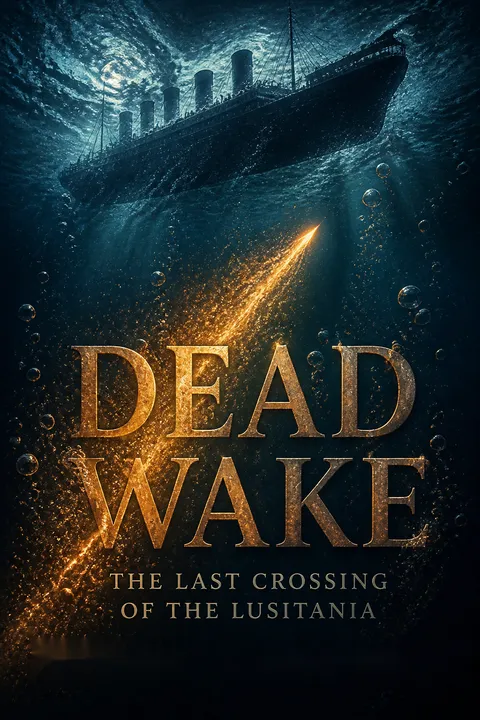
The fatal meeting. On May 7, 1915, German submarine U-20 fired one torpedo at the Lusitania, a 44,000-ton British liner carrying nearly 2,000 people. The ship sank in just 18 minutes. The attack was not an isolated bolt from the blue: decisions about the ship’s design, speed, route, and protection had shaped the danger before the torpedo arrived.
Two voyages converge. Erik Larson follows the liner and the submarine in parallel, while also tracking the British intelligence officers and political leaders whose decisions affect both. The passengers’ ordinary routines, from lunch to games on deck, unfold alongside U-20’s hunt through fog and patrol zones. The result is a disaster that feels both sudden to those aboard and, in retrospect, the product of many connected choices.
The book’s central strength is its insistence that catastrophe can be sudden in experience but gradual in preparation. This distinction matters beyond maritime history: complex failures often emerge from decisions that seem reasonable in isolation, then interact in ways no one has fully mapped. The narrative also resists reducing tragedy to a single villain. That does not erase responsibility; it asks readers to examine the system that made a fatal encounter possible.
A civilian liner's luxury concealed design decisions made for wartime service.
Built for two purposes. The British government helped finance the Lusitania and its sister ship, the Mauretania, in exchange for design requirements that included gun mounts and a hull built to battleship specifications. The Admiralty later decided the Lusitania was too costly to operate as an armed cruiser, so the guns were never installed. To passengers, it remained a commercial liner. Beneath its polished rooms, it retained features shaped by military planning.
A vulnerable inheritance. Longitudinal coal bunkers ran along both sides of the hull. Naval designers had regarded coal as a kind of armor against shells striking above the waterline. During the attack, however, the torpedo ruptured the hull near the starboard bunker. Flooding there helped produce the steep list that made launching boats so difficult. A feature intended for one kind of warfare had consequences in another.
The ship embodies a classic problem of dual-use design: a technology created to serve two missions may be safe for neither once the operating environment changes. Its bunkers were not simply a design flaw, since they reflected the naval assumptions of their time. The lesson is subtler: inherited features need to be reassessed when the threat changes. A vessel built to withstand shells may still be dangerously vulnerable to a weapon its designers did not anticipate.
A reputation for speed is not protection when operating limits change.
Confidence meets cutbacks. The Lusitania was famous for speed, and passengers trusted that advantage against submarines. But wartime economies had led Cunard to shut down one of its four boiler rooms. This reduced the ship’s maximum speed from about 25 knots to 21. It was still faster than any other civilian liner in service, and faster than a U-boat could travel underwater, but it was no longer the near-invulnerable greyhound passengers imagined.
Warnings lost to reassurance. Germany’s public notice warned that British ships in the war zone could be attacked. Many passengers scarcely considered it, while Cunard representatives emphasized the liner’s speed and expected naval protection. Even Captain Turner, a highly experienced master, doubted that a submarine could catch his ship. The danger was not invisible. Confidence, routine, and incomplete information made it easier to discount.
A strong reputation can become a risk when it substitutes for current performance data. In reliability engineering, a system is judged by its condition and operating envelope, not by its best historical record. The Lusitania remained unusually fast, so the confidence was not wholly irrational. The error was treating relative advantage as immunity, especially when speed, escort, and enemy tactics had all changed.
Share actionable intelligence before secrecy makes protection impossible.
A secret advantage. In London, Room 40 intercepted and decoded German naval messages. Its codebreakers knew that several submarines had left port and had tracked U-20’s movements while its wireless operator continued reporting positions. Reports from the Irish coast then indicated that ships had been attacked along the Lusitania’s route. Yet the Admiralty did not provide Turner with a precise account of the danger or arrange an escort.
Warnings without guidance. Turner received brief messages about submarine activity, including a report that submarines were active near Fastnet. They did not explain the recent sinkings or give a clear picture of U-20’s location. Meanwhile, the Admiralty took elaborate precautions to protect the battleship Orion. Keeping Room 40 secret helped preserve a valuable intelligence source, but it also meant the people exposed to danger lacked the information needed to respond.
Intelligence has no protective value unless it reaches someone able to act on it. The tension here is real: if an enemy discovers that its codes have been broken, a strategic advantage can disappear. But secrecy also has costs, especially when information is withheld from the very people whose safety depends on it. The episode raises a practical question for any organization handling sensitive information: what minimum warning can be shared without exposing the source?
A U-boat captain's narrow view made lone judgment a matter of life and death.
A one-eyed weapon. A submarine commander saw the surface world through a periscope, with only a brief, restricted view. He had to judge a ship’s identity, nationality, speed, and course, often without reliable communication with superiors. Once on patrol, he decided when to attack and what rules to follow. Walther Schwieger, commander of U-20, had that authority while operating alone off Ireland.
A complex man, not a simple monster. Schwieger was considered kind and good-humored by his crew, and he fostered a cheerful atmosphere in the cramped submarine. He also attacked merchant ships and was willing to target passenger liners. At the moment of the Lusitania attack, he could see the destruction through his periscope but could not hear the people in the water. His personal qualities did not cancel the consequences of his military choices.
This portrait separates personal character from institutional role. A commander may be humane toward subordinates and still carry out actions that endanger civilians. The submarine’s limited view also resembles a broader decision problem: people with authority often act on narrow, imperfect evidence, while those affected remain unseen. Understanding that constraint explains the pressure on the decision-maker; it does not make the decision morally neutral.
A two-hour departure delay helped place the Lusitania in U-20's path.
Timing mattered. The Lusitania left New York roughly two hours late after passengers were transferred from another ship and the captain’s niece had to disembark. That delay was only one factor, but it changed when the liner reached Irish waters. Other contingencies followed: Cunard had reduced its speed, fog lifted, and Turner altered course to establish his position near the coast. That turn brought the liner onto a path where Schwieger could fire.
A narrow chain. The torpedo also had to work. German estimates suggested many torpedo attacks failed, yet this one struck the ship near the bridge and ruptured a vulnerable part of the hull. A modest change in timing, visibility, course, or impact point could have produced another outcome. Larson’s account does not make the disaster inevitable. It shows how chance and human decisions combined to make it happen.
Counterfactual history is useful when it identifies mechanisms rather than pretending certainty. The delayed departure, altered speed, and changing fog are not proof that any single change would have saved everyone. They show that the event depended on a sequence with several points of sensitivity. That is a valuable way to think about risk: not as a prediction of one outcome, but as a map of where small changes can amplify.
Lifeboat capacity on paper means little without practiced launch crews.
Equipment was not readiness. The Lusitania carried 48 lifeboats with a theoretical capacity of more than 2,600 people. But wartime labor shortages had left the crew short on experienced seamen, and passengers had not practiced getting to assigned boats. When the ship listed sharply, boats on one side swung away from the deck while those on the other side jammed against it. Only six of the 22 conventional boats escaped before the final plunge.
The human bottleneck. Some boats overturned, fell onto other boats, or crushed passengers as they were lowered. Collapsible boats were difficult to rig while frightened survivors clung to them. Many passengers also put on their life jackets incorrectly. The ship had equipment, drills, and procedures, but the emergency overwhelmed the assumptions behind them. The difference between nominal capacity and usable capacity was measured in lives.
Disaster planning often overvalues inventories and undervalues coordination under stress. A lifeboat counts only if people can reach it, understand how to use it, and launch it under the actual conditions of failure. Training is not a decorative addition to safety equipment; it is part of the equipment. At the same time, the crew faced an unusually fast sinking and a severe list, so preparation could reduce danger without guaranteeing survival.
The Lusitania did not bring America into war for another two years.
Shock was not an instant trigger. The sinking killed 1,198 people, including 123 Americans, and intensified anger toward Germany. President Woodrow Wilson nevertheless resisted calls for immediate war. He issued a diplomatic protest and continued trying to preserve American neutrality. The tragedy became a lasting political and public reference point, but it did not by itself decide the country’s next step.
More events changed the calculation. Germany’s submarine campaign continued, and in 1917 it resumed unrestricted attacks on shipping. The Zimmermann Telegram, which revealed Germany’s proposal for an alliance with Mexico, further shifted American opinion. After additional attacks on American ships, Wilson asked Congress to declare war. The United States entered the conflict on April 6, 1917, nearly two years after the Lusitania sank.
A dramatic event can alter the political climate without determining policy on its own. Wilson’s delay reflects the difference between public outrage and a government’s assessment of readiness, risk, and national interest. The Lusitania mattered, but treating it as the direct cause of American entry into the war compresses a long sequence into a false instant. Historical causation is often cumulative: one event changes what later events mean.
Separate proven failures from theories about deliberate betrayal.
The blame campaign. After the sinking, the Admiralty tried to blame Captain Turner, arguing that he had failed to follow its guidance. A British inquiry led by Lord Mersey ultimately found Turner had exercised the judgment of an experienced captain. The Admiralty’s secrecy also concealed how much it knew about U-20’s movements and how carefully it had protected warships such as Orion.
The record has limits. Intercepted messages showed that Schwieger fired one torpedo, although the public account often described two. The cause of the second explosion remains uncertain; a ruptured steam line is presented as the most plausible explanation, not a proven fact. Some historians considered a deliberate plot to endanger the ship, while others favored severe negligence. The evidence supports serious failures, but it does not settle every motive.
The strongest historical interpretation distinguishes three things: what records establish, what they make plausible, and what they cannot resolve. That discipline is especially important when institutions have hidden information and then shape the official account. Suspicion of a cover-up may be warranted without proving a coordinated plot. Clear uncertainty is not a weakness in historical writing; it prevents an unanswered question from hardening into a convenient certainty.
Analysis
Dead Wake is a work of narrative history built around a paradox: the Lusitania’s sinking is known in advance, yet the reader experiences it as contingent. Larson creates that tension by cutting between the liner, U-20, Room 40, and the political world of Woodrow Wilson. The structure lets small events acquire weight without pretending that any one of them explains the whole disaster. A delayed departure, a reduced boiler capacity, a turn near the Irish coast, and a working torpedo become parts of one causal chain.
The book’s most consequential question is institutional, not merely technical. British intelligence had valuable information, but preserving the secrecy of its codebreaking operation competed with protecting a civilian ship. Meanwhile, the Admiralty’s precautions for the battleship Orion demonstrate that the institution could act decisively when it chose to. This contrast invites scrutiny of priorities, though it does not by itself prove that officials intentionally sacrificed the Lusitania. Larson keeps the distinction between negligence and conspiracy alive, even as the imbalance in protection makes suspicion understandable.
The human detail is not a decorative layer over military history. Passengers’ luggage, letters, routines, and choices reveal what the abstract term civilian casualties hides: people traveled with plans for work, family, marriage, and home. The accounts of survivors also show how quickly confidence gives way to improvisation when a designed system fails. Lifeboat totals did not guarantee escape; procedures could not overcome a steep list and an inexperienced crew.
The book’s broader value lies in treating disaster as an interaction among design, incentives, information, and chance. Its limits are also instructive. Counterfactuals can show where the sequence was fragile, but they cannot establish exactly what would have happened under another course or escort. The most trustworthy conclusion is neither that the sinking was inevitable nor that one actor controlled it. It was a preventable risk produced by decisions whose combined consequences exceeded anyone’s grasp.
Review Summary
Dead Wake is a meticulously researched account of the Lusitania's sinking during WWI. Larson's narrative style brings the tragedy to life, focusing on passengers, crew, and historical context. While praised for its detailed portrayal and suspenseful buildup, some readers found certain sections less engaging. The book explores the confluence of events leading to the disaster and raises questions about responsibility. Most reviewers appreciated Larson's ability to humanize historical figures and create a vivid atmosphere, making it an informative and compelling read for history enthusiasts.
People Also Read




Glossary
Dead wake
Lingering disturbance on waterA maritime term for the disturbance left on the surface after a vessel or torpedo passes. In the book, the phrase also suggests the lasting human and political effects of the Lusitania’s destruction. The physical wake fades; the losses, unanswered questions, and consequences of the sinking remain.
Room 40
British naval codebreaking unitA secret Admiralty operation in London that intercepted and decoded German naval communications during World War I. Its work helped British officials track German ships and submarines, including U-20. The intelligence was tightly controlled because revealing the codebreaking operation could have caused Germany to change its codes.
Cruiser rules
Rules for attacking merchant shipsTraditional maritime rules governing attacks on merchant vessels. A warship was expected to stop and search a merchant ship, protect its crew, and take it to port for a prize court to determine its fate. The rules forbade attacks on passenger vessels, but submarine warfare made compliance difficult and German policy increasingly abandoned these protections.
Longitudinal bunkers
Coal bunkers along the hullCoal-storage spaces running lengthwise along both sides of a ship’s hull. Naval designers regarded coal in these bunkers as a form of protection against shells striking near the waterline. On the Lusitania, flooding in the starboard-side bunker after the torpedo strike contributed to the ship’s dangerous list.
FAQ
What is Dead Wake: The Last Crossing of the Lusitania about?
- Historical disaster narrative: Dead Wake recounts the final voyage of the Lusitania, a British passenger liner, in May 1915, focusing on the events leading up to its sinking by a German U-boat. It explores the perspectives of various individuals, from passengers and crew to political and military leaders.
- Tension between safety and war: The book examines the conflict between the perceived safety of civilian travel and the harsh realities of World War I, highlighting the decisions and miscalculations that led to the tragedy. It details the German U-boat threat and the British Admiralty's response.
- Human stories amidst chaos: Larson weaves together the personal stories of passengers, crew, and key figures, revealing their hopes, fears, and actions in the face of impending disaster. The narrative emphasizes the human element of the tragedy, making it more than just a historical account.
Why should I read Dead Wake: The Last Crossing of the Lusitania?
- Suspenseful historical thriller: Larson masterfully builds suspense, creating a narrative that reads like a thriller, even though the outcome is known. The book keeps readers engaged with its detailed accounts and shifting perspectives.
- In-depth historical analysis: The book provides a deep dive into the political, military, and technological context of World War I, offering a nuanced understanding of the events leading to the Lusitania's sinking. It reveals the complexities of wartime decision-making.
- Emotional and human connection: Dead Wake connects readers to the human stories behind the tragedy, exploring the hopes, fears, and sacrifices of those involved. It evokes empathy and provides a powerful reminder of the human cost of war.
What is the background of Dead Wake: The Last Crossing of the Lusitania?
- World War I context: The book is set against the backdrop of World War I, specifically the German U-boat campaign against British shipping. It explores the political and military tensions between Germany and Britain, and the impact of these tensions on civilian lives.
- Technological advancements: The narrative highlights the role of new technologies, such as submarines and wireless communication, in shaping the conflict. It examines how these advancements transformed naval warfare and created new dangers for civilian vessels.
- Cultural and social milieu: The book provides a glimpse into the social and cultural norms of the early 20th century, including the class distinctions aboard the Lusitania and the prevailing attitudes toward war and travel. It also explores the role of propaganda and public opinion in shaping the conflict.
What are the most memorable quotes in Dead Wake: The Last Crossing of the Lusitania?
- "The truth is that the Lusitania is the safest boat on the sea. She is too fast for any submarine. No German war vessel can get her or near her.": This quote, attributed to Cunard's New York manager, highlights the misplaced confidence in the ship's invulnerability, a key element of the tragedy. It underscores the hubris that contributed to the disaster.
- "We must be impartial in thought as well as in action, must put a curb upon our sentiments as well as upon every transaction that might be construed as a preference of one party to the struggle before another.": This quote from President Wilson reflects his struggle to maintain American neutrality amidst the growing pressures of World War I. It reveals the complexities of his position and the challenges of balancing national interests with moral principles.
- "If you get into your berth, you'll never get out.": This quote, attributed to a passenger named Alta Piper, captures the sense of foreboding and fear that some passengers felt before the Lusitania's final voyage. It foreshadows the tragedy and highlights the anxieties of those who sensed the impending danger.
What writing style, narrative choices, and literary techniques does Erik Larson use?
- Interweaving multiple perspectives: Larson employs a narrative style that shifts between the perspectives of various characters, including passengers, crew, political leaders, and military personnel. This technique creates a multi-faceted view of the events and enhances the reader's understanding of the complex circumstances surrounding the Lusitania's sinking.
- Detailed and immersive descriptions: Larson's writing is characterized by meticulous attention to detail, bringing the historical setting and characters to life. He uses vivid descriptions of the ship, its passengers, and the surrounding environment to create an immersive reading experience.
- Suspenseful pacing and foreshadowing: Larson masterfully builds suspense by interweaving seemingly unrelated events and foreshadowing the impending disaster. He uses a chronological structure to create a sense of inevitability, keeping readers engaged and anxious about the outcome.
Hidden Details & Subtle Connections
What are some minor details that add significant meaning?
- The "sucking tube": The detail of a baby's "sucking tube" (pacifier) tied around its neck with cord, part of a detailed description of infant clothing, highlights the vulnerability of the youngest passengers and the human cost of the tragedy. It underscores the innocence lost in the disaster.
- The gold watch with a blood-colored face: The description of a woman's Geneva-made watch with a face the color of blood foreshadows the violence and loss of life to come. It serves as a subtle symbol of the impending doom.
- The mention of a memorial fountain for Titanic wireless operators: The inclusion of this detail, with the note that "space is left for the addition of other names in the future," foreshadows the Lusitania's fate and the likelihood of more maritime disasters. It highlights the cyclical nature of tragedy.
What are some subtle foreshadowing and callbacks?
- The mention of the Empress of Ireland sinking: The reference to the Empress of Ireland sinking in fog a year earlier foreshadows the dangers of fog and the potential for maritime disasters. It creates a sense of unease and highlights the vulnerability of ships at sea.
- The description of the Lusitania as a "floating village in steel": This description, while seemingly innocuous, foreshadows the ship's eventual fate as a "floating coffin." It highlights the contrast between the ship's perceived invulnerability and its actual fragility.
- The repeated emphasis on the ship's speed: The repeated emphasis on the Lusitania's speed, often cited as a guarantee of safety, creates dramatic irony, as it ultimately proves insufficient to evade the U-boat attack. It underscores the limitations of human ingenuity in the face of war.
What are some unexpected character connections?
- The shared history of Captain Turner and Chief Officer Piper: The detail that Turner and Piper had previously served together on the Umbria highlights the close-knit nature of the maritime community and the shared experiences of those who worked at sea. It adds a layer of personal connection to the tragedy.
- The connection between Theodate Pope and Henry James: The friendship between Theodate Pope and Henry James, and her naming a puppy after him, reveals a personal side to the historical figures and adds a layer of intimacy to the narrative. It also highlights the cultural and intellectual milieu of the time.
- The shared experience of the Morton brothers: The fact that both Leslie and Cliff Morton jumped ship from the Naiad to join the Lusitania highlights the shared experiences of young men eager to participate in the war. It underscores the personal motivations and sacrifices of those caught up in the conflict.
Who are the most significant supporting characters?
- Chief Officer John Preston Piper: As the Lusitania's first officer, Piper's actions and observations provide a crucial perspective on the ship's operations and the events leading up to the sinking. His presence highlights the responsibilities and challenges faced by the ship's crew.
- Robert Leith, the Marconi operator: Leith's role in sending out distress signals underscores the importance of communication technology during the disaster. His actions highlight the efforts to seek help and the limitations of technology in the face of overwhelming tragedy.
- Mabel Every, Captain Turner's companion: Every's insights into Turner's personality and private life provide a more nuanced understanding of the man behind the captain's uniform. Her perspective humanizes Turner and reveals his personal struggles.
Psychological, Emotional, & Relational Analysis
What are some unspoken motivations of the characters?
- Captain Turner's desire for redemption: Turner's decision to take command of the Lusitania, despite the risks, may have been driven by a desire to redeem himself after past reprimands and to prove his skill as a captain. This unspoken motivation adds a layer of complexity to his character.
- President Wilson's need for companionship: Wilson's pursuit of Edith Galt was driven not only by romantic interest but also by a deep-seated need for companionship and emotional support after the loss of his wife. This unspoken motivation reveals his vulnerability and his search for solace amidst the pressures of leadership.
- Schwieger's ambition and sense of duty: Schwieger's relentless pursuit of targets, even when they were not clearly military, may have been driven by a combination of ambition and a sense of duty to his country. This unspoken motivation highlights the psychological impact of war and the pressures faced by military leaders.
What psychological complexities do the characters exhibit?
- Captain Turner's stoicism and inner turmoil: Turner's outward calm and confidence mask a deep-seated anxiety and a tendency to be blunt and socially awkward. This psychological complexity reveals the internal struggles of a man burdened by responsibility and the weight of past experiences.
- President Wilson's grief and loneliness: Wilson's profound grief over the loss of his wife, coupled with the pressures of leadership, created a complex emotional state. His reliance on Edith Galt for emotional support highlights his vulnerability and his need for human connection.
- Schwieger's ruthlessness and humanity: Schwieger's ability to carry out his mission with ruthless efficiency while also displaying moments of kindness and humor reveals a complex psychological makeup. This duality highlights the moral ambiguities of war and the challenges of reconciling personal values with military duty.
What are the major emotional turning points?
- Turner's address to passengers: Turner's attempt to reassure passengers about the submarine threat, while intended to calm their fears, ultimately underscores the impending danger and the tragic irony of his misplaced confidence. This moment marks a turning point in the narrative, shifting from a sense of hope to one of foreboding.
- Wilson's confession of love to Edith Galt: Wilson's declaration of love to Edith Galt, while offering him personal solace, also highlights the emotional turmoil he faced amidst the pressures of leadership. This moment marks a turning point in his personal life, as he grapples with grief and the possibility of new love.
- Schwieger's decision to abandon his mission: Schwieger's decision to abandon his assigned patrol zone, driven by a combination of frustration and a desire to protect his crew, marks a turning point in his journey. It reveals the limitations of military orders and the influence of personal judgment in wartime.
How do relationship dynamics evolve?
- The bond between Turner and his crew: Despite Turner's gruff exterior, the crew respected and trusted him, highlighting the importance of leadership and camaraderie in the face of danger. This bond underscores the human connections that form in the maritime world.
- The growing intimacy between Wilson and Galt: The relationship between Wilson and Galt evolves from a chance encounter to a deep emotional connection, providing Wilson with a source of solace and support. This relationship highlights the power of human connection in times of personal and national crisis.
- The camaraderie among U-20's crew: The crew of U-20, despite the harsh conditions and the moral ambiguities of their mission, shared a bond of camaraderie and loyalty. This relationship highlights the human element of war and the importance of teamwork in the face of danger.
Interpretation & Debate
Which parts of the story remain ambiguous or open-ended?
- The exact cause of the second explosion: While the book suggests a steam line rupture as the most likely cause, the exact nature of the second explosion remains open to interpretation. This ambiguity highlights the limitations of historical evidence and the challenges of reconstructing past events.
- The extent of the Admiralty's knowledge: The book raises questions about how much the Admiralty knew about the specific threat to the Lusitania and why they chose not to act more decisively. This ambiguity leaves room for debate about the extent of the Admiralty's culpability.
- The true motivations of Captain Turner: While the book portrays Turner as a skilled and experienced captain, his motivations for taking the Lusitania on its final voyage remain somewhat ambiguous. This ambiguity allows readers to consider the complexities of his character and the pressures he faced.
What are some debatable, controversial scenes or moments in Dead Wake: The Last Crossing of the Lusitania?
- The Admiralty's decision not to provide an escort: The Admiralty's decision not to provide a naval escort for the Lusitania, despite knowing about the U-boat threat, is a highly controversial moment. This decision raises questions about the prioritization of military assets over civilian lives and the ethical implications of such choices.
- Schwieger's decision to attack a civilian liner: Schwieger's decision to attack the Lusitania, despite its civilian status, is a controversial moment that raises questions about the morality of submarine warfare and the responsibility of military leaders. It highlights the ethical dilemmas faced by individuals in wartime.
- Wilson's response to the sinking: Wilson's initial response to the Lusitania sinking, characterized by a desire to maintain neutrality, is a controversial moment that raises questions about the role of leadership in times of crisis. It highlights the tension between diplomatic restraint and the need for decisive action.
Dead Wake: The Last Crossing of the Lusitania Ending Explained: How It Ends & What It Means
- The Lusitania's sinking: The book culminates in the sinking of the Lusitania, a tragic event that underscores the human cost of war and the fragility of life. The sinking serves as a powerful reminder of the consequences of political and military decisions.
- The aftermath and blame: The aftermath of the sinking reveals the complexities of assigning blame and the political maneuvering that followed. The Admiralty's attempt to scapegoat Captain Turner highlights the challenges of accountability in wartime.
- The path to war: The sinking of the Lusitania, while not the sole cause, contributed to the growing pressure on the United States to enter World War I. The book's ending underscores the far-reaching consequences of the tragedy and its impact on global events.
About the Author
Other books by Erik Larson



Download PDF
Download EPUB
.epub digital book format is ideal for reading ebooks on phones, tablets, and e-readers.








