

Key Takeaways
See the fair and the murders as products of one fast, anonymous city
One city, two trajectories. In the 1890s, Chicago was swelling with newcomers, trains, factories, money, and danger. A thousand trains a day brought people into a city where women could arrive alone, find work, and disappear into the crowds. The same rapid growth that made a grand world’s fair seem possible also strained police, public health, and ordinary neighborly oversight. Against the rising White City of the exposition, Holmes built a private world of deception and murder. The book’s central contrast is not simply beauty versus evil. It is a city capable of inspiring extraordinary creation while leaving vulnerable people largely unseen.
Growth hid its costs. The fair drew 27.5 million visits, while Chicago’s ordinary streets remained smoky, filthy, and hazardous. The shared setting matters: the fair and Holmes’s crimes unfolded amid the same restless transformation, though the city’s ambition did not cause his choices.
The pairing works as urban history because it resists the comforting idea that progress automatically produces a more humane society. New infrastructure can expand opportunity while also increasing anonymity and overwhelming institutions. That is a structural explanation, not an excuse for murder or a claim that cities make people violent. The contrast also invites a useful question: whose safety and freedom count as evidence of a city’s success? A spectacular skyline answers only part of that question.
Make impossible projects work by joining artistic vision to operational command
Different strengths, shared work. Chicago had about twenty-seven months to create an exposition meant to surpass Paris’s celebrated 1889 fair. Architect Daniel Burnham could organize people, win support, and press construction forward; his partner John Root supplied much of the firm’s imaginative design. Landscape architect Frederick Law Olmsted shaped the grounds, while a board of leading architects designed the main buildings. The result depended on collaboration, not a lone genius. Root died of pneumonia in January 1891, devastating Burnham and prompting public doubts that the fair could continue. Burnham carried on, took firmer control, and pushed the project through delays, labor disputes, bad weather, and shortages.
Execution joined the vision. When stone and brick proved too slow, the architects used staff, a plaster-like coating over wood frames, to create the appearance of monumental buildings on schedule. The fair ultimately welcomed 27.5 million visits.
The fair resembles a complex engineering program: design, procurement, labor, finance, and governance had to remain coordinated while conditions changed. Burnham’s strength was not just boldness, but the ability to convert a vision into decisions and deadlines. Yet centralized authority has a price. It can resolve gridlock, but can also silence specialists or make dissent feel like obstruction. The story’s achievement is strongest when read as a team effort, not as proof that a single forceful leader is always the answer.
Design the visitor’s whole scene, not a collection of impressive objects
The landscape was part of the art. Olmsted used the term becomingness for the coherence between buildings, grounds, water, light, and the views connecting them. He wanted the landscape to support the fair’s architecture rather than compete with it. Jackson Park began as a sandy, waterlogged stretch beside Lake Michigan. Olmsted’s crews dredged lagoons, shaped islands and banks, and planted trees, grasses, and flowers to create a setting that changed with weather and sunlight. He even argued over the boats: quiet electric launches suited the scene better than noisy steam vessels.
Small details shaped feeling. Olmsted planned foliage for layers of shade, reflection, and glimpses of color, rather than showy flower beds. Visitors later remembered the lawns, lagoons, and buildings as a unified experience, not merely an assortment of exhibits.
This is a powerful account of environmental design: a place influences how people move, look, gather, and feel, often without announcing its influence. Olmsted treated scenery as an active medium rather than decoration, anticipating the way contemporary designers think about the combined sensory experience of public spaces. His approach also had a practical limit: the fair’s deadlines and construction demands left little time for mature landscapes. A designed experience can be compelling, but it cannot be separated from the labor and maintenance that sustain it.
Let engineering astonish, but remember that public trust begins with safety
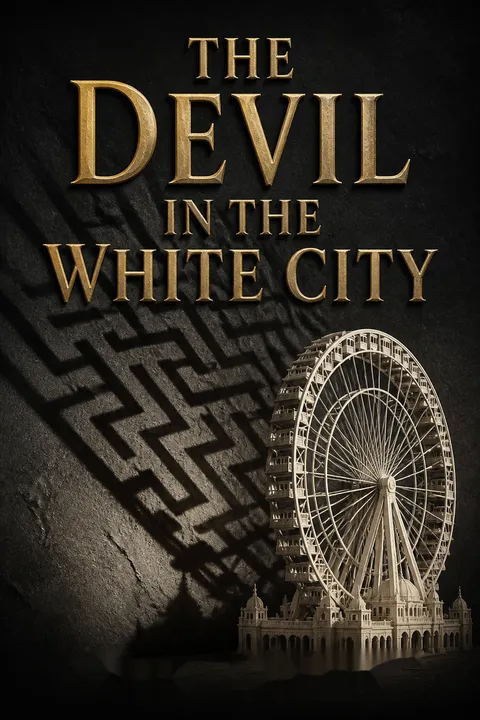
A new sensation in steel. Engineer George Ferris proposed a giant rotating wheel after Burnham challenged engineers to invent an attraction as distinctive as the Eiffel Tower. The finished wheel rose 264 feet and carried thirty-six passenger cars, each designed for about sixty people. Its thin spokes and open framework looked fragile, even though its engineering had been carefully calculated. Construction delays meant it opened on June 21, 1893, fifty-one days after the fair began. Once operating, it became one of the exposition’s most popular attractions and gave riders a sweeping view of the White City and lake.
Appearance mattered too. People questioned whether the wheel could survive a strong wind. During a storm, it barely shifted, while the nearby captive balloon was torn apart. The contrast made the wheel’s strength visible, but only after the public had worried about its apparent delicacy.
Ferris’s wheel shows that technical performance and public confidence are related but not identical. A structure can be safe by calculation and still look frightening to the people asked to ride it. That gap matters in any technology whose risks are difficult for non-specialists to assess. The wheel’s success came partly from the experience it offered, not simply its engineering specifications. Still, spectacle should not substitute for transparent safety practices, especially when a failure could endanger thousands at once.
Holmes made the hotel itself a machine for isolating victims
A familiar role concealed danger. Holmes posed as a doctor, businessman, and hotel owner. His Englewood building included shops, apartments, and rooms for fair visitors, drawing young women who had traveled to Chicago for work or independence. He used charm, false names, debts, and invented explanations to maintain control. The building’s hidden rooms and gas fittings gave him ways to confine and kill people; he also used a kiln, quicklime, and an accomplice skilled in preparing skeletons to dispose of bodies. The book establishes at least nine victims, including Julia and Pearl Conner, Emeline Cigrand, Minnie and Anna Williams, Benjamin Pitezel, and three of Pitezel’s children. Holmes claimed to have killed many more, but the total remains uncertain.
Some scenes are reconstructed. No surviving witness described the murders themselves, so the book distinguishes evidence from plausible narrative reconstruction.
The building’s horror comes from the inversion of ordinary trust: lodging, employment, medical knowledge, and a helpful proprietor all became instruments of control. This makes the story more than a tale of secret rooms. It shows how institutional roles can lend credibility to someone who has no intention of honoring their obligations. The book’s reconstruction of unwitnessed killings creates narrative immediacy, but it also requires caution. Motives and specific actions are less certain than the documents, testimony, and physical evidence that support the broader case.
Investigate disappearance as a pattern, not as isolated private misfortune
Warnings stayed fragmented. Chicago’s rapid growth brought thousands of people outside the protection of familiar families and neighborhoods. Young women arrived seeking jobs as stenographers, clerks, and teachers. Meanwhile, the city’s police were understaffed and often politically appointed. Disappearances were so numerous that investigators struggled to pursue them, and poor or socially marginalized people received less attention than the wealthy. Families wrote letters, hired private detectives, and asked neighbors questions, but their separate efforts rarely became a coordinated investigation. Holmes could exploit this fragmentation: he offered plausible stories about women who had supposedly traveled or married, while those around him had little reason to compare accounts.
Absence needed interpretation. During the first six months of 1892, Chicago recorded nearly eight hundred violent deaths. Missing-person cases competed with a constant stream of other emergencies, making patterns especially easy to overlook.
The lesson is institutional as much as personal. When reports are handled one at a time, a repeated pattern can remain invisible, particularly if the missing people have little social power. Modern systems face the same analytical problem whenever separate agencies collect data but lack the means or mandate to connect it. The historical account also warns against reducing every unexplained absence to crime. The point is not to assume the worst, but to treat recurring warning signs as information worth sharing and examining.
Follow the paper trail when a liar controls the story
Ordinary records broke the case open. In 1895, Philadelphia detective Frank Geyer was sent to find Alice, Nellie, and Howard Pitezel, children last seen with Holmes. Holmes claimed they were alive and traveling with an accomplice. Geyer instead traced their movements through the children’s letters, hotel registers, real-estate records, and recollections of people who had rented rooms or seen them. In Toronto, a neighbor remembered Holmes renting the house where Alice and Nellie had been buried. In Indianapolis, small clues eventually led investigators to Howard’s remains. Each individual record seemed modest; together, they exposed Holmes’s route and lies.
Method beat mystery. Geyer visited lodging houses and offices repeatedly, showed photographs, and checked aliases rather than trusting a single account. His search restored the children’s identities to their mother and gave evidence a court could use.
Geyer’s work is a study in disciplined inference. He does not solve the case through a dramatic confession or a sudden flash of intuition. He treats letters and ledgers as traces of movement, then checks each clue against another source. That method resembles good investigative journalism and archival research: a claim becomes more trustworthy when independent records converge. The approach is slow and emotionally costly, but it is also a safeguard against the persuasive storyteller who can make one invented explanation sound complete.
A civic dream can dazzle millions and still exclude those priced out
The fair modeled a better city. In the White City, visitors encountered electric lighting, clean public facilities, treated water, organized emergency services, and a Children’s Building offering care for visitors’ children. The contrast with Chicago’s polluted streets made the exposition feel like a demonstration of what urban life could become. Yet access was not equal. Travel to Chicago cost money, railroads resisted lowering fares, meals at the fair were expensive, and Congress required the exposition to close on Sundays, barring many workers from visiting on their day off. Workers who built the dream faced dangerous conditions, deaths, and, as funds tightened, layoffs.
Awe did not solve access. Attendance surged on special days but often fell short of the 100,000 daily paying visitors the organizers believed necessary for financial security. The fair’s beauty depended on a fragile business model.
The exposition’s social promise and its commercial logic pull in different directions. Public amenities suggested that beauty, sanitation, and safety could be organized at scale, but ticket prices and work schedules determined who could experience them. This tension remains central to civic planning: a model environment has limited value if ordinary residents cannot enter or afford it. The fair’s achievements deserve recognition, but its clean streets and manicured grounds were not proof that the wider city had become equitable.
Chicago’s record-breaking fair ended not with fireworks, but a mayor’s murder
Triumph turned abruptly to grief. On Chicago Day, October 9, 1893, 713,646 people paid to enter the fair, a record for a peaceful event. The exposition paid its debts, and leaders prepared for a celebratory closing. But Mayor Carter Harrison had become the target of Patrick Prendergast, who believed the mayor owed him a city appointment for supporting his campaign. Harrison had made no such promise. Prendergast shot him at home on October 28, two days before the fair’s scheduled close. The planned celebration became a memorial service, and the exposition’s final flag-lowering ceremony unfolded in mourning.
Public history stayed personal. The fair’s success did not erase the city’s political conflicts, private delusions, or vulnerability to violence. Its closing day became inseparable from Harrison’s funeral and the shock of his death.
This ending punctures the idea that a civic spectacle can suspend ordinary politics. The fair could coordinate thousands of workers and welcome visitors from around the world, yet it could not prevent a private grievance, grounded in a delusion of political entitlement, from entering the mayor’s home. The event also cautions against treating mental illness as a simple explanation for violence. Prendergast’s belief helps clarify his motive, but it does not make the killing inevitable or excuse it.
Preserve what improves city life, not just what makes a spectacular memory
The White City did not last. Most exposition buildings were temporary, and fires destroyed many of the remaining palaces in 1894. The fair’s closure coincided with unemployment and hardship; the same city that had drawn workers to build its marvels now had too few jobs for them. Yet the exposition changed how Americans imagined cities. Its architecture and planning helped inspire the City Beautiful movement, and Burnham went on to prepare plans for Chicago and other cities. The fair’s lasting traces include the Ferris Wheel as a recurring attraction, technologies and products that gained public attention there, and Chicago’s surviving Palace of Fine Arts, now the Museum of Science and Industry.
A model can outlive its materials. The fair’s most durable legacy was the public belief that cities could be designed for beauty and shared use, not only commerce.
The fair’s afterlife illustrates a useful distinction between preserving objects and preserving capabilities. Temporary buildings vanished, but civic ideas migrated into plans, parks, and later institutions. That legacy is neither automatic nor uncomplicated: the fair’s classical style drew criticism for overshadowing Chicago’s emerging architectural movement, and a vision of beauty can become exclusionary if it serves prestige more than daily life. Its strongest inheritance is the demand that cities be judged by the environments they make possible for residents.
Analysis
The book’s central achievement is to make two apparently incompatible histories occupy the same space. One is the deliberate construction of a civic ideal, a fair assembled through architecture, landscape design, labor, finance, and political negotiation. The other is Holmes’s private system of fraud and murder, enabled by anonymity, weak oversight, and the credibility attached to ordinary roles. The contrast does not claim that civic ambition produces evil. It shows instead that a city can create extraordinary public order in one place while failing to notice danger in another.
The fair itself is not a simple triumph. Its clean water, lighting, public facilities, and carefully composed landscape made a persuasive argument that urban life could be improved by design. Its construction also involved dangerous work, unequal access, financial strain, and conflict over who controlled the project. The White City was a prototype and a performance: a temporary place built to persuade visitors that a better city was possible. Its influence depended less on the survival of its buildings than on whether its ideas entered lasting plans and public expectations.
The Holmes narrative adds a second question: how does evidence become visible? Families and acquaintances often possessed fragments of the truth, but each explanation remained local and incomplete. Geyer’s patient reconstruction shows how ordinary records can challenge a fluent liar when details are compared across places and witnesses. At the same time, the book’s immersive scenes of unwitnessed killings require careful reading. The historical case is strongest where records, testimony, and physical evidence converge; the precise inner motives and some narrated actions remain inferential.
Together, these threads make the city itself more than a backdrop. Chicago is an engine of possibility and a test of institutional attention. The fair demonstrates what coordinated imagination can build. The murders reveal what that achievement cannot guarantee: that every person will be seen, protected, or remembered.
Review Summary
The Devil in the White City receives high praise for its compelling storytelling, weaving together the creation of the 1893 Chicago World's Fair and the sinister activities of serial killer H.H. Holmes. Readers appreciate Larson's meticulous research, vivid descriptions, and ability to make history come alive. Many find the fair's development more engaging than Holmes' story. Some criticize the loose connection between the two narratives and occasional speculation. Overall, reviewers commend Larson's writing style and the book's educational value, recommending it to history and true crime enthusiasts alike.
People Also Read






Glossary
White City
idealized fairgroundThe popular name for the illuminated, largely white neoclassical buildings and landscaped grounds of Chicago’s 1893 World’s Columbian Exposition. In the book, the White City also represents a civic ideal: a clean, orderly, beautiful urban environment set against the smoke, filth, and danger of ordinary Chicago.
Black City
industrial ChicagoThe book’s contrasting image of Chicago beyond the exposition grounds: an immense industrial city marked by smoke, crowded streets, poverty, vice, hazardous transportation, and uneven public services. The phrase emphasizes the gap between the fair’s carefully managed appearance and the lived conditions of the city around it.
becomingness
whole-scene coherenceFrederick Law Olmsted’s term for the way landscape elements should contribute to a unified overall scene. At the exposition, he wanted the grounds, water, plants, light, and buildings to support one another, so that no isolated decoration overwhelmed the larger composition.
floating foundation
load-spreading steel raftA foundation method developed by architect John Root for Chicago’s soft, waterlogged soil. Layers of steel rails were laid at right angles over concrete, then filled and covered with cement. The broad rigid base spread a building’s weight across the ground instead of relying on deep bedrock.
Bertillon system
identification by measurementsA criminal identification method associated with French criminologist Alphonse Bertillon. Police recorded detailed measurements and physical characteristics of suspects, then compared records across jurisdictions to distinguish people using aliases. The fair’s organizers prepared to use this system because they expected the event to attract large numbers of criminals.
Columbian Guard
exposition security forceThe World’s Columbian Exposition’s large security organization, commanded by Colonel Edmund Rice. Unlike a force concerned only with arrests after crimes occurred, its stated purpose included preventing crime. It directed crowds, removed known offenders, responded to emergencies, and helped visitors experience the fair as a comparatively safe public space.
FAQ
What's The Devil in the White City about?
- Dual Narratives: The book intertwines the stories of Daniel Burnham, the chief architect of the 1893 World’s Columbian Exposition in Chicago, and H. H. Holmes, a serial killer who preyed on young women during the fair.
- Historical Context: It explores the transformative power of the fair, showcasing American ingenuity and culture, while highlighting the dark underbelly of urban life in late 19th-century Chicago.
- Themes of Good vs. Evil: The narrative contrasts the beauty and ambition of the fair with the horror of Holmes's crimes, illustrating the coexistence of light and darkness in society.
Why should I read The Devil in the White City by Erik Larson?
- Engaging Storytelling: Erik Larson masterfully combines historical facts with narrative flair, making the book both informative and thrilling.
- Rich Historical Detail: Readers gain insight into the architectural innovations and societal changes of the time, as well as the cultural significance of the World’s Fair.
- Psychological Depth: The book delves into the minds of both Burnham and Holmes, providing a fascinating look at ambition, morality, and the human condition.
What are the key takeaways of The Devil in the White City?
- Ambition and Vision: The book emphasizes the importance of vision in achieving monumental goals, as seen through Burnham’s determination to create a world-class fair.
- Consequences of Urbanization: It highlights the rapid changes in urban life during the late 19th century, including the rise of crime and the challenges of industrialization.
- Duality of Human Nature: The contrasting lives of Burnham and Holmes illustrate the potential for both greatness and evil within individuals, reflecting broader societal themes.
What are the best quotes from The Devil in the White City and what do they mean?
- “Make no little plans; they have no magic to stir men’s blood.”: This quote by Daniel Burnham encapsulates the spirit of ambition and the drive to create something extraordinary, urging people to think big.
- “I was born with the devil in me.”: H. H. Holmes’s chilling confession reflects his belief that his murderous tendencies were innate, suggesting a complex interplay between nature and nurture in the formation of evil.
- “The fair was to be a celebration of America’s progress.”: This statement underscores the fair’s role as a symbol of national pride and innovation, contrasting sharply with the dark events occurring simultaneously.
Who are the main characters in The Devil in the White City?
- Daniel Burnham: The chief architect of the World’s Columbian Exposition, portrayed as a visionary leader dedicated to creating a magnificent fair that would showcase American culture and ingenuity.
- H. H. Holmes: A charming but sinister figure, depicted as one of America’s first serial killers, using the fair as a backdrop for his heinous crimes against young women.
- Frederick Law Olmsted: The landscape architect responsible for the fair’s design, shown grappling with the challenges of transforming Jackson Park into a beautiful setting for the exposition.
How does Erik Larson portray Chicago in The Devil in the White City?
- Dynamic and Transformative: Larson depicts Chicago as a city undergoing rapid change, characterized by industrial growth, architectural innovation, and a burgeoning population.
- Contrasting Elements: The narrative contrasts the grandeur of the World’s Fair with the city’s darker aspects, including crime, poverty, and corruption.
- A Character in Itself: Chicago is portrayed almost as a living entity, with its own personality and challenges, shaping the lives of those who inhabit it.
What challenges did Burnham face while organizing the fair?
- Time Constraints: Burnham had to work under immense pressure to complete the fair in less than two years, a task complicated by the sheer scale of the project.
- Political Infighting: He navigated conflicts between the National Commission and the Exposition Company, which often hindered decision-making and progress.
- Labor Strikes: The threat of labor unrest loomed large, as workers demanded better wages and conditions, complicating construction efforts.
How does The Devil in the White City explore the theme of good vs. evil?
- Contrasting Lives: The lives of Burnham and Holmes serve as a study in contrasts, with Burnham representing ambition and creativity, while Holmes embodies manipulation and malevolence.
- Moral Ambiguity: Larson delves into the complexities of human nature, suggesting that greatness and evil can coexist within individuals and societies.
- Symbolism of the Fair: The fair itself symbolizes the potential for beauty and progress, while Holmes’s actions reveal the lurking darkness that can undermine such aspirations.
What impact did H. H. Holmes have on the narrative of The Devil in the White City?
- Antagonistic Force: Holmes serves as the primary antagonist, his actions creating a sense of dread that contrasts sharply with the fair’s celebratory atmosphere.
- Psychological Depth: His character adds a layer of psychological intrigue, as readers explore the motivations behind his crimes and the nature of his evil.
- Historical Significance: Holmes’s story intertwines with the fair’s history, illustrating how one man’s darkness can overshadow a monumental event meant to celebrate light and progress.
How does Erik Larson blend history and narrative in The Devil in the White City?
- Meticulous Research: Larson's extensive research provides a solid historical foundation for the narrative, weaving together primary sources to create an authentic portrayal of the time.
- Character-Driven Storytelling: By focusing on the lives of key figures, Larson humanizes historical events and makes them relatable, allowing readers to connect emotionally with the characters.
- Suspenseful Structure: The alternating chapters between the fair and Holmes's crimes create a sense of tension and anticipation, keeping readers engaged and heightening the impact of both stories.
What is the significance of the title The Devil in the White City?
- Symbolic Contrast: The title reflects the juxtaposition of the fair’s beauty and the evil embodied by Holmes, with the “White City” symbolizing hope and progress, and “the Devil” representing lurking darkness.
- Moral Complexity: It suggests a deeper exploration of morality and human nature, raising questions about the coexistence of good and evil in society.
- Historical Reflection: The title encapsulates the historical context of the fair and the societal issues of the era, serving as a reminder of the complexities of progress and the shadows that can accompany it.
About the Author
Other books by Erik Larson




Download PDF
Download EPUB
.epub digital book format is ideal for reading ebooks on phones, tablets, and e-readers.








