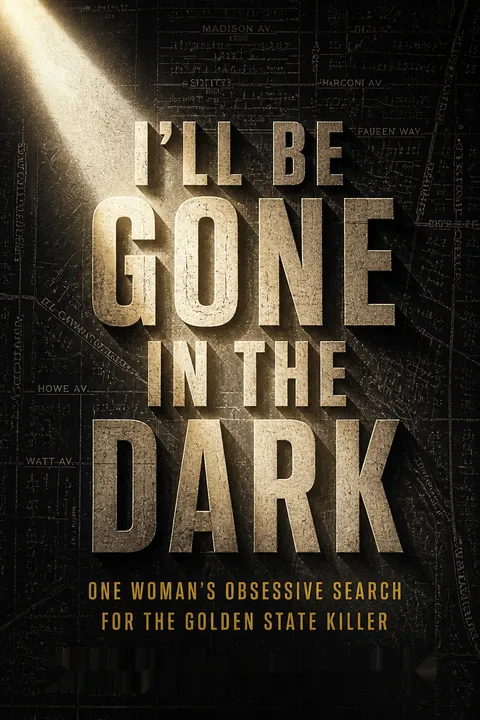


Key Takeaways
One California predator stayed hidden because police saw separate cases.
A crime without a name. From 1976 to 1986, one offender committed about fifty sexual assaults and at least ten murders in California. Investigators knew him by different labels: the East Area Rapist in Northern California and the Original Night Stalker in Southern California. Because attacks crossed city and county lines, departments often held only pieces of the same story. Some suspected links were debated, then shelved; victims and evidence were separated by geography and procedure.
Connection changed the map. DNA eventually tied cases together that investigators had struggled to connect for years. The central obstacle was not a shortage of clues, but the difficulty of assembling them across jurisdictions and decades. The book shows how institutional boundaries can hide a pattern that becomes visible only when records and evidence are compared.
What is striking is that the case’s fragmentation was not merely a failure of individual detectives. Each department could be competent within its own patch and still miss the larger pattern. That distinction matters in any complex investigation: local accuracy does not guarantee system-wide understanding. The story also cautions against treating a common method as proof of a common offender. Cross-jurisdiction collaboration makes patterns testable, but the evidence, not administrative convenience, must ultimately establish the connection.
Treat every behavioral pattern as a lead, never as proof.
Methods leave patterns. The offender often studied homes before entering, disabled lights, used gloves, and carried or improvised bindings. He stole personal items such as rings and driver’s licenses while overlooking more valuable property. In some attacks on couples, he separated the woman from the man and used objects placed on the bound man as an alarm. These repeated details helped investigators recognize related attacks and anticipate how he might operate.
Patterns invite stories. Investigators debated whether the offender had military training, knew victims, or was responding to publicity. Such explanations could seem persuasive, but the clues rarely proved them. Even the apparent ferocity of a murder scene could be misread as evidence of a personal relationship. McNamara shows why a pattern is useful: it directs attention and comparison. It is not a license to turn an inference into a fact.
The distinction between a behavioral signature and a proven explanation is crucial. Repeated actions can help investigators connect events, but they do not automatically reveal motive, personality, or background. A strong narrative can make a theory feel more certain than the evidence warrants, especially when a detail seems to explain several crimes at once. The book’s best investigative habit is therefore also a general one: keep observations, interpretations, and conclusions in separate mental columns.
Keep biological evidence: future methods can connect crimes old labs could not.
Evidence outlasts memory. In 1996, Orange County criminalist Mary Hong reopened preserved sexual-assault evidence from the murders of Keith and Patty Harrington and Manuela Witthuhn. Newer DNA analysis showed that the same unknown man was responsible for both cases. A comparison with evidence from Janelle Cruz’s 1986 murder produced another match. Later testing connected the Ventura murders of Lyman and Charlene Smith as well.
Technology changes what counts. Earlier DNA methods required larger, better-preserved samples and took far longer to process. PCR-STR analysis could work with smaller or degraded material, making it useful for old cases. The evidence had remained stored while methods improved. Its value was not obvious when it was collected, but preserving it made later comparisons possible.
The cases demonstrate a powerful form of investigative patience: preserving material whose future uses cannot yet be predicted. That principle extends beyond forensic science to archives, research data, and institutional records. Preservation is not a promise that every old case can be solved; samples may be degraded, incomplete, or contaminated. But discarding evidence because current methods cannot answer a question closes off future inquiry before better tools can even be considered.
Let DNA link cases before it names a suspect.
A match is not a name. DNA established that several attacks across California belonged to one offender, but it did not identify him. CODIS, the Combined DNA Index System, allowed crime-scene profiles to be compared with profiles held in law-enforcement databases. The killer’s DNA produced no known match there. Investigators could use the profile to connect crimes and eliminate suspects, yet the person behind the sample remained unidentified.
Each answer narrows the question. DNA helped turn separate investigations into a shared case, but the next step still required records, witnesses, and careful detective work. The book repeatedly distinguishes identification of a biological profile from identification of a person. That gap is why a major forensic breakthrough could energize investigators without delivering the arrest they wanted.
DNA is especially persuasive because it can appear to speak with mathematical authority. Yet its meaning depends on where the sample came from, how it was handled, and what database can be searched. The book makes a useful distinction between linking events and identifying an offender. Treating those as separate achievements prevents forensic evidence from being asked to answer questions it cannot answer on its own.
Use geography to narrow the search, not to declare a culprit.
Place reveals routine. Geographic profiling examines where linked crimes occurred to estimate an offender’s likely anchor points, such as home or work. Investigators noticed that the attacks changed shape as the offender moved from Sacramento to the East Bay and then Southern California. In Sacramento he repeatedly operated within a familiar area; in the East Bay, attacks clustered along the I-680 corridor, suggesting a different travel pattern.
A map is a hypothesis. The approach can help prioritize neighborhoods and compare a suspect’s address history with crime locations. It cannot pinpoint a house or establish identity. Paul Holes considered whether work could explain attacks in distant cities, and explored unusual clues suggesting access to air travel. Those ideas remained investigative possibilities, not demonstrated facts. Maps helped organize questions, but each proposed connection still needed verification.
Geographic analysis is valuable because it turns a long list of locations into a question about ordinary movement: where might someone live, work, or travel repeatedly? Its strength is prioritization, not certainty. A plotted cluster can be shaped by which crimes were reported, linked, or preserved, so the map reflects both offender behavior and the limits of the record. The book models disciplined use of geography by showing the theories it generates alongside the uncertainty that remains.
Write victims as whole people, not clues in a killer's story.
A case contains lives. The book gives victims and families histories beyond the crime scene. Manuela Witthuhn’s bridal veil, kept on her bedroom door, hints at a private tenderness that coworkers did not often see. After her murder, her brother Drew cleaned the room and later found a piece of her skull that investigators had missed. In another account, Debbi Domingo’s final argument with her mother, Cheri, becomes part of a family history rather than a clue to be decoded.
Trauma continues. Survivors faced fear, strained relationships, and lasting changes in how safe home felt. Some couples did not remain together. McNamara’s reporting makes clear that a person’s response to assault cannot be judged by a single expected script. Attention to these details restores individuality to people who might otherwise appear only as entries in a timeline.
The human detail is not decoration around the investigation. It changes what the investigation means, reminding readers that a solved pattern does not undo a person’s loss or control the shape of grief. This approach also resists the common temptation to define victims by their final hours. Careful reporting cannot fully represent another person, and it must respect boundaries, but it can avoid reducing a life to its usefulness as evidence.
Give citizen researchers a role, but keep verification with investigators.
Digital searching widened the field. McNamara used online public records, digitized directories, yearbooks, maps, and message boards to pursue leads that might be hard to find in paper files. A dedicated online community exchanged maps, sightings, and theories; some members produced extensive research. McNamara’s search for stolen cuff links led her to a matching-looking pair for sale online, which she handed to investigators. The victims’ family later confirmed they were not the stolen pair.
Collaboration needs discipline. McNamara built relationships with detectives and shared leads, while investigators checked them against case files and forensic evidence. Her work shows how an outsider can add useful labor and fresh questions without replacing official procedures. The cuff-link episode also shows why enthusiasm is not confirmation: an apparent match can be compelling and still be wrong.
The book presents citizen research as a useful extension of investigative capacity, especially when public records and digital tools make scattered information easier to search. Its best model is partnership rather than vigilantism: researchers generate leads, while trained investigators test them and protect the integrity of evidence. Crowds can notice what a tired team misses, but they can also amplify speculation. Verification is not a bureaucratic afterthought; it is what keeps curiosity from becoming accusation.
A plausible suspect is not the same thing as the right suspect.
The case produced convincing wrong turns. Investigators examined people whose location, behavior, or criminal history seemed to fit. Jim Walther had suspicious coincidences connecting him to Sacramento and the East Bay, and Ron Greer possessed troubling items when stopped near an attack. Both were eliminated by DNA. Other suspects, including Joe Alsip in the Smith murders and Brett Glasby in the Goleta cases, drew serious attention without being connected to the full series.
Test the theory against disconfirming evidence. McNamara describes suspect-hunting as emotionally seductive: once a person seems to fit, each new detail can feel like confirmation. But a description, motive, or suspicious past is not the same as proof. In this case, forensic results repeatedly forced investigators to abandon attractive explanations and return to the evidence.
The strongest lesson is not simply to avoid bias, but to design the investigation so that a favored theory can lose. A suspect should face tests that could disprove the hypothesis, not only searches for supporting details. DNA played that corrective role in several examples, but any method can be misused if its limits are ignored. The book also shows the emotional cost of elimination: letting go of a promising answer is necessary work, not failure.
Notice when the hunt begins consuming the hunter.
Curiosity became a vocation. McNamara’s fascination with unsolved crimes began after the 1984 murder of her neighbor Kathleen Lombardo, when she was fourteen. Years later, online research helped her build True Crime Diary and investigate the California attacks. She searched late at night in her daughter’s playroom, surrounded by legal pads and case files. The work brought discovery and connection, but she also described its effects on sleep, attention, and family life.
The story remains unfinished. McNamara died in 2016 before completing the book. Her researcher Paul Haynes and journalist Billy Jensen organized her notes and completed sections from her materials. The book’s ending is not a solved case but a record of continued investigation, including its exhilaration, dead ends, and personal cost.
The memoir strand complicates the romance of relentless research. Persistence can serve victims and revive neglected cases, but intense attention is not automatically healthy or sustainable. McNamara’s candor gives the reader a way to see both sides: the work mattered, and it took up an extraordinary share of her inner life. Her unfinished manuscript also makes the limits of individual effort visible. An investigation can outlive its most committed participant only if knowledge is shared.
Treat genetic leads as powerful evidence with a real privacy cost.
A new route, a new dilemma. The book closes with investigators considering whether genetic genealogy could help identify the unknown offender. DNA databases built for family-history searches might reveal relatives of someone whose crime-scene profile has no match in law-enforcement records. That possibility could create a path from an unknown genetic profile to a family line and, eventually, a person.
Access is not ethically neutral. The authors describe barriers involving company policies, privacy, and legal protections against searches without proper authority. McNamara wanted to explore the method, but the book does not present it as a simple fix. When it closes, the killer has not been identified, and the prospect of using commercial genealogy data remains an unresolved question about both investigative power and consent.
The tension is not between solving crimes and caring about privacy, as though only one value can survive. It is about setting defensible rules for when sensitive information may be used, by whom, and with what safeguards. A relative who uploads DNA for family reasons has not necessarily chosen to assist a criminal investigation. At the same time, unresolved violent cases leave real victims and families without answers. The book leaves readers with a genuine policy question, not a technological shortcut.
Analysis
This book is both a serial-crime investigation and an account of how knowledge is assembled. Its structure moves between crime scenes, the evolution of forensic methods, and McNamara’s own life, refusing to let the reader see the case as a detached puzzle. That choice is central to its value: the victim is not merely a data point, the investigator is not a machine, and the surviving record is not the same as the event itself.
The investigation’s repeated movement between clue and correction offers a practical model of reasoning. A suspicious object, a witness memory, or a geographic cluster can suggest a direction, but each remains vulnerable to misinterpretation. DNA provides unusually strong connective evidence, yet even it initially identifies a profile rather than a person. The case therefore demonstrates that progress often comes through narrowing uncertainty rather than producing immediate certainty.
The book also exposes a systems problem. Investigators worked within jurisdictions, evidence rooms, and procedures that were not designed to preserve a single statewide picture. The solution was not one heroic insight, but the accumulation of preserved samples, later technologies, cross-agency relationships, and contributions from outside researchers. The account is persuasive about collaboration, while also showing its limits: public enthusiasm can generate leads, but unverified theories can damage real people and distract from evidence.
Finally, the unresolved ending is not merely a dramatic device. It makes the reader confront the gap between attention and resolution. McNamara’s work revives a neglected case and makes its victims visible, yet cannot guarantee an arrest or closure. That restraint gives the book an unusual honesty. Its deepest subject is not the fantasy that every mystery yields to enough cleverness, but the demanding, human process of continuing to seek answers without confusing hope for proof.
Review Summary
Most reviewers praise I'll Be Gone in the Dark as a compelling, beautifully written true crime account, highlighting McNamara's empathetic portrayal of victims, her relentless research, and her captivating prose. Many were moved by her personal obsession with the case and noted the bittersweet tragedy of her dying before publication and before the killer's 2018 arrest. Critical reviews cited disorganized structure, incomplete coverage of crimes, and a disjointed timeline. Nearly all readers appreciated the book's unique blend of memoir and investigative journalism.
People Also Read









Glossary
Golden State Killer
Name for the California offenderMichelle McNamara’s name for the unknown offender responsible for a series of California sexual assaults and murders. The book uses it to connect crimes previously discussed under regional labels, including the East Area Rapist and Original Night Stalker. At the book’s close, investigators have linked many crimes but have not identified the offender.
East Area Rapist
Northern California crime-series labelThe name used for a series of sexual assaults that began in Sacramento County in 1976 and spread into Northern California communities. Investigators came to recognize repeated methods and a common offender, though the crimes crossed jurisdictions and were not always connected at the time. DNA later linked this series to murders in Southern California.
Original Night Stalker
Southern California crime-series labelA name used by investigators for a series of murders in Southern California before DNA linked those crimes to the East Area Rapist attacks. The label distinguished the offender from the later, more publicized Night Stalker, Richard Ramirez. The book shows how different regional names obscured the fact that the same unknown man was responsible.
CODIS
Law-enforcement DNA database systemThe Combined DNA Index System, a network that allows qualifying crime-scene and offender DNA profiles to be compared through local, state, and national databases. In the book, DNA comparisons connect previously separate crime scenes, but the Golden State Killer profile does not produce a known offender match. A database match can provide an investigative lead, not a complete case by itself.
PCR-STR
Sensitive DNA profiling methodPolymerase chain reaction with short tandem repeat analysis, a method used to amplify and compare selected repeating regions in DNA. Compared with earlier techniques described in the book, PCR-STR could work with smaller or more degraded samples. Its adoption allowed Orange County investigators to test preserved evidence from older sexual-assault and murder cases.
Geographic profiling
Crime-location analysisAn investigative technique that examines the locations of linked crimes to estimate likely anchor points in an offender’s life, such as home or work. It can help prioritize areas and compare travel patterns, including the offender’s reluctance to attack very near home. It does not identify a person or establish a precise address.
buffer zone
Area near an offender's baseIn geographic profiling, a buffer zone is the area around an offender’s likely home or other anchor point where the person may be less likely to commit crimes. Attacking too close to home can increase the risk of recognition. Investigators use the shape and spread of crime locations to estimate this zone, but the estimate is not proof of residence.
nonsecretor
Person whose fluids lack blood markersA person who does not release blood-group antigens into bodily fluids such as saliva or semen. Investigators used secretor status as one biological characteristic in the case, and the offender was described as a nonsecretor. The book also explains that older secretor testing had limitations, making some historical suspect exclusions less reliable than DNA testing.
homework evidence
Pages found near a crime sceneThe name used for papers collected near the railroad tracks in Danville after an attack. The materials included a school-like written passage, a hand-drawn map, and other fragments. Paul Holes considered the writing and map potentially significant to the investigation, but their authorship and meaning remained uncertain in the book.
Download PDF
Download EPUB
.epub digital book format is ideal for reading ebooks on phones, tablets, and e-readers.








