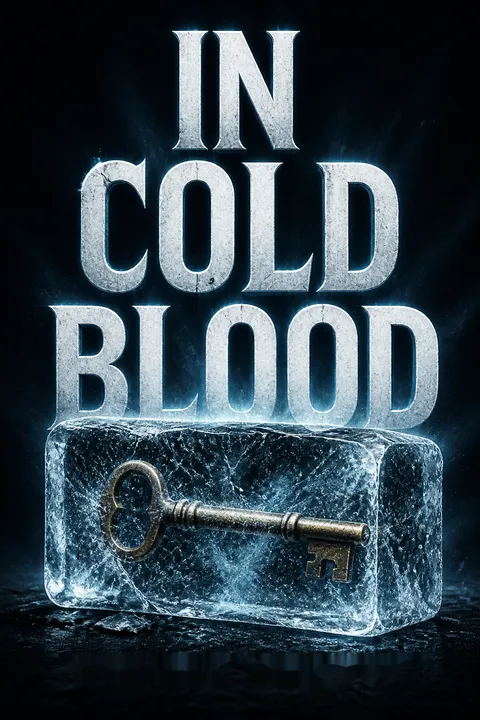


Key Takeaways
One senseless crime made a Kansas town doubt the safety of its neighbors.
Routine before rupture. Holcomb, a small farming community on the western Kansas plains, is introduced through its school, railway, farms, and familiar routines. Herbert Clutter is a prosperous rancher and civic leader; his wife, Bonnie, and their children Nancy and Kenyon are preparing for ordinary family milestones. On the night of November 14, 1959, Dick Hickock and Perry Smith enter the family home expecting to find a safe. By morning, all four Clutters are dead.
A wider shock. The opening establishes a stark contrast between everyday life and sudden violence. The crime is not presented as the culmination of a feud or a long investigation. Its apparent randomness is precisely what makes it frightening: a place that seemed remote from danger becomes the center of a national case.
What's striking is how the setting makes safety feel like a social agreement rather than a physical fact. Holcomb's trust is built from daily familiarity, not locks or security systems, so the crime damages more than one household. The opening also resists the usual true-crime promise that a mystery will reveal a hidden order. Here, the absence of an adequate motive is part of the horror. That framing is powerful, though it can make a community seem more uniformly trusting than any real town would be.
Use documentary detail to make a crime vivid, but not automatically certain.
Scenes and testimony. Capote moves from the Clutters' last day to the killers' preparations, then to the investigation, trial, and imprisonment. The narrative draws on interviews, witness accounts, police work, and courtroom testimony, while reconstructing private scenes and thoughts to carry the reader through events. Small details, such as Nancy's diary entry, the cut telephone wires, or the items the killers buy, make the story feel immediate.
A crafted record. This method gives a sprawling case the momentum of a novel without abandoning its factual subject. But intimacy and proof are not the same thing. Some interior moments are presented through reported recollection or reconstruction, while important details, including exactly who fired particular shots, remain disputed.
The book demonstrates a central tension in narrative nonfiction: scene-making can help readers grasp human stakes, but it also gives the writer unusual authority over what an absent person thought. A vivid scene may feel more certain than the evidence behind it. That does not erase the work's documentary force; it gives readers a useful discipline. Separate established facts, attributed accounts, and interpretive reconstruction. The distinction matters especially when a story invites judgments about motive, character, or mental state.
Make the dead visible as lives, not merely evidence.
Four distinct lives. Herb Clutter is disciplined, ambitious, and generous to employees, though his strict personal standards shape family life. Bonnie struggles with long periods of depression and isolation, even as she hopes a medical explanation may bring relief. Nancy is a talented, busy teenager who cooks, sews, plays music, and helps younger girls; she is also negotiating her first serious romance. Kenyon is a quiet, inventive boy absorbed in carpentry, machinery, and the outdoors.
Loss made concrete. Capote gives readers their plans and habits before describing their deaths. Nancy's cherry-pie lesson, Kenyon's cedar chest for his sister, and Herb's plans for the farm are not clues to a mystery. They are evidence of lives underway, which the crime abruptly interrupts.
What's striking is that characterization changes the moral scale of the crime. The victims are not made important by their deaths; the narrative shows they mattered before them. This counters a common problem in crime coverage, where victims become a tally or a plot device while perpetrators receive the psychological depth. At the same time, the household is not idealized as flawless. Its disagreements, illness, and constraints make the family more recognizable, and therefore harder to reduce to symbols.
Explain a perpetrator's history without turning explanation into excuse.
Different wounds, shared harm. Perry Smith's childhood involved family instability, separation, institutional mistreatment, little schooling, and repeated conflict with authority. His injured legs, artistic ambitions, and longing for friendship sit alongside anger, theft, and a violent temper. Dick Hickock grew up in a poor but supportive family, excelled in sports, suffered a serious car accident, and later fell into gambling, fraud, and repeated criminal behavior. He also concealed sexual behavior he knew was wrong.
Context has limits. Psychiatric evaluations describe serious emotional abnormalities in both men, particularly Perry's poorly controlled rage and detachment. Yet the book does not supply one simple origin story for the murders. Their backgrounds help explain vulnerabilities and choices; they do not establish that violence was inevitable or remove responsibility for what they did.
Developmental psychology distinguishes a risk factor from a sufficient cause. Early abuse, instability, and injury can shape later behavior, but they do not predict a single outcome for every person exposed to them. That distinction supports the book's strongest balance: the men are intelligible without becoming innocent. The account also warns against treating biography as a complete diagnosis. A compelling life history can explain how someone sees the world, but it cannot by itself prove why a particular act occurred.
Follow evidence through dead ends instead of forcing a satisfying theory.
A case without a map. Investigator Alvin Dewey begins with competing explanations: perhaps one killer, perhaps two; perhaps a grudge, perhaps robbery. Suspects include a boyfriend, men with old disputes, and a local farmer whose rope knots resemble those used on the victims. None provides a reliable answer. The killers have removed the shotgun shells and left few useful traces.
Facts accumulate. A former River Valley Farm employee, Floyd Wells, eventually tells authorities that Hickock had discussed robbing the Clutters after hearing Wells's mistaken claim that they kept money in a safe. Investigators connect the suspects to matching boot prints, the missing radio and binoculars, the shotgun, and buried shells, cord, and tape. Confessions add detail, though the men's accounts conflict over who shot whom.
The investigation illustrates why disciplined uncertainty is a strength, not a weakness. Dewey develops theories, but the case advances when physical evidence and independently checkable details constrain them. This resembles good scientific reasoning: hypotheses guide attention, while evidence decides which survive. The false leads also show how easily a plausible story can dominate a search. Even after the men confess, discrepancies remain, reminding readers that a solved case does not necessarily settle every factual question.
When violence lands nearby, fear makes ordinary neighbors look like threats.
Trust collapses locally. Before the murders, Holcomb residents rarely felt a need to lock their doors. Afterward, many stay awake with lights on, buy locks, and wonder whether the killer lives nearby. Rumors assign blame to neighbors, former employees, and imagined conspirators. Even the prosperous Clutters' standing in the community intensifies the shock: if a respected family could be attacked, people ask who could be safe.
Fear changes plans. Some residents leave the area. The Ashidas, a well-liked Japanese American farming family, decide to move to Nebraska; Mrs. Ashida says the crime made something feel finished for her. Others avoid discussing the case because speculation keeps fear alive. The violence damages the community through suspicion and displacement, not only through the deaths themselves.
What's striking is how quickly uncertainty becomes social evidence. With no known attacker, neighbors interpret one another through rumor, which can turn ordinary differences into grounds for suspicion. This is a familiar group response to threat: people seek a visible culprit because randomness is difficult to tolerate. Yet the town's fear is not simply irrational. The killer did come from outside the immediate circle, and residents had little information. The challenge is to acknowledge danger without letting conjecture become a substitute for evidence.
A mistaken safe and wounded pride helped turn robbery into four murders.
A plan built on error. Wells had told Hickock that Clutter owned a safe, although he was wrong. Hickock recruits Smith for a robbery, and the pair prepare weapons, cord, tape, and gloves. On arriving at the farm, they find no safe and little cash. Smith briefly wants to abandon the plan, but Hickock's challenge to his courage helps pull him back in.
Choice compounds choice. The intruders bind the family while searching the house. They take roughly forty to fifty dollars, a radio, and binoculars. The robbery produces no fortune, but the effort to control the victims escalates into murder. The book makes clear that a false premise helped launch the crime, while the perpetrators' repeated decisions, including their choice to silence witnesses, made its outcome catastrophic.
This sequence is a sharp study of escalation. A plan that depends on imagined wealth meets reality, but the men do not simply stop; sunk costs, shame, and the desire to preserve a tough self-image narrow their options. Decision research often describes this pattern as escalation of commitment, when people invest further in a failing course rather than admit error. That model helps illuminate the sequence, but it should not soften the central fact: the murderers retain agency at every point where they choose to use force.
A verdict established guilt, but left sanity and justice contested.
A narrow legal test. The defense asks for fuller psychiatric evaluation, but Kansas follows the M'Naghten Rule, which focuses on whether a defendant knew the nature of an act and understood that it was wrong. The court restricts expert testimony, limiting complex psychiatric opinions to a yes-or-no answer on that legal question. The jury finds both men guilty of first-degree murder and sentences them to death after about forty minutes of deliberation.
Years of appeals. The convictions survive challenges over the trial, legal representation, venue, and evidence. Hickock and Smith remain on Death Row for years before being executed in 1965. The trial resolves legal guilt and punishment, but it does not resolve the broader debate raised by the psychiatric testimony: how severe mental disturbance should affect responsibility, or whether the state should take a life in response.
The courtroom exposes a mismatch between legal categories and human complexity. A rule designed to draw a usable boundary can flatten gradations in judgment, impulse control, and illness. That does not mean a diagnosis automatically absolves someone, or that courts can function without standards. It means the standard itself carries moral choices about which kinds of evidence count. The book also places vengeance and public protection beside due process, showing how justice requires more than a verdict, even when the facts of guilt are strong.
Susan's adulthood carried the plans she and Nancy never got to live.
A future interrupted. Susan Kidwell, Nancy's closest friend, had planned to attend university with her and share a room. After the murders, she and Bobby Rupp struggle through grief, silence, and memories tied to the Clutter home. The family farm is eventually sold, its possessions auctioned, and Nancy's beloved horse Babe goes to another owner. These practical endings make the loss visible in the landscape as well as in memory.
No final repair. Years later, Dewey meets Susan at the Clutter family graves. She is studying art at university and says she is happy, but their shared plans still return to her at moments of joy. The case has ended, and the survivors have lives beyond it. Neither fact restores the future Nancy and Susan once imagined.
The ending resists the tidy emotional closure that true-crime narratives can imply. Solving a murder answers questions about perpetrators, but it cannot return a friend, a sibling, or a planned life. Susan's happiness and her grief coexist, which is more psychologically credible than a simple recovery arc. The scene also shifts attention away from the state's final punishment and toward the people who must continue living. Their unfinished plans become a quieter measure of the crime's lasting cost.
Analysis
In Cold Blood works through a double movement. It makes a remote crime intimate by reconstructing the ordinary routines of the Clutter family, then expands that intimacy into an account of a town, a police investigation, a trial, and a prison system. Suspense comes not only from asking who committed the murders, but from watching people interpret incomplete evidence while the reader sees the killers' preparations. That structure creates dramatic irony and keeps the case from becoming a simple puzzle.
The book's central achievement is its refusal to make either side emotionally convenient. The Clutters are rendered as particular people rather than exemplary victims, while Smith and Hickock receive histories that are painful and revealing without being treated as exonerations. This distinction matters: explanation can deepen moral judgment, but it cannot replace it. The book also shows how public fear feeds on uncertainty, converting an unsolved crime into rumors, locked doors, and departures from Holcomb.
Its most productive tension lies between documentary authority and psychological reconstruction. The narrative offers close access to private thoughts, yet its own account preserves uncertainty about key events, including who fired particular shots. Readers are therefore asked to trust the reporting while noticing that different kinds of knowledge have different strengths. Physical evidence can connect boots, shells, and weapons to a crime; testimony can clarify actions; neither necessarily reveals an inner motive with certainty.
The trial sharpens that tension. The M'Naghten Rule gives the court a narrow threshold for responsibility, while psychiatric testimony describes more complicated patterns of illness and impulse. The result is legally decisive but morally unfinished. The book's final emphasis on Susan Kidwell and the altered farm suggests that the consequences of violence exceed what police and courts can close. Its deepest subject is not merely murder, but the collision between human lives, imperfect explanations, and institutions that must act despite what remains unknown.
Review Summary
In Cold Blood is a groundbreaking true crime novel that meticulously details the 1959 murders of the Clutter family in Kansas. Capote's masterful prose and extensive research create a compelling narrative that explores the lives of both victims and killers. Readers praise the book's suspenseful storytelling, vivid characterizations, and profound insights into human nature. While some find the detailed descriptions and slow pacing challenging, most consider it a classic of the genre, appreciating Capote's objective approach and his ability to humanize all involved parties.
People Also Read




Glossary
M'Naghten Rule
Legal test for insanityA legal standard for determining whether a defendant is criminally responsible because of mental illness. As described in the book, the key question is whether the accused understood the nature of the act and knew it was wrong. The rule gives the court a narrow test, distinct from broader psychiatric judgments about personality, impulse control, or mental disorder.
The Corner
Prison slang for executionA term used by inmates at the Kansas State Penitentiary for the gallows and the place of execution. To be sent to The Corner means to face hanging. The phrase turns the prison's execution chamber into a starkly familiar place-name, reflecting how people inside the institution speak about the threat of death.
Murder Without Apparent Motive
Study of seemingly motiveless killingThe title of a psychiatric study discussed in the book about murderers whose violence appears senseless despite their ability to think and act coherently. The study describes histories that may include emotional deprivation, unstable control over aggression, and altered states during violence. It offers a psychological account of such crimes, not a legal verdict or a claim that every violent person fits the same pattern.
FAQ
What's In Cold Blood about?
- True Crime Narrative: In Cold Blood by Truman Capote is a non-fiction novel that recounts the 1959 murder of the Clutter family in Holcomb, Kansas. It provides a detailed exploration of the lives of both the victims and the murderers, Richard "Dick" Hickock and Perry Smith.
- Psychological Exploration: Capote delves into the psychological backgrounds of the killers and the victims, offering insights into their motivations and the societal factors that contributed to the crime.
- Impact on Community: The book examines the aftermath of the murders and their impact on the small town of Holcomb, capturing the emotional and psychological toll on both the victims' families and the community.
Why should I read In Cold Blood?
- Literary Significance: Capote's work is a pioneering piece in the true crime genre, blending factual reporting with literary techniques to create a compelling narrative.
- Psychological Depth: The book offers profound insights into the human psyche, exploring themes of alienation, violence, and identity, making it a compelling psychological study.
- Cultural Reflection: It serves as a reflection of American society in the late 1950s, addressing issues such as class, mental health, and the justice system, prompting readers to consider broader societal implications.
What are the key takeaways of In Cold Blood?
- Nature of Evil: The book challenges readers to contemplate the nature of evil and what drives individuals to commit heinous acts, presenting the killers as products of their environments.
- Consequences of Violence: Capote illustrates the far-reaching consequences of violence, affecting not just the victims but also the perpetrators and their families.
- Justice and Morality: The narrative raises questions about justice, morality, and the death penalty, inviting readers to reflect on the complexities of punishment and moral implications.
What are the best quotes from In Cold Blood and what do they mean?
- "The last to see them alive.": This phrase underscores the tragic finality of the Clutter family's life before their murder, highlighting the randomness of violence and the fragility of life.
- "It is almost impossible for a man who enjoys freedom with all its prerogatives to realize what it means to be deprived of that freedom.": Reflects the theme of freedom versus confinement, highlighting the psychological struggles of both the murderers and the victims.
- "A race of men that don't fit in.": Speaks to the alienation felt by both Perry Smith and Dick Hickock, suggesting their actions stem from a deep-seated sense of not belonging.
Who are the main characters in In Cold Blood?
- Herbert Clutter: The patriarch of the Clutter family, known for his strong work ethic and community involvement, representing the ideal American family.
- Perry Smith: One of the murderers, a complex character shaped by a troubled childhood and a series of failures, with a deep psychological profile explored by Capote.
- Dick Hickock: The other murderer, characterized by his charm and manipulative nature, whose relationship with Perry is central to the story.
How does Truman Capote develop the theme of violence in In Cold Blood?
- Detailed Descriptions: Capote uses vivid imagery and detailed accounts of the crime to convey the brutality of the murders, immersing readers in the horror of the events.
- Psychological Insights: The author explores the backgrounds of the killers, humanizing them and complicating the narrative of good versus evil.
- Community Impact: Capote illustrates how the violence reverberated throughout Holcomb, affecting the community's sense of safety and trust.
What writing style does Capote use in In Cold Blood?
- Non-Fiction Novel: Capote employs a unique blend of journalism and fiction, often referred to as a "non-fiction novel," creating a narrative that is both factual and emotionally engaging.
- Character-Driven Narrative: The book is structured around the lives of its characters, with in-depth profiles adding depth and complexity to the story.
- Descriptive Language: Capote's use of rich, descriptive language paints a vivid picture of the Kansas landscape and the lives of the characters.
How does In Cold Blood address the concept of the American Dream?
- Ideal vs. Reality: The Clutter family embodies the American Dream, representing hard work and success, while their murder contrasts with this ideal.
- Disillusionment: The killers, particularly Perry, showcase the darker side of the American Dream, highlighting societal failures leading to despair and violence.
- Societal Critique: Capote critiques the notion of the American Dream as a universal ideal, suggesting it can be an unattainable illusion for some.
What role does the setting play in In Cold Blood?
- Isolation of Holcomb: The small-town setting contributes to the sense of isolation felt by both the Clutter family and the murderers, amplifying the tragedy of the crime.
- Symbolism of the Prairie: The vast, open landscape symbolizes both freedom and vulnerability, reflecting the themes of the book.
- Cultural Context: The setting provides a cultural backdrop that informs the characters' actions and motivations, capturing the essence of rural American life in the 1950s.
How does Capote portray the relationship between Perry Smith and Dick Hickock?
- Complex Dynamics: Capote explores the intricate relationship between the two men, highlighting their contrasting personalities and motivations.
- Shared Dreams and Despair: Both men are portrayed as dreamers, yet their dreams are ultimately unattainable, reflecting their shared sense of alienation.
- Mutual Dependence: Despite their differences, Perry and Dick rely on each other for validation and support, leading to their downfall.
What is the significance of the Clutter family's murder in In Cold Blood?
- Catalyst for Change: The murder serves as a turning point for the community of Holcomb, shattering its sense of safety and trust.
- Reflection of Society: The Clutter family's murder reflects broader societal issues, including class disparity and mental health.
- Legacy of Loss: The impact of the murders extends beyond the immediate tragedy, leaving a lasting legacy of grief and fear in the community.
How does In Cold Blood address the theme of mental illness?
- Psychological Profiles: Capote explores the mental health issues faced by both Hickock and Smith, suggesting their actions are influenced by deeper psychological problems.
- Societal Stigma: The book highlights the stigma surrounding mental illness, particularly in the context of criminal behavior.
- Understanding Violence: By addressing mental illness, Capote seeks to understand the motivations behind violent acts, encouraging readers to consider the complexities of human behavior.
Download PDF
Download EPUB
.epub digital book format is ideal for reading ebooks on phones, tablets, and e-readers.








