

Key Takeaways
See the oil murders as a system of theft, not isolated crimes.
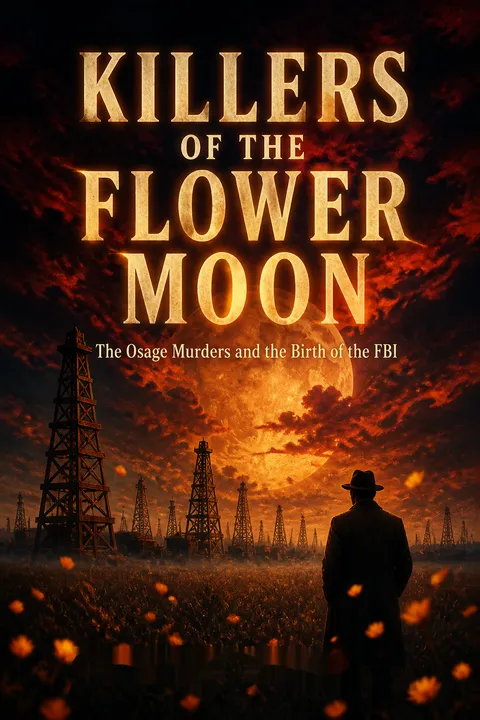
A family became a target. In 1921, Osage woman Mollie Burkhart’s sister Anna vanished, then was found shot near a creek. Her mother and other relatives died soon after, some under suspicious circumstances. Across Osage County, wealthy tribal members were shot, poisoned, or killed with explosives. The killings became known as the Reign of Terror, a period of murders aimed largely at Osage people whose oil wealth made them targets. The federal investigation officially counted at least twenty-four Osage victims, but that figure captured only the cases it could prove. In 1923 alone, the tribe received more than $30 million in oil income, an immense fortune that drew prospectors, local power brokers, and predators.
The book’s central move is to connect intimate grief to an economic structure. Anna’s murder is not merely a puzzle with a clever solution; it exposes a society in which wealth, race, and control of legal institutions converged. This resembles the broader resource-curse pattern, where valuable natural assets can intensify political competition and predation rather than produce shared security. The comparison is useful, but the Osage case is more specific than a generic boom-and-bust story: the tribe owned the mineral rights, while outsiders controlled many of the legal and financial mechanisms surrounding them.
A people can lose land aboveground and still defend wealth below it.
The Osage negotiated a safeguard. After repeated forced removals, the tribe purchased a rocky Oklahoma territory that settlers considered nearly worthless. When federal allotment divided tribal land into individual parcels, Osage leaders negotiated a crucial exception: the tribe retained the oil, gas, and other minerals beneath the surface. Each enrolled member received a headright, a share in the tribal mineral trust that could be inherited but not sold. This arrangement became an underground reservation, a mineral estate the Osage kept even as surface land passed to others. Oil discoveries transformed that legal provision into extraordinary wealth. The strategy did not prevent exploitation, but it preserved a claim that settlers and lawmakers could not simply erase through ordinary land sales.
This episode highlights sovereignty as a matter of legal design, not just geographic possession. The Osage agreement demonstrates how a community can use the rules imposed upon it to preserve a critical resource. Yet legal protection is only as strong as the institutions that enforce it. The mineral trust preserved ownership on paper, while guardianship rules and financial restrictions left many Osage with little practical control over their income. That distinction between nominal rights and usable rights remains important in debates over Indigenous sovereignty and resource governance.
A guardian appointed to protect can become a gatekeeper to exploitation.
Control wore a benevolent face. Federal officials classified many Osage, especially full-blooded members, as unable to manage their finances. The government appointed guardians, generally prominent white residents, to approve spending from their wards’ funds. Some Osage could not freely access money they had earned, even for family needs. Under a related restriction, guardians also controlled how much a person could withdraw. A government study estimated that guardians had stolen at least $8 million from restricted Osage accounts before 1925. The system offered opportunities for inflated purchases, kickbacks, and outright theft. It also placed financial power in the hands of people who might have business ties, political influence, or personal stakes in Osage estates.
Guardianship is a classic principal-agent problem: one party is entrusted to act for another, but the agent may have more information, power, and incentives than the person supposedly being protected. Here, racial prejudice helped justify the arrangement, while local patronage networks weakened oversight. The deeper lesson is that benevolent language does not establish accountability. Any protective system needs transparent decisions, independent review, and a meaningful way for the protected person to challenge the protector. Without those checks, care can become a socially acceptable vocabulary for extraction.
Trace who inherits, and seemingly random killings acquire a chilling logic.
The family deaths formed a pattern. Anna had no children and left most of her estate to her mother, Lizzie. When Lizzie died, her headright passed to her surviving daughters, including Mollie and Rita. Rita’s will meant that if she and her husband Bill died together, much of her wealth would pass to Mollie. Investigators eventually concluded that the sequence of deaths was designed to concentrate family headrights in Mollie’s hands, where her husband Ernest could access the money and his uncle William Hale could exert influence. Anna was shot, Lizzie likely poisoned, and Rita and Bill died in a house bombing. The pattern did not by itself prove every murder, but it gave investigators a motive that scattered crime reports had concealed.
Inheritance records can function like a map of incentives. In this case, probate documents revealed an organizing logic that witnesses and crime scenes had failed to show. That method has wider value: investigators can study not only who had means and opportunity, but also how a death changes control of assets. Still, a financial pattern is a hypothesis generator, not proof of murder. Treating it as conclusive risks turning suspicion into a story that fits too neatly, especially when family relationships and wills are complicated.
In a captured town, missing evidence and false leads protect the powerful.
The investigation was sabotaged. Early officials failed to preserve basic evidence from Anna’s crime scene. Her house was not searched promptly, tire marks were not recorded, and the bullet that should have remained in her skull disappeared during an autopsy. Witnesses feared speaking because informants and investigators could be threatened or bought. Private detectives chased rumors, while some helped manufacture them. One supposed confession blamed a woman named Rose Osage, but federal agents later learned that a stranger had composed the statement and pressured a witness to sign it. Reports also leaked to local suspects. In a county where powerful residents influenced lawmen, judges, and prosecutors, obstruction was not a side problem. It was part of the machinery that kept the murders unresolved.
The case shows why investigative failure cannot always be explained by incompetence alone. In a captured institution, evidence may disappear because people expect no consequence for destroying it, while false leads can consume scarce attention and redirect blame. Modern organizational theory calls this a failure of independent oversight: institutions become answerable to the people they should scrutinize. The account also warns against assuming every inconsistency proves conspiracy. Careful investigators must distinguish deliberate sabotage from ordinary error, a difficult task when both can produce the same empty file.
Build a case from corroborated facts, not the most satisfying story.
Tom White tested each claim. When the Bureau of Investigation assigned him to the case in 1925, he inherited years of rumors, dubious informants, and weakly documented leads. He organized undercover agents, including John Wren, a Ute investigator who could build trust with Osage witnesses. White checked suspects’ alibis against independent testimony and separated what agents knew from what they merely heard. This process exposed false accusations and helped identify Bryan Burkhart’s lie about leaving Anna safely at home. It also caught a trap: Burt Lawson confessed to bombing the Smith home, but his account proved fabricated. Ernest Burkhart and killer John Ramsey supplied evidence that could be checked against other details, helping prosecutors secure convictions.
White’s strength is epistemic discipline: he treats a plausible narrative as a question to test, not a conclusion to defend. That resembles the logic of scientific replication, where a result gains credibility when independent methods converge. The failed Lawson confession is a useful reminder that even a detailed admission may be false, especially when a prisoner expects leniency. Corroboration is not merely paperwork. It is protection against confirmation bias, institutional pressure, and the seductive certainty that often attaches to a neatly solved mystery.
A guilty verdict can still reveal how little justice the system delivers.
The courtroom remained unequal. Hale and Ramsey were ultimately convicted of Henry Roan’s murder and sentenced to life in prison. An earlier jury had deadlocked, and the successful verdict came from jurors willing to convict but unwilling to impose death. Ernest Burkhart pleaded guilty to helping arrange the bombing that killed Rita Smith and others, then briefly recanted under pressure from Hale’s allies before admitting the truth again. Mollie sat through trials that exposed her husband’s betrayal and her family’s deaths. Hale and Ernest were eventually released or pardoned, despite Osage protests. Convictions mattered, but they could not restore the dead, repair Mollie’s family, or erase the years when local justice failed.
Legal accountability is real, but it is not identical to justice. The verdicts broke a powerful local network and publicly affirmed that Osage victims mattered under law. Yet the all-white jury system, the reluctance to impose the harshest sentence, and the later releases show how uneven that affirmation remained. This distinction is central to transitional justice, the effort to address serious wrongdoing after entrenched systems have protected it. A conviction can mark a turning point without settling what a community is owed.
Professional policing can solve crimes while polishing its own mythology.
The Bureau needed a success story. J. Edgar Hoover put White in charge partly because earlier Bureau efforts had failed and the agency faced damaging criticism. Before White’s assignment, the Bureau had released the outlaw Blackie Thompson to work undercover. Thompson escaped, robbed a bank, and killed a police officer. After the Osage investigation produced arrests, Hoover presented the case as proof of the Bureau’s modern methods, emphasizing fingerprints, standardized records, and trained agents while obscuring the earlier blunders. The investigation did help demonstrate the value of a national force insulated from local politics. But Hoover’s public account gave the institution credit and control over the narrative, while the Osage Tribal Council was among the few bodies to formally recognize White’s team by name.
Institutions often learn from failure while simultaneously rewriting it. Professional standards, centralized records, and scientific techniques can reduce local corruption, but a polished origin story can conceal whom an institution failed and what its reforms leave untouched. The case therefore resists a simple celebration of federal power. The Bureau’s intervention helped bring specific killers to trial, yet its leaders shaped the public memory to strengthen their own authority. Institutional competence and institutional self-interest can coexist.
Treat the official 24 murders as a floor, not the full toll.
The archive records only part. Research into guardianship logs, family accounts, and scattered Bureau files revealed suspicious deaths outside the famous prosecutions. Mary Lewis was murdered for her headright in 1918, before the conventional start of the Reign of Terror. Other cases involved suspected poisonings, unexplained deaths, and guardians who gained control of estates. One Osage researcher counted 605 deaths among allotted members from 1907 to 1923, a rate higher than the national white death rate of the period, though those deaths were not all proven murders. Descendants still investigate relatives whose deaths were never properly examined. At the same time, Osage dances, tribal government, and family memory affirm a living community, not merely a record of victimization.
An archive is not a neutral window onto the past. It reflects what officials chose to investigate, what witnesses dared to report, and what institutions preserved. Missing documentation cannot establish a murder by itself, so the expanded death toll must remain an estimate rather than a verdict. But uncertainty should not be mistaken for evidence that nothing happened. The Osage descendants’ research and cultural practices challenge a familiar historical ending in which a federal case closes and the affected community disappears from view.
Analysis
The book’s three-part structure moves from Mollie Burkhart’s intimate losses, to Tom White’s investigation, to the reporter’s return to Osage Country and the unresolved record. That progression revises the familiar crime story. A mystery usually narrows toward a culprit and a verdict. Here, the verdict widens the question: what systems made the crimes profitable, concealed them, and limited which deaths counted as crimes?
The central mechanism was not simply greed. It was greed organized through law. The Osage had secured a legal claim to their mineral wealth, but federal guardianship and spending restrictions weakened their control over it. Local officials and business figures could profit from estates while limiting the victims’ ability to protect themselves. The murders were therefore enabled by a collision between racial paternalism, private enrichment, and institutional capture. The family inheritance pattern gives the case its investigative spine, while the guardianship structure explains why the plot could operate within ordinary civic life.
Tom White’s work supplies a second argument: sound investigation depends on disciplined doubt. He inherits many leads but cannot treat a persuasive confession, a community rumor, or even a government report as self-authenticating. His methods create a stronger case, yet the investigation remains constrained by missing evidence, fearful witnesses, and the Bureau’s own earlier failures. Hoover’s public account then turns a partial success into an institutional origin story. The book does not deny the value of professional policing; it shows how reform and self-promotion can develop together.
The final chronicle refuses closure. Newly recovered stories suggest murders before and after the celebrated prosecutions, but the evidence is uneven and cannot support certainty in every case. That restraint matters. It prevents the book from replacing official erasure with an equally simplistic totalizing conspiracy. Its strongest conclusion is more demanding: the proven crimes were only the visible portion of a larger system, and descendants continue to bear the consequences of the parts history cannot confidently reconstruct. The Osage are not just subjects of a past tragedy. They are historians, political actors, and a living nation reclaiming their story.
Review Summary
Killers of the Flower Moon is a gripping true crime narrative about the murders of wealthy Osage Indians in 1920s Oklahoma. Readers praise Grann's meticulous research, compelling storytelling, and ability to shed light on a forgotten historical injustice. The book is lauded for its exploration of systemic racism, government corruption, and the early days of the FBI. While some found it slightly repetitive, most reviewers consider it a powerful, eye-opening read that combines history and true crime elements effectively.
People Also Read







Glossary
headright
Share in mineral incomeA headright is an individual share in the Osage tribal mineral trust, which distributed income from oil and other underground resources. The 1906 allotment agreement reserved those minerals to the Osage Tribe. Headrights could be inherited, not freely bought and sold, making inheritance a major source of wealth and a powerful motive in the murders.
guardianship
Court-controlled financial managementIn Osage County, guardianship was a government-supervised arrangement in which a court-appointed guardian managed an Osage person’s money and often had to approve spending. Officials disproportionately classified full-blooded Osage as unable to manage their own affairs. Although presented as protection, the system restricted autonomy and enabled guardians and connected local figures to exploit estates.
restricted
Limited access to fundsAn Osage person classified as restricted could not freely withdraw or spend income from a headright. Federal rules limited access to funds and gave guardians substantial control over expenditures. Restrictions were justified as protection, but they could prevent people from meeting personal and family needs while placing financial decisions in the hands of outsiders.
underground reservation
Osage-held mineral estateThe underground reservation refers to the oil, gas, and other minerals beneath Osage land that the tribe preserved under the 1906 allotment agreement. Although surface land was divided and opened to outside ownership, the mineral estate remained under tribal control. The arrangement protected a vital source of Osage wealth, but it also drew intense outside pressure and criminal exploitation.
Wah’Kon-Tah
Osage sacred life forceWah’Kon-Tah is an Osage understanding of a sacred, pervasive life force associated with the natural and spiritual world. In the book, it helps explain the beliefs and ceremonies through which Mollie’s family interpreted birth, death, grief, and the relationship between people and the world around them. It is presented as an Osage concept, not reduced to a simple equivalent in another religion.
Reign of Terror
Era of Osage-targeted murdersThe Reign of Terror is the name associated with the wave of murders and suspicious deaths of Osage people in Oklahoma during the early twentieth century, especially the 1920s. The commonly cited official count includes at least twenty-four victims, but archival discoveries and family research indicate that many deaths were never fully investigated or classified as homicides.
FAQ
What is Killers of the Flower Moon: The Osage Murders and the Birth of the FBI about?
- True Crime Narrative: The book chronicles the systematic murders of wealthy Osage Native Americans in the 1920s, driven by greed for their oil-rich land.
- FBI's Early Days: It details the FBI's early, often flawed, investigation into these crimes, highlighting the challenges of law enforcement in a corrupt environment.
- Focus on Conspiracy: The narrative centers on a complex conspiracy involving powerful local figures, revealing the depths of human depravity and the struggle for justice.
Why should I read Killers of the Flower Moon: The Osage Murders and the Birth of the FBI?
- Uncover Hidden History: The book reveals a largely forgotten chapter of American history, exposing the brutal exploitation of Native Americans.
- Compelling True Crime: It offers a gripping true crime narrative with complex characters, unexpected twists, and a deep exploration of human nature.
- Explore Systemic Issues: It delves into themes of greed, power, corruption, and the struggle for justice, making it relevant to contemporary issues.
What is the background of Killers of the Flower Moon: The Osage Murders and the Birth of the FBI?
- Historical Context: The story is set in the 1920s, a period of rapid social and economic change, including the oil boom and the rise of organized crime.
- Cultural Setting: It explores the unique cultural and historical context of the Osage Nation, highlighting their traditions and the impact of sudden wealth.
- Political Landscape: The book reveals the political corruption and systemic racism that allowed the murders to occur and hinder the initial investigations.
What are the most memorable quotes in Killers of the Flower Moon: The Osage Murders and the Birth of the FBI?
- "We've got to stop this bloody business.": This quote from William Hale encapsulates his public persona as a law-abiding citizen while masking his role as a mastermind of the murders.
- "The Indian, instead of starving to death…enjoys a steady income that turns bankers green with envy.": This quote from the New York weekly Outlook highlights the public's fascination and resentment towards the Osage's sudden wealth.
- "The blood cries out from the ground.": This quote, used by Mary Jo Webb, reflects the enduring pain and injustice experienced by the Osage people, emphasizing the lasting impact of the murders.
What writing style, narrative choices, and literary techniques does David Grann use?
- Investigative Journalism: Grann employs a meticulous, investigative style, piecing together historical records, interviews, and archival materials to construct a detailed narrative.
- Character-Driven Storytelling: He focuses on the complex motivations and inner lives of key figures, such as Mollie Burkhart, William Hale, and Tom White, creating a compelling human drama.
- Foreshadowing and Suspense: Grann uses subtle foreshadowing and narrative misdirection to build suspense, keeping the reader engaged and questioning the true nature of events.
Hidden Details & Subtle Connections
What are some minor details that add significant meaning?
- The Million Dollar Elm: The tree under which oil leases were auctioned symbolizes the source of the Osage's wealth and the greed that fueled the murders, becoming a silent witness to the unfolding tragedy.
- The Missing Bullet: The bullet that disappeared from Anna Brown's skull during the autopsy highlights the corruption and cover-ups that hindered the initial investigation, suggesting a deliberate attempt to conceal the truth.
- The 'Fraid Lights': The electric lights that the Osage began to install around their homes symbolize their growing fear and vulnerability, a desperate attempt to ward off the unseen killers.
What are some subtle foreshadowing and callbacks?
- Minnie's "Wasting Illness": The mysterious illness that killed Mollie's sister Minnie foreshadows the later use of poison as a method of murder, hinting at a pattern of calculated deaths.
- Hale's "Friendship": Hale's repeated claims of friendship with the Osage, particularly with Anna Brown and Henry Roan, are ironic callbacks to his betrayal and role in their deaths.
- The Recurring Pallbearers: Hale's repeated role as a pallbearer at the funerals of his victims underscores his calculated presence and the macabre nature of his involvement in their deaths.
What are some unexpected character connections?
- Hale and the Shoun Brothers: The close relationship between Hale and the Shoun brothers, who were the doctors involved in the autopsies, suggests a network of complicity and raises questions about their role in the murders.
- Mollie and Henry Roan: The revelation of Mollie's previous marriage to Henry Roan adds a layer of complexity to her character and highlights the interconnectedness of the Osage community, making her grief even more profound.
- Kelsie Morrison and the Victims: The fact that Kelsie Morrison, a key informant, was also involved in the murder of Anna Brown reveals the duplicity and moral ambiguity of many characters in the story.
Who are the most significant supporting characters?
- John Wren: As a Ute agent, Wren's unique perspective and ability to connect with the Osage community provide crucial insights and help to build trust, highlighting the importance of cultural understanding in the investigation.
- Kelsie Morrison: As a double agent, Morrison's shifting allegiances and knowledge of the criminal underworld provide valuable information, while also demonstrating the pervasive corruption and moral ambiguity of the time.
- The Shoun Brothers: As doctors, their involvement in the autopsies and their relationship with Hale raise questions about their complicity in the murders, highlighting the corruption within the medical community.
Psychological, Emotional, & Relational Analysis
What are some unspoken motivations of the characters?
- Hale's Need for Control: Beyond financial gain, Hale's actions are driven by a deep-seated need for control and power, reflecting a desire to dominate the Osage community and its resources.
- Ernest's Desire for Approval: Ernest's willingness to participate in the murders stems from a desire for his uncle's approval and a deep-seated insecurity, highlighting his susceptibility to manipulation.
- Mollie's Internal Conflict: Mollie's struggle to reconcile her love for Ernest with the knowledge of his betrayal reveals her internal conflict and the emotional toll of the murders on her.
What psychological complexities do the characters exhibit?
- Hale's Narcissism: Hale exhibits a narcissistic personality, characterized by a grandiose sense of self-importance, a lack of empathy, and a need for admiration, which allows him to justify his heinous actions.
- Ernest's Moral Ambiguity: Ernest's character is marked by moral ambiguity, as he is both a perpetrator and a victim of manipulation, highlighting the complexities of human nature and the capacity for both good and evil.
- Mollie's Stoicism: Mollie's stoicism and quiet strength mask her deep emotional pain and the trauma she endures, revealing her resilience in the face of unimaginable loss.
What are the major emotional turning points?
- Mollie's Discovery of Ernest's Betrayal: The moment Mollie realizes Ernest's involvement in the murders marks a profound emotional turning point, shattering her trust and forcing her to confront the depths of his treachery.
- Ernest's Confession: Ernest's decision to confess is a major emotional turning point, driven by a combination of guilt, fear, and a desire for redemption, highlighting the internal conflict he experiences.
- White's Determination: White's growing determination to solve the case, fueled by the injustice he witnesses, marks an emotional turning point, driving him to overcome the obstacles and bring the perpetrators to justice.
How do relationship dynamics evolve?
- Hale and Ernest's Dynamic: The relationship between Hale and Ernest evolves from one of mentorship to one of manipulation and control, highlighting the destructive power of unchecked authority.
- Mollie and Ernest's Marriage: The marriage between Mollie and Ernest deteriorates from a seemingly loving union to one of betrayal and heartbreak, underscoring the devastating impact of the murders on their relationship.
- White and the Osage: White's relationship with the Osage community evolves from one of suspicion to one of trust and collaboration, highlighting the importance of empathy and understanding in the pursuit of justice.
Interpretation & Debate
Which parts of the story remain ambiguous or open-ended?
- The Full Extent of the Conspiracy: The book leaves open the question of whether all those involved in the murders were ever identified, suggesting that the conspiracy may have been more extensive than what was uncovered.
- The Motives of Minor Characters: The motivations of some minor characters, such as the Shoun brothers and various local officials, remain ambiguous, leaving the reader to question their level of complicity.
- The True Number of Victims: The exact number of Osage victims remains uncertain, highlighting the difficulty of uncovering the full truth and the lasting impact of the murders on the community.
What are some debatable, controversial scenes or moments in Killers of the Flower Moon: The Osage Murders and the Birth of the FBI?
- The FBI's Methods: The book raises questions about the FBI's methods during the investigation, including the use of informants and the potential for coercion, prompting debate about the ethics of law enforcement.
- Ernest's Confession: The circumstances surrounding Ernest Burkhart's confession, including his shifting allegiances and the possibility of manipulation, raise questions about the reliability of his testimony.
- Hale's Portrayal: Hale's portrayal as a complex character, rather than a one-dimensional villain, prompts debate about the nature of evil and the capacity for both good and bad within individuals.
Killers of the Flower Moon: The Osage Murders and the Birth of the FBI Ending Explained: How It Ends & What It Means
- Justice Served, but Scars Remain: The book concludes with the conviction of Hale and Ramsey, but it emphasizes that the legal victory does not erase the trauma and loss experienced by the Osage, highlighting the limitations of the justice system.
- Unresolved Questions: The ending leaves many questions unanswered, including the full extent of the conspiracy and the true number of victims, underscoring the enduring legacy of the murders and the difficulty of achieving complete closure.
- A Call for Remembrance: The book's ending serves as a call for remembrance and a reminder of the importance of acknowledging historical injustices, urging readers to confront the dark chapters of American history and to seek a more just future.
About the Author
Other books by David Grann


Download PDF
Download EPUB
.epub digital book format is ideal for reading ebooks on phones, tablets, and e-readers.








