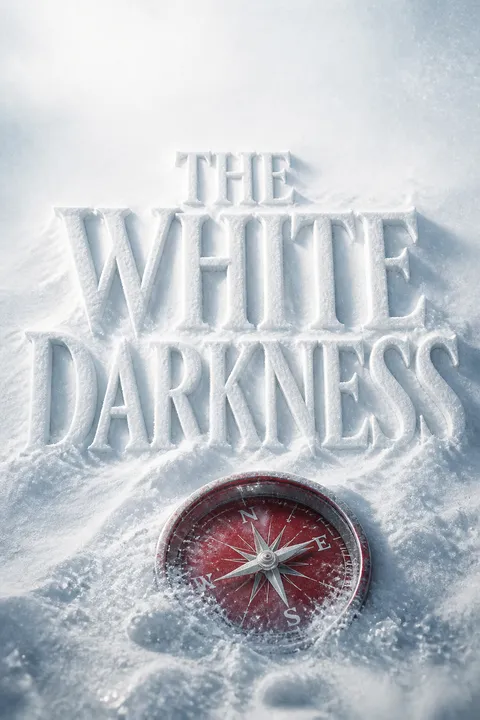


Key Takeaways
The polar hero worth copying was the man who turned back.
Failure changed the objective. On the Nimrod expedition, Ernest Shackleton and three companions came within 97 nautical miles of the South Pole. He chose to retreat because continuing could leave them without enough food to return. Years later, when his ship Endurance was crushed by sea ice, he abandoned the planned crossing and focused on rescuing his crew. All 28 men survived. The expedition failed at its original geographic goal, but succeeded at the more urgent task of getting people home.
Worsley studied the judgment. Henry Worsley revered Shackleton as a model of courage and leadership. The story complicates that admiration: Shackleton's defining achievement was not simply enduring hardship, but changing the mission when survival demanded it.
What's important here is the difference between achievement and responsibility. A leader is often celebrated for reaching a target, while the harder act may be revising the target when the costs change. Shackleton's story offers a useful counterweight to cultures that treat persistence as proof of virtue. It also resists turning leadership into a tidy formula: his courage mattered, but so did his willingness to accept an incomplete victory. The test is not whether a plan survives intact. It is whether people remain more important than the plan.
Know when persistence has become a refusal to read your body.
Willpower has limits. In 2015, Worsley set out alone to cross Antarctica, hauling a 325-pound sled without food caches, dogs, or a sail. After reaching the South Pole and continuing north, he grew profoundly weak, struggled to perform basic camp tasks, and wrote increasingly bleak diary entries. After 71 days and nearly 800 nautical miles, he called for evacuation rather than continue toward his goal.
The ending was not a simple lesson. Worsley was diagnosed with bacterial peritonitis after rescue and died the following day. The account does not establish that his expedition caused the infection. His decision to stop was still a clear recognition that his body could no longer carry him safely onward, even though it could not undo the medical crisis.
The distinction between a sound decision and a favorable outcome matters. People often judge choices by what happens afterward, a distortion known as outcome bias. Worsley's evacuation did not guarantee recovery, but that does not make continuing the wiser choice. The story also questions the idea that willpower is a reliable instrument for judging capacity. Determination can keep effort going while weakening the ability to notice danger. A stopping rule, agreed upon before exhaustion takes hold, can protect judgment when judgment is under strain.
Let ambition negotiate with the people who bear its absence.
A dream occupies shared space. Worsley wanted to explore Antarctica from childhood, but each expedition meant long separations for his wife, Joanna, and their children. His first trans-Antarctic expedition was not a military deployment he had to accept. It was a personal choice, and his son struggled with the difference. Joanna supported him, yet she had expected that his retirement from the Army would give them time to travel and pursue plans together.
Support does not erase the cost. Worsley recognized that his passion could become obsession and that his family had sometimes been left feeling less important. Before his final expedition, he sought Joanna's approval. Her support reflected love and understanding, but the book keeps the tradeoff visible: the explorer's private calling shaped the lives of those waiting at home.
Ambition is often narrated as an individual story, though its costs are distributed across households, friendships, and caregiving arrangements. That makes consent more complicated than a single approving conversation. A person can support a dream and still absorb real losses because of it. The Worsley family's loyalty is not evidence that the cost was trivial; it is part of what made the cost bearable. A more complete account of achievement asks not only what the ambitious person gained, but who carried the absence and whether that burden was honestly shared.
Build morale through shared burdens, not speeches about toughness.
Small rituals held the crew together. While Endurance was trapped in ice, Shackleton set aside much of the ship's usual rank-bound routine. Men shared rations and chores, played games, listened to music, and gathered for slide shows. He stayed visibly involved in ordinary work and tried to keep the group cheerful. The aim was practical: boredom, fear, and resentment could fracture a party already confined in lethal conditions.
Worsley made care visible. As a commander, he shared tasks with soldiers and showed concern for their welfare. In Antarctica, he and his companions took turns breaking trail and agreed to help whoever was struggling. When Adams questioned the route, Worsley heard him out, then made a clear decision. Authority worked best when it combined consultation with responsibility.
Morale in these stories is not decorative optimism. It is part of how a group keeps coordinating under pressure: shared routines reduce isolation, and shared hardship makes leadership credible. Still, cheerfulness can become dangerous if it turns into a demand to hide pain. The strongest version of Shackleton's example is not that every member must appear upbeat, but that the leader notices how morale is shaped by daily treatment. A culture that welcomes honest reports can preserve both cohesion and the information needed to make sound decisions.
Practice against real failure before trusting a beautiful plan.
Preparation exposed weak points. Worsley and his first expedition partners trained by dragging weighted tires and entered a 300-mile race in Canada's Yukon, which they had to finish within eight days. The effort tested their ability to cope with cold, hunger, sleeplessness, and hallucinations. Training on Baffin Island revealed more ordinary but dangerous mistakes: the men moved too slowly, navigated poorly, nearly set their tent on fire, and Worsley suffered snow blindness after leaving off tinted goggles.
The plan needed people, too. Their early expedition lacked clear leadership and sufficient funding. Worsley challenged the disorganization and eventually took command. He also studied maps, routes, equipment, and food carefully. The preparation that mattered was not just building fitness; it was finding errors early enough to change procedures and roles.
A plan can feel convincing because it is detailed, not because it has survived contact with reality. These training episodes resemble stress testing in engineering: expose a system to demanding conditions, observe where it fails, and revise it before the stakes become irreversible. They also show why preparation includes team structure. Equipment and endurance cannot compensate for unclear authority or inadequate supplies. The limit is that rehearsal never reproduces the full environment. Its value lies less in guaranteeing success than in making people quicker to recognize what they do not yet know.
In Antarctica, one hidden crevasse can outweigh a lifetime of courage.
Nature sets the terms. Antarctica is a desert, yet it is also the highest, coldest, and windiest continent. The book describes an interior where temperatures can fall below minus 75 degrees Fahrenheit, and winds can reach 200 miles per hour. Nearly all the continent is covered by ice. The surface hides deep crevasses, while whiteouts can erase the horizon and make direction difficult to judge.
Skill lowers risk, not the stakes. On the Beardmore Glacier, Worsley, Gow, and Adams roped themselves together, used crampons, and tested the surface before stepping forward. A slip could mean a fall into a crevasse; getting wet could rapidly become fatal in the cold. Their satellite phone and daily check-ins offered a route to rescue, but no equipment could make the terrain safe.
The landscape makes a powerful case for distinguishing courage from control. In safety-critical work, the environment is not a test that can always be passed through effort; it is a source of hazards that require layers of protection. The explorers use ropes, navigation tools, and check-ins because skill alone is not a sufficient safeguard. This does not diminish bravery. It locates bravery within reality, where good judgment includes respecting conditions that cannot be negotiated with. The risk remains that repeated survival can make a dangerous system feel more manageable than it is.
Reduce a terrifying distance to today's work, then reassess.
Attention made movement possible. A crossing of hundreds of miles can overwhelm even an experienced explorer. Worsley focused on the immediate stretch ahead, setting daily mileage goals and repeating basic routines: ski, rest, eat, make camp, and check his body. On the team expedition, the men burned an estimated 6,000 to 8,000 calories a day and still lost weight. Worsley also drew on family memories, music, and messages from home to keep the days psychologically navigable.
The small horizon needs a wider check. His daily broadcasts gave listeners a view into the grind, while his diary recorded pain that his public reports sometimes softened. Breaking a huge task into manageable actions can keep a person moving, but it does not answer whether the overall pace remains safe. Progress needs both close attention to the next step and periodic assessment of the whole situation.
Breaking a large task into near-term actions is a useful way to reduce mental overload. It directs attention toward what can be done now, rather than letting an immense endpoint consume all available focus. But narrow focus can also hide accumulating costs. In demanding work, the same concentration that helps someone continue may make it harder to notice deteriorating performance. The Worsley account suggests a two-level discipline: keep the immediate task small, while preserving scheduled moments to inspect the larger pattern, including fatigue, time, and changing conditions.
Solo ambition needs an outside voice with permission to interrupt.
Solitude removed useful friction. Worsley chose his final expedition because he wanted to cross the continent alone. He had no companion beside him to compare judgments, notice his decline, or take some weight from his sled. As his exhaustion deepened, his diary showed distress, and Joanna heard increasing weakness in his broadcasts. Yet friends who followed his progress expected him to manage, and the daily contact system depended on Worsley himself reporting his condition.
Communication is not intervention. A satellite phone made rescue possible, but it did not provide a teammate empowered to challenge his decisions on the ice. Worsley eventually called for evacuation. The account cannot prove that another person would have prevented his death, but it shows a structural danger of solo travel: the person under the greatest strain is also the person responsible for deciding when the strain has become too much.
Expertise can become a closed loop when the expert controls both the work and the decision to stop. The risk is not simply loneliness; it is the loss of independent observation. In many fields, external review exists because people operating under pressure may normalize warning signs or become invested in finishing. A useful safeguard is not someone who overrides every difficult choice, but someone with clear authority to ask hard questions and trigger a pause. The limit is that outside observers also lack the full picture, so interruption protocols must be defined before a crisis.
Analysis
The White Darkness works as adventure narrative, biography, and a critique of how cultures turn endurance into a moral ideal. Its structure invites readers to admire Henry Worsley, then complicates the admiration by showing both the human costs of his calling and the limits of his hero's example. Shackleton's legacy is easy to flatten into a slogan about persistence. The historical record presented here is harder and more useful: he pursued a monumental objective, but when conditions made the return journey doubtful, he abandoned the objective. Worsley learned much from Shackleton's leadership, yet his final solo expedition placed him in a situation where no companion could provide an independent reading of his decline.
The central tension is not simply ambition versus caution. The Antarctic journey gave Worsley purpose, helped raise funds for wounded service members, and drew on capacities he had developed through military service and earlier expeditions. Reducing that pursuit to recklessness would miss the meaning it held for him and the people who supported him. At the same time, the story exposes escalation of commitment: after years of preparation, public attention, and personal identification with a goal, stopping can feel like surrendering more than a route. That pressure can coexist with real competence.
The book is also a study in outcome bias. Worsley's death after rescue can tempt readers to treat his decision to evacuate as either too late or futile. The account supports a more careful conclusion: he recognized that his body could no longer continue, then suffered a grave infection whose precise cause is uncertain. The decision and the outcome are not the same thing. Most importantly, the narrative asks what counts as success. Reaching a pole is measurable; returning to the people who love the explorer is harder to put on a map, but no less consequential.
Review Summary
The White Darkness recounts Henry Worsley's Antarctic expeditions, inspired by Ernest Shackleton. Readers praise Grann's storytelling, the book's stunning photographs, and its exploration of human endurance. Many find Worsley's dedication inspiring, while some question the risks he took. The book is described as short but impactful, offering insights into Antarctic exploration history and the psychology of extreme adventurers. Most reviewers recommend it for those interested in exploration, survival stories, and pushing human limits.
People Also Read


Glossary
White darkness
Disorienting polar whiteoutA phrase used for Antarctic conditions in which snow, sky, and horizon lose contrast, leaving little visual information for navigation. Worsley describes struggling to maintain direction when even the tips of his skis could disappear from view. A compass and GPS could help, but neither removed the danger or disorientation.
Sastrugi
Wind-sculpted snow ridgesParallel ridges and waves formed in snow by persistent winds. In Antarctica, they can rise several feet and stretch across the surface, forcing travelers to climb, weave, or push through them. For a person hauling a sled, sastrugi turn apparently level terrain into a slow, energy-consuming obstacle.
Unsupported
No supplies placed aheadIn polar travel, an unsupported crossing requires explorers to carry their provisions rather than rely on food caches deposited along the route. Worsley's solo attempt also used no dogs or sail. The term does not mean that no logistical safety net existed: he carried a satellite phone and could request an evacuation.
About the Author


Download PDF
Download EPUB
.epub digital book format is ideal for reading ebooks on phones, tablets, and e-readers.








