

Key Takeaways
Use hardship to recover, but do not mistake risk for repair
Action against sorrow. Theodore Roosevelt repeatedly met grief and defeat by seeking harder physical tests. As a sickly child, he trained himself to overcome asthma. After his father died, he plunged into strenuous outdoor life. When his first wife and mother died on the same day, he fled to the Dakota Badlands, where work and danger gave him a way to endure grief. After losing the 1912 presidential election, he again looked for a punishing challenge, this time in South America.
A familiar remedy. Roosevelt’s energy helped him build a life of remarkable achievement, but the Amazon journey began partly as an escape from rejection and political failure. He would learn that sheer will could not make a dangerous plan safe or restore control over what he had lost.
The pattern gives the adventure its emotional engine: the river is both a geographical mystery and Roosevelt’s preferred answer to helplessness. Physical activity can help people regain structure and agency during grief, but it cannot guarantee that grief has been processed. The distinction matters here because Roosevelt treats greater difficulty as a kind of cure. His approach is admirable as persistence, yet costly when personal recovery becomes inseparable from risking other people’s lives. The story invites a useful question: is a demanding goal helping someone face pain, or helping them avoid it?
An unknown river exposed the price of ambition without preparation
A holiday becomes an expedition. Roosevelt originally expected a relatively comfortable South American speaking tour and river trip. In Rio, Brazil’s foreign minister Lauro Müller suggested that he descend an unmapped tributary instead. Roosevelt chose the most difficult option, the Rio da Dúvida, or River of Doubt, whose route and rapids were unknown even to experienced explorer Cândido Rondon.
The plan did not catch up. The expedition had been organized for a different journey. Its enormous motorboats could not be hauled through the forest, its baggage burdened failing pack animals, and its provisions included luxuries that were nearly useless in the jungle. The lightweight canoes selected by outfitter Anthony Fiala were eventually left behind. When the party reached the river, it had twenty-two men and no boats suited to the task.
The expedition shows how a bold decision can outrun the systems meant to support it. In modern project management, this resembles a commitment made before the team has tested assumptions about equipment, staffing, and contingencies. The danger was not simply that the river was unknown. The party had also failed to prepare for the kind of uncertainty it was entering. Still, preparation could not have removed every risk from an unmapped river. The useful distinction is between accepting unavoidable uncertainty and creating avoidable vulnerability through weak planning.
Let exploration serve evidence without treating people as obstacles
Two explorers, different duties. Rondon, a Brazilian military engineer and Positivist, believed in scientific knowledge, progress, and protecting Indigenous people through nonviolence. He had spent decades mapping Brazil’s interior and insisted that his soldiers not retaliate against Indigenous attacks. Roosevelt admired Rondon but approached danger more pragmatically, favoring action and speed when he believed lives were at stake.
Their disagreement became practical. Rondon wanted a painstaking fixed-station survey, stopping repeatedly to measure and map the river. Roosevelt pushed to move faster, especially after his son Kermit had to take the dangerous lead position. Their partnership was not a simple contest between right and wrong: Rondon’s care preserved valuable measurements, while Roosevelt’s urgency responded to dwindling food and mounting danger.
The contrast is compelling because it turns philosophy into decisions made under pressure. Rondon’s refusal to kill could protect Indigenous lives and create the conditions for trust, while Roosevelt’s emphasis on immediate survival could protect an endangered expedition. Neither principle works well as a universal rule detached from context. Scientific precision can become costly when time is short; speed can become reckless when it overrides local knowledge. Their disagreement offers a model for leadership: name the values in conflict, then judge methods by both their immediate consequences and the people who bear them.
The Amazon looked abundant, yet its ecology offered little for free
Green is not a pantry. The rain forest seemed lush, but the men found little game and struggled to catch fish or locate edible plants. Floodwater dispersed fish, while many animals hid through camouflage or stayed high in the canopy. The forest’s plants competed intensely for scarce nutrients and sunlight, and many fruits appeared only when mature or were accessible to particular animals.
Small dangers accumulated. The party faced mosquitoes carrying malaria, biting flies, parasites, snakes, and constant rain. Insects could ruin clothes and supplies, while illness made even routine labor dangerous. Roosevelt’s fever and infected leg revealed the limits of the idea that nature is inherently generous. The forest sustained extraordinary diversity, but it did not distribute food or safety according to human need.
The expedition’s hunger exposes a common error in reading landscapes: visible abundance is mistaken for accessible abundance. Ecology is a network of relationships, not a buffet. A fruit may depend on a specific pollinator, and an animal may be present but effectively invisible to an outsider. This is a powerful corrective to romantic pictures of wilderness as effortless plenty. Yet describing nature as cruel risks assigning human moral categories to ecological processes. The sharper insight is that ecosystems are indifferent to human plans, and survival depends on understanding their relationships rather than admiring their appearance.
The Cinta Larga's restraint mattered as much as the explorers' courage
The unseen neighbors. The expedition entered the territory of the Cinta Larga, an Indigenous people unknown to the outsiders at the time. The explorers found abandoned villages, trails, and signs of recent presence, but rarely saw anyone. The Cinta Larga knew how to move, hunt, and communicate through the forest far more effectively than the visitors could.
An attack was not inevitable. Some Cinta Larga wanted to attack the intruders, while others argued for letting them pass. Their decisions required consensus. The group ultimately did not destroy the expedition, despite having the advantage of concealment and effective weapons. Rondon also left gifts and tried to signal peaceful intent. The explorers’ survival therefore depended partly on choices made by people whose land they were crossing, not only on their own endurance.
This perspective shifts the story away from the familiar explorer’s claim to be alone in an empty wilderness. The Cinta Larga were not scenery or a final obstacle; they were political actors weighing risk on their own terms. Their restraint may have spared the expedition, but it should not be romanticized as consent to intrusion. The encounter also raises a broader issue in exploration narratives: maps may record a place as unknown to outsiders while it is already known, inhabited, and governed by others. That distinction changes what counts as discovery.
On the river, bad logistics turned inconvenience into mortal danger
Every mistake gained weight. The overland journey wore down the pack animals, and crates of food were abandoned along the trail. The party began the river descent with seven locally purchased dugouts, many heavy, leaky, or hard to steer. Rapids forced exhausting portages; accidents and rising water destroyed canoes. After the first major losses, the expedition had to build another boat and reduce its equipment again.
Food set the clock. The remaining provisions could not sustain the group for the full journey at its slow pace. The men had little success hunting or fishing, and even a small delay consumed precious rations. Their predicament was not just a test of courage. It was a chain of practical failures in transport, supplies, and contingency planning, each making the next problem harder to survive.
Adventure stories often make endurance look like the decisive resource, but this journey makes logistics visible as a form of life support. The wrong boat can turn a manageable rapid into a forced portage; a forced portage consumes time, calories, and strength. This is a systems problem because failures compound rather than remain isolated. The lesson is not that risk can be engineered away. It is that robust planning asks what happens when equipment fails, routes take longer, and expected food is unavailable. The expedition repeatedly discovered those questions after its options had narrowed.
When hunger sharpened conflict, justice and survival demanded different answers
The expedition turned inward. After Kermit disobeyed Rondon’s warning and attempted to cross dangerous rapids, his canoe was wrecked. One of the paddlers, Simplicio, drowned. The group mourned him, but the loss also left the survivors with fewer boats and less equipment. Soon after, the camarada Julio de Lima, already suspected of stealing food, shot and killed the respected Paishon during a portage.
Law collided with urgency. Roosevelt wanted Julio tracked down and killed, arguing that a murderer threatened everyone’s survival. Rondon insisted that Brazilian law required a trial, not an execution. Julio escaped into the forest. Their clash reveals how isolation and scarcity can make a moral question feel like a logistical one: whether the group can afford to protect a prisoner, and whether fear justifies abandoning legal restraint.
The killings strip away the comforting idea that good intentions or a shared mission automatically produce solidarity. Hunger and exhaustion make trust fragile, while authority becomes contested when survival seems immediate. Rondon’s insistence on legal process is more than formalism: it resists allowing emergency to become permission for arbitrary violence. Roosevelt’s fear for the group is also real. The tension resembles a recurring problem in crisis ethics: emergency powers may appear efficient, but they can erase protections precisely when people are most vulnerable. The episode leaves no easy answer, only a clear view of the stakes.
Kermit saved his father, but inherited courage could not protect him
A son reverses the roles. Feverish and gravely ill with an infected leg, Roosevelt believed he could not survive a forced trek through the forest. He told Kermit and naturalist George Cherrie to continue without him. Kermit refused. He believed that the expedition could get its canoes through the gorge, and his persistence helped persuade the others to try. Roosevelt understood that his son would not leave his body behind, and chose to keep fighting.
The rescue did not settle everything. Kermit had been brave and capable, but also prone to recklessness and periods of brooding. After his father died in 1919, he struggled with the loss and with his own direction. In 1943, while serving in Alaska during World War II, he died by suicide. The book presents courage as real, but not as a guarantee of inner resilience.
Kermit’s refusal is a striking reversal of a relationship shaped by his father’s discipline and expectations. The same traits Roosevelt admired in his son, including endurance and fearlessness, could also become dangerous when they tipped into recklessness. That is not a diagnosis of Kermit or proof that his father caused his later death. It is a reminder that visible competence can coexist with private vulnerability. Narratives of heroic toughness often reward people for functioning under pressure, while leaving little room to notice the emotional cost of always being the capable one.
Mapping the river made history, while opening the frontier carried a cost
The expedition reached people. After nearly two months on the river, the weakened party encountered rubber tappers who gave them food, boats, and directions. Roosevelt, who had lost fifty-five pounds and was close to death, received treatment for his infected leg. On April 26, the expedition reunited with Lieutenant Pyrineus and his relief party. The river was mapped and later named for Roosevelt, despite his preference for keeping its original name.
Discovery changed the map, not just the story. Roosevelt returned to public acclaim, though some explorers questioned his claims. Rondon’s work also helped extend Brazilian presence into the interior. The telegraph route later became a road that brought settlers and extractive activity into Indigenous territory. Rondon spent his life advocating Indigenous protection, yet the infrastructure he helped create could also enable dispossession.
The ending resists a clean triumph. The expedition’s geographic achievement was genuine, and its survival required skill, cooperation, and extraordinary labor. But mapping and infrastructure are not neutral: they can make remote places legible to governments and markets, with consequences for people already living there. Rondon’s career embodies this contradiction especially sharply. His protective principles mattered, yet the routes he helped establish could serve forces beyond his control. The book’s lasting question is not whether exploration should be celebrated or condemned, but who gains power when a place becomes newly accessible.
Analysis
Candice Millard shapes a historical adventure as three stories at once: Roosevelt’s attempt to answer political defeat with physical danger, Rondon’s effort to map Brazil while protecting Indigenous people, and the expedition’s encounter with an ecosystem that does not yield to human confidence. The narrative gains force from the collision among these stories. Roosevelt seeks speed and achievement; Rondon values careful measurement and restraint; the river imposes its own timetable through rapids, illness, and hunger.
That structure makes the book more than a survival account. It asks what explorers mean when they call a place unknown, and whether scientific discovery can be separated from the expansion of state power. The Cinta Larga are crucial to that question. They remain largely unseen in the expedition’s immediate experience, yet their deliberation and decision not to attack help determine the party’s fate. The landscape is likewise not a passive backdrop. Its ecology shapes the expedition’s choices, defeats its assumptions about plentiful food, and magnifies the consequences of poor preparation.
The book’s vivid admiration for Roosevelt’s stamina and Rondon’s convictions is balanced by evidence of their limits. Roosevelt’s resolve cannot substitute for planning, and Rondon’s pacifism asks enormous sacrifices of his men. Their disagreements are not ornamental character contrasts; they determine how much time the party spends surveying, how it responds to violence, and how it weighs one life against the group’s survival.
The expedition’s achievement remains real, but the epilogue complicates the usual heroic arc. Mapping the river and building routes into the interior could support knowledge and communication while also making Indigenous lands more accessible to settlers and extractive interests. The book’s deepest insight is therefore double-edged: courage can carry people through a crisis, but it cannot control what their success makes possible. The story is strongest when it lets achievement and consequence remain unresolved together.
Review Summary
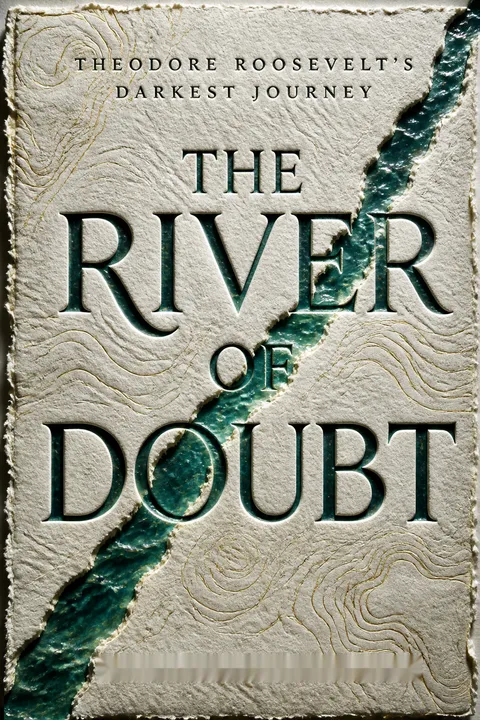
The River of Doubt is a gripping account of Theodore Roosevelt's perilous 1913-1914 expedition down an uncharted Amazon tributary. Millard's vivid prose brings to life the dangers faced by Roosevelt and his team, including disease, starvation, and hostile indigenous tribes. Readers praise the author's meticulous research, engaging storytelling, and ability to weave historical context with thrilling adventure. The book offers insight into Roosevelt's character and the brutal challenges of Amazon exploration, earning high marks for its educational value and page-turning narrative.
People Also Read
Glossary
strenuous life
A creed of effortTheodore Roosevelt’s ideal of meeting life through energetic work, physical exertion, and action rather than passivity. In the book, it is both a source of strength and a personal coping strategy: Roosevelt repeatedly seeks demanding adventures after grief, frustration, or political defeat.
Positivism
Knowledge through evidenceA philosophical movement associated with Auguste Comte that privileges scientific knowledge and observed facts over mysticism or unsupported belief. Rondon adopted it as a human-centered creed tied to progress and service. His interpretation informed his efforts to map Brazil and his insistence that soldiers avoid killing Indigenous people.
Roosevelt Corollary
A US intervention claimTheodore Roosevelt’s extension of the Monroe Doctrine, asserting that the United States could intervene in countries in the Western Hemisphere when it judged their governments unable to maintain order or meet obligations. The policy provoked lasting resentment in South America and shaped the political atmosphere surrounding Roosevelt’s visit.
fixed-station survey
Repeated river measurementsA method of mapping in which surveyors stop at successive points, establish a sighting rod, and measure direction and distance before moving on. Rondon favored it because it produced precise geographic records. On the River of Doubt, its repeated stops slowed the expedition and placed Kermit, who often set the marker, in danger.
seringueiro
Amazon rubber tapperA worker who gathers latex from wild rubber trees in the Amazon. Seringueiros often lived in isolated huts and traveled through the forest to tap and revisit trees, then smoked the latex into marketable rubber. Their difficult lives made them a sparse link between the river wilderness and the outside world.
Cinta Larga
An Indigenous Amazonian peopleThe name outsiders used for an Indigenous people living in the region of the River of Doubt. The name refers to the broad bark belts worn by the men. At the time of Roosevelt’s expedition, the group had little or no contact with outsiders and possessed detailed knowledge of the forest in which the explorers were lost.
camarada
Expedition laborer or companionThe expedition’s term for the Brazilian laborers who paddled its boats, carried supplies, and built portage roads. They performed much of the hardest physical work and often had fewer provisions and poorer equipment than the officers. Their labor and judgment were indispensable to the expedition’s survival.
buck fever
Fear that disrupts controlRoosevelt’s term for intense nervous excitement in the face of danger, which can undermine a person’s judgment even when that person is not generally timid. He believed that nerve control came through practice confronting real challenges. The idea shaped the physically demanding tests he gave himself and his children.
FAQ
What's The River of Doubt about?
- Exploration of the Amazon: The book chronicles Theodore Roosevelt's perilous journey down the uncharted River of Doubt in Brazil, undertaken in 1913 after his political career. It details the challenges faced by Roosevelt and his team as they navigate treacherous waters and dense jungle.
- Historical Context: The narrative intertwines Roosevelt's personal struggles following his electoral defeat in 1912 with the broader historical context of American exploration and imperialism in South America. It highlights the clash between civilization and the wild, as well as the impact of colonialism on indigenous peoples.
- Themes of Survival and Adventure: The book explores themes of survival, human endurance, and the relentless pursuit of adventure. It paints a vivid picture of the dangers posed by nature, including wildlife, disease, and the unknown.
Why should I read The River of Doubt?
- Engaging Storytelling: Candice Millard's writing is described as "extremely gripping" and "riveting," making the historical account feel like a thrilling adventure. The narrative is rich with detail, bringing the Amazon jungle and its challenges to life.
- Insight into Roosevelt's Character: The book provides a deep dive into Theodore Roosevelt's personality, showcasing his determination and resilience. Readers gain insight into how his experiences shaped his views on nature, exploration, and leadership.
- Educational Value: It offers a blend of history, ecology, and adventure, making it informative for those interested in American history, environmental science, and exploration. The book serves as a reminder of the complexities of human interaction with nature.
What are the key takeaways of The River of Doubt?
- Human Resilience: The expedition illustrates the limits of human endurance and the will to survive against overwhelming odds. Roosevelt's determination to push through adversity serves as a powerful testament to the human spirit.
- Consequences of Exploration: The book highlights the impact of exploration on indigenous cultures and the environment. It raises questions about the ethics of exploration and the responsibilities of explorers toward the lands and peoples they encounter.
- Nature's Indifference: Millard emphasizes nature's unpredictability and the dangers it poses to those who underestimate it. The narrative serves as a cautionary tale about the hubris of man in the face of the wild.
What are the best quotes from The River of Doubt and what do they mean?
- “I will stop here”: This quote reflects Roosevelt's moment of despair and the limits of his physical endurance during the expedition. It signifies a turning point where he confronts the reality of his situation and the challenges ahead.
- “The fear of some fatal accident befalling him was always a nightmare to me”: This quote captures Roosevelt's deep concern for his son Kermit during their journey. It underscores the emotional weight of parental worry amidst the physical dangers of exploration.
- “Die if you must, but never kill”: This principle from Rondon illustrates his commitment to peaceful coexistence with indigenous tribes. It highlights the ethical considerations of exploration and the respect for life that Rondon embodied.
What challenges did Roosevelt face during the expedition in The River of Doubt?
- Physical Hardships: Roosevelt and his team faced extreme physical challenges, including disease, starvation, and the harsh conditions of the Amazon jungle. The relentless rain and humidity took a toll on their health and morale.
- Navigational Difficulties: The River of Doubt was unpredictable, with numerous rapids and whirlpools that posed constant threats to the expedition. The lack of accurate maps made navigation perilous and complicated their journey.
- Interpersonal Conflicts: Tensions arose among the expedition members, particularly between Roosevelt and Father Zahm, who had different visions for the journey. The dynamics of leadership and authority were tested as they faced the wilderness together.
How did the expedition impact Roosevelt's legacy as described in The River of Doubt?
- Exploration and Adventure: The journey down the River of Doubt became a defining moment in Roosevelt's life, showcasing his adventurous spirit and commitment to exploration. It added a significant chapter to his legacy as a naturalist and explorer.
- Humanitarian Concerns: The expedition highlighted Roosevelt's evolving views on conservation and the treatment of indigenous peoples. His experiences in the Amazon influenced his later policies regarding the environment and native rights.
- Personal Reflection: The challenges faced during the expedition forced Roosevelt to confront his own limitations and mortality. This introspection added depth to his character and legacy, illustrating the complexities of his life beyond politics.
What role did Colonel Rondon play in The River of Doubt?
- Experienced Guide: Colonel Cândido Rondon was a seasoned explorer and the expedition's co-commander, bringing invaluable knowledge of the Amazon. His expertise in navigating the jungle and understanding its inhabitants was crucial for the expedition's survival.
- Philosophical Leader: Rondon's commitment to peaceful relations with indigenous tribes shaped the expedition's approach to exploration. His motto, “Die if you must, but never kill,” reflected his belief in respecting the lives of others, including the native peoples they encountered.
- Cultural Bridge: Rondon served as a cultural intermediary between Roosevelt and the indigenous tribes. His ability to communicate and negotiate with the local populations was essential for maintaining peace and ensuring the expedition's safety.
How did the environment affect the expedition in The River of Doubt?
- Harsh Weather Conditions: The Amazon's climate posed significant challenges, with heavy rains and high humidity affecting the men's health and morale. The constant downpours made travel difficult and contributed to the spread of disease.
- Dangerous Wildlife: The jungle was home to numerous dangerous creatures, including piranhas and venomous snakes, which posed constant threats to the expedition. The men had to remain vigilant to avoid encounters with these predators.
- Resource Scarcity: The dense jungle made it difficult to find food and fresh water, leading to concerns about starvation. The expedition's reliance on limited provisions became a critical issue as they ventured deeper into the wilderness.
What were the consequences of the expedition's decisions as outlined in The River of Doubt?
- Loss of Supplies: The decision to abandon certain provisions and equipment during the journey had dire consequences, leading to shortages that threatened the expedition's survival. The men faced increasing hunger and desperation as their rations dwindled.
- Increased Risks: The choice to run rapids instead of portaging around them resulted in the loss of canoes and heightened danger for the men. This decision underscored the precarious balance between ambition and caution in exploration.
- Impact on Relationships: The expedition's challenges strained relationships among the members, leading to conflicts and resignations. The dynamics of leadership and teamwork were tested as they navigated both the river and their interpersonal struggles.
How did Roosevelt's leadership style influence the expedition in The River of Doubt?
- Collaborative Approach: Roosevelt's willingness to defer to Rondon's expertise demonstrated a collaborative leadership style that respected the knowledge of his co-commander. This approach helped foster a sense of unity among the expedition members.
- Emphasis on Adventure: Roosevelt's adventurous spirit and determination to explore the unknown inspired his men to push through challenges. His enthusiasm for the journey helped maintain morale, even in the face of adversity.
- Personal Responsibility: Roosevelt's deep concern for his son Kermit and the other men highlighted his sense of personal responsibility as a leader. He was acutely aware of the risks involved and sought to protect his team while pursuing their ambitious goals.
What lessons can be learned from The River of Doubt?
- Respect for Nature: The expedition serves as a reminder of the power and unpredictability of nature. It emphasizes the importance of respecting the environment and understanding the risks involved in exploration.
- Teamwork and Leadership: The dynamics of the expedition illustrate the significance of teamwork and effective leadership in overcoming challenges. The relationships among the members were crucial for their survival and success.
- Courage and Resilience: Roosevelt's journey down the River of Doubt exemplifies the courage and resilience required to face the unknown. It encourages readers to embrace challenges and pursue their passions, even in the face of adversity.
How does The River of Doubt relate to modern environmental issues?
- Conservation Awareness: The narrative highlights the impact of exploration and exploitation on the Amazon rainforest and its indigenous peoples, raising awareness about the need for conservation. It serves as a historical context for ongoing environmental challenges in the region.
- Cultural Preservation: The book emphasizes the importance of preserving indigenous cultures and their knowledge of the land, which is often overlooked in modern development. It advocates for recognizing and valuing traditional ecological practices.
- Legacy of Exploration: The expedition's consequences reflect the broader implications of human activity on natural ecosystems, urging readers to consider the long-term effects of their actions on the environment. It calls for a more responsible approach to exploration and resource management.
About the Author
Other books by Candice Millard
Download PDF
Download EPUB
.epub digital book format is ideal for reading ebooks on phones, tablets, and e-readers.








