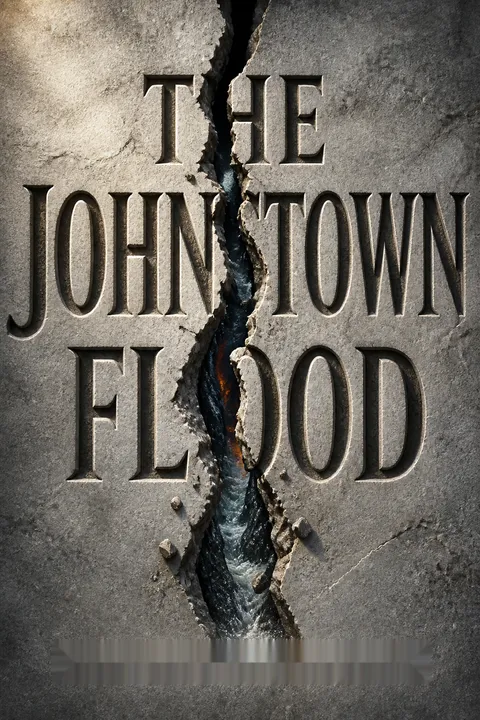


Key Takeaways
Treat extreme weather as a stress test, not an excuse
The storm was exceptional. In May 1889, roughly six to eight inches of rain fell across a broad region, with more than ten inches recorded in some mountain locations. Rivers were already high after months of wet weather. The flood was not an ordinary event, and McCullough does not suggest that people could have stopped the rain.
The catastrophe was also human-made. A badly restored dam, a full reservoir, obstructed waterways, and years of neglected warnings turned the storm into a mass-casualty disaster. When the dam failed, more than 2,200 people died. The distinction matters: weather supplied the force, but choices shaped how much danger reached the people below.
What's striking is the separation between a hazard and a disaster. A hazard is a dangerous event, such as extreme rainfall; a disaster occurs when people and systems are exposed without adequate protection. This distinction helps avoid two easy errors: claiming nature was harmless, or treating the outcome as inevitable. Modern risk analysis similarly asks not only how intense an event was, but which safeguards failed and who had the authority to maintain them. The framing has limits: no infrastructure can eliminate every risk, especially under unprecedented conditions. But uncertainty makes preparation more important, not less.
A reservoir needs reliable outlets, not confidence in its builders
The dam lost its controls. The original earth dam had five large pipes for releasing water and a spillway cut through solid rock beside the embankment. After the Pennsylvania Railroad abandoned the reservoir, the pipes were removed and sold for scrap. When Pittsburgh clubmen restored the dam, they did not replace them or hire a qualified engineer to direct the work.
Several changes reduced its margin of safety. The crest was lowered to make room for a road, its center sagged, and iron fish screens could clog the spillway with storm debris. The club filled the lake close to capacity, yet had no way to lower it. The problem was not simply that the dam was old. It had become a large, uncontrolled container whose overflow route could be obstructed.
This is a classic lesson in safety engineering: reliability comes from layers of protection, not a single promise that a structure is sound. An outlet, an unobstructed spillway, competent inspection, and the ability to lower water levels address different failure modes. Removing one safeguard can leave the others carrying more risk than they were designed to bear. The club members may not have understood the dam's technical weaknesses, but that uncertainty strengthens the case for independent review. Confidence is not a substitute for evidence, especially when other people bear the consequences of failure.
Repeated warnings become background noise when each false alarm passes
People had heard the warning before. During high water, Johnstown residents repeatedly worried that the South Fork dam might fail. Each time it held, the fear ebbed. The Tribune also minimized the danger, suggesting that even a break would cause little harm. In 1880, engineer John Fulton had inspected the dam and warned that leaks and the lack of a discharge pipe created serious danger. Cambria Iron manager Daniel Morrell offered to help make it safe. The club declined, and the concern faded from public attention.
Familiarity weakened urgency. Residents joked that every spring would be the year the dam broke. When disaster finally came, years of uneventful warnings made the real one easier to dismiss.
The pattern resembles what safety researchers call normalization of deviance: repeated exposure to a risky condition without immediate harm gradually makes that condition feel acceptable. The concept fits Johnstown's warnings, though it should not be used to blame residents who had little control over the dam. The more useful question is institutional: who was responsible for translating a recurring concern into inspection, repair, or evacuation planning? Public warnings lose force when authorities issue them without consequences, or when local reporting consistently reassures people without showing its evidence.
Upstream choices can turn ordinary floods into valley-wide catastrophe
The watershed was changing. As Johnstown grew, timber was stripped from nearby mountains, reducing the forest's ability to hold water and soil. Industrial development also narrowed parts of the river channels and filled low ground for mills and other buildings. The rivers had flooded for generations, but the combination of faster runoff and less room for water made high-water events increasingly dangerous.
Risk accumulated across the valley. The storm's rain entered a landscape already altered by logging, construction, and industry. At the same time, homes and workplaces crowded a floodplain where the two rivers joined. No single change explains the disaster. Together, they made a severe storm more likely to overwhelm the valley and gave the water fewer safe places to go.
A watershed functions as infrastructure, even when nobody designed it as such. Forests slow runoff, soil stores water, and open floodplains give rivers room to spread. Replacing those functions with cleared slopes and built-up banks can shift costs downstream, often toward residents who did not benefit most from development. That does not mean every forest cut or riverbank filled causes a catastrophe. It means land use is part of flood planning, not a separate concern. The book's account is especially useful because it treats environmental change as cumulative rather than searching for one villainous act.
Bottlenecks can turn a flood into a second, stronger disaster
The flood changed shape as it traveled. The reservoir released an immense volume of water in roughly forty minutes. The wave tore through South Fork and down the narrow Little Conemaugh valley, carrying trees, buildings, railroad cars, and other debris. At a stone railroad viaduct, the debris blocked the arch and briefly held the water back. When the obstruction failed, the stored water surged forward again.
Johnstown created another choke point. The flood struck the city, then piled buildings, railcars, barbed wire, and human beings against the downstream stone bridge. The jam trapped people and caught fire during the night. Victor Heiser survived by riding debris through the city; many others had no escape from the moving wreckage or the burning pile.
The wave's course shows how disasters can become cascades: one failure creates conditions for the next, and the next failure changes the scale of the danger. In this case, the first dam failure sent debris into a valley where bridges and other structures became temporary barriers. A bottleneck may reduce flow in one moment, then amplify destruction when it gives way. This is why risk assessment has to examine connected systems, including transportation infrastructure and debris pathways, rather than judging each structure in isolation. The exact movement of the flood varied by location, so a single simple model would miss important local differences.
Pair local knowledge with organized relief before panic takes over
Residents organized amid wreckage. The day after the flood, local leaders chose businessman Arthur Moxham to direct emergency work. Committees searched for survivors, identified bodies, cared for the injured, and guarded supplies. The response was improvised, but it gave people immediate roles while food, safe water, shelter, and communications were scarce.
Outside capacity made the effort larger. Relief trains brought supplies and workers, while the Pennsylvania Railroad rebuilt track quickly enough to move aid into the valley. Clara Barton and the American Red Cross established hospitals and temporary lodging, conducted surveys, and distributed necessities. Barton remained for five months. Donations from the United States and abroad ultimately totaled about $3.7 million, alongside trainloads of goods.
The response illustrates a useful division of labor. Local residents understand the terrain, households, and immediate needs; larger organizations can supply transport, medical staff, equipment, and sustained funding. Neither capacity is enough alone. The railroad's rapid mobilization mattered because it converted distant generosity into material help, while local committees helped direct work on the ground. The early confusion also shows why relief depends on clear roles and reliable information. Spontaneous aid can be humane and energetic, but without coordination it may send unsuitable goods or leave vulnerable people unseen.
Generous relief cannot substitute for public accountability
The dam's owners faced blame but not damages. Investigations found that the club's repairs lacked qualified engineering oversight and that changes to the dam and spillway contributed to its failure. A jury in Cambria County said the owners were responsible for the loss of life and property. Yet lawsuits against the club and its members produced no compensation for flood victims. Courts accepted the argument that the storm was a providential event beyond human control.
Charity and liability followed different paths. Club members donated some money and supplies, but the club itself had little capital, and no member paid damages. The contrast angered survivors: national sympathy helped feed and shelter them, while the people associated with the dam escaped financial responsibility.
The episode exposes a recurring tension between emergency generosity and institutional accountability. Donations can address urgent needs quickly, while legal remedies ask a slower, narrower question: which defendant can be shown to have acted negligently under the standards of the time? A corporation's limited assets and the difficulty of proving individual responsibility can make those processes especially unequal. The book also preserves nuance: some club members may have relied on assurances that the dam was safe, and the storm was extraordinary. Yet good intentions or ignorance do not erase the consequences of controlling dangerous infrastructure.
When disaster becomes spectacle, insist on evidence before repeating its stories
The press helped the country respond. Reporters and telegraph operators worked through dangerous conditions to send news outward. Their accounts, photographs, and interviews helped prompt a national relief effort. But the scramble for vivid stories also produced errors, exaggerations, and invented heroes. A celebrated tale described a rider who warned the valley just ahead of the flood, although investigators found no reliable evidence that such a man existed.
Rumor also targeted outsiders. Stories claimed that Hungarian workers were looting and mutilating the dead. The book finds little support for these accusations and describes how they fueled suspicion and abuse of a small, frightened immigrant community. The disaster drew attention to real suffering, but sensational reporting sometimes replaced inquiry with a story readers were ready to believe.
Disaster journalism has two obligations that can pull against each other: make distant suffering legible, and preserve the distinction between witnessed fact and rumor. The invented warning rider gave readers a dramatic character, while the false accusations against immigrants offered a familiar scapegoat. Such narratives can travel faster than corrections because they are emotionally satisfying and easy to remember. The positive result, substantial public aid, does not excuse the harm of misinformation. A careful reader should ask who witnessed an event, whether independent accounts agree, and whose reputation is damaged when an allegation is repeated.
Rebuild the town, but keep the dead visible in its history
Recovery began before grief had settled. Johnstown's steelworks resumed some operations by mid-July, and residents rebuilt homes, shops, and schools. Restoring the town took years. Yet recovery could not restore the families lost: the accepted death toll was 2,209, including 396 children aged ten or younger. Ninety-nine families were wiped out, and 663 bodies were recorded as unidentified.
Memory became part of the reconstruction. Survivors left, returned, searched for relatives, and told stories that became family history. A cemetery plot and monument commemorated those who could not be named. The figures and memorials resist the comforting idea that rebuilding means the disaster is finished. They preserve the scale of loss and the fact that many victims remained unknown even after the town's streets and mills came back.
Reconstruction is often measured in visible units: houses, rail lines, factories, and jobs. The Johnstown account adds a less measurable dimension, the recovery of identity and memory. A list of names, an unknown person's grave, or a survivor's testimony can preserve losses that aggregate statistics flatten. At the same time, commemoration should not be mistaken for justice; a monument records grief but does not compensate survivors or repair the institutions that failed. The book's closing perspective is therefore both resilient and unsentimental: a community can rebuild its material life while carrying an unresolved human and political wound.
Analysis
McCullough's account is powerful because it refuses to make the Johnstown Flood only a story about water. He first establishes the town as a living place, with steelworkers, shopkeepers, families, parades, and ambitions, then follows the catastrophe through individual experience. That intimate scale makes the loss legible without allowing the engineering story to disappear. Readers see both the valley's physical vulnerabilities and the ordinary ways people explain risk away: the dam had survived before, respected men owned it, and the newspaper said the consequences would be limited.
The book's strongest analytical move is its layered account of causation. The rainfall was extraordinary, but the damage depended on a chain of decisions and conditions: the outlet pipes vanished, repairs lacked qualified oversight, the spillway could clog, the lake was kept high, forests and river channels were altered, and warnings were diluted by routine. This is more persuasive than assigning the disaster to a single bad actor. It also complicates blame. The club's owners bore responsibility for a dangerous structure, while Johnstown's leaders and residents had limited information and little power over it. The narrative makes that imbalance visible without claiming that every person understood the danger equally.
The account also reveals a gap between moral judgment and legal remedy. Engineering findings and local verdicts condemned the dam's condition, yet claims for compensation failed. The phrase Act of God helped turn an event with identifiable human contributors into an apparently unavoidable natural visitation. Meanwhile, public charity was enormous and practical, but could not repair the absence of legal accountability.
The book's treatment of journalism is similarly double-edged. Reporting carried relief into the valley, while sensational stories distorted events and vilified immigrants. The result is a history not just of disaster, but of how a society narrates disaster, assigns responsibility, and decides which victims remain visible. Its central warning is institutional: expertise, public trust, and infrastructure are valuable only when scrutiny continues after the immediate danger seems to have passed.
Review Summary
Reviews for The Johnstown Flood are overwhelmingly positive, averaging 4.13/5. Readers praise McCullough's meticulous research, compelling storytelling, and ability to humanize a massive tragedy. Many highlight the book's relevance to modern disasters and its examination of how wealthy negligence contributed to 2,209 deaths. Some critics note the opening chapters are dry and overly detailed with names and statistics. Several reviewers draw parallels to Hurricane Katrina and other modern disasters, emphasizing the book's enduring lesson about not assuming those in power are acting responsibly.
People Also Read



Glossary
South Fork Fishing and Hunting Club
Private reservoir ownersA Pittsburgh-based private club organized in 1879 that acquired the old reservoir and dam above South Fork, Pennsylvania. Its members used Lake Conemaugh as a summer recreation site for fishing, boating, and hunting. The club's restoration and management of the dam became central to investigations of the 1889 flood.
spillway
Excess-water channelA channel that carries water safely away from a reservoir when its level rises. The original South Fork dam's spillway was cut through solid rock beside the earth embankment. Later changes, including fish screens that could collect debris, reduced its ability to pass water during the 1889 storm.
earth dam
Compacted-soil barrierA dam built primarily from compacted earth rather than a solid masonry wall. The original South Fork structure was made from layers of clay and faced with stone. Such a dam can hold substantial water when carefully built and maintained, but overtopping or internal seepage can erode it and cause failure.
Act of God
Unavoidable natural eventA legal argument that damage resulted from an extraordinary natural event beyond human control. In lawsuits after the Johnstown Flood, the club and railroad invoked the storm's exceptional force to resist liability. Courts accepted this reasoning, although engineering findings identified human decisions and structural defects that had increased the danger.
About the Author
Other books by David McCullough







Download PDF
Download EPUB
.epub digital book format is ideal for reading ebooks on phones, tablets, and e-readers.








