

Key Takeaways
Treat Paris as a workshop for your country's unfinished work
A purposeful crossing. The Americans who first traveled to Paris in the 1830s were not simply tourists or exiles. They came to train as doctors, painters, writers, and educators, believing that work they cared about could not be mastered at home. Their passage took three to six weeks on crowded sailing ships, and a ticket to Le Havre cost about $140, a serious expense for families funding the trip.
A city as teacher. George Healy arrived barely twenty-one, without French or local contacts, determined to learn portrait painting. Emma Willard sought ideas she could bring back to her school. Their experiences belonged to a larger pattern: Paris became a practical education, and many returned to build careers and institutions in the United States.
What's striking is that travel functions here as vocational infrastructure. The city offers access to teachers, collections, hospitals, and peers that an aspiring professional cannot easily assemble alone. That resembles experiential learning: knowledge becomes more durable when tested in real settings, among people doing the work. But the story also depends on money, education, and family support. The inspiring model is not simply leave home and work hard. It is to ask what resources make serious learning possible, and who is excluded when access depends on them.
Let old monuments reset your sense of what a society can build
A change in scale. On the road to Paris, travelers stopped at Rouen Cathedral, whose spire reached 440 feet. The United States Capitol, then the country's largest building, was roughly 300 feet shorter. For Emma Willard and Charles Sumner, the cathedral made history tangible: its scale, sculpture, and centuries of work confronted them with an artistic inheritance their young country did not possess.
Art made public. The Louvre deepened that lesson. Its vast galleries held masterpieces that visitors could study, and the museum admitted the public without charge. Harriet Beecher Stowe, who had never studied painting, found that a work portraying shipwrecked survivors could communicate suffering with the force of a great book. Paris did not just display culture. It trained visitors to notice what art could make them feel and understand.
The book's strongest cultural insight is that comparison can educate without requiring self-contempt. The Americans saw what their institutions lacked, but they also learned how museums and architecture shape public attention. In contemporary terms, cultural access is a form of civic capacity, not merely a luxury for connoisseurs. Still, admiration can make a visitor mistake grandeur for justice. Stowe's attention to suffering, and her awareness of poverty beyond the polished avenues, remind readers to ask what a beautiful city reveals and what its beauty conceals.
Demand bedside evidence, but keep the patient in view
Learn from cases. Paris was a medical center unlike anything in the United States. In 1833, twelve hospitals treated 65,935 patients; Boston's two main hospitals together cared for fewer than 800. Students attended rounds, saw many examples of the same illness, dissected bodies, and learned from specialists. Pierre Louis stood out by recording symptoms carefully and comparing cases instead of relying on medical tradition alone.
Science needs care. James Jackson, Jr., and Henry Bowditch carried Louis's approach back to America, where former Paris students helped teach a more evidence-based medicine. Oliver Wendell Holmes later added an important qualification: diagnosis and scientific method mattered, but physicians also needed to understand and care about the person who was ill. Clinical skill could become a performance that served the surgeon's reputation more than the patient.
This episode captures a lasting tension in professional expertise: measurement can correct confident error, yet data can also make people disappear behind cases. Louis's method resembles modern evidence-based practice because it makes claims answerable to observed outcomes. The surgeons' theatrical operations, often performed without anesthesia or infection control, show that technical brilliance is not the same as ethical care. Holmes's qualification is therefore more than sentiment. Trustworthy medicine needs both disciplined observation and attention to the human consequences of treatment.
Put beauty in public life, not only in private collections
Shared civic space. Americans were astonished by Paris's gardens, public concerts, theaters, and the crowds at the Louvre. On Sundays, visitors from many social classes filled the museum, while families spent hours in the Tuileries Garden. John Sanderson saw parks as a city asset, not wasted land that should be sold for construction. He believed public beauty could teach taste and give people room to meet.
A way of living. The lesson extended beyond monuments. Parisians lingered over meals, watched street life, and treated leisure as part of ordinary existence. Oliver Wendell Holmes and other medical students made time for opera and conversation alongside intense study. They felt that music and art helped them understand people, making them better prepared to care for patients rather than treating medicine as a narrow technical trade.
Paris presents public beauty as an everyday service: a garden or museum can offer rest, learning, and encounters across class lines. Urban research often finds that shared spaces matter not only for recreation but for social trust and a sense of belonging. The book makes the argument through observation rather than policy analysis, so it cannot establish who actually benefited equally. Still, the contrast with American cities measured mainly by utility is sharp. Beauty becomes civic when ordinary people can enter, use, and shape the spaces that contain it.
Let lived encounters unsettle the hierarchies you inherited
A new observation. In 1838 Charles Sumner watched Black students participate comfortably at the Sorbonne. The sight challenged his earlier assumption that racial inequality in the United States reflected nature rather than social conditions. That realization helped turn him toward opposition to slavery. The change began not with an abstract argument but with seeing people treated differently in another institution.
More than one barrier. Paris also offered openings that American society often denied. Elizabeth Blackwell trained at the Maternité, a maternity hospital, after becoming the first American woman to earn a medical degree. Fugitive slave and writer William Wells Brown spoke freely against slavery at a Paris peace conference. Mary Cassatt pursued a professional art career despite expectations that women should remain amateurs. Their opportunities were real, but limited and hard won.
The section shows how contact can make a social assumption visible as an assumption. In social psychology, direct encounters can weaken stereotypes when people meet as participants rather than distant categories. Yet a few welcoming classrooms do not prove that structural discrimination has disappeared. Sumner's observation mattered because it gave him evidence against a belief, not because Paris had solved racial injustice. Blackwell and Cassatt likewise faced institutional barriers. The useful lesson is to let experience revise inherited explanations while still asking what rules keep inequality in place.
Let a rejected career redirect your technical imagination
A painful redirection. Samuel Morse went to Paris hoping to become a history painter. His ambitious Gallery of the Louvre, a large canvas presenting thirty-eight famous paintings, earned praise but little public interest. Years later, after losing the chance to paint a major work for the U.S. Capitol, he abandoned painting and concentrated on the electric telegraph he had been developing.
Ideas travel between fields. In Paris, Morse studied the existing semaphore telegraph and discussed electrical communication with friends. On a later visit, he saw Louis Daguerre's new photographic images and recognized their importance. Morse helped introduce the daguerreotype to Americans, then worked with a chemist to make portraits. His success depended not only on invention but on collaborators, public demonstrations, and support from others who believed the device could work.
Morse's story is not a simple tale of failure secretly preparing a triumph. His telegraph required years of work, technical help, investment, and government funding. The more useful connection is to innovation research on recombination: useful ideas often emerge when someone carries a question across fields and notices a new application. A rejected profession can free attention, but rejection alone produces nothing. Morse's persistence mattered because it was paired with collaborators and repeated experiments.
Measure urban progress by whose homes the new avenues erase
A city remade. After Napoleon III took power, he put Georges-Eugène Haussmann in charge of a sweeping redesign of Paris. The work widened streets, added sewers and water systems, planted trees, and created parks and long boulevards. By 1869, the project had built about seventy-one miles of new roads and spent roughly 2.5 billion francs. Its supporters promised health, commerce, employment, and a more beautiful capital.
The cost of the vista. The work also demolished whole neighborhoods. On the Île de la Cité, the resident population fell from about 15,000 to 5,000 as crowded housing was cleared and the Hôtel Dieu hospital was replaced. Wide avenues improved movement and gave the city its monumental appearance, but the displaced residents did not share evenly in the gains. Modernization could be both a public improvement and a force that pushed the poor aside.
Haussmann's Paris is a useful warning against treating infrastructure as politically neutral. A boulevard can improve sanitation and transport while also changing land values, dispersing communities, and making a city easier to control. Contemporary urban planning increasingly asks who receives the benefits and who bears displacement, a question the grand perspectives often obscure. The book does not reduce the transformation to a single motive: public health needs were real. Its deeper challenge is to judge progress by more than the elegance of the finished view.
Keep public duty human when regimes and crowds turn volatile
A diplomat under pressure. In 1848, American minister Richard Rush recognized France's new republic before Washington could instruct him, reasoning that the French people had chosen their government. In 1870, Elihu Washburne stayed in Paris during the Prussian siege after other major diplomats left. He helped Americans and more than 20,000 Germans obtain safe passage before the city was sealed.
Protection amid collapse. During the siege, Washburne's legation fed and sheltered refugees. When civil conflict returned in the Paris Commune, he sought access to the imprisoned Archbishop Darboy and tried to prevent his execution. The Commune and the Versailles army both committed atrocities; the final fighting killed an estimated 20,000 to 25,000 people. Washburne recorded the suffering without pretending that one side alone had behaved brutally.
Washburne's conduct illustrates a practical ethics of public service: preserve channels of protection when political authority fragments. His work for Germans as well as Americans shows that duty can extend beyond nationality, especially when civilians are vulnerable. The narrative also resists easy hero worship. Neutrality did not mean indifference, and advocacy for prisoners did not make the violence symmetrical in every respect. The broader point is to assess institutions by what they do to people with the least power, not just by the legitimacy they claim.
Master tiny details before trusting yourself with monumental work
From cameo to monument. Augustus Saint-Gaudens began work at thirteen, cutting small portraits into stone and shell. That demanding apprenticeship taught him patience, design, and close attention to faces. In Paris, he studied sculpture at the École des Beaux-Arts, then took on a commission for a bronze monument to Admiral Farragut. The project moved through small studies, life-size clay models, a larger figure, plaster molds, and foundry casting.
Scale demands judgment. Saint-Gaudens struggled for weeks with one leg of the statue and revised the work repeatedly. The finished Farragut stood more than eight feet tall, weighed about 900 pounds, and won strong praise when unveiled in New York in 1881. His success grew from a methodical process, not a sudden flash of inspiration. He kept testing each stage until the whole figure conveyed the admiral's character.
Saint-Gaudens's method resembles deliberate practice: isolate difficult parts, work through them, and use each version to improve the next. The anecdote about a troublesome leg makes artistic judgment visible as repeated labor rather than mystical talent. Yet process alone does not guarantee quality; he also had access to skilled assistants, foundries, teachers, and a public commission. His example is strongest when discipline and infrastructure are considered together. Ambition becomes feasible when a craftsperson can build a sequence of manageable tests.
Make cultural exchange reciprocal, not a one-way apprenticeship
The balance shifts. Early American visitors often saw Paris as the established center of art and learning. By the late nineteenth century, Americans were exhibiting in growing numbers. At the 1889 exposition, 572 American artworks appeared, second only to France's, and John Singer Sargent received a gold medal. Morse's telegraph, American machinery, and the Statue of Liberty also carried American achievement into French public life.
Influence runs both ways. Eiffel's tower, initially attacked as an ugly intrusion, became a central attraction at the exposition. The French gift of the Statue of Liberty stood for republican friendship, while Saint-Gaudens returned from Paris feeling more clearly American, not less. Paris remained a place where artists could test themselves against demanding standards, but the exchange was no longer simply Americans learning from France. Both countries shaped the other's image of modernity.
The book's long arc turns cultural prestige into a moving relationship rather than a permanent ranking. The student who arrives to learn may later contribute inventions, art, or symbols that alter the host city's understanding of America. This resembles cultural exchange as translation: ideas do not travel unchanged, and each side selects what it can use. The account is strongest when it tracks concrete objects and careers, from Morse's apparatus to the Liberty statue. It also cautions against assuming that recognition abroad automatically improves conditions at home.
Analysis
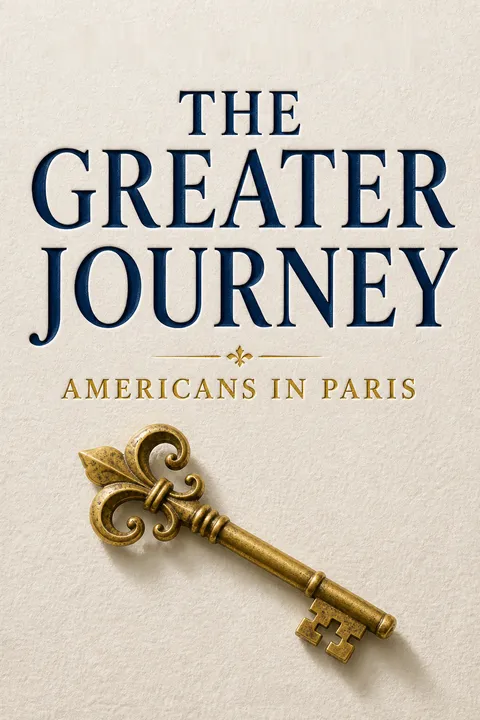
The Greater Journey is a collective biography organized around a city. Its central claim is not that Paris enchanted Americans, though many were enchanted. It is that Paris became a working institution for them: a place where young professionals could encounter art, medicine, architecture, and political life at a scale unavailable in the United States, then carry new standards and methods home. The narrative moves from the dangerous sailing voyages of the 1830s, through the revolutions of 1848 and 1870, to the rebuilt capital and the world fairs that made cultural exchange increasingly reciprocal.
Its main strength is its use of letters, diaries, and remembered scenes to make large historical changes personal. Morse's long labor at the Louvre, Sumner's observation of Black students at the Sorbonne, and Washburne's efforts during the siege show history as a series of encounters that alter decisions. The varied protagonists also resist a single definition of success. Some return home, some remain abroad, some achieve public fame, and some discover that work, illness, grief, or family responsibilities limit their ambitions.
The book's account of Paris is necessarily selective. Many travelers it follows had education, money, or connections, while the people most affected by city reconstruction and siege appear less often as narrators. That imbalance matters. The same boulevards that offered beauty and sanitation displaced residents; the same institutions that trained American men admitted women and Black students only in narrow or exceptional ways. The narrative often makes such contradictions visible, even when its focus remains on Americans.
The result is a history of cultural transfer, not a simple celebration of French superiority or American progress. Paris teaches visitors to see, but it also becomes a stage on which Americans test their own identity. By the end, American art and technology are no longer merely students of Europe. The lasting insight is that intellectual independence can grow through serious apprenticeship, provided the learner eventually contributes something of their own.
Review Summary
The Greater Journey is widely praised for its engaging portrayal of 19th-century Americans in Paris. Readers appreciate McCullough's storytelling and meticulous research, bringing to life figures like Samuel Morse and Mary Cassatt. Many find the book informative and enjoyable, though some note its slow pace and lack of cohesive narrative. The focus on artists, writers, and medical pioneers resonates with history enthusiasts. While not as captivating as some of McCullough's other works, it offers valuable insights into the cultural exchange between America and Paris during a transformative era.
People Also Read




Glossary
Paris Médicale
Paris's medical worldMcCullough uses this term for the connected world of Paris hospitals, medical schools, professors, students, nurses, and patients in the nineteenth century. It was a major center of medical training because students could observe large numbers of cases, attend lectures, and study anatomy. The term distinguishes this professional world from the city's artistic, political, commercial, and tourist life.
flâner
Wander and observeA French verb used in the book for walking through a city without a narrow practical purpose, taking in its streets, people, architecture, and activity. For the Americans in Paris, this kind of wandering was more than sightseeing. It helped them learn the city's layout and habits, and offered a way to observe urban life at close range.
grisouille
Winter's gray gloomA French word the book uses for the dull, overcast winter weather that made Paris feel cold and dispiriting. Several American visitors found the season difficult, especially when short daylight, rain, fog, and damp rooms interfered with study and worsened homesickness. The term conveys the persistent atmosphere rather than one particular storm or cold day.
grisette
Working-class young companionA nineteenth-century Paris label for young working women, often shop workers or seamstresses, who sometimes formed intimate relationships with students and other men. The book describes these arrangements as shaped by poverty and mutual dependence, rather than simply romance. A grisette might provide companionship or practical care, while the student offered money or protection.
Morse code
Dots-and-dashes alphabetSamuel Morse's system for representing letters and numbers as combinations of short and long electrical signals. It allowed an operator to send written messages over a wire, where an electromagnet recorded the signals for decoding. Morse developed the code as part of his telegraph system, which became a practical means of rapid long-distance communication.
neurasthenia
Historical nervous exhaustion diagnosisA historical medical diagnosis used in the book for symptoms such as fatigue, insomnia, irritability, worry, and depression. Physicians of the period often associated it with prolonged mental or physical strain. Augustus Saint-Gaudens and other characters were described in these terms. The label reflects nineteenth-century medical thinking, not a precise modern diagnosis.
American Ambulance
American-run field hospitalA field hospital established in Paris by American dentist Thomas W. Evans and colleagues during the Franco-Prussian War. It used tents to provide fresh air and treated French wounded during the siege. American doctors and volunteers staffed it, and its organization and cleanliness earned praise from French authorities and observers.
FAQ
What's The Greater Journey: Americans in Paris about?
- Exploration of expatriates: The book chronicles the experiences of American artists, writers, and intellectuals who traveled to Paris in the 19th century, seeking artistic and intellectual growth.
- Cultural exchange: It highlights the influence of French culture on these Americans and their contributions to American society upon returning home.
- Historical backdrop: Set against significant events like the July Revolution of 1830 and the cholera epidemic of 1832, the narrative provides a rich historical context.
Why should I read The Greater Journey: Americans in Paris?
- Rich historical narrative: David McCullough offers a detailed account of a transformative period in American history, focusing on notable figures like Samuel Morse and James Fenimore Cooper.
- Inspiration for creatives: The book showcases the ambition and determination of those who sought to better themselves through cultural immersion.
- Insight into Parisian life: Readers gain a vivid picture of 19th-century Paris, making it a fascinating read for history and culture enthusiasts.
What are the key takeaways of The Greater Journey: Americans in Paris?
- Pursuit of knowledge: The book emphasizes the importance of seeking knowledge beyond one's homeland, as exemplified by the characters' journeys to Paris.
- Cultural impact: It illustrates how experiences in Paris shaped the perspectives and careers of these Americans, influencing their contributions to literature, art, and medicine.
- Resilience in adversity: The narrative showcases the resilience of these individuals in the face of challenges, highlighting their determination to succeed.
Who are the main figures in The Greater Journey: Americans in Paris?
- Samuel Morse: Known for developing the electric telegraph, Morse's time in Paris was crucial for his artistic development and later innovations.
- James Fenimore Cooper: A prominent novelist, Cooper's experiences in Paris influenced his writing and deepened his understanding of European culture.
- Mary Cassatt: An American painter who became a key figure in the Impressionist movement, focusing on the lives of women and children.
How did the Americans adapt to life in Paris according to The Greater Journey?
- Cultural immersion: The Americans quickly immersed themselves in Parisian life, learning the language and customs to navigate their new environment.
- Social connections: They formed friendships with locals and other expatriates, enriching their experiences and providing support.
- Professional growth: Many took advantage of educational opportunities, attending lectures and studying under renowned figures in art and medicine.
What challenges did the Americans face in Paris as described in The Greater Journey?
- Language barrier: Many struggled with the French language, leading to communication difficulties and misunderstandings.
- Cultural differences: Adapting to Parisian social norms posed challenges, as they encountered a society vastly different from their own.
- Health risks: The cholera epidemic of 1832 presented a significant threat, causing fear and uncertainty among the expatriates.
What role did art and medicine play in The Greater Journey: Americans in Paris?
- Artistic development: Paris was a hub for artists, providing inspiration and opportunities for American painters like Morse and Healy.
- Medical education: Paris was a center for medical training, where American students learned from leading physicians and gained invaluable experience.
- Cultural exchange: Both art and medicine served as avenues for cultural exchange, influencing their respective fields in the United States.
How did the experiences in Paris influence the Americans' return to the U.S. in The Greater Journey?
- Enhanced perspectives: Time in Paris broadened their horizons, allowing them to see their own country through a new lens.
- Professional advancements: Many returned with new skills and knowledge that propelled their careers forward.
- Cultural ambassadors: They shared their experiences and insights, enriching American society with European influences.
What was the significance of the cholera epidemic in The Greater Journey: Americans in Paris?
- Public health crisis: The epidemic serves as a backdrop, illustrating the challenges faced by the Americans in Paris.
- Personal struggles: Characters like Morse and Cooper navigated fears and uncertainties brought on by the epidemic.
- Reflection on mortality: The epidemic prompted reflections on life, death, and health, resonating throughout their experiences.
How does The Greater Journey connect to American identity?
- Exploration of self: The book delves into the quest for identity among Americans abroad, grappling with cultural roots and new influences.
- Pride in heritage: Experiences in Paris fostered pride in their American identity, asserting their place in the world.
- Legacy of influence: The narrative underscores how their journeys helped shape American cultural identity.
What are the best quotes from The Greater Journey: Americans in Paris and what do they mean?
- “The thought of going abroad makes my heart leap.”: Reflects the excitement and anticipation of new experiences.
- “I feel that I take a bold, almost rash step.”: Acknowledges the risks involved in leaving home for an uncertain future.
- “Paris is the city of cities.”: Emphasizes Paris's significance as a cultural and artistic center.
How does The Greater Journey address themes of identity and belonging?
- Cultural displacement: Characters grapple with feelings of isolation while living in a foreign city.
- Artistic identity: Explores how time in Paris helped define their artistic identities.
- Transnational connections: Highlights the fluidity of cultural identity and the complexities of experiences abroad.
About the Author
Other books by David McCullough



Download PDF
Download EPUB
.epub digital book format is ideal for reading ebooks on phones, tablets, and e-readers.








