

Key Takeaways
In Belfast, silence protected armed groups and orphaned the truth.
A mother vanishes. In December 1972, masked neighbours took Jean McConville from her Divis Flats home in front of her children. The widowed mother of ten never returned. Her children were left to survive alone, then separated into institutions where several suffered severe abuse. For years, rumours suggested Jean had run away or helped the British Army, while the family had no body, explanation, or grave to visit.
Silence had enforcers. The IRA threatened one of Jean’s sons after he asked questions, and the community largely turned away from the abandoned children. Her remains were found on a beach in 2003, more than thirty years after her abduction. The book’s title points to more than discretion: fear, loyalty, and political discipline made not speaking a condition of life in Belfast.
What's striking is how disappearance keeps harm active. The family cannot complete ordinary mourning while the missing person remains both absent and unexplained. Psychologist Pauline Boss calls this ambiguous loss, a form of grief without confirmation or closure. The McConville children endured it alongside poverty, separation, and suspicion. Their experience also shows why silence should not be mistaken for consent: in a tightly controlled community, saying nothing may be a survival strategy. Yet a silence imposed by threat can protect perpetrators while leaving relatives to carry the uncertainty.
Inherited martyrdom can turn a political cause into a family destiny.
The cause was domestic. Dolours Price grew up in a republican household where prison photographs and stories of rebellion were part of family life. Her father, Albert, had joined the IRA as a boy. Her aunt Bridie lost both hands and her sight in an explosives accident, yet the family treated her suffering as an honourable sacrifice for Ireland. For young Dolours, martyrdom was not an abstraction. It had a face, a voice, and a place at home.
Inheritance was not automatic. As a teenager, Dolours questioned whether armed struggle could succeed and explored socialist politics. But after she and her sister Marian were attacked during the peaceful Burntollet march, she came to see the armed IRA as a return to the family cause. Her story shows how conviction can be passed down, challenged, and then reclaimed under pressure.
Political socialization often works through stories more powerfully than through formal instruction. A child learns which sacrifices are praised, which losses are made meaningful, and what kind of person the family admires. The Price household gave Dolours a vivid moral vocabulary for resistance before she could assess its consequences. That inheritance helps explain her choices without excusing them. A useful distinction is between understanding how violence becomes imaginable and treating that pathway as destiny. The book preserves both forces: family tradition shaped Dolours, but she also argued, chose, and acted.
State violence made armed resistance persuasive, not morally inevitable.
Peaceful protest met force. In 1969, Catholic civil-rights demonstrators marched from Belfast toward Derry to protest discrimination in jobs, housing, and political power. At Burntollet Bridge, loyalists attacked them with stones and clubs while police did little to protect them. In 1972, British paratroopers killed unarmed civilians on Bloody Sunday. For Dolours Price, these events helped destroy faith in nonviolent persuasion and drew her into the Provisional IRA.
Retaliation widened the damage. Price helped lead the IRA’s 1973 London bombing mission, intended as a strike on British territory and planned with advance warnings. Two bombs exploded, injuring nearly 250 people. The bombers meant to avoid civilian deaths, but the warnings and police response failed to prevent the injuries. Across the conflict, attacks meant to pressure the British repeatedly harmed ordinary people, including the communities the IRA claimed to defend.
The section makes a hard distinction between explanation and justification. Repression can increase the appeal of armed groups by making peaceful institutions look complicit or useless. That mechanism appears in many insurgencies, but it is not a law of nature: repression does not compel every person to join an armed movement, and political violence creates its own victims and grievances. The London operation also exposes a recurring strategic error. Intentions do not control blast effects. A warning can reduce risk, but it cannot make a large bomb in a crowded city reliably discriminate between symbolic targets and civilians.
A state fighting insurgents can become another armed faction in civilians' eyes.
Counterinsurgency turned covert. British commander Frank Kitson studied how to penetrate insurgencies, including by recruiting rebels to betray their comrades. He brought that thinking to Northern Ireland, where the army’s MRF used plain-clothes operatives, informants, hidden observation posts, and sometimes lethal force. Its members sometimes used weapons associated with paramilitaries to make killings look like the work of rival groups.
Authority lost credibility. Mass internment in 1971 relied on outdated and sectarian intelligence, sweeping up many uninvolved Catholics while missing key IRA figures. British forces also used abusive interrogation techniques against detainees, and an MRF team attempted to kill IRA commander Brendan Hughes. Such tactics were defended as security measures, but they deepened local suspicion that the army was not a neutral referee. The book also documents collusion between state agents and loyalist killers.
Counterinsurgency depends on information and public legitimacy, but covert violence can undermine both. A government may gain tactical intelligence while teaching civilians that official claims of neutrality are untrustworthy. The asymmetry matters: paramilitary groups commit crimes, but a state also has legal duties and a public mandate that make its abuses especially corrosive. The book does not make the sides equivalent. It shows how clandestine methods blurred the boundary between policing and terror, making that distinction harder for residents to believe, and harder for the state to defend.
A movement's secrecy can protect its cause by destroying people it suspects.
Informers were feared as traitors. The IRA called informers touts and treated betrayal as a grave offence, often punishable by execution. British intelligence recruited some captured IRA members as double agents, known to the MRF as Freds. Seamus Wright and teenage volunteer Kevin McKee supplied information that helped expose a British intelligence operation using a laundry service to watch republican neighbourhoods. After the IRA used their disclosures, both men disappeared and were killed.
Suspicion could outlast proof. Brendan Hughes said Jean McConville was executed because she informed for the British, but the family rejected that charge. A 2006 police ombudsman’s inquiry found no record that she had been an agent and called her innocent. Other evidence and disputed timelines left questions unresolved. The book shows how clandestine groups use secrecy to enforce discipline, while the lack of transparent evidence makes it difficult to distinguish actual betrayal from a story that justifies punishment.
The informer system creates a destructive feedback loop. Secret operations require trust, but the threat of betrayal encourages surveillance, interrogation, and pre-emptive punishment. Once a group treats suspicion as proof, internal security can protect the organization while making it less accountable to its own members and community. The McConville dispute is especially instructive because the accusation itself became another source of injury to her children. The evidence is uneven, and the book does not settle every factual question. That uncertainty is a reason for caution, not a license to convert allegation into verdict.
A body can become political leverage, but the cost outlives the protest.
Prison became a battlefield. After conviction for the London bombing, Dolours and Marian Price refused food until they were transferred to Northern Ireland and treated as political prisoners. They were force-fed for months, a degrading and dangerous procedure, before the doctors stopped when the sisters resisted so fiercely that feeding became unsafe. Their strike lasted 206 days. Price later believed the campaign helped change British policy on force-feeding, though she also worried that this change enabled later prisoners to die on hunger strike.
The strategy changed politics. In 1981, Bobby Sands ran for Parliament from prison and won while on hunger strike. His election brought broad attention to the republican cause, and he died after sixty-six days without food. Nine more men died that year. The hunger strike made bodily suffering a political signal, but survivors carried lasting physical and psychological consequences.
A hunger strike transforms the body into both the protest and its evidence. It can make an institutional conflict visible, but it also creates a brutal contest over who bears responsibility for death. The Price sisters’ force-feeding shows that a policy intended to preserve life can itself inflict trauma and become politically damaging. Their later concern about the consequences of ending that practice illustrates moral complexity, not simple cause and effect. The same tactic can win recognition for one group and create conditions that another group interprets as permission to continue sacrificing lives.
Peace can end a campaign while leaving its veterans without moral repair.
The movement changed course. Gerry Adams increasingly argued that the IRA’s armed campaign could not win by itself and that republican politics had to prepare for a long struggle. The Good Friday Agreement of 1998 established power sharing and made Northern Ireland’s constitutional future depend on consent. It helped stop the campaign, but it did not create a formal process for confronting the past.
Some fighters felt abandoned. Brendan Hughes believed that the political leadership had converted the sacrifices of volunteers into electoral success without telling them that the goal had changed. Dolours Price likewise felt that the settlement betrayed the cause for which she had risked her life and killed. Both remained burdened by acts they could no longer justify through the promised outcome. The book calls this moral injury: distress tied not only to danger endured, but to deeds that violate a person’s sense of right and wrong.
Political settlement and personal reconciliation are different achievements. Leaders may need ambiguity and compromise to bring opponents to an agreement, while participants who carried out the violence may need candour and accountability to make sense of their actions. Moral injury research helps name this gap: survival does not resolve the conflict between a person’s former convictions and present judgment. Still, Hughes and Price represent particular lives, not every veteran’s response. Their experience makes the costs visible without proving that compromise was wrong; it shows that a peace deal cannot, by itself, distribute its emotional costs fairly.
Treat secret oral histories as testimony, not as verdicts or safe deposit boxes.
The archive promised protection. The Belfast Project recorded interviews with former republican and loyalist paramilitaries, conducted by people with personal ties to the conflict. Participants were told their accounts would remain sealed until after their deaths. The project’s creators hoped that this promise would allow candid testimony in a society where speaking openly could invite prosecution or retaliation.
The promise failed under pressure. Boston College had not obtained legal review of the confidentiality agreements. When police sought recordings for the McConville murder investigation, courts ordered some materials released. One crucial detail is easy to miss: Price did not discuss McConville in her recorded Belfast Project interviews. Her detailed account came from a separate 2010 interview Ed Moloney made and then placed in the archive. The episode exposed both the danger of absolute promises and the limits of oral history, where memory, loyalty, grievance, and self-exculpation shape testimony.
Oral history can preserve perspectives that official records exclude, especially when participants have spent decades unable to speak. Yet confidentiality is not simply a researcher’s promise; it depends on contracts, law, institutional capacity, and informed consent about risks. The Belfast Project’s failure was not only that the law reached the tapes. Its secrecy also limited scholarly oversight and left basic rules unresolved. Testimony remains valuable, but it is not a substitute for corroboration. The distinction between Price’s archived interviews and Moloney’s separate recording demonstrates how easily a compelling story can become misrepresented as settled evidence.
A signed peace can stop shootings without repairing the divided places they left.
The past remained present. By 2018, Northern Ireland was peaceful compared with the Troubles, but the communities were still sharply separated. More than 90 percent of children attended segregated primary schools, and Belfast’s peace walls remained physical boundaries between neighbourhoods. No comprehensive truth-and-reconciliation process had accompanied the Good Friday Agreement. Instead, old crimes were revisited through separate investigations, inquests, and prosecutions, often leaving families dissatisfied and accusations of unequal treatment.
The ending stays unsettled. Jean McConville’s body was found, but no one had been prosecuted for her murder. The case against Ivor Bell stalled after he was judged unable to stand trial, and prosecutors did not charge Adams. The book closes with her son Michael raising and racing pigeons. The birds can cross great distances and return home, a small image of attachment that offers no easy reconciliation for a society still arguing over who belongs.
A ceasefire can change behaviour faster than it changes institutions, neighbourhoods, or inherited narratives. Northern Ireland’s peace walls and segregated schools show how separation may reduce immediate contact and conflict while preserving the categories that sustain distrust. A truth process can help, but it is not a magic solution: testimony may be partial, politically contested, or dangerous to obtain. The final pigeon image is modest rather than triumphal. It locates resilience in a family practice, not in a claim that the broader community has resolved its past.
Analysis
Say Nothing is a work of narrative history built around a missing person, but its deeper subject is how political violence is remembered, concealed, and repurposed. The story moves from Jean McConville’s abduction to the radicalization of Dolours Price, the insurgency and counterinsurgency around her, the IRA’s shift toward electoral politics, and the legal battle over oral histories. Each transition changes the meaning of silence. In a family, silence protects children from danger and preserves hope. In an armed organization, it protects operations and enforces discipline. In post-conflict politics, it can preserve a public story that no longer matches private memory.
The book’s strongest method is its refusal to treat testimony as transparent. The McConville children remember a mother they loved, while former IRA participants describe her as an informer. Police records do not confirm that allegation, and the timelines remain contested. Price’s account implicates herself and others, but memory, fear, loyalty, and self-justification shape every recollection. The reader is not offered a courtroom standard of proof for every episode. Instead, the narrative makes the uncertainty itself consequential: it shows how an unresolved accusation can injure a family for decades.
The conflict’s moral asymmetries also matter. The IRA and loyalist groups committed violence against civilians, while British forces and intelligence units used detention, torture, covert killings, and collusion. These acts should not be flattened into a simple equivalence. The state’s claim to lawful authority imposes distinct obligations, while paramilitary claims of liberation do not erase responsibility for murder. The book’s account of the Belfast Project adds a further institutional lesson: preserving testimony requires more than good intentions. Researchers must anticipate legal compulsion, security risks, and the limits of confidentiality. The ending offers no final verdict or reconciliation. It leaves a sharper question: what kind of peace is possible when the guns fall silent but the truth remains contested?
Review Summary
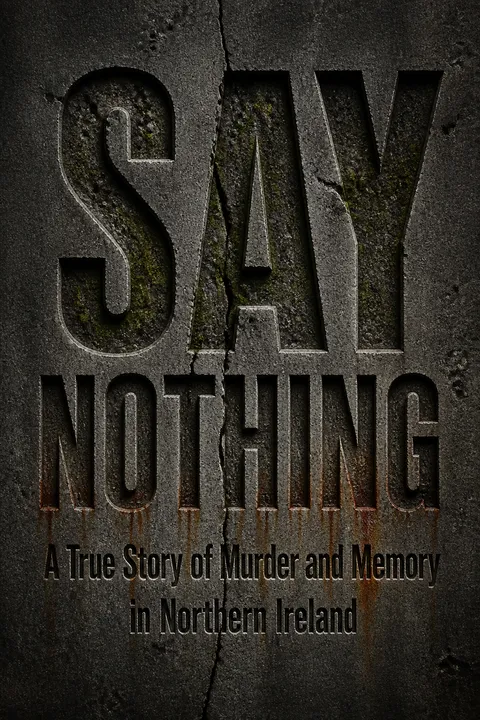
Say Nothing is a meticulously researched account of The Troubles in Northern Ireland, focusing on the disappearance of Jean McConville and key IRA figures. Reviewers praise Keefe's balanced approach, engaging narrative style, and ability to weave personal stories with historical events. The book is lauded for its accessibility to those unfamiliar with Irish history, while still offering depth and new insights. Many readers found it emotionally powerful and difficult to put down, considering it one of the best nonfiction books they've read on the subject.
People Also Read





Glossary
the disappeared
Secretly killed missing peoplePeople abducted and killed during the Troubles whose bodies were secretly buried and whose deaths were concealed from their families. The IRA used disappearance in some cases involving people it accused of informing. The practice denied relatives both certainty and the ordinary rites of burial. A later commission helped locate remains, but it did not settle every dispute about responsibility or motive.
Unknowns
Secret IRA operational cellA small, clandestine unit within the Provisional IRA that handled sensitive operations and answered directly to Gerry Adams. Pat McClure commanded the group, and Dolours and Marian Price were members. The unit’s secrecy kept its work outside the ordinary public structure of the IRA. Its members transported people accused of informing, including individuals who were later executed.
Freds
British-run IRA informantsThe nickname used by the British Army’s Mobile Reconnaissance Force for IRA members recruited to provide intelligence. Some were shown surveillance images, identified people, and helped British forces understand republican networks. The IRA learned about the informants through Seamus Wright and Kevin McKee, who had themselves been recruited. The name reflects the hidden, human infrastructure of counterinsurgency.
Nutting Squad
IRA internal security unitThe Provisional IRA unit responsible for investigating suspected informers and other internal threats. Its members interrogated suspects, sometimes using torture, and informers who confessed could be executed. The name came from the slang term for shooting someone in the head. The squad was created after the earliest disappearances, so it should not be confused with the unit that handled every 1972 case.
counter-gang
Insurgents turned against insurgentsA counterinsurgency tactic in which members of an insurgent movement are recruited to provide intelligence or help undermine their former group. Frank Kitson developed the idea through experience in colonial conflicts, including Kenya, and applied related methods in Northern Ireland. The tactic can reveal hidden networks, but it also creates risks of false intelligence, covert violence, and damage to public trust.
Belfast Project
Secret Troubles oral historyA Boston College oral history project that recorded former republican and loyalist paramilitaries discussing their experiences in the Troubles. Interviewers promised that the material would remain confidential until participants had died. Police subpoenas later led courts to order the release of some recordings. The project became a case study in the conflict between historical testimony, legal evidence, researcher ethics, and participant safety.
moral injury
Distress over violated moral beliefsA form of psychological distress linked to actions a person has committed, witnessed, or failed to prevent that conflict with deeply held moral beliefs. It differs from fear-based trauma because the central wound concerns responsibility, guilt, betrayal, or lost moral meaning. The book uses the idea to illuminate how Dolours Price and Brendan Hughes struggled to interpret violence they had once believed necessary.
FAQ
What's Say Nothing: A True Story of Murder and Memory in Northern Ireland about?
- Focus on the Troubles: The book explores the complex and violent history of the Troubles in Northern Ireland, focusing on the abduction and murder of Jean McConville.
- Personal Stories: It intertwines the lives of key figures like Dolours Price, Brendan Hughes, and Gerry Adams to illustrate the impact of political violence on personal lives.
- Disappeared Victims: The narrative delves into the phenomenon of the "disappeared," highlighting the emotional toll on families left behind, particularly the McConville children.
Why should I read Say Nothing by Patrick Radden Keefe?
- Engaging Narrative: The book reads like a thriller, making complex historical events accessible and engaging through personal stories.
- Insight into Human Experience: It offers profound insights into trauma, loss, and the struggle for justice, encouraging reflection on the moral complexities of political violence.
- Critical Acclaim: Say Nothing has been praised for its thorough research and narrative style, shedding light on lesser-known aspects of the Troubles.
What are the key takeaways of Say Nothing?
- Impact of Violence: The book illustrates how political violence devastates families and communities, leaving lasting scars.
- Complexity of Memory: It emphasizes collective memory and denial, exploring how communities cope with traumatic histories.
- Role of Leadership: The actions and decisions of leaders like Gerry Adams are critically examined, raising questions about accountability.
What are the best quotes from Say Nothing and what do they mean?
- “We cannot build a republic on the IRA’s military victories.”: Gerry Adams underscores the need for a political solution rather than relying solely on armed conflict.
- “There is no such thing as political murder, political bombing, or political violence.”: Margaret Thatcher's assertion reflects her hardline stance against the IRA.
- “This is the past.”: This quote reflects the struggle between acknowledging historical violence and the desire to move forward.
Who are the main figures in Say Nothing?
- Dolours Price: A prominent IRA member, her life story reflects the complexities of loyalty, ideology, and the consequences of violence.
- Brendan Hughes: A former IRA commander, his reflections on moral dilemmas add depth to the narrative.
- Gerry Adams: The leader of Sinn Féin, his actions and denials regarding IRA involvement are scrutinized.
How does Say Nothing address the theme of memory?
- Collective Memory: The book explores how communities construct narratives to cope with traumatic events, often leading to collective denial.
- Personal Testimonies: Through interviews, Keefe highlights varying perspectives on memory among those affected by the Troubles.
- Historical Revisionism: The narrative critiques how history is remembered and recorded, questioning who gets to tell the story.
What role does the concept of "the disappeared" play in Say Nothing?
- Victims of Political Violence: The "disappeared" refers to individuals abducted and murdered by paramilitary groups, particularly the IRA.
- Quest for Justice: Families of the disappeared, especially the McConville children, seek answers and justice for their loved ones.
- Moral Implications: The book raises ethical questions about the justification of violence and the moral responsibilities of those involved.
How does Say Nothing portray the IRA's internal dynamics?
- Leadership and Decision-Making: The book delves into power struggles and decision-making processes within the IRA.
- Role of Women: Keefe highlights the significant contributions of women in the IRA, challenging traditional gender roles.
- Secrecy and Loyalty: The culture of secrecy within the IRA is a recurring theme, illustrating how loyalty and betrayal shaped operations.
What is the significance of the Boston College tapes in Say Nothing?
- Oral History Project: The tapes were part of a project documenting experiences of former paramilitaries, becoming a focal point for legal battles.
- Legal Controversy: Their release raised questions about confidentiality and the ethics of historical documentation.
- Impact on Families: The tapes' content has profound implications for families of the disappeared, as they seek closure and accountability.
How does Say Nothing address the issue of justice and accountability?
- Ongoing Struggles: The book highlights families' ongoing struggles for justice, particularly the McConville family.
- Legal Challenges: Keefe examines legal obstacles faced by families, critiquing the effectiveness of the justice system.
- Moral Responsibility: The book raises questions about the moral responsibilities of individuals and organizations involved in the conflict.
What impact did the Good Friday Agreement have on the individuals in Say Nothing?
- Disillusionment: Many former paramilitaries felt betrayed by the agreement, believing it compromised the original goals of the republican movement.
- Shift in Identity: The agreement forced individuals to confront their pasts and reassess their identities in a post-conflict society.
- Legacy of Violence: The peace process did not erase memories of violence; instead, it complicated narratives for those who had fought.
How does Say Nothing explore the relationship between the IRA and Sinn Féin?
- Political Evolution: The narrative illustrates Sinn Féin's transition from a purely political party to one embracing electoral politics.
- Tension Between Violence and Politics: It highlights ongoing tension within the republican movement between armed struggle and political solutions.
- Leadership Dynamics: The book examines leaders like Gerry Adams in navigating this complex relationship, often prioritizing political expediency.
About the Author
Other books by Patrick Radden Keefe
Download PDF
Download EPUB
.epub digital book format is ideal for reading ebooks on phones, tablets, and e-readers.








