

Key Takeaways
Make a dead man's invented life carry a lie into enemy strategy
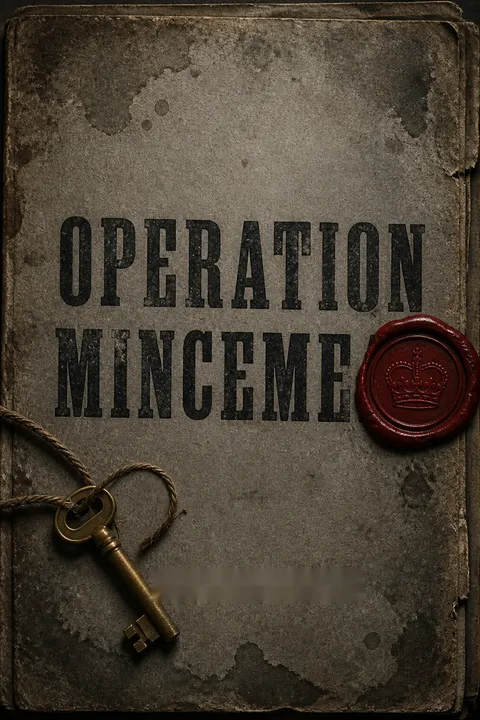
A person made persuasive. In 1943, British intelligence needed to divert German forces from Sicily, the Allies’ obvious next target. Their solution was to send a dead man ashore in Spain carrying false military letters. The corpse became Major William Martin, a Royal Marines officer whose papers described Allied plans to attack Greece and Sardinia instead.
Fiction crossed into fact. The operation, called Mincemeat, depended on more than forged orders. Martin had a fiancée, a worried father, debts, theater tickets, and personal letters. His invented life made the documents look like evidence recovered by chance. A submarine delivered him to Spain, where German agents could find the story and carry it toward Berlin.
What's striking is that the deception worked through ordinary human interpretation, not merely secret codes. The letters gained credibility from the surrounding life, while the life gained credibility from the letters. That mutual reinforcement resembles a well-built argument: each detail appears to support the others. Yet the same feature creates fragility. If one central clue had been disproved, the surrounding realism might have looked like deliberate stagecraft. The operation's achievement was not simply inventing a false person, but making separate pieces of evidence seem to have arisen independently.
When the obvious target cannot be hidden, make it look like the decoy
Sicily was no secret. After Allied success in North Africa, Sicily was the logical next target. It sat close to the North African coast and controlled access to the Mediterranean. British leaders knew the Germans could reach the same conclusion, so the deception could not rely on concealing every sign of preparation.
The cover had layers. Operation Barclay promoted imaginary Allied plans for Greece and the Balkans, while Mincemeat pointed toward Greece and Sardinia. The letters also described Sicily as a possible cover target. That apparent admission made real preparations, including bombing Sicilian airfields, easier to misread as part of the bluff. The aim was not to make Sicily disappear from the map, but to give the enemy a convincing explanation for why it seemed threatened.
This is a useful distinction between hiding a fact and controlling its interpretation. When a visible signal cannot be suppressed, a planner can try to supply a plausible explanation for it. That is a more demanding task than simple concealment because the explanation must fit several competing observations. The strategy also carries a risk: a decoy can become so persuasive that it consumes resources needed elsewhere. Here, the layered plan helped because the false targets were militarily plausible and aligned with concerns the German leadership already held.
Feed a leader the answer his fears are already demanding
Belief shaped judgment. Admiral John Godfrey described two weaknesses in German intelligence: wishfulness, or a readiness to accept reports that matched desired conclusions, and yesmanship, or the tendency of subordinates to tell leaders what they wanted to hear. Hitler already feared an Allied move through Greece and the Balkans, which threatened German access to essential resources.
The lie found receptive minds. German analyst Alexis von Roenne called the papers convincing, and Hitler ordered more forces toward Greece and Sardinia. Their assessment reflected existing anxieties as well as the planted letters. One senior Nazi, Joseph Goebbels, privately questioned whether the documents were camouflage, but his doubts did not redirect the broader response.
The episode shows why evidence does not enter a neutral mind. People evaluate claims against what they already fear, hope, and expect. A false report that fits a leader's mental model can feel more credible than an accurate report that challenges it. But the book also complicates the idea of a single, gullible audience: Goebbels remained wary, and some German analysts asked questions. The deception succeeded not because every recipient believed equally, but because enough influential people accepted it and the institution acted on their conclusion.
Make planted evidence feel discovered, not delivered
A life in the pockets. Martin’s wallet and belongings, sometimes called wallet litter, were designed to supply small clues about his habits and relationships. He carried a photograph of Pam, a woman presented as his fiancée, along with letters from her and his father, a bank warning about an overdraft, and theater tickets dated shortly before his supposed flight.
Details had to agree. The official letters came from senior British officers and suggested attacks on Greece and Sardinia. Personal items made the officer carrying them seem real, while the chain linking his briefcase to his body explained why the documents arrived with him. Some details were imperfect, but German agents in Britain had largely been captured or neutralized, making simple verification difficult.
The strongest evidence here is cumulative: no single ticket or letter proves Martin existed, but together they create a coherent account of his last days. That is also why the plan required discipline. A detail that seems harmless in isolation can undermine the whole construction if it conflicts with the others. The planners sometimes overfilled the story, and a few errors survived. Their advantage was not flawless fakery, but a setting in which the evidence could not easily be checked against a living person.
Build deception as a network, not a lone mastermind's trick
Different skills, one operation. The idea grew from earlier proposals about using a corpse to carry false papers. RAF officer Charles Cholmondeley developed the plan with naval intelligence lawyer Ewen Montagu. A coroner found a suitable body, a pathologist advised on its condition, an inventor designed a sealed transport canister, and submarine commander Bill Jewell delivered it to Spain.
Coordination mattered. The Twenty Committee oversaw double agents, while naval intelligence managed the operation’s documents and communications. The wider Double Cross System used captured German spies to pass misinformation, alongside fictional agents. The work was not frictionless: senior officers repeatedly revised the key letter, and the team had to manage secrecy across several services and countries.
Mincemeat is often remembered as an ingenious idea, but the idea alone could not have changed military decisions. Its success required specialists to solve different problems, from forensic plausibility to maritime delivery and intelligence routing. That makes the operation less like a solitary act of genius and more like a temporary organization built around a shared objective. The network also created coordination costs: every additional participant increased the risk of leaks, but excluding the right expertise would have made the plan far less credible.
Route a lie through enemy spies who have earned the right to be believed
A trusted channel. The British chose Huelva because German agent Adolf Clauss had a strong local network and would likely hear about the body. From there, the documents could reach Karl-Erich Kühlenthal, a senior German intelligence officer in Madrid. Kühlenthal already trusted Juan Pujol, the double agent known to the Germans as Arabel and to the British as Garbo.
Credibility traveled with the messenger. Pujol had built a large fictional spy network and sent the Germans hundreds of reports. Kühlenthal believed the network, and its apparent success improved his standing with German leaders. The Mincemeat letters therefore arrived through people who had reasons to take them seriously, rather than as an unexplained package dropped into Berlin.
A message's source can matter as much as its content. The British exploited a chain of trust already in place, so the new information inherited credibility from earlier reports. This is more efficient than trying to persuade a suspicious audience from scratch. It is also a point of vulnerability: if the source's reputation collapses, the whole stream of information becomes suspect. In Mincemeat, the German officers' confidence in their network helped the false report move upward with unusual speed.
Test the enemy's access to evidence, then stage what they see
The handoff went wrong. The body washed ashore near Huelva on April 30, 1943. The briefcase initially fell into the hands of Spanish naval officers, who were less accessible to German agents than local police. British officials had to appear concerned about the missing papers while avoiding a recovery that came too soon.
Both sides examined the trail. Spanish officials opened the envelopes, copied the key letters, and resealed them before returning the briefcase. British examiners later found evidence of tampering, including altered folds and paper that curled after being removed. The British then sent word, through channels they knew the Germans could monitor, that the papers appeared untouched. The operation depended on managing not just the documents, but beliefs about who had read them.
The Spanish navy's unexpected custody nearly blocked the plan, showing that deception is exposed to events its designers cannot fully control. The British response was to adapt: they used visible concern and staged reassurance to shape what German observers inferred. This resembles managing an experiment in which the observer is also part of the system. Still, the approach depended on luck and on messages being intercepted as expected. A carefully designed performance cannot guarantee that an audience will be watching the intended scene.
Measure deception by forces diverted, not by claiming sole credit
The lie changed deployments. German forces moved toward Greece and Sardinia, and the number of German divisions in the Balkans rose from eight to eighteen between March and July 1943. The First Panzer Division was sent to Greece, where it waited for an attack that never came. Sicily, meanwhile, remained less strongly defended than it might have been.
The invasion still had many causes. Allied forces landed in Sicily on July 10. The island was conquered in 38 days, faster than the 90 days planners had expected, and Allied casualties were lower than feared. Mincemeat contributed to the deception effort, but it was one part of a broader campaign, and the outcome also depended on military planning, air and naval power, and weak Italian resistance.
The book makes a compelling case that Mincemeat altered the distribution of German forces, but it does not turn that effect into a precise body count. Such restraint matters. Counterfactual claims about how many lives a deception saved cannot be measured directly, and Sicily's outcome had multiple causes. The soundest assessment is narrower and stronger: the false documents helped keep attention and resources away from the actual landing zone. That is consequential without pretending one operation single-handedly decided the campaign.
Remember the real person sacrificed beneath the fictional hero
A life without protection. The body was Glyndwr Michael’s. Born into poverty in Wales, he lost both parents, drifted without a home, and died in a London hospital in January 1943 after ingesting rat poison. His family was not consulted before his body was used, and the official account concealed his identity.
The fiction displaced him. As Major William Martin, Michael was buried in Spain with military honors and a gravestone that described a patriotic death. His name was recovered in 1996 from declassified records, and the grave was amended in 1997 to acknowledge that he had served as Martin. The operation honored a fictional officer while the real man remained absent from its public story for decades.
The operation's ingenuity does not erase the asymmetry at its foundation: a man with little social power became a tool for a state without being asked. The book's account restores his identity, but restoration is not the same as consent or compensation. This tension is important because wartime narratives can turn vulnerable people into symbols of national purpose. Remembering Michael as a person, rather than merely as the body that made the plot possible, changes the moral shape of the story.
Treat official histories as another layer of the operation
The public story was edited. After the war, Montagu’s best-selling account described Mincemeat but omitted important participants and misrepresented how the corpse had been obtained. Government approval helped protect intelligence sources, avoid political embarrassment, and keep the identity of the dead man hidden. The celebrated account was therefore itself selective, even as it presented a remarkable true operation.
Secrets outlived the war. The book also reveals a Soviet spy within the wider story: Montagu’s brother Ivor had supplied intelligence to Soviet military intelligence. Soviet services learned about Mincemeat through several sources, including other British spies. The operation’s history is not a simple record of British ingenuity, but a contest over who knew what, who told whom, and what later generations were allowed to read.
The story's afterlife reinforces its central subject: information is shaped by the route it takes and by the interests of those who control it. Montagu's account helped preserve a compelling public narrative, but it also concealed inconvenient facts. That does not make the account worthless; it makes its limits part of the evidence. Readers of intelligence history should distinguish between an operation's contemporary effects and the later stories used to explain, celebrate, or sanitize it.
Analysis
Operation Mincemeat was not simply a clever forgery. It was a chain of constructed credibility: a plausible body, a carefully invented identity, documents that matched the identity, a route through known intelligence networks, and an enemy leadership predisposed to interpret the evidence in a particular way. Each stage had to work well enough for the next. The plan also survived through adaptation. Spanish naval custody interrupted the expected route, and the British responded by shaping what German observers could infer from their own attempts to retrieve the papers.
The most important causal claim is therefore specific. Mincemeat did not make Sicily invisible, nor did it single-handedly win the invasion. It helped persuade German decision makers that other fronts deserved urgent reinforcement, and that strategic diversion mattered in a campaign where surprise and timing were precious. The book gives evidence of forces moved and resources withheld, while also showing that Allied military success depended on many additional conditions. The exact number of lives saved remains unknowable.
The narrative's moral center complicates its triumph. The fictional Major Martin receives family, love, honor, and a grave. Glyndwr Michael, whose body enabled the deception, was poor, isolated, and used without his family's knowledge. The gap between those identities exposes the unequal human costs concealed by strategic language.
Finally, the postwar record repeats the operation's method in a different form. Montagu's authorized account made the story vivid while withholding facts that could embarrass institutions or reveal sources. Later archives changed the picture again. The result is a history in which the deception itself succeeded, but the public account remained another managed version of events. Its enduring lesson is not that imagination always defeats force, but that belief can redirect force when evidence, incentives, and expectation align.
Review Summary
Operation Mincemeat is highly praised for its gripping narrative of a remarkable WWII deception operation. Readers appreciate Macintyre's detailed research, engaging writing style, and ability to bring historical figures to life. Many found the book difficult to put down, comparing it to a thrilling spy novel. Some criticism focused on excessive detail and pacing issues. Overall, reviewers lauded the book for its fascinating subject matter, well-crafted storytelling, and insight into a lesser-known aspect of WWII history.
People Also Read



Glossary
Operation Mincemeat
Dead courier deceptionA British wartime deception operation in 1943. A corpse was dressed as a Royal Marines officer and placed off the Spanish coast carrying forged letters that pointed German attention toward Greece and Sardinia, away from the Allied invasion of Sicily. The plan relied on the body, invented identity, documents, and expected German access to fit together convincingly.
Operation Barclay
Mediterranean diversion planThe wider Allied deception effort designed to obscure the intended invasion of Sicily. It promoted the prospect of attacks in Greece, the Balkans, and Sardinia through dummy forces, false signals, rumors, and double agents. Operation Mincemeat formed one important strand of this broader attempt to spread German forces across several possible targets.
Double Cross System
Controlled double-agent networkThe British system for managing captured German spies and using them to send misleading information back to their handlers. It combined real double agents with invented subordinate agents and was coordinated by British intelligence committees. The system helped make false reports appear to come from a broad, active network inside Britain.
XX Committee
Double-agent oversight groupA British intelligence committee that oversaw the use of double agents during the war. Its name used the Roman numeral for twenty as a double-cross pun. The committee reviewed deception plans, coordinated agencies, and helped decide what information could be passed to German handlers through controlled spies.
Ultra
Decoded German communicationsThe highly classified intelligence produced from deciphered German communications, including messages encoded with Enigma. British intelligence used Ultra to monitor German assessments and movements, assess whether Mincemeat was influencing decisions, and guide the distribution of intelligence. Its secrecy meant that evidence from these intercepts could not be freely shared.
haversack ruse
False papers planted as evidenceA deception technique in which misleading documents are made to appear accidentally lost or abandoned, so the enemy discovers them and draws false conclusions. The technique had older precedents, including a British ruse in the First World War that used a staged lost bag. Operation Mincemeat adapted the idea by using a dead courier.
notional agents
Fictional intelligence sourcesAgents invented by British intelligence who did not exist as real people but were presented to German handlers as members of a spy network. Their supposed reports, habits, and relationships had to remain consistent. Because they could not be captured, coerced, or independently questioned, notional agents could be useful tools for maintaining deception.
wallet litter
Everyday identity cluesThe small personal items people accumulate in wallets and pockets, such as receipts, tickets, letters, and cards. In Operation Mincemeat, these objects were planted to suggest Major William Martin's routines, relationships, finances, and recent movements. Their purpose was to make the invented officer seem like a person whose life could be reconstructed from ordinary traces.
wishfulness
Belief shaped by desireA tendency in intelligence assessment to accept reports that fit what decision makers already hope or fear is true. British intelligence leaders believed German officials were vulnerable to this bias, especially when Hitler's concerns were involved. Mincemeat exploited the tendency by presenting a false plan that aligned with existing German anxieties about Greece and the Balkans.
yesmanship
Telling leaders what they wantThe tendency of subordinates to support a superior's preferred interpretation rather than challenge it. In the book, British intelligence treated this as a weakness in German decision making: officers had incentives to confirm the high command's expectations. It helped explain how a plausible false report could gain authority as it moved through the hierarchy.
About the Author

Download PDF
Download EPUB
.epub digital book format is ideal for reading ebooks on phones, tablets, and e-readers.








