

Key Takeaways
Treat every message you consume or send as food for a relationship.
Communication nourishes or harms. Hanh asks readers to treat not only meals but also media, conversation, and their own words as forms of food. What enters through the eyes and ears can feed fear, anger, or compassion. What leaves through speech and writing can do the same. Mindful consumption means noticing what communication is doing to you instead of absorbing it automatically. This applies to online reading as much as to gossip at work: the point is not to avoid technology, but to choose what deserves attention.
Words change relationships. At Plum Village, a husband heard that his distressed wife needed care, then spent a drive focusing on what he appreciated in her. She returned home noticeably happier. The example makes the claim concrete: attention and speech can alter the emotional atmosphere between people.
The food metaphor usefully shifts communication from a neutral exchange of information to an ongoing environment that shapes mood and judgment. It also connects personal well-being to media habits: repeated exposure to hostile or humiliating content can normalize those tones in everyday interaction. Still, the metaphor should not turn into a demand for perfect curation. People cannot avoid all distressing news or difficult conversations, and some discomfort is necessary for learning and civic awareness. The practical question is whether an input expands understanding or merely keeps agitation circulating.
Return to yourself before you try to reach anyone else.
Presence begins inside. Hanh argues that communication tools cannot make up for a mind that is scattered or unable to recognize its own feelings. Mindfulness, in his usage, is awareness of the present moment, including the body, emotions, and surroundings. A few attentive breaths can reveal whether tension, fear, or anger is shaping what a person is about to say.
Make the pause practical. Before opening a difficult email or answering a ringing phone, stop for three breaths. Mindful walking offers another route: attend to breath, footfall, and contact with the ground instead of mentally racing ahead. Hanh also recounts Nelson Mandela saying he wanted time simply to sit after years of demands. The pause is not wasted time; it helps a person arrive more fully to the next exchange.
This is a communication strategy rooted in attention rather than technique. Research on emotion regulation suggests that noticing bodily signals can help people identify rising stress before it drives an impulsive response. The breath functions as a simple attentional anchor, not a magic fix. Its value lies in creating a small gap between stimulus and reply. That gap may be difficult to access during acute distress, and some people find breath-focused exercises uncomfortable. The broader principle still holds: choose a grounding practice that restores awareness before entering a consequential conversation.
Listen to your own suffering before deciding what another person needs.
Self-understanding makes empathy possible. Hanh says that unacknowledged pain often surfaces as blame, withdrawal, or anger. Listening inwardly means recognizing suffering without immediately judging it or trying to outrun it. He uses the image of holding a distressed child to describe meeting painful feelings with care rather than rejection.
A crisis changes through understanding. One woman described in the book had considered suicide while trapped in conflict with her husband and children. At a mindfulness retreat, she examined her own anger and assumptions, then became able to recognize that her husband was suffering too. She approached him with curiosity instead of accusation, and he began to speak openly. This account illustrates how understanding one’s own pain can widen the view of another person. It is an example of relational change, not a substitute for crisis care.
The movement from self-awareness to empathy is psychologically plausible: naming one’s own emotional state can reduce the impulse to treat a feeling as proof of another person’s intent. The story also resists a simple villain-and-victim account by showing how each partner’s pain shaped the relationship. That insight should not be used to assign equal responsibility in every conflict. When coercion, abuse, or immediate danger is present, safety and outside support take priority over mutual understanding. Compassion can clarify responsibility; it need not erase it.
Let the other person finish before you offer your version of events.
Listening is an active choice. Deep listening is Hanh’s term for listening with the intention of helping another person suffer less. It is not passive agreement. The listener notices judgments and irritation without letting them take over, and resists interrupting to correct details while the other person is trying to express pain.
Protect the quality of attention. Hanh says that a sustained period of compassionate listening can bring relief, but also advises people not to force a conversation when they are too upset to listen well. They can pause and return when calmer. The listener may hear exaggerations or accusations and still wait to respond. Once the speaker feels heard, there is room to clarify misunderstandings. Listening first is not surrendering the truth; it is making truth more likely to be heard.
This practice resembles reflective listening used in counseling and conflict mediation: first understand the speaker’s account, then test interpretations and introduce new information. The order matters because immediate rebuttal often confirms the speaker’s fear of being dismissed. Listening without interruption does not require accepting every claim as accurate. It separates acknowledgment of distress from agreement about facts. The approach also depends on boundaries: no individual can listen indefinitely, and a listener who feels unsafe or overwhelmed can set limits while preserving respect.
Tell the truth in language the listener can actually receive.
Honesty needs skill. Hanh’s Buddhist practice of Right Speech asks people to avoid lying, exaggeration, inconsistent accounts, and violent or humiliating language. Truthfulness is not permission to attack. A speaker should also remember that a strong perception may be incomplete or mistaken.
Adapt the delivery, not the truth. Hanh offers four tests for teaching or speaking well: use familiar language, consider the listener’s understanding, fit the message to the person and situation, and remain faithful to deeper reality. His example of a child frightened by a preserved body shows why timing matters: a complicated account of death may be true but poorly suited to the child’s immediate fear. The speaker can respond simply now and leave room for a fuller conversation when the child is ready.
This account treats communication as both ethical and audience-aware. In rhetoric, a message can be accurate yet ineffective if it ignores what listeners can interpret or tolerate. Hanh’s distinction between changing the explanation and changing the underlying truth is important, especially in teaching, parenting, and leadership. It also creates a risk: deciding what another person can handle can become paternalism or a pretext for withholding information. Skillful timing should therefore remain accountable to the listener’s agency and to an eventual commitment to clarity.
Use small, direct words to replace love’s tests and punishments.
Presence is more useful than performance. Hanh’s Six Mantras are brief prompts for expressing care with attention. In paraphrase, they cover six moves: offer your presence, recognize the other person’s presence, acknowledge their pain, disclose your own hurt and ask for help, notice what is good in the present, and respond to praise or criticism with a balanced view of yourself. Their force depends on sincerity and mindfulness, not on reciting a formula.
Ask instead of testing. Elizabeth, a reader described in the book, noticed that she often lectured her sister. She began expressing appreciation for her sister’s presence. With her husband, she replaced silent punishment with questions about what had happened and what his words meant. These small changes helped reveal that some hurtful remarks came from pressures unrelated to her.
The prompts work like relational bids: small signals that invite attention, reassurance, or repair before resentment hardens. Their directness is valuable because people often communicate hurt indirectly, then judge loved ones for failing to decode it. Yet a formula cannot manufacture trust by itself. The same words can sound hollow when contradicted by neglectful behavior, and some relationships need concrete changes more than verbal reassurance. The useful test is not whether the line sounds warm, but whether it accurately names the need and is followed by conduct that supports it.
Ask before you accuse; pride can turn a mistaken perception into disaster.
Anger narrows the story. Hanh advises recognizing anger, calming it, and examining what fed it before confronting the person blamed. He rejects the idea that shouting or striking a pillow necessarily releases anger, arguing that rehearsing an angry response can strengthen it. The goal is neither suppression nor explosive discharge, but understanding the emotion before acting on it.
One question could have changed a family. In a Vietnamese story, a soldier returned from war and heard his young son describe a nighttime visitor. The father assumed his wife had been unfaithful and withdrew into silence. The boy had actually been pointing to the mother’s shadow on the wall, which she had used to comfort him. The father understood only after his wife had died by suicide. The tragedy shows how certainty, silence, and pride can turn an unchecked assumption into irreversible harm.
The story dramatizes a well-documented cognitive hazard: people often infer intent from limited evidence, then treat their inference as fact. Anger can make that interpretation feel especially certain. A pause and a question are therefore not signs of weakness; they are methods of checking the story before acting on it. Hanh’s warning against anger rehearsal is useful, though emotional expression is not uniformly harmful. The key distinction is whether expression helps identify needs and causes or simply rehearses hostility. Some harms are real, not mistaken perceptions, and require accountability.
Build repair into relationships before resentment becomes their daily climate.
Make room for repair. Hanh presents Beginning Anew as a recurring practice for families or work groups. Participants first name genuine qualities they appreciate in one another, then acknowledge their own regrets, and finally describe hurts or difficulties without blame. During each person’s turn, others listen instead of rebutting. Appreciation is not flattery; it is a way to hold a fuller picture of someone than their latest mistake.
Delay the hard conversation. A Peace Note lets someone name a hurt and request a later time to discuss it calmly. The related Peace Treaty sets shared expectations: do not escalate, do not deny the anger, reflect on one’s contribution, and postpone the conversation if either person is not ready. These practices turn repair from a vague hope into a scheduled, mutual process.
The structure resembles restorative practices, which give people a protected sequence for acknowledging harm, hearing its effects, and considering responsibility. Regular repair can stop small injuries from accumulating into a generalized sense of distrust. Beginning with appreciation may also help participants remember that a relationship contains more than its current conflict. Still, appreciation must not become a price of admission for discussing harm. In unequal or abusive relationships, a group ritual can expose vulnerable people to pressure or retaliation. Safety, consent, and accountability determine whether a repair process is appropriate.
Make mindful communication a shared practice, not a private virtue.
Groups shape individual behavior. Hanh argues that community can support the attention and compassion that are difficult to sustain alone. At work, he suggests beginning meetings with a quiet pause, letting one person speak at a time, and inviting contributions rather than allowing the most eager voices to dominate. Even one person modeling calm can affect the room, though shared practice offers stronger support.
Listen before negotiating. In retreats for Israelis and Palestinians, participants first practiced mindfulness and self-understanding separately. Only after that preparation did they share their experiences, with listeners asked not to interrupt or correct. The aim was to recognize suffering on the other side before attempting solutions. Hanh proposes this sequence for divided groups: calm first, listen deeply, then negotiate.
The emphasis on shared conditions is a valuable correction to accounts of communication that place all responsibility on individual self-control. Meeting norms, facilitation, and protected speaking time shape whose knowledge can enter a decision. This connects mindfulness to psychological safety, the sense that people can speak without immediate humiliation or punishment. But calm dialogue cannot by itself resolve material disputes or unequal power. Listening can humanize opponents and improve negotiation; institutions still need fair procedures, evidence, and enforceable agreements.
Your thoughts and words keep acting after the conversation ends.
Communication leaves consequences. Hanh uses the Buddhist term karma for the combined effects of thought, speech, and bodily action. A resentful thought can influence a later response; a cruel remark can shape how a child experiences a household; a compassionate one can make repair easier. In this view, communication is not limited to what is said aloud. It includes intentions and actions that continue to affect others.
The past can be answered now. Hanh suggests that someone who regrets hurting a deceased relative can acknowledge the harm inwardly and commit to treating others differently. The apology cannot change the event, but a new pattern can change what the event continues to produce. His cloud image conveys this continuity: what one thing generates can keep nourishing other things after its source has changed form.
This view gives everyday communication moral weight without reducing it to public reputation. It also resembles social learning: children and colleagues absorb patterns of speech, conflict, and care, then carry them into other relationships. The idea that present action can answer past harm is psychologically useful because regret can otherwise become either denial or self-punishment. The book’s account of continuing effects is also spiritual, not simply empirical. Readers can take its ethical insight seriously without needing to accept every metaphysical implication.
Analysis
The book’s deepest claim is that communication is not a detachable skill applied after a person has formed an opinion. It is an ongoing practice that shapes the speaker, the listener, and the social world they share. That claim explains the book’s unusual progression: begin with what a person consumes, return attention to the body, understand suffering, listen before speaking, and then extend the practice into relationships, workplaces, and communities. The structure is less a toolkit than a widening circle of responsibility.
Its strongest practical contribution is the insistence that emotional readiness matters. Breathing, waiting, and listening are presented not as decorative calm but as conditions for seeing accurately. The story of the soldier who mistakes a shadow for evidence makes the cost of certainty memorable. So do the small scripts for acknowledging pain and asking for help. They replace indirect tests of affection with information another person can act on.
The approach is most persuasive when it joins compassion to truthfulness. Hanh does not equate kindness with hiding facts: his account of Right Speech emphasizes honesty, restraint, and language fitted to the listener. That balance is difficult in practice. Adaptation can become concealment, and listening can be mistaken for agreement. The book is strongest when its methods are treated as ways to improve understanding, not as obligations to absorb harm or forgive on demand.
A second limitation is that interpersonal insight cannot solve every conflict. Some problems arise from unequal power, material scarcity, institutional incentives, or deliberate abuse, not merely from misperception. Compassionate conversation may help people address these realities, but it cannot replace boundaries, protection, or structural change. The book itself acknowledges the need for safety in violent relationships, a distinction essential to using its practices responsibly.
Taken together, the ideas offer a demanding but usable ethic: notice what is shaping attention, understand the pain beneath reactions, speak truth without adding needless injury, and create shared conditions for repair. The measure is not whether every conversation feels peaceful. It is whether communication increases clarity, care, and the possibility of responsible action.
Review Summary
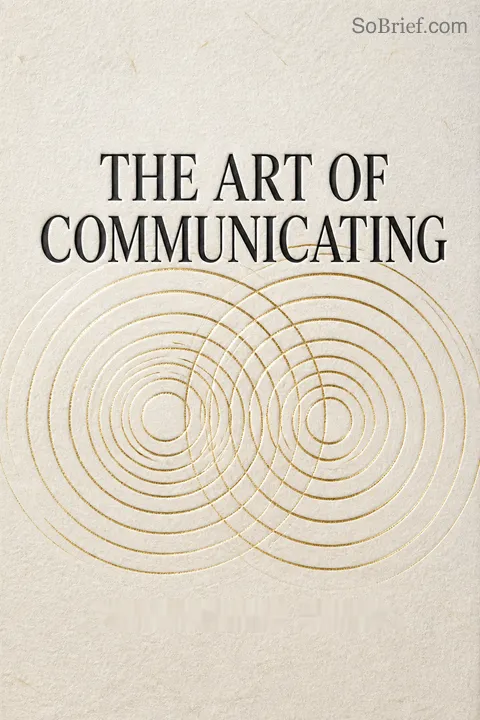
The Art of Communicating is highly regarded for its insights on mindful communication, compassion, and self-awareness. Readers appreciate its simple yet profound advice on listening deeply and speaking lovingly. Many find it transformative, though some feel it's basic or repetitive. The book emphasizes understanding one's own suffering to better communicate with others. While rooted in Buddhist philosophy, its teachings are seen as applicable to all faiths. Some readers note the challenge of implementing the practices in real life, despite their apparent simplicity.
People Also Read




Glossary
Mindful consumption
Attentive intake of communicationThe practice of noticing how media, conversations, and other sensory experiences affect the mind and relationships. Hanh treats what people hear, read, watch, and say as nourishment that can strengthen compassion or intensify suffering. Mindful consumption does not require avoiding technology; it requires awareness of what is being taken in and what effects it has.
Deep listening
Listening to reduce sufferingListening with the intention of understanding another person’s suffering and helping relieve it. The listener tries not to interrupt, judge, or immediately correct the speaker, even when the account seems mistaken or accusatory. Deep listening is not agreement with every claim. It is a way to make room for the speaker’s experience before responding.
Right Speech
Truthful, non-harmful speechA Buddhist practice of speaking truthfully and in ways that do not needlessly cause suffering. In this book, it includes avoiding lies, exaggeration, inconsistent or manipulative speech, and violent or humiliating language. Right Speech also requires skill: a speaker considers the listener’s understanding and the circumstances without changing the underlying truth for personal advantage.
Six Mantras
Prompts for loving communicationSix short communication practices for expressing presence, recognizing another person, acknowledging suffering, asking for help, appreciating the present, and responding to praise or criticism with humility. Hanh presents them as ways to make care explicit and to interrupt indirect punishment or neglect. They are intended to be spoken mindfully, not repeated mechanically.
Beginning Anew
A recurring relationship repairA structured practice for renewing communication in families or groups. Participants express appreciation for one another, acknowledge their own regrets, and describe hurts or difficulties while others listen without interruption. The practice aims to keep gratitude and accountability present together, so resentment can be addressed before it accumulates.
Peace Treaty
Agreement for handling conflictA mutual set of commitments for responding to anger without escalating it. It asks the person who is hurt not to suppress anger, to reflect, and to request a calm conversation; it asks the other person to respect the hurt and allow time. Either person can postpone discussion if they are not calm enough to participate constructively.
Peace Note
Written request for repairA brief written message that names an action or remark that caused hurt and proposes a later time to discuss it calmly. It creates a way to disclose suffering without starting an immediate argument. The note is not a verdict on the other person’s intent; it opens a shared inquiry into what happened and how to repair the relationship.
habit energy
Inherited or learned response patternsA recurring tendency to think, feel, or act in familiar ways, often without conscious choice. Hanh describes these patterns as arising from personal experience and family history, including suffering transmitted across generations. Mindfulness helps a person recognize a pattern as it appears, interrupt its automatic expression, and gradually weaken its influence.
karma
Effects of thought, speech, actionA Buddhist term meaning action, used here to include thoughts, words, intentions, and bodily behavior. These actions have consequences for the person producing them and for others, and their effects can continue beyond the immediate moment. Hanh emphasizes that communication is part of this ongoing consequence, rather than something separate from a person’s life.
FAQ
What's "The Art of Communicating" about?
- Mindful Communication: The book by Thich Nhat Hanh focuses on the art of mindful communication, emphasizing the importance of being present and aware in our interactions.
- Holistic Nourishment: It explores the concept that communication is a form of nourishment, affecting our well-being and the well-being of those around us.
- Compassionate Practices: The book provides practical advice and exercises for developing compassionate communication skills, both with ourselves and others.
- Building Relationships: It highlights the role of communication in building and maintaining healthy relationships, communities, and a peaceful world.
Why should I read "The Art of Communicating"?
- Improve Communication Skills: The book offers valuable insights and techniques to enhance your communication skills, making interactions more meaningful and effective.
- Enhance Relationships: By practicing the methods outlined, you can improve your relationships with family, friends, and colleagues.
- Personal Growth: It encourages self-reflection and mindfulness, promoting personal growth and emotional well-being.
- Global Impact: The principles of compassionate communication can contribute to creating a more understanding and peaceful world.
What are the key takeaways of "The Art of Communicating"?
- Mindful Presence: Being fully present in communication is essential for understanding and connection.
- Compassionate Listening: Deep listening without judgment is crucial for alleviating suffering and fostering understanding.
- Loving Speech: Speaking with kindness and mindfulness can transform relationships and reduce conflict.
- Self-Communication: Understanding and communicating with oneself is the foundation for effective communication with others.
How does Thich Nhat Hanh define "Essential Food" in communication?
- Broad Definition of Food: Hanh expands the concept of nourishment to include what we consume through our senses and interactions.
- Impact on Well-being: He emphasizes that everything we consume, including conversations, can either heal or poison us.
- Mindful Consumption: Being aware of what we ingest through communication is crucial for maintaining mental and emotional health.
- Positive Nourishment: Encourages creating and participating in communication that uplifts and nourishes ourselves and others.
What are the "Six Mantras of Loving Speech" in "The Art of Communicating"?
- "I am here for you": This mantra emphasizes the importance of being present for loved ones.
- "I know you are there, and I am very happy": Acknowledges the presence of others as a source of happiness.
- "I know you suffer, and that is why I am here for you": Offers support and understanding in times of suffering.
- "I suffer, please help": Encourages vulnerability and asking for help when needed.
- "This is a happy moment": Reminds us to appreciate the present moment and its happiness.
- "You are partly right": Balances praise and criticism, acknowledging both strengths and weaknesses.
How does Thich Nhat Hanh suggest we handle anger in communication?
- Mindful Breathing: Use mindful breathing to recognize and embrace anger without acting on it impulsively.
- Tenderness Toward Anger: Treat anger with tenderness, understanding it as a part of ourselves that needs care.
- Avoid Suppression: Suppressing anger can be harmful; instead, acknowledge and explore its roots.
- Communicate Calmly: Once calm, communicate your feelings using compassionate speech to resolve conflicts.
What is the role of "Deep Listening" in "The Art of Communicating"?
- Compassionate Intention: Deep listening involves listening with the intention to help the other person suffer less.
- Non-Judgmental Approach: It requires letting go of judgment and being fully present to the speaker's words and emotions.
- Healing Power: Deep listening can create moments of joy and help handle painful emotions.
- Foundation for Understanding: It is essential for understanding others and building compassionate relationships.
How does Thich Nhat Hanh address "Communicating with Yourself"?
- Internal Connection: Emphasizes the importance of connecting with oneself to understand personal emotions and thoughts.
- Mindful Awareness: Encourages practices like mindful breathing and walking to foster self-awareness.
- Self-Compassion: Understanding and loving oneself is crucial for effective communication with others.
- Digital Mindfulness: Suggests using technology mindfully to enhance rather than hinder self-communication.
What are the "Four Elements of Right Speech" according to Thich Nhat Hanh?
- Truthfulness: Always tell the truth and avoid lying or distorting facts.
- Non-Exaggeration: Refrain from exaggerating or embellishing the truth.
- Consistency: Avoid double-talk and be consistent in your speech across different contexts.
- Peaceful Language: Use language that is non-violent, non-insulting, and non-judgmental.
How can "The Art of Communicating" be applied in the workplace?
- Mindful Arrival: Begin the workday with mindful breathing to arrive calm and present.
- Compassionate Meetings: Use deep listening and loving speech in meetings to foster understanding and collaboration.
- Stress Reduction: Incorporate mindful breathing practices to reduce stress and improve communication.
- Lead by Example: Model mindful communication to inspire colleagues and create a harmonious work environment.
What are some of the best quotes from "The Art of Communicating" and what do they mean?
- "Nothing can survive without food." This quote highlights the importance of mindful consumption in all forms, including communication.
- "Our communication is our continuation." Emphasizes that our words and actions leave a lasting impact and define our legacy.
- "Love is born from understanding." Suggests that true love and compassion arise from deeply understanding another's suffering.
- "Mindfulness is our skin." Illustrates mindfulness as a protective layer that helps us navigate and filter our experiences.
How does Thich Nhat Hanh suggest we "Create Community in the World"?
- Collective Mindfulness: Encourages building communities committed to mindful speech and deep listening.
- Shared Energy: Highlights the power of collective mindfulness to support individual practice and societal change.
- Trust and Patience: Building trust and understanding in communities takes time and requires patience.
- Global Impact: Compassionate communication within communities can lead to broader societal transformation and peace.
About the Author
Other books by Thich Nhat Hanh








Download PDF
Download EPUB
.epub digital book format is ideal for reading ebooks on phones, tablets, and e-readers.








