Key Takeaways
1. Asperger's Diagnosis: A Product of Nazi Vienna
Asperger’s diagnosis of autistic psychopathy emerged from the values and institutions of the Third Reich.
Challenging a benevolent image. The modern perception of Hans Asperger as a compassionate champion of neurodiversity is incomplete. His groundbreaking diagnosis of "autistic psychopathy" was not a standalone scientific discovery but was deeply intertwined with the political and social climate of Nazi Vienna. This historical context reveals how societal values can profoundly shape medical classifications.
Turbulent interwar period. Vienna in the 1920s and 1930s was a cauldron of social upheaval, political strife, and economic ruin following World War One. The city's progressive welfare system, "Red Vienna," aimed to create "new people" for a socialist society, but it also embraced eugenics, leading to increased state intervention in family life and child-rearing. This laid the groundwork for later, more authoritarian measures.
Shifting scientific landscape. Asperger's career began amidst this transformation. He joined the University of Vienna Children's Hospital under Franz Hamburger, a staunch Nazi sympathizer who purged Jewish and liberal faculty. This environment, coupled with the Nazi annexation of Austria in 1938, created a vacuum that allowed Asperger and his like-minded colleagues to rise, shaping their work to align with the regime's eugenicist and collectivist ideals.
2. The Dual Nature of Asperger's Actions
While Asperger did support children he believed to be teachable, defending their disabilities, he was dismissive about those he believed to be more disabled.
A two-sided approach. Asperger's actions were characterized by a stark duality. He offered intensive, individualized care to children he deemed "promising" and capable of "social integration," often highlighting their "special abilities" in technical professions. This benevolent side is what largely defines his modern reputation.
Condemnation for the "irremediable." Conversely, Asperger prescribed harsh institutionalization and even transfer to Spiegelgrund, a notorious child killing institution, for children he judged to have "greater disabilities" or to be "irremediable." This distinction between "favorable" and "unfavorable" cases was a core tenet of Nazi medicine, which sought both to "treat" and to "eliminate" individuals based on their perceived value to the Reich.
Echoes of Nazism's project. This double-sided character mirrored Nazism's broader project to transform humanity. The regime aimed to train some individuals to meet its standards while eradicating others deemed undesirable. Asperger's selective compassion, therefore, was not an act of resistance against Nazi ideology but rather an embodiment of its core principles within the medical field.
3. Nazi Psychiatry and the Concept of "Gemüt"
Gemüt was essential to individuals’ connection with the collective, a key ingredient for fascist feeling.
The racialized "soul." Nazi child psychiatry, particularly influenced by figures like Paul Schröder (Asperger's mentor), developed the concept of "Gemüt" to signify a metaphysical capacity for social bonds and collective feeling. Originally meaning "soul," "Gemüt" became racialized under Nazism, representing a uniquely German quality essential for belonging to the "Volk" (national community).
Diagnosing social disconnection. Children who lacked "Gemüt" were seen as problematic for society. Nazi child psychiatrists created numerous diagnoses, such as "gemütsarm" (lacking Gemüt), to classify children who forged weaker social ties and did not align with collectivist expectations. This focus on social cohesion became a new category of persecution alongside race and physical defects.
Asperger's adoption of "Gemüt." Asperger, deeply influenced by Schröder, incorporated "Gemüt" into his definition of autistic psychopathy. He described autistic children as having a "poverty of Gemüt" or "anomalous Gemüt," leading to a "disharmony of feeling" and a "narrowing of relations to their environment." This framed autism not just as a medical condition but as a fundamental failing in social and national belonging.
4. Indexing Lives in a "Diagnosis Regime"
The state became obsessed with sorting the population into categories, cataloguing people by race, politics, religion, sexuality, criminality, heredity, and biological defects.
Mass customization on paper. The Third Reich operated as a "diagnosis regime," meticulously cataloging its population through various means like Ancestor Passports, Labor Books, and the Hereditary Index. This monumental undertaking aimed to abstract individual lives into standardized forms and numbers, assessing social, economic, biological, and mental attributes.
Public Health Offices as instruments. Vienna's Public Health Office, directed by Max Gundel (a co-founder of Asperger's Vienna Society for Curative Education), was central to this effort. It gathered extensive information on citizens, funneling it into a Hereditary Inventory that blended bodily, psychological, social, economic, and racial concerns. This data was used to:
- Deny marriage loans
- Enforce forced sterilizations
- Authorize arrests and internments
- Facilitate deportations and euthanasia killings
Asperger's role in categorization. Asperger actively collaborated with these state agencies, serving as a medical expert for Vienna's Public Health Office and juvenile court system. His clinic became an "advisory body" for the city, assessing children's "educability" and "value" to the regime. His diagnoses, even if seemingly benign, contributed to this system of classification that determined individuals' fates.
5. Spiegelgrund: A Center for Child Euthanasia
At least 789 children died there during the Third Reich, with the official cause of death for almost three-quarters of them listed as pneumonia.
The "special children's wards." Spiegelgrund was Vienna's notorious child killing institution, part of a network of 37 "special children's wards" across the Reich. Children deemed "unfit" were sent there for "observation" and, frequently, medical murder. The official cause of death was often falsified, typically as pneumonia, to mask the deliberate killings.
Beyond physical disability. While the program ostensibly targeted children with biological disabilities, Spiegelgrund's criteria for killing extended to social factors. Children were assessed on their perceived ability to integrate into the "Volk," with "alien to the community" (Gemeinschaftsfremd) being a key criterion. Many victims had amorphous diagnoses like "imbecility" or "idiocy," or no specific diagnosis at all.
A system of social control. Spiegelgrund was deeply integrated into Vienna's welfare system, functioning as an educational institution and reformatory. Children from poor, single-parent, or "asocial" families were disproportionately targeted. The institution's methods, including brutal regimentation, appalling conditions, and violent discipline, were often indistinguishable from other children's homes, except for the ultimate threat of extermination.
6. Asperger's Active Complicity in the Killing System
Files reveal that Asperger participated in Vienna’s child killing system on multiple levels.
Collaboration with perpetrators. Asperger co-founded the Vienna Society for Curative Education with key figures in the child euthanasia program: Max Gundel (head of Vienna's Public Health Office and municipal director of Spiegelgrund), Erwin Jekelius (medical director of Spiegelgrund), and Franz Hamburger (director of the University of Vienna Children's Hospital). This organization aimed to synchronize child treatment efforts under Nazi auspices.
Public recommendations for Spiegelgrund. Asperger publicly urged his colleagues to transfer "difficult cases" of children to Spiegelgrund for "prolonged and stationary observation." This seemingly benign language was, in fact, a code for the killing process, as "stationary observation" and "treatment" (Behandlung) were euphemisms for determining a child's fate and, often, for murder.
Direct involvement in transfers. Records indicate Asperger's direct involvement in transferring dozens of children to Spiegelgrund, many of whom perished.
- He served on a city commission that sent 35 children to Spiegelgrund for "Jekelius Action" (an instruction to kill); all 35 died.
- He recommended transfers as a medical consultant for various Nazi administrative offices.
- His clinic directly sent children to Spiegelgrund, including two girls who died.
These actions demonstrate a conscious and active participation in the regime's extermination policies.
7. Gender Bias in Autistic Psychopathy
We have never met a girl with the fully fledged picture of autistic psychopathy.
A male-centric diagnosis. Asperger explicitly stated that autistic psychopathy was a male diagnosis, claiming he had "never met a girl with the fully fledged picture." He attributed similar traits in girls to hormones or "masculinization" in American women, rather than an underlying condition. This gender bias was rooted in the prevailing stereotypes of his time.
Intelligence and gender. Asperger linked autistic psychopathy to superior intelligence, particularly abstract thinking, which he considered a male trait. He believed boys possessed a "gift for logical ability, abstraction, precise thinking," while girls were suited for "the concrete and the practical." This led to differential interpretations of similar behaviors:
- Boys' atypical speech was praised as "creative" or "original."
- Girls' digressive speech was deemed "inadequate" or "uncontrolled."
- Boys' resistance to testing was seen as a sign of hidden genius.
- Girls' similar behavior would likely be dismissed as lack of intelligence.
Differential treatment and outcomes. This gendered interpretation had deadly consequences. While boys like Fritz and Harro, despite problematic behavior, received intensive, individualized care due to their perceived intellectual potential, girls like Elfriede and Margarete, exhibiting similar traits, were dismissed as "irremediable" and sent to institutions like Spiegelgrund, where they faced death.
8. The Daily Horrors and Rationalizations of Murder
It didn’t even matter to us, because we had become so phlegmatic that we actually didn’t care what they did.
Systematic dehumanization. Spiegelgrund survivors recounted a daily life of terror, hunger, and violence. Children were subjected to brutal regimentation, "vomit shots," "sulphur cures," and constant humiliation. They were stripped of their dignity, reduced to numbers, and pitted against each other, fostering a sadistic environment where "the law of the jungle ruled."
Perpetrators' justifications. Spiegelgrund staff, including doctors like Marianne Türk and Heinrich Gross, rationalized their actions as professional clinical practice and acts of compassion. They claimed to be "healing sick children and killing those who were terminally ill," believing they were shortening "unnecessary agony." This rhetoric disguised the true intent: purging the Reich of "undesirable" citizens.
Public knowledge and parental responses. Despite attempts at secrecy, knowledge of the killings was widespread in Vienna. Some parents desperately tried to rescue their children, while others, burdened by poverty or societal stigma, expressed acceptance or even approval of their child's death, often believing the official cause of death or hoping for a "painless" end. This complex interplay of fear, complicity, and desperation highlights the pervasive cruelty of the regime.
9. Asperger's Post-War Image and Self-Absolution
If the Nazis had won the war, it would have cost me my head.
A fabricated narrative of resistance. After the war, Asperger actively cultivated an image as a resister of Nazism, claiming he "never reported those with cerebral injuries for extermination" and faced Gestapo arrest. This narrative, though lacking documented evidence, helped him avoid denazification and prosper in his career, becoming interim director of the University of Vienna Children's Hospital.
Shifting academic focus. Post-war, Asperger largely moved away from his Nazi-era work on autistic psychopathy, publishing very few articles on the topic. He also distanced himself from the concept of "Gemüt" and adopted a more benevolent tone, emphasizing the "special abilities" of autistic children. This shift may reflect a genuine change in conviction or a strategic effort to cleanse his work of its tainted origins.
The ethics of atonement. Asperger's post-war writings explored themes of morality, free will, and atonement. He argued that true absolution came from an internal decision to acknowledge wrongdoing, without necessarily requiring external action or public confession. This philosophical stance allowed him to reconcile his past actions with his conscience, highlighting the complex ways individuals grappled with their complicity in the Third Reich.
10. The Enduring, Unsettling Legacy of a Diagnosis
The history of Asperger and autism should underscore the ethics of respecting every child’s mind, and treating those minds with care—showing how a society can shape a diagnosis.
Unvetted origins. Asperger's diagnosis gained international recognition decades later, largely through the work of Lorna Wing and Uta Frith, who translated and popularized "Asperger's Syndrome." Neither the World Health Organization nor the American Psychiatric Association thoroughly vetted Asperger's Nazi-era activities before naming a condition after him, leading to a diagnosis cleansed of its historical context.
The "autism spectrum" and societal anxieties. The expansion of Asperger's ideas into the "autism spectrum" in the 1990s coincided with a "diagnosis regime" of its own, driven by increasing scrutiny of children and anxieties about integration in a fast-changing world. This spectrum, mirroring Asperger's hierarchy of "favorable" and "unfavorable" cases, reflects societal hopes for "high-functioning" individuals and fears of isolation.
A call for ethical reflection. The story of Asperger and autism serves as a cautionary tale about the power of diagnostic labels and their susceptibility to social and political forces. It highlights how classifications can dehumanize, lead to persecution, and shape self-perception. Understanding these origins is crucial for fostering neurodiversity and ensuring that diagnoses are rooted in respect for every child's unique mind, rather than societal ideals or prejudices.
Last updated:
Review Summary
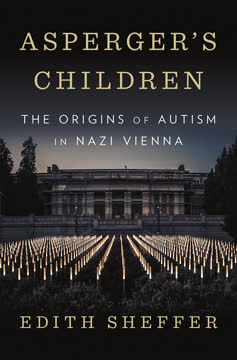
Asperger's Children presents meticulously researched evidence that Hans Asperger was complicit in Nazi Vienna's child euthanasia program, sending children he deemed "unredeemable" to their deaths at Spiegelgrund clinic. Reviewers find the book disturbing yet essential, documenting how psychiatric diagnoses served Nazi eugenic ideology. Many praise Sheffer's balanced approach and extensive archival work, though some note repetitive sections and misleading expectations about autism content. The book challenges Asperger's heroic reputation and questions diagnostic labels' origins and ongoing social implications, particularly regarding neurodiversity and conformity pressures in modern psychiatry.
Similar Books