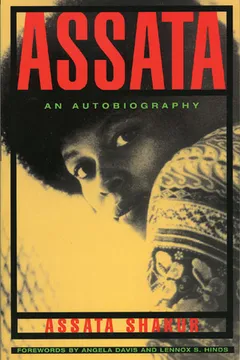


Key Takeaways
Treat survival as resistance when institutions deny your humanity
The opening wound. Shakur begins with the May 1973 highway shooting. She recounts that Zayd was dead, she had been shot twice, and officers assaulted and threatened her while she lay injured. At the hospital, she says, police questioned her before she could reach her family or lawyer. Her lung was damaged, her right arm paralyzed, and a bullet remained in her chest. A Black nurse eventually helped her contact her aunt and lawyer. She describes being chained to a hospital bed under armed guard, with threats and intimidation continuing around her care.
A contested first account. The memoir opens here because the arrest becomes the lens through which Shakur examines law, medicine, and state authority. Her immediate task is to survive without letting her captors dictate who she is.
What's striking is the gap between care as a formal service and care as a lived experience. A hospital can treat a wound while the patient remains exposed to coercion, surveillance, and fear. Trauma psychology distinguishes the original injury from the sustained threat that follows it, a distinction that clarifies why the account gives so much weight to small acts of safety, such as the nurse's help. The episode is Shakur's testimony, not an independently verified record in this text, but its specificity invites scrutiny of how custody can compromise both bodily autonomy and medical trust.
Carry your dignity into rooms designed to make you feel lesser
Dignity as training. Shakur's grandparents taught her to hold her head up, speak clearly, and expect respect, even under Jim Crow. Their lessons were not abstract: her grandmother sent her back to stores to reject inferior goods and confronted white trespassers on the family's property. The family had to buy again a house they believed an ancestor owned, after discovering the legal arrangement had given him only lifetime use. They later built a Black beach business on family land despite intimidation from white locals.
A child's education. Segregation also meant Shakur could not visit the local zoo or amusement park. Her mother once talked their way into a ride by pretending to be from abroad. Such episodes taught Shakur that exclusion was constructed, not natural, and that dignity could be practiced even when access was denied.
The family scenes show dignity as a learned social skill, passed through repetition and example. This resembles cultural transmission: children absorb not only what adults say, but the conduct they see when a boundary is tested. The beach business also makes dignity material, tied to land, leisure, and economic independence. Still, self-respect cannot substitute for equal access or legal protection. The memoir's strength lies in holding both truths together: a family can equip a child to resist humiliation, while the surrounding institutions continue to produce it.
Question the beauty standards you learned before they become self-hatred
Racism learned inward. As a child, Shakur absorbed the idea that lighter skin, straighter hair, and thinner features were more attractive. Black children repeated insults about one another's hair and features, while adults straightened hair or used skin-lightening creams. Shakur herself once rejected a dark-skinned boy with a cruel comment about his appearance. His hurt forced her to recognize how deeply she had taken in the standards around her.
Changing the mirror. At college, she cut off her chemically straightened hair and began wearing it natural. She describes this as a personal choice shaped by a political environment that routinely devalued Black appearance and culture. Her point is not that one hairstyle makes someone politically virtuous. Rather, she came to see grooming as capable of expressing either conformity or self-definition.
The most powerful part is the recognition that prejudice can travel through a community without being consciously endorsed. Social psychology calls this internalization: repeated judgments can become a person's own preferences and self-assessments. Shakur's memory of hurting Joe makes the process concrete, because the harm was not limited to white institutions. Her account also wisely avoids treating appearance as a reliable measure of political commitment. A natural hairstyle can signal refusal, but symbols alone cannot reveal a person's beliefs or replace changes to the conditions that make some features seem superior.
Turn private confusion into political knowledge by tracing who benefits
Learning to investigate. As a teenager and young adult, Shakur often repeated claims about communism and the Vietnam War without knowing their history. A conversation with African students challenged her assumptions and sent her to read more. She began asking who controlled resources, whose interests government policy served, and why the history taught in school left out Black resistance.
Theory meets experience. Her work at an employment agency exposed another gap between official promises and actual opportunity. A conference advertised to connect Black graduates with corporations produced few interviews; she learned that participating firms could satisfy a requirement to seek candidates without hiring them. For Shakur, education meant joining historical study to everyday evidence, then asking how knowledge could serve communities rather than merely help an individual advance.
The shift from repeating a claim to investigating its origin is a form of epistemic independence. It resembles media literacy, where the key question is not only whether a statement sounds plausible, but who produced it, what evidence supports it, and what incentives shape its circulation. The employment conference gives this method a concrete test. At the same time, tracing beneficiaries does not automatically establish a complete explanation: political analysis still needs competing evidence and careful distinctions among actors. Shakur's most durable lesson is the habit of inquiry, not the presumption that one framework answers every question.
Do not confuse courtroom procedure with a genuinely fair trial
Justice before evidence. Shakur describes repeated trials in which she believed prejudice had already shaped the outcome. In one federal bank robbery case, an image of a woman with a gun had been widely circulated with her name beneath it. The defense challenged the identification process, and a bank manager testified that she was not the robber. The jury acquitted her. In New Jersey, by contrast, she describes hostile media coverage, a jury drawn from a county with very few Black residents, and limited defense access to forensic experts. She was convicted in 1977.
The memoir's argument. Shakur sees jury selection, public narratives, money for investigators, and access to expert testimony as parts of justice, not procedural details separate from it. The same rules can operate very differently when one side has far greater resources.
The account anticipates a central question in procedural justice: can a trial be meaningfully impartial when the pool, publicity, and resources are unequal before testimony begins? Formal rights matter, but their practical value depends on whether a defendant can investigate and challenge the state's case. The contrasting outcomes in Shakur's trials make that disparity vivid. A memoir cannot, by itself, settle every factual dispute about a verdict, and acquittal in one case does not prove innocence in another. It can, however, expose how process and power shape what a jury is able to hear.
Build solidarity through practical care, not slogans alone
Care with consequences. In jail, Black nurses helped Shakur when guards and prison staff obstructed ordinary communication and treatment. Other incarcerated women helped her manage daily tasks with one functioning arm, shared what they had, and offered companionship during isolation. Their support did not erase the conditions, but it made survival more possible.
Food as politics. In the Black Panther Party, Shakur worked on a breakfast program for children. One boy quietly saved food for his mother because their stove was broken and the family had little to eat. Shakur responded by offering food to take home, not by treating the child as a rule-breaker. The program linked political commitment to a material need, and it showed her that service starts by listening to what people actually lack.
These episodes make solidarity observable. It is not simply agreement with a cause; it is the practical distribution of time, food, attention, and protection. Scholars of care ethics emphasize that survival depends on often-invisible labor, a point the nurses, prisoners, and breakfast volunteers embody. The child's food story also shows why institutions should interpret behavior in context rather than default to suspicion. Yet local care cannot compensate for an unsafe jail or inadequate social provision. Its importance is both immediate and diagnostic: care helps people endure, while the unmet need reveals what systems are failing to provide.
A movement needs study, criticism, and roots among ordinary people
Organization under pressure. Shakur joined the Black Panther Party, working on health services and free breakfasts while studying Black history and political theory. She valued the Party's community programs, but criticized its uneven political education, weak organizing training, and tendency toward slogans without enough context. She also describes disputes and expulsions that weakened relationships among members.
Divide and conquer. COINTELPRO was the FBI counterintelligence program that, in Shakur's account, targeted political movements through surveillance, disruption, and efforts to provoke internal conflict. She recalls that forged communications and false rumors helped deepen divisions in the Panthers. The experience led her to stress criticism, accountability, and political education, along with sustained ties to the people a movement claims to represent.
The organizational lesson is sharper than a call for unity at any cost. Cohesion without criticism can protect leaders from correction; criticism without trust can accelerate fragmentation. Research on resilient organizations similarly points to the value of feedback channels that surface problems before they become existential. The memoir also highlights an adversarial environment in which outside actors may exploit internal weaknesses. That pressure makes transparent accountability more important, not less. Shakur's account presents COINTELPRO as a major cause of division, while also showing that movements need internal practices capable of resisting manipulation.
Armed courage cannot substitute for strategy or mass support
Will is not a plan. After going underground, Shakur encountered small, dispersed groups with different politics, little training, and no shared command. She understood why people who had seen leaders killed and communities assaulted wanted to fight back. But she concluded that courage and sacrifice alone could not win liberation.
Politics and force. She argues that armed resistance cannot succeed by itself. A movement needs a long-term political strategy, public support, organization, and a clear understanding of the conditions it is trying to change. In her view, actions must connect to political goals and make sense to the people whose freedom is at stake. Emotional urgency may be understandable, but decisions made only from anger can endanger a movement without building its strength.
This is a strategic argument about legitimacy as much as tactics. Collective-action research repeatedly finds that durable movements depend on recruitment, coordination, and a credible relationship with the communities they claim to serve. Shakur's distinction between resolve and strategy helps explain why isolated acts of defiance can fail to accumulate political power. There is also a serious tension: when peaceful channels are closed or violently repressed, calls for restraint can sound like demands for passivity. Her standard is more demanding than either reflex. It asks whether a tactic advances a broader, publicly supported project.
Treat freedom as more than escape: repair the relationships confinement fractures
A child's loss. During a visit in prison, Shakur's four-year-old daughter struck her and said Shakur was not her mother. The child's anger reflected years of separation, not a failure of affection. Shakur understood that a short weekly visit could not restore the everyday relationship prison had taken away. The moment helped her decide that she had to leave.
Freedom with consequences. After escaping, Shakur reached Cuba and reunited with her family after years without contact. She describes the joy of seeing her daughter again alongside the lasting damage to her family and her own difficulty readjusting after prison. Her reflections on Cuba are also qualified: she saw a government committed to opposing racism, while recognizing that history and racial assumptions did not disappear overnight. Freedom required safety, connection, and continued political work.
The reunion makes freedom relational rather than merely legal or geographic. A person may escape confinement while still carrying its injuries, and children experience separation in their own terms, not as an abstract political sacrifice. Family systems thinking helps illuminate why the grandmother, mother, aunt, and daughter form part of the story's infrastructure of survival. The memoir also resists a simple before-and-after account of Cuba: a different political system can change institutions without instantly resolving inherited attitudes. That distinction keeps hope from becoming a claim of perfection.
Analysis
Assata is both a life story and an argument about how power is experienced in ordinary institutions. Its structure begins with the turnpike shooting, then moves back through childhood, school, work, political awakening, organizing, imprisonment, and exile. That opening makes the reader encounter the state's force before learning how the narrator acquired her political vocabulary. The recurring poems interrupt the chronology with compressed emotional judgments, while scenes of food, hair, family, and humor prevent the narrative from becoming only a political indictment.
The memoir's central achievement is to connect intimate experience to structures without making the personal disappear. A grandmother's insistence on dignity, a boy's hunger, a nurse's small act of assistance, and a daughter's anger all carry political meaning because they show how institutions enter daily life. Shakur also subjects movements to scrutiny. She praises the Panthers' community work while criticizing weak political education, authoritarian habits, and internal division. Her account therefore treats resistance as more than defiance: it requires learning, organization, and accountability.
The book should be read as situated testimony, not as a neutral survey of every historical dispute it raises. Its accounts of police conduct, trials, state strategy, and revolutionary politics are presented through Shakur's perspective, and some of its broad historical claims are polemical. That does not diminish the memoir's value. It clarifies what kind of evidence it offers: a detailed record of how one person understood events, how she says institutions treated her, and how political convictions developed under pressure. The reader can distinguish that witness from independent corroboration while still taking its questions seriously. What makes the story endure is the tension between devastation and insistence on life: freedom is not an abstraction, but the capacity to protect people, tell the truth, and build relationships beyond the reach of confinement.
Review Summary
Readers overwhelmingly praise Assata as a powerful, essential autobiography, highlighting Shakur's resilience, intelligence, and humor. Many describe feeling deeply moved by her vivid account of police brutality, racist judicial proceedings, and inhumane prison conditions. The alternating narrative structure—weaving her childhood with her trial and incarceration—is widely appreciated. Readers frequently cite her incisive commentary on capitalism, racism, and education as profoundly relevant today. Her poetry is lauded as breathtaking. A few critics found the narrative lacking depth or clarity, but most consider it transformative, urgent reading.
People Also Read





Glossary
COINTELPRO
FBI disruption programThe FBI counterintelligence program described by Shakur as targeting political movements, including Black liberation groups. She says it used surveillance, forged communications, and efforts to heighten internal conflict. In her account, these tactics contributed to mistrust and splits within the Black Panther Party and the broader movement.
Black Liberation Army
Black liberation currentA name Shakur uses for an armed Black liberation movement that she describes as decentralized, with groups and collectives operating in different places rather than under one unified command. She also presents it as an idea arising from racial and economic oppression, while emphasizing that armed struggle alone cannot achieve liberation.
Black Panther Party
Black liberation organizationThe political organization Shakur joined, known in her account for community programs such as free breakfasts, health initiatives, and political education. She valued its efforts to serve Black communities and challenge state power, while criticizing its inconsistent training, internal authoritarianism, and failures of accountability.
intercommunalism
Newton's imperialism theoryA theory Huey Newton advanced in the period Shakur describes. It argued that imperial power had weakened the significance of sovereign national borders, leaving oppressed communities as the relevant political units. Shakur criticizes the theory's presentation and questions whether affected communities could simply be declared no longer national.
railroad (support network)
Clandestine support networkShakur's term for the network of people and stations that assisted those living underground. Its work included arranging travel and finding basic necessities. Such support depended on careful attention to contacts, routes, and details because participants faced surveillance and arrest.
Republic of New Afrika
Black nationhood movementA movement Shakur encountered that advocated creating an independent Black nation in the southern United States, specifically across South Carolina, Georgia, Alabama, Mississippi, and Louisiana. She describes being drawn to its vision of Black self-determination, while initially regarding the proposed nation as distant and difficult to realize.
Download PDF
Download EPUB
.epub digital book format is ideal for reading ebooks on phones, tablets, and e-readers.








