

Plot Summary
Prologue
Two prologues open the novel with a voice speaking from beneath the sea. The drowned narrator carries the weight of what she failed to save, then identifies herself through her twin, Toko, and the family he leaves behind. She remembers how he and his son tried to rescue fallen birds, and how care kept drawing them toward people other adults had abandoned.
Her voice cannot change events, but it can gather their scattered causes: family loyalty, inherited violence, and the damage done when someone walks away. The story begins as a ghost's confession, though the living do not yet know they are being watched.
The ghostly frame makes memory an ethical force rather than a supernatural solution. The narrator can see how separate choices accumulate, but she cannot intervene or absolve herself by understanding them. Her recollection of Toko saving birds establishes care as a repeated, imperfect practice, not a heroic trait that guarantees success. The drowned voice also unsettles the boundary between witness and participant: she watches the living, yet her own past actions helped shape their losses. By opening with guilt before revealing its source, the novel asks readers to hold judgment in suspension, much as its characters must learn that a person cannot be reduced to the worst thing they have done.
Ari's New Farm
Eight-year-old Ari arrives at his aunt Kat's farm after his parents die, and his older brother Taukiri, called Tauk, leaves him there with promises to return. Ari stays silent, hoping his silence might stop the car, but Tauk drives away. Neighbor Beth draws him into farm life, where their first game ends with a badly mauled rabbit.
Beth kills it with a rock; Ari kicks her dog, Lupo, in panic, and the two children quarrel before becoming friends. That night Ari covers imaginary injuries with every plaster he can find. His new home offers no familiar bedtime routines, and he cannot reach his grandmother or brother. The plasters give him a small, private way to mark pain nobody else seems to notice.
Ari understands grief through objects and bodily sensations because adults have not given him language for it. His silence at the driveway is an attempt to exert control over an irreversible departure; when it fails, he turns to plasters, which convert diffuse hurt into something with edges. Beth's decision to kill the rabbit is practical but emotionally costly, and Ari's panicked kick exposes how badly he wants to help without knowing what help means. Their clash gives grief a companion. The farm is not simply a new setting: it is a place where Ari must learn whether care can exist without replacing the family he lost.
Northbound Without a Phone
Tauk drives north with his guitar and surfboard, avoiding the coast because the sea recalls the wreck that nearly killed him. At the ferry terminal he takes pills stolen from Kat, then throws his phone into the water rather than answer her call. In Wellington he sleeps curled in his car and searches for work until a scallop-factory owner hires him.
Busking with Elliot gives him a living audience and a brief sense that music can hold him together. Tauk sends Ari a page he has stolen from a library book, marked with an apology, and leaves a guitar as a Christmas present through Tom Aiken. He keeps earning money and moving forward, but each practical step away from Ari is also another way to avoid the brother he fears he has abandoned.
Tauk's escape is less a journey toward independence than an effort to put water between himself and unbearable memory. Throwing away the phone turns avoidance into an irreversible gesture, while work and busking supply routines that do not require intimacy. Music briefly lets him participate in the world without explaining himself. Yet the page he mails and the guitar he sends betray the attachment he claims to have severed. His care is real, but it arrives indirectly, as an object passed through someone else. The contrast between giving Ari a means to make music and refusing to speak to him captures Tauk's central conflict: he wants to protect his brother from his own damage, and mistakes distance for protection.
A Song Beside the Sea
Jade grows up in the House, a gang home where her mother Felicity uses drugs and her father, Head, rules through fear and bursts of violence. Head also protects Jade from a man who tries to take her to the beach, and later helps her learn to read from the books her teacher brings. Those mixed lessons make love hard for Jade to separate from danger.
As a young woman, she slips away from her partner Coon and meets Toko at a beach gathering. Toko sings while Jade dances, and his attention feels different from the claims men have made on her before. Their attraction offers a glimpse of another life, but Jade has learned to distrust any freedom that does not come with a plan for what follows.
Jade's childhood does not divide neatly into an abusive past and a loving one. Head can defend her and teach her, then frighten the same household he claims to protect. That contradiction trains Jade to interpret tenderness through the threat of its withdrawal. Her meeting with Toko matters because she experiences desire as something she chooses, rather than something extracted from her. Still, one night of music cannot undo the habits built in the House. The section explains why escape will require more than finding a kinder man: Jade must learn to recognize her own wants when they are no longer organized around another person's power.
Letters Burn, Gifts Wait
Beth becomes Ari's closest companion, sharing lessons, outrageous stories, and a plan for an imagined future in Auckland. At Christmas, Tom brings the guitar Tauk sent; Ari hides it under his bed, saving its opening for the day his brother returns.
A handwritten letter from Tauk reaches the farm, but Uncle Stu snatches it and burns it before Ari can read it. That night Ari hears Stu assault Kat and presses plasters over his ears, though they cannot block the sound.
Tom's home gives the children meals and laughter, but Ari still returns to a household where Stu's anger controls the air. The unopened guitar and destroyed letter become opposite messages: Tauk has reached toward Ari, while the adults around him make that connection difficult to trust.
Ari's hope depends on material signs because the adults in his life often fail to answer him directly. The guitar becomes a promise he can touch, while Stu's burning of the letter destroys not only information but Ari's right to receive it. His response, covering his ears, turns the familiar plasters into a child's attempt to manage violence he cannot stop. Tom's hospitality offers a genuine alternative, but it cannot yet dislodge Ari's sense that he belongs at Kat's farm. The contrast shows how abuse works through control of ordinary things: mail, meals, rooms, and the permission to feel safe.
Sav's Last Escape
Jade returns to the House after leaving Toko, and finds her cousin Sav trapped in the same gang world. Sav is pregnant by Tommy and wants to escape Hash, so Jade uses money Coon gave her for birthday dresses to plan a bus journey. Coon discovers the attempt and forces both women into a room with drugs.
When Sav's pregnancy is exposed, he beats her and Jade; Sav and her unborn child die. Toko and Tommy arrive too late to save Sav, but find Jade alive and badly injured. At the tangi, Jade cannot cry until Sav's great-aunt plays the song Sav had chosen for her funeral. The music breaks through her numbness, and afterward Jade accepts Toko's invitation to leave with him.
Jade's rescue plan is compromised by the very system that has trained her to negotiate with Coon. Money, which briefly seems like a tool of escape, remains subject to his authority, and his violence turns the House into a place where even pregnancy offers no protection. Sav's death exposes the cost of postponing departure until a safer moment arrives. At the tangi, grief only becomes accessible through a song tied to Sav's own wishes, not through pressure to mourn correctly. Jade's departure with Toko is a real opening, but the section carefully avoids treating escape as a cure. She leaves carrying both trauma and the memory of a cousin she could not save.
Felicity at Sea
Jade moves in with Toko and slowly learns the ordinary freedoms she has never had: sleeping safely, asking questions, and choosing what to eat. Toko takes her to sea on his family's boat, and they develop practical rules for cooking and cleaning in its cramped galley. They marry, name the boat Felicity, and welcome their son Taukiri.
For a time the boat gives them a life beyond the House. When they return to shore, Hash confronts them and blames them for Sav's death, making clear that the past has not released them. Jade and Toko retreat to the boat again, but family life cannot make the gang's grievance disappear. Their new home is shelter, not immunity.
The boat gives Jade a structure she can help shape. Unlike the House, its routines are negotiated: meals, space, and labor become shared problems rather than proof of one person's dominance. That practical cooperation makes intimacy credible, because safety is built from repeated choices, not promises alone. Yet Hash's accusation shows that private refuge exists inside a wider social world where violence keeps its claims alive. Naming the boat after Felicity holds tenderness and grief together without pretending Jade's mother has become someone else. The section's hope is therefore grounded but provisional: a chosen household can offer new habits, though it cannot erase the systems that threaten it.
The Craypot Attack
At the Craypot, Hash arrives with two men and provokes Toko and Tommy. A fight erupts; one attacker strikes Toko repeatedly with a metal hook, killing him in front of Jade. Jade fights back, then later cuts at the birds tattooed on her ribs and is found by Toko's sister Aroha. After treatment, Jade attends the tangi but cannot bear to keep caring for her baby.
She walks away while Aroha takes Taukiri into her care and raises him with her partner Jack and their son Ari. Jade disappears from their lives. Tauk grows up believing his father died in a boating accident and his mother chose drugs over him, while Aroha and Jack give him a home without telling him the whole story.
Toko's murder destroys the refuge Jade and Toko had made, and Jade's self-injury turns grief against the body that has survived too much. Aroha's intervention protects the infant, but the transfer of care creates a new silence: Tauk is loved by the people raising him without knowing the history that connects them. Jade's departure is neither a simple rejection nor a choice made free of trauma. By placing these acts together, the novel shows how protection and abandonment can look identical to a child who has not been told why adults disappear. The family formed afterward carries both genuine care and an inherited omission.
The Coast Road Wreck
Aroha and Jack raise Tauk as their son beside Ari, but Tauk's memories of the sea remain dangerous and incomplete. In a storm, their car leaves the coast road and sinks. Tauk escapes through a window, pulls Aroha toward a buoy, then dives repeatedly to search for Jack. The current takes Aroha away while Tauk is still underwater; he reaches shore at Bones Bay and is found alive.
Ari loses both parents and is sent to Kat's farm, while Tauk survives convinced that people he loves are endangered by his presence. That belief explains why he leaves Ari soon afterward, even as his departure deepens the younger boy's orphanhood. The wreck turns Tauk's fear of the sea into guilt about failing to save his family.
The wreck supplies the emotional cause beneath Tauk's flight, but it does not excuse the harm his leaving causes Ari. Tauk's repeated dives make his love visible as action, while the undertow makes clear that effort cannot control every loss. His survival becomes psychologically difficult because it feels like evidence of failure rather than chance. Ari, meanwhile, experiences the same catastrophe through separation from his brother. The two boys inherit different versions of one event: Tauk believes he must withdraw to prevent further harm, and Ari reads withdrawal as proof he is unworthy of staying. Their conflict grows from love distorted by grief, not from its absence.
The Cowpat Welcome
Beth and Ari begin school on a bus arranged by Tom, but the adults turn their first day into a publicity event. Beth retaliates by tipping cow dung onto the visiting organizer, and Ari helps signal when to do it. The prank earns them punishment and a trip home. At the farm Stu grabs Ari by the collar, knocks him and threatens him with a boot, while insulting his absent brother.
Tom takes Ari to his house, where Beth's loyalty gives him somewhere to sit without explaining his fear. Soon Tauk calls from Wellington. Ari tells him about school and asks when he will return; Tauk says he cannot come yet. Afterward, Tauk removes his bone carving and puts it away, while Ari must face the school year with no promise he can rely on.
The school prank gives Beth and Ari a small alliance against adults who treat them as symbols rather than children. Its consequence is not merely discipline: Stu uses the return home to make Ari physically afraid, confirming that the farm's danger is not an imagined extension of grief. Tom's intervention is important because it offers protection without demanding that Ari perform gratitude. Tauk's call briefly restores contact, then his refusal renews the wound. Putting away the carving is his attempt to loosen himself from obligation, but for Ari the call has made hope concrete again. The brothers' different survival strategies now collide openly.
Blue's Leadlight Truth
In Wellington, Tauk's drug use deepens until Megan, Elliot's sister and a photographer, finds him disoriented and brings him to her home. At a bar, Tauk sings a song his father used to play; the owner, Blue, recognizes it and reveals that Toko was killed, not lost in a boating accident. Blue had known Tauk's family but cannot tell him where his mother is.
Tauk later sees Megan's friend May at court with a split lip and follows her, hoping she might be the mother he has never met. When he speaks to her, he realizes she is not. Megan's photographs of May's injuries leave Tauk thinking about the difference between witnessing harm and intervening. His search for a mother has become a search for the truth about the violence that shaped him.
Blue's recognition of the song converts music from refuge into evidence. Tauk learns that the story he was given about his father is false, but the truth arrives in fragments, without the family conversation that might help him absorb it. His encounter with May repeats this pattern: he projects a missing relationship onto a stranger, then has to face her as a person with her own injuries. Megan's work makes looking ethically complicated. A photograph can expose violence, yet it does not itself stop it. Tauk is beginning to understand that knowledge creates responsibility, even while he remains unsure what action he can take.
The Man in the Car
Short of money, Tauk agrees to carry a drug order for Jason, then abandons the run to surf at Lyall Bay. When he returns late, Elliot accuses him of informing on Jason, and Megan warns that the shipment contains something more dangerous than weed. They flee south. A gang veteran with a bulldog tattoo abducts Tauk and says he ordered Head's murder and helped arrange Toko's killing; he also admits Jade is alive on Rakiura.
The man gives Tauk her address and a note asking forgiveness, then kills himself. Tauk takes the gun and the bone carving from the chocolate box, and drives toward Kaikōura instead of boarding the ferry. He is heading back to Ari, carrying the weapon and the family history he has just learned.
Tauk's decision to surf instead of deliver the drugs looks impulsive, but it interrupts a chain that would have tied him more deeply to Jason's criminal world. The abduction then collapses the distance between his private grief and organized violence: the man responsible knows his family's most intimate losses. His confession does not repair anything, and his suicide leaves Tauk holding both a new address and a weapon. Taking the carving back from the chocolate box marks a return to kinship, while taking the gun exposes him to the cycle he has just learned about. The road home is therefore not a clean moral reversal; it is a choice to act despite fear and incomplete knowledge.
The River Turns
Kat's black eye finally convinces Ari that she should leave Stu. Tom takes Kat, Beth, and Ari camping, where Ari catches an eel and the group lets their anger at Stu out together. When they return, Kat begins packing, but the children go to the river and encounter Stu. He shoots Lupo as the dog chases a bee, then strikes Beth when she runs at him.
Ari finds Beth unconscious and tries to carry her toward help, stopping and lifting her again whenever her weight overwhelms him. His repeated effort gets her closer to the truck. At the same time, Tauk reaches the farm and sees Ari carrying Beth. The boy who once covered every bruise with a plaster is now moving another injured child toward safety.
The camp gives Kat and the children a brief experience of anger spoken aloud rather than absorbed in silence. That release does not protect them from Stu; the river scene proves how quickly his violence can turn a shared sanctuary into a trap. Lupo's death is especially cruel because Beth's affection for him had made him part of her fragile sense of home. Ari's slow, repeated lifting is not a miraculous transformation into fearlessness. He remains frightened and exhausted, but he acts anyway. The shift from applying plasters to carrying Beth marks growth in agency: he cannot undo harm, yet he can refuse to leave someone alone inside it.
The Farmhouse Standoff
Jade arrives at the farm looking for the family she was meant to meet on Rakiura. She finds Ari beside the injured Beth, calls for emergency help, and hears a shot from the house. Tauk rushes inside with an eel gaff, followed by Jade, while Stu holds Kat at gunpoint. Ari steps between Stu and Jade to say he has come for his aunt.
Beth appears with the gun Tauk brought from the car. Tom lunges for Stu's rifle but is struck; Tauk hooks Stu's leg with the gaff. As Stu turns the rifle toward Tauk, Beth fires and knocks him down. Ari reaches Kat, and the adults' violence is finally met by a united effort to get the children and Kat out alive.
The climax gathers the novel's recurring objects into a single crisis: the gun makes inherited violence immediate, the gaff recalls Ari's river courage, and Beth's borrowed Dutch courage turns play into action. Yet the decisive force is relational. Ari steps forward for Kat, Tauk returns for Ari, Jade enters danger rather than retreating, and Beth acts beside the people who have become her family. None of them is untouched by fear, and no single savior controls the outcome. The scene challenges the fantasy that courage means standing alone. Here, survival depends on several imperfect people choosing, at the same time, not to abandon one another.
A Home With Open Pages
After the shooting, Tauk and Ari leave the hospital to recover Lupo's body from the river and bury him. Ari attends the tangi and runs out afterward to laugh with his cousins, giving grief room for life as well as sorrow. Tauk gives him the guitar he had kept waiting, and Ari begins learning to play.
Jade, who has spent years alone on Rakiura, comes back into the family; Tauk carries her note of remorse without treating it as a cure for the past. Nanny turns her surviving pearl into a necklace, ending Ari's frantic search for its lost mate. Around the table, the family begins using te reo together. Their new home is not a return to what they were, but a place where the missing can be remembered without keeping the living apart.
The ending refuses a single gesture of forgiveness as a cure. Burying Lupo, attending the tangi, learning guitar, and returning to a shared table are small acts that make continued life possible without erasing what happened. Jade's reunion with Tauk is meaningful because it follows years of separation and an acknowledgment of mutual harm, not because the past has been repaired. The pearl necklace gives Ari a different way to remember loss: its missing half is no longer an emergency he must solve. Te reo offers the family a shared practice through which belonging can be renewed. Their home remains marked by absence, but absence no longer dictates who may stay.
Analysis
Auē treats abandonment not as one event but as a pattern that travels through families. Jade leaves Taukiri when trauma makes motherhood unbearable; Aroha and Jack offer him a home but keep the history of his birth parents partly hidden; after their deaths, Taukiri leaves Ari because he believes his survival makes him dangerous. Each departure has a different motive, yet the child left behind experiences the same immediate fact: someone he needs is gone. The novel therefore refuses easy moral sorting. Care can coexist with failure, and an explanation may deepen understanding without canceling injury.
The book's objects and practices give this emotional problem physical form. Ari's plasters turn anxiety into a task. The brothers' bone carvings and chocolate box hold a bond that speech cannot reliably protect. The boat named Felicity offers Jade a household built through shared labor, while the sea that once held her freedom also takes lives and traps Taukiri in memory. Songs, books, and te reo make a counter-record to the stories gang life tells about power, masculinity, and ownership. They preserve histories without insisting that those histories be clean.
Violence is shown as both intimate and structural. Stu's abuse dominates a farmhouse; Coon and Hash carry gang power into homes, bars, and relationships. The novel does not excuse individual cruelty by blaming a social world, but it shows how that world trains people to confuse possession with love and retaliation with justice. Against this cycle, the children's solidarity is deliberately unsentimental. Ari, Beth, and Tauk are frightened, impulsive, and imperfect, yet they repeatedly act for one another. Their courage is collaborative rather than pure.
The ending offers no return to an untouched family. Instead, it makes repair a practice: burying Lupo, teaching guitar, sharing food, recovering language, and allowing grief to change shape. Forgiveness does not erase responsibility. It makes a future possible without requiring anyone to pretend that the past was harmless.
Review Summary
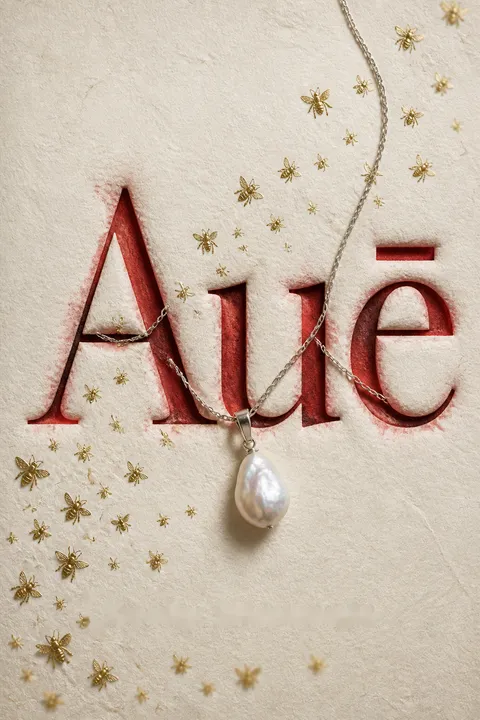
Auē by Becky Manawatu is a devastating yet beautiful debut novel about two orphaned Māori brothers, Taukiri and Arama, separated after their parents' deaths. The story alternates between perspectives and timelines, revealing their family's history of violence, gang involvement, and intergenerational trauma. Reviewers praise the visceral, lyrical writing and compelling characters, particularly young Ari and his friend Beth. While the novel confronts domestic abuse, poverty, and grief with unflinching honesty, it balances darkness with hope, humor, and compassion. The book won multiple New Zealand awards and is considered essential New Zealand literature.
People Also Read

Characters
Taukiri
The runaway musicianTaukiri is a Māori teenager, gifted with a guitar and drawn to surfing, who sees himself as dangerous to the people he loves. He is fiercely protective of his younger brother Ari, but grief and survivor guilt turn that instinct into flight. In Wellington he tries to silence memory with work, drugs, and music, while small gestures toward Ari reveal a loyalty he cannot yet express directly. His pride and impulsiveness can make him careless, but beneath them is a young man searching for a boundary strong enough to hold him when no adult is there to set one. His struggle is not simply to return home, but to accept that responsibility and affection can coexist with his own damaged past.
Ārama, called Ari
The watchful younger brotherAri is an eight-year-old boy whose parents' deaths and Taukiri's departure leave him trying to decode adult behavior with a child's literal attention. He counts steps, guards a guitar present, and covers imagined injuries with plasters. His grief appears in funny, startling images because he is still learning what can be said aloud. Beth gives him a companion who is neither solemn nor predictable, and Tom offers a model of adult care that does not depend on fear. Ari can be anxious and easily overwhelmed, yet he is also observant, inventive, and capable of acting for someone else while frightened. His developing courage grows from attachment, not from becoming emotionally invulnerable.
Jade
The survivor seeking authorshipJade is a Māori woman raised in a gang household where affection and violence repeatedly occupy the same rooms. She learns to read, collects stories, and develops a sharp awareness of the ways people use love to claim or control one another. Her bond with Toko gives her an experience of chosen desire and shared daily life, but her past makes safety difficult to trust. Jade's resourcefulness is real, as is her tendency to disappear when pain becomes unbearable. She is not defined only by what has been done to her: she is also a reader, a storyteller, a cousin, and a woman trying to decide whether she can belong to a family without surrendering herself.
Toko
The rescuing musicianToko is a Māori guitarist, fisherman, and diver whose instinct is to notice people and creatures others leave behind. He carries humor and confidence into his relationships, but his care is practical as well as romantic: he shares work, makes room, and tries to build routines with Jade. As Aroha's twin, he belongs to a family shaped by love, resentment, and stories passed between generations. His impulse to rescue can be generous, though it cannot guarantee that he will control what happens next. Toko's music offers others a way into connection, while his ease at sea contrasts with the danger that the ocean holds for the family.
Aroha
The divided caregiverAroha is Toko's twin, a midwife, and Ari's mother. She becomes a caregiver to Taukiri as well, carrying responsibilities formed by love and family history. Her practical knowledge helps others through emergencies, but competence does not protect her from guilt or indecision. Aroha can recognize the harm in a household and still struggle to act decisively against it, especially when loyalty and exhaustion pull in opposite directions. The novel's spectral frame gives her an unusually intimate relation to the family's story: she sees how choices echo beyond the moment they are made. She is loving, imperfect, and deeply aware that caring for someone does not mean being able to save them from everything.
Beth
The fearless farm storytellerBeth is Tom Aiken's outspoken daughter and Ari's closest friend on the farm. She invents elaborate stories, loves unruly games, and uses humor to make isolation feel less powerful. Her bravado can be provocative, particularly when she tests Ari's fears or repeats ideas she does not fully understand. Beneath it, she is a lonely child who wants her father to be present and struggles to make sense of her mother's absence. Beth's friendship with Ari is built through quarrels, shared mischief, and acts of loyalty rather than sentimental promises. Her imagination gives her a language for courage, but it does not shield her from the consequences of the adults around her.
Kataraina, called Kat
The silenced auntKat is Ari's aunt and Aroha's younger sister. She takes Ari into her home but is herself constrained by a volatile marriage and the long history she shares with her family. Away from Stu, she can be warm, funny, and attentive; at the farm, she often retreats into silence. Her care for Ari is genuine, though fear and exhaustion limit what she can offer at first. Kat's relationship with Tom Aiken carries old affection and unresolved possibility.
Stuart Johnson, called Stu
The volatile farmerStu is Kat's husband, a farmer whose resentment and aggression shape the atmosphere of their home. He treats domestic power as entitlement, using insults, intimidation, and physical force to keep others cautious. His occasional ordinary or remorseful gestures do not erase the pattern of harm, and his treatment of Ari and Beth exposes how little control he has over his own anger. Stu's presence makes silence feel like a survival tactic.
Tom Aiken
The steady neighbor-fatherTom Aiken is Beth's father and the neighboring farmer who offers Ari practical help and a place at his table. He works long hours and is not always available to Beth, but he listens, cooks, teaches, and makes room for the children in his home. His kindness is concrete rather than polished: a meal, a ride, or a chance to try something difficult. He also cares deeply about Kat, though he cannot decide for her what she must do.
Sav
The searching cousinSav is Jade's cousin, a survivor who uses performance, jokes, and invented errands to find brief exits from a violent life. She is caught in a relationship with Hash and holds on to her connection with Tommy as a possible alternative future. Her humor can mask fear, but it also gives Jade moments of shared freedom. Sav's longing for love is sincere even when the conditions around her make safety difficult to imagine.
Coon
The gang's wounded tyrantCoon is a gang leader and Jade's controlling partner, a man whose tenderness and violence are bound together in a destructive pattern. He sees loyalty as ownership and reacts to resistance with punishment. His capacity for remorse complicates how Jade understands him, but it does not make her safe. Coon's authority depends on people accepting the gang's rules, even as those rules damage everyone involved.
Hash
The trapped gang associateHash is Sav's partner and a gang associate whose behavior makes him dangerous to the women around him. He is shaped by the gang's code of loyalty and retaliation, and he treats personal loss as a reason to demand payment from others. His connection to Coon and the wider gang world carries violence beyond the House, ensuring that escape does not automatically end the threat.
Megan
The observant photographerMegan is Elliot's sister, a photographer whose work brings her close to scenes of injury and crime. She notices Taukiri's distress and offers him practical help, while resisting his efforts to turn care into flirtation or evasion. Her attention to May's injuries raises difficult questions about witnessing violence and intervening. Megan's loyalty is not blind: she believes Tauk can be better than the choices he is making, and tells him so directly.
Elliot
The enabling buskerElliot is a street musician who gives Taukiri a first foothold in Wellington's busking scene. He is sociable and generous with music, but also introduces Tauk to drugs and a party culture that deepens his escape from grief. His friendship offers belonging with a cost, illustrating how companionship can be genuine and harmful at once.
Blue
The keeper of broken glassBlue is a bar owner with a history in Kaikōura and a talent for turning broken glass into leadlight. He recognizes Taukiri through a song and knows more about the family's past than Tauk has been told. Blue is blunt, wary, and reluctant to speak carelessly about old violence, but his recognition opens a path toward truth.
Hēnare
The grieving fishermanHēnare is Toko and Aroha's father, a fisherman and boatman who lives with the losses and silences of his family. His humor can soften painful memories, but grief and alcohol sometimes make him withdraw. His stories connect younger relatives to land, sea, and ancestry, even when he struggles to speak plainly about what has happened.
Colleen
The keeper of family storiesColleen is Hēnare's wife and the grandmother known to Ari as Nanny. She treasures family stories and a pair of pearl earrings inherited from her mother. Grief makes her difficult to reach, yet the warmth of her memories and her attachment to te reo remain important to the younger generation. Her silences can wound as much as her stories can comfort.
Jack
The adoptive father figureJack is Aroha's partner and a father to Ari. He helps make a home for Taukiri as well, offering the boys affection, music, and ordinary family rituals. He is remembered through the care he gives and the songs attached to him, rather than through a long account of his inner life.
Head
The feared protectorHead is Jade's father and the leader of the House. He protects his daughter from an outside predator and teaches her to read, yet his own violence makes home precarious. Jade's memories of him hold affection and fear together. His complicated example shapes her early understanding of what love can demand and what it can damage.
Felicity
The erratic storytellerFelicity is Jade's mother, a woman living with addiction who finds moments of tenderness in books, stories, and the sea. Her care for Jade is real but inconsistent, and she cannot always meet her daughter's need for protection. She gives Jade imaginative language that survives even when their daily life is unstable.
Plot Devices
The drowned narrator
A witness beyond the livingA voice speaking from beneath the sea frames the story and watches the consequences of choices made by the living. It does not supply a clean supernatural explanation or intervene to prevent harm. Instead, it reveals that the narrator is entangled in the family history she observes and is burdened by actions she cannot undo. The voice allows the novel to move between memory, guilt, and present events while emphasizing the limits of hindsight. Its perspective turns the reader into a listener to a confession that arrives before its full context.
Bone carvings and box
A portable bond between brothersTaukiri and Ari share bone carvings made from a whale's remains, a private sign of their family and their secret place, Bones Bay. Taukiri later puts his carving in the chocolate box Ari once made for him, alongside small scraps from his life. The objects carry attachment when the brothers cannot speak directly. Their movements between neck, box, and hand register separation and return, making the relationship legible through physical gestures. The box also becomes a place where memory, apology, and danger are gathered together.
Ari's plasters
A child's map of hurtAri uses plasters on bruises, imagined injuries, and places where he feels fear or grief but cannot make adults respond. The habit begins after he witnesses Beth kill an injured rabbit and continues through the instability of Kat's farm. It is funny in its excess, yet emotionally exact: Ari turns invisible pain into something he can cover and count. The dwindling box also gives his distress a concrete measure. Plasters do not heal the family's deeper injuries, but they show how a child improvises care when protection is unreliable.
The sea and Bones Bay
A landscape holding memoryThe sea is both a place of family intimacy and the force behind Taukiri's worst trauma. Bones Bay, a hidden shore known to the brothers and their grandfather, connects play, ancestry, survival, and grief. Taukiri fears the water after the wreck, while the sea continues to draw him back into memories he wants to escape. The changing meaning of the coast prevents it from becoming a simple symbol of danger or healing. It is a real landscape that holds the family's histories without resolving them.
Songs, books, and te reo
A language for belongingMusic and stories let characters communicate what they cannot yet say plainly. Toko's guitar draws Jade toward him; songs help Jade grieve Sav; familiar music reconnects Taukiri with his father and exposes a concealed history. Books carry Felicity's hopes for Jade, while te reo links the younger generation to family and cultural inheritance. These forms do not magically repair harm. They create shared practices through which memory can be held, revised, and passed on, allowing characters to imagine belonging without denying grief.
Auē Series
Download PDF
Download EPUB
.epub digital book format is ideal for reading ebooks on phones, tablets, and e-readers.








