

Plot Summary
Prologue
Derceto, a lonely healer, falls in love with a Greek sculptor at a foreign goddess’s temple. When she tells him she is carrying his child, he denies the baby and abandons her.
Grief and rejection turn to rage: Derceto stabs him at the altar, then carries her infant to a lake and drowns herself. She leaves the child on a rock, wondering what kind of woman her daughter might become if she survives.
The opening gives Semiramis an inheritance of abandonment before she can speak or remember. Derceto’s violence is both an attempt to punish the man who rejected her and a desperate refusal to remain powerless; her suicide then repeats the abandonment in a more intimate form. The prologue also sets love beside mortality, a pairing that will govern the novel’s later relationships. Semiramis’s survival is not a divine rescue so much as a fact that others will turn into myth, making her life a contest between the story told about her and the person she becomes.
The Governor's Last Gold
On a rocky road in Eber-Nari, Semiramis watches soldiers ambush a wounded rider. She offers to help him reach the Euphrates, but demands the gold rings in his hair as payment. Before she can guide him to the river, another arrow kills him. The soldiers discover her beside the body and threaten to cut off her hand for theft.
Semiramis bolts down the slope, escapes their arrows, and hides among tree roots until night. Only then does she learn from the soldiers’ remarks that the man she tried to rob was the province’s governor. She washes the blood from herself at the river and returns to Mari with the rings hidden in her pouch, more determined than ever to escape.
The encounter establishes Semiramis’s governing instinct: she treats danger as an opening for action, not a reason to wait for rescue. Her bargain with the dying governor is neither noble nor simply cruel. She has learned that laws protect the powerful, while survival belongs to whoever can judge a moment accurately. The gold becomes a material token of the wider world she wants to enter, but it also ties her to the empire’s violence before she has any real power within it. Her escape demonstrates resourcefulness while exposing the cost of living where every act can be punished as a crime.
Mari's Narrow Walls
In Mari, Semiramis hides the rings with other stolen keepsakes beneath her sleeping mat. Her adoptive father, Simmas, has begun arranging her marriage now that she is old enough, and his beatings have taught her that home offers no safety. Her brother Amon loves her, but his acceptance of village life makes him a reminder of the future she refuses.
Assur-danin’s soldiers impale the dead governor in the square, and Semiramis secretly cleans his blood from the body. At a night climb, she outruns Baaz, the blacksmith’s son, only to hear him mock her dead mother. The insult forces her to face the fear beneath her ambition: she may be nobody, but she will not stay in Mari.
Mari is not merely a poor setting that Semiramis hopes to leave. Its domestic and public violence belong to the same order: Simmas disciplines a dependent girl, while soldiers display a dead governor to make political obedience visible. Semiramis’s secret washing of the body reveals a moral impulse that coexists with her appetite for risk. She recognizes that rank cannot prevent death, yet she still longs for the authority that rank offers. Baaz’s insult attacks the fantasy that her mother’s story can make her exceptional, turning her desire to escape into a refusal to let other people define her limits.
A Brother's Blood
At the empire’s center, Prince Ninus learns that his forces have captured his older brother, Assur-danin, after years of civil war. Assur began the rebellion because their father, Shalmaneser, favored another commander, and Ninus defended the king. Now the brothers meet in a military tent, where Assur taunts Ninus for avoiding the cruelties required of a ruler.
Ninus orders surrendered cities spared, but recognizes that he cannot dismantle Assur’s army while leaving its leader alive. He draws his sword and kills his brother. The act ends the rebellion and makes Ninus king, but it leaves him with a throne built on the death of the person who once shared his childhood and imagined ruling beside him.
Ninus’s accession is a political victory that immediately becomes a private wound. He has the capacity to choose restraint, as shown by his orders to spare surrendered cities, but the civil war has narrowed his available choices until mercy appears to threaten the state. Killing Assur makes him resemble the rulers he doubts, even as he tells himself the act was necessary. Their shared childhood complicates the public label of traitor: Assur is both an enemy and the brother whose approval Ninus once wanted. The throne gives Ninus authority, but not freedom from the family history that produced the conflict.
A Prophecy at the Feast
With Assur dead, Ninus appoints his confidant Onnes governor of Eber-Nari to secure the western trade routes. Onnes reaches Mari with soldiers and demands the villagers’ loyalty. Semiramis watches from the wall, then encounters him at the river before dawn. His scars and guarded manner fascinate her; he, in turn, notices her resemblance to Ishtar.
At the feast welcoming him, he recognizes her intelligence and speaks with her about loss, stories, and the cages hidden inside palaces. A village diviner then predicts that a woman will become as great as Babylon. Semiramis hears the prophecy as a possible map out of Mari, while Onnes’s departure date makes her fear that this opening may close before she can act.
The meeting joins private desire to political mobility. Onnes represents a route out of Mari, but Semiramis’s attraction is not only to his status: he recognizes her as different without reducing that difference to a threat or a joke. The prophecy gives her ambition a language, though its ambiguity lets her project her own wishes onto it. In this world, a prophecy does not simply predict; it reorganizes what a person believes is possible. Semiramis’s response is characteristically active. She does not wait for destiny to arrive in a recognizable form. She begins calculating how to cross the distance between the life she has and the life she wants.
The Hand She Takes
Baaz accuses Semiramis of stealing his carved seals, and Simmas finds the governor’s rings beneath her bed mat. He drags her into the grain store and beats her until she loses consciousness. Semiramis escapes into the rain, then goes to Onnes’s tent and asks for shelter. When she tells him that Simmas stole the rings, Onnes has the chief shepherd punished under the law: Simmas loses a hand but survives.
Amon condemns Semiramis for what she has done, and she leaves without him. On the road, Onnes reveals that his soldiers recognized her as the woman who tried to save the governor. He has understood her lie and admires her nerve. Semiramis agrees to marry him and travel east to Kalhu.
Semiramis’s departure is an act of escape, but it is also an act that harms others. She turns the legal code against Simmas by telling Onnes a lie that he is willing to enforce, and her new freedom begins through another person’s punishment. That contradiction prevents her ambition from reading as uncomplicated triumph. Amon’s rejection marks the emotional price of leaving: she refuses the village’s limits, but cannot carry her closest familial bond with her. Onnes’s knowledge of her deception creates an unusual foundation for marriage. He sees her capacity to manipulate power, and she sees that he will not require her to pretend to be harmless.
The Palace Opens
Onnes brings Semiramis into Kalhu, where the glazed palaces and terraced gardens dwarf everything she has known. She is formally introduced to King Ninus and his formidable mother, Nisat, then settles into Onnes’s governor’s residence. Ribat, a palace slave who learned to read by studying the branding scar on his mother’s back, becomes her guide to the city’s hidden rules.
Semiramis learns the servants’ names, asks Ribat to teach her cuneiform, and begins training with spears so she can defend herself. Their lessons give her access to records and political knowledge, while the household gives her allies. The splendour she once imagined proves to be another hierarchy, but now she has a place from which to study it.
Kalhu offers Semiramis both enlargement and confinement. Its luxury fulfills a childhood vision, yet its rooms are organized by rank, gender, and ownership. Ribat’s literacy makes this structure legible: he has converted the mark of enslavement into an education, just as Semiramis converts her outsider status into a reason to observe closely. Their alliance is practical, but it is also grounded in mutual recognition between people who understand dependence. Semiramis’s decision to learn letters and weapons matters because she is not content merely to be admitted to power’s rooms. She wants the tools to interpret what happens inside them and to act without relying entirely on Onnes.
Secrets Under Blue Brick
At the wedding feast, Semiramis meets Sasi, the king’s eunuch spymaster, and discovers how quickly palace gossip can become political currency. Sasi later reveals that Onnes is Shalmaneser’s son and Ninus’s half-brother, a secret Onnes has kept from her. Semiramis confirms the truth with her husband and sees how tightly his loyalty binds him to the king.
She also befriends Taria, a princess of Urartu held hostage in Kalhu, who describes Onnes’s capacity for violence. Nisat then tells Semiramis that Ninus loves Onnes. These revelations alter the marriage she thought she understood. Semiramis continues to train, but she now sees the triangle of affection and power around her, and understands that her place in it is not secure.
The palace’s most consequential currency is not gold but information about intimacy. Sasi’s revelation changes the meaning of Onnes’s closeness to Ninus, while Taria’s account complicates Semiramis’s image of her husband as merely guarded. Nisat’s warning is both strategic intelligence and an attempt to wound a rival. Semiramis is forced to recognize that marriage has not made her central to Onnes’s emotional life. Rather than retreat, she begins reading relationships as structures of power. Her growing knowledge makes her more capable, but it also makes affection harder to experience as private: every bond in Kalhu can be watched, interpreted, and used.
The Prince's Hand
During the royal lion hunt, Semiramis sees Prince Marduk of Babylon take pleasure in killing wounded animals. At the feast, he insults her and later corners her at the training ground, trying to force himself on her. Ribat interrupts by inventing a summons from Sasi, giving Semiramis a way to leave without surrendering her standing.
Marduk retaliates by painting a sexual slur on her palace wall in blood and wounding her leopard when it drives him away. Semiramis refuses to hide the insult until nightfall, making the court see what he has done. She also begins attending the king’s council, where she challenges assumptions that a common-born woman has no right to speak about imperial affairs.
Marduk’s assault makes explicit what courtly charm often conceals: a powerful man can treat another person’s refusal as an inconvenience, then use reputation as a weapon. Ribat understands that the threat is not only physical. If Marduk can publicly define Semiramis as sexually available, he can damage the authority she has built. Her choice to leave the blood on the wall turns humiliation into evidence, making the court witness the violence instead of allowing it to become private gossip. This is a tactical victory, not a guarantee of safety. Her presence in council similarly forces access without erasing the gendered hostility that made access necessary.
Fifty Climbers
After Ninus leads the Assyrian army east to conquer Balkh, months pass without reliable news. The capital suffers shortages, and Semiramis takes a place in council while Nisat and Ilu press for further campaigns. A messenger eventually reports that Balkh still resists and asks for fifty climbers to reinforce the army.
Semiramis offers herself to Bel, Ilu’s son, explaining that she grew up scaling cliffs and will not slow his men. She tells Ribat she must face the danger rather than let fear decide her life. He understands, though he fears losing the one person who treats him as more than property. Semiramis leaves Kalhu with Bel’s small party, carrying her own weapons toward a war she knows may consume her.
The volunteer mission converts Semiramis’s childhood survival skills into political and military value. She is not selected because the institution has recognized her equality; she must insist on her usefulness and accept the risk of proving it. Her decision also exposes the limits of ambition as a private project. Ribat’s attachment to her is real, but her departure threatens the future he hopes to build through their alliance. Their exchange shows how people with unequal power can still become emotionally dependent on one another. Semiramis’s courage is not the absence of fear. It is a practiced refusal to let fear become the only force shaping her choices.
The Ravine Plan
Semiramis reaches the Assyrian camp to find an army worn down by the siege and an Onnes too exhausted to welcome her. He orders her to return to Kalhu, but the distance and danger make that impossible. At the war council, Ilu proposes that the climbers scale the exposed slope beneath Balkh’s walls. Semiramis argues that the bodies already covering that slope prove it is a death trap.
Instead, she proposes climbing the steep ravine toward the acropolis, killing the few guards at the star-shaped watch posts, then setting fires to draw defenders away from the main gate. Ninus accepts a day of scouting. Bel agrees to lead the climbers, and Onnes prepares to enter the city through an abandoned sewage tunnel.
This section marks Semiramis’s transition from proving that she can fight to changing how the army fights. Her authority comes from close observation rather than rank: she reads the landscape and the failed assaults as evidence, then proposes a different use of the climbers. Ninus’s acceptance is significant because it makes room for judgment over inherited military habit, though only after she persuades men who retain the power to overrule her. Onnes’s exhaustion foreshadows the emotional damage of the campaign, while the separate tunnel plan makes the attack depend on coordinated risks. The strategy is a collective design, but Semiramis supplies its decisive alternative.
Fire Above Balkh
Before dawn, Semiramis climbs the ravine with Bel, Mannu, and Luqa. A guard shoots one climber, and Mannu falls from a watch post, but Semiramis reaches the platform and kills its sentry before he can raise the alarm. Bel’s group eliminates another guard, and they continue toward the acropolis. Below, Onnes leads his men through the filthy tunnel, then fights toward the main gate.
The climbers are spotted before they can set their planned fires, and Bel and Luqa are killed in the fighting. Semiramis finds a fallen torch and ignites the acropolis. The distraction helps the Assyrians breach the gate. She rescues the wounded Ninus from the burning streets, then is struck by an arrow herself.
The assault makes victory inseparable from loss. Semiramis’s plan succeeds in opening a path into Balkh, but the deaths of the young climbers prevent the triumph from becoming a clean proof of her competence. Her actions also cross a moral threshold: she sets fire to a city where civilians are trapped, even as she later tries to save some of them. Ninus and Semiramis rescue one another in the chaos, creating an intimacy grounded in shared vulnerability rather than courtly fascination. The city’s fall thus changes both political fortunes and personal bonds, while leaving the victors with the human consequences their military language tries to obscure.
Prisoners of Victory
After Balkh falls, Semiramis sees Assyrian soldiers burn the dead, plunder temples, and impale Bactrian leaders. Onnes helps carry out the punishments, while Ninus, sickened, leaves the scene. Semiramis confronts Onnes over the cruelty and asks Ninus to place women and children under her protection. Ninus agrees, allowing her to prevent soldiers from abusing them and later arrange resettlement in Eber-Nari.
The choice does not undo the city’s destruction, and Semiramis knows her own fire helped make it possible. Back in Kalhu, she returns wounded and changed. During the army’s absence, Ribat has also learned that his mother was poisoned after witnessing Nisat and Ilu together, giving him a personal reason to fear the palace’s secrets.
The victory tests whether Semiramis can use power for more than self-preservation. Her protection of the prisoners is concrete but limited: she can redirect some survivors, not restore the dead or the city. That tension keeps mercy from functioning as absolution. She participated in the attack and must live with the fact that the same strategy that saved Assyrians helped destroy Bactrian lives. Ribat’s discovery of his mother’s fate reveals a parallel cost of imperial power inside the palace. Both characters are learning that survival may require access to authority, yet authority is also the instrument that made their losses possible.
The Father Behind the Blade
Back in Kalhu, Ribat tells Semiramis what he witnessed during the civil war: Onnes entered the sick king Shalmaneser’s chamber and killed him after a confrontation about Onnes’s mother. Ninus believed Assur had murdered their father, so he killed the wrong brother. Semiramis confronts Onnes at the training ground and demands to know why he concealed the truth.
He insists that Shalmaneser’s cruelty toward his mother justified the act, but he offers no comfort for Ninus’s grief. Semiramis strikes him with a broken spear, trying to force him to acknowledge that he cares for someone beyond his dead mother. Onnes finally admits that he cares, then leaves her with the truth and the damage it has caused.
The revelation recasts the civil war as a tragedy built on misdirected guilt. Ninus killed Assur in the belief that he had avenged their father, while Onnes’s silence allowed that belief to harden into history. Ribat’s testimony carries particular weight because a slave, officially invisible, has preserved the fact that powerful men could not safely speak. Semiramis’s confrontation is an attempt to make Onnes answer emotionally as well as politically. Her anger recognizes that his private trauma does not erase the harm he caused. The scene also dismantles the bond she had formed with him through shared abandonment: understanding a wound is not the same as being able to heal it.
Taria Leaves, Ninus Draws Near
Nisat plans to marry Taria to Ninus to secure an alliance with Urartu. Semiramis discovers that Taria is pregnant by Marduk and warns her that the marriage would put both her and the child in danger. She urges Nisat to send Taria home rather than force her into a union that could provoke scandal or war. Ninus releases the princess and accepts the risk to the alliance.
As he and Semiramis grow closer, she finally yields to the desire she has resisted, despite knowing that she is married to Onnes. The affair is not simply a romantic choice: it entangles her with the king, threatens her standing, and deepens the emotional rupture between the three people whose loyalties already overlap.
Taria’s pregnancy gives Semiramis a chance to act in solidarity with another woman, but the decision also serves her political and emotional interests. She prevents a coerced marriage and helps Taria return home, while removing the proposed queen from the space between herself and Ninus. The novel refuses to make those motives mutually exclusive. Semiramis’s affair with Ninus likewise resists a simple account of seduction or betrayal: desire grows from recognition, but it carries consequences for Onnes and the state. In choosing intimacy, she does not escape power. She enters a more dangerous relationship with it, where personal feeling can alter treaties and succession.
The Brother's Confession
Ninus asks Onnes to marry his daughter Sosanê, offering to take Semiramis as his own wife. Onnes refuses, and the concealed history finally breaks open: he tells Ninus that he, not Assur, killed Shalmaneser. Ninus attacks him in the gardens but cannot bring himself to deliver the killing blow. Semiramis pulls the wounded Onnes away as rain fills the gardens.
Later, when Ninus proposes marriage again, Onnes sees Semiramis’s presence as proof of betrayal and confronts them in the king’s quarters. Semiramis steps between the men. Onnes lowers his sword, declares his love, and turns the blade on himself. Ninus and Semiramis are left with the man who bound their lives together and the guilt of surviving him.
Onnes’s death is not presented as a clean sacrifice that resolves the triangle. His confession exposes a life organized around resentment and secrecy, while Ninus’s inability to kill him repeats the very failure of justice Onnes accuses him of. Semiramis’s position between them is both literal and moral: she cannot prevent the violence, and she cannot choose a version of the past that leaves no one wounded. Onnes’s final act converts his private despair into an irreversible political and emotional rupture. His death frees neither lover. It leaves Ninus with grief and Semiramis with the knowledge that desire, loyalty, and harm have become inseparable.
Dur Calls the King
After Onnes’s death, Semiramis chooses Ninus, and their relationship becomes public enough to threaten Nisat’s plans for the throne. Ninus arranges Sosanê’s marriage to Sargon, binding the royal household to Ilu’s family while keeping his own succession open. Semiramis realizes she is pregnant but cannot find a safe moment to tell Ninus.
Then news arrives that Marduk has become king of Babylon and is assembling an alliance against Assyria. Ninus chooses to meet him at Dur rather than wait behind Kalhu’s walls. Semiramis argues for defense, but Ninus sees retreat as weakness. When he departs, she follows with guards, determined not to let grief and prophecy carry him toward another battlefield without her.
This section shifts the center of the story from intimate aftermath to state crisis. Ninus’s choice to attack is shaped by the expectations of kingship: he fears that caution will be read as weakness, even when Semiramis offers a plausible defensive strategy. Her pregnancy raises the stakes without giving her control over his decision. The unresolved disclosure reflects how private vulnerability is repeatedly postponed by public duty. Semiramis’s journey after him is an act of love and intervention, but also a return to the pattern that has defined her life: she moves toward danger because passivity feels like surrender. The prophecy remains influential precisely because it cannot tell her what action will save him.
Mud, Steel, and Blood
At Dur, rain turns the battlefield into mud as Marduk’s Elamite and Aramean allies attack. Ninus fights on foot, abandoning his armour, and urges his troops toward the river, where enemy soldiers drown in the crush. He eventually faces Marduk, while Ilu is wounded protecting him. Semiramis reaches the camp to find Ninus badly hurt and Marduk captured.
She enters the prisoners’ tent and kills the Babylonian king with her dagger, knowing that his death leaves Babylon’s succession unsettled. Ninus survives the battle but develops a dangerous fever. As healers call for willow medicine, Ribat remembers his mother’s poisoning and sees Nisat in the king’s fevered face. He withholds the remedy and leaves Ninus without it.
The battle exposes how easily Ninus’s desire to rule justly is overwhelmed by the violence expected of him. His order to push men toward the river turns strategic necessity into mass death, while Semiramis’s killing of Marduk shifts the war’s consequences from battlefield to succession. Ribat’s withheld medicine is the novel’s starkest reversal of power: the former slave briefly controls the king’s life, acting from an injury the palace never acknowledged. His choice is not rendered as simple justice, since it answers one murder with another possible death. The scene compresses the book’s central moral problem into action: people harmed by a violent system can become its agents even while seeking redress.
The Crown After Grief
Ninus’s fever worsens, and he dies before Semiramis can tell him she is carrying his child. Nisat initially orders Semiramis out of Kalhu, then hears the pregnancy is real and recognizes that the unborn boy could inherit the throne. Semiramis argues that if the child is denied, Sosanê and Sargon would leave power in Ilu’s hands.
She also exposes Ilu’s affair with Nisat, forcing the general to calculate the cost of opposing her. Semiramis declares that she will rule until her child comes of age, then receives the court’s submission and takes the royal name Sammuramat. She orders Ninus’s tomb raised above the palace precinct, turning private grief into a public memory that can support her rule.
The ending grants Semiramis authority without pretending that authority cleanses the path to it. She uses pregnancy, political calculation, and knowledge of Nisat and Ilu’s secret to prevent rivals from taking the throne. Those are the same instruments by which the court has constrained women, now redirected by a woman who understands their mechanics. Her succession plan also depends on a future child, so her independence remains entangled with dynastic expectation. The mound over Ninus’s tomb makes remembrance part of governance: she preserves the king’s image while securing her own position. Her ascent is both achievement and compromise, a life built from grief, strategy, and the refusal to disappear.
Epilogue
Ribat watches Semiramis’s coronation and thinks of the scars her royal robes conceal. Now a free scribe, he later meets Sasi, who tells him that Semiramis has given birth to a son, Ninyas, and understands that Ribat withheld the medicine from Ninus. Semiramis has protected him, but when they meet again she admits she cannot forgive his betrayal.
Ribat returns to the school and begins recording her rise, determined that a woman born in poverty will not vanish from the written record. The story ends with the scribe choosing what the empire’s tablets have rarely preserved: the life of a woman who made herself visible.
The epilogue turns literacy into an answer to the novel’s recurring fear of erasure. Ribat’s education began with reading the scar imposed on his mother; it ends with him using a stylus to record Semiramis’s life. Yet the new record does not repair what happened between them. Semiramis can value Ribat’s loyalty and still refuse forgiveness, preserving the moral weight of his choice rather than converting affection into absolution. His writing becomes an act of counter-memory, challenging the archive’s preference for kings and male heroes. The ending’s hope is therefore modest but consequential: power may vanish, while the story of who held it can endure.
Analysis
Babylonia treats power as a means of surviving vulnerability, then asks what survival demands of the people who acquire it. Semiramis begins with almost no control over her body, work, or future. She responds by learning: she steals, observes, studies cuneiform, trains with weapons, and enters rooms where women of her birth are not expected to belong. Her rise is therefore not a clean liberation narrative. Each gain depends on bargains that injure someone, and the novel keeps her moral intelligence alive by making her confront the victims of Assyrian conquest, including those harmed by her own plan at Balkh.
Ninus and Onnes offer a parallel account of power’s emotional cost. Ninus inherits a kingdom that demands violence while privately longing for tenderness and mercy. Onnes survives by suppressing need, but the secrets that protect him also deform his relationships. Their bond echoes Gilgamesh and Enkidu, not as a promise that love defeats death, but as an illustration of how grief can outlast the person who caused it. Ninus’s inability to see Onnes clearly is itself a form of attachment: he loves an ideal partly because the truth would be unbearable.
The book’s repeated attention to law, prophecy, spirits, and tablets shows characters searching for systems that can make suffering intelligible. Yet no system removes responsibility. Prophecy can be interpreted, law can be manipulated, and the gods remain silent while people act. Ribat’s final turn toward writing answers that silence imperfectly. He cannot undo his decision or restore Ninus, but he can preserve a history the official record might omit. Semiramis’s crown and Ribat’s stylus become parallel acts of ascent: one secures authority in the present, the other argues for remembrance beyond it. The novel’s deepest claim is that becoming visible is not the same as becoming innocent, but invisibility is also a form of erasure.
Review Summary
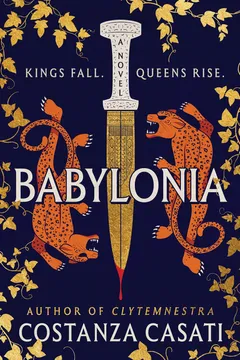
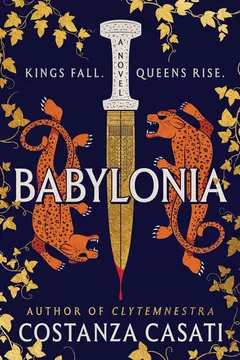
Babylonia is widely praised for its lyrical prose, complex characters, and immersive depiction of ancient Assyria. Most reviewers admire Semiramis as a compelling, morally gray protagonist whose rise from orphaned commoner to queen feels both epic and intimate. The three-way dynamic between Semiramis, Onnes, and Ninus is frequently highlighted as messy, tragic, and captivating. Many compare Casati favorably to Madeline Miller and Natalie Haynes. A minority found the pacing uneven or felt less connected than with Casati's debut, Clytemnestra. Overall, the book earned strong ratings and passionate recommendations.
Characters
Semiramis
The self-made climberAn orphan raised in Mari, Semiramis is curious, observant, and impatient with the life prescribed for her. She gathers knowledge as carefully as she gathers stolen objects, treating each new skill as a way to reduce dependence on people who can hurt or dismiss her. Her ambition begins as a wish to escape marriage and poverty, but her intelligence draws her into the Assyrian court’s dangerous negotiations. She is capable of tenderness, particularly toward the powerless, yet her survival instincts can make her calculating and severe. The central tension in her character is not whether she wants power, but whether she can hold it without becoming indifferent to the people beneath her.
Ninus
The burdened kingThe younger son of Shalmaneser and ruler of Assyria, Ninus is thoughtful, bookish, and uneasy with the cruelty that sustains his throne. His older brother’s rebellion forces him to act as a king before he has made peace with his own grief and fear. He relies deeply on Onnes, his childhood companion and closest adviser, while his mother Nisat presses him to embody the strength expected of a ruler. Ninus wants to be merciful without appearing weak, a conflict that shapes both his politics and his private life. His habit of seeing the best in people offers genuine tenderness, but can also blind him to what they conceal.
Onnes
The guarded governorGovernor of Eber-Nari, Onnes is a disciplined soldier and Ninus’s trusted companion from childhood. He keeps his feelings behind a controlled expression, relying on action and loyalty more readily than confession. The death of his mother and his uncertain place within the royal family shape his distrust of intimacy and his fear of appearing weak. Semiramis attracts him because she can see through some of his defenses, though recognition does not make him easy to know. His competence in war contrasts with the damage he carries from family history, leaving him both formidable and emotionally difficult to reach.
Ribat
The watchful scribeA palace slave and son of a slave, Ribat survives by noticing what powerful people assume nobody sees. His mother taught him to read through the scar on her back, and he turns that lesson into a quiet hunger for writing and freedom. He studies the palace’s movements, remembers its secrets, and becomes a source of information for Semiramis. His caution is not cowardice but an adaptation to a world where a careless word can be fatal. Beneath it, he longs for education, tenderness, and a life that belongs to him. His loyalty is sincere, though the novel asks whether devotion can coexist with choices that harm the person he serves.
Nisat
The queen motherNisat, Ninus’s mother, is a formidable political strategist who rose from the household of a cupbearer to become the most influential woman in Assyria. She regards power as protection and believes survival depends on anticipating threats before they become visible. Her love for Ninus is real, but she expresses it through discipline, alliances, and an insistence that he meet the demands of kingship. She respects ambition when it is useful and distrusts softness when it invites danger. Semiramis unsettles her because she recognizes a familiar will in the younger woman, while also seeing the risks that such a will can bring.
Derceto
The abandoned healerSemiramis’s mother is a village healer who falls in love with a Greek sculptor and believes his attention means they share a future. Her rejection leaves her isolated from both the man and the community that judges her. Derceto’s story reaches the reader through the prologue and through the legends told about her, so her life is partly obscured by rumor. She represents the vulnerable history Semiramis inherits, but her daughter’s ambition is also an effort to resist the ending others associate with her.
Amon
The loyal village brotherAmon is Simmas’s son and Semiramis’s brother by upbringing. Kind, patient, and more at ease with village life than she is, he offers her affection without sharing her hunger to escape. He tries to protect her from their father and warns her about the political danger surrounding Mari. Their closeness makes her departure emotionally costly, because he represents a home she loves in part even as she refuses its limits.
Simmas
The brutal adoptive fatherChief shepherd of Mari, Simmas adopts Semiramis after finding her as an infant but treats her as a future asset in a marriage bargain. He values obedience and status, and his violence intensifies as she refuses to behave as he expects. His household gives Semiramis a place to grow up, but not the security of unconditional care. He embodies the local authority that teaches her how easily protection can become possession.
Sasi
The secret-collecting spymasterA Phoenician eunuch who serves as the king’s spymaster, Sasi gathers information from across the empire and understands how secrets move through a court. Witty and difficult to read, he uses charm as carefully as other officials use soldiers. His own history as a deportee gives him insight into vulnerability, though survival has taught him to place self-preservation first. He sees Semiramis as a possible ally because she is both ambitious and alert to the cost of power.
Ilu
The army's ruthless commanderThe turtanu, or commander-in-chief, Ilu is a celebrated soldier and a powerful member of the king’s council. He prizes force, loyalty to the ruling order, and the influence of his own family. His confidence can look like competence, and often is, but he has little patience for those he considers weak. His relationship with Ninus is shaped by years of service and discipline, while his rivalry with Onnes reflects older contests over royal favor.
Taria
The Urartian hostage princessA princess of Urartu held at the Assyrian court, Taria carries the memory of a homeland whose mountains and communities have been devastated by war. Proud and direct, she dislikes being treated as a diplomatic object, even when she understands the political bargains surrounding her. Her friendship with Semiramis grows from their shared awareness of life as a spectacle for powerful men, though their different origins and needs complicate that bond.
Marduk
The predatory Babylonian princeA Babylonian prince and political guest in Kalhu, Marduk is accustomed to having his desires treated as commands. He enjoys violence and sees women, captives, and rivals as objects to dominate. His charm is part of the danger: he can make cruelty sound like entitlement and then retaliate when challenged. As a representative of Babylonian power, he brings both personal menace and a growing threat to Assyria’s fragile alliances.
Sosanê
Ninus's thoughtful daughterNinus’s daughter is a quiet, serious child who finds comfort in stories and tablets. She has grown up in the women’s palace, surrounded by wealth but often short of her father’s attention. Her perceptiveness allows her to see more than adults assume, and her questions reveal an independence that does not depend on wanting the throne. She is shaped by the demands of royal inheritance even as she searches for a life of her own.
Baaz
The village rivalThe blacksmith’s son is a skilled climber who resents Semiramis’s speed and uses rumors about her mother to humiliate her. His taunts sharpen her awareness of how the village polices women who do not conform. He is not a major political figure, but his hostility helps make Mari feel like a place she must escape.
Bel
The climbers' commanderIlu’s elder son, Bel leads the recruitment of climbers sent to reinforce the siege of Balkh. He is a practical soldier who initially doubts Semiramis’s place in the expedition, then accepts her experience as useful. His command gives the risky assault its structure, even as the climbers face the danger of a plan that may cost them their lives.
Sargon
Ilu's ambitious younger sonIlu’s younger son is shaped by the privileges and expectations of an old Assyrian family. He taunts those he considers weak and takes pride in his father’s standing. His presence in court and the military makes him part of the political pressure surrounding Ninus’s succession and Sosanê’s future.
Ana
The compassionate palace slaveAna is a slave in Onnes’s household, brought to Kalhu as a captive. She is generous and attentive to the people around her, though palace life has taught her to hide her feelings. Her connection with Ribat offers both of them a brief glimpse of tenderness that is not organized around rank.
Zamena
The guarded household servantZamena works in Onnes’s palace and knew Ribat’s mother. She is cautious because she has seen what can happen to slaves who speak too freely. Her knowledge helps Ribat understand the dangers surrounding his mother, though fear makes her reluctant to reveal what she knows.
Bârû
The royal divinerThe bârû interprets omens through ritual and the inspection of sacrificial organs. His predictions influence how rulers understand danger, but he is also constrained by the court’s hierarchy and by assumptions about what women may know or become. His role shows how religious authority can reinforce political expectations even when the future remains uncertain.
Dayyan-Assur
The fallen royal commanderA trusted commander under Shalmaneser, Dayyan-Assur was appointed to lead the army instead of the crown prince Assur. That decision helped provoke the civil war. Though he is absent from most of the action, his appointment becomes one of the political choices that shapes the brothers’ rivalry.
Plot Devices
The twin prophecies
Ambition framed as fateA diviner in Mari predicts that a woman will become as great as Babylon, while a second prophecy foresees a king destroyed by his own madness. The predictions do not give their listeners clear instructions. Instead, Semiramis and the people around Ninus interpret them through desire, fear, and political circumstance. Their uncertainty keeps fate from functioning as a simple map of events: characters still choose, but they do so while wondering whether choice can alter what has been foretold.
The laws of Hammurabi
Power given legal teethThe code governing Assyrian life makes punishment concrete, from the threat of losing a hand for theft to the public enforcement of property law. Semiramis understands that rules often serve the powerful, but she also learns to use the law’s procedures against those who assume she has no leverage. The code is therefore both a tool of order and a language of coercion. Its presence makes personal choices legible to the state, while showing how justice can depend on who has the authority to interpret and enforce it.
The Epic of Gilgamesh
A mirror for griefStories of Gilgamesh and Enkidu recur as the characters confront friendship, love, and the impossibility of defeating death. Semiramis learns and retells the epic, while Ninus and Onnes find their own relationship reflected in its bond between a king and the companion he cannot bear to lose. The poem does not promise that stories can restore the dead. Instead, it gives grief a form that can be shared, and suggests that memory may preserve a life even when it cannot return one.
Cuneiform literacy
Knowledge becomes a way outRibat learns to read from the scar on his mother’s back, then teaches Semiramis the signs pressed into clay. Literacy lets them enter a world of records, omens, accounts, and official knowledge from which people of their status are normally excluded. For Semiramis, reading is one more tool for understanding the court. For Ribat, it is a long-held dream of a different life. The tablets also connect the novel’s plot to its larger concern with who gets remembered and whose history is left unwritten.
The leopard
Wildness made visibleSemiramis encounters a captive leopard after the royal hunt and brings the animal into her household. The leopard becomes her companion and a visible warning to courtiers who might mistake her for powerless. Its presence connects Semiramis to the wildness she refuses to suppress, while the animal’s captivity mirrors the constraints of palace life. It also has practical force: the leopard can frighten intruders and protect the household, though its need for space and freedom remains beyond any owner’s complete control.
Download PDF
Download EPUB
.epub digital book format is ideal for reading ebooks on phones, tablets, and e-readers.








