

Key Takeaways
Treat singlehood as a social label, not proof of a failed life
The label carries history. Betsy Israel begins with her own experience: in 1986, a widely publicized study abruptly recast her as a woman with dwindling marriage prospects. The findings were flawed, but the alarm was real. Suddenly, other people treated her apartment, age, and future children as public questions. Her history traces how that reaction developed over roughly a century and a half, from the feared spinster to the supposedly liberated career woman.
A varied population, one stigma. In 2002, Israel reports that 42 percent of American women over eighteen were technically single, including never-married women, widows, and divorcees. The category covers very different lives, yet culture repeatedly treats it as one condition requiring explanation or repair.
What's striking is how a demographic category becomes a moral diagnosis. That process resembles labeling in sociology: once people are named as deficient, ordinary choices can be interpreted as symptoms of the deficiency. The book makes the label's history visible without insisting that every single woman is happy or that marriage is inherently oppressive. Its more durable point is that relationship status alone cannot explain a person's character, needs, or prospects. The 42 percent figure also needs context: the category combines sharply different experiences, so it measures marital status, not a shared identity or common fate.
When women leave marriage's expected path, culture invents a warning label
Old work, new insult. The word spinster first described women who earned a living spinning thread. By the seventeenth century, it could also identify an unmarried woman who needed income. Over time, that practical identity blurred with the grotesque Old Maid: unattractive, spiteful, and supposedly ridiculous. The stereotype made women's economic circumstances look like personal defects.
A population becomes a threat. The 1851 British census recorded 405,000 more women than men. Commentators called them redundant or superfluous, then proposed shipping them abroad or training them to attract men. In the United States, the caricatures differed by class: the poor working girl was cast as sexually endangered or immoral, while the middle-class spinster was portrayed as useless and withered. The types changed, but unmarried women remained cautionary examples.
The sequence shows a powerful rhetorical maneuver: structural conditions, such as a labor market or a sex imbalance, are translated into individual shame. Modern readers may recognize the same pattern whenever a group is described as a social surplus rather than as people responding to constraints. The book's emphasis on labels is especially useful because it asks who benefits from making a particular life look abnormal. At the same time, its largely white, urban archive cannot stand in for every woman's experience. Israel acknowledges that limitation, especially for Black women, whose stories received far less space in the public record she examines.
Build chosen communities where marriage once monopolized security
A life beyond the household. Some nineteenth-century women rejected marriage not because they had no ambitions or affection, but because marriage could restrict their work, movement, and legal independence. They called their preferred state single blessedness. Among them were abolitionist Sarah and Angelina Grimké, Louisa May Alcott, Susan B. Anthony, and Florence Nightingale.
Friendship became infrastructure. Women formed deep partnerships, supported one another through correspondence, and sometimes shared a home or lifelong work. Settlement houses offered another model: Jane Addams and Lillian Wald built communities where women lived and organized social services together. Alcott wrote, worked, and supported relatives; Nightingale used statistics and hospital reform to change medical practice. These arrangements did not erase hardship, but they created routes to purpose and mutual support outside marriage.
These examples expand the meaning of independence. It is not simply the ability to live alone; it can also mean choosing dependable relationships and shared work without making a husband the organizing center. Social science on social support helps explain why those bonds matter: connection can provide practical help, belonging, and resilience. The history also cautions against imposing today's categories on older female friendships. Some bonds were romantic, some were not, and the evidence does not always settle the question. Their historical importance does not depend on assigning them a single modern label.
Economic independence opens doors, but bad jobs keep many women trapped
Work brought both wages and company. Immigrant women in nineteenth-century cities labored in factories, homes, and shops, often for very little pay. Domestic workers could face unpredictable demands and close supervision; factory workers endured dangerous machinery, noise, and exhausting hours. Yet the factory also offered friendships, shared information, and time away from family control. Shop girls built clubs, held secret celebrations, and found ways to socialize despite strict workplace rules.
A key made adulthood tangible. For decades, landlords doubted that an unmarried woman could be a responsible tenant. In 1910, the Trowmart Inn opened affordable housing for working women, including rooms they could rent alone. Its residents gained privacy, but small rooms and limited comforts remained. The point was not that wages solved every problem. A job and a key offered practical choices previously denied to women.
The book links autonomy to material conditions rather than treating it as an attitude. Income, housing, and control over one's time determine whether independence is usable. This resembles a basic insight in labor economics: having a job is not the same as having bargaining power, especially when pay is low and alternatives are scarce. The factory girls' friendships also show that workplaces can create informal support networks even when employers did not intend them to. That social benefit should not romanticize harsh conditions; solidarity helped women endure exploitation, but it did not make exploitation acceptable.
Every public leap in women's freedom invites a fresh cultural backlash
The New Woman unsettled old rules. College-educated women entered professions, supported suffrage, and increasingly questioned marriage as their sole destination. The Gibson Girl offered a polished, athletic image of this independence. The flapper made it mass culture: short hair, looser clothing, public dancing, and visible participation in modern life. After women won the vote in 1920, however, popular attention often favored the stylish flapper over the political activist.
Then independence became illness. Critics warned that working or educated women endangered marriage and motherhood. The specialized field of sexology classified some independent women as sexually abnormal, including by treating presumed frigidity or gender nonconformity as medical problems. The sequence reveals a recurring pattern: a new form of freedom becomes visible, then media and experts recast it as vanity, danger, or pathology.
Visibility is double-edged. A popular image can make a new identity imaginable, but it can also shrink a movement into a marketable costume. The flapper's appeal helped normalize women in public life, while attention to clothes and sexual behavior could eclipse political demands. The medical language adds another layer: institutions can turn discomfort with social change into claims about individual disorder. The book's evidence is strongest as a history of cultural representation, not as proof that every critic shared the same motive. Backlash can arise from commercial incentives, genuine anxiety, or both.
Wartime praise for women's labor vanished when men returned
The crisis needed workers. During World War II, women took jobs in factories and offices, including work previously treated as men's territory. Israel reports that the number of women in defense factories rose by 460 percent in a year, reaching 2.5 million. Rosie the Riveter became the celebrated face of this labor, although the most skilled and visible jobs went overwhelmingly to white women.
The welcome was temporary. After the war, employers, government policy, and public messaging pushed women out to make room for returning men. Women lost more than a million factory jobs, along with hundreds of thousands of clerical, service, and sales positions. Women's share of all jobs fell from 36 percent to 28 percent. The same culture that had praised female competence now described women workers as temporary and treated homemaking as their proper destination.
This reversal is a clear case of institutions adapting to labor demand without surrendering their assumptions about gender. Exceptional performance did not automatically produce equal access or lasting authority. The racial divide sharpens the point: Black women faced barriers even when they met the same requirements and often received substantially lower pay. Wartime work expanded what employers knew women could do, but knowledge alone could not overcome policy and power. The episode is a useful counter to simple progress narratives: social change can move forward in one sector while access, pay, and recognition remain uneven.
Make adult independence materially possible, not merely culturally imaginable
Marriage dominated the postwar ideal. By the early 1950s, marriage was so expected that some women hid at home if they lacked a date. The Barbizon, a women-only hotel in Manhattan, gave young newcomers a temporary place to live, but its residents could still be treated as lonely oddities. In the 1960s, the Pill and growing numbers of women living alone widened the choices people could imagine.
Rights changed the practical options. By 1975, one in four American households was headed by a single woman. The Equal Credit Opportunity Act that year made it easier for women to obtain credit in their own names. That shift mattered for ordinary decisions, from buying a home to furnishing it. Israel's point is that a private life becomes more than a slogan when women can secure housing, money, and a household on their own terms.
This takeaway guards against treating independence as purely psychological. A person can reject conventional expectations and still lack the credit, housing, or income needed to act on that decision. The history of the latchkey, the women's hotel, and credit access makes everyday infrastructure part of the story of freedom. It also suggests a broader policy test: does a society merely praise self-reliance, or does it give people the tools to practice it? The book's household statistic includes varied circumstances, including divorce and widowhood, so it should not be read as a count of one unified lifestyle.
Do not confuse marriage with safety, or singleness with isolation
Real danger became a public argument. The murders of single women in the 1960s and 1970s were genuinely horrifying. The killings of Janice Wylie and Emily Hoffert, Kitty Genovese, and student nurses in Chicago became part of a national vocabulary of danger. Israel does not dismiss the risks women faced living alone or moving through cities.
But fear also policed choice. Newspapers and popular stories often turned those crimes into warnings against independent life itself. A woman alone could be represented as vulnerable, reckless, or responsible for what happened to her. Meanwhile, women created their own precautions and communities, from roommates to friendships and neighborhood networks. The distinction matters: acknowledging violence should lead to better protection and accountability, not to the claim that a husband is the only safeguard against danger.
The section holds two truths together: gendered violence is real, and public narratives about violence can be used to restrict women's movement. That distinction resembles the difference between risk reduction and victim-blaming. Effective safety measures address perpetrators, environments, and access to help; they do not make autonomy itself the problem. The book's vivid crime stories explain why fear shaped single life, but notorious cases cannot tell readers how often a particular risk occurs. Their value here is cultural as well as factual: they show how a rare catastrophe can become a powerful social script.
Read each single-woman caricature as a verdict on women's freedom
The stereotype keeps changing. In the 1980s and 1990s, the single woman appeared as either the lonely professional who had sacrificed love or the hard-edged careerist supposedly incapable of ordinary affection. Ally McBeal and Bridget Jones offered a different figure: capable, self-aware, sometimes distressed, and able to find humor in the contradictions around them. Their fictional lives made room for emotional mess without treating it as proof of failure.
Real lives refuse a single ending. Some women married young and found partnership meaningful; others preferred living alone, built careers, raised children without husbands, or remained unsure what they wanted. Israel's closing argument is not that every woman should choose singleness. It is that no one should mistake a cultural caricature for a verdict on the worth or completeness of the person being caricatured.
The book's lasting method is to compare public images with the lives those images flatten. That approach remains useful in a media environment where recognizable character types travel faster than complicated biographies. It also invites a sharper question: which choices are treated as normal, and which require a person to explain herself? The answer can reveal social values more clearly than a supposedly neutral poll. Israel's frame remains bounded by its time and by its emphasis on white, urban American women. That boundary limits its reach, but also makes a strong case for histories centered on experiences it could not fully cover.
Analysis
Bachelor Girl is a cultural history organized around a productive tension: single women lived diverse lives, while public culture repeatedly tried to compress them into a few legible types. The spinster, shop girl, New Woman, flapper, Rosie the Riveter, and swinging single are not merely colorful labels. Each reveals which forms of female autonomy a particular era could tolerate, commercialize, or punish. Israel's method moves between census figures, advice writing, novels, films, advertisements, and oral histories, showing how a stereotype can shape ordinary encounters as well as public policy.
The book's most important analytical move is to connect representation with material conditions. A woman needs more than a positive image to live independently. She needs wages, housing, legal rights, access to credit, and relationships that provide practical support. The Trowmart room key and the later ability to obtain credit make that argument concrete. So does the postwar reversal, when wartime praise for women's skill gave way to policies and rhetoric that returned jobs to men.
The narrative also resists a simplistic celebration of singleness. It acknowledges poverty, isolation, family obligations, sexual danger, and the real appeal of marriage for many women. That complexity keeps the book from replacing one universal script with another. Its argument is not that marriage is false consciousness or that independence is always liberating; it is that neither status should be treated as a complete explanation of a life.
The archive has clear limits. Israel focuses chiefly on white women and Manhattan, and she explicitly notes that Black women's histories and lesbian lives deserve fuller treatment. The book is therefore best read as a revealing history of dominant American images, not as a comprehensive account of every unmarried woman. Its central question remains valuable: when society calls a woman incomplete, what arrangements, interests, and anxieties is that judgment protecting?
Review Summary
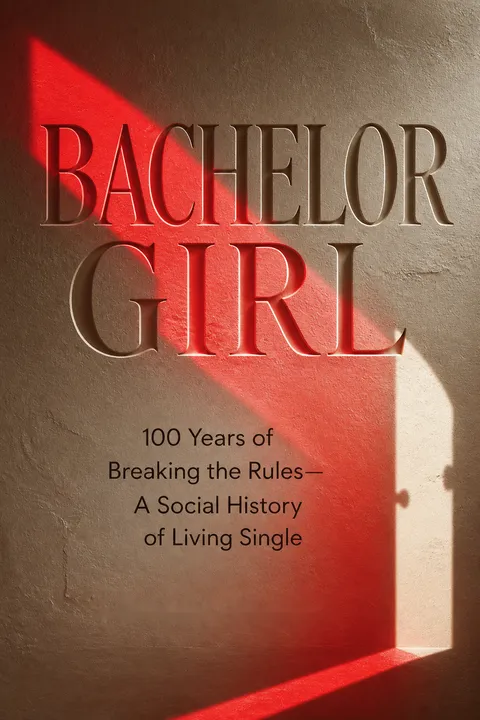
Bachelor Girl explores the history of single women in America, focusing on urban white women from the late 19th to early 21st centuries. Readers appreciate Israel's accessible writing style and comprehensive research, though some note limitations in scope. The book reveals societal pressures and stigmas faced by single women, as well as their resilience and independence. While some reviewers found the content enlightening and empowering, others felt it lacked depth in certain areas or relied too heavily on pop culture references.
People Also Read


Glossary
single blessedness
Chosen unmarried lifeA nineteenth-century expression used by some educated New England women to describe unmarried life as a positive choice rather than a misfortune. Its advocates rejected the assumption that marriage was every woman's duty, and some preferred education, public work, friendships, or personal independence to a marriage they considered restrictive.
redundant women
Women labeled surplusA Victorian-era label applied especially in Britain to women described as surplus because census figures showed more women than men. The term made a demographic imbalance sound like a problem caused by women themselves. Proposed solutions included emigration and employment restrictions, rather than a broad reconsideration of women's access to work and independence.
New Woman
Independent educated womanA turn-of-the-twentieth-century cultural type associated with women's higher education, professional work, political activism, and greater independence from marriage. The label could refer to reformers and suffragists, but popular media also used it loosely for unconventional women generally. Her visibility prompted both admiration and claims that independence threatened femininity, family life, or social order.
sexology
Classification of sexual behaviorA field of early twentieth-century writing and professional claims that classified sexual behaviors and identities, often presenting its categories as scientific fact. In Israel's account, sexology helped frame independent women as sexually abnormal, frigid, or inverted. Its authority gave older anxieties about women's education, work, and unmarried lives a medical-sounding vocabulary.
New Dependency
Family reliance on single daughtersIsrael's term for the expectation that an unmarried working woman would financially support relatives, particularly parents or brothers, because she had no husband or children of her own to support. The arrangement could drain her earnings and limit her choices, while families and commentators often portrayed her financial help as a duty rather than a burden.
swinging single
Visible urban single adultA popular mid-twentieth-century image of the unmarried woman living independently in a city, working, socializing, and participating in a growing singles culture. The term often emphasized dating, nightlife, and consumer identity, obscuring the varied lives behind the label, including loneliness, economic limits, danger, and the ordinary work of building a stable home.
slacker spinsters
Wry modern single heroinesIsrael's phrase for fictional and real women represented by figures such as Bridget Jones and Ally McBeal. They are capable adults who may be professionally successful yet uncertain, emotionally exposed, or comically disorganized in their personal lives. Their self-awareness lets them question the idea that marriage is the necessary proof of a complete life.
FAQ
What's Bachelor Girl about?
- Social History of Single Women: Bachelor Girl by Betsy Israel delves into the evolution of single women in America over the past century, highlighting their struggles, triumphs, and societal perceptions.
- Cultural Icons and Stereotypes: The book examines cultural icons like the Gibson Girl and the Flapper, exploring how they shaped societal views of single women.
- Historical Context: Israel connects the experiences of single women to significant historical events, such as the suffrage movement and the Great Depression, illustrating their impact on women's choices and identities.
Why should I read Bachelor Girl?
- Rich Historical Context: The book offers a comprehensive overview of the social history of single women, providing valuable insights into gender dynamics in America.
- Engaging Narratives: Betsy Israel combines personal anecdotes, historical research, and cultural analysis, creating an engaging narrative that resonates with readers.
- Empowerment and Reflection: Reading Bachelor Girl encourages reflection on contemporary issues surrounding singlehood, independence, and societal expectations, empowering readers to consider their own experiences.
What are the key takeaways of Bachelor Girl?
- Evolution of Singlehood: The perception of single women has evolved from being seen as "spinsters" to empowered individuals with diverse identities.
- Cultural Influence: Media and cultural representations significantly impact the lives of single women, shaping societal attitudes and personal choices.
- Intersection of Identity and Society: The book illustrates the intersection of race, class, and gender in shaping the experiences of single women, revealing the complexities of their lives.
What are the best quotes from Bachelor Girl and what do they mean?
- Marriage and Female Existence: “Marriage had ceased to be the ‘sine qua non of female existence.’” This quote reflects shifting attitudes towards marriage, suggesting singlehood as a valid choice.
- Modern Spinster's Empowerment: “The average spinster of today is…self-supporting, independent, very busy and surprisingly contented.” It highlights empowerment and satisfaction, countering stereotypes of loneliness.
- Societal Scrutiny: “There’s something about a woman standing by herself. People wonder what she wants.” This underscores societal curiosity and judgment faced by single women.
Who is the author of Bachelor Girl and what is her background?
- Betsy Israel's Expertise: Betsy Israel is a journalist and author focused on women's issues, culture, and social history, bringing a wealth of knowledge to her writing.
- Personal Connection: Israel shares her own experiences as a single woman, adding depth and authenticity to her exploration of the subject.
- Research and Interviews: The author conducted extensive research and interviews with women from various backgrounds, enriching the narrative with diverse perspectives.
How does Bachelor Girl address the challenges faced by single women?
- Societal Expectations: The book discusses the pressure on single women to conform to traditional roles, including marriage and motherhood, and the stigma of being unmarried.
- Economic Independence: Israel highlights the financial struggles many single women face, emphasizing the importance of economic independence and balancing work and personal life.
- Cultural Stereotypes: The author examines negative stereotypes surrounding single women, such as being seen as desperate or lonely, and their impact on women's lives.
What historical events are linked to the experiences of single women in Bachelor Girl?
- The Suffrage Movement: The fight for women's voting rights empowered women to seek independence and challenge traditional gender roles.
- The Great Depression: Economic hardship forced many single women into the workforce, reshaping societal views on women's roles.
- World War II: The war opened up new opportunities for women, leading to a reevaluation of their capabilities and contributions to society.
How does Bachelor Girl explore the intersection of race and class in single women's lives?
- Diverse Perspectives: Israel includes narratives from women of different racial and socioeconomic backgrounds, illustrating varied experiences of singlehood.
- Systemic Barriers: The book addresses systemic barriers faced by women of color and working-class women, highlighting how these factors influence opportunities and choices.
- Cultural Representation: The author examines how cultural representations of single women often reflect racial and class biases, shaping public perceptions and personal identities.
What role does media play in shaping the narrative of single women in Bachelor Girl?
- Cultural Imagery: Israel discusses how media representations, from literature to film, have historically portrayed single women, influencing societal attitudes.
- Stereotypes and Myths: The book critiques stereotypes perpetuated by media, such as the "desperate single woman," and their impact on real women's lives.
- Empowerment through Representation: Israel argues for authentic representation of single women in media, advocating for narratives that celebrate their independence and complexity.
How does Bachelor Girl depict the evolution of dating and relationships for single women?
- Changing Norms: The book discusses the evolution of dating norms, from restrictive courtship practices to more liberated dating cultures.
- Impact of Feminism: Israel highlights how the feminist movement influenced women's expectations in relationships, encouraging equality and fulfillment.
- Modern Challenges: The narrative addresses contemporary challenges, such as online dating pressures and societal expectations, reflecting ongoing complexities of single life.
What is the significance of the title Bachelor Girl?
- Historical Reference: The title references "bachelor girl," historically referring to single women living independently, often facing societal scrutiny.
- Empowerment: By reclaiming this term, Israel seeks to empower single women and challenge negative connotations associated with being unmarried.
- Cultural Commentary: The title serves as a cultural commentary on changing perceptions of single women, highlighting their resilience and contributions throughout history.
How does Bachelor Girl conclude regarding the future of single women?
- Evolving Identities: The book suggests that single women's identities will continue to evolve, reflecting broader societal changes and the ongoing fight for equality.
- Empowerment and Community: Israel emphasizes the importance of community and support among single women, encouraging them to embrace their identities and challenge societal norms.
- Hope for Change: The author expresses optimism for a future where single women are celebrated for their contributions and choices, rather than judged or marginalized.
Download PDF
Download EPUB
.epub digital book format is ideal for reading ebooks on phones, tablets, and e-readers.








