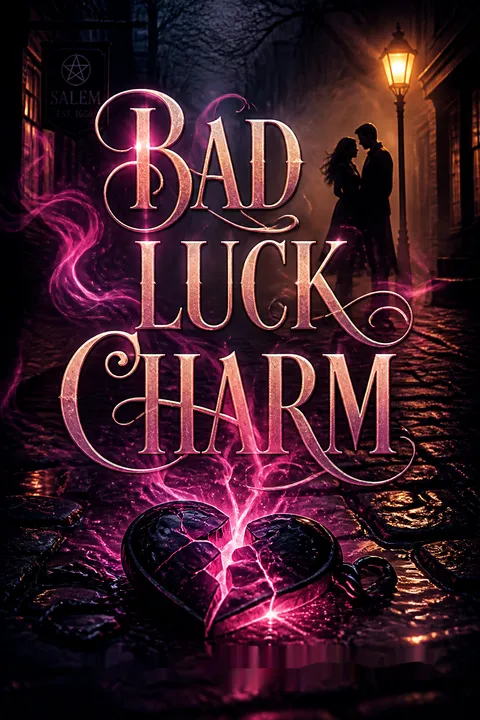


Plot Summary
Prologue
Two weeks after a murder is discovered, Gwen Goode opens her Salem shop to find a detective waiting in her office and her barista warning that the police may think Gwen killed their neighbor.
The accusation lands on top of a week of threats, a kidnapping, and a dangerously unexpected entanglement with Graham Graves, the man she has spent years avoiding. Before Gwen can explain how her life turned so sharply, the story returns to the morning when an angry customer stormed into The Gallows.
The prologue begins with consequences rather than causes: Gwen is already exhausted, under suspicion, and unable to sort danger from desire. Its compressed list of recent upheavals establishes her comic voice as a survival skill, not evidence that she takes everything lightly. The return to two weeks earlier then gives the narrative a mystery-shaped engine. Readers know a murder accusation is coming, but not how a shopkeeper who sells novelty potions becomes a suspect. The frame also places the romance under pressure from the outset: Graham is part of the crisis, yet Gwen’s feelings for him are among the things she least wants to explain.
The Bottle and the Brawler
The Gallows, Gwen Goode’s cafe and occult shop, is interrupted by a customer whose wife bought Jilted Juice, a harmless prank potion meant to discourage infidelity. He blames Gwen for his sudden sexual trouble and lunges across her counter when she refuses to accept responsibility. Graham Graves, her old adversary and best friend Florence’s boyfriend’s closest friend, catches him by the collar and hauls him away.
Gwen bristles at Graham’s demand for thanks, but he insists they need to speak privately. His unexpected arrival carries more weight than the rescue: he knows about a crime scene behind her shop, and he has come to bring her to it. Gwen follows, unaware that the customer’s threat is the least of her troubles.
The opening gives Gwen a small-scale version of the novel’s larger danger: people assign her power and blame without understanding what she has actually done. The potion is a joke, but the customer’s threat is real, and Graham’s intervention establishes that Gwen’s self-sufficiency cannot always protect her physically. Her refusal to thank him also preserves the friction that defines their early relationship. Beneath the banter, however, his presence signals a change in their usual pattern. He has crossed into her working life because the threat is no longer merely social, and Gwen must begin accepting help before she knows whether she trusts the person offering it.
The Lifeguard Memory
At ten, Gwen spends summers with her loving aunt Colette in Salem, escaping a childhood shaped by a neglectful mother and unstable homes. When a sea urchin pierces her foot at the beach, a teenage lifeguard carries her to safety, removes the spines, and gives her a nickname she treasures.
Years later, at thirteen, she sees him again and embarrasses herself in front of his friends; he remembers her, but she leaves believing the crush is hopeless. As an adult, newly returned to Salem after Colette’s death, Gwen hears Graham dismiss her aunt’s occult shop and the kind of woman who runs it. Grieving, she takes his contempt as a personal wound and turns her old admiration into years of deliberate avoidance.
Gwen’s history with Graham is not simply a childhood crush revived by proximity. The lifeguard becomes an early symbol of safety in a life where safety was scarce, so her later anger carries the force of disillusionment. When adult Graham insults Colette’s work, he seems to destroy not only Gwen’s image of him but also the refuge that made her childhood survivable. Her avoidance protects her from renewed humiliation, while allowing her to preserve the story that her old hope was foolish. The section frames their romance as a struggle over memory: Graham is both the boy who once helped her and the man she believes betrayed what that kindness meant.
Blood in the Alley
In the storeroom, Graham asks about the shop’s rear exit, its lack of cameras, and who has used the alley that morning. He then takes Gwen outside, where she finds a donkey dismembered and arranged within a blood-drawn pentagram. A Latin warning on the wall promises a return. Graham explains that he works as a special consultant and private investigator, not the handyman Gwen had assumed, and Detective Caden Hightower joins the inquiry.
When Gwen recognizes that the markings and placement are deliberate, she helps the men interpret the scene. Hightower shows her photographs of earlier sacrifices: a cat, rooster, goat, and pig. Because the newest scene was left behind her shop, the investigators suspect Gwen may be the intended target.
The crime scene turns Gwen’s storefront from a carefully managed refuge into evidence that danger can enter through its back door. Her knowledge is practical rather than supernatural: she can recognize ritual form without claiming to practice magic. That distinction matters because both the police and the witches will later try to make her into something more than she believes herself to be. Graham’s profession also revises Gwen’s picture of him, exposing the limits of her strategy of refusing to learn about him. She has spent years treating ignorance as emotional protection; now the case makes her knowledge necessary for survival.
The Coven’s Warning
The night after the crime scene, three cloaked women drug Gwen with shimmering powder and take her to an abandoned basement. Their leader, Eliza Proctor, is Gwen’s elderly neighbor; the others are Sally and Agatha, members of the Bay Colony Coven. They insist they did not kill the animals, blaming a rival sect called the Heretics.
The women reveal that Colette had led their coven as High Priestess and that Gwen, her only living descendant, carries the blood the Heretics need to break an old binding curse. They want Gwen to leave Salem, but she refuses to abandon Colette’s house and shop. The witches leave her tied in the dark. Graham tracks her laptop, finds the basement, frees her, and takes her somewhere secure.
The revelation makes family inheritance literal and dangerous. Gwen has treated Colette’s shop as a legacy she chose to preserve, not as proof that she belongs to a supernatural lineage. The coven recasts that inheritance as obligation, asking her to surrender her home for a conflict she does not understand. Their protective motive does not erase the coercion: they decide what safety means for Gwen and enforce it by taking away her choice. Graham’s rescue contrasts with their control, though he too acts unilaterally. The novel begins to test a central tension in Gwen’s life: accepting care without surrendering agency.
A Night Without Escape
Graham refuses to take Gwen back to her house after rescuing her, believing she needs protection, and brings her to his loft. His commanding manner frustrates her, but after he tends her scraped knees and gives her clean clothes, his concern becomes harder to dismiss. When he kisses her to interrupt a spiraling argument, Gwen is startled by how strongly she responds.
Later, unable to sleep beside him, she explains that her mother’s partners and chaotic home life made nighttime feel dangerous; she learned to sleep only when alone and secure. Graham listens without mocking her or demanding that she change. The next morning, his teasing returns, but the night has altered their closeness, leaving Gwen both comforted and alarmed.
The bed becomes more than a romantic setting: it is the place where Gwen’s childhood taught her to remain alert. Her rule about sleeping alone is not coyness or a test of Graham’s patience; it is an adaptation that once helped her endure an unsafe home. By listening, Graham earns a different kind of intimacy than physical attraction alone could provide. Yet his unilateral decision to keep her at his loft complicates the comfort. Care and control remain uncomfortably adjacent. Gwen’s response shows that desire can coexist with fear, but the story does not treat attraction as a cure for trauma. Trust will require choices, not merely chemistry.
The Kiss That Breaks
Once Graham walks Gwen through her empty house to check for intruders, he notices that she has barely decorated beyond her bedroom. He argues that she keeps life temporary because she fears putting down roots, and that she lets men close physically while holding them away emotionally. His diagnosis enrages her, especially when he turns the argument into a kiss.
Gwen kisses him back, then feels humiliated when his words make the moment sound like proof of his point. She slaps him and orders him out. Graham leaves, but not before insisting she lock the door. Their attraction is now undeniable, yet Gwen interprets it as another way he can reach past her boundaries and expose vulnerabilities she has not chosen to share.
Graham sees something true about Gwen, but being right does not give him the right to decide when she is ready to hear it. The kiss collapses argument, insight, and desire into one act, leaving Gwen unable to tell whether she has been understood or maneuvered. Her slap is a sudden reversal of the helplessness she grew up with, though it also frightens her because she has become what she resents. This scene gives the romance an ethical obstacle beyond simple miscommunication: Graham’s perceptiveness can feel like intimacy or intrusion depending on whether Gwen has consented to being read.
The Psychic’s Dangerous Debt
At the shop, a large, furious man named Mickey O’Banion corners Gwen beside the dumpsters and demands to know where Madame Zelda has gone. Gwen refuses to share the psychic’s private information, though she does not know Zelda has vanished because of a dispute with Mickey’s family.
Later, Graham explains that Mickey hired Gravewatch to find Zelda, whom he suspects of stealing valuable heirlooms from his ailing mother. Gwen and Flo trace Zelda to her apartment and confront her; Zelda denies stealing the jewelry and suggests Mickey may be using the accusation to hide a fight over his mother’s inheritance.
When Mickey breaks into the apartment, Zelda fires at him, buying time for Gwen and Flo to escape down a fire escape. A Gravewatch operative watches them flee.
The Zelda subplot tests Gwen’s instinct to protect people who are vulnerable, even when she lacks reliable information about them. Her loyalty is generous, but it can also turn into a refusal to distinguish compassion from trust. Zelda’s account gives Gwen a plausible reason to doubt Mickey without proving the psychic innocent. Meanwhile, Graham’s work for the O’Banions places him on the other side of Gwen’s moral instincts: he sees a client and a task, while she sees a person who may be in danger. The escape establishes that this conflict is not abstract. A bad judgment about whom to trust can bring armed men to the door.
The Warning in Bed
Graham learns that Gwen and Flo visited Zelda and breaks into Gwen’s house at night to demonstrate how easily someone can get past her defenses. She wakes swinging a baseball bat, but he pins her to the bed and demands that she stop interfering in the O’Banion case. Gwen admits she lied about knowing Zelda’s location and reveals that Mickey had threatened her earlier.
Graham’s anger gives way to a kiss and escalating physical intimacy, but he abruptly describes Mickey’s history of violence to make Gwen understand what could have happened. Gwen feels manipulated and orders Graham away. He finally explains that his desire is real, not a strategy, but she cannot absorb the confession through her fear and exhaustion.
The scene deliberately entangles erotic power with actual danger, making Gwen’s discomfort more than a romantic obstacle. Graham’s demonstration is meant to protect her, but breaking into her home and restraining her recreates the loss of control he claims to be warning against. His use of her attraction to deliver a lesson further erodes trust, even if his concern is genuine. Gwen’s insistence that her body’s response does not grant him authority over her is a crucial act of self-definition. The novel asks whether protective intent can excuse coercive behavior, and its answer depends on whether Graham can listen when Gwen sets a limit.
Eliza on the Tomb
Six days later, Gwen discovers Eliza’s body on a crypt in the Old Burying Point cemetery, an occult knife through her heart. The scene echoes the earlier animal sacrifices, and Gwen is found there by dog walkers who summon the police. Detective Hightower questions her, while Graham insists that the murder may be connected to the Heretics and Gwen’s earlier warnings.
The investigation turns sharply against her when forensics find Gwen’s fingerprints on the knife, which is missing from The Gallows, and neighbors report her recent argument with Eliza. Graham’s surveillance records later place Gwen at the shop during the estimated time of death, but for now the evidence makes her look capable of killing the woman who had tried to protect her.
Eliza’s murder transforms Gwen’s fear from a private worry into a public accusation. The body is staged for her to find, so the violence functions both as a threat and as an effort to shape the police’s interpretation of her. Gwen’s prior conflict with Eliza gives the evidence a convincing surface logic, even though it omits the supernatural feud beneath it. The knife’s connection to Gwen’s shop also implicates the space she inherited from Colette. Home, work, and ancestry collapse into a single crime scene. The detective’s suspicion is not irrational, which forces Gwen to confront how difficult it is to prove a truth that sounds impossible.
The Calendar’s Pentagram
As Hightower reviews the animal-slaying photographs and a city map, Gwen notices that the sacrifices fall near seasonal pagan observances: the spring equinox, Beltane, the summer solstice, the first harvest, and the autumn equinox. She predicts the next ritual will be on Samhain, Halloween, barely three weeks away. The knife from her shop and the suspicious timing make the case urgent.
Gwen finally tells Graham the full story of the coven, Colette’s role, and the Heretics’ plan to use her blood. She admits she withheld the truth because she feared Graham would retaliate against the older witches. Grief over Eliza overwhelms her, and she and Graham choose one another in a mutually desired night together.
Gwen’s pattern recognition turns her from a threatened witness into an active investigator. The lunar calendar does not simply decode the past; it supplies a deadline that reorganizes the future. Her willingness to share the coven’s secrets with Graham is equally consequential. She stops treating silence as the only way to retain control and risks letting another person help carry the truth. Their intimacy follows grief, not as a magical resolution but as a moment of chosen closeness. Gwen’s first movement toward trust is not the disappearance of fear. It is the decision to act while fear remains present.
The Room Between Them
After their first night together, Gwen still insists on sleeping at home, and Graham calls her fear a hangup. His words wound her; she leaves his loft convinced that his care has become another form of pressure. He does not disappear. Instead, he arrives at her house with a sleeping bag and keeps watch from an empty room, respecting her need for a separate bed while refusing to abandon her.
They argue again, then reconcile physically. In the morning, Gwen finds him stripping the hideous wallpaper from her dining room. His practical help makes the house feel less like a borrowed refuge and more like a place she might shape for herself. The first time she invites him to remain beside her, she falls asleep in his arms.
The shift is small in action but large in meaning: Gwen chooses shared sleep, a vulnerability she has avoided for years. Graham’s decision to stay in a separate room matters because it offers protection without demanding immediate access to her bed. Their conflict does not vanish, but he begins to show that persistence can include restraint. The wallpaper gives their emotional movement a physical counterpart. Removing it does not erase Colette’s history; it creates room for Gwen to make the house her own. The scene recasts intimacy as repeated negotiation, where safety grows through actions that respect the boundary rather than simply challenging it.
Zelda’s Uneasy Bargain
Gwen learns Graham’s team has found Zelda and is holding her at Gravewatch while they search for the O’Banion family’s stolen jewelry. She visits the psychic, who blames Gwen for her predicament and refuses to cooperate. Gwen threatens to let the O’Banions take custody of her; Zelda breaks and reveals that she sent the jewels to her sister in Maine.
The information gives Graham a path to recover the property and negotiate Zelda’s release from the family’s vengeance. When Gwen asks about the case again, Graham admits Zelda is in custody and explains the plan. He will return the jewelry, clear the debt, and get Zelda out of Salem. Gwen’s intervention helps, but Zelda’s choices have consequences she cannot erase.
Gwen’s confrontation with Zelda marks a more mature form of loyalty. She no longer assumes that protecting someone requires believing every claim or shielding them from accountability. Her threat works because Zelda values freedom more than the comfort of blaming Gwen, and the recovered location turns an emotional standoff into actionable information. Graham’s plan reflects the compromises of his gray-area profession: he seeks a resolution outside a courtroom, hoping to prevent violent retaliation. Gwen’s compassion remains active, but it is no longer indiscriminate. She helps Zelda without pretending the psychic has done nothing wrong.
A Warning in Evidence
Hightower brings Gwen to the station and presents the murder weapon, which bears her fingerprints, along with evidence that the athamé is missing from her shop. Neighbors have described her quarrel with Eliza, and Gwen has no useful alibi for the estimated time of death.
She asks for a lawyer rather than inventing a story the detective will not believe. Reviewing the map of sacrifice sites, she recognizes that the marks form a pentagram across Salem, centered on Broad Street Cemetery.
The inference gives the investigation a likely ritual location and confirms that the attack is aimed at her. Graham arrives and stops Hightower from questioning her alone, then keeps her close as the team prepares for Halloween. The evidence now points toward both a frame-up and a deadline.
This section makes the cost of Gwen’s earlier concealment visible. Because she has withheld key facts, ordinary evidence appears to tell a coherent story of guilt, and Hightower is obliged to take it seriously. Her request for counsel is not a confession but a recognition that she cannot safely improvise her way through an institutional process. The map offers a different kind of evidence: spatial pattern rather than personal motive. Gwen’s ability to see the pentagram shows her scholarship becoming a form of agency. Graham’s intervention protects her, though the conflict between his methods and police procedure remains unresolved.
Samhain’s Hidden Center
Before Halloween, Agatha and Sally visit The Gallows on their way to Eliza’s funeral. They tell Gwen they do not blame her, but warn that the Heretics still need her blood. Sally gives her a carved bone pendant taken from their first High Priestess, Gwen’s ancestor Sarah Goode, as protection.
At the shop’s Halloween party, Gwen studies a pirate museum map and realizes the sacrifice locations form a pentagram centered on Broad Street Cemetery. She carries the clue toward the party, where Graham’s twin brothers, Holden and Hunter, guard her. The O’Banion brothers confront them in an alley, demanding Zelda and threatening Gwen. The twins fight back, giving her time to escape, but the attackers scatter her from her protectors.
The pendant and map bring two systems of inheritance into contact. The bone links Gwen to a lineage she never chose, while the map translates the Heretics’ scattered violence into a plan she can understand. The coven’s gift is not proof that Gwen suddenly shares its beliefs; it is a concrete gesture of solidarity after the loss of Eliza. Meanwhile, the O’Banions’ threat shows that supernatural danger is not the only danger around her. The twins’ protection buys time but cannot make Gwen invulnerable. Her escape from the alley will depend on judgment and luck, not simply on the powerful people assigned to guard her.
The Barista’s Betrayal
Gwen reaches The Gallows after escaping the O’Banions, expecting to call for help. Instead, Hetti appears without her familiar goth makeup and admits that the friendly barista persona was a disguise. She blows the same paralyzing powder into Gwen’s face and speaks the Heretics’ promise that they will rise that night.
Gwen wakes on a cemetery crypt at Broad Street, surrounded by cloaked practitioners and a full moon nearing eclipse. Hetti reveals that she killed Eliza and plans to use Gwen’s blood to break the old binding curse. The Bay Colony Coven arrives to stop the ritual, but the Heretics overwhelm Sally, Agatha, and their companions. Hetti raises the engraved dagger over Gwen as the eclipse reaches its final stage.
Hetti’s betrayal is potent because it corrupts the ordinary rhythms that once made The Gallows feel safe. Gwen trusted her through months of work, so the revelation attacks not only her body but her ability to read familiar people. The powder also echoes the earlier coven kidnapping, creating a sharp contrast: the same method can be used by people claiming protection or by a killer preparing sacrifice. Hetti’s motives are ideological as well as personal. She believes Colette’s coven denied her sect power, and she frames murder as restoration. The ritual makes Gwen’s inherited blood a political resource claimed by competing groups.
The Bullet Before the Blade
As Hetti brings the dagger down, a shot strikes her shoulder and knocks the blade away. Graham and the Gravewatch team storm Broad Street Cemetery, scattering the Heretics and freeing Gwen from the crypt.
Their fight leaves the surviving coven members alive, though Sally and Agatha are unconscious, while police and paramedics arrive to take over. Hightower arrests Hetti and the other Heretics; Graham confirms that the evidence ties Hetti to Eliza’s murder. He carries Gwen home, and she wakes later beside him, no longer keeping him at a distance.
Graham tells her he loves her and wants a life together, including a shared home, marriage, children, and the ordinary daily security she never had. Gwen accepts, returning his love and choosing to begin living rather than merely endure.
The climax resolves the external plot through cooperation: Gwen’s map identifies the site, the coven resists, Gravewatch intervenes, and the police take custody of the perpetrators. No single group possesses enough power to end the threat alone. The emotional resolution follows the same logic. Graham cannot rescue Gwen into trust; she must choose to let him stay after the danger has passed. His promises about a house, food, and a future answer the material insecurities of her childhood without reducing her to them. The ending’s central change is not that Gwen becomes fearless, but that she accepts a life in which safety can be shared.
Epilogue
When Gwen returns to The Gallows after the danger has passed, Graham, Florence, Desmond, the Gravewatch team, and Hightower gather to support her. A new visitor, Imogen Warner, asks about the shop’s vacant psychic position rather than the advertised barista job.
Her striking appearance and repeated glances toward Hightower unsettle the room, while Gwen welcomes her inside. The shop is open to a new chapter, even if no one yet knows what Imogen’s arrival will bring.
The epilogue restores The Gallows as a communal place rather than merely the site of Gwen’s danger. Her friends and protectors appear without being summoned, offering the kind of support she once struggled to accept. Imogen’s arrival also leaves the story’s world open-ended: the supernatural business continues, and the shop’s vacant psychic role suggests that Salem’s mysteries will not end with the Heretics’ defeat. The scene shifts the atmosphere from crisis to possibility without resolving Imogen’s connection to Hightower. Gwen is no longer alone at the counter, and the shop can once again welcome the unknown as part of ordinary life.
Analysis
Bad Luck Charm makes safety the story’s contested resource. Gwen has built a life around competent self-management: she runs a busy shop, owns her home, dresses with deliberate polish, and keeps other people from seeing how much she fears dependence. Those habits are not superficial quirks. They are adaptations to childhood poverty, instability, and a home where adults could not be trusted. The novel’s central romantic question is therefore not whether Graham desires her, but whether his care can become safe without becoming another form of control.
The supernatural plot externalizes that question. The Heretics regard Gwen’s blood as a tool; the Bay Colony Coven regards her as a responsibility; the police regard her as a suspect; Graham sometimes treats her as someone whose choices must be overridden. Each group has a different explanation for what Gwen is and what should happen to her. Her growth comes through reclaiming authorship: she interprets the ritual calendar, identifies the pentagram’s center, chooses when to disclose the truth, and eventually chooses to share a bed and a future. She does not become powerful by mastering a spell. She becomes more powerful by acting on what she knows and deciding whom to trust. The novel also refuses to equate love with effortless healing. Graham’s perception of Gwen is often accurate, but accuracy alone does not make his tactics acceptable. His breaking into her home and using intimacy to frighten her expose the danger in his belief that he knows what she needs. Their relationship improves when his protection includes restraint and when Gwen can say yes without being cornered. The romantic resolution works because it offers material forms of security, such as shared food, a finished room, and a home shaped together, rather than asking Gwen to abandon the habits that once kept her alive overnight.
Finally, the setting binds personal memory to public history. Salem’s tourist commerce, witch-trial sites, and occult shops make the supernatural both spectacle and lived inheritance. Gwen’s humor keeps the spectacle from swallowing her, while the graveyards remind her that the past can be honored without dictating every choice. The book’s answer to inherited fear is not forgetting. It is building a present in which memory no longer has to be faced alone.
Review Summary
Bad Luck Charm is a witchy romance set in Salem, featuring Gwen, who runs an occult shop, and Graham, a private investigator. Readers praise the book's spooky atmosphere, humor, and steamy romance. Many enjoy the enemies-to-lovers dynamic and the murder mystery subplot. However, some readers find Graham's behavior problematic and the plot predictable. Overall, the book is well-received for its fall vibes and entertaining storyline, though opinions on character development and pacing vary.
People Also Read






Characters
Gwendolyn Goode
The guarded shopkeeperGwen owns The Gallows, an occult shop and cafe inherited from her Aunt Colette. Funny, stylish, and quick with customers, she uses humor and competence to keep fear at a distance. Her childhood with a neglectful mother taught her to rely on herself, avoid asking for help, and treat independence as protection. She is curious about occult history but does not begin as a practicing witch or supernatural believer. Her long-standing feelings for Graham complicate her efforts to keep emotional distance, while the murders force her to trust her own observations and accept help without surrendering her choices.
Graham Graves
The relentless investigatorGraham is a Harvard-educated private investigator and special consultant whose company, Gravewatch, assists law enforcement with difficult cases. He is disciplined, observant, blunt, and accustomed to taking charge, qualities that make him effective at work and difficult in intimate relationships. His long familiarity with Gwen has made him attentive to her habits, even while their hostility has kept them from speaking honestly. He values loyalty and protection, but his instinct to solve problems for others can cross into control. Beneath his commanding manner is a patient, deeply committed man who wants a shared life rather than a passing conquest.
Florence Lambert
Gwen’s steadfast best friendFlo is Gwen’s oldest friend and a devoted elementary-school teacher. Warm, direct, and cheerfully interventionist, she supports Gwen through grief, danger, and romantic denial without pretending to be neutral about Graham. Her love for Desmond gives her a secure partnership to model, though she knows Gwen’s fears cannot simply be argued away. Flo offers practical help at The Gallows, joins Gwen’s search for Zelda, and provides emotional shelter when Gwen is too proud to ask for it.
Desmond Bourne
The thoughtful historianDesmond is Flo’s boyfriend and Graham’s closest friend, a university professor of New England history and folklore. Gentle and bookish, he contrasts with Graham’s forceful temperament without judging him by it. He cares deeply for Flo and treats Gwen as part of their shared circle. His support is quieter than Flo’s, but he helps her run the shop and stands beside her when events become frightening.
Henrietta Charles
The sardonic baristaKnown as Hetti, Gwen’s goth barista is dependable, sharp-tongued, and unimpressed by customers who expect conventional warmth. Her interest in mystical subjects fits naturally into The Gallows, and her dry humor gives her a distinctive presence behind the espresso counter. She watches the people around her closely, even when her expression suggests complete indifference. Her relationship with Gwen begins in the routines of shared work, where trust is built through reliability and small acts of assistance.
Graham’s mother
A distant family presenceGraham’s mother belongs to the wealthy Graves family and established a trust for her sons. Graham’s reluctance to accept that money hints at unresolved strain between them and helps explain his insistence on earning his own standing.
Colette Goode
Gwen’s generous auntColette raised Gwen’s spirits and sense of possibility during the summers Gwen spent in Salem. She ran The Gallows for decades, welcomed people without much concern for profit, and passed the shop and family home to Gwen. Her curiosity about witchcraft and her bond with the coven shape the story long after her death. To Gwen, Colette represents the first home where she felt safe.
Caden Hightower
The principled detectiveCaden is a Salem police detective who investigates the ritual killings and takes Gwen’s safety seriously. Warm and courteous in personal exchanges, he is also methodical about evidence and cannot ignore facts that make her look suspicious. His approach often clashes with Graham’s willingness to work outside ordinary procedure. Caden’s concern for Gwen is genuine, but he must balance that concern against the duties of his office.
Elizabeth Proctor
The protective neighborEliza is Gwen’s elderly neighbor, a keen gardener and one of Colette’s longtime friends. She is reserved in public but fiercely protective when she believes Gwen is in danger. Her place in the Bay Colony Coven connects the quiet residential street to Salem’s hidden supernatural history.
Agatha
The blunt coven elderAgatha is an older member of the Bay Colony Coven, forceful, argumentative, and convinced that decisive action is necessary to protect Gwen. Her bluntness often makes her advice difficult to accept, but it comes from loyalty to Colette and fear of the Heretics. She shares a lively, combative friendship with Sally.
Sally
The warm coven elderSally is an elder of the Bay Colony Coven, affectionate and hospitable beneath her sharp wit. She remembers Colette with deep love and tries to make Gwen feel included in a community she never knew existed. Her baking and teasing soften the coven’s severity, while her courage shows that age has not diminished her willingness to defend others.
Madame Zelda
The elusive shop psychicZelda is an independent psychic who uses a curtained space inside The Gallows and makes private visits to clients. Flamboyant, mercenary, and difficult to pin down, she treats her work as a business and keeps much of her personal life private. Gwen’s concern for her reflects a generous impulse, but Zelda’s evasiveness makes that trust complicated.
Mickey O’Banion
The volatile clientMickey is a member of Salem’s powerful O’Banion family and hires Gravewatch to locate Zelda. Large, impatient, and quick to anger, he carries the confidence of someone used to making demands. His concern for his mother and his family’s property is entangled with a threatening sense of entitlement, making him dangerous even when his grievance may be genuine.
Holden Graves
One of Graham’s twinsHolden is one of Graham’s younger twin brothers and a skilled member of the Gravewatch team. He is physically formidable, terse, and protective of the people his brother assigns him to guard. His confidence in a fight is matched by a streak of impatience that Graham keeps a close eye on.
Hunter Graves
The other Graves twinHunter is Holden’s twin and another capable Gravewatch operative. Like his brother, he is restrained in conversation and decisive under pressure. The twins’ loyalty to Graham is rooted in family as well as work, though they are old enough to bristle when he treats them like reckless teenagers.
Hecate
Zelda’s noisy macawHecate is Zelda’s brightly colored macaw, housed in a neglected apartment and prone to repeating ominous, mystical-sounding phrases. Her startling presence adds a comic and unsettling edge to Zelda’s world.
Imogen Warner
The new shop applicantImogen is a striking, reserved visitor who approaches Gwen about the vacant psychic position at The Gallows. Her unusual composure and attention to Detective Hightower make her arrival feel like the beginning of another mystery.
Gwen’s mother
The unreliable parentGwen’s mother moved through unstable relationships and jobs while giving her daughter little protection or consistency. Her neglect teaches Gwen to be self-reliant, but also leaves her wary of dependence and intimacy.
Plot Devices
The seasonal sacrifices
A ritual with a timetableThe Heretics leave increasingly elaborate animal sacrifices at locations around Salem, using blood, pentagrams, and cryptic inscriptions. Gwen first helps interpret the details without recognizing the sequence behind them. Later, she matches the discoveries to pagan seasonal festivals and realizes Halloween is the next likely date. The murders therefore function both as clues and as a countdown. Each new scene increases the threat while teaching Gwen and the investigators how the ritual is organized.
The Goode bloodline
An inherited supernatural keyThe Bay Colony Coven tells Gwen that her descent from Colette and the earlier High Priestess Sarah Goode makes her blood essential to the Heretics’ attempt to break an old binding curse. Gwen has not inherited a clear sense of magical power and initially resists the idea that ancestry determines her role. This device makes the conflict personal without making it voluntary: rival groups seek control of her body because of what they believe it contains. It also links the supernatural plot to Gwen’s struggle over what it means to inherit Colette’s home, business, and history.
The bone pendant
A tangible line of protectionSally gives Gwen a carved shard from the femur of Sarah Goode, engraved with coven symbols and presented as protection. Gwen initially treats it as a strange, unsettling keepsake rather than a weapon or a guarantee of safety. At the cemetery, while drugged and barely able to move, she uses its sharp point to wound Hetti and create a chance to escape. The pendant translates an inherited history into a practical object Gwen can use herself. Its importance lies not in making her invulnerable, but in giving her one tool when her body and choices have been taken from her.
Gravewatch surveillance
A network against isolationGraham’s investigative company uses cameras, traffic footage, background checks, and field operatives to monitor threats around Gwen. The surveillance helps locate her after her abduction, records evidence that challenges the murder accusation, and identifies Hetti’s movements before the final ritual. It also creates a recurring tension: Graham’s protective network keeps Gwen safer, yet it can feel like another force deciding where she may go. The device mirrors the novel’s larger distinction between support and control. Its value depends on whether the information protects Gwen’s agency or merely substitutes Graham’s judgment for hers.
The citywide pentagram
A map reveals the ritual centerThe locations of the sacrifices seem unrelated until Gwen plots them on a map of Salem and connects them into a pentagram. The center falls at Broad Street Cemetery, where the Heretics intend to perform the final rite. Gwen notices the pattern after seeing a museum pamphlet marked with an X, a mundane object that turns scattered evidence into a legible design. The map links her knowledge of occult imagery with ordinary geography and gives the investigators a specific place to search. It is the clue that makes the final confrontation preventable rather than merely imaginable.
Witch City Series
About the Author
Other books by Julie Johnson

Download PDF
Download EPUB
.epub digital book format is ideal for reading ebooks on phones, tablets, and e-readers.








