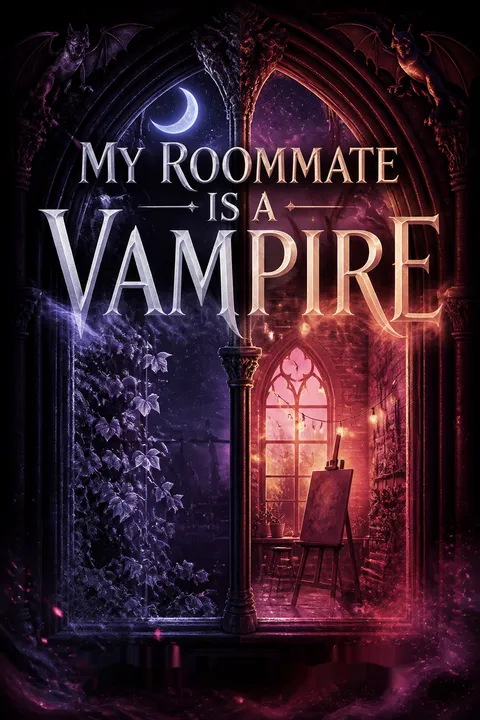


Plot Summary
Two Hundred Dollar Room
Cassie Greenberg, a thirty-two-year-old artist scraping by on part-time jobs, has two weeks to respond to an eviction notice and nowhere affordable to go. Her oldest friend, Sam, urges her to consider a Craigslist room in Lincoln Park for just two hundred dollars a month. The listing promises a spacious apartment, lake views, and a roommate rarely home after dark, but offers no photographs and bears an unfamiliar name.
Sam searches court and public records, finding no trace of Frederick J. Fitzwilliam. With homelessness closing in and her pride keeping her from accepting Sam’s offer of money or a sofa, Cassie emails the mysterious landlord anyway. His formal reply arrives within minutes and invites her to visit after sundown.
Cassie’s crisis is financial, but pride shapes its emotional force. She rejects help from people who love her because accepting it would confirm her private belief that she has failed at adulthood. The absurdly cheap room therefore offers more than shelter: it lets her imagine recovery without owing anyone. Sam’s practical concern and Cassie’s defensive humor establish a friendship in which care is freely offered but difficult for her to receive.
Fitzwilliam After Sundown
At the brownstone, Cassie meets Frederick, a striking man in a tailored three-piece suit whose old-fashioned speech matches the apartment’s antique furniture and dim rooms. He keeps the rent at two hundred dollars even after Cassie points out how far below market value it is.
He asks her to stay out of his bedroom and a locked hall closet, explaining that he sleeps during the day and has an embarrassing hobby. Sam waits outside, but Cassie decides Frederick seems unusual rather than dangerous.
She accepts the room, partly because she needs it and partly because the lake-facing windows could give her space to make art again. The apartment’s strict nighttime rhythm and unexplained rules leave her curious, wary, and unexpectedly attracted to her new roommate.
The apartment makes social class visible before Cassie understands its supernatural dimension. She reads its furnishings as evidence of wealth and bad taste, while Frederick’s manners suggest a life governed by rules she no longer recognizes. Their first bargain is unusually asymmetrical: he has resources, she has modern competence, and neither names the value of what the other can offer. Attraction complicates the arrangement immediately, but Cassie’s need for housing keeps the decision practical on the surface.
Fruit, Pans, and Blood
Frederick is asleep when Cassie moves in, but he leaves her handwritten instructions and a bowl of kumquats as a welcome gift. When she discovers the kitchen has no cookware, he rushes out to buy some and returns with an extravagant collection of pans and utensils.
Their notes become a tentative friendship: he praises her sketches, asks about her art, and tries to adjust the apartment to her needs. Cassie hangs her Lake Michigan landscapes over an ugly hunting scene, and Frederick first mistakes her found objects for mere rubbish before listening as she explains their purpose.
Their closeness intensifies after she accidentally walks into him outside the bathroom, where he is shirtless. The strange packages arriving for him and the forbidden closet remain unexplained.
Care arrives here in comically excessive forms: exotic fruit, costly cookware, and attention to Cassie’s drawings. Frederick’s generosity is sincere but socially clumsy, while Cassie’s art makes her own way of seeing legible to him. Their intimacy grows through small acts of accommodation rather than declarations. The locked closet and odd deliveries also show the limits of this apparent domestic safety. Cassie is beginning to trust a roommate whose life remains deliberately partitioned from hers.
The Fridge Gives Him Away
Cassie opens the refrigerator and finds rows of labeled blood bags beside her groceries. Frederick arrives with Reginald, the strange man Cassie has seen at the coffee shop, who immediately drinks from a bag using visible fangs. Frederick finally admits that he is a vampire and says he has not fed on a living human for more than two centuries.
Cassie cannot make his assurances feel safe after discovering that he concealed what he was, so she runs from the apartment and takes refuge on Sam’s couch. The revelation turns Frederick’s nocturnal schedule, cold body, old-fashioned manners, and strange diet into evidence she had missed. It also leaves her homeless again, now with a secret she cannot easily explain to her closest friend.
The blood in the refrigerator converts earlier eccentricities into a coherent but frightening pattern. Cassie’s flight is not simple prejudice: Frederick withheld information that directly affects her safety and ability to consent to living with him. His kind treatment cannot erase that breach. The scene also complicates the familiar vampire threat, since Frederick claims restraint while Reginald performs appetite openly. Cassie must decide whether observed character can outweigh a category that horror stories have taught her to fear.
Letters Make a Way Back
Frederick’s careful letter tells Cassie he will keep her belongings and donate nothing without her permission. Its gentleness moves her to call him and hear the explanation he never finished. He reveals that Reginald accidentally poisoned him with a failed vampire spell in Paris, leaving him in a coma for a century; he woke in Chicago only a month before placing the roommate ad.
He needs help learning modern life and avoiding dangers he cannot recognize. Cassie agrees to return after setting a firm boundary: she must not see blood or watch him feed. Frederick promises to store his blood separately. Back in the apartment, he gives her a list of lessons he wants, and she starts planning how to teach him without treating him as a project.
The handwritten letter gives Frederick a way to apologize without demanding immediate forgiveness. His century of sleep explains his helplessness, but it does not absolve the deception; Cassie’s food boundary makes renewed trust conditional and concrete. Their exchange also reverses the usual teacher-student hierarchy. She can navigate contemporary life, while he brings attention and respect to a talent she has learned to undervalue. Their household becomes a negotiated partnership rather than a rescue arrangement.
Lessons in Being Modern
Cassie begins teaching Frederick about the internet, coffee shops, and clothes, while he tries to study the modern world without losing his own dignity. He fumbles through social media, becomes jealous when he sees Cassie in a bikini, and struggles to disguise his century-old assumptions.
At a department store, Cassie helps him choose jeans and soft shirts; touching his chest for a supposed fabric lesson makes their attraction harder to deny. Their conversations also turn personal.
Frederick shares that he was turned in 1734 after a vampire attack killed or transformed most of his English village, and Cassie tells him about her own uncertain artistic ambitions. After finding his research into kissing advice, she and Frederick test the subject together, and their first kiss changes their lessons into courtship.
The lessons expose how adaptation can be both practical and intimate. Frederick must learn social conventions, but Cassie also has to recognize that his old world left grief and isolation behind, not merely comic confusion. His jealousy and her willingness to touch him reveal desire without yet resolving the risks of their unequal lifespans. Art provides a bridge between their different temporal habits: each learns to attend to the other’s inner life instead of treating difference as spectacle.
Rejection, Then the Bathroom
Cassie submits her mixed-media painting of a manor beside a lake to a gallery exhibition and receives an unexpected interview invitation from Harmony Academy. At Sam and Scott’s party, Frederick navigates the crowd by studying Taylor Swift and discussing her music with Sam’s sister, Amelia.
Cassie and Frederick grow close on the crowded train, where he holds her steady, then keeps her near. At the party, gallery-connected friend David tells Cassie the judges rejected her painting as too abstract, and her confidence collapses.
Frederick finds her crying in the bathroom, cleans the mascara from her face, and insists her work has value. Cassie kisses him there, and they leave the party together, no longer pretending their attraction is merely part of his education.
Cassie’s professional disappointment strikes at the identity she has protected through making art. Frederick’s response matters because he does not offer empty reassurance; he recognizes the vision she fears others cannot see. Meanwhile, his preparation for the party shows both comic overcompensation and a genuine desire to meet her world on its terms. The bathroom kiss follows emotional vulnerability rather than a seduction tactic, shifting their relationship from charged possibility to chosen intimacy.
An Engagement from the Past
Back at the apartment, Cassie and Frederick become lovers, but Frederick worries that he might lose control while feeding. Cassie offers a small amount of blood from her finger, giving him consent and helping him manage the risk. The next day, after Cassie’s library shift, she finds Frederick arguing with his mother, Edwina, who has come to demand that he marry Esmeralda Jameson.
Frederick explains that vampire families still arrange marriages and that his mother expects him to return to a predatory way of life. He refuses the match and says he will meet the Jamesons at the Ritz-Carlton to end it in person. Cassie hears his resolve, but the family’s power and his confidence leave her uneasy as he departs.
Intimacy here depends on explicit negotiation, not on the fantasy that love removes danger. Cassie chooses how much to share, and Frederick treats her consent as central to his self-control. The family conflict then reveals that his private ethics challenge a larger social order built on domination and inherited obligation. His mother’s proposed marriage is not just a romantic obstacle; it is an attempt to reclaim Frederick for a culture he has rejected.
Missing at the Ritz
Frederick does not return from the hotel, and Reginald confirms that the Jamesons have imprisoned him in a suburban vampire dungeon after he refused the engagement. Cassie is frightened and furious, but she still attends her Harmony Academy interview. When the school asks why she pursued teaching, she admits she once assumed no school would want her work; Frederick’s faith in her helped her reconsider.
The interview goes well, though no job is secured yet. Later, Cassie finds an Instagram photograph of Esmeralda helping Frederick into a limousine and fears he may have chosen his old world. Reginald tells her the image shows an abduction, not consent, and that Frederick faces forced marriage if they cannot get him out.
The simultaneous interview and kidnapping plot places Cassie’s professional and romantic self-worth under pressure. She speaks honestly to Harmony instead of performing the certainty she thinks employers want, suggesting a new capacity to trust her own account. The photograph then triggers her old habit of measuring herself against women who seem more accomplished or desirable. Reginald’s clarification gives her an actionable problem, redirecting insecurity into agency.
TikTok Threat in Naperville
Cassie and Reginald devise a threat aimed at Edwina’s fear of exposing vampires: they film a deliberately theatrical video claiming vampires are real and promise to post it online. Edwina’s assistant agrees to a meeting in Naperville, where Cassie must destroy the video in exchange for Frederick’s release. Reginald stays nearby, hidden above the suburban house, while Cassie approaches alone.
A nosy neighbor mistakes her visit for a drug purchase, but she reaches the door and shows Edwina the clip. The frightened matriarch accepts the bargain, and Frederick appears moments later, exhausted but alive. Reginald joins them outside, and Cassie arranges a car away from the house so they can escape without lingering among the family’s allies.
The rescue succeeds because Cassie turns a weakness of the old vampire order into leverage. Edwina understands secrecy as essential, while Cassie understands the reach of online media even if her own following is tiny. The comedy of the fabricated video does not make the danger trivial; it shows how cultural change can unsettle inherited power. Cassie acts despite having no supernatural strength, relying instead on invention, nerve, and Reginald’s support.
Home, Chosen Freely
Back in Chicago, Frederick explains that the Jamesons restrained him but did not break his refusal. Esmeralda ultimately helped end the engagement because she did not want to marry a man who rejected her.
Cassie tells Frederick that her Harmony interview went well, so she may soon have a life that no longer depends on his cheap rent. He asks her to stay anyway, despite knowing that she will age while he remains unchanged. Cassie chooses to remain with him because she wants the relationship, not because she needs the apartment.
A year later, she is teaching art full time at Harmony, and Frederick has adapted to ordinary routines, including texting. He offers her a ruby ring and time to consider what becoming a vampire would mean; she accepts the ring as a promise to think, not a final answer.
The resolution separates economic dependence from emotional commitment. Cassie’s new teaching career answers the opening’s housing crisis, but it does not function as a prize that makes her worthy of love. Frederick’s request respects the scale of the choice he is asking her to contemplate, and Cassie does not surrender her future in a burst of romance. The ring remains deliberately provisional: partnership is affirmed, while immortality and bodily transformation stay open questions.
Epilogue
One year later, Cassie is a full-time art teacher at Harmony Academy, bringing found materials and unconventional projects into her students’ work. Frederick waits outside her building in clothes he chose himself and uses his phone with ease. During a walk by the campus lake, he presents a ruby engagement ring and asks Cassie to consider spending her life with him.
She tells him she needs to understand what becoming a vampire would involve before deciding. Frederick promises to explain, and Cassie lets him place the ring on her finger. She has not agreed to transform, but she accepts the promise and walks home with him.
The epilogue resolves Cassie’s immediate insecurity without pretending that love settles every question. She has gained professional stability, yet her choice to remain with Frederick is no longer secured by rent or rescue. The ruby ring echoes his old-world inheritance, but its meaning is negotiated in modern terms: Cassie asks for information before making a permanent bodily decision. Frederick’s willingness to wait marks the distance he has traveled from inherited expectations. Their future is hopeful precisely because the book leaves its most consequential choice with Cassie.
Analysis
The novel makes ordinary precarity the doorway into supernatural romance. Cassie’s eviction and scattered work are not incidental backstory; they shape what she can risk, what she refuses to accept, and why a suspiciously cheap room looks like a route back to independence. Frederick possesses money and physical power, but he is the one disoriented by contemporary life. Their arrangement therefore trades capacities rather than reducing either character to a rescuer or dependent.
The romance develops through practical acts of attention. Frederick buys cookware, preserves Cassie’s belongings, studies the world she knows, and takes her art seriously before he can fully understand it. Cassie, in turn, insists on explicit limits around his feeding and asks for knowledge before considering a life with him. The book treats consent as an ongoing practice, not a single permission granted by attraction. Their intimacy grows because each person can revise an agreement and still be heard.
Art and immortality offer contrasting answers to impermanence. Cassie makes discarded materials endure by changing their meaning; Frederick has endured for centuries while losing almost everyone who formed his original world. His admiration helps Cassie recognize her work’s value, but she ultimately has to claim that value herself in the Harmony interview. Her career development is not a reward for finding a partner. It is a parallel movement toward self-trust. The comedy also has a structural purpose. Old etiquette, fanny packs, fruit conjuring, and a badly staged vampire video keep the supernatural from becoming a pure power fantasy. The final proposal preserves the story’s central ethical question rather than solving it with a romantic gesture. Cassie can love Frederick and still need to understand the bodily and temporal cost of joining his life. Their future remains meaningful because she has not been asked to surrender the right to choose it.
Review Summary
My Roommate Is a Vampire is a lighthearted paranormal romance that has charmed many readers with its humor and sweet story. The book follows Cassie, a struggling artist, who becomes roommates with Frederick, a centuries-old vampire adjusting to modern life. Readers praise the witty banter, cute romance, and Frederick's fish-out-of-water moments. While some found the plot simplistic and the ending rushed, many enjoyed it as a fun, cozy read. The book's humor and lovable characters make it a satisfying comfort read for fans of paranormal rom-coms.
People Also Read








Characters
Cassie Greenberg
Found-art makerCassie is a resourceful Chicago artist whose mixed-media work turns discarded objects into deliberate statements. Debt, unstable employment, and repeated rejection have taught her to expect failure, while pride makes her resist help from Sam and her parents. Humor protects her from embarrassment, but it can also hide how deeply she wants to be taken seriously. She is attentive to other people and unusually willing to improvise, strengths that serve both her art and her relationships. Her central challenge is not learning to work harder; it is accepting that her unconventional vision and her needs deserve room.
Frederick J. Fitzwilliam
Formal nocturnal roommateFrederick is a wealthy, highly mannered man whose antique habits make him conspicuous in contemporary Chicago. Beneath his polished clothes lies a sincere curiosity, a strong moral code, and deep discomfort with needing help. He tries to express care through gifts, letters, and practical attention, even when he misunderstands what ordinary life requires. His isolation has made him cautious about intimacy and resistant to the social world his family represents. Cassie’s candor challenges him to adapt without pretending his past and values can simply be erased.
Reginald Cleaves
Chaotic old confidantReginald is Frederick’s longtime companion, a prankster whose irreverence often masks loyalty. He is more comfortable navigating the modern world than Frederick, but his helpfulness comes wrapped in mischief and poor timing. Their friendship is combative, intimate, and rooted in shared history. Reginald’s willingness to assist Cassie shows that he can take responsibility when someone he cares about is in danger.
Sam Collins
Protective childhood friendSam has been Cassie’s closest friend since childhood and approaches her crises with practical concern. A successful young lawyer, he offers housing, money, and advice, though Cassie’s reluctance to accept help can frustrate him. His protective instincts sometimes lead him to judge a situation before he knows its full shape. Beneath that caution is enduring loyalty and genuine respect for Cassie’s creative ambitions.
Scott
Steady creative allyScott is Sam’s husband and a thoughtful, creative presence in Cassie’s circle. He supports her art without pretending to understand every choice, and offers practical help when she needs photographs of her work. His calmness balances Sam’s more protective intensity. Scott also represents a stable, affectionate partnership that Cassie admires even when it sharpens her worries about her own life.
Edwina Fitzwilliam
Tradition-bound family matriarchEdwina is Frederick’s formidable mother, committed to the customs and alliances of her social world. She treats family decisions as matters of authority and stability, leaving little room for individual refusal. Her dramatic presentation and forceful manner make her intimidating, but her concern for her son exists alongside her desire to control his choices.
Esmeralda Jameson
Independent family heiressEsmeralda belongs to the old social circle that surrounds Frederick and carries herself with striking polish. Others speak of her as a beautiful and influential figure, but her public image reveals little of her private character. She is bound by family expectations while retaining a capacity for self-respect and independent judgment.
Marcie
Library arts mentorMarcie manages the children’s section where Cassie works and helps create its art nights. She is warm, practical, and willing to let Cassie bring imagination into an otherwise routine job. Her support gives Cassie a modest but important place to practice teaching and making art.
Katie
Warm coffee shop managerKatie supervises Cassie at Gossamer’s. Patient with eccentric customers and fair to her staff, she provides a familiar, grounded presence amid Cassie’s upheaval.
David Gutierrez
Gallery-connected friendDavid is a friend of Sam and Scott whose family owns an art gallery. His connection to the local art world gives Cassie a chance to submit her work, and his candidness helps her understand how the exhibition committee judged it.
Amelia
Polished accountant sisterAmelia is Sam’s capable, career-focused sister. Cassie has long felt judged by her, but Amelia’s enthusiasm for music reveals a warmer and less predictable side than Cassie expects.
Plot Devices
The Craigslist listing
A bargain with a catchThe unusually cheap room gives Cassie a believable reason to enter Frederick’s household while placing her need for stability beside the mystery of his life. Its price is low enough to attract someone under eviction pressure and suspicious enough to make Sam investigate. The listing initiates the romance, establishes the imbalance in their resources, and turns an ordinary housing search into the story’s first risk.
Letters and kitchen notes
Intimacy by correspondenceFrederick’s preference for handwritten notes creates a private channel between roommates who rarely share waking hours. Their messages begin with household logistics, then grow into jokes, drawings, questions, and small acts of praise. The form suits Frederick’s old habits while giving Cassie room to answer in her own informal voice. It also makes his apology after she leaves feel considered rather than coercive.
Blood bank supplies
A concealed diet revealedThe labeled blood bags in Frederick’s refrigerator make his secret impossible to dismiss and force Cassie to confront the danger she imagined. His reliance on stored blood establishes his effort to avoid harming living people, while Reginald’s immediate drinking makes the contrast between them visible. The device turns food storage, a mundane roommate concern, into the story’s central breach of trust and prompts Cassie to set a clear boundary before returning.
Frederick’s conjured fruit
A ridiculous hidden powerThe locked closet contains Frederick’s collection of fruit, which he involuntarily produces when nervous. The ability is embarrassing to him and useless for his own nourishment, but he shares the fruit with Cassie and a food pantry. It reframes the kumquats from his first welcome gift and reveals how badly he wants to impress her. The comedy also punctures the assumption that supernatural power must be glamorous or useful.
The TikTok bluff
Modernity becomes leverageCassie and Reginald create an exaggerated video threatening to expose vampires to the human public. Its credibility is weak, but the danger of public attention is potent enough to bring Edwina to the bargaining table. The plan lets Cassie use contemporary media against a family that depends on secrecy and inherited authority. Its success depends less on technical reach than on understanding what the other side fears losing.
FAQ
Synopsis & Basic Details
What is My Roommate Is a Vampire about?
- Unlikely Roommates Connect: A struggling artist, Cassie Greenberg, finds an unbelievably cheap apartment and moves in with the mysterious Frederick J. Fitzwilliam, only to discover he's a centuries-old vampire.
- Modern World Adaptation: The story follows Frederick's attempts to navigate the modern world with Cassie's help, leading to humorous and heartwarming situations as they learn from each other.
- Romance and Acceptance: As they navigate their differences, a romantic connection develops, forcing them to confront their fears and embrace their unique circumstances.
Why should I read My Roommate Is a Vampire?
- Unique Premise: The blend of a vampire romance with a modern-day roommate comedy offers a fresh and engaging take on both genres.
- Charming Characters: The characters are well-developed, with relatable flaws and endearing qualities that make them easy to root for.
- Heartfelt Story: Beyond the humor, the story explores themes of acceptance, trust, and the power of love to transcend differences, making it a satisfying and emotionally resonant read.
What is the background of My Roommate Is a Vampire?
- Contemporary Urban Setting: The story is set in modern-day Chicago, contrasting the city's bustling environment with the old-world nature of Frederick.
- Cultural Clash: The narrative explores the clash between modern and historical perspectives, highlighting the challenges of adapting to a rapidly changing world.
- Vampire Lore Subversion: The book subverts traditional vampire lore by portraying Frederick as a vulnerable character who needs help adjusting to the modern world, rather than a powerful, menacing figure.
What are the most memorable quotes in My Roommate Is a Vampire?
- "I am a vampire, Cassie.": This quote marks the pivotal moment when Frederick reveals his true nature, setting the stage for the central conflict and romance.
- "You have never met anyone like me, Miss Greenberg.": This line highlights Frederick's awareness of his unique existence and foreshadows the challenges he and Cassie will face.
- "I will never hurt you.": This quote underscores Frederick's sincerity and his desire to protect Cassie, despite his vampiric nature, emphasizing the theme of trust.
What writing style, narrative choices, and literary techniques does Jenna Levine use?
- Humorous Tone: Levine employs a lighthearted and comedic tone, using witty dialogue and situational humor to balance the supernatural elements.
- First-Person Perspective: The story is told from Cassie's point of view, allowing readers to connect with her thoughts, feelings, and reactions to the bizarre events unfolding around her.
- Character-Driven Narrative: The focus is on the characters' relationships and personal growth, with the plot serving as a vehicle for exploring their emotional journeys.
Hidden Details & Subtle Connections
What are some minor details that add significant meaning?
- The Welcome Mat: The tacky welcome mat with a puppy and kitten, placed by Reginald, contrasts sharply with Frederick's refined taste, foreshadowing the clash between their personalities and the humor that ensues.
- The Monogrammed Stationery: Frederick's use of monogrammed stationery highlights his old-fashioned nature and his attempts to maintain a sense of formality in a modern world.
- The Kumquats: The bowl of kumquats Frederick gives Cassie as a move-in gift foreshadows his unique ability to conjure fruit and his desire to offer her something special, even if he doesn't fully understand her tastes.
What are some subtle foreshadowing and callbacks?
- The "Repaired" Pots and Pans: Frederick's claim that his pots and pans are being repaired foreshadows his lack of experience with modern life and his reliance on others for basic needs.
- The Hall Closet: The mysterious hall closet that Frederick forbids Cassie from entering creates suspense and foreshadows the reveal of his unusual ability to conjure fruit.
- The Regency Romance Novels: Frederick's collection of Regency romance novels hints at his longing for a bygone era and his romantic nature, which is later revealed through his interactions with Cassie.
What are some unexpected character connections?
- Reginald and Frederick's History: The deep-seated friendship between Reginald and Frederick, despite their constant bickering, reveals a shared history and a bond that transcends their differences.
- Sam and David's Friendship: The unlikely friendship between Sam and David, the wedding coordinator, highlights the unexpected connections that can form in life and how they can influence the plot.
- Cassie and Katie's Connection: Cassie's friendship with her manager, Katie, at Gossamer's, provides a sense of normalcy and support in her otherwise chaotic life, and also serves as a source of humor.
Who are the most significant supporting characters?
- Reginald R. Cleaves: Reginald acts as a foil to Frederick, providing comic relief and a connection to the vampire world, while also being a source of support and information.
- Sam Collins: Sam serves as Cassie's confidant and a voice of reason, offering practical advice and a grounding influence in her life.
- Mrs. Edwina Fitzwilliam: Frederick's mother, though an antagonist, drives the plot forward and highlights the challenges he faces in defying his family's expectations.
Psychological, Emotional, & Relational Analysis
What are some unspoken motivations of the characters?
- Frederick's Need for Connection: Frederick's desire for a roommate stems from his loneliness and his need for connection after a century of isolation, not just a need for help with modern life.
- Cassie's Fear of Failure: Cassie's initial skepticism about the apartment and her reluctance to accept help from Sam reveal her deep-seated fear of failure and her desire for independence.
- Reginald's Hidden Loyalty: Reginald's constant teasing and apparent indifference mask a deep loyalty and concern for Frederick's well-being.
What psychological complexities do the characters exhibit?
- Frederick's Anachronistic Nature: Frederick's struggle to reconcile his old-world sensibilities with modern life highlights his internal conflict and his desire to find a place where he belongs.
- Cassie's Self-Doubt: Cassie's self-doubt and her tendency to downplay her own talents reveal her insecurities and her journey towards self-acceptance.
- Reginald's Contradictory Behavior: Reginald's mix of humor and genuine concern for Frederick showcases his complex personality and his internal struggle between his mischievous nature and his loyalty.
What are the major emotional turning points?
- Cassie's Discovery of Frederick's True Nature: The moment Cassie finds the blood in the fridge is a major turning point, forcing her to confront the reality of Frederick's identity and her own fears.
- Frederick's Confession: Frederick's vulnerability when he admits his need for help and his fear of hurting Cassie marks a shift in their relationship, fostering trust and intimacy.
- Cassie's Decision to Return: Cassie's decision to move back in with Frederick signifies her acceptance of him and her willingness to embrace the unknown, marking a significant emotional turning point.
How do relationship dynamics evolve?
- From Skepticism to Trust: Cassie's relationship with Frederick evolves from initial skepticism and fear to a deep sense of trust and understanding, highlighting the power of open communication.
- From Friendship to Romance: The relationship between Cassie and Frederick transitions from a roommate dynamic to a romantic one, marked by shared vulnerability and a growing emotional connection.
- From Antagonism to Understanding: The relationship between Cassie and Reginald evolves from initial wariness to a grudging respect and a shared goal of protecting Frederick.
Interpretation & Debate
Which parts of the story remain ambiguous or open-ended?
- The Nature of Vampire Powers: The extent and limitations of vampire powers, such as glamour and the ability to conjure fruit, are left somewhat ambiguous, allowing for a sense of mystery and wonder.
- Frederick's Past: While some details of Frederick's past are revealed, many aspects of his life before becoming a vampire remain unknown, leaving room for further exploration.
- The Future of Vampire Society: The story hints at the existence of a larger vampire society with its own rules and traditions, but the full extent of this world is left unexplored, leaving room for future stories.
What are some debatable, controversial scenes or moments in My Roommate Is a Vampire?
- Cassie's Initial Fear: Some readers might debate whether Cassie's initial fear of Frederick is justified, given his centuries-old nature and the potential danger he represents.
- Frederick's Deception: Frederick's decision to withhold his true identity from Cassie could be seen as a betrayal of trust, raising questions about the ethics of their relationship.
- The Use of Blood: The depiction of vampires drinking blood, even from blood banks, might be seen as controversial, raising questions about the morality of their existence and the ethics of their dietary needs.
My Roommate Is a Vampire Ending Explained: How It Ends & What It Means
- Commitment and Acceptance: The ending sees Frederick and Cassie committing to a future together, despite their differences, highlighting the power of love to transcend boundaries.
- Open-Ended Future: The ending leaves the future of their relationship open-ended, suggesting that their journey is ongoing and that they will continue to face challenges and grow together.
- Hopeful Tone: The ending is ultimately hopeful, emphasizing the importance of embracing change and finding love in unexpected places, leaving readers with a sense of optimism and possibility.
My Vampires Series


Download PDF
Download EPUB
.epub digital book format is ideal for reading ebooks on phones, tablets, and e-readers.








