

Key Takeaways
Stop calling yourself bad with money; replace secrecy with specifics
Shame keeps people uninformed. Dunn begins by challenging the idea that financial difficulty proves someone is foolish or defective. Money experts often sound certain while offering advice that can conflict, and many people were never taught the basics. In a coffee-shop experiment, strangers readily discussed sex but balked at sharing their bank balances. That silence makes it harder to compare experiences or learn what money decisions actually cost.
Make the numbers discussable. Dunn once felt humiliated asking a magazine to pay a $500 freelance invoice that took a year to arrive. She worried about seeming desperate, while the organization had little reason to feel embarrassed. Her point is not that every balance must be public. It is that honest, specific conversations can replace vague advice and expose problems that thrive on secrecy.
What's striking is how financial privacy can masquerade as dignity while leaving people isolated with preventable mistakes. Specific conversations can function like shared infrastructure: salary information, late-payment norms, and real costs help people make decisions with better evidence. That does not require disclosing every account balance to everyone. Privacy still matters, especially where debt, family conflict, or safety is involved. The useful distinction is between chosen privacy and shame-driven silence. The first protects boundaries; the second blocks learning.
Trace your family’s money scripts before trying to overwrite them
Money lessons arrive early. A money script is an internalized belief about what money means and how it should be used, often learned by watching family members. Dunn saw different scripts across generations: her grandmother, a Holocaust survivor, spent on beauty and luxury; another grandmother worked for years and postponed retirement; her father lived for the present amid addiction and debt. Her mother, who worked hard to pay off law-school loans, sometimes spent beyond the family’s means to give her children experiences.
Shared childhood, different lessons. Dunn and her sister interpreted the same uneven family finances differently. Dunn became anxious and vigilant; her sister was more comfortable spending on herself. Talking with relatives and siblings can recover missing pieces of that history and reveal which inherited habits still help, and which now cause harm.
Family financial behavior resembles a household culture: rules are transmitted through routines, silences, and emotional reactions, not only explicit advice. Naming a script creates distance from it, making change more possible without turning parents into villains. Dunn’s examples also show that inheritance is not simple imitation. One child may repeat a pattern while another rebels against it, and both responses can carry costs. The framework is most useful as a prompt for curiosity, not as a diagnosis of relatives or a complete explanation of adult behavior.
Treat hardship as both personal and political, not a character test
Individual habits meet unequal rules. Dunn rejects the claim that budgeting alone can overcome every financial problem. She describes barriers tied to race, class, gender, disability, and sexuality, including discriminatory lending and the difficulty of accessing education or stable work. The book cites research estimating that in 2011, roughly 1.5 million U.S. families, including nearly 3 million children, lived on about $2 per person per day. It also describes disability benefits that can penalize people for holding more than $2,000 in assets.
Blame hides the design. Dunn argues that people can take practical steps while recognizing that low wages, medical costs, and bureaucratic obstacles shape their choices. The result is not a choice between self-help and collective reform. It is a need to understand both the personal decisions available and the structures limiting them.
This framing avoids two familiar errors: treating poverty as a moral failure, and treating individuals as powerless within institutions. The social-science idea of administrative burden helps explain how paperwork, waiting, and scrutiny can make public aid difficult to obtain even when someone qualifies. At the same time, structural explanations should not erase differences in circumstance or agency. A useful analysis asks both what choice was made and what options were realistically available. The book’s strongest political insight is that personal responsibility cannot be evaluated fairly without examining the conditions under which it operates.
Compare education and career opportunities with the debt they require
Prestige can carry a steep price. Dunn wanted to leave Florida and attend Emerson College, despite having access to Florida programs that could have made the University of Florida nearly free. Her parents supported the move because she was miserable at home, but the decision left her with about $30,000 in student loans. Her sister also accumulated roughly $30,000 after first choosing an expensive out-of-state community college rather than starting locally.
Ask what the opportunity buys. Dunn recommends examining aid letters closely, distinguishing grants from loans, and asking a college whether its offer can be improved. Community college, transfer routes, and trade schools can provide less costly paths, though they may carry social stigma. Unpaid internships pose a related problem: they can demand travel, housing, and tuition while excluding students who cannot afford to work for free.
Education is both a learning experience and a purchase made under uncertainty. A teenager choosing a school may be trying to buy belonging, safety, or escape as much as a credential, so salary comparisons alone are too narrow. Yet prestige can conceal the financing terms that shape a graduate’s freedom for years. A sound decision process makes both sides visible: the value of the specific program, the total cost, and the alternatives. The book’s account also shows why unpaid experience is not a neutral opportunity when only some applicants can subsidize it.
Plan around irregular income instead of trusting the next windfall
Freelance pay is unpredictable. Dunn’s working life moved among journalism, online video, acting, podcasting, brand deals, and delivery work. A major television sale once brought her $50,000, but many other payments were small, delayed, or uncertain. A visible online following did not guarantee enough income to cover basic bills. Freelancers also face tax paperwork from multiple clients; after a higher-earning year, Dunn owed about $10,000 in taxes.
Build visibility into the work. Dunn advises freelancers to review contracts, get payment dates in writing, and track jobs, expenses, and business events on a calendar. An accountant helped her identify relevant deductions, while records made tax preparation less chaotic. Gig work can bridge an income gap, but it is not proof that a person is thriving. Applying for unemployment is also worthwhile when someone qualifies.
Irregular income creates a timing problem as much as an income problem: money may arrive in bursts while rent and taxes arrive on schedule. That mismatch can make a person feel irresponsible even when the underlying issue is volatility. The book’s practical emphasis on contracts and records is valuable because administrative habits protect income that has already been earned. Yet hustling should not be romanticized as a complete safety net. Multiple gigs may diversify opportunity, but they can also shift business risk and unpaid administrative labor onto workers.
Treat emotional spending as a clue about mental health, not a moral defect
Spending can follow mood. Dunn describes how bipolar episodes affected her decisions: during elevated periods, she made impulsive purchases and once spent about $800 on an unplanned European trip soon after a severe crash. During depression, buying things could seem like a quick way to feel better. She later connected these behaviors to bipolar II and sought treatment, rather than treating every episode as simple irresponsibility.
Add friction and support. Dunn shares practical safeguards discussed with bipolar educator Julie Fast: use cash when spending feels hard to monitor, remove saved card details from shopping apps, freeze cards, set alerts, or ask a trusted person to help notice unusual behavior. She also lists lower-cost ways to ride out a low mood. These tools can support care, but they are not a substitute for professional help.
The link between mood and spending makes financial behavior a useful signal, though not a diagnostic test. Choice architecture offers a practical connection: adding a pause between urge and purchase can reduce harm when judgment is impaired. The book also avoids an easy but damaging romantic myth that mental illness fuels creativity without cost. Its account suggests a more humane standard: support treatment and safeguards without treating a person as incapable of agency. These strategies need consent and trust, since financial monitoring can otherwise become controlling.
Inspect real transactions before choosing a budget or credit tool
Visibility beats vague guilt. Dunn’s first detailed spending review revealed $600 spent on Amazon in one month, much of it on impulse purchases. She chose not to force herself into a rigid budget, instead using savings categories and an app to make expenses more visible. The lesson is to find a method one can actually maintain, whether that means an envelope system, a spreadsheet, or an app.
Read the terms, not just the pitch. Dunn discovered that a credit card’s introductory zero-interest period had ended and the rate had reached 22 percent. She explains that payment history and amounts owed are major factors in a credit score, while warning that credit can become costly when balances grow. Bank fees, payday loans, and credit products deserve scrutiny; a credit union may offer a useful alternative, depending on access and needs.
A transaction record turns a character judgment into a solvable question: what is happening, how often, and what can be changed? That shift matters because shame tends to produce avoidance, while feedback makes adjustment possible. Budgeting tools are not morally superior or inferior; their value depends on whether they fit a person’s income pattern and attention. Credit scoring adds a complication: it can open doors, but it reduces complex financial lives to a risk estimate. The book’s combination of practical scrutiny and skepticism toward institutions is more useful than either blanket trust or blanket rejection.
Make money expectations explicit before love turns them into resentment
Different scripts shape intimacy. Dunn dated people who earned far less than she did and others who were wealthier, and she found that either situation could pressure her to spend beyond her means. She also describes relationships where one partner assumed the provider role without discussing it. Her advice is to talk about debt, saving, spending, and how shared costs will be divided before assumptions harden into resentment.
Count more than dollars. Couples might split expenses evenly, divide them according to income, or recognize unpaid work such as cooking and housework as a contribution. The same clarity helps with weddings: the book cites a U.S. average cost above $33,000 in 2018 and describes vendors who disclose prices only after a sales conversation. Asking for ranges early can protect a couple from pressure disguised as tradition.
Money conversations are often proxy conversations about fairness, safety, and power. An equal split is not necessarily equitable when incomes differ sharply, while a contribution measured only in cash can erase substantial domestic labor. The book’s examples also challenge gendered assumptions about who pays, including assumptions that persist in queer relationships. Early discussion does not guarantee agreement, but it reveals whether both partners can negotiate in good faith. A wedding is a vivid case because emotion and opaque pricing make it easy to confuse meaningful celebration with expensive performance.
Check coverage before care, because insurance does not prevent medical debt
A health crisis can become a financial crisis. Dunn faced about $7,000 in bills after gum surgery despite having insurance. Her friend H. Alan Scott accumulated roughly $80,000 in medical debt after cancer treatment, including dental care his insurance did not cover. One treatment he needed cost about $12,000, and his insurer initially refused coverage. Such stories challenge the idea that medical debt reliably reflects carelessness.
Ask before the bill arrives. Dunn recommends confirming what insurance covers and checking what services may be available through sliding-scale therapists, free clinics, or Planned Parenthood. She also questions the growing dependence on crowdfunding, where sick people must persuade others that they are deserving of help. Medical costs tied to pregnancy, abortion, and fertility treatment further show how access to care and reproductive choices depend on money.
The central tension is that insurance reduces some risk without making health care financially predictable. Patients may face gaps between medical necessity and what a plan classifies as covered, while illness can also reduce the time and energy available to challenge a bill. Crowdfunding can provide real relief, but it turns social support into an uneven audition based on visibility and perceived likability. The book’s practical advice to verify coverage is useful, though it cannot solve the deeper problem that many households lack bargaining power against complex health systems.
Save what you can, but do not mistake retirement rules for universal access
Small habits still matter. Dunn began saving for retirement late, after years of debt and unstable earnings. Financial educator Bola Sokunbi encouraged starting with even a dollar, emphasizing consistency over the size of the first contribution. Dunn explains workplace 401(k) plans and individual accounts such as IRAs and SEP IRAs, which can serve freelancers. She also urges people to understand fees, taxes, and employer matching before choosing a plan.
Access is unequal. Some people have no money left to save, and the book notes that disabled people receiving Supplemental Security Income may face a $2,000 asset limit. Dunn reframes retirement as future freedom to choose work, rather than simply stopping work. Saving can help where possible, but the ability to save is shaped by income, benefits rules, and access to financial services.
The habit-based message is psychologically strong: a small, repeatable action can build confidence and make future planning feel less abstract. But exhortations to start early can become another form of blame when households are choosing among rent, food, debt, and care. The book’s attention to asset limits is an important corrective to standard retirement advice, which often assumes every reader can accumulate savings without penalty. A useful approach holds both truths at once: start where circumstances allow, and treat the rules that prevent saving as policy choices, not personal shortcomings.
Write down who decides, who inherits, and what happens after death
Grief is a poor time for paperwork. Dunn describes people who faced funeral costs, unpaid bills, and family disputes after a parent died without clear instructions. Writer Eden Dranger, for example, had to handle her father’s estate while grieving, and discovered his bank account was overdrawn by $2,000. The book explains that probate is the legal process for distributing an estate and paying creditors, which can be lengthy when plans are unclear.
Make a few decisions in advance. Dunn suggests identifying beneficiaries, considering a will, and discussing who can make decisions if someone becomes incapacitated. A power of attorney gives another person legal authority to act on someone’s behalf in specified matters. Estate rules differ by state, so professional advice may be necessary. The broader point is practical: clear instructions can spare loved ones avoidable confusion and conflict.
Advance planning is a form of care for people who may have to act under emotional strain. It reduces the cognitive burden of guessing what someone wanted while also making legal and financial responsibilities easier to identify. The book’s frankness about funeral costs and debt is useful because families often plan for the ceremony but not the administration surrounding it. Still, legal documents must match local law and personal circumstances. A conversation is a beginning, not a replacement for valid paperwork or qualified legal guidance.
Analysis
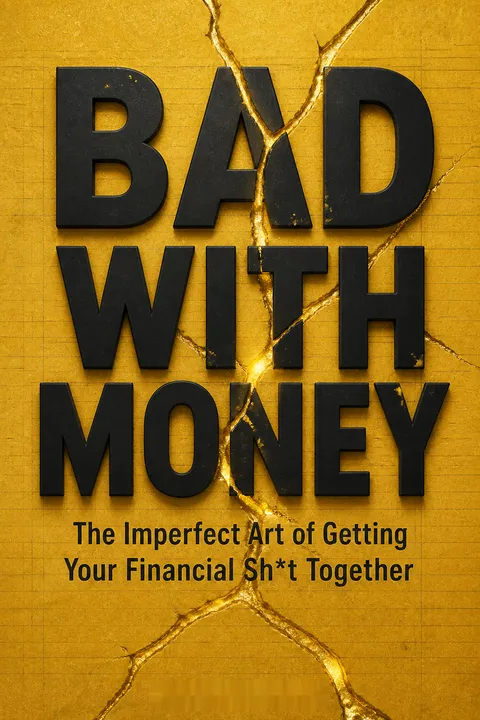
Bad with Money is a memoir-driven guide that refuses the usual personal-finance bargain: obey a confident expert, follow a universal formula, and interpret success as proof of virtue. Dunn instead uses her own financial mistakes as evidence that money behavior is shaped by family history, mental health, labor markets, public policy, and opaque institutions. The narrative matters. A delayed freelance paycheck, an expensive college choice, and a manic spending episode make abstract systems visible as lived consequences rather than detached advice.
Its most durable contribution is a double focus. Readers are asked to inspect their own transactions, understand debt terms, and prepare for taxes, while also resisting the claim that every hardship can be fixed by self-discipline. This avoids both simplistic individualism and fatalism. The book also demonstrates how disclosure can produce knowledge: specific prices and balances make it possible to compare experiences, test assumptions, and spot exploitative practices.
The approach has limits. The anecdotes are compelling but cannot establish how common any one experience is, and much of the cited financial data reflects the period around publication. Financial regulations, benefit thresholds, tax rules, and product terms change, so readers should verify current details rather than treating the book as an up-to-date manual. Its political critique is strongest when it identifies mechanisms, such as unpaid internships excluding people who cannot subsidize them; broader claims about the entire system are more persuasive when tied to such concrete examples.
The book’s governing insight is not that money is unknowable, but that no single expert or rule can account for every life. The practical response is informed experimentation: learn the terms, track what happens, seek help where needed, and distinguish a personal adjustment from a structural failure. That combination offers a more honest form of financial agency, one that does not require pretending the playing field is level.
Review Summary
Bad with Money receives mixed reviews, with an average rating of 3.51 out of 5. Readers appreciate Dunn's honest and humorous approach to discussing personal finance, particularly for young adults. Many find the book more memoir-like than instructional, which some enjoy and others find disappointing. The book is praised for its accessibility and relatable anecdotes, but criticized for lacking in-depth financial advice. Some reviewers note that the content may be too basic for those already familiar with personal finance concepts.
People Also Read






Glossary
money scripts
Inherited beliefs about moneyMoney scripts are internalized beliefs about what money means and how it should be used. They can include ideas such as money brings happiness, spending comforts sadness, or wealthy people are morally suspect. These beliefs are often learned by observing parents and other family members, and they can influence adult spending, saving, and attitudes toward wealth.
comfort spending
Buying to soothe sadnessComfort spending is purchasing things in an attempt to improve a low mood or ease emotional distress. Dunn describes buying material goods as a short-term mood lift that can become costly when it substitutes for addressing the source of distress. The behavior can occur with or without a diagnosed mental health condition.
manic spending
Impulsive purchases during maniaManic spending is impulsive purchasing associated with a manic or hypomanic episode. Dunn describes elevated energy and impaired judgment making purchases seem necessary or deserved, even when they exceed what a person can afford. The term is used in the book in connection with bipolar disorder and should not be treated as a stand-alone diagnosis.
F-Off Fund
Savings for leaving unsafe situationsThe F-Off Fund is a savings reserve named by writer Paulette Perhach. It is intended to give someone financial options to leave an abusive relationship or a harmful workplace, such as a job involving harassment. The fund recognizes that having even some accessible money can increase a person’s ability to act when their safety or well-being is threatened.
debit resequencing
Reordering bank transactionsDebit resequencing is a bank practice described in the book in which transactions may be processed in an order different from the sequence in which a customer made them. Dunn gives the example of a bank processing the largest charge first, which can trigger more overdraft fees than processing smaller charges first. The practice illustrates how transaction rules can affect customers’ costs.
SEP IRA
Retirement account for self-employed peopleA Simplified Employee Pension Individual Retirement Account is a retirement savings arrangement commonly used by self-employed people and small-business owners. Contributions are generally made before taxes and can be higher than the contribution limits for some other individual retirement accounts. The book presents it as one option for freelancers who do not have an employer-sponsored 401(k), while advising readers to compare plans and tax treatment.
Download PDF
Download EPUB
.epub digital book format is ideal for reading ebooks on phones, tablets, and e-readers.








