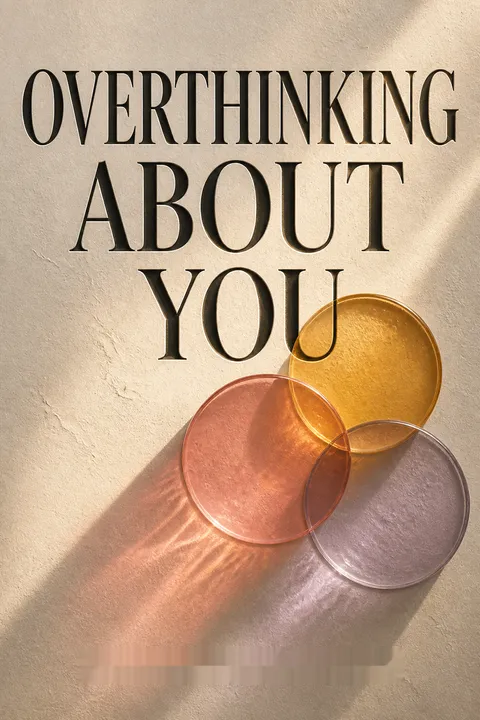


Key Takeaways
Date successfully with anxiety by learning your patterns, communicating, and choosing carefully.
Anxiety changes the stakes. Allison Raskin opens with a familiar crisis: her boyfriend’s flight was late, so she feared he had died or no longer cared about her. She knew the fear was disproportionate, but knowing that did not stop it. Logic rarely switches off anxiety on command, and partners may not understand distress they have never experienced themselves.
Change takes practice. Raskin describes years of therapy, medication, and learning to manage her reactions. Her central promise is not that love will cure mental illness, or that everyone must find a partner. It is that people with anxiety, OCD, or depression can build healthy relationships by understanding their own patterns, communicating clearly, and selecting partners with care. She also notes that her perspective comes from substantial personal and financial access to treatment, which many people lack.
The opening airplane episode captures a crucial gap between intellectual insight and emotional regulation: recognizing that a fear is unlikely does not automatically quiet the body. This distinction helps partners respond with empathy without being asked to endorse every anxious conclusion. The book’s strongest framing is practical rather than triumphalist. Symptoms may remain, but responses can change. Its scope also matters: advice grounded in one person’s experience cannot stand in for culturally responsive care or access to treatment, and the author explicitly acknowledges those limits.
After rejection, separate the breakup's facts from your brain's forever-story.
Grief is not proof. A breakup can mean losing a partner, a daily confidant, and an imagined future. Raskin also describes grieving the fantasy of a relationship after only a few dates, because years of hoping had made that possibility meaningful. Strong pain does not mean the relationship was destined, or that the person left behind is unlovable.
Label the spiral. A fact might be that a partner ended the relationship. The claims that nobody else will love you, or that you will never recover, are thoughts, not established facts. Notice them, name them, and return attention to the present. Replaying impossible alternatives can keep distress alive; instead, write down what the relationship taught you, reduce contact or social-media checking when needed, and maintain basic routines like eating, sleeping, and moving your body.
This approach resembles cognitive defusion, a therapeutic skill that treats a thought as an event in the mind rather than a command or a fact. It is particularly useful when heartbreak turns a specific loss into a sweeping verdict about identity. The emphasis on reducing reminders is also behaviorally astute: repeated checking can renew attention to the ex and invite fresh interpretation. Still, no-contact is not a universal moral rule. Shared responsibilities, safety concerns, or a genuinely mutual friendship may call for different boundaries.
Treat repetitive relationship doubt differently from concrete, repairable problems.
Doubt has different forms. Relationship OCD, or ROCD, is an OCD theme in which obsessions and compulsions fixate on whether a relationship or partner is right. It may focus on whether the person feels enough, or on a partner’s traits and whether they are good enough. Unlike ordinary uncertainty, the questions can recur relentlessly, sometimes hundreds of times a day, and pull someone away from the relationship.
Examine the concern. Repeated worries about a partner’s laugh, smell, or whether a more suitable person exists may be difficult or impossible to resolve through discussion. Concerns about being ignored, rarely spending time together, or feeling disrespected are concrete issues that partners can address. Abuse is a real danger, not a symptom to dismiss. A written list can help sort recurring, unworkable doubts from problems that merit conversation; diagnosis itself belongs with a qualified professional.
The distinction is valuable because it avoids two damaging extremes: treating every doubt as a sign to leave, or dismissing every concern as illness. In clinical terms, the pattern, function, and consequences of a thought matter, not just its subject. Reassurance can briefly soothe obsessive doubt while strengthening the demand for more certainty, so partners may need boundaries as well as compassion. The caveat about abuse is essential: mental-health language must never be used to explain away coercion or unsafe behavior.
Choose mutual relationships, not rescue roles or constant emotional warfare.
Read the relationship’s pattern. A healthy partnership is not conflict-free; it is one where conflict can lead to learning, repair, and greater understanding. Raskin describes changing her own behavior from treating a partner as an opponent to seeing them as a teammate. She also recounts placing one boyfriend on a pedestal, then acting from fear and resentment when her anxiety and self-doubt strained the relationship.
Look for capacity and reciprocity. Before starting a relationship, consider whether distress is consuming so much of life that there is little room for another person’s needs. This is not a demand to be symptom-free. It is a check on whether the relationship can begin with mutual care rather than one person rescuing the other. A partner who dismisses mental-health needs or refuses needed help may not be a suitable match. A clear statement about what cannot continue is a boundary, not a promise to control someone else.
The emphasis on mutuality improves on the familiar idea that people must be fully healed before dating. Everyone brings needs and vulnerabilities; the more useful question is whether care can move in both directions. The teammate model also borrows from collaborative problem-solving: a disagreement becomes a shared problem rather than a contest over who wins. One nuance is important. Temporary illness, disability, or crisis does not automatically make a relationship unequal or unwise. The relevant issue is the pattern over time, including whether both people’s needs and limits remain visible.
Disclose mental health in stages, sharing needs without outsourcing self-soothing.
Build disclosure gradually. There is no universal date for sharing a diagnosis or personal history. As a relationship grows more intimate, offer relevant information in manageable stages and notice whether the other person responds with interest and care. A partner does not need to experience the same symptoms to be supportive. Explaining what helps, what worsens symptoms, and how they appear can prevent misunderstandings.
Share the process, not every thought. Saying that anxiety has flared and that support or treatment is underway can explain a change in behavior. Repeatedly asking a partner to resolve intrusive doubts may instead turn them into a reassurance source. Raskin calls her practical limit the One Ask Rule: ask for reassurance about a concern once in a day, rather than returning to the same question repeatedly. Both partners also need support and relationships outside the couple.
Staged disclosure works like calibrated trust: each person shares enough to deepen intimacy, then uses the response as information about the relationship. The distinction between reporting a state and narrating every anxious thought can protect both partners. It also preserves a person’s agency by making clear what help is requested. The One Ask Rule is a personal tactic, not a clinical prescription, and its usefulness will vary. Some partners may need more structured agreements, especially when reassurance-seeking is a prominent OCD symptom.
Judge medication by its effect on functioning, not stigma alone.
Weigh lived tradeoffs. Raskin’s experience complicates the idea that medication either fixes everything or changes who someone is. An antidepressant helped her regain stability, while Zoloft also brought substantial weight gain. She later worked with her psychiatrist to try a different treatment approach. Common SSRI side effects can include digestive problems, weight changes, and sexual effects, but individuals respond differently.
Make treatment collaborative. Medication is not right for everyone, and it is not a substitute for other forms of care. The book suggests discussing it with a qualified clinician when symptoms interfere with work, relationships, sleep, eating, or the ability to use tools learned in therapy. It is reasonable to raise concerns about side effects and to reassess a treatment with the prescriber. The question is not whether medication is good or bad in the abstract, but what its benefits and costs are for this person at this time.
The most useful contribution here is a quality-of-life standard: merely meeting obligations does not prove that someone is doing well. That perspective counters stigma that equates medication with weakness, while the account of side effects resists simplistic advocacy. Treatment decisions are also preference-sensitive: symptom relief, sexual function, weight concerns, cost, and access may all matter. Because medication changes can carry clinical risks, the book’s personal story should not be read as a self-directed regimen. Decisions about starting, switching, or stopping belong with a prescriber.
Make sex about shared pleasure, not performing a script or proving worth.
Anxiety can crowd out sensation. Raskin spent years interpreting difficulty reaching orgasm as evidence that her body was broken. She was monitoring herself, worrying about pleasing partners, and comparing her experience with portrayals of sex in media. Pressure made sex feel like an exam rather than an encounter. A partner who treated her difficulty as something to fix added pressure, while feeling safer with another partner helped her explore without making orgasm the required result.
Define fulfillment for yourselves. Sexual connection can include many forms of intimacy, and pleasure does not have to end in orgasm or penetration. Consider what feels good, when desire appears, and when sex feels like an obligation. Share that learning with a partner, including when medication, anxiety, or depression affects desire or arousal. If the same difficulty keeps recurring, the author suggests considering a sex therapist.
This section challenges sexual scripts: culturally repeated ideas about what sex should look like can make ordinary variation feel like failure. Its emphasis on attention and safety also connects with the broader principle that performance monitoring competes with pleasurable engagement. A useful caution is that a psychological explanation should not be assumed whenever someone has sexual pain or difficulty. Bodies, medication, relationships, and health conditions can all matter. The practical starting point is curiosity about a person’s own experience, not a demand that it match a media template.
Date deliberately, not as if one match must rescue you from being alone.
Use dates to learn. Raskin compares choosing a partner to hiring for an important role: know your needs, dealbreakers, and vision for life before investing heavily. An authentic dating profile should show what everyday life with you might be like. Move beyond endless texting when possible, and ask about values, intentions, and future plans. Chemistry cannot compensate for major incompatibility, and neither person should have to pretend to be someone else.
Protect everyone’s time. Dating more than one person may lower the pressure on a single new connection, if all parties understand the arrangement. Be clear about boundaries before intimacy, and end a mismatch directly rather than ghosting or offering false hope. Raskin’s three-tier system asks whether there is attraction, respect, and a sense that the person fits into the life and community that matter to you. These questions help clarify compatibility, not assign human worth.
The hiring metaphor turns romance from fate into discernment, which can be especially helpful when anxiety makes each match feel like the only chance. The book balances structure with authenticity: criteria are useful when they identify genuine needs, but counterproductive when they become a fantasy checklist. Its advice to state intentions and boundaries also treats dating as an ethical interaction, not just an individual search. The strongest filter is not surface polish, but whether two people respect each other’s values and want compatible lives.
Prepare to survive the breakup you fear, without giving up on love.
The worst case happened. While writing the book, Raskin’s fiancé ended their engagement abruptly during the pandemic. The loss echoed her deepest fears, yet she did not return to the suicidal despair that followed an earlier breakup. She credits increased self-worth, coping skills, and a support network that surprised her with practical care. Her recovery did not mean the heartbreak was small; it meant she could endure it without treating the ending as proof that she was unlovable.
Do not invent blame. Raskin resists replaying what she might have done differently when her partner had not given her the chance to address his doubts. She concludes that a relationship ending does not determine a person’s value, and that surviving loss does not require rejecting future love. The measure of progress is not securing a partner at any cost. It is being able to want partnership while trusting that one’s life can continue if a relationship ends.
The final story gives the book a more credible ending than a guaranteed romantic success: the author’s engagement ends, but her growth remains real. This resembles resilience as recovery capacity, not invulnerability. Her account also shows why support should not be concentrated in one partner; friends, family, and community can provide continuity when a couple dissolves. Still, surviving one crisis does not ensure that every future crisis will feel manageable. The lesson is not to minimize pain, but to build supports before they are urgently needed.
Analysis
This book is a hybrid of memoir, therapeutic education, and practical dating guide. Its strongest structural choice is to keep returning from concepts to lived episodes: a late flight, a breakup, a disclosure, a medication decision, a sexual worry, and finally a broken engagement. These stories make a central distinction legible: mental illness can shape what a person feels and does, but it does not erase agency or make every relationship problem an illness symptom. The interviews with clinicians and couples widen the perspective beyond one narrator, while the author’s explicit acknowledgment of her privilege helps mark the limits of her advice.
The most useful thread is not a technique for finding a partner. It is a sequence of capacities: identify patterns, tell thoughts from evidence, determine which concerns are actionable, communicate needs, and assess whether care is reciprocal. That sequence shifts attention away from the fantasy that the right partner will repair a person’s inner life. It also avoids the opposite prescription, that self-sufficiency should replace romantic desire. Partnership remains a legitimate aim, but it is not a measure of personal worth.
The book is most persuasive when it offers flexible questions and concrete distinctions. It is less universal when a personal rule, such as limiting reassurance, might sound like a one-size-fits-all intervention. Readers with different diagnoses, identities, resources, or relationship structures may need other supports. The author acknowledges that mental-health care is unequal, but acknowledgment cannot remove that structural barrier. The adaptation’s practical value is therefore best understood as a vocabulary for reflection and conversation, not as diagnosis or treatment. Its final claim is especially grounded: success is not proven by being chosen. It is shown by developing the ability to choose, connect, and recover without surrendering the self.
Review Summary
Overthinking About You receives mixed reviews, with an average rating of 3.99/5. Many readers find it helpful for navigating relationships with anxiety, depression, or OCD. Positive reviews praise its relatable content, expert advice, and the author's vulnerability. Critics argue it lacks depth, focuses too much on the author's experiences, and may not be universally applicable. Some appreciate the humor and inclusive language, while others find it too casual. The book is most beneficial for those new to dating with mental health concerns.
People Also Read


Glossary
Relationship OCD (ROCD)
OCD focused on relationshipsA thematic form of obsessive-compulsive disorder in which obsessions and compulsions center on a romantic relationship. Doubts may focus on whether the relationship is right, whether a person feels enough, or whether a partner is good enough. The recurring, distressing pattern differs from ordinary occasional uncertainty. The term does not mean that every relationship doubt is OCD.
STOP
Pause before reactingA brief sequence for creating space between a trigger and a response: Stop, Take a breath, Observe, Proceed. The person pauses, settles their breathing, notices what is happening, and then chooses how to act. In the book, it is offered as a way to avoid reacting immediately when anxiety or a partner interaction feels activating.
One Ask Rule
Limit repeated reassuranceRaskin’s personal rule of asking for reassurance about a concern once per day rather than repeatedly asking the same question. The intention is to reduce compulsive reassurance-seeking, which may soothe anxiety briefly but leave the underlying doubt intact. It is a practical personal guideline, not a universal clinical standard.
secondary helper
Support without taking overA partner who offers care, communication, affection, and reasonable accommodations while recognizing that the person experiencing anxiety remains responsible for learning to soothe it. The phrase distinguishes supportive partnership from making one person responsible for managing another’s symptoms or providing endless reassurance.
three-tier system
Three compatibility questionsRaskin’s informal way to assess whether she wants to pursue someone. The three checks consider physical attraction, whether she respects and feels proud of the person, and whether the person seems compatible with the important people in her life. The questions are meant to clarify personal fit, not to rank people’s objective value.
good enough relationship
Compatible without being perfectA relationship that meets a person’s important needs and values without satisfying every preference or matching an ideal of perfection. The book uses the idea to challenge the expectation that a partner must provide everything or feel right every moment. What counts as good enough depends on the individual, except that abuse and serious harm should not be excused as ordinary imperfection.
FAQ
What's "Overthinking About You" by Allison Raskin about?
- Blend of memoir and self-help: The book combines personal anecdotes with practical advice to help readers navigate romantic relationships while dealing with anxiety, OCD, and/or depression.
- Focus on mental health: It addresses the intersection of mental health and dating, offering insights into how these conditions can affect relationships.
- Inclusive perspective: While written from the author's personal experience as a white, straight, cis woman, it acknowledges the broader spectrum of experiences, including those of marginalized groups.
- Practical guidance: The book provides strategies for handling breakups, understanding personal disorders, and maintaining healthy relationships.
Why should I read "Overthinking About You"?
- Personal and relatable: Allison Raskin shares her own experiences, making the book relatable for anyone who has struggled with mental health in relationships.
- Expert insights: The book includes interviews with therapists and relationship experts, offering professional perspectives on managing mental health in dating.
- Actionable advice: It provides practical tips and exercises to help readers improve their dating lives and mental health simultaneously.
- Empowering message: The book encourages self-awareness and self-compassion, empowering readers to pursue healthy relationships without compromising their mental well-being.
What are the key takeaways of "Overthinking About You"?
- Self-awareness is crucial: Understanding your mental health and how it affects your relationships is essential for personal growth and relationship success.
- Communication is key: Open and honest communication with partners about mental health struggles can strengthen relationships.
- Healthy boundaries: Setting and respecting boundaries is vital for maintaining a balanced and healthy relationship.
- Resilience and hope: Despite setbacks, it's important to remain hopeful and resilient in the pursuit of love and happiness.
How does Allison Raskin suggest handling breakups in "Overthinking About You"?
- Acknowledge your feelings: It's normal to feel devastated after a breakup; allow yourself to grieve and process your emotions.
- Distinguish facts from thoughts: Learn to separate your anxious thoughts from reality to prevent spiraling into negative thinking.
- Avoid "what-if" scenarios: Focus on the present and avoid dwelling on hypothetical situations that can't be changed.
- Lean on support systems: Reach out to friends and family for support, but remember that healing ultimately comes from within.
What advice does "Overthinking About You" offer for dating with anxiety, OCD, or depression?
- Recognize your triggers: Identify what causes your anxiety or OCD to flare up in dating situations and develop coping strategies.
- Communicate with your partner: Be open about your mental health struggles and how they might affect your relationship.
- Set realistic expectations: Understand that no relationship is perfect and that it's okay to have doubts and concerns.
- Focus on self-care: Prioritize your mental health and well-being, even while pursuing a romantic relationship.
How does Allison Raskin address the topic of medication in "Overthinking About You"?
- Understand side effects: Be aware that medications can have side effects, such as weight gain or sexual dysfunction, and weigh the benefits against the drawbacks.
- Communicate with your psychiatrist: Work closely with your healthcare provider to find the right medication and dosage for you.
- Medication isn't a cure-all: Combine medication with therapy and other self-care practices for the best results.
- Long-term perspective: Consider the long-term benefits of medication for your mental health and quality of life.
What are some of the best quotes from "Overthinking About You" and what do they mean?
- "Love is really a verb.": This quote emphasizes that love requires action and effort, not just feelings.
- "You can’t regret not taking opportunities that you weren’t given.": It highlights the importance of not blaming yourself for situations beyond your control.
- "You only get one internal life.": This quote encourages readers to prioritize their mental health and well-being.
- "Confidence is sexy!": It underscores the idea that self-assurance is attractive and important in relationships.
How does "Overthinking About You" suggest improving communication in relationships?
- Be honest and open: Share your thoughts and feelings with your partner, even when it's uncomfortable.
- Listen actively: Pay attention to your partner's concerns and validate their feelings.
- Avoid assumptions: Don't assume you know what your partner is thinking; ask questions and seek clarification.
- Practice empathy: Try to understand your partner's perspective and respond with compassion.
What does Allison Raskin say about setting boundaries in "Overthinking About You"?
- Identify your needs: Understand what you need from a relationship to feel safe and respected.
- Communicate clearly: Express your boundaries to your partner in a straightforward manner.
- Respect others' boundaries: Be mindful of your partner's boundaries and respect their needs as well.
- Reevaluate as needed: Boundaries may change over time, so be open to discussing and adjusting them as necessary.
How does "Overthinking About You" address the stigma around mental health and dating?
- Acknowledge the stigma: Recognize that societal stigma around mental health can make dating more challenging.
- Challenge misconceptions: Educate yourself and others about mental health to combat stereotypes and misinformation.
- Promote inclusivity: Use inclusive language and consider diverse experiences in discussions about mental health and relationships.
- Encourage openness: Foster an environment where mental health can be discussed openly and without judgment.
What strategies does "Overthinking About You" offer for dating productively?
- Set clear intentions: Know what you're looking for in a relationship and communicate it to potential partners.
- Be authentic: Present your true self in dating profiles and interactions to attract compatible partners.
- Manage expectations: Understand that not every date will lead to a relationship and that's okay.
- Prioritize self-care: Balance dating with self-care practices to maintain your mental health and well-being.
How does Allison Raskin suggest dealing with rejection in "Overthinking About You"?
- Reframe rejection: View rejection as a natural part of dating rather than a reflection of your worth.
- Learn from experiences: Use rejection as an opportunity to learn and grow, rather than dwelling on negative feelings.
- Maintain perspective: Remember that everyone experiences rejection and it's not a personal failure.
- Stay hopeful: Keep a positive outlook and remain open to future opportunities for love and connection.
Download PDF
Download EPUB
.epub digital book format is ideal for reading ebooks on phones, tablets, and e-readers.








