

Key Takeaways
Trade some adult scheduling for daily, child-led outdoor play.
Play, not entertainment. At TimberNook, Angela Hanscom’s outdoor program, a six-year-old asks what activity comes next. She expects adults to keep her entertained. Instead, she finds children inventing games, building forts, and exploring the woods. The scene introduces the book’s central claim: children benefit when they have time and room to direct their own active play, especially outdoors.
Hanscom, a pediatric occupational therapist, connects this play to physical, sensory, social, emotional, and cognitive development. Her practical prescription is not another lesson or exercise class. It is a regular stretch of time in which children choose what to do, move in varied ways, and make decisions with other children. The book argues that this kind of play can support development and may help prevent or ease some difficulties.
The opening scene captures a cultural shift: children may become accustomed to adults supplying the agenda, while spontaneous play requires them to generate one. The strongest insight is not that every child should be left entirely alone, but that adults can stop treating every unplanned minute as a problem to solve. The argument is most persuasive as a case for making room for play, rather than as a universal explanation for developmental difficulties. Children differ in temperament, access, and support needs, so freedom is best understood as a flexible opportunity, not a single prescription.
Treat fidgeting as information about movement needs, not automatic defiance.
Movement supports attention. Hanscom describes visiting a fifth-grade classroom where nearly every child fidgets during a story. She links such behavior to limited opportunities to move and to develop balance, strength, and body awareness. The book calls the brain’s coordination of sensory information for useful action sensory integration. Proprioception is the sense of body position and effort, while the vestibular sense, based in the inner ear, helps orient the body in space and maintain balance.
These abilities grow through varied movement, including climbing, swinging, carrying, and rolling. Hanscom reports a small pilot assessment in three classrooms: only one of twelve children matched the comparison level for core strength and balance drawn from children tested decades earlier. That finding is suggestive, not a national measure, but it illustrates why she sees movement as developmental practice, not wasted time.
Reframing fidgeting as a possible signal changes the adult response from punishment to investigation: does the child need a break, a different posture, or a more active way to learn? That shift can preserve dignity while making classrooms more workable. It also avoids an unhelpful false choice between movement and learning. The evidence in this section is uneven, however. Classroom observations and a small comparison cannot establish that reduced outdoor play caused attention or strength problems, and persistent difficulties still deserve individualized assessment.
Choose nature for sensory variety without the constant volume turned up.
A calmer kind of stimulation. Nature engages several senses at once without relying on flashing lights, loud music, or a single prescribed activity. A child crossing a log, for example, adjusts to its uneven surface, notices the surrounding sounds, and feels changing textures underfoot. Hanscom argues that this varied but relatively gentle input can help children stay alert without becoming overwhelmed.
Natural settings also invite imagination because their materials have no fixed purpose. A stick might become a tool, a prop, or part of a shelter. In the book, a study of children with attention difficulties found that natural views were associated with calmer behavior, while research on decorated classrooms found that highly cluttered walls could distract children during lessons. The point is not that indoor spaces are useless, but that nature offers a distinctive setting for both sensory exploration and self-directed invention.
The useful distinction here is between stimulation that invites attention and stimulation that competes for it. A log, patch of mud, or changing weather gives children something to interpret and respond to, rather than a stream of ready-made prompts. The idea also helps explain why outdoor play can feel more open-ended than many commercial play spaces. Still, nature is not automatically soothing for every child. Insects, unfamiliar textures, noise, or weather can be stressful, so a supportive environment leaves room for children to approach new sensations at their own pace.
Let children practice manageable risk before the stakes become adult-sized.
Risk can teach judgment. Hanscom draws on Norwegian researcher Ellen Sandseter’s account of risky play: exciting play that includes a possibility of physical injury. Examples include climbing, speed, rough-and-tumble games, using tools, and exploring away from adults. The argument is that children learn to judge their abilities by trying, adjusting, and sometimes falling, rather than by hearing repeated warnings alone.
The book describes a New Zealand school that removed many recess rules and allowed children to climb, build, and use scooters. Its principal reported fewer serious injuries and behavior problems, alongside better classroom concentration. That example is encouraging, but it is not proof that every restriction is harmful. Adults still need to account for real hazards, children’s abilities, and the setting. The practical aim is to replace blanket prohibition with boundaries that allow reasonable challenges.
Risk is not the same as danger without limits. A child who chooses a low branch, tests it, and climbs down when uncertain is practicing assessment, while an adult can still intervene around traffic, deep water, or genuinely unsafe equipment. This distinction gives parents a more precise tool than either hovering constantly or withdrawing all guidance. The case for challenge is strong, but the book’s examples should not be read as a guarantee that risk-taking prevents injury or anxiety. The value lies in calibrated practice, with supervision matched to context.
Protect unstructured hours from screens, homework, and overbuilt calendars.
Time is the scarce ingredient. A modern child’s day can be a relay of school, commuting, homework, screens, and organized activities. Hanscom’s example of a nine-year-old moving from cartoons to class, homework, and extracurriculars shows how little time remains for freely chosen movement. Sports can build teamwork and stamina, but she argues they should add to free play, not replace it.
The book cites research reporting that children’s unstructured play had fallen by about half, and it advocates several hours of outdoor play daily. At TimberNook, children often needed roughly forty-five minutes to move from wandering and trying equipment into sustained, imaginative play. These figures are the author’s guidance and observations, not a universal clinical standard. The practical lesson is to protect open time in the family schedule, rather than assume that a packed list of activities meets every developmental need.
This is a calendar argument as much as a parenting argument. Adding outdoor play as one more scheduled obligation risks reproducing the very structure the book questions. Protecting unclaimed time makes room for children to choose, persist, and stop when they are ready. The recommendation also points toward a real constraint: work hours, safe outdoor access, caregiving demands, and school schedules are not equally flexible. A useful approach is to treat free play as a priority when possible, while avoiding guilt when families must adapt it to their circumstances.
Make recess long, permissive, and stocked with things children can transform.
School needs movement breaks. Hanscom notes that recess was shortened or eliminated in many American school districts as academic testing pressures grew. She argues that brief breaks may end just as children are organizing a game. At TimberNook, and at a New Zealand school that relaxed recess rules, children were described as more engaged when they had room to choose activities and solve conflicts themselves.
A practical school environment can include loose parts, meaning movable materials such as planks, fabric, logs, tires, or pinecones that children can use in many ways. Recess can also allow children to get dirty, with time and a system for changing clothes afterward. In class, the same principle means brief instruction followed by movement, varied positions, hands-on projects, or learning outdoors. Adults provide a safe framework, then leave children space to play.
This proposal treats recess as part of learning rather than a reward that competes with it. Children negotiating a game practice communication and rule-making in a real situation, while moving breaks can help make long stretches of instruction more tolerable. Loose materials are especially useful because they support different kinds of play without prescribing one outcome. Implementation matters: schools need clear supervision, accessible spaces, and practical plans for weather and cleanup. The benefits described are compelling, though any one school’s experience should be treated as a model to test, not a guarantee.
Give babies supervised floor time outdoors, while limiting unnecessary containers.
Start with ordinary movement. Hanscom argues that babies benefit from time on the floor, where they can reach, roll, push up, and explore their surroundings. When awake and appropriately supervised, time outdoors adds varied sights, sounds, textures, and temperatures. Carrying a baby also offers changing positions and movement, while giving parent and child close contact.
The book warns against keeping infants in seats and carriers for most of the day, describing the term container baby syndrome as a label therapists used for concerns about restricted movement and related developmental issues. This is not an argument against useful equipment or safe sleep practices. Instead, the suggestion is to use containers when they serve a purpose and make room for free movement when the baby is awake. Outdoor time should be adapted to weather, the baby’s needs, and ordinary safety precautions.
The central distinction is between convenient equipment used as needed and equipment becoming the default environment. Babies need safe opportunities to move and explore, while caregivers also need practical support. That balance matters more than turning any single device into a villain. Outdoor sensory experience can be valuable, but advice about infant sleep and exposure must remain consistent with current professional guidance. The book’s broad developmental message is strongest when read as encouragement for supervised movement and exploration, not as a replacement for medical advice or safe-sleep recommendations.
Choose play spaces with room, natural elements, and real physical challenge.
Design changes what play invites. Hanscom contrasts older playground equipment, such as tall climbing structures and merry-go-rounds, with newer designs that she sees as lower and less challenging. She argues that spinning, climbing, and swinging give children chances to develop balance, strength, and body awareness. A good playground, in her view, need not be elaborate: it needs room to move, natural features, and equipment that offers graduated challenges.
Look for trees, hills, dirt, water, open ground, and materials that children can move or build with. Keep visual clutter manageable, and avoid assuming that a brightly colored indoor play space can replace time in nature. These venues can still be useful, especially when outdoor access is limited. The choice is less about old equipment being inherently better than new equipment, and more about whether children can explore, move in varied ways, and choose their own play.
The design lesson is that safety and developmental value should not be treated as opposites. A playground can reduce avoidable hazards while preserving challenge through varied terrain, climbable features, and space for invention. Natural components also make a site less prescriptive: one patch of ground can serve many games. However, equipment standards respond to real concerns, and older structures are not automatically safe or beneficial. The most useful question for designers and caregivers is whether a space offers choices and manageable challenge for children with different ages and abilities.
Build independence through small freedoms, boredom, friends, and open-ended materials.
Freedom grows by practice. Hanscom describes letting her daughters bike to nearby friends for the first time, then watching their play expand to streams, rock pits, and more elaborate games. Her approach is gradual: begin with a familiar yard or park, set clear boundaries, teach relevant safety skills, and allow more range as the child demonstrates readiness.
Boredom is part of the process, not necessarily a cue for an adult to provide entertainment. Children may need time to explore before they settle into what Hanscom calls deep play: sustained play with chosen companions, roles, and an evolving shared idea. Friends and open-ended objects can help that process. A basket of fabric, rope, or kitchen items may spark play, but the adult should resist explaining what each object is supposed to become.
Independence is best understood as a skill built through repeated, appropriately sized decisions. A short familiar trip can teach navigation and judgment more effectively than a lecture about self-reliance. The same is true of play: children often need the freedom to be bored before they can create something absorbing. Families differ in neighborhood safety, children’s maturity, and access to peers, so the exact radius of freedom cannot be universal. The useful principle is to expand autonomy in response to demonstrated competence rather than age alone or adult anxiety alone.
Analysis
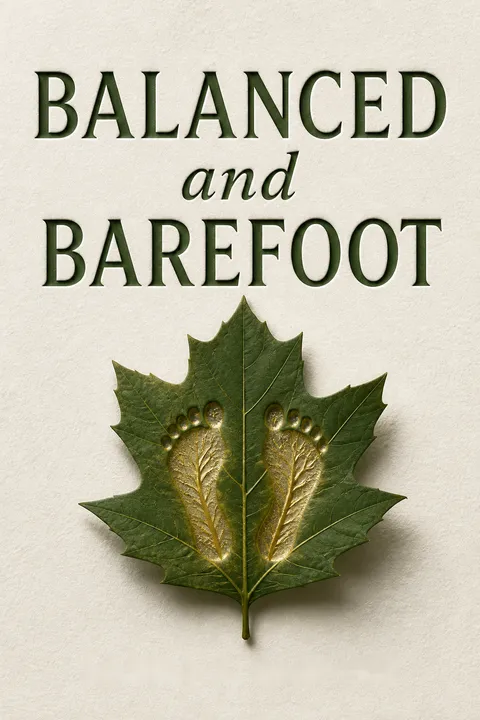
Balanced and Barefoot makes a persuasive case for restoring something that modern childhood often squeezes out: sustained, self-directed movement outdoors. Its most valuable contribution is the connection it draws between ordinary play and multiple kinds of development. Climbing, carrying, balancing, inventing games, and negotiating rules are not separate enrichment activities. They are integrated experiences in which children use bodies, senses, judgment, imagination, and social skill together.
The book also turns familiar adult interpretations upside down. Fidgeting may signal a need to move, boredom may precede creativity, and small falls may offer information a warning cannot provide. This reframing is useful because it shifts attention from correcting children to examining their environments. Schools, playgrounds, family calendars, and access to safe outdoor space become part of the developmental picture.
The argument is less secure when it attributes broad trends in attention, anxiety, strength, allergies, or injuries to reduced outdoor play. The text combines occupational therapy experience, teacher interviews, small observations, and published studies, but these forms of evidence do not all establish causation. Reports from three classrooms cannot describe every child, and changing diagnosis rates may reflect shifts in awareness, access, or criteria as well as changes in development. Claims about nature should therefore be treated as a strong rationale for opportunity, not a substitute for evaluation or treatment.
The book is most practical when its recommendations are adapted rather than followed literally. Its multi-hour play targets may be unrealistic for families constrained by work, housing, weather, disability, or neighborhood safety. Yet the underlying principles travel well: reduce unnecessary confinement, offer varied movement, make play spaces open-ended, and let children take increasing responsibility within clear boundaries. Nature is not a cure-all. It is a rich developmental setting that many children are currently denied, and making room for it is a sensible form of prevention and education.
Review Summary
Balanced and Barefoot receives mostly positive reviews, with readers praising its emphasis on unstructured outdoor play for children's development. Many find the book informative and transformative, appreciating its practical advice and scientific backing. Some criticize it for being repetitive and occasionally lacking credible sources. Readers particularly value the insights on sensory benefits, playground design, and addressing modern childhood issues. While some find it preachy or oversimplified, most agree with the core message of prioritizing outdoor play for children's physical, emotional, and cognitive well-being.
People Also Read








Glossary
active free play
self-directed active playPlay that children choose and direct, with meaningful freedom to decide what to do, how to do it, and when to stop. In this book, active free play emphasizes whole-body movement and is especially valuable outdoors, where children can explore, invent games, take manageable risks, and interact with peers without adults organizing each step.
sensory integration
organizing sensory informationThe process of taking in information from the senses and coordinating it for useful action. A child balancing on uneven ground, for instance, combines visual information with touch and signals from muscles and joints. Hanscom argues that varied movement and play give children practice integrating these inputs, supporting body awareness, attention, and coordinated movement.
proprioception
body position and effortThe sense of where body parts are and how much force they are using, based on information from muscles, joints, ligaments, and connective tissues. It helps a child judge how firmly to hold an object or how much force to use while moving. The book connects its development to activities involving pushing, pulling, carrying, and climbing.
vestibular sense
balance and spatial orientationThe sense, supported by the inner ear, that helps the brain register movement, gravity, balance, and the body's position in space. Hanscom emphasizes movement such as spinning, swinging, rolling, and going upside down as ways children experience vestibular input. She links this system with balance, posture, coordination, and visual attention.
heavy work
resistance through movementActivities that make muscles and joints work against resistance, especially through pushing, pulling, carrying, lifting, or digging. Examples in the book include hauling a loaded wagon, moving rocks, and shoveling. Hanscom describes heavy work as a practical way to provide proprioceptive input and help children develop strength and awareness of how much force to use.
loose parts
movable open-ended materialsObjects that children can move, combine, and use in different ways rather than materials designed for a single activity. Examples include planks, sticks, fabric, tires, stones, baskets, and pinecones. The idea, associated in the book with architect Simon Nicholson, is that changeable materials invite children to invent, build, and direct their own play.
risky play
play with possible injuryPlay that feels exciting because it includes some possibility of physical injury, while children explore what they can manage. The book draws on researcher Ellen Sandseter's categories, including climbing, speed, rough-and-tumble play, tool use, proximity to elements such as water or fire, and exploring away from adults. The emphasis is on manageable challenge, not reckless exposure.
deep play
sustained imaginative playHanscom's term for play that has moved beyond initial exploration into a sustained activity with purpose. Children have chosen companions, settled on roles or a shared idea, and begun to build an ongoing play arrangement. At TimberNook, the author observes that children may need substantial uninterrupted time before this kind of absorbed play takes hold.
container baby syndrome
concerns about restricted infant movementA term used by therapists, as described in the book, for concerns associated with infants spending excessive time in devices that restrict movement, such as carriers, seats, and bouncy chairs. The concerns discussed include limited opportunities to move and possible effects on motor development or head shape. The term is not a reason to avoid useful equipment, but to balance its use with safe, supervised movement.
FAQ
What is Balanced and Barefoot by Angela J. Hanscom about?
- Emphasis on outdoor play: The book argues that unrestricted outdoor play is essential for children’s healthy sensory, motor, social, and intellectual development.
- Critique of modern parenting: Hanscom discusses how overprotection, constant supervision, and a decline in independent outdoor play negatively impact children’s growth and resilience.
- Practical strategies: The author provides actionable advice for parents and educators to foster strong, confident, and capable children through daily active free play, especially in natural settings.
Why should I read Balanced and Barefoot by Angela J. Hanscom?
- Insight into child development: The book explains why many children today struggle with attention, coordination, emotional control, and physical strength, linking these issues to modern lifestyle changes.
- Evidence-based approach: Hanscom combines her expertise as a pediatric occupational therapist with scientific research and real-life observations to highlight the therapeutic value of outdoor play.
- Actionable guidance: Readers receive practical strategies to incorporate active free play into daily routines, supporting children’s sensory, motor, social-emotional, and cognitive development.
What are the key takeaways from Balanced and Barefoot by Angela J. Hanscom?
- Nature is essential: Daily, unrestricted outdoor play is critical for developing strong bodies, organized senses, and confident minds in children.
- Risk and independence matter: Allowing children to take manageable risks and play independently fosters resilience, creativity, and safety awareness.
- Adults must step back: Parents and educators should provide safe but stimulating environments, reduce unnecessary rules, and trust children’s innate ability to know their limits and needs.
What developmental problems in children does Angela J. Hanscom link to lack of outdoor play in Balanced and Barefoot?
- Attention and hyperactivity issues: The book discusses the rise in ADHD diagnoses and how restricted movement contributes to attention difficulties and increased fidgeting.
- Physical weakness and poor posture: Hanscom highlights declining core and upper body strength, poor posture, decreased stamina, and increased clumsiness among children.
- Emotional and social challenges: Increased anxiety, emotional dysregulation, aggression, and reduced imaginative play are linked to sensory and motor underdevelopment and limited outdoor play.
How does Balanced and Barefoot by Angela J. Hanscom define and explain "active free play"?
- Definition of active free play: It is self-directed, vigorous physical activity involving sensory engagement, creativity, and social interaction without adult-imposed rules or structure.
- Importance of freedom: Play must be child-led, allowing children to choose what, how, and with whom they play, fostering independence and problem-solving.
- Daily necessity: Hanscom recommends several hours of active free play outdoors every day to develop strong muscles, bones, sensory systems, and healthy immune function.
What are the key benefits of outdoor play according to Balanced and Barefoot by Angela J. Hanscom?
- Sensory integration and motor skills: Outdoor play stimulates all senses and helps children develop balance, coordination, and body awareness.
- Emotional and social growth: Risk-taking and independent play outdoors build confidence, resilience, problem-solving skills, and social-emotional abilities.
- Cognitive and academic advantages: Nature exposure improves attention, reduces stress, and supports brain development, leading to better behavior and learning outcomes.
How does Angela J. Hanscom address parental fears about outdoor play and safety in Balanced and Barefoot?
- Reality of risks: The book clarifies that serious injuries and stranger abductions are extremely rare, and overprotection can hinder children’s ability to assess risk and develop safety skills.
- Value of risk-taking: Experiencing manageable risks, like climbing trees or falling occasionally, is crucial for motor development and emotional growth.
- Practical safety advice: Hanscom offers tips for teaching children street smarts, recognizing poisonous plants, handling minor injuries, and preparing for wildlife encounters without instilling fear.
What negative effects of modern lifestyle and restricted movement does Balanced and Barefoot highlight?
- Overuse of baby devices and sitting: Prolonged use of infant containment devices and long hours of sitting in school limit natural movement, leading to muscle weakness and developmental delays.
- Screen time and overscheduling: Excessive screen exposure and packed schedules reduce opportunities for spontaneous, imaginative play, contributing to attention problems and anxiety.
- Reduced sensory and motor development: These factors impair sensory integration, coordination, balance, and emotional control, increasing the risk of injuries and behavioral issues.
How does Balanced and Barefoot by Angela J. Hanscom explain the role of the senses and body in child development?
- Gross and fine motor skills: Whole-body and precise hand movements develop through daily practice and sensory experiences, especially outdoors.
- Sensory integration: The book details how the seven senses—touch, proprioception, vestibular, sight, hearing, taste, and smell—work together to help children interact with their environment.
- Mind-body connection: Social-emotional and cognitive skills are closely tied to sensory and motor experiences, with outdoor play providing rich opportunities for growth.
What specific sensory benefits does outdoor play provide, according to Balanced and Barefoot by Angela J. Hanscom?
- Visual and auditory benefits: Natural light and varied visual stimuli help prevent myopia and improve eye function, while natural sounds like birdsong calm and improve auditory processing.
- Tactile and proprioceptive benefits: Playing barefoot on varied terrain and interacting with natural textures enhance touch tolerance, foot arch development, and body awareness.
- Immune system support: Exposure to dirt and natural microbes strengthens the immune system, supporting the hygiene hypothesis.
How much outdoor active free play does Angela J. Hanscom recommend in Balanced and Barefoot?
- Infants (1-12 months): Multiple opportunities daily for active movement and outdoor sensory experiences to support development.
- Toddlers and preschoolers (1-5 years): Ideally 5 to 8 hours of active play daily, mostly outdoors, to develop strength, coordination, and sensory integration.
- School-age children (5-13 years): At least 4 to 5 hours of physical activity and outdoor play daily to maintain engagement and support learning.
- Adolescents (13-19 years): Aim for 3 to 4 hours of active play daily for healthy brain development and emotional regulation.
What practical advice does Balanced and Barefoot by Angela J. Hanscom offer for fostering strong, confident, and capable children through outdoor play?
- Prioritize daily outdoor time: Allow children ample time every day to play freely outdoors without adult interference or structured activities.
- Encourage risk-taking and independence: Let children explore, climb, and take manageable risks to build confidence and body awareness.
- Limit screen time and overscheduling: Reduce passive entertainment and structured commitments to make room for spontaneous, imaginative play.
- Use natural environments and loose parts: Provide access to varied natural settings and materials like sticks, rocks, and water to stimulate creativity and sensory development.
- Support barefoot play: Encourage children to go barefoot outdoors to strengthen foot muscles and improve sensory feedback.
Download PDF
Download EPUB
.epub digital book format is ideal for reading ebooks on phones, tablets, and e-readers.








