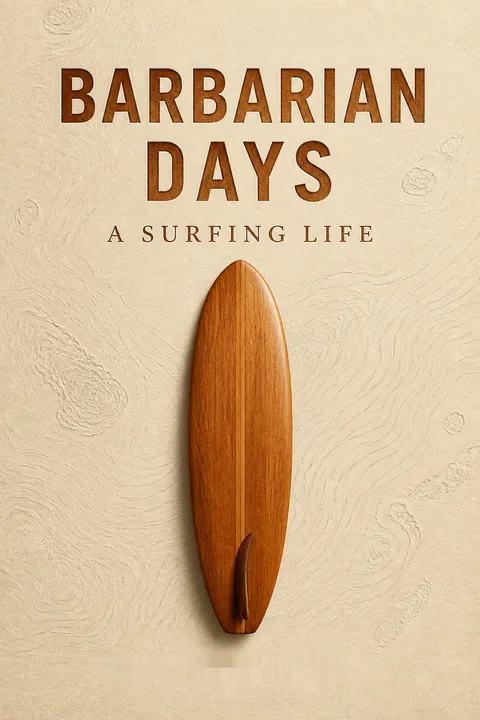


Key Takeaways
Let an obsession shape you, but notice when it starts choosing for you.
The ocean becomes a world. Finnegan begins as a lonely thirteen-year-old in Honolulu, bullied at school and unsure where he belongs. Surfing gives him a different life: a reef to explore, local surfers to learn from, and moments of beauty and danger that feel more vivid than anything on land. That attachment lasts across decades and continents. It affects where he lives, what work he takes, and which relationships he neglects. Surfing is not simply a hobby in this memoir. It becomes a private system of meaning, refuge, and challenge.
A life reordered by waves. The pull is powerful precisely because it offers experiences ordinary routines rarely do: total concentration, physical effort, and a world that cannot be controlled. Yet the same devotion can turn every other claim on a person’s time into an interruption. Finnegan’s story asks readers to distinguish a sustaining passion from one that quietly takes over.
What's compelling is that obsession is shown as both a source of vitality and a narrowing force. Deep practice can give a person attention, competence, and a meaningful community, but it can also make alternative values seem dull by comparison. That tension is more useful than a simple celebration of following one’s passion. The memoir suggests a practical question for any vocation or art: does this commitment enlarge the person’s capacity to live, or does it become the only place life feels real?
Study a place patiently; real skill begins with reading what changes.
Waves reward attention. A surfer does not meet the same wave twice. Swell direction, wind, tide, currents, and underwater contours combine to change where a wave breaks and whether it can be ridden. At Cliffs in Honolulu, Finnegan learns to notice small clues: water color, shifting peaks, and how a tide exposes the reef. In California, he and his friend Rich study one break over many sessions, comparing observations and learning its local patterns. This close observation is not background to surfing. It is the work that makes a ride possible.
New boards, new possibilities. The shortboard revolution of the late 1960s changed what surfers could do. Shorter, lighter boards made sharper turns and deeper rides inside hollow waves more attainable, but they demanded different timing and skill. Finnegan’s progress depends on both adapting to new equipment and continuing to read each place for himself.
The memoir’s account of wave-reading offers a vivid example of tacit knowledge: expertise built through repeated perception and action, much of which is difficult to reduce to instructions. Similar learning occurs in fields such as medicine, craft, and field science, where experienced practitioners notice patterns novices miss. The lesson is not simply to gather more information. It is to return to the same changing situation, test expectations, and revise them. That kind of knowledge remains provisional because the conditions never stand still.
Treat fear as a boundary signal, not a verdict on your courage.
Fear changes with experience. As a teenager, Finnegan paddles into Rice Bowl in Honolulu believing the waves are manageable. A powerful set arrives, and he barely escapes being caught inside. He remembers the episode as a recognition of how little control a surfer has when the ocean turns hostile. At other times, he tests himself in larger surf and gradually makes situations thinkable that once seemed impossible. Courage, in this account, is not the absence of fear. It is learning to assess fear without letting panic decide.
The calculation stays imperfect. Years later, at San Francisco’s Ocean Beach, even experienced surfers face punishing paddle-outs, shifting sandbars, and cold water. Finnegan describes survival as dependent on judgment, fitness, local knowledge, and luck. Skill can reduce uncertainty, but it cannot erase it.
This distinction matters well beyond surfing. Fear can be an alarm, a learned response, or a reaction to unfamiliarity, and treating every alarm as proof of danger can make life unnecessarily small. But treating fear as weakness can be worse, encouraging people to override evidence they need. Finnegan’s examples support a more disciplined approach: identify what the fear is responding to, compare it with actual conditions, and accept that some risks remain unknowable. The ocean makes the cost of confusing bravery with judgment unusually visible.
A surf lineup is a social world, not merely a queue for waves.
Local knowledge includes people. In Honolulu, Finnegan’s first friendships in the water are with Roddy and Glenn Kaulukukui and Ford Takara, Hawaiian and Japanese American surfers whose skill and humor reshape his view of the place. His school life, by contrast, is marked by racial division, bullying, and a rough hierarchy of alliances. He gradually recognizes that surfing in Hawaii is not merely an imported pastime: it is tied to local families, language, and a history in which Hawaiian culture was suppressed by colonization.
Access has its own rules. At every break, surfers negotiate position, deference, reputation, and the right to catch a wave. Later, at San Francisco’s Ocean Beach, Finnegan describes an unwritten social contract governing how people share waves and how much they boast. The water has a pecking order, but also a community shaped by mutual attention.
The lineup functions like a small social institution. Its rules are informal, but they distribute access and status, much like norms in workplaces or neighborhoods. Finnegan’s early outsider perspective also shows how quickly a newcomer can mistake unfamiliar customs for a simple personal welcome or rejection. The memoir is strongest when it links surfing’s local etiquette to a deeper cultural history. One important limit is that a visitor’s friendships cannot stand in for full knowledge of a community, especially one shaped by dispossession.
Travel can widen your world without absolving your privilege.
The search exposes its own limits. In 1978, Finnegan and his friend Bryan set off across the South Pacific looking for waves, using charts and guesswork to find reefs that might work. Their search takes them through Samoa, Tonga, and Fiji. They are repeatedly welcomed into villages, especially by Sina Savaiinaea’s family in Samoa, who share food, lodging, and care. Finnegan is moved by communal life and practical skill, but he also recognizes that his admiration can turn local people into symbols of an imagined, more whole way of living.
The outsider’s position persists. In Tonga, a young woman challenges the surfers’ drifting, self-focused lives. In Indonesia, Finnegan sees how wealth separates Western travelers from the people whose homes they visit. Curiosity can lead to real encounters, but it does not cancel unequal resources or make a visitor’s motives innocent.
The memoir’s self-critique resists a familiar travel fantasy: that leaving home automatically produces wisdom. A traveler can be observant and open while still carrying wealth, mobility, and the freedom to leave. That asymmetry affects what a visitor notices and what remains invisible. Finnegan’s willingness to show his romantic projections makes the encounters more credible, though it cannot fully correct them. Readers can borrow the useful discipline: approach other lives with curiosity, but treat admiration as a beginning, not proof of understanding.
Do not call it freedom if someone else bears your costs.
Restlessness has consequences. Finnegan leaves school, jobs, and home in pursuit of travel and waves. His partner Caryn joins him in Maui, where they live precariously and struggle with his assumption that their plans are shared simply because they are together. Their relationship deteriorates, and her pregnancy and abortion deepen a rupture he had failed to face. Years later, he recognizes a similar pattern with Sharon: he pursues his own projects without asking clearly what she wants.
Independence can conceal dependence. Finnegan often imagines himself as a free agent, yet other people provide emotional support, shelter, money, and patience. He does not always notice what they give until the relationship is already strained. The memoir’s account of adventure is therefore also an account of the people asked to accommodate it.
A person’s freedom is rarely self-contained. It is supported by other people’s labor, flexibility, and willingness to absorb uncertainty. This is especially easy to miss when the traveler or artist frames sacrifice as a personal adventure. Finnegan’s retrospective honesty makes that imbalance visible without reducing every act of independence to selfishness. The useful test is not whether a choice feels authentic, but whether the people affected have genuine room to consent, disagree, and pursue aims of their own.
Keep obsession answerable to work, commitments, and consequences.
Adulthood complicates escape. Finnegan discovers that he enjoys demanding work as a railroad brakeman, yet leaves it for a long surf journey. Later, in South Africa, he takes a teaching job in a segregated township. When students boycott classes to protest apartheid education, he supports their alternate curriculum, while recognizing how little he understands about local politics and the risks his interventions may create. His experience shifts him toward journalism, where curiosity becomes a way to investigate power rather than simply flee routine.
Good intentions need scrutiny. Finnegan’s career-counseling project for students seems helpful, but he later learns it may have encouraged choices that conflicted with a political boycott. His account shows that acting with purpose does not guarantee acting wisely. Responsibility requires listening to the people who understand the stakes better.
This section brings a valuable distinction between intention and effect. Institutions often reward visible initiative, yet in politically unequal settings, outsiders can reproduce harm while believing they are helping. Finnegan’s uncertainty is not a reason to withdraw from every difficult situation. It is a reason to build accountability into action: ask who has authority, whose knowledge is missing, and who bears the downside if a plan fails. His move from private escape toward reporting also shows how curiosity can become a public discipline.
Choose your own measure of mastery, not the bravado of the lineup.
Surfers disagree about the good life. In San Francisco, Mark Renneker treats surfing as a central life practice, pursuing enormous Ocean Beach waves with relentless enthusiasm. Peewee Bergerson is also a formidable big-wave surfer, but he is quieter, more selective, and rooted in local community and work. Finnegan is drawn to Mark’s intensity while also recognizing the risks of letting surfing crowd out every other obligation. Peewee’s example shows another form of seriousness: restraint, steadiness, and commitment without constant display.
Performance is part of the pull. Surfers want solitude with the ocean, yet they also want to be seen and recognized by others. The unwritten rules of the lineup regulate that desire. A good ride can be thrilling, but boasting about it may violate the group’s shared sense of restraint.
Mark and Peewee embody two competing models of expertise: accumulation through relentless pursuit and refinement through selectivity. Neither is simply a moral ideal. The contrast helps readers see that mastery is not identical to maximum exposure or maximum risk. Communities also shape what counts as admirable, sometimes rewarding restraint and sometimes daring. Finnegan’s own mixed response is instructive: borrowed standards can motivate improvement, but they can also make a person mistake another surfer’s appetite for a personal obligation.
Treat coastlines as living systems, not empty platforms for profit.
A wave depends on its setting. Finnegan’s surf destinations are not interchangeable scenery. Their reefs, sandbars, currents, and shorelines create the particular waves people travel to ride. Tavarua in Fiji first appears as a remote discovery shared by a tiny circle of surfers. It later becomes an exclusive resort, then opens to wider commercial surf traffic. In Madeira, a development project buries the reef at Jardim do Mar beneath landfill and concrete, destroying the wave and altering a coastline used by villagers for generations.
Development redistributes costs. New roads and construction can bring convenience, jobs, and tourism, but the benefits and losses are not evenly shared. At Jardim, villagers have little say in a project that serves powerful political and commercial interests. A place can be marketed as paradise while its ecology and local use are being transformed.
These stories connect surfing to environmental governance: a wave is a moving natural process, but access to it is governed by property, tourism, and political power. The Tavarua resort protects one kind of access by excluding most surfers; Madeira’s construction destroys the physical basis of the break. Neither example reduces neatly to a slogan about public versus private ownership. The deeper question is who decides, who benefits, and whether the ecological system itself is treated as a stakeholder rather than inert real estate.
Let age revise your risks without pretending the desire has vanished.
The body keeps changing the terms. Finnegan continues chasing waves into middle age, but his strength, speed, and recovery decline. In 2014, at Makaha, he paddles into large surf on an unsuitable board and is held underwater through successive waves. He runs short of air and thinks of his daughter Mollie. The episode forces him to acknowledge that his old calculations about endurance no longer apply. He survives, but the near miss changes how he thinks about risk.
The pull remains real. At Cloudbreak in Fiji, local surfer and lay preacher Inia Nakalevu helps Finnegan choose waves after a head injury. Inia’s local knowledge keeps him safer, while the session still delivers beauty and joy. The memoir ends not with a cure for desire, but with a more honest awareness of its costs and limits.
Aging changes more than physical capacity. It alters the margin for error and raises the stakes for people who depend on the person taking the risk. Finnegan’s near drowning makes that relational dimension explicit through his thought of Mollie. At the same time, the book refuses to treat the loss of capacity as the loss of meaning. The mature question is not whether desire should disappear, but whether judgment can change before the body forces the issue.
Analysis
Barbarian Days is a memoir organized less by a single argument than by the changing relationship between a person and a practice. Surfing begins as an adolescent refuge, becomes a demanding craft, then a vehicle for travel, friendship, and self-testing. It never settles into a simple identity. Finnegan both loves surfing and distrusts the way it can excuse neglect, vanity, and reckless behavior. That contradiction gives the book its shape: the ocean offers an unusually vivid form of attention, while life on land keeps making claims that cannot be indefinitely postponed.
The memoir’s most distinctive insight is that expertise and uncertainty grow together. Finnegan learns to read reefs, currents, and wave patterns with exceptional precision, yet the ocean retains the power to invalidate his knowledge. His stories therefore resist the usual adventure narrative in which courage steadily conquers danger. Experience can make a risk legible, but not safe. The strongest moments often come when he recognizes the boundary between preparation and luck.
The book also widens from personal obsession into questions of culture and power. Hawaii’s surfing history carries the legacy of colonial suppression; travel exposes the gap between a visitor’s freedom and local constraints; development can erase the very natural conditions that made a place desirable. Finnegan’s candor about his own privilege and self-absorption matters because it complicates the romantic image of the wandering surfer. Yet self-awareness is not the same as repair. The people he meets remain partly beyond his understanding, and the memoir acknowledges that limit.
Finally, the narrative’s long span makes aging and responsibility inseparable from desire. The young surfer can treat danger as a private test. The older father must reckon with what survival means to others. The book does not resolve this tension by declaring surfing childish or transcendent. It shows a lifelong practice as both a source of beauty and a force that must be continually negotiated against work, love, community, and the changing body.
Review Summary
Barbarian Days: A Surfing Life receives mixed reviews. Many praise Finnegan's vivid prose and ability to capture surfing's allure, particularly in the book's early sections. Some find the detailed descriptions of waves and surfing techniques captivating, while others feel they become repetitive. Critics appreciate Finnegan's travelogue and insights into surfing culture but note the memoir's length and self-indulgent tone. The book's appeal seems strongest for surfing enthusiasts, with some readers finding it less engaging if they lack interest in the sport.
People Also Read
Glossary
Lineup
Wave-catching areaThe lineup is the area offshore where surfers wait for waves to arrive and break. Its position shifts with the swell, tide, current, and underwater contours. Surfers compete and cooperate there, using local knowledge and informal rules to decide where to wait and who has the right of way.
Groundswell
Distant storm wavesGroundswell is wave energy that has traveled away from the storm that produced it. As it moves across open water, the wave train becomes more organized and can cross thousands of miles before reaching a coast. Its interval, direction, and size help determine how waves break at a particular surf spot.
Barrel
Tube-shaped breaking waveA barrel, also called a tube, forms when a wave pitches forward and creates a hollow space beneath its lip. A surfer tries to ride through that space and emerge safely. Barrels are prized for their intensity and difficulty, but they often break over shallow reefs, rocks, or sandbars, making falls dangerous.
Hold-down
Prolonged underwater submersionA hold-down is the period a surfer remains underwater after a wave breaks on them. A powerful wave can tumble a person, pull them deep, and delay their return to the surface. When another wave arrives before the surfer can breathe, it becomes a two-wave hold-down, a particularly feared danger in heavy surf.
Fear line
Personal risk boundaryFinnegan uses the fear line for the shifting boundary between conditions a surfer can face and conditions that feel overwhelmingly dangerous. It moves as a person gains experience, but it is not a simple measure of courage. Physical ability, local knowledge, judgment, and luck all affect where that boundary lies.
Shortboard revolution
Shift to shorter boardsThe shortboard revolution was a late-1960s transformation in surfboard design and surfing style. Shorter, lighter boards made quicker turns and deeper rides inside hollow waves more feasible than the longboards that had dominated. The change altered what surfers valued, how they moved on waves, and how they handled crowded breaks.
Download PDF
Download EPUB
.epub digital book format is ideal for reading ebooks on phones, tablets, and e-readers.








