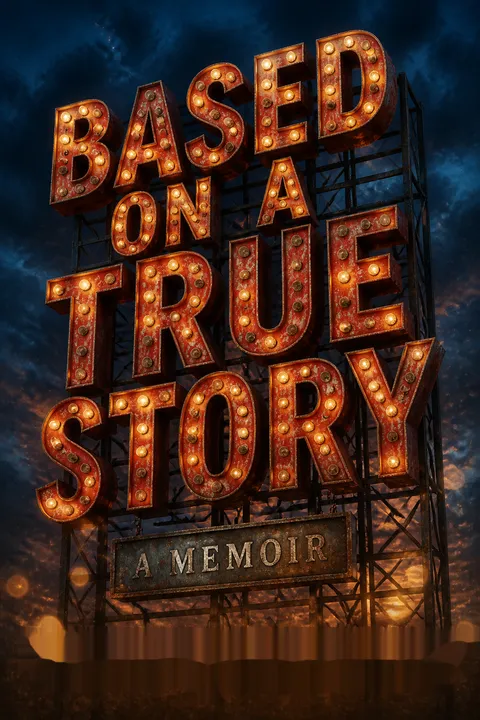


Key Takeaways
A memoir can tell emotional truth without pretending memory is exact.
The story admits its limits. The book opens with a comic fiction: Norm finds an online obituary declaring him dead, then decides to write his own account. He warns that memory is not a recording device, and that a story changes as it is recalled and retold. Names and details may shift, while the narrator promises only to tell what he can remember as truthfully as possible.
The form keeps wobbling. A road trip to Las Vegas frames stories about childhood and show business, while a ghostwriter named Keane interrupts to challenge Norm’s version and pursue a novel of his own. The result is not a dependable career chronology. It is a memoir staging the struggle to control who gets to tell a life.
What's striking is that the book makes unreliable memory part of its subject, rather than a flaw it can quietly conceal. Cognitive research likewise treats autobiographical recall as reconstruction, shaped by present concerns, not playback from a perfect archive. That does not make every version equally true: emotional honesty and factual accuracy remain different standards. The frame asks readers to notice how stories create identity, while resisting the tempting conclusion that a vivid or funny account must therefore be reliable.
Question what appearances hide, without pretending every blank can be filled.
A child learns to doubt. Norm watches a cat toy with a mouse, then imagines a familiar painting as paint rather than as a scene. The lesson unsettles him: what seems gentle or real may conceal something else, yet knowing how an illusion works does not necessarily make it disappear. Old Jack, the farmhand, performs magic and refuses to explain his tricks, preserving the boy's wonder.
The gaps stay troubling. Old Jack tells Norm that war made him a sniper and changed how he saw other people. Soon after, the memoir skips over much of Norm's childhood, then returns at Old Jack's funeral. The story suggests a disturbing episode in the shed but does not recover it as a clear memory. Its uncertainty is part of the point, not a mystery readers can solve with confidence.
The distinction between appearance and reality is potent here because it does not promise that seeing clearly will feel liberating. A magic trick can lose its wonder when explained, while a traumatic blank may remain unresolved even when its implications seem obvious. The account also cautions against treating a narrative gap as proof of a specific event. In life, interpretation can help people make sense of experience, but certainty can outrun what memory actually supports.
Let routine work free your mind to find its comic angle.
Comedy begins offstage. Before performing, Norm takes unskilled manual jobs. Repetitive physical tasks leave his attention free to wander, and he starts inventing jokes to entertain the men who gather around a card table after work. His first stage material grows from an idea about answering machines. At twenty-one, he trades a day's wages for short sets at an Ottawa comedy club and soon develops a loyal but limited following.
The audience matters. Norm describes a cult following as a mixed blessing: devoted fans may love a comic's style while everyone else finds it baffling. His own material remains spare and conversational, even when the room does not respond. The stories suggest that comedy is not simply a collection of punchlines. It is also a distinctive way of noticing ordinary habits and testing them in front of other people.
The account offers a useful picture of creative incubation: attention can loosen when a task is repetitive enough to stop demanding constant thought. That is not a universal recipe, and routine labor is not automatically fertile or freely chosen. The more durable insight is that ideas often arise from the social world a person actually inhabits. Norm's comedy starts with everyday technology and the reactions of fellow workers, not with an abstract plan to become a star.
Take a real opportunity seriously before mistaking it for a prank.
A career turns on trust. Norm performs on Star Search, loses badly to a comic whose act better suits the international contest, and leaves convinced he has blown his chance. Soon afterward, a Tonight Show booker offers him a date with Johnny Carson and Steve Martin. Norm assumes the man is playing a joke and repeatedly pretends to be the King of Spain. By the time he realizes the invitation was real, the booking has gone to someone else.
Other people reopen doors. After the mistake, Norm moves to New York, where David Letterman gives him a television appearance. Adam Sandler encourages Saturday Night Live's head writer to watch it, and that chain of introductions leads to an audition with Lorne Michaels. The memoir treats success less as a straight climb than as a mixture of nerve, timing, and help from people willing to vouch for someone.
The missed Carson booking is funny because the defense mechanism is recognizable: distrust can feel safer than risking embarrassment. Yet the episode is not a case for indiscriminate optimism. A sound response to an unlikely offer is to verify it, ask direct questions, and check the source, rather than either dismissing it or believing it blindly. The story's deeper point is that opportunity often arrives through relationships, and suspicion can close a door before its reality has been tested.
Turn your limitations into a format that makes your strengths visible.
A role fits the person. At SNL, Norm struggles to write sketches and play characters. Lorne Michaels doubts the show can use a stand-up comic who is not a natural sketch performer. The proposed solution is Weekend Update, a news desk where Norm can read jokes from cue cards. He pairs with experienced writers and producers, including Jim Downey and Lori Jo Hoekstra, while outside writers supply a large volume of material.
The constraints become a style. The team generates thousands of jokes, cuts them to a small selection for broadcast, and favors short setups with unexpected, blunt endings. Norm's deadpan delivery and oversized cue cards become part of the segment's identity. The memoir makes clear that his success is collaborative: his presence matters, but so do the writers, production choices, and editing that let his particular strengths land.
This is a strong example of fit between a person's abilities and the structure of a job. Organizational design often works best when it does not demand that every contributor excel at the same task. A defined format can free an unusual performer to do distinctive work, while a skilled team covers what that performer lacks. The qualification is important: constraints do not magically create talent. They help when the role, collaborators, and audience are aligned.
The gambler's real drug is the moment before uncertainty resolves.
The wager suspends time. Norm loses money for years, yet explains that the appeal is not the payout. It is the interval after placing a bet and before learning the result, when hope feels vivid and the next outcome is still open. He builds a reckless plan around casino credit, imagining that he can win enough to buy a Montana ranch. His backup plan is death by overdose if the gambling fails, a grotesque fantasy of making even ruin serve a purpose.
Control is an illusion. He studies sports odds, tries to avoid casino tables, and believes a run of wins will prove his strategy. Then he loses fifteen consecutive bets and later burns through more credit while drinking and blacking out. A tiny video-keno wager briefly appears to rescue him, but the winnings are stolen. The narrative's lucky breaks do not turn gambling into a reliable plan.
The account captures a powerful feature of gambling: intermittent outcomes keep attention fixed on the next possibility, not on the accumulated cost. The distinction between relief and lasting satisfaction is especially sharp. Statistical knowledge can help estimate odds, but it cannot turn a negative expectation into a dependable income strategy, and a dramatic win can reinforce the very behavior that caused the danger. The memoir's comic treatment exposes the delusion without making the addiction harmless.
Never convert a friend's rescue into a debt they can never repay.
Loyalty becomes leverage. Adam Eget travels with Norm through the casino scheme, despite losing his job and home along the way. Norm says an old debt from Atlantic City gives him the right to summon Adam and keep him beside him. The claim lets Norm treat a friend as an assistant who must obey, even when Adam is frightened and wants to go home.
Care and selfishness coexist. Adam helps Norm survive a near-fatal crisis, and Norm sometimes offers him money, companionship, and a possible place on the imagined Montana ranch. But Norm also tries to claim Adam's video-keno jackpot because the nickel came from his pocket. Their bond is funny and affectionate, but it is also unequal. The story shows how a ledger of past favors can turn gratitude into control.
Reciprocity is essential to friendship, but it becomes coercive when one person decides that a past favor purchases indefinite obedience. The book's exaggeration makes that logic visible: Norm can be generous in one moment and exploitative in the next, without becoming a consistent moral hero. Real relationships require room to renegotiate obligations and refuse demands. A rescue may deserve gratitude, but gratitude is not a lifetime contract.
Don't let one famous performance become the only story you tell.
Recognition has a short memory. Norm becomes known to many viewers through SNL, but even his early appearance with a single line gives a doorman a nickname for him. Years later, audiences come to his stand-up shows hoping to meet the television figure they remember. They may not know his wider body of work, and some stop attending when he does not repeat the old image they came for.
The person exceeds the clip. The memoir describes fame as warmth in an otherwise cold world, but also as a narrowing label. Norm can feel the pleasure of being recognized and the sting of being reduced to a past role. His career includes decades of stand-up, writing, film, and television, yet a familiar bit can eclipse all of it. The ghostwriter's struggle to capture Norm's essence echoes the same problem: a life resists a single definitive description.
Public identity is often compressed into whatever image is easiest to recall, whether a performance, a job title, or a viral moment. Recognition can create connection, but it can also make a person feel trapped inside an older version of himself. The useful response is not to reject the past, which helped build the audience, but to keep making room for work and relationships that cannot be summarized by one memorable appearance.
Let mortality sharpen attention to ordinary tenderness, not just achievement.
A wish leads into danger. Norm accompanies a terminally ill boy to Newfoundland so he can fulfill an unexpected wish to kill a seal. The journey across freezing water and ice becomes a test of endurance, and the boy survives his illness after the expedition. A year later, he is killed by a city bus. The sudden reversal refuses the comforting idea that a brave act guarantees a long life.
Grief notices small things. At the funeral, Norm remembers the boy's mother quietly straightening his tie. His own improvised speech lurches between jokes, regret, and mundane comforts, including coffee and funeral cookies. Elsewhere, a near-death vision offers reunion with loved ones, then complicates the afterlife with the flaws of those remembered. The book leaves mortality unresolved, but its sharpest moments attend to care that needs no grand explanation.
The tie is more affecting than a polished eulogy because it gives grief a concrete action: a parent continues caring for a child who cannot respond. Such details do not explain death or make it fair; they show how attention can preserve intimacy without manufacturing a lesson. The book's comedy can feel irreverent around loss, but the contrast also exposes how people reach for familiar routines when language fails. Not every bereavement needs a redemptive meaning.
Analysis
This memoir is less a factual timeline than a comic argument about who controls a life story. Its opening false obituary turns the act of writing into a response to imagined death, while the framing road trip to Las Vegas supplies suspense and lets childhood, SNL, and Hollywood stories interrupt one another. The ghostwriter's chapters deepen that uncertainty: Keane claims authority, pursues a novel, and begins to resemble the person he is trying to write. Authorship itself becomes part of the joke.
The recurring pattern is misrecognition. A child mistakes appearances for reality, Norm mistakes a real booking for a prank, audiences mistake a remembered television persona for a whole career, and the narrator mistakes gambling confidence for control. These episodes connect the book's absurdity to a sincere anxiety: people are always interpreting incomplete evidence, including evidence about themselves. Repeated jokes and repeated stories become both a comic signature and a defense against time's erasure.
The book's strongest emotional counterweight is its attention to ordinary details: an old farmhand's quiet kindness, a mother's small gesture at a coffin, or the warmth of being recognized by strangers. Fame and career success matter, but they cannot settle the question of what a life means. Nor does the memoir offer a clean moral redemption. Norm can be generous, frightened, cruel, and self-deceiving in close succession. That contradiction gives the comic voice its energy, while also warning readers not to confuse charm with wisdom.
The book should therefore be read neither as sworn testimony nor as pure nonsense. Its declared uncertainty and deliberate inventions make literal verification impossible in places, but the form still reveals how memory, performance, ambition, addiction, and grief compete to define a person. Its humor is sometimes deliberately abrasive, and not every joke yields a deeper lesson. The enduring value lies in the tension between the ridiculous story a person tells and the vulnerable life that story cannot fully contain.
Review Summary
Based on a True Story is a comedic, unconventional memoir by Norm Macdonald that blends fact and fiction. Many readers found it hilarious and praised Macdonald's unique storytelling approach, while some were disappointed by the lack of straightforward autobiography. The book features outlandish tales, gambling adventures, and meta-narrative elements. Fans of Macdonald's comedy style generally loved it, appreciating his wit and clever writing. However, those seeking a traditional celebrity memoir may be frustrated by its surreal nature and limited factual content.
People Also Read


Glossary
markers
casino credit for gamblingMarkers are credit extended by a casino to a player for wagering. In the memoir's Las Vegas plot, Norm argues that repaying past markers has earned him access to a large line of credit. The term matters because his scheme depends on casino trust being mistaken for evidence that he can beat the odds.
tilt
emotion-driven gamblingTilt describes gambling while emotionally unsettled, often after losses, when a player keeps wagering despite impaired judgment. Norm's friends use the term when he makes increasingly reckless bets and cannot stop. In the story, tilt names the gap between his calm explanations of strategy and his behavior at the tables.
Weekend Update
SNL's satirical news segmentWeekend Update is Saturday Night Live's recurring news parody, in which an anchor delivers jokes based on current events. In the memoir, Norm's deadpan presentation and a team of writers shape the segment's distinct style. The format suits him because it relies on reading and timing rather than the character acting he struggles with.
method writing
Imitating a subject's identityMethod writing is ghostwriter Terence Keane's label for his approach to a subject. He listens closely, absorbs the person's manner and stories, then tries to write from that person's perspective. In the memoir's self-conscious plot, this method becomes unstable: Keane's effort to embody Norm blurs the boundary between observing a subject and becoming a character himself.
The House Painter
Keane's rejected novelThe House Painter is the novel Terence Keane is secretly writing while ghostwriting Norm's memoir. It follows a talented painter whose artistic work goes unrecognized, forcing him to earn a living painting houses. The manuscript represents Keane's own literary ambition and contrasts the creative work he values with the celebrity books he is paid to produce.
FAQ
What's "Based on a True Story: A Memoir" about?
- Norm Macdonald's life and career: The memoir is a blend of real-life experiences and fictionalized stories from Norm Macdonald's life, focusing on his career as a comedian and actor.
- Humor and storytelling: The book is filled with Macdonald's unique brand of humor, combining absurdity with wit, and often blurring the lines between truth and fiction.
- Behind-the-scenes insights: It offers a glimpse into the world of stand-up comedy and television, particularly Macdonald's time on "Saturday Night Live" and his experiences in Hollywood.
- Themes of fame and identity: The memoir explores themes of fame, identity, and the nature of storytelling, questioning what is real and what is fabricated in the life of a public figure.
Why should I read "Based on a True Story: A Memoir"?
- Unique narrative style: Norm Macdonald's memoir is not a typical autobiography; it mixes fact with fiction, creating an entertaining and unpredictable reading experience.
- Insight into comedy: The book provides a behind-the-scenes look at the world of stand-up comedy and television, offering insights into the challenges and triumphs of a comedian's life.
- Humor and wit: Macdonald's humor is sharp and often absurd, making the memoir a funny and engaging read for fans of his comedy.
- Exploration of truth and fiction: The memoir delves into the nature of storytelling, exploring how truth and fiction intertwine in the life of a public figure.
What are the key takeaways of "Based on a True Story: A Memoir"?
- Blurring of truth and fiction: The memoir highlights how stories can be both true and fictional, reflecting the complexity of memory and identity.
- Challenges of fame: Macdonald shares the ups and downs of his career, illustrating the challenges and absurdities of life in the public eye.
- Importance of humor: Throughout the book, humor is portrayed as a vital tool for coping with life's challenges and connecting with others.
- Reflection on life and career: The memoir offers a reflective look at Macdonald's life, considering what it means to be successful and how to find meaning in one's work.
How does Norm Macdonald describe his time on "Saturday Night Live"?
- Formative experience: Macdonald describes his time on "SNL" as a significant period in his career, shaping his comedic style and public persona.
- Challenges and triumphs: He shares both the challenges he faced, such as being fired from "Weekend Update," and the triumphs, like creating memorable characters and sketches.
- Behind-the-scenes insights: The memoir provides a look at the inner workings of "SNL," including the dynamics between cast members and the pressures of live television.
- Impact on career: Macdonald reflects on how "SNL" influenced his career trajectory, both positively and negatively, and how it contributed to his identity as a comedian.
What are some of the best quotes from "Based on a True Story: A Memoir" and what do they mean?
- "To live outside the law you must be honest." This quote, borrowed from Bob Dylan, reflects the memoir's theme of truth and fiction, suggesting that honesty is crucial even when bending the rules.
- "I know of only two very real evils in life: remorse and illness." This quote from Leo Tolstoy's "War and Peace" highlights the memoir's exploration of regret and the human condition.
- "The only thing an old man can tell a young man is that it goes fast, real fast, and if you’re not careful it’s too late." This reflects Macdonald's reflections on life and the fleeting nature of time.
- "I’ve been lucky." This simple statement encapsulates Macdonald's gratitude for his career and experiences, despite the challenges he faced.
How does Norm Macdonald approach storytelling in his memoir?
- Mix of truth and fiction: Macdonald intentionally blurs the lines between reality and imagination, creating a narrative that is both entertaining and thought-provoking.
- Humor as a tool: He uses humor to explore serious themes, such as identity and fame, making the memoir both engaging and insightful.
- Unreliable narrator: Macdonald embraces the role of an unreliable narrator, challenging readers to question what is true and what is fabricated.
- Reflective tone: Despite the humor, the memoir has a reflective tone, as Macdonald considers the impact of his career and life choices.
What role does humor play in "Based on a True Story: A Memoir"?
- Coping mechanism: Humor is portrayed as a way to cope with life's challenges and absurdities, providing relief and perspective.
- Connection with others: Macdonald uses humor to connect with readers, sharing his experiences in a way that is relatable and entertaining.
- Exploration of identity: Through humor, Macdonald explores his identity as a comedian and public figure, questioning what it means to be funny.
- Challenge to norms: The memoir uses humor to challenge societal norms and expectations, encouraging readers to think critically about the world around them.
How does Norm Macdonald reflect on fame in his memoir?
- Double-edged sword: Macdonald describes fame as both a blessing and a curse, offering opportunities but also bringing challenges and scrutiny.
- Impact on identity: He reflects on how fame has shaped his identity, both personally and professionally, and the pressure to maintain a public persona.
- Isolation and connection: Fame is portrayed as isolating, yet it also provides a way to connect with others through shared experiences and humor.
- Legacy and relevance: Macdonald considers the fleeting nature of fame and the desire to leave a lasting impact through his work.
What insights does "Based on a True Story: A Memoir" offer about the world of stand-up comedy?
- Behind-the-scenes look: The memoir provides a glimpse into the life of a stand-up comedian, including the challenges of touring and performing.
- Craft of comedy: Macdonald shares insights into the craft of comedy, from writing jokes to delivering them on stage.
- Community and competition: The book explores the dynamics of the comedy community, highlighting both the camaraderie and competition among comedians.
- Evolution of a career: Macdonald reflects on how his career in stand-up has evolved over the years, shaping his identity and approach to comedy.
How does Norm Macdonald address the theme of identity in his memoir?
- Public vs. private self: Macdonald explores the tension between his public persona and private identity, questioning how fame has shaped who he is.
- Role of storytelling: The memoir suggests that storytelling is a way to construct and understand identity, blurring the lines between truth and fiction.
- Search for meaning: Macdonald reflects on his search for meaning and purpose, both in his career and personal life, through the lens of identity.
- Complexity of self: The book acknowledges the complexity of identity, suggesting that it is fluid and multifaceted, shaped by experiences and choices.
What is the significance of the title "Based on a True Story: A Memoir"?
- Blurring truth and fiction: The title reflects the memoir's exploration of the boundaries between truth and fiction, suggesting that all stories are "based on" reality to some extent.
- Challenge to readers: The title invites readers to question what is true and what is fabricated, engaging them in the storytelling process.
- Reflection on memory: The memoir considers how memory shapes our understanding of the past, acknowledging its imperfections and subjectivity.
- Playful tone: The title sets the tone for the memoir, indicating that it will be both humorous and thought-provoking, challenging conventional expectations of a memoir.
How does Norm Macdonald's memoir explore the concept of storytelling?
- Narrative structure: The memoir uses a non-linear narrative structure, blending real and fictional events to create a unique storytelling experience.
- Role of the narrator: Macdonald embraces the role of an unreliable narrator, challenging readers to question the truth of his stories.
- Themes of memory and identity: Storytelling is used to explore themes of memory and identity, considering how stories shape our understanding of ourselves and the world.
- Humor and absurdity: The memoir uses humor and absurdity to challenge traditional storytelling conventions, creating a narrative that is both entertaining and insightful.
Download PDF
Download EPUB
.epub digital book format is ideal for reading ebooks on phones, tablets, and e-readers.








