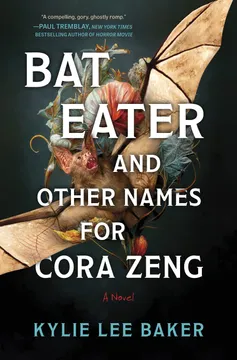


Plot Summary
The Train Takes Delilah
In April 2020, Cora Zeng waits out the rain at an empty East Broadway station with her older sister, Delilah. Delilah has just revealed that she plans to go to China alone, leaving Cora to face rent, unemployment, and the sister she has built her life around.
A white man in a surgical mask calls them a racist slur, grabs Delilah, and pushes her onto the tracks. The train kills her before Cora can reach her. Cora is left drenched in her sister's blood, while the attacker vanishes and the police find no clear lead. The pandemic empties the city, but it does not make Cora safe from the hatred gathering in it.
The murder joins private abandonment to public violence. Cora is already confronting the possibility that Delilah will leave her; the attacker makes that separation absolute and turns a family rupture into a racialized crime. The empty station intensifies the injustice: Cora witnesses the killing, yet the city offers no witnesses, no immediate rescue, and eventually no answer. Her fixation on cleanliness also gains a grim origin point. Blood crosses the boundary of her body before she can choose whether to face grief, establishing contamination as both a physical fear and a memory she cannot scrub away.
The Bat in Yuxi's Drain
Months later, Cora earns rent by cleaning violent crime scenes for her coworker Harvey Chen's uncle, alongside Yifei Liu. At the apartment of Yuxi He, a doctor found shot in her bathroom, the crew removes skull fragments and blood without seeing the body. Cora pulls a bat from the clogged bathtub drain, an image that revives the insult shouted before Delilah died.
Yuxi's ordinary belongings make the violence feel intimate, not theatrical. Cora also notices that Asian women now account for an alarming share of their jobs. Harvey treats gore like a horror film, while Yifei quietly pockets objects from the dead. Cora's work brings her near death's remains, even as she tries to keep her sister's death sealed away.
The cleanup crew occupies an uneasy space between evidence and erasure. Cora and her coworkers are hired to remove the visible aftermath, but every stain they erase risks making a victim easier to forget. Yuxi's possessions interrupt the abstraction of gore by suggesting the particular life interrupted: a doctor, a reader, someone with routines and preferences. The bat is both a physical clue and an imposed racial symbol. Cora cannot yet know whether the two meanings connect, but her reaction shows how public language has already entered her private trauma.
The Offering Cora Refuses
Cora's aunt, Auntie Zeng, marks the start of Ghost Month by burning paper offerings and explaining that the dead return to visit the living. She urges Cora to burn something for Delilah, whose violent death could leave her spirit unsettled. Cora rejects the warning and throws away the joss paper Auntie Zeng secretly packs for her.
Their disagreement rests on more than belief: Cora has spent months avoiding Delilah's death, while her aunt keeps insisting that grief requires action. Cora also depends on relatives for money and housing support, though she resents their supervision. By refusing the ritual, she chooses numbness over the possibility that her sister might still need something from her.
The offering gives grief a practical form, which is precisely what Cora resists. If Delilah is simply gone, Cora can try to resume life without reopening the scene at the station. If the dead remain reachable, then ignoring her sister becomes an action with consequences. Auntie Zeng's ritual tradition therefore presses on Cora's deepest conflict: dependence feels safer than choice, but avoidance is still a choice. The discarded paper is not merely a rejected custom. It materializes Cora's attempt to make loss manageable by treating it as finished.
Church Without Shelter
Cora attends church with Auntie Lois, who helps pay her student loans and expects her to seek forgiveness, including for Delilah's killer. In the confessional, Cora accidentally hands the priest a photograph of Yuxi He’s murdered body, provoking his anger and embarrassing Auntie Lois.
Outside, a white man knocks Cora down, pulls away her masks, and spits in her face while ordering her back to China. Cora clamps her mouth shut and scrubs herself with sanitizer, but the assault leaves her feeling invaded in a way no washing can undo. Auntie Lois urges forgiveness instead of anger. Cora leaves with neither spiritual comfort nor a sense that the people around her will protect her.
The scene places two competing moral demands beside a bodily violation. Auntie Lois treats forgiveness as proof of spiritual goodness, while Cora experiences the assault as something that enters her body and cannot be removed by moral instruction. The priest's reaction to the photograph also exposes how quickly the visible facts of death become socially unacceptable. Cora is expected to conceal both her distress and the violence done to her. Her silence is not serenity; it is a survival response shaped by repeated encounters with authority figures who ask her to manage other people's discomfort.
Zubat's Uneasy Burial
At the apartment of Zihan Huang, Cora finds axe marks and blood, while Yifei uncovers a sealed vent full of bats whose wings have been torn. Harvey accidentally crushes one with a skillet. Rather than discard it, the three coworkers bury the bat beside abandoned train tracks and give it the name Zubat.
Harvey's regret over killing it briefly cuts through his usual joking detachment, and the burial becomes an awkward first gesture of friendship. Cora sees a dark figure watching them from the tracks, but says nothing. The battered bats were not ordinary pests. Someone had trapped and mutilated them, and Cora can no longer comfortably treat the crime scenes as isolated messes.
The bat's treatment mirrors the victims' reduction to material left for others to handle. Harvey's remorse matters because he recognizes that an accidental death remains a death, unlike the fictionalized violence he consumes in games. The burial gives the crew a small ritual of their own, one that acknowledges a life even when its importance is easy to dismiss. Cora's silence about the figure shows that she still distrusts her perceptions and fears the social cost of naming what she sees. The scene quietly joins companionship, death, and the possibility of a larger pattern.
Footprints in the Crypt
When dark specks appear in her vision, Cora visits an optometrist, who finds her eyes healthy and suggests the disturbance may come from her brain. At Yifei's apartment, Cora learns that her coworker has a crescent-shaped scar she associates with a hungry ghost, though Cora still doubts the explanation.
Later, while sweeping a church crypt for the young minister Father Thomas, Cora discovers fresh bare footprints in the dust. She sweeps them away, then sees another set leading toward her. Two identical Father Thomases appear at opposite doors, each claiming to be real. Cora freezes until she wakes in the ordinary crypt, unsure whether fear, exhaustion, or something supernatural has altered what she witnessed.
Cora's difficulty is not simply deciding whether ghosts exist. Her own mind has long been treated as unreliable, so every uncanny event arrives with a ready-made explanation that turns her back against herself. Yifei's scar offers tangible evidence but not certainty; the crypt offers a perception that disappears before it can be tested. The false choice between the two priests dramatizes Cora's paralysis when she must decide without trustworthy guidance. Even the safest explanation leaves her alone with the experience, because the people around her have already taught her to doubt her account.
The Ghost at Home
Cora joins Harvey and Yifei for dinner, trying to practice the ordinary social life she never knew how to build. Two white diners make a joke about bats and Chinese food. A brick suddenly smashes through the restaurant window, showering the group with glass and injuring Harvey. Cora gets home shaken and, in the quiet of her apartment, hears Delilah call her name.
A cold hand touches her shoulder and throat, then vanishes when Cora turns around. That night, a gaunt woman appears in Cora's living room and bites through her coffee table. Cora cannot tell whether grief has finally broken into hallucination or whether the dead have found a way inside.
The brick turns ambient prejudice into a physical threat, while the apparition makes private grief equally difficult to dismiss. Cora has tried to become sociable by following the routines of other young adults, but even a shared meal becomes dangerous because racial hostility follows her into public space. At home, the boundary between memory and external presence collapses. Her need to believe that the voice is Delilah is also a need to restore the relationship that death interrupted, despite the evidence that their bond was already strained.
An Orange for Delilah
The woman returns beneath Cora's apartment lights, her throat narrow and her body ruined. Cora recognizes the jade bracelet on its wrist and, reading its gold character as hope, decides the ghost must be Delilah. She offers an orange. The creature swallows it whole, and Cora understands that her refusal to make offerings may have left her sister hungry.
Soon afterward, the cleaners find a new crime scene at a hotel: travel nurse Ai Wu has been murdered, with a bat painted in blood above the bed. Yifei argues that the murders and their hidden bat evidence deserve public attention. The ghost's apparent recognition of Cora draws her toward the living victims as well as her own grief.
Feeding the ghost feels like care, but it also deepens Cora's dependence on a relationship she cannot verify. The bracelet gives her a concrete sign to trust, yet Cora cannot read its inscription accurately, making cultural disconnection part of the haunting's mechanics. Her desire to identify the apparition as Delilah is emotionally understandable and dangerous at once. Ai Wu's murder widens the moral field: Cora's attention is no longer confined to her sister, because the repeated violence suggests that many women are being abandoned to the same silence.
Bats Painted in Blood
Yifei breaks the cleanup crew's silence by meeting Devin, a young reporter, to describe the murdered Asian women and the bats left at their scenes. Harvey joins her, but Devin doubts that the evidence proves a serial killer. Cora, intoxicated and exhausted, tells him how Delilah died and how police dismissed her description of the attacker.
The outburst gives the reporters a human witness, but Yifei later learns the newspaper will not publish their account. She proposes searching the subway tracks for Delilah's missing remains, believing an intact burial might ease her ghost's hunger. Cora agrees, even though she dreads finding what the train left behind. For once, grief gives her a task that points beyond herself.
Cora's testimony is an act of exposure she cannot control once it leaves her mouth. She wants the reporter to recognize the victims as people, yet the newspaper's refusal demonstrates that visibility depends on institutions that may decide the story is inconvenient. Yifei answers that refusal with direct action, contrasting Cora's habitual retreat with a willingness to risk public consequences. The search for Delilah's remains combines care and fear: Cora is not ready to face the physical truth, but she has begun to accept responsibility for what her sister may need.
Wang's Hand Beneath the Bed
At the apartment of Officer Wang, a Chinese American policeman found shot in bed, Cora feels a skeletal hand reach from beneath the mattress and gestures toward a hidden thumb drive. The crew is abruptly ordered to clean before the scene has been photographed, and a police photographer insults them as they leave.
That night, Cora, Harvey, and Yifei enter the closed subway to search for Delilah's remains. They find old blood on a tunnel wall but no skull. Footsteps charge after them in the darkness, and a hand grabs Cora before Harvey and Yifei haul her onto the platform. The failed search convinces Yifei to try a Ghost Month feast instead.
The officer's death makes the investigation feel compromised from inside the institution supposedly responsible for it. The cleaners are allowed into a scene too early, then treated as offenders when they notice the irregularity. Cora's ghostly encounter supplies a lead without explaining its source, preserving the tension between evidence and belief. In the subway, her friends physically keep her from being pulled back into the place where Delilah died. Their rescue marks a change: Cora is no longer enduring the haunting entirely alone.
Evidence in the Shredder
The ghost leads Cora to the police station, where she pretends to be Officer Wang's widow so she can ask about his belongings. While a secretary searches his office, Cora spots a paper shredder bulging with shredded documents and takes the bag. The secretary stops her only to hand over an old family photograph of Wang.
Later, Harvey calls with a plan based on Chinese vampire folklore, hoping rice, coins, a mirror, and peach wood might repel hungry spirits. At a park, their rice instead attracts a crowd of gaunt ghosts, including the one Cora thinks is Delilah. They escape, but unseen hands reach into Cora's bright apartment that night and claw at her bookshelf.
Cora's theft is a meaningful departure from her usual passivity, though she still acts because the apparition directs her. The family photograph complicates her job's habit of reducing victims to scenes: Wang had a life beyond the apartment where he died. Harvey's improvised ritual reveals his fear beneath his humor, but the ghosts turn folklore into a practical danger. Cora's apartment, carefully designed as a clean refuge, proves unable to exclude death. The repeated intrusion undermines the idea that control over surfaces can guarantee safety.
Rice Summons the Dead
After the rice attracts spirits, Auntie Zeng visits Cora and hangs protective charms, burns joss paper, and gives her rules for Ghost Month. Cora admits that the haunting is real, though she still cannot tell her aunt everything. Auntie Zeng explains that the dead can be guided with offerings and later with lanterns. Cora puts on the jade bracelet she had neglected.
Meanwhile, she, Harvey, and Yifei prepare for a proper feast. Cora and Harvey reconstruct the documents she stole from Wang's shredder, finding profiles of men linked to white-supremacist groups and Wang's notes connecting one to Zihan Huang's murder. Their plan to honor Delilah now shares space with evidence that the living are organizing violence.
Auntie Zeng's practical response offers Cora an alternative to both denial and the church's demand for forgiveness. Her guidance does not promise that every danger will disappear; it gives Cora procedures for acting within uncertainty. The shredded records also shift the story's scale. What looked like a set of isolated crimes begins to resemble a network supported by shared ideology. Cora now faces two forms of unfinished business, the suffering dead and the living perpetrators, and the feast becomes an attempt to address the first before confronting the second.
Ten Faces Reassembled
Cora and her coworkers piece the shredded files together at Yifei's apartment. Several profiles belong to white men with neo-Nazi affiliations, and Wang had linked one suspect to Zihan's murder. Before they can identify a single culprit, Cora realizes the files may describe multiple killers copying one another.
Yifei insists that the feast must take priority, because keeping a hungry ghost nearby can make it more dangerous. Cora sets an altar for Delilah with a photograph, brush, lipstick, perfume, and stones, then helps place food around an empty seat. Yifei's roommates, Paisley and Ryan, come home and join the table. Their casual interruption leaves the ritual exposed to people who do not understand its risk.
Reassembling the pages gives Cora a new role: she is no longer only cleaning up evidence but interpreting it. The faces refuse to resolve into one convenient villain, foreshadowing a collective responsibility that will frustrate the desire for simple revenge. At the same time, the altar forces Cora to remember Delilah as a complicated person rather than a lost ideal. Her recollections include resentment and tenderness together. The roommates' entrance shows how easily spiritual danger can collide with ordinary domestic life, particularly when the people present have no reason to believe in the ritual.
The Feast Turns Fatal
When the power cuts and shadows rise from the walls, Delilah's ghost appears at the feast. Instead of accepting a measured offering, she kills Ryan and Paisley, swallowing them in pieces while the other spirits tear through Yifei's apartment. Cora could flee, but sits down and places food before the ghost. Delilah eats the entire table, dishes and all, then disappears when the lights return.
Cora, Harvey, and Yifei are left amid blood, broken plates, and the evidence of two deaths. Knowing the police will not believe a ghost explanation, they use their cleaning equipment to remove the remains and conceal the scene. The meal meant to release Delilah has made the three friends complicit in a new horror.
The feast overturns the comforting idea that ritual can make grief orderly. Cora's attempt to care for Delilah brings real victims into the haunting, and her decision to keep feeding the ghost comes from love but cannot undo its consequences. The cleanup that follows echoes her paid work, except now erasure protects her and her friends rather than a client. This inversion stains Cora's familiar competence with guilt. The scene also sharpens the difference between the living sister Cora remembers and the hungry force that has taken her shape.
Harvey in the Washer
After the feast, Cora, Harvey, and Yifei contract COVID and spend days recovering apart. During quarantine, Harvey studies Wang's files and tells Cora he may have identified the killer. When Cora and Yifei go to the dry cleaner to meet him, they find the back door open and a bat loose inside. Harvey's phone rings from an industrial washing cylinder filled with red solvent.
His body is trapped in the machine, and Yifei cannot open it. Cora sets off the fire alarm rather than risk the poison, then pulls Yifei away before police arrive. They leave with knives from Yifei's apartment and head toward Staten Island, aware that whoever killed Harvey may be hunting them too.
The washing machine turns the cleaners' everyday tools into instruments of helplessness. Cora knows exactly what the chemical can do, but knowledge cannot reverse the death in front of her. Her choice to trigger the alarm rather than attempt a rescue shows a painful shift from reflexive compliance toward judgment under threat. Harvey's death also removes the group's most exuberant member just as their investigation begins to produce answers. The friends' trade in bodily aftermath becomes personal in the most literal way: one of their own is now a scene they cannot safely stay to clean.
Yifei's Confession, Cora's Loss
On the drive out of the city, Yifei tells Cora that her birth family never gave her a name and kept her younger sister hidden after the child was nearly drowned. When their parents later died, Yifei locked the dangerous girl away and fled. Before Cora can answer, bats swarm the car and Yifei crashes into a tree.
Cora survives beside Yifei's crushed body. A gaunt ghost arrives, and Cora assumes it is Delilah until it silently points her toward safety. At a Taco Bell, Cora calls Auntie Zeng. Her aunt hears that the ghost wears Delilah's bracelet and recognizes the mistake: Delilah's bracelet bore a different character. The spirit following Cora is not her sister.
Yifei's confession dismantles the simple opposition between the brave friend and the frightened protagonist. She has survived by making a choice she cannot forgive herself for, and now admits that fear may still govern what she can do for Cora. The crash makes that fear tragic rather than abstract. Cora's mistaken recognition of the ghost reveals how grief can turn a desired identity into apparent evidence. Her aunt's correction does not remove the loss, but it breaks the false intimacy that has shaped Cora's choices.
Hope Is Not Delilah
Auntie Zeng reaches Cora at the restaurant with lanterns and bright lights, keeping the false Delilah at bay. She explains that the spirit can be sent back when Ghost Month ends. While preparing to pray, Cora hears the same patterned knocking that haunted her during COVID. She finds Wang's USB in her bag and realizes the knocks match its password: 325.
On Auntie Zeng's computer, the drive opens. Cora discovers hundreds of crime photographs and records from Wang's investigation. What she expected to be a clue to one masked attacker is evidence of a much wider horror. The false ghost has led her toward the truth, but the full explanation waits inside the files.
The bracelet's mistranslated character turns Cora's cultural insecurity into a plot hinge, but the deeper consequence is psychological: she must separate love for Delilah from the apparition's demands. Auntie Zeng offers protection without pretending that protection is permanent. The password, carried through sound and memory, converts haunting into communication rather than mere terror. Cora's willingness to open the drive marks a further break from avoidance. She is no longer asking whether knowledge will hurt; she is choosing to learn what the dead have been trying to show her.
A Citywide Killing Pattern
Wang's files contain photographs of 374 murdered Asian women, recordings of his superiors ordering him to abandon the case, and a note from Mayor Webb telling a police captain to keep matters quiet. A racist online forum displays crime-scene images and encourages imitators; the ten profiles Cora and her friends reconstructed are not one suspect list but a set of copycat killers.
Cora understands that there may be no single attacker to punish. The phrase used against her and Delilah has become a permission structure for widespread violence. In the dark, Yuxi He's ghost appears beside the computer, confirming that the murdered women remain present even when institutions and newspapers have concealed them.
The revelation denies Cora the emotional simplicity of one identifiable monster. The violence is organized less by a lone villain than by a culture that supplies its participants with language, audience, and institutional cover. That scale can feel paralyzing, but it also clarifies why individual arrests alone would not resolve the story's central wound. Yuxi's presence connects the anonymous archive to a particular person Cora once cleaned away. The dead are not merely evidence in a case; they are witnesses whose continued existence contests the official effort to make them disappear.
Fire Along the River
Cora leaves Auntie Zeng's apartment carrying propane tanks from the church crypt and a box of matches. When a white man grabs her on the street and calls her a slur, she shoves him away, then claims the insult rather than shrinking from it. With Yuxi and a growing procession of hungry ghosts behind her, Cora reaches Mayor Webb's residence.
She pours fuel around the house and sets it alight, offering the fire to the dead. Later reports identify Webb's death in an unexplained house fire. Before Ghost Month closes, Auntie Zeng and Cora release paper lanterns onto the river to guide the spirits home. Cora lights the final lantern without knowing whether Delilah is among the ghosts, choosing an act of care over certainty.
Cora's final action is neither a clean triumph nor a conventional act of justice. She attacks the home of an official connected to suppression, but the fire is also an offering to people whose suffering cannot be repaid. Her answer to the street harassment changes the role of the slur: she refuses to let its speaker define her as powerless, though the danger remains real. The lanterns temper vengeance with care. Cora cannot verify that Delilah is listening or that the ritual repairs anything, yet she acts without waiting for permission or certainty.
Epilogue
By April 2021, Cora lives with Auntie Zeng and cleans apartments for a new employer. Harvey and Yifei are gone, and Cora cannot give Yifei a proper burial because no one can prove her identity. Mayor Webb's death brings the suppressed investigation into public view, but Cora does not expect the city to deliver justice.
She keeps the dead remembered on an altar with photographs and objects from their lives. One afternoon, she offers an orange to the darkness behind her blinds. A hand reaches out and takes it. Cora eats the other half herself, accepting that living with grief means making room for both the dead and her own needs.
The ending refuses to make recovery synonymous with forgetting. Cora's work, home, and small pleasures are modest beginnings rather than a sudden cure, and the altar keeps grief connected to names and objects rather than spectacle. The last exchange of fruit is deliberately unresolved: the hand may belong to a spirit, but Cora is no longer surrendering the whole orange or her whole self. She can offer something and also eat. That small act marks a new boundary, one shaped by care without the old demand that she disappear into another person's needs.
Analysis
The novel's horror works by refusing to separate private symptoms from public conditions. Cora's compulsive cleaning, fear of touch, and distrust of her own senses are intensely personal, but they unfold amid a pandemic that has made contamination an ordinary civic language and anti-Asian hostility a visible threat. Her mind is not a neutral instrument, yet neither is it simply an unreliable narrator's trap. The story repeatedly shows that dismissing her perception can be as dangerous as believing every fear without question.
The crime scenes turn bodies into both material and information. Cora's paid labor makes her fluent in the physical traces of violence, while the police and press decide which traces count as public knowledge. The images of bats demonstrate how a racist label can move from insult to staged signature to online entertainment, recruiting people into violence without requiring a single mastermind. The revelation of copycats denies the comfort of concentrating blame in one exceptional monster. Structural hatred is harder to apprehend because it is reproduced by ordinary people and protected by institutions that prefer quiet.
Family and ritual offer a counterpractice to erasure. Auntie Zeng's offerings do not promise that death can be undone; they insist that the dead remain worthy of attention. Cora initially treats ritual as another demand imposed by relatives, just as she once treated Delilah's choices as instructions. Her movement toward agency is not a clean break from attachment. It comes when she can remember Delilah's failures and still mourn her, and when she can act without knowing whether the ghost is truly her sister.
The ending holds care and violence in unresolved proximity. Cora's fire answers a political cover-up with an act that cannot be called ordinary justice, while the lanterns offer a gentler passage for the dead. Her later willingness to share an orange without giving up her own portion suggests a changed relation to love: she can remember and offer, but no longer has to vanish inside another person's hunger.
Review Summary
Characters
Cora Zeng
The reluctant witnessCora is a twenty-four-year-old Chinese American art history graduate living in New York, where she works cleaning crime scenes. She is intensely anxious about contamination, skeptical of her own perceptions, and accustomed to letting her older sister make decisions for her. Her compulsions give her a fragile sense of control, while her sharp observations often expose details others overlook. Cora carries grief as both love and resentment, and she struggles to distinguish inherited expectations from desires of her own. Her relationship with her aunt, coworkers, and the dead tests whether she can act without borrowing someone else's certainty. She is not fearless; her defining capacity is the ability to move while afraid.
Delilah Zeng
The luminous older sisterDelilah is Cora's older sister, beautiful, stylish, and drawn to possibility. She moves through life with a confidence that Cora both admires and resents, often trusting intuition, luck, and the promise that events will eventually balance out. Delilah can be loving without being attentive to the ways her choices shape Cora's life. Their bond is intimate but unequal: Cora organizes herself around Delilah, while Delilah protects her sister in moments of danger yet retains her own ambitions. She represents both the comfort of belonging and the cost of treating another person as a compass.
Yifei Liu
The fierce coworkerYifei is Cora's coworker in the crime-scene cleanup crew, a quick-witted Chinese immigrant with a guarded private life and a taste for collecting objects from the apartments she cleans. She speaks directly, notices when institutions are evading responsibility, and is more willing than Cora to turn anger into action. Her practical toughness is not the same as fearlessness; she has reasons to distrust family, authority, and dependence. Yifei's humor makes room for companionship, while her bluntness can unsettle Cora's need for reassurance. She is drawn to survival, yet she wants her life and the lives of other Asian women to mean more than the circumstances of their deaths.
Harvey Chen
The gore-loving friendHarvey is a tall, loud cleanup worker whose uncle runs the dry-cleaning business that hires him and Cora. He jokes about gore and approaches horror as entertainment, but beneath that posture is a man haunted by childhood isolation and unsure where play ends and real danger begins. He is generous in awkward, impulsive ways, offering food, company, and help before he knows how to speak seriously. His friendship with Cora grows through practical acts rather than polished conversations. Harvey's fascination with frightening things coexists with a deep awareness that life is fragile and there are no extra chances.
Auntie Zeng
The keeper of ritualsAuntie Zeng is Cora's father's younger sister and one of the few relatives who has consistently provided practical care. She is resourceful, eccentric, and committed to Chinese rituals involving ancestors, offerings, and protection. Her approach can feel intrusive to Cora, especially when she reports on Cora's wellbeing to the family, yet she pays close attention to what Cora cannot say. Auntie Zeng does not require Cora to share every belief before helping her. She offers rules and objects when comfort alone will not do, making her a grounded guide through both family history and supernatural danger.
Auntie Lois
The demanding benefactorAuntie Lois is Cora's maternal aunt, a churchgoing woman who helps pay Cora's student loans and expects religious participation in return. She values Christian forgiveness and believes faith should shape how people respond to harm. Her financial support is real, but so is her tendency to mistake obedience for wellbeing. Cora experiences her as both a lifeline and an authority whose moral certainty leaves little room for anger.
Yuxi He
The doctor behind the doorYuxi He is a doctor whose apartment Cora's crew cleans after a violent death. Her medical symbols, unfinished tea, books, and small domestic comforts reveal a private life that the crime scene alone cannot explain. Yuxi's absence presses Cora to see the person behind the biological remains. Her story becomes part of the wider pattern of violence affecting Asian women in New York.
Officer Wang
The investigator silencedOfficer Wang is a Chinese American police officer whose apartment becomes one of the crew's crime scenes. Cora initially knows him only through the violence left behind, but his private records show a man who kept pursuing an investigation despite pressure to stop. A family photograph and his concealed files restore some human scale to a victim who might otherwise remain an anonymous body.
Father Thomas
The uneasy ministerFather Thomas is a young minister in training who asks Cora to clean part of the church crypt. He is gentler than the senior priest and wants Cora to feel welcome, but his concern is constrained by the congregation's fear of her. His sincerity does not prevent him from minimizing the prejudice directed at her, making him a complicated figure rather than a simple ally.
Antoni Mezzasalma
The precinct captainAntoni Mezzasalma is a captain in the precinct that handles Cora's account of Delilah's death. He has institutional authority over how the case is treated and leaves Cora with a memory of being questioned rather than helped. His role links an individual crime to the larger structures of policing and political influence.
Mayor Webb
The pro-police mayorMayor Webb is New York's incumbent mayor, a public advocate of expanded policing whose administration promotes reassuring claims about safety. His political ambitions shape the climate in which officials choose which crimes deserve attention. He embodies the distance between a public narrative of order and the lived insecurity of Chinatown.
Paisley
Yifei's oblivious roommatePaisley is one of Yifei's roommates, a young woman whose ordinary routines and assumptions contrast with the danger unfolding around the cleanup crew. She shares the apartment with Ryan and has little understanding of Yifei's private life.
Ryan
Paisley's easygoing partnerRyan is Paisley's partner and Yifei's other roommate. He is casual, food-loving, and largely unaware of the beliefs and risks occupying Yifei's apartment, bringing everyday domestic life into a story where the supernatural can intrude without warning.
Cora's mother
The absent idealistCora's mother is a white Midwesterner who has entered an alternative religious commune. Her choices, including giving her inheritance to the community, leave Cora with financial and emotional distance that other relatives try to manage.
Cora's father
The distant providerCora's father returned to China and built a new family there. He sends Cora money when prompted by Auntie Zeng, offering limited support without becoming an active presence in her daily life.
Devin
The cautious reporterDevin is a young reporter who listens to Yifei, Harvey, and Cora describe the murders and their evidence. He is curious but constrained by editorial and political pressures that keep the story from reaching the public.
Dr. Robinson
The careful optometristDr. Robinson examines Cora's visual disturbances and finds no problem with her eyes. His ordinary medical explanation offers useful information but cannot address the wider experiences Cora is struggling to describe.
Yejide
Cora's new employerYejide owns the apartment-cleaning business that later employs Cora. She gives Cora steady work, timely pay, and health insurance, offering a practical form of stability.
Plot Devices
Ghost Month
The calendar of returnGhost Month gives the supernatural plot a timetable and a set of practical customs. In the story, the dead return hungry, families make offerings, and lanterns guide spirits back when the month ends. Cora's refusal to burn joss paper helps explain why she interprets the haunting as a personal debt. The calendar also creates urgency: her friends cannot postpone the feast indefinitely, and the final night becomes the point at which she must choose what to offer and whom to release.
Bats and the Slur
Racist language becomes evidenceBats connect the murders to the pandemic-era slur used against Chinese people, while the repeated crime-scene appearances suggest deliberate staging rather than coincidence. Their use shifts from a grotesque motif to evidence of a culture in which racist language can be converted into violence and spectacle. Cora's memories of being called a bat eater make the clue personal, but the eventual pattern extends beyond one attacker. The device links physical crimes, online encouragement, and the social permission that enables copycat violence.
Crime Scene Cleanup
The work of erasureCora's job gives her access to the aftermath of murders while keeping the victims themselves out of sight. The crew scrubs blood, removes fragments, and prepares apartments for reuse, tasks that let landlords and families move forward but can also obscure evidence. The work mirrors Cora's private attempt to clean Delilah out of her mind. As the crew notices repeated details and is improperly sent into scenes, their role shifts from removing traces to recognizing a pattern. The same skills later become a means of concealing a tragedy they helped cause.
Wang's USB Drive
A buried case fileThe hidden drive collects crime-scene photographs, suspect profiles, police recordings, and evidence of political interference. A ghost points Cora toward it, while a password encoded in repeated knocks keeps its contents inaccessible until she is ready to interpret the clue. The files first seem to promise a single killer and a route to revenge. Instead, they expose a broader system of online copycats and institutional suppression. The device turns Cora from witness to investigator without giving her a simple culprit or an easy form of justice.
Jade Bracelets
A fragile test of identityThe matching bracelets given by Auntie Zeng connect Cora and Delilah to family tradition and offer Cora a concrete object to trust. Their Chinese characters matter, but Cora cannot confidently read them. That gap allows her to mistake a hungry ghost for her sister. When Auntie Zeng corrects the character, Cora must question not only the apparition but the assumptions grief has made feel certain. The bracelets hold protection, memory, and misrecognition in the same small object.
Download PDF
Download EPUB
.epub digital book format is ideal for reading ebooks on phones, tablets, and e-readers.








