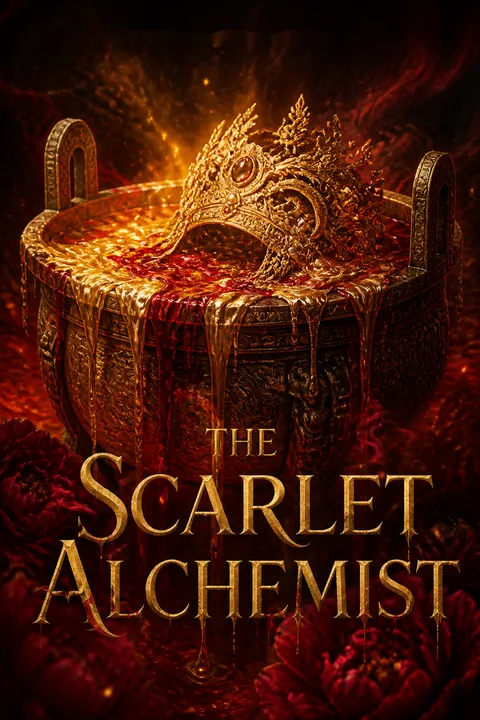


Plot Summary
Prologue
As a child, Zilan sees Chang’an’s five dark gates beside her parents, then falls through a world that seems to come apart. She wakes in Guangzhou, but the dream remains more solid to her than the explanations her parents offer.
Her mother later dies, and her father disappears. Years afterward, Zilan still remembers the gates and the forgotten words her father spoke, though she cannot yet understand why that memory follows her.
The opening makes memory feel less like a record than a wound that has not healed. Zilan’s vision of the gates arrives before she can interpret it, establishing a split between what her conscious mind knows and what her body remembers. Her parents’ changed attention, followed by their absence, gives the dream emotional weight without explaining it away. The gates also turn the book’s central boundary, between life and death, into an image that precedes its magic system. The prologue asks the reader to hold uncertainty rather than solve it, so later revelations can change the meaning of Zilan’s earliest memory.
A Price for the Dead
In Guangzhou, seventeen-year-old Fan Zilan secretly raises the dead for wealthy clients while helping her cousins Wenshu and Yufei run their family’s funerary-figure shop. She revives Gou Jau Gam despite his badly decayed body, collecting a steep fee and concealing the danger from her aunt and uncle.
That night, a stranger finds her at a well, recognizes her reputation, and offers one hundred thousand gold for a resurrection. He then admits that he expects to die and wants Zilan to bring him back. She refuses to abandon her coming alchemy examination for a job she cannot yet understand. The refusal keeps her future hers, at least for now, while the stranger’s urgency makes Chang’an feel suddenly close.
Zilan treats death as both a craft and a marketplace: she sets fees, refuses bad conditions, and tells herself that money is the only consequence she can control. Her work is not simply greed. It is a response to poverty, family illness, and a society that prices survival according to status. The stranger’s offer exposes the limit of that practical code. His fortune could ease her family’s suffering, but accepting would mean surrendering the exam that represents a future not purchased by someone else. Her refusal is a small assertion of agency, and it begins the conflict between ambition and obligation that will keep narrowing around her.
The Cage Exam
Zilan studies alongside Wenshu and Yufei for examinations that might lift the three of them out of Guangzhou’s hunger and punitive taxes. At the southern alchemy trial, officials mark her as foreign-born and withhold the stones given to every other candidate. When the other competitors harass and strip her, she turns one attacker’s blood into an iron blade and cuts herself free, though she appears too late to qualify.
The result list surprises her: prejudice has not erased her score, and she ranks second. Wenshu and Yufei also pass their scholarly round. The three cousins decide to leave together for Chang’an, buying horses and accepting the risk of a long journey because a place in the capital could support the family they leave behind.
The cage makes institutional exclusion physical: Zilan is admitted to the test only to have its materials withheld, then is punished for improvising within the rules the judges denied her. Her escape demonstrates resourcefulness, but the exam’s delayed recognition shows that competence alone does not guarantee fair treatment. The cousins’ decision to travel together turns individual advancement into a fragile family project. Their ambition is practical, yet it also depends on a promise of belonging. Zilan’s rank offers a route upward, but it does not undo the humiliation that taught her how quickly official systems can make a person fight for the right even to compete.
The Family’s Secret
On the road north, a rich magistrate and his men attack the cousins after trying to claim Yufei. Zilan and Yufei fight back, and Wenshu kills the magistrate with a fire poker; the three flee before the authorities can retaliate. The danger recalls the event Zilan has kept from them: years earlier, Wenshu and Yufei stopped breathing, and she used her father’s notes and forbidden bloodstone alchemy to bring them back.
She carved their names into their spines to tether their souls. They have lived beside her ever since, but Zilan has never known what price the resurrection exacted. Their escape toward Chang’an now carries more than exam hopes. They are three people bound by an act of love whose consequences none of them understands.
The attack confirms that the cousins’ closeness is not sentimental decoration; it is a survival strategy in a world where wealth can turn people into property. The revelation of Zilan’s childhood resurrections complicates that bond. She saved the two people she loved most, but did so without knowing whether the act could remain a gift. Her secrecy protects the family from fear while also isolating her from the very people she wants to keep. The body becomes an archive of love and danger, with the soul tags preserving a decision that the children were too young to consent to or question.
Five Gates in Chang’an
After weeks on the road, Zilan, Wenshu, and Yufei reach Chang’an nearly out of money. Zilan secretly multiplies a coin to pay the city toll, but the counterfeit gold turns to ash, forcing them to flee the guards through crowded streets.
During the confusion, she glimpses Empress Wu and sees the five archways from her childhood vision. The procession also reveals the emperor’s young-looking daughters, publicly despised as the children of a supposed traitor.
The cousins are eventually directed toward a royal welcome for exam candidates, but officials refuse them entry because their clothes mark them as poor southerners. They sleep outside the wealthy wards instead. Zilan finds bloodied pearls in the dirt, an unsettling clue she pockets rather than discard.
Chang’an offers the cousins the scale of opportunity they imagined, but its gates immediately sort people by money, dialect, and appearance. Zilan’s counterfeit coins are a tiny act of invention that secures entry while making her a fugitive. The five arches disrupt her sense of time and place, suggesting that her personal past is entangled with the capital’s hidden history. Meanwhile, the bloodied pearls place material wealth beside bodily harm. The city’s glitter is not an innocent backdrop: it is a system that admits some people as owners and others as expendable intruders.
Pearls in the Library
At the candidates’ welcome, Zilan recognizes the man from Guangzhou as Crown Prince Li Hong, the stranger who had asked her to resurrect him. His public greeting makes the other alchemists suspect she has been favored.
When the royal librarian confiscates her stones, someone later kills him and scatters her collection; the bloodied pearls she found outside are missing. Zilan and her cousins leave before guards can blame them, but she cannot dismiss the pattern.
At a training session, Zheng Sili, the hostile alchemist from her first exam, attacks her and she wins by transforming his pearl tooth, worsening her isolation among the competitors. In the crowded city, Zilan also sees a strange, pale man feeding on a pig. Her cousins doubt her account, but the pearl evidence now points toward a threat.
Zilan enters the capital with technical skill but no social protection. Li Hong’s recognition gives her visibility, yet that visibility is immediately recoded as sexual favor rather than achievement. The dead librarian and missing pearls sharpen her instinct for evidence: she has learned to read materials because powerful people often control the official story. Her fight with Zheng Sili shows the cost of using the tactics that keep her alive; she can win an encounter and still lose trust. The grotesque man extends this conflict beyond human prejudice, hinting that the capital’s polished surface is being maintained by something literally predatory.
A Barrel of False Gold
For the second alchemy trial, each candidate must identify one genuine piece of gold hidden in a barrel of counterfeits. Zilan tests the pieces by weight, touch, and whether they sink in water, using the ordinary methods she learned while checking customers’ coins in Guangzhou.
She is the last candidate working, and the officials dismiss her conclusion that her entire barrel is fake. When one produces a supposedly genuine sample, Zilan bites it and breaks a tooth without bending the metal.
The Moon Alchemist orders the judges to verify the result, exposing their fraud and allowing Zilan to advance. A palace healer offers to replace her tooth with gold, but Zilan refuses. Li Hong’s kindness does not erase the court’s corruption, though it begins to complicate her distrust of him.
The trial pits embodied knowledge against credentialed expertise. Zilan’s merchant habits, dismissed as low-status labor, provide the more reliable test, while the judges use institutional authority to redefine falsehood as truth. Her broken tooth is both evidence and cost: she has to damage herself to make the system acknowledge what she can already see. The Moon Alchemist’s intervention matters because it is not charity; it is a demand that procedure answer to reality. Zilan’s refusal of a gold tooth also marks a boundary. She will accept recognition, but she resists being remade in the image of the people who have always held power.
The Dungeons Below
After the city burns an innocent girl as a suspected fox spirit, Li Hong comes to Zilan for help rescuing his half-sisters, Princesses Yiyang and Gao’an, from the royal dungeon. Zilan agrees after securing a large payment for her family.
She and the prince cross the palace’s underground escape tunnels, evade guards, and use a fire in a military storehouse as cover to reach the cells. There they free the girls and learn the prince believes his mother, the Empress, killed her own infant daughter and is eliminating rivals to keep power.
He suspects his relatives’ deaths and repeated attempts on his life are part of the same campaign. Zilan leaves the tunnels knowing the palace’s danger is not rumor. By helping Li Hong, she has tied herself to a secret that could cost them both their lives.
The rescue shifts Zilan from an observer of Chang’an’s violence to a participant in its political machinery. Her choice is still transactional, but the children’s vulnerability reaches the part of her that has spent years trying to keep family alive. Li Hong’s confession exposes the gap between public legitimacy and private power: the heir has a title, but his mother controls the guards and the story of the royal family. The tunnels make this imbalance spatial. The prince knows hidden routes through his own palace because he cannot safely move through its official corridors.
The Scarlet Alchemist
At the final examination, Empress Wu commands the candidates to create a living creature from stones alone and warns that those who fail will not leave the palace. Zilan combines all five elemental stones with blood and her own qi, nearly losing herself in the transformation.
The result is a living duck, the first successful creation in years. The Empress names Zilan the Scarlet Alchemist, bringing her into the royal service she has pursued. She stumbles through the palace, following the duck, and finds a two-faced creature emerging from a murdered court woman.
The monster’s pearl-hard body defeats her firestones. Li Hong shelters Zilan and admits that the royal alchemists create such creatures for the Empress. Her hard-won title is therefore also an entrance into a violent secret.
The duck makes Zilan’s triumph intimate and unsettling. She succeeds not by mastering a clean formula but by risking her own life, which echoes the desperation that drove her childhood resurrections. The Empress rewards the result by renaming her, turning recognition into possession: Zilan gains status, but that status comes with a new claim on her labor. The monster waiting inside the palace punctures the fantasy that achievement will place her safely above the cruelty she has witnessed. Her success does not free her from the system. It gives the system access to her skill.
A Feast of Threats
Li Hong’s rescued sisters are moved to a convent, while Zilan begins training with the Moon Alchemist and learns that palace alchemists make monsters from resurrected bodies. At a formal dinner, Empress Wu measures Zilan, mocks her southern dialect and foreign parentage, and serves her food laced with a sedative.
The Empress’s questions draw out that Zilan came to Chang’an with Wenshu and Yufei, making her family newly vulnerable. Li Hong gets her out, but Zilan rebukes him for treating his mother’s violence as something he cannot challenge. When she later tries to draw Wenshu and Yufei into a plan against the Empress, they refuse and tell her to sever ties with them. The court has isolated her from the family she hoped to protect.
The dinner is an interview disguised as hospitality. The Empress uses Zilan’s body, speech, and appetite as instruments of classification, then uses the drugged meal to make extraction feel like consent. Li Hong’s presence offers comfort but not yet resistance; Zilan recognizes that sympathy without action can preserve the very danger it mourns. Her cousins’ refusal is likewise not simple rejection. They understand the unequal risks of the palace more clearly than Zilan does, but their attempt to protect themselves lands on her oldest fear: that family can withdraw belonging when she becomes difficult to keep.
The Name Beneath
A sapphire-skinned monster attacks Li Hong, and Zilan stops it by scrubbing away the soul tag burned into its back. Afterward, their growing intimacy falters when the prince notices a faded name scarred between Zilan’s shoulders. The Moon Alchemist confirms that it reads Su Zilan and reveals that she revived Zilan as a child, after an imperial horse brigade crushed her in Chang’an.
Zilan’s parents accepted the danger and spent their remaining years near her; her father later returned north seeking help for her dying mother. The Moon Alchemist explains that resurrected people drain qi from those who love them. Zilan realizes her family’s illnesses may be the price of her own and that she has been living on borrowed life without knowing it.
The revelation overturns Zilan’s account of herself without erasing the person she has become. Her birth name and soul tag preserve an earlier identity, while the name Fan marks the family that raised her and the life she chose. The Moon Alchemist’s explanation makes resurrection ethically intimate: the cost is not an abstract balance but the slow depletion of loved ones. Zilan’s deepest fear, that she is tolerated rather than loved, now collides with evidence that her family may have been sacrificing themselves for her. The knowledge threatens both her self-image and the relationships she believed she had already lost.
A Family Taken
After learning the truth about her resurrection, Zilan runs to Wenshu and Yufei’s quarters, hoping they will help her understand what she has become. They are gone, their belongings scattered, and an imperial note taunts her from the wall. The Empress has taken them. Zilan is too shaken to plan alone, and the Moon Alchemist first refuses to discuss rebellion, then secretly brings her to a coalition of royal alchemists already plotting against Wu.
They need the Empress’s blood to turn her own pearl monsters against her guards. Zilan agrees to obtain it, hoping the coup will also free her cousins. The alliance gives her a chance to act, but it rests on secrecy and on the belief that the Empress can still be surprised.
The empty room makes absence more frightening than a visible threat. Wenshu and Yufei’s scattered possessions suggest a hurried removal, while the note converts Zilan’s private panic into deliberate political leverage. The Moon Alchemist’s shift from reprimand to recruitment reveals that caution can be both wisdom and complicity. The coalition is not born from abstract unity; its members have each survived by hiding their dissent until a usable opportunity appears. Zilan joins them with an urgent personal aim, but the plan demands that she trust people who have withheld crucial knowledge from her before.
Blood Through Gold
Zilan and Li Hong first plan to poison the Empress, but the kitchen is destroyed before they can dose her tea. Later, Zilan notices that gold thread can carry alchemy from the prince’s hand to a cup or plate. Their first dinner attempt cracks the wrong dish. When the Empress humiliates Li Hong, Zilan uses his blood as a conduit, breaking down the life gold on his plate into iron.
The Empress bites the metal and injures her mouth. Zilan steals the bloodied cloth and extracted tooth from the healer, then gives the material to the rebel alchemists. She believes she has supplied the Empress’s blood. In fact, Wu has substituted the rebels’ blood, turning the evidence of Zilan’s success into the mechanism of their betrayal.
Zilan’s improvisation transforms the court’s defining substance, gold, into a path through which its violence can be answered. The scheme depends on observation rather than superior force: she reads the table, the prince’s jewelry, and the contents of his blood as linked materials. Yet the operation also exposes the limits of cleverness when information is controlled by the antagonist. Zilan obtains a genuine victory, drawing blood from the Empress, but cannot verify what happens to it afterward. Her mistake is not a lack of skill; it is trusting that a visible trace tells the whole story.
The Coup Turns Red
When the rebels release the pearl monsters, they feed them the blood Zilan supplied, believing it belongs to the Empress. Wu has substituted the alchemists’ own blood, so the creatures attack their makers instead. The palace erupts as prisoners and monsters clash with the guards. The Paper Alchemist confronts Zilan over the mistake, and a monster kills her before Zilan can intervene.
Zilan and Li Hong search for the Emperor, only to learn in the throne room that he has been dead for months and that Wu has hidden his death to preserve her rule. She also reveals that Wenshu and Yufei are dead, displaying their soul tags as proof. The failed coup has cost Zilan her allies, her cousins, and the hope of a clean transfer of power.
The coup’s collapse turns a procedural error into a moral catastrophe. Zilan’s confidence in evidence is shattered when the Empress manipulates the chain of custody itself, making the rebels’ resource their weapon against them. The Paper Alchemist’s death gives the failure a face and a relationship, not merely a casualty count. Wu’s disclosure about the dead Emperor and the cousins’ soul tags then removes the political and personal futures that had organized Zilan’s choices. The revelation is designed to make resistance feel pointless. The Empress’s most effective weapon is not immortality, but the ability to make other people believe their sacrifices have already failed.
The Scarlet Pearl
Wu cages Zilan and threatens Li Hong, offering to spare him if Zilan helps make more life gold. Li Hong refuses to live as her hostage and turns Wu’s knife toward himself. Zilan throws him a spool of gold thread, giving him the opening to break free, but Wu slits his throat.
Rather than submit, Zilan swallows a bloodied pearl and transforms into the kind of monster she has feared, breaking her cage and killing the Empress by tearing into her throat. Guards cut out Zilan’s soul tag, but she carves Fan Zilan’s name into her own arm and survives. She then retrieves Yufei’s soul into Wu’s body and brings Wenshu back in Li Hong’s body. Li Hong’s soul remains missing, leaving victory incomplete.
Zilan’s choice is not a triumphant embrace of power; it is a decision to accept the cost she has spent the book trying to control. By becoming a pearl creature, she uses the Empress’s own technology against her, but risks losing the self that made resistance meaningful. Rewriting her soul tag as Fan Zilan turns identity into an act of authorship rather than an inherited label. Her resurrections afterward preserve family at terrible cost and leave an unresolved absence: Wenshu lives in Li Hong’s body, while Li Hong himself is not restored. The victory refuses the fantasy that love can make every loss reversible.
A Kingdom Without Gold
With the Empress dead, Yufei governs from Wu’s body and halts life-gold production. She lowers taxes in the south and orders rice sent to families in need, while Wenshu handles legislation, funerals, and the repair of the damaged palace. Zilan withdraws from court life, grieving the alchemists she could not save and the prince whose soul is still absent.
Wenshu finds more of Zilan’s father’s notes about Penglai Island and a possible elixir that could change alchemy’s rules. Zilan and Wenshu leave Chang’an to search for it, while Yufei stays to steady the new government. Zilan’s next journey is chosen freely, but she carries the dead with her as a promise to try again.
The political resolution rejects the assumption that removing a tyrant automatically repairs the structures that sustained her. Yufei’s reforms answer material deprivation directly, while Wenshu’s administrative labor gives those promises a practical form. Zilan’s withdrawal is not indifference; it is grief, exhaustion, and the recognition that she cannot govern every consequence at once. The journey toward Penglai keeps the ending open without making the revolution meaningless. The search may restore lost lives, but it also risks repeating the very desire to overrule death that powered the Empress’s cruelty. Zilan leaves with hope, though no longer with the innocence that once made resurrection seem simple.
Analysis
The Scarlet Alchemist builds its fantasy around a question that its heroine first refuses to ask: what does it mean to save someone? Zilan learns resurrection as a practical skill, one she can charge for and use to protect the people closest to her. The later discovery that the revived drain qi from their loved ones turns that apparent miracle into a distributed cost. Care becomes ethically difficult because its consequences fall on people who never agreed to pay them. This is the story’s most consequential challenge to heroic rescue: good intentions cannot make a harmful system harmless.
The novel binds that question to political economy. Life gold gives the elite control over aging, while the poor sell the dead, absorb exploitative taxes, and watch their children suffer. The Empress’s immortality is not an isolated magical achievement; it is sustained by an apparatus that converts vulnerable bodies into state resources. Zilan’s own ambition initially points toward entry into that apparatus. She wants security, recognition, and the freedom to practice, but the court offers each of these only in exchange for obedience. Her rise therefore exposes the ambiguity of meritocracy: she can outthink the examiners and still be recruited into their violence.
Names and bodies form a second political language. Zilan’s family name, her original name, and her alchemical title each describe a different claim on who she is. Soul tags make that claim material, while the Empress’s monsters show what happens when a person is reduced to a useful body. Zilan’s decision to rewrite her own tag makes identity neither a fixed inheritance nor a simple act of self-invention. It is a relationship among memory, chosen kin, and responsibility.
The ending does not declare resurrection evil or promise that love can undo every death. Instead, it distinguishes the desire to preserve power from the desire to repair harm. Yufei’s reforms answer material need; Zilan’s departure acknowledges unfinished grief and the danger of believing that one brilliant act can restore everything. Hope remains, but it now has to reckon with cost.
Review Summary
Reviews for The Scarlet Alchemist are largely positive, averaging 4.01/5. Readers praise the immersive Tang dynasty alternate-history setting, the unique blood/death alchemy magic system, and the compelling protagonist Zilan, whose fierce determination and family loyalty resonate despite her flaws. The fast-paced political intrigue and dark, gory atmosphere earn consistent acclaim. Common criticisms include underdeveloped side characters, a rushed romance, and a divisive ending that some found forced. Many readers eagerly anticipate the sequel.
People Also Read



Characters
Fan Zilan
The defiant life alchemistZilan is a poor Guangzhou merchant’s daughter, a gifted alchemist, and a practical young woman who has learned to price her labor because compassion alone cannot feed her family. Her ambition to enter the royal court is bound to a wish for security and recognition, especially after her father’s absence and the contempt she faces as a hùnxiě. She is quick to improvise, blunt with authority, and more emotionally vulnerable than her hard bargains suggest. Her central conflict is not whether she cares, but how much care should cost when every rescue seems to demand another sacrifice. She keeps testing the boundary between clever survival and responsibility for the harm her choices can cause.
Li Hong
The endangered crown princeLi Hong is the gentle, anxious heir to an empire that grants him enormous status but little practical safety. He is curious about ordinary lives, attached to his ducks, and more comfortable studying than commanding, which makes him easy to underestimate. His attraction to Zilan grows from genuine respect for her skill, though his wealth initially blinds him to how insulting offers of money or leftovers can feel. He wants to be chosen freely rather than obeyed through rank, but that idealism can shade into passivity when action carries political cost. His relationship with Zilan forces him to confront the difference between feeling concern for the vulnerable and taking responsibility for them.
Wenshu
The cautious scholar cousinWenshu is Zilan’s older cousin, a disciplined reader with a sharp memory and a deep investment in practical plans. He values education because it offers a rare route out of the family’s poverty, and his caution often protects the cousins from dangers that Zilan would rather confront. His tidiness, anxiety, and constant scolding can make him seem controlling, but they also reveal how much responsibility he feels for the people around him. He loves his family while fearing that reckless choices will destroy their chance at a stable future. His bond with Zilan is affectionate, competitive, and strained by the fact that they define protection in different ways.
Yufei
The fearless scholar cousinYufei is Zilan’s cousin and Wenshu’s sister, a blunt, strong young woman who resists the marriages and manners others try to impose on her. She is physically bold, irreverent about food and danger, and often quicker than Wenshu to act when someone threatens her family. Her apparent indifference conceals fierce loyalty, but she does not automatically endorse Zilan’s plans. Yufei wants room to choose her own life, not merely to escape poverty by becoming someone’s wife. Her relationship with Zilan carries the ease of shared childhood and the friction of two people who love one another yet fear different forms of captivity.
The Moon Alchemist
The formidable royal mentorThe Moon Alchemist leads the royal alchemists and commands a reputation built on extraordinary skill, precision, and long experience. She is disciplined, unsentimental in her instruction, and wary of anyone who treats dangerous alchemy as a simple answer to grief. Her severity can look like cruelty, yet it is shaped by the knowledge that power in the palace always has a price. She recognizes Zilan’s ability without flattering her and expects her to understand the consequences of her craft. Their relationship places mentorship beside mistrust: the Moon Alchemist can open doors to knowledge while also embodying the compromises required to survive inside the court.
Empress Wu
The immortal court rulerEmpress Wu is the empire’s brilliant, commanding ruler, preserved by life gold and accustomed to making people and institutions serve her designs. She reads others closely and understands that fear, status, and appetite can be used as tools of government. Her fascination with alchemy is inseparable from her desire to secure power indefinitely. She sees talent as something to cultivate only when it can be controlled, and she treats dissent as a threat to be managed rather than an argument to answer. Her presence forces Zilan to confront the political consequences of her own ambition and the possibility that skill can be recruited into systems of harm.
Zheng Sili
The bitter exam rivalZheng Sili is a successful southern alchemist who treats Zilan as an illegitimate competitor. He mocks her poverty and gender, then relies on formal training and physical aggression to assert his superiority. His hostility reflects the way a person can benefit from an unfair system while still feeling threatened by someone who succeeds outside its preferred path. He is skilled, proud, and quick to interpret a challenge as an insult. His rivalry with Zilan repeatedly tests the difference between technical competence and the judgment needed to use it responsibly.
The Paper Alchemist
A clever rebel craftswomanThe Paper Alchemist is one of the royal alchemists who helps train Zilan and takes part in the quiet resistance to the Empress. She is inventive, teasing, and alert to the practical uses of an opponent’s habits. Her lessons encourage Zilan to fight strategically rather than answer every insult with force. Beneath her playful manner lies a clear understanding of how dangerous dissent can be in the palace. She offers Zilan a rare experience of being taught without being dismissed, making their connection an important model of professional respect.
The River Alchemist
A watchful rebel healerThe River Alchemist is a warm, observant member of the royal alchemists who helps Zilan learn to approach danger with patience and economy. She is curious about Zilan’s unusual work and understands that a transformation’s visible result may conceal a much greater risk. Her kindness is cautious rather than naïve; she knows how closely the court watches its servants. Through her, Zilan glimpses a community of skilled outsiders who have learned to cooperate while living under the Empress’s control.
The Comet Alchemist
A volatile royal alchemistThe Comet Alchemist is a member of the royal alchemist circle, known for explosive work and a brash presence in the training grounds. She represents the range of personalities and specialties hidden behind the court’s controlled public face. Her role in the alchemist community shows that mastery can be unruly, collaborative, and more playful than the Empress’s formal examinations suggest.
Auntie So
Zilan’s adoptive auntAuntie So is Wenshu and Yufei’s mother and the adult who takes Zilan into her household after Zilan’s mother dies. She is practical, sharp-tongued, and attentive to the daily needs that keep a poor family functioning. Her care often arrives as food, work, and warnings rather than tender speeches. She wants her children to find security, but her expectations are shaped by a world that offers girls very few choices. To Zilan, Auntie So’s acceptance is precious partly because it has never felt entirely guaranteed.
Uncle Fan
The family shopkeeperUncle Fan is Wenshu and Yufei’s father and a maker of funerary clay figures. He is often ill and tired, yet he offers the younger generation practical advice and small acts of protection, including preparing Zilan for a dangerous journey. His blunt view of business teaches the children that survival often requires limits on generosity. Beneath that hard lesson is a deep attachment to the family and the fragile shop that supports them.
Zilan’s mother
The lost first homeZilan’s mother is remembered through intimate acts of care: braiding her hair, improving her meals, and offering a child the security of being loved. Her illness and absence shape Zilan’s fear that every attachment can disappear without warning. She remains a measure of tenderness against the transactional world Zilan learns to navigate.
Zilan’s father
The absent alchemy scholarZilan’s father is a Scotian alchemist whose notes become the foundation of her forbidden practice. He left behind a mixture of technical curiosity, ambitious theories, and a daughter who interprets his absence as abandonment. His work inspires Zilan even as her resentment pushes her to surpass him. He represents both the inheritance of knowledge and the emotional uncertainty that comes when a parent’s choices are hidden from a child.
Princess Yiyang
The elder hidden princessYiyang is Li Hong’s elder half-sister, a young royal whose composed manner masks the danger of living under the Empress’s suspicion. She retains a child’s curiosity even when adult politics determine where she can safely go. Her connection to Li Hong gives his struggle a personal dimension beyond succession.
Princess Gao’an
The younger hidden princessGao’an is Li Hong’s younger half-sister, lively and direct in her curiosity about Zilan. Her presence makes the royal family’s political conflict immediate and human, especially because she is too young to understand why the adults around her treat her as a threat.
Old man Gou
The paying resurrection clientOld man Gou is a wealthy Guangzhou client who brings Zilan his brother’s corpse and expects money to buy a return to ordinary life. He is impatient, entitled, and unwilling to consider the discomfort his brother may endure. His demand forces Zilan to face the gulf between restoring a body and restoring a person.
Plot Devices
Qi and the five elements
Alchemy’s costly engineAlchemy works by drawing elemental properties from stones into the practitioner’s qi, then using that energy to alter matter. The five elements shape different transformations, while blood can serve as a route to life energy. Every working carries a cost, though Zilan initially believes small successes can be separated from larger consequences. This device makes magic tactile and strategic: a stone’s material, the practitioner’s intention, and the available catalyst all matter. It also gives the story its ethical pressure, since power is never merely a tool. A transformation changes the world by taking something from a body, a resource, or a relationship.
Soul tags
Names that tether soulsA name carved or written onto a resurrected body anchors its soul to that body. The tag can be hidden, damaged, or removed, and it gives the story a physical way to represent identity as something both intimate and vulnerable. Zilan uses names in her own resurrections without understanding the full system behind them. Soul tags later become evidence of past choices and a target in fights against monsters. The device ties identity to action rather than to bloodline alone: a name can be imposed, inherited, chosen, or rewritten, but each alteration has consequences.
Life gold
Immortality’s gilded bargainThe wealthy consume alchemically produced gold to halt aging, creating a society in which the ruling class can preserve its bodies while ordinary people struggle to afford food and funerals. Gold functions as currency, status symbol, and bodily substance, binding economic inequality to magical power. The Empress’s court depends on continued production, and its appetite for life gold drives the exploitation of corpses and qi. The device turns immortality into a political economy rather than a private miracle. It also makes gold’s apparent purity deceptive: its shine conceals the bodies and labor required to sustain it.
The five gates
A recurring memory thresholdZilan repeatedly sees five great archways in dreams, fainting spells, and moments of danger. The visions connect her childhood memory to Chang’an before she understands why the place feels familiar. They interrupt the linear journey with fragments of another time and make the boundary between the living world and the river of souls feel permeable. The gates are not simply a prophecy or a map. They are a signal that Zilan’s own history has been altered, and their meaning becomes clearer as she learns what happened to her body and soul.
Imperial examinations
A ladder built to excludeThe staged examinations offer Zilan and her cousins a route from poverty into government and royal service. Their tests reward memory, practical skill, and improvisation, but officials also manipulate access according to class, region, gender, and ancestry. The exam structure creates clear milestones while showing that merit is never assessed outside politics. Zilan passes by applying knowledge learned through work, not formal schooling, and each success brings her closer to the very institution that will try to own her skill. The trials therefore function as both plot engine and critique of mobility that promises fairness while controlling who may rise.
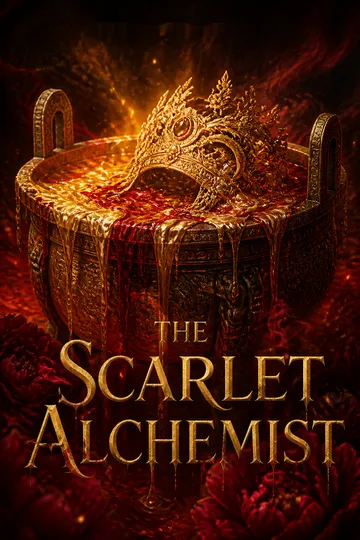
The Scarlet Alchemist Series
Download PDF
Download EPUB
.epub digital book format is ideal for reading ebooks on phones, tablets, and e-readers.








