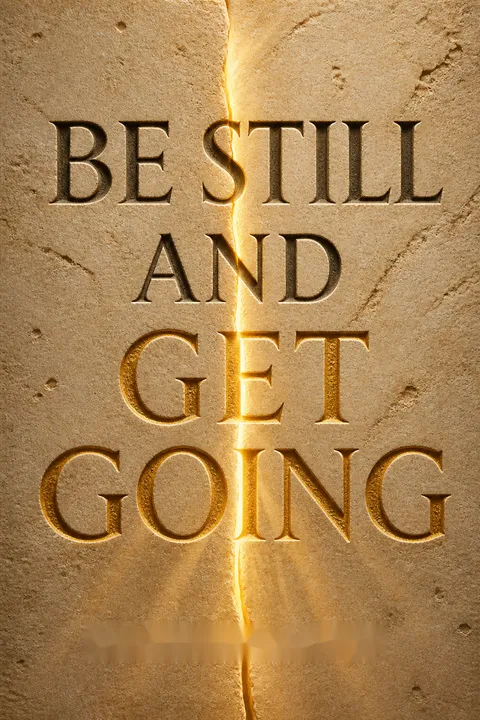


Key Takeaways
Look for spiritual treasure in the daily practices already within reach
The treasure is nearby. A Yiddish story tells of Azyk, who travels to Warsaw after dreaming of treasure beneath a bridge. A watchman says he dreamed of treasure in Azyk’s oven. Azyk returns home, opens it, and finds his fortune. Later tellers moved the treasure beneath the house, making it seem hidden and exotic. Alan Lew argues the oven matters: spiritual riches may be found in ordinary, frequently used places, not secret doctrines.
Practice makes it visible. At Makor Or, Lew and Zen teacher Norman Fischer joined mindfulness meditation with familiar Jewish practices: prayer, Torah study, and Shabbat. The point was not to invent ancient techniques or collect mystical highs, but to become attentive enough to experience the depth already present in Jewish life.
The story does more than argue for religious loyalty. Its oven image suggests that attention changes the value of what is already available: the ordinary can become a site of discovery without being replaced by something novel. That is a generous model for spiritual exchange across traditions. Still, the claim that the Jewish sources contain a complete meditation path is Lew’s interpretive reading, not a neutral historical finding. Its practical force rests less on proving ancient intent than on whether the practice makes inherited rituals more awake.
Interrupt habit before it turns your life into something you barely feel
Habit dulls experience. Lew reads the Torah’s stories of Abraham, Jacob, and Moses as beginning with departures from home. Leaving the familiar, whether literally or inwardly, makes a person more receptive to what is happening now. He recalls an experiment in which ordinary participants grew less responsive to a repeated bell, while Zen meditators reportedly responded to each ring as if it were new. The contrast illustrates habituation: experience continues, but attention stops registering it.
Practice rehearses departure. Meditation creates a daily break from automatic living by returning attention to posture and breath. Yet Lew does not romanticize crisis. Illness, loss, or upheaval can interrupt routine, but without practice they can just as easily overwhelm someone. Regular meditation prepares people to meet disruption with more awareness, rather than assuming that pain automatically produces insight.
This account links contemplative practice to a familiar problem in psychology: repeated stimuli lose salience when attention is not renewed. The useful move is not to chase novelty, but to recover contact with what has become routine. The distinction matters because constant stimulation can imitate wakefulness while leaving perception shallow. Lew’s emphasis on daily repetition also keeps the idea grounded. A caveat is necessary: crisis does not reliably make people wiser. Preparation can support a response, but it cannot guarantee one.
Let meditation transform your sense of place, self, and God
Awareness changes the landscape. Lew reads three Torah encounters as a sequence of transformation. In Jacob’s ladder dream, the place Luz becomes Bethel, the House of God: attention makes the ground itself feel sacred. In Jacob’s night struggle, he receives the name Israel, facing a difficult part of his own nature rather than projecting it onto others. In Moses’s encounter with the burning bush, God’s name points toward being and becoming in the present.
Meditation follows a similar movement. Attention first settles into the body and breath, making the immediate world vivid. Wandering thoughts then reveal recurring concerns and traits the meditator might prefer not to face. Finally, attention opens toward the sense that presence is larger than any one thought or identity. Lew presents this as a spiritual path, not as a claim that every session delivers a revelation.
The sequence offers a compact map of contemplative change: perception of surroundings, acceptance of the self, and a revised sense of the sacred. Its strength is that transformation does not require leaving the body or rejecting ordinary life. The biblical stories remain active partners in the practice. The interpretive risk is flattening richly different narratives into stages of one psychological process. Read as a practical lens rather than the sole meaning of these stories, the sequence invites attention without closing down other readings.
Let suffering teach, without pretending every wound has a purpose
Pain can expose reality. Lew draws on the Buddhist account of suffering, especially the idea that resistance to experience can intensify distress. During years of painful meditation, he found that attending closely to a sensation sometimes changed his relationship to it. He also tells of Eve, whose fear of losing her stepdaughters became clearer when their birth mother repeatedly returned and left. The events did not create every insecurity, but brought an existing vulnerability into view.
Meaning has limits. Jewish texts sometimes frame affliction as a possible spur to reflection or as a blessing understood only in retrospect. But Lew also emphasizes suffering that cannot be explained away, especially the death of a child. In a Talmudic story, healing comes not from a tidy explanation but from one person offering another a hand. Presence can help where interpretation cannot.
The section is strongest when it holds two truths together: attention can change the experience of pain, and some losses resist any redemptive account. That distinction protects spiritual practice from becoming a blame system in which sufferers are told to find the lesson they supposedly deserve. The emphasis on compassionate presence also gives care a concrete form. It does not solve grief or illness, but it can reduce the added burden of facing them alone.
When conflict repeats, investigate the need beneath the accusation
Patterns point inward. Genesis traces conflict from Adam and Eve’s inner struggle, to Cain’s violence against Abel, and then to humanity’s collective ambition at Babel. Lew sees a widening spiral: unresolved inner conflict gets projected onto other people and eventually shapes whole communities. Isaac’s repeated disputes over wells help make the pattern visible. The first well is named for external contention; the next name points toward enmity within the self; a later well is associated with spaciousness.
Repetition is evidence. Lew describes discovering that rivalries followed him through poetry, Zen practice, and rabbinic work. The people and settings changed, but his hunger for recognition remained. Looking beneath the arguments revealed old feelings of neglect and a universal longing for love. This is not a command to blame oneself for every dispute. It is an invitation to notice what recurring conflicts touch, and what need they may conceal.
The shift from accusation to underlying need resembles a useful move in mediation: separating stated positions from the interests and vulnerabilities beneath them. It can loosen the zero-sum feeling that each side must win the argument to receive care. But inward inquiry should not erase accountability. Some conflicts involve real abuse, unequal power, or material harm. Self-understanding is valuable alongside boundaries and justice, not instead of them.
In panic, gather attention before deciding what the moment requires
Fear can invent its enemy. At the Red Sea, the Israelites see Pharaoh’s approaching army and panic. Lew interprets the scene as more than a military threat: the people are reacting to the terrifying image of Egypt formed by years of enslavement. He distinguishes imagined fear from the awe that can arise when a person feels suddenly exposed to greater intensity or possibility.
Clarity comes before action. Lew turns the biblical scene into a practical sequence: stop obeying panic, collect scattered attention, look at what is actually happening, become still enough to see clearly, then take the next necessary step. He compares this to the moment he left law school despite his parents’ expectations. He lay awake expecting his life to end, then discovered in the morning that the feared catastrophe had not occurred. Stillness did not remove the dilemma; it made another life imaginable.
The sequence is useful because it places perception between emotion and action. Fear is treated as real information about a person’s state, but not automatically as an accurate forecast. That distinction can prevent impulsive decisions while preserving the possibility that danger is genuine. The final move matters too: reflection is not meant to become endless postponement. The method is most responsible when checking the facts includes outside help, especially in situations involving actual threats or urgent consequences.
Treat fear around your calling as a threshold, not a verdict
A life can be chosen into shape. Lew holds destiny and free will together: people may have distinctive gifts and tasks, yet can refuse to act on them. A Talmudic story tells of Rabbi Akiva’s daughter, whom astrologers predicted would die from a snakebite on her wedding day. She survives after secretly feeding a poor visitor. The story suggests that actions can alter the course of what seems destined.
Calling is not a job title. Lew connects vocation with the activities that make a person feel fully engaged. He recounts Lawrence LeShan’s patients, including a man who found meaningful work answering travelers’ questions at a roadside information booth. Lew also warns against turning such stories into claims that people cause their own cancer by failing to fulfill a vocation. The useful question is what kind of work expresses a person’s capacities, not whether illness proves a failure of purpose.
This account makes vocation less about prestige and more about the fit between a person’s abilities and the work they can sustain with care. It also recognizes that fear may accompany a meaningful choice because there is something to lose. The caution around illness is essential: purpose can enrich a life, but disease is not evidence of moral or vocational failure. Circumstances, access, family needs, and chance all shape which paths are realistically available.
Listen to desire before obeying it or trying to erase it
An impulse carries information. Lew argues that desire is not automatically sinful or wise. It may point toward a legitimate need, such as intimacy, recognition, or meaningful work, while acting on it carelessly can harm others. He tells a story of a lonely religious man whose fixation on a princess, after a misunderstanding, becomes sustained contemplation and eventually spiritual devotion. The episode suggests that even an unruly impulse can be redirected toward something deeper.
Attention creates a third option. Instead of suppressing a desire or immediately satisfying it, Lew recommends observing it closely. In his own life, a strong need for attention once felt shameful. He later saw that it had also helped him speak publicly and organize people around causes he valued. This does not make every desire virtuous. It makes awareness a way to distinguish the underlying need from a harmful method of meeting it.
The distinction between impulse and action is ethically important. Shame can hide a need, while immediate gratification can turn that need into damage; attention offers room for choice. The approach also resists treating desire as a command from the self’s deepest truth. Some impulses are fleeting, contradictory, or shaped by circumstances. Listening carefully means asking what a desire is signaling, then deciding whether its proposed expression is fair to others.
Use breath to experience impermanence without mistaking emptiness for nothing
Life is a flow, not a fixed possession. Lew uses the Kabbalistic term Ain Sof for God’s endless, unbounded nature. In his reading, the world arises from a charged emptiness, and the Hanukkah oil story can be read as light appearing even when there is not enough oil for one day. The image shifts the miracle from lasting longer than expected to arising from almost nothing. The Temple’s innermost chamber likewise centers on a powerful empty space.
Breath makes the idea tangible. Each breath arrives, sustains life, and leaves; the next comes without being commanded. Meditation lets attention follow this rhythm and notice how thoughts, feelings, and bodily states also change. Emptiness here does not mean that nothing matters. It means that no form is fully separate or permanent. Clinging to a fixed identity or moment can turn change itself into distress.
The image of emptiness is most useful when it challenges rigid identity without devaluing particular lives. A person can be changing and interconnected while still deserving concrete care, safety, and recognition. The breath gives the metaphysical idea an observable anchor, although breathing alone does not prove a theology of divine emptiness. The practice can be meaningful on experiential grounds, while the theological interpretation remains a matter of faith and tradition.
Read Torah for the moment it speaks into your life
Study can be a practice of attention. Lew reads a short section of the weekly Torah portion each day, often after meditation. He notices that a word or passage may suddenly feel unusually vivid, then finds that it resonates with a particular event in his life. The text and the moment illuminate each other. This resembles the Zohar’s image of Torah revealing itself briefly to a devoted reader, then withdrawing rather than yielding every meaning at once.
The practice is receptive, not arbitrary. Lew does not suggest that any personal association automatically proves what a text means. Regular study, shared tradition, and close reading give the encounter a frame. His own meditation background shaped how he read, but he also came to feel connected to generations of Jewish study. The goal is not only to extract information. It is to become attentive to how a sacred text changes the way life is seen.
This method treats reading as an exchange rather than a hunt for a single hidden answer. A text can prompt self-examination and help a reader notice a neglected feature of experience. That makes personal resonance valuable, but not self-validating: interpretations benefit from historical knowledge, communal discussion, and awareness of the reader’s own projections. The combination of intimacy and discipline is the safeguard. The text can speak personally without being reduced to a mirror.
Practice daily, with others, until attention becomes a way of living
Formal practice must travel. The Torah’s wilderness journey places the Tabernacle at the center of a community moving through hunger, complaint, fear, and conflict. Lew uses this image to ask how spiritual discipline can meet ordinary life. During a painful period with his rebellious teenage daughter, he and his wife found that the practice of releasing expectations and responding with attention belonged at home as much as on a meditation cushion.
Ritual builds continuity. Lew recommends daily meditation, prayer, Torah study, and Shabbat, practiced in community when possible. The early excitement may fade into boredom, but repeated practice can establish attention as a durable habit. Shared practice also counters the fantasy of being entirely separate from others. Its test is not a remarkable retreat experience, but whether greater awareness changes how one treats family, neighbors, strangers, and people in need.
The move from sanctuary to daily conduct is the book’s practical test of spiritual seriousness. Ritual is not valuable merely because it feels elevated; it matters when it changes a person’s attention and behavior amid friction. Community supports that continuity and makes interdependence harder to treat as an abstraction. Yet disciplined routine should not become a measure of spiritual worth. A practice serves life when it increases responsiveness, not when it becomes another standard for self-punishment.
Analysis
This book is part spiritual memoir, part reading of Jewish scripture, and part practice manual. Its central move is to place mindfulness beside ordinary Jewish observance rather than treating meditation as an exotic technique or Judaism as a cultural inheritance without contemplative depth. The oven story frames that move: the treasure is not a secret object buried elsewhere, but a capacity to notice what daily life already contains.
The book’s strongest practical thread is the conversion of attention into response. Breath anchors awareness; wandering thoughts expose recurring concerns; repeated conflicts reveal unmet needs; stillness makes action less reactive. The sequence connects inward practice with ethical life. It also gives traditional rituals a distinctive function: prayer, Torah study, and Shabbat become repeated ways of interrupting habitual perception and placing the self within a wider community.
Its interpretive method is deliberately personal. Biblical narratives become maps for meditation, while contemporary crises make the texts newly legible. This is spiritually productive, but it should not be mistaken for a claim that the texts were originally composed as mindfulness instructions. Their historical, legal, political, and communal meanings remain substantial. The most responsible reading holds both possibilities: Lew’s contemplative interpretation can be illuminating without exhausting the texts.
The book is careful about suffering, but its language of transformation can still be misused if detached from its cautions. Pain may sharpen attention, yet no person should be required to discover a lesson in illness, trauma, or bereavement. Lew’s emphasis on irredeemable loss and human presence supplies an important ethical limit. Likewise, vocation can organize a meaningful life, but it cannot explain why some people suffer or imply that they failed to become themselves. The enduring contribution is not a promise of control. It is a disciplined way to meet experience, accept uncertainty, and let awareness inform action.
Review Summary
Be Still and Get Going receives mixed reviews, with an overall rating of 4.19/5. Many readers find it illuminating and insightful, praising Lew's integration of Jewish spirituality with Buddhist concepts. Some appreciate its practical approach to meditation and Torah interpretation. However, critics argue the book lacks structure, is overly focused on the author's personal experiences, and may not be helpful for meditation beginners. Some readers find it dry or boring, while others consider it life-changing and deeply moving. The book seems to resonate most with those seeking to blend Jewish tradition with mindfulness practices.
People Also Read









Glossary
Ain Sof
God’s limitless beingA Kabbalistic term meaning the Endless or the unbounded nature of God, beyond form, description, and limitation. Lew uses it to describe the charged emptiness from which creation emerges and to which contemplative attention can become more attuned. It does not mean simple nothingness, but a reality beyond ordinary categories.
Hitbodidut
Inner spiritual solitudeA Hebrew term associated with physical separation or solitude that Lew also connects with meditation. In his account, the essential departure is often internal rather than geographic: a person steps away from habitual, scattered consciousness while remaining part of a human community. The term names a form of inward leave-taking.
Tzim-tzum
Divine contraction for creationA Kabbalistic concept describing God’s self-contraction or withdrawal as a condition for creation. In the account Lew presents, God’s limitless presence makes room for the universe by withdrawing from a central point. The image connects creation with emptiness and helps explain why the world is not simply identical to God’s undivided fullness.
Four Worlds
Stages of spiritual realityA Kabbalistic schema of four realms between material existence and the divine source: asiyah, action and physicality; yetzirah, formation, feeling, and language; briyah, conception and thought; and atzilut, spiritual emanation. Lew uses the sequence as a meditation map, beginning with body and breath and moving toward subtler dimensions of experience.
kavanat lev
Direction of the heartA Hebrew phrase Lew uses for mindful attention understood as a gentle directing of the heart. Rather than forcibly suppressing thoughts or feelings, the practitioner turns toward experience with awareness and compassion. This orientation allows impulses to be examined without immediately acting on them or condemning oneself for having them.
yisurin shel ahavah
Affliction born of loveA Talmudic phrase meaning suffering or affliction associated with divine love. It can refer to hardship understood later as a turning point or blessing, and to the idea that accepting suffering can alter its meaning. Lew emphasizes the danger of applying this explanation universally, since some suffering cannot honestly be redeemed or justified.
shlichut
A person’s life missionA Jewish concept of mission or being sent to fulfill a particular task. Lew connects it with the belief that people have distinctive capacities that can serve the wider world. Such a calling does not necessarily dictate a prestigious occupation or a single fixed career; people retain the freedom to accept, avoid, or reshape its expression.
Hineni
Present and preparedA Hebrew expression literally meaning Here I am. In the biblical and interpretive contexts Lew discusses, it signals more than physical presence: it conveys readiness, attention, and willingness to answer a demand or enter a responsibility. Figures such as Moses and Abraham use it at moments when a life task becomes unmistakable.
FAQ
1. What is Be Still and Get Going by Alan Lew about?
- Jewish Meditation Practice: The book introduces a meditation practice rooted in Jewish texts and traditions, integrating mindfulness with prayer, Torah study, and Sabbath observance.
- Spiritual Transformation: Alan Lew explores how meditation leads to transformation, moving from unconsciousness to awareness and from tension to relaxation, using biblical stories as metaphors.
- Practical Spiritual Guide: Rather than abstract theology, the book offers concrete guidance and exercises for daily spiritual practice.
- Accessible Wisdom: It makes ancient Jewish spiritual wisdom relevant and accessible to both Jews and non-Jews seeking meaning.
2. Why should I read Be Still and Get Going by Alan Lew?
- Unique Integration: The book uniquely blends Jewish tradition with contemporary meditation, offering a fresh, accessible approach to spirituality.
- Practical Tools: Readers gain actionable advice for managing fear, embracing destiny, and cultivating mindfulness in daily life.
- Transformative Perspective: Lew encourages a courageous embrace of one’s true self, offering a path to spiritual liberation through stillness and awareness.
- Universal Relevance: While rooted in Judaism, its insights are valuable for anyone on a spiritual path seeking deeper connection and meaning.
3. What are the key takeaways from Be Still and Get Going by Alan Lew?
- Stages of Spiritual Growth: The book outlines a journey from awareness of place, to self-acceptance, to divine presence, using biblical stories as a map.
- Daily Practice is Essential: Consistent meditation, prayer, and Torah study are emphasized as the foundation for real transformation.
- Embracing Suffering and Fear: Suffering and fear are reframed as catalysts for spiritual growth, not obstacles.
- Living in the Present: The ultimate goal is to saturate every moment with awareness, transforming ordinary life into sacred encounter.
4. How does Alan Lew define meditation in Be Still and Get Going?
- Transformation Through Practice: Meditation is described as a process of becoming—moving from unconsciousness to awareness, and from scattered to centered.
- Encounter with the Divine: It is a human encounter with God or the absolute, helping us become who we truly are.
- Daily Discipline: Lew stresses the importance of daily, disciplined meditation rather than occasional retreats.
- Mindfulness Focus: The practice centers on breath and body awareness, cultivating presence and stillness.
5. What are the key stages of spiritual transformation in Be Still and Get Going by Alan Lew?
- Sacred Place Awareness: Inspired by Jacob’s ladder, this stage involves saturating the present moment with awareness, making ordinary reality sacred.
- Embracing the Self: Drawing from Jacob’s wrestling with the angel, this stage is about confronting and accepting one’s shadow and unique nature.
- Consciousness of God: Based on Moses’s burning bush encounter, this stage involves recognizing God’s presence in the present moment.
- Ongoing Practice: These stages unfold through meditation, moving from awareness of place, to self, to divine presence.
6. What practical meditation advice does Alan Lew give in Be Still and Get Going?
- Posture and Breath: Sit with a forward pelvic tilt, root yourself in the earth, and focus on deep, natural breathing at the diaphragm.
- Mindful Awareness: Gently focus on breath and body, notice when thoughts arise, and return focus without judgment.
- Group Practice: Meditating with others supports discipline and counters isolation, fostering interconnectedness.
- Daily Commitment: Consistent daily practice in a quiet, uncluttered space is essential for transformation.
7. What is the five-step program for facing fear in Be Still and Get Going by Alan Lew?
- Don’t Panic: Recognize and resist acting on imagined fears, which are often phantoms.
- Pull Yourself Together: Collect scattered awareness and stand firm with your experience.
- See Clearly: Observe your experience as it really is, not as distorted by fear.
- Be Still: Enter a deep stillness that arises from clarity and firmness.
- Get Going: From stillness, allow necessary action to arise naturally and move forward.
8. How does Be Still and Get Going by Alan Lew address suffering and its role in spiritual practice?
- Suffering as Catalyst: Suffering is seen as central to the spiritual path, often forcing us to confront reality and open to transformation.
- Comparative Wisdom: The book draws parallels between Jewish and Buddhist teachings on suffering’s inevitability and its potential to awaken desire.
- Obstacles Increase Desire: Suffering and obstacles are viewed as divine instruments that increase resolve and propel us toward holiness.
- Meditation and Suffering: Meditation helps us inhabit suffering fully, transforming pain into a gateway to deeper presence.
9. What is the significance of emptiness and stillness in Be Still and Get Going by Alan Lew?
- Sacred Emptiness: Emptiness is presented as a radiant, charged core of being, the source of life and healing.
- Impossibility of Absolute Stillness: The book acknowledges that stillness and focus are impossible to sustain absolutely, reflecting life’s constant flux.
- Healing Through Flow: Letting go into emptiness allows life to flow naturally, reducing suffering caused by clinging.
- Symbolism: The Holy of Holies and the primordial light are used as metaphors for this sacred emptiness.
10. What are the key Jewish concepts explored in Be Still and Get Going by Alan Lew?
- Beshert and Destiny: The book discusses destiny and how love and vocation are intertwined with divine mission.
- Hineni – Readiness: “Hineni” (“I am here”) represents submission and preparedness to live out one’s destiny, illustrated by Moses’s journey.
- Four Worlds: The Kabbalistic doctrine of the Four Worlds frames the spiritual journey from physicality to pure spiritual emanation.
- Unmasking God: Spiritual practice is about revealing the hidden divine presence behind worldly forms, as exemplified by the Purim story.
11. How does Be Still and Get Going by Alan Lew interpret Jewish holidays like Hanukkah and Purim?
- Hanukkah as Light from Emptiness: The holiday is reframed as a celebration of light arising from emptiness, reflecting the miracle of creation.
- Rabbis’ Ambivalence: The book discusses the Talmudic rabbis’ initial resistance to Hanukkah and how it was integrated into Jewish tradition.
- Purim as Unmasking God: Purim is portrayed as a story of God’s hiddenness, with the spiritual task of revealing divine light.
- Spiritual Lessons: Both holidays symbolize deeper realities—emergence of light from darkness and the hiddenness of divine providence.
12. What role does Torah study play in Be Still and Get Going by Alan Lew?
- Torah as Meditation: Torah study is approached as a meditative practice, revealing spiritual insights beyond intellectual understanding.
- Daily Practice: Setting aside fixed daily time for Torah study, ideally after meditation, is recommended for cultivating sensitivity to the text.
- Life and Text Interconnected: Moments in life and Torah passages can reflect and illuminate each other, deepening spiritual understanding.
- Timelessness of Torah: The book discusses the multidirectional flow of spiritual time, highlighting the living nature of Torah.
Download PDF
Download EPUB
.epub digital book format is ideal for reading ebooks on phones, tablets, and e-readers.








