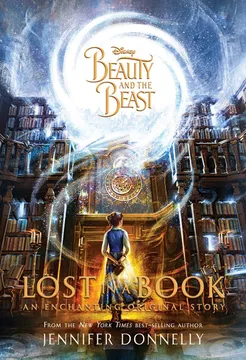


Plot Summary
Prologue
In an ancient palace, the sisters Love and Death gamble over whether the Beast can learn to love Belle before the last enchanted rose petal falls. Love stakes three million gold coins on his chance to change; Death expects him to fail.
After losing their chess game, Death refuses to accept that Belle might alter the ending. She sends two vultures to place a dangerous enchanted book, Nevermore, in the Beast's library, planning to draw Belle into its pages and seize control of her story.
The opening makes the novel's fairy-tale machinery visible: love and death are not distant abstractions but competing players who interfere in human lives. Their wager turns Belle and the Beast's relationship into a test, while Death's decision to plant a book shows how easily a story can be weaponized. Love's confidence is not certainty, and Death's apparent power is not authorship in any absolute sense. The contest establishes the central tension between a life shaped by outside forces and the difficult work of choosing how to respond to them.
A Rose Opens The Prison
When Maurice is imprisoned for taking a rose from the Beast's grounds, Belle takes his place and becomes a captive in the castle. After she enters the forbidden West Wing, she flees in panic and encounters wolves; the Beast drives them off but is badly wounded, and Belle helps bring him home.
Mrs. Potts explains that the Beast was once a cruel prince, cursed alongside his servants by an enchantress. The spell can end only if he learns to love and is loved before the rose loses its last petal. Trying to make amends, the Beast gives Belle his library. She finds a world of books there, even as the locked castle reminds her that generosity has not restored her freedom.
The library gift does not cancel the captivity that precedes it. That contradiction gives Belle's response its force: she can be grateful without mistaking kindness for justice. The Beast's curse also makes private character consequential. His past cruelty has trapped the servants as well as himself, so change cannot be treated as a purely romantic reward. Belle's curiosity makes her attentive to the Beast's hidden pain, but her insistence on answers protects her from dissolving her own needs into sympathy for him.
Dust, Soap, and Nevermore
Belle and the castle servants spend a day cleaning the neglected library. The Beast joins them, clumsily wrecks a bookcase, and braces for the anger he would once have unleashed. Instead, Belle wipes his face and he leaves without roaring or breaking anything; the servants recognize the change. After they go, Belle discovers a narrow workroom and a black book called Nevermore.
It grows enormous, spills living words across the floor, and opens onto a scene of a glittering party. Belle touches the page, steps through, and finds herself on the grounds of a grand château. Her work dress has become a ball gown, and a charming young duke named Henri offers to escort her inside.
The Beast's restraint matters because it is practiced in public, during embarrassment, rather than announced as a promise. Belle's gentle response gives him room to recover without pretending the accident never happened. The servants' astonishment shows that even small changes disrupt their expectation of violence. Nevermore arrives in a library she has made her own, linking imaginative escape to a place of genuine independence. Yet Belle's first step through its pages is also a step into a world whose rules and intentions she cannot inspect.
The Paris Ball
At the château, Henri introduces Belle to the Countess of the Land of the Dead, a regal woman who seems to know her history. Belle dances, meets guests from distant countries, and defeats a condescending actor in a contest of Shakespearean memory.
The evening gives her the human company and intellectual challenge she has missed. The countess presents Nevermore as a place to return to, and Henri makes himself seem like a sympathetic friend. But the countess reacts sharply when beetles disrupt the refreshments and spell a cryptic warning.
She calls their keeper dangerous, then sends Belle back to the library. As the countess secretly keeps strands of Belle's hair caught on her ring, Henri promises that the people of Nevermore will be waiting.
The ball offers Belle recognition for qualities her village treated as odd: her reading, wit, and appetite for a larger world. Its pleasures are therefore not empty decoration; they answer real deprivation. That makes the countess's hospitality persuasive. At the same time, the beetles' warning and the stolen hair introduce a mismatch between the scene's elegance and its underlying control. Belle is invited to feel chosen, while the countess quietly turns an accidental intimacy into a means of possession.
Skates Across Winter
Back at the castle, the Beast arranges an outing to a frozen pond, complete with skates, hot chocolate, and beignets. He falls repeatedly on the ice, but Belle helps him stand and the two skate together until dusk. His willingness to look ridiculous for her pleasure gives their growing trust a physical shape: she steadies him, and he keeps holding her hand.
Later, Belle tells Chip about Agathe, a beggar woman who helped a grieving, violent neighbor recover from loss. Chip sees a likeness between that wounded man and the Beast. The story leaves Belle wondering whether she can reach the Beast without forcing him to speak before he is ready.
The skating scene revises the usual image of the Beast as a figure who controls the room through strength. On ice, he is unsteady and dependent on Belle's guidance, and the risk of humiliation does not become aggression. Chip's recognition of the Beast's hurt gives Belle a model for compassion, but Agathe's example is not passive tolerance: she acts, persists, and feeds someone in crisis. The pairing suggests that care requires both patience and concrete attention.
A Lion's Thorn
Missing Maurice, Belle wakes in the night and uses Aesop's fable of Androcles and the lion to ask the Beast about the pain beneath his anger. He resists her attempt to interpret him and cannot explain the curse, leaving Belle with more questions. She returns to Nevermore, where the countess takes her to Paris and admits that she planted the book in the Beast's library.
Claiming friendship with Belle's late mother, she promises that the book can open the world to her and offers to bring Maurice there. Belle accepts the promise. The offer answers her deepest longing, but it also shifts her attention from the people she has begun to care for in the castle toward a future controlled by the countess.
Belle reaches for the Beast through a story because direct questions have repeatedly met silence. His refusal is not simple malice: the curse forbids disclosure, and his shame makes openness harder still. The countess exploits precisely the gap that leaves. She offers not generic luxury but reunion with Maurice, attaching her invitation to Belle's most enduring grief. The moment is psychologically credible because the promise is both dangerous and genuinely desirable; recognizing manipulation is hardest when it arrives in the shape of rescue.
Three Bites, Three Warnings
At the Palais-Royal, the countess entertains Belle with pastries, gossip, and an exhibition of clockwork figures by Monsieur Truqué. A beetle named Lucanos and a spider named Aranae warn Belle not to eat or leave things in Nevermore, but the countess dismisses them as pests. Belle has already eaten a macaron and, at the café, a tea cake.
Love visits the countess and identifies the danger: three foods eaten and three belongings left can bind Belle to the realm. Belle does not hear the full warning. When a veiled woman steals the collection cap, the countess treats the theft as an inconvenience; Belle instead feels compassion for the boy who lost it and unease at the living automaton's longing.
The rule works because it turns ordinary gestures into irreversible choices. Eating a sweet or giving away a coin has no apparent gravity in a hospitable setting, so Belle's vulnerability comes from misplaced trust rather than foolishness. The automaton's sadness also complicates the spectacle: even a constructed figure can make Belle feel another being's desire to live. Her attention to that longing is ethically perceptive, but the countess uses the atmosphere of wonder to keep Belle from distinguishing compassion from consent.
Chip's Birthday, Belle's Choice
While the Beast is sick in bed, Belle and Chip use breadcrumbs to make birds spell a get-well message outside his window. The Beast laughs at their effort, and Belle realizes the castle feels emptier without him. Mrs. Potts warns Belle not to let reading replace the life she is living, but Belle still longs to return to Nevermore.
At the countess's country estate, a professor helps plan travel through Italy, and the countess says she may be able to bring Maurice there. Belle eats a pear she believes is safe. She hurries back for Chip's birthday, where the Beast gives him a chest of model ships from his own childhood. The next morning, the Beast gives Belle his mother's glass heart, deepening her conflict about leaving.
This sequence puts competing forms of attachment beside each other. The birds' message and the model ships are modest acts of care that make the castle feel like a community, not merely a prison. The countess's travel plan, meanwhile, promises a life that Maurice and Belle might share. Belle's dilemma cannot be solved by declaring one desire false: she loves her father and has begun to value the Beast's household. The glass heart becomes meaningful because it is given without a demand for an answer.
The Father's False Face
At the estate, Belle finds Maurice on the terrace and rushes to embrace him. He seems confused and frail, but she believes their reunion is real. When a rose thorn pricks his hand, she gives him her handkerchief. Henri later asks for a keepsake; Belle refuses to surrender the Beast's glass heart and gives him a copper coin instead.
His face cracks, exposing him as the wooden automaton from Truqué's show. The countess reveals that Maurice is another illusion, then points to the three things Belle has left: her hair, coin, and handkerchief. Combined with the three foods she has eaten, they bind her to Nevermore. The countess admits the wager behind her scheme and leaves Belle trapped in a decaying realm.
The betrayal lands through objects that once carried affection. Belle's handkerchief is a practical kindness, her coin a memory of home, and her hair an intimate trace taken without consent. The countess converts each into evidence of a contract Belle never knowingly accepted. The false Maurice is especially cruel because it imitates the ordinary confusion of an aging parent, making Belle doubt not only the world but her own recognition. Her longing has been used as a mechanism of capture.
The Automaton's Heart
Belle escapes the pursuing dolls and marionettes by reaching a ruined upper room, where Lucanos and Aranae finally answer her call. Lucanos explains that Nevermore is a real realm of decay, not merely an illusion, and that reclaiming her three belongings may weaken the spell.
In the countess's study, Belle recovers the handkerchief from King Otto, the automaton who posed as Maurice. When Otto mourns that he cannot love without a heart, Belle makes him one from torn red silk, and his new joy turns him into an ally.
Together they cut the strings controlling Henri and retrieve Belle's coin. They break through the summer house doors, but Otto cannot cross the boundary. Belle removes his winding key at his request, then continues alone with Lucanos and Aranae.
Belle's rescue plan depends on recovering what she gave away, but the sequence refuses to reduce people to tools in that plan. She pauses to answer Otto's grief, even though the pause costs time. The cloth heart cannot grant him a human body, yet his capacity for attachment becomes real through action and relationship. His final choice makes the cost of escape visible: leaving Nevermore is not a clean victory when a friend cannot follow. Belle's courage is expressed as fidelity under pressure.
The Bracelet and Lions
Belle and her companions reach the countess's château, now revealed as a rotting ruin. They sneak upstairs while the countess sleeps, and Aranae binds her with silk so Belle can unfasten the bracelet made from Belle's hair. Mouchard catches their escape, but Lucanos and Aranae trip him long enough for Belle to flee into the overgrown grounds.
A towering toad and the countess's animated stone lions drive them through a hedge maze. Belle climbs above the yew walls and spots Nevermore, but its page has hardened like ice. On the other side, the Beast and servants search the library, believing Belle has chosen to leave. Her three recovered objects have not opened the way home, and the countess closes in behind her.
Retrieving the bracelet reverses the countess's appropriation of Belle's body, but it does not automatically undo the danger. The maze makes the cost of that distinction physical: Belle can reclaim what was taken and still find herself shut out. Across the page, the Beast's grief confirms that her absence matters without making him entitled to her choice. The story places external rescue and relational recognition side by side, then denies Belle an easy passage between them.
A Diamond Cuts Through
As the countess demands the recovered objects, Lucanos urges Belle to use her heart. Moonlight catches the gift at her throat, revealing that the Beast's glass pendant is a diamond. Belle draws its hard edge across Nevermore's frozen page and cuts a passage through. The countess lunges, but Belle slips through the opening into the Beast's library.
The pendant that once seemed only a keepsake has become the means of escape, while Belle's trust in the Beast gives her reason to risk using it. Lucanos and Aranae stay behind as she crosses. Belle returns alive, but the struggle leaves her with a final decision about whether Nevermore should remain in the library.
The escape is not powered by a sudden change in the Beast or by defeating Death on her own ground. Belle uses a gift whose value she had preserved precisely because it carried another person's history. The diamond's material hardness turns emotional significance into a practical tool, but the choice to use it is Belle's. The scene therefore joins dependence with agency: love can give someone a means, while the person in danger must still act.
Back Among The Imperfect
The servants crowd around Belle, and she embraces them before approaching the Beast, who has been holding her blue ribbon. She tells him that his heart pendant helped her return. Once the book is closed, Belle carries Nevermore to a window and throws it into the wind, which tears its pages away. The Beast gives her ribbon back and asks to hear what happened.
Belle admits that neither of them has mastered friendship, but she chooses to keep trying with him. The ending does not erase her longing for Maurice or make the Beast's past harmless. Instead, Belle turns from a perfect refuge toward the complicated people who have shown care through imperfect, concrete acts.
Destroying Nevermore is not a rejection of books or imagination. Belle's library remains a source of freedom, but the dangerous book offered an escape that required surrendering judgment and reciprocal ties. Her return restores the distinction between refuge and avoidance. The Beast's awkward care, the servants' worry, and Belle's willingness to speak honestly establish a friendship rather than resolve the romance prematurely. The ending values relationship as a practice: imperfect people can keep making repair without pretending that harm never happened.
Epilogue
In a willow tree, Love and Death resume their chess game. Death insists the wager is not settled, since Belle and the Beast have only begun to become friends. Love believes the Beast is learning to care for others and that Belle may learn to love him in return.
Death counters that the human heart remains unpredictable, then continues the game. Their contest stretches across night, day, and time, leaving the Beast's hope alive but not guaranteed.
The epilogue resists turning Belle's escape into a final romantic verdict. She has chosen the Beast's company, not yet a completed love story, and the distinction preserves her autonomy. Love's confidence now rests on observable change: the Beast's concern for his servants and Belle's growing capacity to trust him. Death's skepticism is not disproved, only challenged. By returning the sisters to their game, the book frames human attachment as neither guaranteed triumph nor futile wager. Its outcome depends on repeated choices that no outside player can fully dictate.
Analysis
The novel makes reading both Belle's freedom and her vulnerability. In the Beast's library, books let her travel beyond Villeneuve and imagine lives larger than the one assigned to her. Nevermore offers the same pleasures in embodied form, but removes the distance that lets a reader pause, question, or close the cover. Its danger lies not in fantasy itself but in a fantasy engineered to exploit a specific hunger: Belle's wish to see her father again.
That hunger gives the book's account of manipulation psychological precision. The Countess does not tempt Belle with random luxury. She offers companionship, education, travel, and finally Maurice, each promise fitted to a real absence. Belle's mistakes therefore do not make her foolish; they show how trust can be steered by someone who understands what a person most wants. The rule of three sharpens this point by turning food and gifts into a contract whose terms are hidden from the person supposedly choosing.
Against that false generosity, the Beast's developing care is awkward and materially grounded. He gives Belle access to the library, tries to share skating, and offers his mother's heart without asking her to love him. The servants make care visible through work, worry, and celebration. None of these acts erases the fact that Belle is captive, and the story's strongest ethical distinction is between compassion and absolution. Belle can recognize the Beast's wounds while still demanding honesty and keeping her own judgment.
Otto extends the same question beyond human bodies. His longing to understand love becomes meaningful not because he imitates a person perfectly, but because he responds to Belle with loyalty and sacrifice. The book's final emphasis is consequently not on a completed romance. Belle returns to imperfect relationships and chooses to keep building one with the Beast. Love is presented less as a guaranteed ending than as a practice of seeing, acting, and repairing, while preserving the freedom of the person one hopes to reach.
Review Summary
Beauty and the Beast: Lost in a Book received mixed reviews. Many readers enjoyed the expanded storyline and magical elements, praising Donnelly's writing style and the exploration of Belle's character. Some found it a charming addition to the original tale, while others felt it lacked substance or portrayed Belle inconsistently. The book's darker themes and pacing were points of contention. Overall, fans of Beauty and the Beast generally appreciated this imaginative spin-off, though some wished for more originality or better character development.
People Also Read

Characters
Belle
The reader who choosesBelle is a curious, stubborn young woman who loves books, wants to see the world, and resists being defined by her small village or her captivity. Her loyalty to Maurice leads her to exchange her freedom for his, while her attention to the Beast's pain keeps her from reducing him to his frightening appearance. That compassion does not make her compliant: she continues to seek the truth about the castle and expects her needs to matter. Belle is drawn to Nevermore because it offers travel, conversation, and the possibility of reunion with her father. Her central strength is her ability to care without surrendering her judgment, even when longing clouds it.
The Beast
The wounded castle masterThe Beast is a cursed prince whose imposing body conceals a cultivated mind and a history of emotional injury. His childhood under a cruel father helps explain his guardedness, but it does not excuse the selfishness that brought the enchantress's curse upon his household. He wants Belle to be happy, yet often retreats when conversation approaches his past or the terms of her captivity. His awkward efforts, from giving Belle the library to attempting to skate, reveal a desire for connection that outruns his social skill. The Beast's defining struggle is to make care visible through action rather than assume that remorse alone can repair what he has damaged.
The Countess
The alluring story hostThe Countess is a commanding, elegant woman who controls a glittering world of parties, travel, and fascinating acquaintances. She notices Belle's appetite for learning and offers experiences that answer desires Belle has carried since childhood. Her attention feels personal, especially when she speaks of Belle's mother and Maurice. The Countess is practiced at making generosity feel intimate and opportunity feel safe. Her polished manners and black wardrobe give her an air of mystery, while her confidence in shaping events makes her a formidable presence.
Henri
The charming young dukeHenri is a witty young duke who shares Belle's enthusiasm for literature and presents himself as a friend who can listen without judgment. His teasing helps her laugh at her troubles, and his studies and concern for his estate suggest more seriousness than his social ease first implies. Belle enjoys the attention of someone near her own age who seems to understand her ambitions. Henri's charm is carefully tailored to Belle's longing for equal companionship, making him an important contrast to the Beast's more halting attempts at friendship.
Maurice
Belle's devoted fatherMaurice is Belle's loving father, a gifted maker of intricate music boxes who has encouraged her imagination. He is the person she misses most while living at the Beast's castle, and memories of their shared life give her a strong sense of home. Maurice's kindness contrasts with the harshness Belle has encountered elsewhere. His grief over losing his daughter weighs on her even when she cannot be with him, shaping her vulnerability to promises of reunion.
Mrs. Potts
The castle's steady caretakerMrs. Potts is a warm, perceptive teapot and Chip's mother. She looks after the castle's household while remaining alert to the emotional needs of both Belle and the Beast. Her loyalty to the Beast is rooted in regret: she and the other servants once failed to protect him from his father. She offers Belle care without demanding that Belle approve of her captivity, and she is willing to warn her when books begin to look more like an escape from life than a way into it.
Lumiere
The hopeful candlestickLumiere is the Beast's lively footman, transformed into a golden candelabrum. His humor eases tension in the castle, but he also understands the Beast's loneliness and encourages him to show Belle his true character. He loves Plumette and treats affection as something that can cross the strange forms the curse has imposed on them. Lumiere's optimism is practical: he organizes help, mediates awkward moments, and keeps the household moving when the curse makes hope feel costly.
Cogsworth
The fretful old soldierCogsworth is a small, ceremonious clock who describes himself as a seasoned military man and approaches ordinary chores as if they were campaigns. His constant complaints can irritate the others, but beneath them lies a strong sense of duty and concern. He joins the servants in making Belle welcome, even when the work strains his gears. His bluster is both comic armor and a sincere way of showing that he wants the household, and its people, to remain safe.
Chip
The perceptive teacup childChip is Mrs. Potts's young son, a chipped teacup whose playfulness and curiosity make him an easy companion for Belle. He is quick to recognize that the Beast's anger may come from suffering, and his simple observations help Belle reconsider what she sees. Chip wants the people around him to stay together, a wish that gives his birthday celebration emotional weight. His energy brings humor into the castle, but his sensitivity to others makes him more perceptive than the adults sometimes expect.
Plumette
The affectionate feather dusterPlumette is an enchanted feather duster and Lumiere's beloved. She is lively, flirtatious, and less patient with pointless work than her companions, but she joins the household's efforts to help Belle. Her relationship with Lumiere brings tenderness and play into the castle's constrained life. Like the other servants, she has lost her human form, yet her wit and emotional warmth remain unmistakable.
Love
Death's rival sisterLove is Death's sister and opponent in the wager over the Beast and Belle. She believes people can change and sees the Beast's suffering as a reason for a second chance, not a permanent verdict. Her faith is forceful rather than passive; she challenges Death's interference and sends beetles to warn Belle. Love's confidence gives the story its counterweight to cynicism, though the continuing wager makes clear that her hope does not guarantee an easy outcome.
Death
The patient game playerDeath is Love's formidable sister, a solitary figure who regards human weakness with suspicion and enjoys contests whose stakes are real. She expects the Beast to fail and believes people reliably choose badly. Her manner is elegant, sardonic, and calculating; she is willing to bend circumstances in pursuit of a victory. Death's role is not simply to threaten bodies but to test whether affection can survive fear, temptation, and the wish to escape pain.
Lucanos
The beetle who warnsLucanos is a large stag beetle who recognizes the danger in Nevermore and repeatedly tries to warn Belle. He is blunt, impatient, and practical, especially when time is short. His warnings are easy to dismiss because he appears alongside the strange creatures the Countess has taught Belle to fear. Lucanos nevertheless returns when Belle admits she has made a mistake, then helps her think through a way out. His loyalty requires no flattering language.
Aranae
The watchful spider allyAranae is a spider who works alongside Lucanos to protect Belle. She communicates through gestures and chittering, and her judgment of Belle is not easily won. Her silk becomes a practical tool in their escape efforts, while her presence challenges the Countess's portrayal of her as a creature to fear. Aranae is cautious, capable, and more emotionally expressive than her unsettling appearance suggests.
Otto
The longing automatonOtto is a clockwork king created for public performances, fascinated by human feeling and especially by love. He has watched people from the outside and longs to understand what makes them risk themselves for one another. His stillness and mechanical movements conceal a distinct personality, including grief, curiosity, and a capacity for loyalty. Otto's longing makes him a sympathetic figure in a world where many characters are treated as objects or pieces in someone else's game.
Mouchard
The countess's grim servantMouchard is the Countess's hulking attendant, marked by a hooked nose, beady eyes, and a grave manner. He carries out her instructions and watches over the entrances and grounds of her estate. His presence makes the Countess's polished hospitality feel less secure, because he is a constant reminder that her world has guards as well as guests.
Agathe
The brave village beggarAgathe is a beggar woman from Belle's village who refuses to abandon a neighbor after grief turns him hostile. She approaches him with food and patience when others want him driven away. Belle remembers her as a model of courage grounded in action, and the story she tells Chip shapes how she thinks about the Beast.
Philippe
Belle's faithful horsePhilippe is Belle's horse and an important companion during her first days at the Beast's castle. He carries her through the forest and helps her bring the injured Beast back after the wolf attack. His steady presence links Belle to the world she left behind.
Pere Robert
Belle's village librarianPere Robert is the village clergyman who maintains its small collection of books. He shares Belle's love of reading and has spent long hours reciting Shakespeare with her. His encouragement gives Belle intellectual companionship in a place where few people understand her ambitions.
Monsieur Truqué
The maker of automataMonsieur Truqué is a showman who presents lifelike clockwork figures to crowds at the Palais-Royal. His performance fascinates Belle, who notices the yearning in one figure as it winds down. The spectacle introduces the automata and hints at the distance between being animated and being understood.
Professore Truffatore
The travel-planning scholarProfessore Truffatore is an Italian classics scholar who helps Belle and the Countess imagine a tour of Italy. He brings the practical detail of cities, universities, museums, and historical sites to Belle's dream of travel. His presence makes the Countess's offer feel informed and attainable.
Plot Devices
Nevermore
A story that capturesNevermore is an enchanted book placed in the Beast's library. Its pages open into an elaborate realm where Belle can move through stories rather than merely read them. The book offers travel, company, and the promise of seeing Maurice, answering needs that the castle cannot meet. Its beauty conceals a more dangerous function: it draws Belle deeper into a place governed by the Countess and makes her longings part of the trap. The book turns fiction into both refuge and environment, forcing Belle to distinguish imaginative freedom from an escape that demands surrender.
The Rule of Three
A binding exchangeIn Nevermore, three foods eaten and three belongings left behind can bind a visitor to the realm. Belle eats a macaron, a tea cake, and a pear that is actually a pomegranate. She leaves strands of hair, a copper coin, and her handkerchief, without understanding that these ordinary acts are being counted. The rule makes politeness, appetite, and generosity dangerous under the wrong conditions. Its connection to the myth of Persephone gives the trap an old logic: food can become a contract, even when the person eating it does not know the terms.
The Enchanted Rose
A visible deadlineThe rose under glass measures the time left for the Beast to break the enchantress's curse. Before its final petal falls, he must learn to love and be loved in return. The flower makes the curse visible to the Beast and his servants, and its decline turns each possible change in his behavior into a question of urgency. It also connects Belle's captivity to the suffering of everyone in the castle. The rose is not a simple romantic clock: it records the consequences of the Beast's earlier cruelty and the limited time available for repair.
The Glass Heart
A gift becomes a bladeThe Beast gives Belle a glass heart that belonged to his mother. Belle initially values it as a personal keepsake, but its true material proves crucial when Nevermore seals its pages against her. Moonlight reveals that the heart is a diamond, hard enough to cut open the page and make a passage home. Its function depends on both material and relationship: the Beast offers it without demanding a return, and Belle chooses to trust what the gift means. The object joins inheritance, affection, and agency in one physical form.
Books Within Books
Stories as testsBooks shape Belle's understanding of herself and of other people. The Beast's library gives her real intellectual freedom, while Aesop's tale of Androcles and the lion helps her approach the Beast's concealed pain. Nevermore twists that same love of stories into a literal world designed to keep her. The contrast is central: reading can expand the reader's sense of possibility, but no story should replace the reader's ability to question what is happening. Belle ultimately carries what she learns from stories back into her own choices.

Download PDF
Download EPUB
.epub digital book format is ideal for reading ebooks on phones, tablets, and e-readers.








