

Plot Summary
The Cart to the Village
The story opens as Beauty and Tristan are carried from Queen Eleanor’s castle toward the village auction. Beauty has deliberately disobeyed the Crown Prince rather than remain in the court, where she was admired and expertly disciplined.
Tristan has also provoked his former master, Lord Stefan, who was once his lover. Bound among other disgraced slaves, the pair steal a brief moment of closeness in the jolting cart. Tristan admits that he is frightened of what awaits them, despite having chosen his own punishment.
Beauty cannot explain why she gave up her favored place, only that the village’s harsher, less polished world drew her. Their shared uncertainty becomes the question that follows them: whether obedience is a surrender, a refuge, or a desire of its own.
The cart makes the story’s first contradiction concrete: Beauty and Tristan have chosen a punishment whose terms they do not understand. Their choice is neither simple rebellion nor ordinary consent, because both have been raised inside a system that makes submission the only available language of intimacy. Beauty’s inability to explain her decision gives her curiosity narrative force, while Tristan’s candid fear punctures his princely composure. Their bond begins not with certainty, but with recognition that each has stepped beyond a familiar hierarchy and cannot yet say what they hoped to find.
Sold Before the Crowd
At the marketplace, guards separate Beauty and Tristan and drive the prisoners through a jeering crowd. The auction makes their fall from the Queen’s court unmistakable: each is inspected and sold under rules that assign them to village labor and public discipline.
Nicolas, the Queen’s chronicler, outbids the crowd for Tristan, then leads him away with quiet authority. Beauty is displayed next and bought by Jennifer Lockley, the wealthy innkeeper of the Sign of the Lion.
Their separation leaves Beauty without the one familiar face she sought. Lockley takes her to the inn on a bridle, while Nicolas sends Tristan through the streets under orders to march properly. Both new owners turn the auction’s spectacle into the start of private routines.
The auction translates status into price. Beauty and Tristan arrive as aristocratic tributes, but the village treats their rank as a selling point rather than protection. The buyers also establish contrasting forms of authority: Nicolas is reserved and deliberate, while Lockley manages a public business where discipline is practical and visible. Separating the pair prevents their shared rebellion from becoming a shelter. The sale therefore does more than relocate them; it breaks their old social identities into two distinct relationships, each of which will test what they believe they want from submission.
Lockley Sets the Rules
At the Sign of the Lion, Lockley warns Beauty that continued defiance will bring prolonged exposure outside the inn. She punishes her, then assigns her cleaning work beside other village slaves, making obedience part of the daily business rather than a courtly ceremony.
Prince Roger, a long-serving slave, explains that a former castle tormentor, Lady Juliana, once became his owner and remained in the village, complicating Beauty’s assumptions about where a slave’s life can lead. The Captain of the Guard soon arrives, recognizes Beauty from the auction, and claims her attention as his own when he lodges at the inn. Beauty finds herself drawn to his blunt authority even as she resents the loss of choice it represents.
Lockley’s authority is deliberately unsentimental: she links punishment to chores, schedules, and keeping an inn running. That practical setting unsettles Beauty more than the castle’s formal rituals because nobody pretends the system is a ceremonial favor. Roger’s story widens the possibilities beyond return to court, showing that a former slave can occupy power without erasing the memory of captivity. The Captain’s arrival adds another complication: attraction does not cancel the imbalance between them. Beauty’s curiosity grows precisely where control and desire become difficult to separate.
Nicolas Takes Tristan Home
Nicolas takes Tristan from his house to a nearby farm, where attendants harness him with other slaves to pull a coach. At the manor, Tristan is made to perform stable and orchard labor, then serve the other slaves before being left in a restrictive position. Jerard, an experienced pony who once tried to escape, explains that the village’s routines have become familiar to him, even pleasurable, and that Nicolas treats him with a discipline he trusts.
Tristan cannot yet share that certainty. Still, he begins to understand that the village’s humiliations feel different from the castle’s games because they are woven into ordinary work. At night, Nicolas brings Tristan into his bedchamber, where severity gives way to private intimacy.
Tristan’s first day changes the scale of his humiliation. At court, punishment was staged within an environment designed for pleasure; at the farm, the same body is absorbed into labor and routine. Jerard offers neither a simple warning nor a model to imitate. His account shows how repeated discipline can make an imposed role feel like identity, while Tristan remains unsettled by that possibility. Nicolas’s shift from public control to private closeness sharpens the question: does intimacy transform power, or merely make its exercise feel more personal?
A Master Who Understands
Nicolas brings Tristan through a public punishment and afterward questions him privately about why he fled Stefan. Tristan recognizes that their former intimacy made Stefan hesitant to master him, while he himself wanted a firmer authority than Stefan could provide.
When the Captain recognizes Tristan from the soldiers’ camp, he confirms that Tristan once responded to the camp’s strict daily discipline and then lashes him in the village square. Tristan accepts the punishment rather than hiding from it.
Later, Nicolas asks him to explain what he feels, listens without dismissing his contradictions, and admits that he loves him. Tristan has the chance to flee while Nicolas sleeps, but stays. Nicolas plans to ask the Queen to let him keep Tristan in the village.
This turn gives Tristan a vocabulary for a desire he had previously enacted without understanding. His account does not make the surrounding hierarchy disappear; rather, it distinguishes between random control and authority that attends to him, interprets him, and offers a relationship in return. The Captain exposes Tristan’s history to Nicolas, while Nicolas turns that disclosure into sustained attention. Tristan’s decision to stay matters because escape is now imaginable, not merely forbidden. His choice is meaningful, but it remains made within a world that has trained him to value surrender.
Beauty Finds Her Place
Beauty’s days at the inn combine household work, punishment, and service to the Captain and his soldiers. After she speaks out of turn, Lockley disciplines her severely; Beauty then learns from Prince Richard, a slave who has spent a year under Lockley, that he once panicked at commands but gradually learned to endure the village’s demands.
Richard believes Lockley’s firmness helped him more than gentler treatment would have. Beauty sees that Lockley watches her with unusual attention, and her own feelings deepen when Lockley privately invites her into an intimate encounter with Richard.
Unlike Tristan, Beauty does not describe her surrender as devotion to one master. She is drawn to the village’s severity and to the freedom of not needing to love those who control her.
Beauty’s development moves along a different axis from Tristan’s. Richard gives her a practical account of adaptation, while Lockley’s attention creates an attachment that Beauty is reluctant to name. Yet she refuses the idea that submission must culminate in exclusive emotional devotion. Her attraction to the village lies partly in its indifference: she can experience its demands without granting any one authority her inner self. The difference between the protagonists is not a disagreement about whether power affects them, but about whether love should become the meaning of that power.
The Runaway at Camp
During a night visit to the soldiers’ camp, the Captain questions Laurent, a runaway prince captured in the surrounding woods. Laurent denies planning his escape with Princess Lynette, whose disappearance has already stirred searches. The Captain orders Laurent punished and displayed, while his men report unexplained riders near the village.
He doubles the watch but doubts that an attack is imminent. Beauty hears the warning while at the camp, then returns to the inn with the Captain and is placed among his soldiers for the night. The possibility of an escape becomes more complicated: the village is not only a system of private masters and public rituals, but a guarded settlement exposed to outside forces its inhabitants may not control.
Laurent’s capture and the riders’ report introduce danger that the village cannot absorb into its familiar routines. The Captain reads the incident through security and discipline, while Beauty registers a world beyond the roles she has begun to inhabit. The contrast matters: earlier threats came from masters operating within an established system; now the possibility of invasion suggests a force that may not respect its limits. Lynette’s successful flight remains uncertain in meaning, but her absence makes escape a concrete event rather than a theoretical choice.
Tristan Passes Below
The next day, a drum-led procession carries Laurent through the village, bound to a display frame, while slaves pull the cart. Beauty watches from the inn and recognizes Tristan among them, harnessed at the head of the team.
The sight stirs both fascination and guilt, but she soon learns that the Queen has condemned Laurent to four years in the village. That evening, Nicolas allows Beauty to visit Tristan at his house. They embrace and compare what the village has taught them: Tristan says Nicolas’s attention makes even severe discipline bearable, while Beauty values the harsher system without giving her soul to any master.
Nicolas watches them through a concealed mirror, then intervenes when their mention of missing soldiers confirms that the village may be dangerously undefended.
The procession converts private change into something visible. Beauty sees that Tristan has adapted to a form of degradation she once feared for him, and that recognition forces her to reconsider her own desire without simply adopting his interpretation. Their reunion confirms affection, not sameness. Nicolas’s hidden observation introduces another kind of exposure: even their private conversation exists under his scrutiny. His response to the missing guards shifts the scene from intimate confession toward external threat, joining the personal plot to the village’s fragile security.
The Gates Give Way
As Nicolas hurries Beauty back toward the Sign of the Lion, a battering ram breaks through the village’s eastern gate. Bells sound, residents scramble to free their slaves, and riders in foreign dress flood the streets.
Tristan tries to protect Beauty, but a mounted raider lifts her onto his saddle; other riders seize Tristan, while Nicolas is knocked aside. The captors bind their prisoners to the horses and escape through the countryside toward the coast. Beauty glimpses the sea and a dark ship before losing consciousness.
The village’s familiar punishments had always been presented as bounded by the Queen’s authority. The raid destroys that assumption: Beauty, Tristan, Laurent, and other slaves are now captives of people outside the system they know.
The raid is the novel’s decisive break in consent and context. Beauty and Tristan have made choices within a coercive institution, but the riders neither belong to that institution nor honor its supposed protections. The familiar language of punishment cannot contain this new violence. Nicolas’s helplessness also revises his role: his authority and affection offered a measure of order, but neither can stop an armed force. The episode turns the story from an exploration of village hierarchy into a question of what happens when even its limited rules vanish.
Caged for the Sultan
Aboard the ship, attendants wash, perfume, and display the captured slaves as valuable foreign prizes. Beauty finds Tristan nearby, but both are confined in gilded cages and kept quiet with drugged drinks.
A royal envoy boards the vessel and explains that the raiders serve a Sultan who has long traded in the Queen’s pleasure slaves. He has negotiated an indemnity and a return arrangement, but the prisoners will spend two years in the Sultan’s palace, where their status will be lower than it was in the village.
Nicolas is alive, the envoy says, but no rescue is possible. Later, the attendants adorn Beauty and Tristan for a feast and bring them together as entertainment. The book ends with the pair still captive, facing an unknown new order.
The ending offers neither rescue nor a completed transformation. The envoy reframes the raid as part of diplomacy, turning individual bodies into bargaining pieces between rulers. His assurance that the captives will be returned does not restore their agency; it only gives their confinement a timetable. The foreign attendants’ careful grooming and the gilded cages echo the village’s polished rituals, but resemblance is not safety. Beauty and Tristan recognize that they are entering another hierarchy, one whose rules they do not know and whose masters have already claimed them.
Analysis
Beauty’s Punishment builds its plot around two different interpretations of surrender. Tristan gradually understands his submission as a relationship with a master who sees and responds to him. Beauty is drawn instead to the village’s severity while protecting the idea that her inner self remains unowned. Their contrast keeps the story from presenting one emotional response as universal: the same institutions can produce devotion, curiosity, fear, or detachment.
The village itself is a system of spectacle and labor. Auctions, punishment grounds, inns, farms, and harnessed coaches make control part of public routine. The court calls these practices punishment, but the novel also presents them as desired ritual. That tension is central, and it should not be mistaken for a simple account of consent. The characters’ choices take shape within an unequal world that restricts their options and trains them to interpret coercion as pleasure or belonging.
The raid forces that ambiguity into sharper focus. Beauty and Tristan have pursued harsher experiences within the Queen’s order, where rules, relationships, and a promised return still exist. The foreign captors seize them without that framework, and diplomacy treats their bodies as valuable goods rather than people with preferences. The final ship therefore tests the story’s own fantasy of bounded danger: familiar symbols of luxury and discipline reappear, but the safeguards they once implied are gone. The book ends not with mastery resolved, but with its protagonists carried into a new system whose terms they have not chosen and cannot yet read.
Review Summary
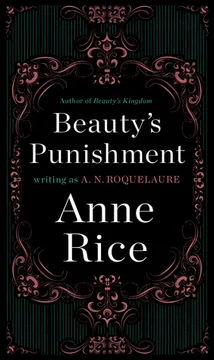
Beauty's Punishment is the second book in Anne Rice's Sleeping Beauty erotic trilogy, receiving a 3.63/5 rating on Goodreads. Readers are divided: fans praise its psychological depth, character development, and exploration of BDSM dynamics, particularly through the dual perspectives of Beauty and Prince Tristan. Critics condemn its graphic content, lack of character development, and non-consensual themes. A controversial scene involving a cat prompted strong negative reactions. Most agree it surpasses the first book in plot and emotional engagement.
People Also Read







Characters
Beauty
The curious rebelA princess who has been a favored slave at Queen Eleanor’s court, Beauty deliberately disobeys rather than remain in familiar comfort. Curiosity, not a clear plan, draws her toward the village and its harsher conditions. She is observant and emotionally candid, yet often cannot explain her own impulses until experience gives them shape. Her bond with Tristan is rooted in recognition, but she does not share his belief that submission must center on love for one master. Beauty’s central tension is between giving up control of her body and preserving an inner self she considers her own. That distinction makes her both receptive to experience and resistant to anyone’s claim over her feelings.
Tristan
The searching princeA strong, proud prince who once loved Lord Stefan, Tristan arrives in the village after provoking the master who could not command him. His composure conceals fear, and his initial insistence that he has chosen punishment does not mean he understands what he seeks. He responds to clear authority and close attention, gradually finding in Nicolas a master whose discipline is joined to curiosity about Tristan’s inner life. Unlike Beauty, he comes to connect surrender with devotion to a particular person. His struggle is not simply to obey, but to understand why submission feels more sustaining when it is shaped by someone he loves.
Nicolas
The watchful chroniclerThe Queen’s village chronicler buys Tristan at auction and governs him with a combination of strict control, private tenderness, and intellectual curiosity. Nicolas wants to understand why highborn slaves submit, but he does not treat Tristan as a puzzle alone; he listens to the answers Tristan struggles to give. His self-possession contrasts with the village’s public spectacle, and his affection complicates his authority without making their unequal positions disappear. He is also a person of influence, able to make decisions about the village and speak to the Queen. Beauty’s visit to his house shows that he can permit intimacy on his own terms while still keeping watch.
Jennifer Lockley
The practical innkeeperKnown as Mistress Lockley, Jennifer owns the Sign of the Lion, where the village’s punishments become part of everyday work and hospitality. She is direct, disciplined, and attentive to the needs of her household, making her authority feel less ceremonial than the court’s. She expects obedience but also notices the distinct temperaments of the slaves in her care. Beauty finds her both intimidating and compelling, especially because Lockley’s warmth appears only in brief, carefully controlled moments. Her relationship with Beauty exposes the difference between enforcing a role and feeling genuine interest in the person forced to occupy it.
The Captain of the Guard
The soldier who claims BeautyA powerful officer who serves Queen Eleanor and spends much of his time among the village’s soldiers and slaves. He recognizes Tristan from the earlier journey that brought him to the Queen’s castle, and he understands the effect that strict, repeated discipline had on him. At the inn, he also takes a strong interest in Beauty. His authority is blunt and military, but his attention can become unexpectedly tender. He embodies the connection between the Queen’s larger political power and the village’s local customs, and his confidence is tested when unexplained riders threaten the settlement.
Queen Eleanor
The distant sovereignThe ruler whose system sends highborn princes and princesses to serve at court before some are punished in the village. Eleanor is not present in most of the action, but her authority defines the rules followed by masters, guards, and auctioneers. The village’s discipline is presented as service to her, and its citizens assume she can decide whether a slave returns to court or remains among them. Her power is therefore most visible through institutions and other people’s obedience, rather than through direct appearances.
Lord Stefan
Tristan’s former loverA young nobleman who was Tristan’s lover before the two became master and slave under Queen Eleanor. Stefan admires Tristan’s strength, but their prior equality complicates his ability to command him. Tristan’s memories of Stefan explain why their old intimacy did not satisfy his need for firm authority. Stefan remains an emotional reference point even when he is absent, because Tristan measures his new relationship with Nicolas against what failed between them.
Lady Juliana
Beauty’s former tormentorA young woman at the castle who once disciplined Beauty and later appears in Roger’s account of village life. Juliana’s history shows that a former court slave can become a powerful mistress without discarding her memories of service. Her braided hair remains linked to that earlier identity. Through Roger’s story, she makes the boundary between slave and master appear less permanent than Beauty had assumed.
Prince Roger
The inn’s seasoned slaveA dark-haired prince who works at the Sign of the Lion and helps Lockley train Beauty in the inn’s routines. Roger has lived in the village for years after being punished for leaving with a princess. His account of Juliana’s return to power gives Beauty an early glimpse of lives that continue beyond the court’s expected path. He is practical and good-humored, but his long familiarity with the village suggests how thoroughly its customs can become ordinary.
Prince Richard
Lockley’s candid veteranA red-haired prince who has spent a year under Lockley’s authority. Richard tells Beauty that he once panicked and failed to obey, then gradually learned to manage tasks and public punishment. He credits Lockley’s strictness with helping him adapt and believes that a gentler master might not have reached him. His account gives Beauty a model of endurance, but not one she must adopt: Richard’s attachment to his mistress differs from Beauty’s guarded approach to authority.
Jerard
The experienced ponyA village slave who once tried to escape and was caught near the border. Jerard now works as a pony and speaks to Tristan about the strange pride and familiarity he has found in the role. His blunt account helps Tristan imagine how repetition can change the meaning of humiliation.
Laurent
The captured runawayA powerful prince found in the woods after fleeing the village. Laurent denies conspiring with the missing Princess Lynette, but his capture leads to a public procession and helps expose the settlement’s vulnerability. He becomes a visible example of the consequences attached to escape.
Princess Lynette
The missing fugitiveA princess whose escape from the village triggers searches by the Captain and his patrols. Her absence makes flight a real possibility for the other slaves, while her uncertain whereabouts contribute to the growing anxiety about the village’s security.
The Sultan
The distant new rulerThe ruler of the foreign palace to which Beauty, Tristan, and the other captured slaves are taken. He does not appear directly, but the envoy’s account makes clear that his court has long traded with Queen Eleanor. His power reaches the prisoners through diplomatic arrangements, attendants, cages, and the promise of a future return.
Plot Devices
The village auction
Turns rank into priceThe auction marks the transition from the Queen’s court to village life. Disgraced princes and princesses are examined before a crowd, then sold to local owners for a period of service. The ritual makes their loss of status public and gives the village’s masters authority over their daily labor and discipline. It also creates the story’s key relationships: Nicolas buys Tristan, while Jennifer Lockley buys Beauty. The market is not merely a setting for their separation; it establishes the economic and social rules that structure their different experiences.
The public punishment grounds
Makes discipline communalThe village’s turntables, maypole, pillories, and tents turn punishment into a public event. Masters can send slaves there, while crowds watch, jeer, and sometimes contribute money. These spaces contrast with the Queen’s more polished court because discipline occurs amid ordinary shops, traffic, and commerce. For Tristan, the crowd’s attention intensifies his experience of surrender; for Beauty, the same system represents a world whose severity she finds compelling without treating it as a source of personal devotion.
The pony harness
Makes submission visibleHarnesses, reins, bits, and coaches turn village slaves into working teams. The apparatus converts discipline into labor and makes a slave’s place in the hierarchy visible in public. Tristan’s experiences as a pony are especially important because they bring together physical humiliation, routine, and Nicolas’s close oversight. Jerard’s account shows how the role can become familiar, while Tristan’s changing response reveals that adaptation is not instantaneous. The harness also becomes an image of how village authority directs bodies through spaces that would otherwise belong to ordinary civic life.
Nicolas’s hidden mirror
Turns privacy into surveillanceThe concealed mirror in Nicolas’s house allows him to watch Beauty and Tristan during their private reunion. It reveals that their apparent privacy remains subject to his control, even when he has permitted them time together. The device also serves a practical purpose: Nicolas overhears Beauty’s information about the missing soldiers and recognizes the danger before the raid begins. Intimacy and surveillance therefore meet in one object. It embodies Nicolas’s mixture of affection, authority, and vigilance without reducing him to either a purely benevolent or purely cold figure.
The gilded cages
Signals a new hierarchyAfter the raid, the captured slaves are drugged, groomed, adorned, and confined in gilded cages aboard the Sultan’s ship. Their presentation recalls the village’s emphasis on spectacle, but the captivity is no longer governed by Queen Eleanor’s known rules. The cages and ceremonial preparations signal a shift from familiar masters to a foreign court whose customs remain unknown. The royal envoy’s explanation confirms that the prisoners have become part of a diplomatic bargain. This device carries the story into an unresolved final stage, where past adaptations offer no guarantee of safety.
Download PDF
Download EPUB
.epub digital book format is ideal for reading ebooks on phones, tablets, and e-readers.








