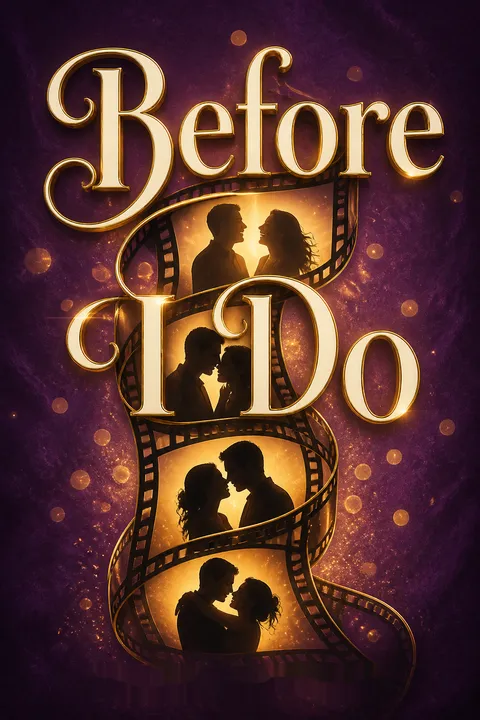


Plot Summary
Prologue
Audrey steps out of a church in her wedding dress, barefoot, bruised, and unable to make sense of the sirens behind her. Paramedics hurry inside while her friend Paul clears a path through the guests.
She cannot face her family, so she slips into nearby woodland and sits alone, her ruined bouquet in hand. The wedding has not gone as planned, but the shock leaves her asking a question that reaches far beyond the day itself: when did the choices that brought her here begin?
The opening gives the wedding the atmosphere of an aftermath before the reader knows what has happened. Audrey’s bare feet and damaged dress make the social ritual suddenly physical and exposed, while the sirens turn a ceremony into an emergency. Her retreat to the trees is more than a hiding place: it gives her the first quiet in which to question the history beneath the crisis. The prologue also makes time feel unsettled. The present disaster is already asking to be read through the past, inviting the reader to treat memory not as background but as evidence.
The Bat Before the Bride
At the wedding rehearsal, Audrey watches her mother, Vivien, direct every detail, from which stepfather will escort her to the aisle to the placement of guests. Her fiancé, Josh, steadies her, but the elaborate ceremony feels more like Vivien’s production than Audrey’s choice. A dead bat drops into the church, prompting Josh to take charge and Granny Parker to call it an omen.
Later, at the rehearsal dinner, Audrey sees Fred, the green-eyed stranger from a photo booth encounter six years earlier, arriving as a date for Josh’s sister, Miranda. The sight jolts her so badly that she retreats to the bathroom. The next day’s wedding has not begun, yet Audrey’s buried past has already entered the room.
The dead bat and the crowded rehearsal frame Audrey’s anxiety in two competing ways. The family reads accidents as omens, while Audrey’s discomfort has a more intimate source: a life she never resolved is now physically present. Vivien’s management of the wedding mirrors Audrey’s habit of letting other people make decisions when she cannot settle on her own. Josh offers steadiness, but steadiness cannot answer the question raised by Fred’s return. The plot turns a familiar pre-wedding panic into a confrontation between inherited stories about fate and Audrey’s private memory.
A Secret in the Car Park
Audrey persuades Clara, her maid of honour and oldest friend, to draw Fred outside under the pretext of signing the wedding plate. Alone with him, Audrey asks him not to tell the family that they have met before. Fred remembers their connection and says he searched for her, but Audrey cuts off his explanation and returns to Josh.
At dinner, Josh’s stepfather Lawrence tries to bind the couple together with a ceremonial flowered rope. Audrey trips, the rope drags Josh across the table, and glass and wine crash around them. Her neck is scraped and Josh is briefly furious before apologizing in their room. The accident intensifies Audrey’s fear that the day is warning her, even as she tries to keep Fred from disrupting it.
Audrey’s request for secrecy is a form of damage control, but it also establishes the emotional cost of her avoidance. She is managing appearances rather than examining why Fred still unsettles her. The rope ceremony makes that strategy visible: a well-meant symbol of unity becomes a literal entanglement, injuring both partners and leaving Audrey more alert to the possibility of disaster. Yet Josh apologizes and cares for her, demonstrating that their relationship contains repair as well as friction. The scene refuses to make the mishap a supernatural verdict. Its force comes from Audrey’s readiness to interpret coincidence as judgment.
Four Photos, One Day
Six years earlier, Audrey finds a photo strip left in a Baker Street booth. A blond young man, Fred, has posed with a playful message about finding someone. On impulse, she leaves her own photo reply. Months later they meet on opposite Tube platforms, recognize each other, and share the pictures they have kept.
Fred explains his love of analogue photography and shows Audrey old booth photos of himself with his father, who has died. Audrey tells him about her own father and her wish to study astronomy. Their conversation becomes an exuberant day together: they dance in Hyde Park, leap from a Ferris wheel, ride a sightseeing bus, and explore a model solar system. They kiss in the booth and arrange to meet again the next day.
The photo strip is both a physical keepsake and a machine for turning chance into a story. Audrey and Fred know little about each other, but the images encourage them to treat recognition as proof of deep compatibility. Shared grief and fascination with old photographs give their attraction real tenderness; the fantasy is not invented from nothing, but it grows faster than their knowledge can support. Fred’s appetite for risk draws Audrey beyond her cautious habits, while her astronomy gives their flirtation a language of stars and possible worlds. The section lets the spark feel genuine without claiming that intensity alone can predict a life.
Benedict Enters the House
Before Audrey’s encounter with Fred, she learns that Vivien is involved with Benedict Van Vuuren, a celebrated sculptor, despite still being married to Brian, the calm stepfather Audrey trusts. Audrey resents the affair but keeps quiet, then agrees to visit Benedict’s gallery in hopes of easing the tension at home.
In a private viewing, Benedict comments on her body, positions her in front of a mirror, and touches her in ways that make her feel trapped. She escapes without being able to explain exactly what has happened. At home, she has long watched Vivien fall intensely in love and then reorganize the family around a new man. That history makes it difficult for Audrey to distinguish loyalty to her mother from loyalty to herself.
Benedict’s power in this section depends partly on ambiguity. He presents unwanted physical contact as artistic attention, placing Audrey in the familiar bind of questioning her own interpretation before she can name a boundary. The family history makes the bind sharper: Audrey fears that protecting herself will once again damage Vivien’s happiness. Her mother’s romantic intensity has taught her that love can redraw the household without warning, so Audrey treats her own discomfort as a threat to someone else. This is not simply a conflict between a young woman and a powerful man. It is also a learned pattern of self-silencing within a family.
The Number That Failed
After leaving Benedict’s gallery, Audrey runs to Baker Street to meet Fred, but he never arrives. His phone number is smudged on the photograph, and when she calls home, Vivien does not pass along any message. Audrey returns to find her mother pleased that she and Benedict seem to be getting along. When Audrey finally tells Vivien that Benedict touched her in ways she did not want, Vivien believes her and ends the relationship.
Benedict later confronts Audrey, calls her dishonest, and blames her for losing Vivien. Audrey absorbs the accusation as guilt. Already shaken, she fails her mathematics exam and abandons her plan to study astronomy. She concludes that she has ruined her mother’s happiness and lost the future she wanted.
Several losses converge, but Audrey interprets them as one moral failure. Fred’s absence feels like abandonment; Benedict’s retaliation turns her attempt to protect herself into supposed evidence of cruelty; the failed exam then seems to confirm that she is incapable of building a different life. The actual causes are more complex than her self-blame allows. Her mother makes her own decision about Benedict, and Audrey’s exam failure follows an acute period of distress rather than proving a lack of ability. The section shows how shame converts events into identity: instead of thinking that something painful happened, Audrey decides that she is the person who causes pain.
Bad Jeans, Better Man
Years later, Audrey meets Josh through her housemates, repeatedly forgetting his name while dismissing him as a dull City worker. She gradually notices his humour and generosity, especially when he refuses to treat her drunken flirtation as consent to a casual fling.
At a later wedding, Josh asks her on a proper date; he follows through, listens closely, and explains that financial insecurity in his childhood made reliable work important to him. Audrey discovers a man less conventional than she assumed, while Josh sees past her scattered jobs and restless self-doubt.
Their relationship deepens through ordinary acts as well as attraction: he moves a struggling tree for her, invites her into his carefully ordered life, and shares the night sky that connects her to her father.
Josh’s courtship challenges Audrey’s learned association between desire and uncertainty. She is accustomed to men whose inconsistency keeps her attention fixed on whether she has been chosen; Josh’s restraint initially feels unfamiliar, but it makes room for trust. His practical habits are not presented as mere comic opposites to her spontaneity. They come from childhood insecurity and a wish to make life safer for the people he loves. Audrey, in turn, brings colour and improvisation into his structured world. Their differences create a working relationship, not proof of destiny, though Audrey still has to learn the distinction.
A Ring Beneath Es Vedrà
Audrey and Josh build a life together, though their different rhythms show in everything from holidays to household routines. Josh plans carefully; Audrey prefers to improvise, and wedding spreadsheets make her feel as if romance has been buried under administration.
Still, he proposes on an Ibiza beach with an emerald ring and tells her that she is his constant. Audrey accepts happily. Later, a sculpture by Benedict appears at a celebratory restaurant and triggers a panic attack, but Josh sits with her outside and lets the moment pass without demanding an explanation.
Their attachment is real, yet Audrey continues to keep Fred’s photographs in her wallet, preserving the younger self she associates with possibility. She agrees to a large wedding that increasingly reflects Vivien’s tastes more than her own.
The proposal gives Audrey a clear experience of wanting Josh, but it does not erase her uncertainty about who she is becoming. Her panic at Benedict’s sculpture shows how an old injury can re-enter through a sensory reminder, even during a happy occasion. Josh’s response is important because he offers companionship without insisting on immediate disclosure. At the same time, Audrey’s retained photographs reveal a split in her self-understanding: she treats her younger, more adventurous identity as something she might have lost. The wedding planning then repeats an older pattern, as her indecision gives Vivien room to direct the life event for her.
A Ceremony Loses Its Voice
On the wedding morning, Audrey’s dress splits while Clara is helping her dress, and the repair leaves little room for the day to feel controlled. Miranda worries that she will never marry, while Clara admits that caring for newborn twins has strained her relationship with Jay; Audrey comforts both women instead of asking for help herself.
Vivien mistakenly gives Audrey a private letter meant for Brian, revealing that old feelings between them may still be active. At the church, Audrey walks with Brian and Lawrence, sees Fred among the guests, and learns that her real letter from her father is still with Brian. Before she can answer the vows, Reverend Daniels turns pale and collapses. Josh begins helping him, and Audrey leaves the church without marrying.
The collapse interrupts the ceremony at the moment Audrey must publicly choose, but the book does not treat it as an answer delivered by fate. Her attention has already been divided by family secrets, Fred’s presence, and the unprocessed grief of her father’s absence. Meanwhile, she absorbs Clara’s and Miranda’s distress, continuing to act as caretaker while concealing her own fear. The vicar’s emergency gives her a genuine pause, but it cannot resolve the questions she has been avoiding. The scene distinguishes an external postponement from an internal decision: the wedding stops, while Audrey’s responsibility to understand what she wants remains.
The Kiss in the Booth
At the reception, the guests celebrate despite the missing vows. Fred tells Audrey that an accident kept him from their meeting six years earlier and that he tried to call, but someone with a South African accent gave him the wrong information.
Audrey realizes Benedict may have intercepted the call, though she does not yet know the full story. Fred then treats the failed ceremony and their reunion as signs that they belong together. In the photo booth, he kisses Audrey; she freezes, then briefly responds before pulling away.
Josh sees them. He finds the old pictures in her wallet and understands that she kept Fred’s image throughout their relationship. Hurt by the secrecy and kiss, Josh leaves the reception, and Audrey realizes her confusion has caused real harm.
Fred’s explanation gives Audrey a plausible alternative history, but it arrives at the worst possible moment, when fantasy can easily masquerade as evidence. The kiss is not a considered choice, yet Audrey’s brief response and years of secrecy still have consequences for Josh. This distinction matters: the novel neither absolves Audrey by calling the event accidental nor reduces her to a single betrayal. Josh reacts not only to the physical kiss but to the discovery that an old possibility has occupied private space in their relationship. The photo booth, once a symbol of wonder, becomes a witness to the gap between Audrey’s inner life and what she has shared.
Letters Beneath the Lies
Audrey follows Josh to Ibiza, but he tells her at the airport that their relationship has not felt like a team and leaves to continue his work trip with Granny Parker. Alone, Audrey reads her father’s letter, which urges her to choose a kind partner and keep believing in love.
Vivien then reveals that she found explicit photographs of women on Benedict’s computer and had already decided to leave him; Audrey did not destroy her mother’s happiness.
Vivien also explains that she shut Audrey out after the breakup, while Audrey mistook that distance for blame. Miranda’s email adds that Fred abruptly left a train after reading a coincidence as a sign. Audrey sees that she had mistaken a brief, dazzling encounter for knowledge of the man himself.
The revelations dismantle Audrey’s most punishing private story: that she caused Vivien’s loss and therefore cannot trust her own judgment. The truth does not make every past choice harmless, but it restores agency to the people whose decisions Audrey had taken on as her responsibility. Her father’s letter offers a relational standard based on kindness rather than cosmic certainty. Miranda’s account of Fred’s impulsiveness further separates the real man from Audrey’s idealized version. The emotional work here is not replacing one soulmate fantasy with another. It is learning to read events without turning coincidence, guilt, or longing into a verdict.
Trees Planted Together
At their hotel, Josh is absent, so Audrey’s improvised song and hired dancers win only an audience of strangers and a burst of glitter. Granny Parker tells her to consider what Josh needs, not merely what she wants to prove. Audrey joins a project restoring almond groves and spends two days planting saplings, then arranges for Granny Parker to bring Josh to the farm.
She tells him the truth about Benedict, Fred, the failed exam, and the photographs. Beside the new trees, she explains that she wants to be a partner, not simply the recipient of his steadiness, and labels the saplings with both their names. Josh admits he still loves her, though the secrecy hurt him. They reconcile, understanding that their differences can make them a team.
The failed serenade exposes the limit of performance: Audrey can produce a grand gesture without yet understanding the person she hopes to win back. Granny Parker redirects her from spectacle toward reciprocity. Planting trees is an apt action because it requires effort over time and cannot be reduced to a single romantic display. Audrey also shifts from confession as self-punishment to disclosure as an invitation to mutual understanding. Josh’s forgiveness is not automatic; he names the hurt caused by secrecy. Their reunion becomes credible because it includes both affection and accountability, rather than treating love as proof that no repair is needed.
A Wedding of Their Own
Six months later, Audrey and Josh marry in a small Sussex chapel with twenty guests, wildflowers, Spanish food, and choices they have made together. Audrey wears a vintage dress she chose because it makes her feel like herself, while the cake features a newly painted smiling bride and a groom modeled on Josh.
Vivien walks with Audrey, and their renewed closeness is visible in an unguarded embrace. Miranda and Paul are together again, Clara and Jay have found their footing as parents, and Hillary has landed a demanding stage role.
Audrey and Josh plan a longer honeymoon that includes an astrophotography course at Kielder Observatory, giving her an opening to return to astronomy. Their ceremony feels personal not because it is flawless, but because they shaped it jointly.
The second wedding revises the first through concrete choices rather than a claim that all doubt has disappeared. Audrey walks toward the altar on her own terms, and the small guest list removes the audience pressure that made the earlier ceremony feel like Vivien’s production. The repaired figurine and chosen cake turn an omen into an object that can be altered. The supporting couples also resist the idea that romantic certainty guarantees ease: they continue negotiating work, parenthood, and commitment. Audrey’s astronomy course matters for the same reason. Marriage does not complete her identity; it accompanies her as she begins to pursue a long-deferred ambition.
Epilogue
Fifty years later, a magazine profile celebrates Audrey Parker as a pioneering astrophotographer whose images have revealed previously unseen regions of space. She credits her family for supporting a career she began later than expected, and names Josh as the person whose love has remained brighter to her than the stars she photographs.
The story closes not with a prediction about fate, but with the life built after the wedding: a vocation recovered, a marriage sustained, and a shared history long enough to become its own kind of light.
The epilogue gives Audrey’s delayed career the scale of a life rather than a missed opportunity. Her professional achievement grows from the childhood curiosity she once feared she had forfeited, while her marriage appears not as the source of her identity but as a supportive condition for its development. The public profile compresses decades into a few lines, yet its emphasis is intimate: success is narrated through the people who made sustained work possible. Returning to stars also closes the novel’s central metaphor with restraint. The cosmos may supply images and questions, but the meaning of Audrey’s life comes from what she and Josh have chosen to build on Earth.
Analysis
Before I Do treats romantic destiny as a compelling story people tell when uncertainty feels intolerable. Audrey’s attraction to Fred is real, but much of its apparent meaning comes from what she has attached to it: her younger self, her abandoned astronomy plans, and the possibility that a different choice might have spared her painful experiences. Because she knows Fred through one intense day and years of photographs, he can remain an ideal. Josh, by contrast, is known through repeated acts, shared routines, and conflict. The novel does not claim that ordinary love is automatically superior; it asks what kind of evidence should guide a life decision.
Audrey’s central psychological problem is not that she is indecisive. It is that she treats her uncertainty as proof that she is defective, then lets other people’s needs decide what she is allowed to want. Her silence around Benedict grows from fear of hurting Vivien, while her guilt after speaking up makes her distrust the boundary she had tried to protect. The later revelation that Vivien independently found evidence against Benedict releases Audrey from a false responsibility, but it cannot undo the years in which she believed she had caused the family’s pain. Repair requires both the facts and the willingness to speak about them.
The disrupted wedding also tests the difference between spectacle and partnership. The first event is heavily managed, full of symbolic gestures and other people’s expectations; the second is small because Audrey and Josh make its choices together. Their reconciliation is not secured by a song, a ring, or a cosmic sign. Audrey listens to Josh’s hurt, tells him what she had hidden, and acts on the idea of shared responsibility by planting trees with both their names. The book’s mature claim about love is practical without being cynical: people do not discover a perfect match who removes uncertainty. They choose one another repeatedly, make room for each other’s unfinished selves, and build meaning through the choices they sustain.
Review Summary
Before I Do by Sophie Cousens centers on Audrey, who questions her impending marriage to Josh when Fred—a man she spent one magical day with six years ago—appears at her rehearsal dinner. Reviews are mixed: many praise the unpredictable love triangle, witty writing, and emotional depth exploring fate versus choice. Readers appreciated the multiple timelines and character development, particularly Josh's portrayal. However, some found Audrey frustrating and selfish, struggled with the wedding chaos, and felt trauma was used to excuse poor behavior. The ending polarized readers—some found it satisfying while others deemed it cringeworthy.
People Also Read







Characters
Audrey Lavery
The searching brideAudrey is imaginative, funny, and chronically unsure which path to take. She works a string of jobs, takes photographs, and keeps astronomy close even after giving up on studying it. Her father introduced her to the stars, and his death left that interest tied to both comfort and grief. Audrey’s complicated relationship with her mother has taught her to second-guess her own needs, especially when she fears that honesty will hurt someone she loves. She is drawn to vivid possibilities, but can mistake intensity for certainty and indecision for personal failure. Her wit and curiosity make her warm company; beneath them is a persistent wish to feel that she belongs in her own life.
Josh Parker
The steady partnerJosh is Audrey’s thoughtful, practical partner, a reinsurance professional whose work supports large renewable-energy projects. His orderly habits and careful planning grow from a childhood when money was uncertain and even well-fitting shoes were not guaranteed. He seeks security, but is not simply conventional: he plants trees, listens closely, and encourages Audrey to ask for what she wants. His affection is expressed through attention and dependable acts rather than dramatic declarations. He can be hurt when Audrey keeps important parts of herself from him, and he expects a relationship to involve mutual effort. His grounded nature both reassures Audrey and exposes how easily she can interpret stability as a lack of adventure.
Fred
The unfinished first sparkFred is a photographer and collector of obsolete technology, especially analogue photo booths. Restless, energetic, and attracted to adventure, he has a habit of treating coincidences as invitations to change course. His photographs connect him to memories of his father, and his insomnia inspires a book project about the night. Fred’s enthusiasm makes new experiences feel possible, but his confidence can blur the line between a powerful feeling and a well-founded belief about another person. To Audrey, he represents a vivid encounter preserved in memory, while the real man has a more impulsive and complicated nature than the image she has carried.
Vivien
The theatrical motherVivien is Audrey’s mother, an actor with a flair for performance and a forceful vision of how life should look. She has been married several times and often pursues romance with an intensity that can reorganize the family around her. Beneath her polish and stage-managed confidence is a fear of being alone and of losing the feeling that makes her feel alive. Vivien loves Audrey, but her choices and emotional distance have sometimes left her daughter feeling responsible for adult unhappiness. She is both an affectionate parent and a complicated model for love, making Audrey’s desire to choose differently understandable without making their relationship simple.
Clara
The loyal best friendClara has been Audrey’s closest friend since childhood and is her maid of honour. An image consultant in the music industry, she is bold, funny, and adept at persuading people to take risks. Becoming a mother to twins has left her tired and uncertain about how to balance her work with the demands of family life. She loves Audrey fiercely and can turn a tense moment into laughter, but her loyalty sometimes leads her to hide how much she is struggling. Clara offers Audrey practical support and emotional honesty, even while she herself is learning that partnership and parenthood require constant renegotiation.
Hillary
The irreverent family anchorHillary began as Audrey’s unconventional actor-nanny, or nactor, and became a lifelong friend. His theatricality, dry humour, and instinct for an entrance make him a natural source of comic relief, but he is also one of Audrey’s most reliable protectors. He can recognize when her jokes are concealing panic and knows how to stay with her without demanding a polished explanation. Hillary’s own acting career brings him insecurity about being valued for his looks rather than his ability. His affection for Audrey is expressed through both teasing and steadfast care, a combination that lets him challenge her without making her feel abandoned.
Brian
The gentle former stepfatherBrian is an artist and one of Audrey’s stepfathers. Calm, attentive, and quietly affectionate, he takes a genuine interest in her friends and her fascination with the stars. He offers a contrast to the more volatile romantic patterns in Vivien’s life, and Audrey experiences him as a dependable presence during her adolescence. Brian’s bond with Audrey is important because it is based on sustained care rather than showmanship. He remains part of the family’s emotional landscape even when adult relationships become complicated.
Benedict Van Vuuren
The celebrated sculptorBenedict is an acclaimed sculptor who becomes Vivien’s partner. He is charismatic and proud of his art, and his confidence can make others feel that he is offering access to a world they do not understand. Audrey is wary of him from early on, partly because his arrival unsettles her bond with her mother and her trust in Brian. His position as both an artist and a powerful adult shapes how Audrey interprets their encounters, making her struggle to speak plainly about discomfort.
Miranda Parker
Josh's perceptive sisterMiranda is Josh’s sister, a perfumer whose unusually keen sense of smell shapes her impressions of people. Warm and sociable, she dislikes facing weddings alone and can be candid about her fears of being left behind. Her past relationship with Paul remains emotionally important to her, even as she tries to appear relaxed about it. Miranda’s perceptions are often sharp, but she is not immune to insecurity or wishful thinking. She brings both comic energy and a grounded account of how social expectations around marriage can weigh on people.
Paul
The watchful old friendPaul is Audrey’s friend and former housemate, a good-humoured man who is comfortable puncturing solemnity with a joke. He knows Audrey’s habits well enough to notice when she tries to manage a room instead of admitting how she feels. His history with Miranda gives him a personal stake in the wedding’s family dynamics, while his friendship with Audrey lets him offer candid advice without turning himself into the centre of the story.
Granny Parker
The omen-minded grandmotherJosh’s Yorkshire grandmother, Granny Parker is blunt, resilient, and fond of reading romance novels. She sees bad omens in ordinary disruptions and takes family lineage seriously, but her superstition sits alongside a keen understanding of care and commitment. She judges character through practical acts, such as the way someone treats an animal, rather than through polished promises. Her directness can unsettle Audrey, yet she is capable of offering hard advice with surprising tenderness.
Lawrence
Vivien's current husbandLawrence is Vivien’s husband and another of Audrey’s stepfathers. A former diplomat, he is fond of ceremonial gestures and stories from his travels, sometimes with more confidence than accuracy. He wants to be a meaningful father figure in Audrey’s life and tries to bring tradition into the wedding. His good intentions can become awkward when he turns private relationships into public performance.
Debbie Parker
The anxious wedding plannerDebbie is Josh’s mother, a generous woman who feels most useful when she can organize practical details. She plans seating, worries about drafts, and tries to anticipate problems before they happen. Her elaborate systems can add to the wedding’s comic disorder, but they come from genuine care for guests and family. Debbie’s eagerness to help contrasts with Audrey’s wish for a less managed celebration.
Michael Parker
Josh's distracted fatherMichael is Josh’s father, a mild and affectionate man whose attention sometimes drifts toward cricket. He is an easygoing presence in the Parker family and is more comfortable with quiet support than elaborate speeches.
Richard
Audrey's stargazing fatherRichard is Audrey’s late father, a playwright who introduced her to constellations and the stories people build around them. Their nights studying the sky gave Audrey a lasting way to feel close to him. His curiosity combines imagination with a writer’s instinct to search for patterns, while Audrey is often more interested in the science itself. His absence shapes her grief, but his encouragement remains part of how she thinks about her future.
Reverend Daniels
The nervous officiantReverend Daniels is the elderly minister preparing to marry Audrey and Josh. He tries to manage the rehearsal with patience despite the family’s competing instructions and the church’s inconvenient details. His formal role places him at the centre of the ceremony Audrey has spent months anticipating.
Jay
Clara's easygoing husbandJay is Clara’s husband and the father of their twin daughters. He is sociable, politically opinionated, and less organized than Josh, which makes the two men an uneasy fit as friends. His playful manner and affection for Clara coexist with the strain of new parenthood, where small domestic disagreements can take on outsized force.
Plot Devices
Photo-booth strips
A memory made tangibleThe analogue photo booth first connects Audrey and Fred through images left behind and a reply she chooses to make. Because the photographs are physical, private, and difficult to reproduce, they become keepsakes of a day Audrey cannot stop revisiting. She carries Fred’s strip long after the encounter ends, treating it as evidence of a possible life as well as a reminder of who she was then. Years later, the same kind of booth appears at her wedding, transforming a symbol of youthful possibility into the setting of a painful breach with Josh. The strips make memory visible, but they also show how a preserved image can become more vivid than the person it represents.
Stars and the North Star
A compass for changing selvesAstronomy links Audrey to her father, to her abandoned educational ambition, and to the habit of searching for orientation when life feels unstable. The North Star suggests a fixed point, while the changing constellations and vastness of space complicate the fantasy that there is one destined path. Josh uses the image of a constant to express his love, but the story ultimately treats commitment as something lived rather than guaranteed by the cosmos. Stars therefore work on two levels: they offer Audrey comfort and a language for intimacy, while also reminding her that human beings make meaning from patterns that may not dictate what they should do.
Wedding omens
Coincidence mistaken for fateThe dead bat, the rope accident, the falling cake figurine, the torn dress, and the collapsing minister accumulate into a sequence that makes Audrey wonder whether the wedding is being warned against. Granny Parker reinforces this interpretation, while Josh tends to regard each event as a practical hurdle. The incidents are real, but their meaning is not fixed; Audrey’s guilt and fear encourage her to read them as a verdict on her relationship. By putting ordinary mishaps beside emotionally charged secrets, the novel shows how anxiety can turn coincidence into a persuasive story. The omens matter because Audrey must decide whether to let them decide for her.
Interleaved timelines
The past interrupts the presentThe narrative moves between the wedding countdown and earlier turning points in Audrey’s life. Memories of her father, Vivien’s marriages, Fred’s photo-booth meeting, and the beginning of her relationship with Josh gradually supply context for the panic unfolding around the ceremony. This structure lets the reader experience Audrey’s present confusion before understanding its sources, then reconsider earlier events as new information emerges. The timelines are not merely a puzzle: they reproduce the way a crisis can summon old experiences without presenting them in neat chronological order. The effect is to make the wedding day feel like the meeting place of several unfinished versions of Audrey.
The unmade wedding
A pause for chosen commitmentThe interrupted ceremony prevents marriage from functioning as a simple finish line. Once Reverend Daniels is taken to hospital, Audrey and Josh must decide what their relationship means without the immediate structure of vows, reception rituals, and family expectations. The pause exposes a conflict that the wedding schedule had concealed: Audrey has not fully shared her past, and Josh needs to know whether they can meet difficulty as a team. Their later wedding is smaller and more collaborative, but its importance comes from the work done during the interval, not from repeating the ceremony. The device turns postponement into a test of choice, communication, and repair.
About the Author
Other books by Sophie Cousens



Download PDF
Download EPUB
.epub digital book format is ideal for reading ebooks on phones, tablets, and e-readers.








