



Plot Summary
Photographs That Lied
After Julianne Fournier7's sparsely attended funeral, Birdie1 returns to the Vancouver apartment and studies two photographs she stole from the reception. In one beach image, a girl identified as Elizabeth lacks the heart-shaped birthmark on Birdie1's thigh.
In another close-up, the child has brown eyes. Birdie1's are gray. She compares the photos to her own childhood snapshots and realizes the girls are not the same person.
The cumulative oddities of her life, the lack of family nearby, Julianne7's refusal to discuss her past, the constant reminders that she was unwanted, suddenly cohere into a single terrifying question. She calls her best friend Micky,3 who suggests taking a genetic genealogy test to find biological relatives and answers.
The photographs function as objective evidence against a lifetime of constructed narrative. The birthmark and eye color are bodily truths that cannot be rewritten by Julianne's gaslighting. This moment dramatizes the uncanny experience of discovering that one's foundational identity may be fraudulent. The detail that Birdie never liked the name Elizabeth but could not explain why suggests her body remembered what her mind was forced to forget. The photographs initiate the story's central investigation: not just who took her, but who she actually is underneath the false self she was forced to become.
Bring Home Bridget
Six weeks after the funeral, Birdie1's Stellar Genetics results arrive. She reads the names with shaking hands: Ken Hayes,6 paternal parent. Lori Hayes,5 maternal parent. Jack Hayes,4 full sibling. Unable to process what this means about her supposed abandonment, she initially closes the website.
Later, while cleaning Julianne7's closet, she discovers a hidden birth certificate listing Julianne7 as her birth mother and hospital bracelets, documents that cannot possibly be hers.
She reopens the genetics site and searches the Hayes6 name. The first result is BringHomeBridget.com. A full-screen photo of herself at age six stares back, alongside an FBI missing person listing: vanished from Niagara Falls in October 2000. She was never adopted. She was abducted.
The two-stage discovery, first the DNA names and then the missing person website, mirrors the psychological process of accepting an unbearable truth. Birdie's initial reaction is avoidance because the DNA results threaten her core belief that she was unwanted. The physical documents in the purse force a second reckoning. The website transforms her biography from rejection to crime, reframing her entire emotional history. The people she believed had discarded her have been searching for twenty-two years. This reversal is the story's foundational revelation, setting in motion both the investigative plot and the emotional journey toward believing she is worthy of love.
A Killer's Private Thoughts
Birdie1 and Micky3 descend into the building's basement storage, a crammed wire cage bursting with Shopping Channel purchases, and after hours find a box of Julianne7's daily journals dating to 1976. On the flight to Minneapolis, Birdie1 reads entries that chill her blood.
Julianne7 writes about hating Elizabeth, about the child being clumsy, ungrateful, and inconvenient. An October 2000 entry calls Niagara Falls 'the best decision' and praises herself for being bold enough to take an opportunity.
Another entry mentions landscaping the backyard, a detail Birdie1 later learns coincides with the discovery of a child's body. She realizes the real Elizabeth Fournier was murdered, and she was taken as a replacement, a living alibi to mask the crime.
The journals serve as a posthumous confession, revealing a woman with textbook antisocial personality disorder who viewed children as property. Julianne's casual cruelty, her obsession with perceived slights, and her complete absence of remorse paint a clinical portrait of malignant narcissism. For Birdie, reading these entries is horrifying but also clarifying: Julianne's coldness was never about Birdie being unlovable. It was about Julianne's fundamental incapacity for love. This begins the long process of externalizing the negative self-beliefs that Julianne installed, though Birdie will spend much of the story still hearing her abductor's voice in her own self-criticism.
The Hotel Room Stranger
At her Minneapolis hotel the night before confronting her birth family, Birdie1 spots an impossibly handsome man at the bar. She flirts with him, and he nicknames her 'Gray' for her striking eyes. He saves himself in her phone as 'Hot Guy From The Bar.'
She invites him to her room. What follows is the most intense sexual experience of either of their lives. He is dominant yet attuned, making her come with his mouth before taking her from behind. They climax together, something he has never achieved with anyone.
After he leaves, he realizes how empty his penthouse feels despite its luxury. Neither knows the other's true identity. She is Bridget Hayes,1 the missing child. He is Lonan Burke,2 the boy who first kissed her in a tree fort and has dreamed of her every autumn since.
The anonymity creates a unique emotional laboratory where their connection can form without the weight of shared trauma or social roles. Lonan gets to experience a woman who wants him for his humor and presence, not his NHL fame. Birdie gets to experience sexual generosity and praise without the defensive walls she built under Julianne. Their physical compatibility is established as rare and combustible, but so is their banter, their laughter, and their post-coital tenderness. The scene plants dramatic irony that will pay off catastrophically when recognition occurs: they have already been intimate in every way except honesty about their names.
Collapsed Among the Sharpies
The next morning, Birdie1 stakes out her parents'6 house on Briar Lane, then tails a woman's car to a Target parking lot. Inside, she approaches the woman in the office supply aisle. When she says 'Mom,' Lori5 turns, and recognition floods her aging face.
They collapse together on the linoleum between Post-it notes and markers, sobbing and clutching each other. Lori5 calls Ken,6 barely able to form words through tears, then refuses to let Birdie1 out of her sight. On the drive home, Birdie1 learns her parents never stopped searching, that they are on a first-name basis with the entire police department and local FBI.
The scent of Lori5's perfume unlocks childhood memories Birdie1 had buried for self-preservation. By evening, she is sitting in her childhood home, meeting the family that never stopped wanting her.
The Target reunion stages profound emotional catharsis in the most banal American setting, and the contrast heightens its power. Life-altering transformations happen in fluorescent-lit big-box stores while strangers glance and move on. Lori's physical collapse onto the floor communicates twenty-two years of suspended grief more viscerally than any words could. The detail about first-name relationships with law enforcement subtly conveys the scope of the Hayeses' search, transforming what Birdie assumed was abandonment into a portrait of relentless parental devotion. This moment begins the painful work of rewriting Birdie's internal narrative: she was not discarded. She was hunted for, prayed over, and loved across decades.
Gray Is Bridget
Jack4 calls Lonan2 with the news: Birdie1 is alive and at the family home. Lonan2 drives over clutching magenta peonies, her favorite color as a child. When she walks into the living room, he freezes. Gray, the woman from the hotel, the best sex of his life, is Bridget Hayes.1
She recoils with the same horrified recognition. They stumble through an awkward reintroduction while the family watches, then proceed to a tense dinner where his foot finds hers under the table and she does not pull away.
Later, Jack4 corners Lonan2 in the wine cellar, warning him not to treat his sister like one of his disposable conquests. Lonan2 fires back, confessing that his playboy reputation masks deep loneliness, that hookups left him feeling used, and that Bridget1 is something he has wanted his entire life.
The recognition scene layers three kinds of knowing: childhood friends, anonymous lovers, and now reunited family, all colliding in a single moment. Jack's protective intervention in the wine cellar serves dual narrative purposes: it articulates the legitimate fear that Lonan's history could wound Birdie, and it forces Lonan to articulate something he has never admitted aloud. His confession that 'she will hurt me long before I hurt her' inverts the expected power dynamic and reveals his vulnerability. The footsie under the dinner table is a perfect synecdoche for their dynamic: public propriety barely containing private electricity, bodies always more honest than words.
A Chef with Benefits
When news vans surround the Hayes6 house after Birdie1's story leaks, Lonan2 offers her a solution: live in his penthouse as his personal chef and house sitter, providing privacy from the press and a paid job while she waits for her Social Security paperwork.
She accepts. The arrangement hums with unresolved sexual tension. He surprises her with an expensive stand mixer she admired at Williams Sonoma. A kitchen kiss rekindles their hotel chemistry. But on the couch, just as Birdie1 is grinding toward climax on his lap, the private elevator opens.
A blonde in a trenchcoat named Nikki strides in calling him Daddy. Birdie1 retreats behind a wall of forced casualness, insisting they remain just friends. Lonan2 refuses to accept this demotion, certain their connection is extraordinary.
Lonan's orchestration of this living arrangement (he secretly tipped off the press to force Birdie's hand) is ethically dubious but psychologically revealing: he is so terrified of losing her again that he manufactures a cage, ironically replicating the captivity dynamic she escaped. Nikki's intrusion functions as a ghost from his past, confronting Birdie with the reality of his former lifestyle and triggering her deepest fear of being one among many, temporary and interchangeable. Her retreat into 'just friends' is classic avoidant attachment: if she refuses to want him, she cannot be devastated when he inevitably, in her traumatized calculus, discards her for someone better.
The Closet Performance
While Lonan2 is at training, Birdie1 wanders into his walk-in closet, enveloped by his cedarwood scent, and begins touching herself on the heated floor. He comes home early and discovers her. Instead of retreating, he pulls up a leather chair and watches, stroking himself as he instructs her to continue.
He talks her through it, his words filthy and tender in equal measure. When she struggles to climax, he gently collars her throat and praises her until she shatters.
Afterward, he carries her to the shower for aftercare, washing her hair and wrapping her in a warm robe, but stops before sex. He tells her he wants her heart, not just her body. That night, she furiously masturbates in her room, deliberately loud enough for him to hear through the walls.
This scene is the fulcrum of their emotional relationship. Superficially about control and exhibitionism, it is actually about exposure: Lonan wants Birdie to see herself through his eyes as beautiful, desirable, and worthy. The aftercare is the crucial element. By bathing her and offering tenderness without demanding intercourse, he demonstrates that his investment is not transactional. His refusal to penetrate her until she offers emotional access is simultaneously maddening and transformative for a woman who has never had anyone prioritize her heart over her body. Her loud revenge masturbation is defiant assertion of autonomy, but also an admission that she wants him to hear her wanting him.
No Condom, No Walls
After weeks of away games and separation, Birdie1 greets Lonan2 in black lingerie under his hockey jersey. She has prepared lobster ravioli, but dinner waits. He drops to his knees on the kitchen tile, then she returns the favor on a couch cushion, taking him deep until tears streak her face.
When he carries her to his bed, she tells him she is on birth control and clean. He has never gone bare with anyone. Raw, he slides into her and something fundamental shifts: it feels sealed, like a vow.
He takes her in multiple positions, praising her, spanking her, calling her a good girl. Afterward, they eat ravioli in bed and watch a movie, her body curled into his. He realizes he loves her but does not yet say the words aloud, afraid of spooking her.
The unprotected sex carries symbolic weight exceeding the physical act. For Lonan, who has meticulously used condoms with countless partners, going bare is an act of radical differentiation and trust. He is not just inside her body; he is crossing a boundary he maintained with every other woman. For Birdie, offering herself without barriers contradicts every lesson Julianne taught about her worth. The post-coital domesticity, homemade pasta in bed with a movie, models the partnership they both crave but fear claiming. Food she prepared becomes a form of care that nourishes him, completing a circuit of mutual giving and receiving that defines mature intimacy and distinguishes this from every empty hookup in his past.
Counting Down the Days
Birdie1 receives an email: her ESTA travel authorization expires in thirty days with no possibility of extension. Her Social Security restoration remains stalled. The Hayes6 family gathers around the dining table, surrounded by three laptops, legal documents, and even an old encyclopedia, scrambling for a loophole in a system not designed for resurrected kidnapping victims.
The mood oscillates between gallows humor and desperation. None of the standard visa categories fit her situation. Working alone late into the night, Lonan2 discovers the Fiancé Visa: if they marry within ninety days of application, she can stay in the country while her paperwork processes.
He calls his lawyer the next morning to confirm the legality, then presents the idea privately to Ken,6 Lori,5 and Jack,4 swearing them to secrecy while he plans a genuine proposal.
This section foregrounds the Kafkaesque absurdity of confronting bureaucratic systems with an unprecedented human situation. Birdie is caught between legal identities: dead according to one agency, foreign according to another, alive and American according to reality. The family's wild research session, complete with gallows humor about death euphemisms, channels collective trauma into collaborative problem-solving. Lonan's solo discovery of the Fiancé Visa transforms him from passive longing into active pursuit, but it also creates the central dramatic irony: his solution is legally perfect and emotionally disastrous. He cannot see how proposing marriage as a logistical fix will read to a woman whose entire life has been one person after another 'keeping' her for their own purposes.
The Tree Fort Refusal
Birdie1 wakes to a call from Social Security: her identity has been restored. She is officially alive as Bridget Hayes.1 Before she can share the news, Lonan2 leads her into the woods behind her parents' house.
He has spent a week secretly renovating their childhood tree fort, adding a bedroom with a skylight, garden boxes, and an outdoor shower. Standing where they shared their first kiss at ages eight and seven, he drops to one knee with a starburst diamond ring and declares his love. She says no.
She reveals her paperwork came through and accuses him of proposing only because of the visa threat. He admits he leaked her story to the press to keep her from fleeing. She calls the proposal a logistical arrangement, not love. He tells her to pick up her things from the concierge. She leaves gutted.
The tree fort proposal is Lonan's attempt to anchor adult commitment in their childhood bond, proving his love predates any visa crisis. Every detail, the skylight for stargazing, the vegetable beds, the bedroom where her husband was supposed to live, references their childhood pact. But Birdie cannot hear romance because she filters everything through Julianne's legacy: the belief that she is a burden, that people only keep her because they need something. Lonan's admission about leaking the story confirms her worst fear. The tragedy is structural: both are right and both are wrong. He did manipulate, but from desperate love. She did reject, but from traumatized self-protection that cannot yet distinguish being kept from being cherished.
Pollyanna in Therapy
In the aftermath, Birdie1 moves into a studio apartment, secures a chef position at an upscale restaurant called Alloy, and begins intensive therapy with a counselor named Carol. She learns to recognize her pattern of cutting and running whenever intimacy threatens.
She sits for a national television interview, publicly telling her abduction story and declaring that Julianne7 no longer controls her. Meanwhile, Lonan2 gets into a vicious hockey fight, provoked when an opposing player mentions Birdie.1
Micky3 texts him with hard truths: Birdie1 has been held captive her entire life, and his proposal felt like another cage. He finally understands what he did wrong. He helps Micky3 secure an apartment above the team bar, extracting her promise to aid in winning Birdie1 back when the time is right.
The parallel recovery arcs show two people processing the same rupture through opposite modalities. Birdie's therapy and public testimony represent external processing: naming trauma, claiming narrative, constructing an authentic self for the first time. The interview is a ritual reclamation, transforming her from victim into survivor. Lonan's hockey violence is internalized pain expressed somatically, a regression to the only coping mechanism his hypermasculine environment permits. Micky's intervention reframes Birdie's rejection not as a verdict on his worth but as a predictable trauma response. His assistance with her apartment is both penance and strategy, a way of staying tethered to Birdie's world without violating the space she needs for healing.
Mint Chip Warfare
Micky3 moves to Minneapolis and drags Birdie1 to Top Shelf, the hockey team's bar. Lonan2 arrives with teammates. Across the crowded room, their eyes lock. He sends over two ice cream sundaes: one is frozen yogurt, the other mint chocolate chip, a callback to their fight when he insisted she deserved better than vanilla.
He mouths across the bar: 'Choose wisely.' She does. Weeks later, at Maddie9's dance recital, they are seated beside each other. Neither pulls away when their bare arms touch. The electricity is unbearable.
He texts her afterward that this is not over. She replies that she knows. On Instagram, he sees Nate8 has been commenting on her photos. Lonan2 decides to bring Nikki to the upcoming Children's Hospital gala, a deliberate provocation to force a final confrontation.
The mint chocolate chip callback demonstrates Lonan's deep attunement to the private language they have built. It is not a grand gesture but a coded message: I remember every word you have ever said to me about yourself. The dance recital proximity continues their established pattern of physical connection preceding emotional resolution. Their bodies have always been honest even when their words were guarded. The Instagram surveillance and the decision to weaponize Nikki at the gala reveals that both are still performing indifference while privately obsessed. The question is no longer whether they will reunite but who will break the stalemate first, and whether the break will be toward each other or definitively away.
Take Us Home
At the gala, Birdie1 arrives with Nate.8 Lonan2 brings Nikki but sends her home midway after she kisses his neck without permission. Birdie,1 wounded by the display, tries to leave early. Lonan2 intercepts her at the doors, pulls her into his Bentley, and drives to a rooftop parking garage.
There, under the stars, with the same song playing that accompanied their first lovemaking, he demands she stop running. He asks her again to marry him, making it clear he would have proposed regardless of visas or timelines.
She says yes through tears. He takes her on the leather seat, calling her his future wife, making her repeat that she is his. After, she whispers, 'Take us home.' He does. The ring he has carried for months finally slides onto her finger.
This scene bookends the tree fort proposal by stripping away every complicating factor. Where the first proposal was freighted with secrets, the press leak, the visa agenda, and unspoken fears, this one is bare. He dispatches Nikki before she can taint the moment. The setting is deliberately unromantic, a concrete parking structure, because the question itself is the romance. The Bentley becomes a confessional, a liminal space between the gala's public performance and the private life they are choosing. When she says yes, it is not because she needs him for legal survival but because she has built a self that can freely choose him. 'Take us home' is the simplest line in the book and its most profound: home is no longer a place but a person.
Epilogue
Birdie1 and Lonan2 marry in the woods beside the renovated tree fort under strings of globe lights. Maddie9 wears fairy wings as the flower girl, dropping handfuls of lavender. Micky3 cries, which she never does. Birdie1 wears her mother Lori5's wedding gown, reimagined by a seamstress into a backless masterpiece.
Lonan2 walks Lori5 down the aisle before taking his place. Jack4 stands as best man. The officiant speaks, but neither bride nor groom hears the words. They are too busy looking at each other, the way they have since they were children in a tree house, promising to grow vegetables and build skylights and love each other forever.
A second epilogue follows them to a Maldives water villa, where Lonan2 instructs Birdie1 to watch in the mirror as he takes her, showing her the woman he sees: beautiful, desired, powerful in her surrender. She shatters watching his wicked smile, and they fall asleep tangled as the sun sets over the Indian Ocean.
The dual epilogues serve distinct but complementary functions. The forest wedding completes the childhood promise, literalizing the tree fort pact made when they were too young to understand what they were pledging. Every detail closes a loop: the magenta peony in Birdie's bouquet echoes Lonan's flowers, the fairy wings on Maddie resurrect the magic of Birdie's own lost childhood, and Lori's gown, remade for her daughter, transforms a garment of grief into one of reclamation. The Maldives epilogue is the erotic fulfillment of their journey, but its true focus is visual: the mirror reflects Birdie back to herself as Lonan has always seen her. She can finally look at her own image without flinching, because she has internalized his gaze. The two scenes together answer the novel's central question: yes, she is worthy of being kept, when keeping means choosing, not caging.
Analysis
"Before We Came" is, at its core, an extended meditation on the difference between being kept and being chosen. Julianne Fournier7 kept Birdie1 as a prop, a living alibi to mask the murder of her own daughter. She provided shelter, food, and education but withheld the one thing Birdie1 needed: the sense that her existence mattered to someone. The tragedy of Birdie1's abduction is not primarily physical but psychological. She spent twenty-two years believing she was unwanted, and that belief became the architecture of her personality. She learned to preempt rejection by never fully attaching, to stay safe by staying small, to interpret every kindness as a transaction with hidden terms. Lonan2's journey is the mirror image. He was also an unwanted child, discarded by an alcoholic mother, and he coped by becoming the one who discards first. His string of empty hookups is not about sexual appetite but about avoiding the vulnerability of real intimacy. When he finally finds someone he genuinely wants, his instinct is to orchestrate her circumstances, to manufacture a situation where she cannot leave, unwittingly replicating the very captivity she fled. The novel suggests that trauma is not just what happened to you but the stories you tell yourself about what happened. Birdie1's recovery requires not just learning the truth about her abduction but unlearning the lies Julianne7 installed about her worth. Therapy, a job, an apartment, a television interview, these are not just plot points but rituals of self-claiming. She cannot say yes to Lonan2 until she has built a self that saying yes would not destroy. The happy ending is earned not through grand gestures but through the unglamorous work of learning to believe she is someone worth choosing.
Review Summary
Before We Came receives mixed reviews averaging 3.79/5 stars. Readers praise the spicy romance between Birdie and Lonan, the unique kidnapping storyline, and strong chemistry. Many loved the suspenseful plot twist and found it unputdownable. However, common criticisms include underdeveloped family reunion scenes, the kidnapping backstory being sidelined, MMC's immature behavior (especially the Nikki incident), lack of closure, rushed pacing, and insufficient exploration of Birdie's trauma. While some found it orgasmic and perfectly balanced suspense with romance, others felt the second half dragged and lacked depth in character development.
People Also Read










Characters
Bridget 'Birdie' Hayes
Abducted survivor reclaiming her identityKidnapped at age six from Niagara Falls and raised in Vancouver under the false name Elizabeth Fournier, Birdie believed her entire life that she was an unwanted adopted child. She is a professionally trained chef, fiercely independent, and wields humor as both sword and shield. Her captor, Julianne7, subjected her to decades of emotional neglect, programming her to believe she was unlovable and that love must be earned through compliance. She is sexually adventurous but emotionally guarded, terrified of vulnerability because every attachment in her life has been weaponized against her. Her gray eyes are her most distinctive physical feature and the clue that ultimately unlocks her true identity. Her journey is learning that independence and interdependence are not opposites, and that accepting love requires more courage than refusing it.
Lonan Burke
NHL defenseman and childhood sweetheartA star defenseman for the Minnesota Lakes, Lonan was raised by the Hayes6 family after his alcoholic mother neglected him. His childhood crush on Bridget1 never faded, and her disappearance shaped his emotional landscape into adulthood. Known publicly as a playboy who cycles through puck bunnies, he is privately hollow and lonely, using sex as a poor substitute for the family and intimacy he craves. He is dominant, confident, and physically powerful, but emotionally he has been waiting his entire life for someone who wants him for himself rather than his fame and salary. His relationship with the Hayeses6 is the most stable attachment in his life, and his protectiveness of them sometimes leads him to make controlling decisions under the guise of care. His arc is learning to offer love without orchestrating the conditions of its acceptance.
Micky McCoy
Loyal best friend and truth-tellerBirdie1's best friend since culinary school, Freya 'Micky' McCoy is an extroverted, sarcastic mixologist with dreams of opening a patisserie cocktail lounge. She balances Birdie1's introversion with relentless warmth and refuses to indulge self-pity. She is the person who first suggests the DNA test, who holds Birdie1 together at the funeral, and who later delivers the crucial insight to Lonan2 that his proposal felt like captivity to a woman who has been held hostage her whole life. She is emotionally perceptive beneath her party-girl exterior and serves as the story's moral compass, equally willing to support Birdie1 or call her out when she is self-sabotaging.
Jack Hayes
Protective older brotherBirdie1's older brother, now married to Audrey with two children, Maddie9 and Liam. He gave Birdie1 her nickname as a toddler when he could not pronounce 'Bridget.' He and Lonan2 are best friends who grew up playing pond hockey and grieving Birdie1 together. Initially, he warns Lonan2 away from his newly returned sister, knowing Lonan2's playboy history, but comes to support their relationship when he sees Lonan2's genuine devotion. His protectiveness is rooted in guilt over not being able to prevent his sister's abduction when they were children.
Lori Hayes
Grieving mother reunited with her childBirdie1's biological mother, a nurturing woman whose love language is feeding people. Losing her daughter nearly destroyed her, but she held her marriage and family together through decades of uncertainty. She and Ken6 took in a neglected Lonan2 when he was ten, effectively adopting him as a second son. Her reunion with Birdie1 in a Target aisle, collapsing on the linoleum and sobbing, is the novel's emotional climax of the first act. She represents unconditional maternal love, the kind Birdie1 was starved of under Julianne7, and her steady presence helps Birdie1 learn to accept care without suspicion.
Ken Hayes
Steadfast father and anchorBirdie1's biological father, a steady, emotionally present man who maintained the search for his daughter for twenty-two years alongside Lori5. He and his wife are on a first-name basis with the entire police department and local FBI agents from years of dogged investigation. His bear hugs and quiet strength provide Birdie1 with a model of paternal love she has no memory of experiencing. He represents stability and the kind of fatherhood that protects without controlling, the antithesis of the emotional abandonment Birdie1 internalized under Julianne7's care.
Julianne Fournier
Child murderer and narcissistic abductorBirdie1's kidnapper, now deceased in a car crash that was likely suicide to avoid prosecution. Her journals reveal a malignant narcissist who murdered her biological daughter Elizabeth and abducted Bridget1 as a replacement child, a living alibi to mask the crime. She was incapable of love, obsessed with appearances, and casually cruel, spending twenty-two years convincing Birdie1 she was unwanted, ungrateful, and lucky to have been taken in. She taught Birdie1 to cook and homeschooled her, but emotionally starved her, treating her as furniture rather than family. Though dead before the story begins, her psychological imprint on Birdie1's self-worth drives the entire emotional conflict.
Nate
Rival love interest and foilThe Minnesota Lakes team nutritionist who asks Birdie1 out after a professional meeting. He represents the safe, unthreatening option: a normal guy with a normal job who would never inspire the kind of all-consuming passion and terror that Lonan2 does. His role is primarily to catalyze Lonan2's jealousy and to provide Birdie1 with a contrast that clarifies what she actually wants.
Maddie Hayes
Adoring niece and symbol of continuityJack4 and Audrey's four-year-old daughter, named Madelyn Bridget in honor of her missing aunt. Her unabashed love for 'Aunt Birdie1' and 'Lo-Lo' (Lonan2) provides moments of pure joy and levity. Her innocent questions about why they do not wear wedding rings and her fairy wings at the wedding represent the family continuity that Birdie1's abduction interrupted but could not destroy.
Plot Devices
Julianne's Journals
Posthumous confession of a murdererA collection of daily journals spanning from 1976 to Julianne7's death in 2022, discovered in the basement storage unit of her Vancouver apartment building. Written in her own handwriting, they chronicle her narcissistic inner world: casual cruelty toward Elizabeth, obsessive shopping, petty grievances against neighbors and teachers. The crucial entries from October 2000 reference a trip to Niagara Falls as 'the best decision' and praise herself for seizing an opportunity. Another entry mentions landscaping the backyard around the time a child's body was later found buried there. The journals serve as both confession and psychological portrait, revealing a woman incapable of empathy who murdered her own daughter and abducted a replacement. Birdie1 turns them over to Detective Tim Rollins as evidence.
Stellar Genetics DNA Test
Reveals Birdie's true biological familyAn at-home genetic genealogy kit that Birdie1 submits after Micky3's suggestion. Six weeks later, the results match her to Ken6 and Lori Hayes5 as parents and Jack Hayes4 as a full sibling. The Hayes6 family had joined the service years earlier specifically hoping Birdie1 might someday take a test and find them. The results are the first objective proof that Birdie1 is not Elizabeth Fournier and that her birth family has been searching for her. The test catalyzes her journey to Minnesota and her entire identity reclamation, functioning as the technological deus ex machina that bridges the gap between her false Canadian life and her true American origins.
BringHomeBridget.com
Missing person website proving abductionA website maintained by the Hayes6 family for over two decades, featuring age-progressed photos of Bridget1, details of her disappearance from Niagara Falls on October 19, 2000, and contact information for tips. The site includes family photographs, a physical description noting her gray eyes and heart-shaped birthmark, and the detail that she answers to the nickname 'Birdie.' When Birdie1 finds this site after her DNA results, the full-screen photo of herself as a child is the moment her false identity collapses entirely. The website represents the public face of private grief, the Hayes6 family's refusal to stop looking, and the digital trail that makes Julianne7's crime impossible to hide in the internet age.
The Tree Fort
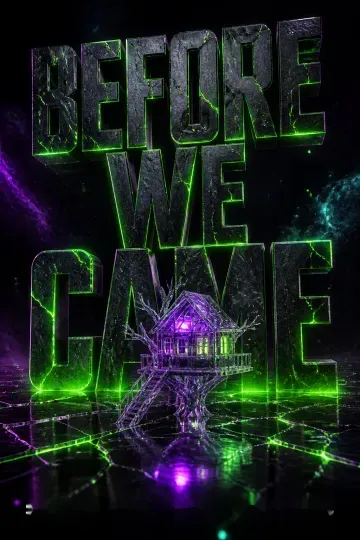
Childhood sanctuary and proposal siteA wooden fort built in the trees behind the Hayes6 property, where Bridget1, Jack4, and Lonan2 played as children. It is the site of Bridget1 and Lonan2's first kiss at ages seven and eight, and the place where they made a childhood pact to marry. After Bridget1's disappearance, Lonan2 fought to preserve it against those who wanted it torn down, maintaining it every spring as a way of staying connected to her memory. Years later, he secretly renovates it into a livable luxury treehouse with a bedroom, skylight, garden boxes, and an outdoor shower, fulfilling every detail of their childhood fantasy. It becomes the site of his first marriage proposal, which she rejects, and later, the forest around it hosts their wedding ceremony.
The Fiancé Visa
Legal mechanism forcing relationship crisisThe K-1 Fiancé Visa, a provision of U.S. immigration law that allows a foreign national to enter or remain in the country to marry an American citizen within ninety days. Lonan2 discovers this option while desperately researching ways to keep Birdie1 in Minnesota after her ESTA travel authorization approaches expiration. The visa requires a genuine romantic relationship and intent to marry. Lonan2 presents it to Birdie1's parents as a practical solution but plans a romantic proposal, hoping the legal necessity will not overshadow the emotional truth. The visa becomes the central conflict driver: Birdie1 interprets the proposal as a logistical arrangement rather than a love offering, reinforcing her core wound that people only 'keep' her because they need something from her, not because they genuinely want her.
Lakes Hockey Series



Download PDF
Download EPUB
.epub digital book format is ideal for reading ebooks on phones, tablets, and e-readers.








