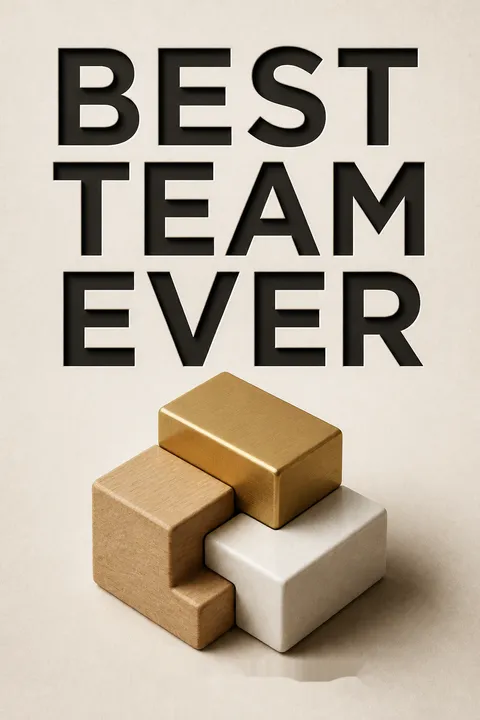


Key Takeaways
Choose culture over star talent: it determines what a team can do
The team makes talent. In 2010, American curler John Shuster was benched after his team finished last at the Olympics. Four years later, he joined other overlooked players to build their own team. Despite limited funding and early setbacks, they earned Olympic gold in 2018. Their comeback opens a larger argument: selecting impressive individuals is not enough if the way they work together holds them back.
Three conditions matter. The book groups them as common understanding, meaning people know each other's roles and working styles; psychological safety, the freedom to speak up and take interpersonal risks; and prosocial purpose, knowing how the work benefits others. The story is not proof that culture alone wins championships, but it illustrates the book's central claim: team practices shape how much talent can contribute.
The useful shift is from asking whom to recruit to asking what conditions let people contribute. That moves team performance from a fixed property of individual talent toward something leaders can influence through roles, norms, and shared goals. The curling story also cautions against treating selection systems as objective: rejected players can outperform handpicked ones. Still, one dramatic victory cannot isolate culture from training, skill, or circumstance. The framework is most persuasive as a practical lens for diagnosing how a team works, rather than a guarantee that good culture will overcome every disadvantage.
Clarify roles early, so collaboration spends less time negotiating ownership
Clarity creates coordination. At Pal's Sudden Service, customers wait an average of eighteen seconds at the pickup window, and an order is wrong about once in every 3,600. The company invests heavily in training, from more than 120 hours for new employees to as many as 800 for managers. Staff are trained across stations, and frequent quizzes help reveal where instruction needs work. Clear expectations do not make the work less collaborative. They help colleagues rely on each other instead of guessing who owns each task.
Make the work visible. Brief huddles can surface progress, next steps, and obstacles. A team charter records agreed norms for communication and decisions. A short list of priorities prevents everything from being treated as urgent, while If-Then plans link a trigger to an agreed response. These practices also need revision when work changes.
Clarity reduces coordination costs: people can spend attention on the problem instead of repeatedly negotiating responsibilities. That is especially valuable when work is interdependent and small delays accumulate. Pal's shows how standardization can support rather than erase teamwork, because employees understand multiple stations and how each contributes to service. The limit is that its fast-food model has unusually repeatable tasks. In exploratory work, excessive specification can freeze useful improvisation. A sound application makes responsibilities explicit while leaving room to revise the plan when evidence or circumstances change.
Learn how people work, not just what their job titles say
Know the person behind the role. UCLA gymnastics coach Valerie Kondos Field began by imitating the severe coaching style she saw around her. After her team told her that she was demeaning them, she changed course: athletes would be held accountable, but treated as whole people. Under her leadership, UCLA won its first national title and six more. She also built trust with gymnast Katelyn Ohashi by keeping their conversations outside the gym focused on life beyond performance.
Make differences usable. Empathy means understanding another person's feelings and perspective well enough to anticipate how they may respond. The book connects it to collective intelligence: teams do better when members notice social cues and make room for different voices. Teammate manuals can explain individual work preferences, while shared meals or informal conversation help colleagues learn about one another beyond their job descriptions.
Empathy here is not softness or agreement. It is information: knowing how a colleague interprets feedback, signals difficulty, or approaches a task helps the group coordinate with fewer mistaken assumptions. Kondos Field's change also illustrates the value of upward feedback, though such honesty depends on leaders responding without retaliation. Informal connection can help, but it should not be confused with compulsory intimacy. Some colleagues prefer privacy, and a team's goal is not to become a family. The stronger standard is whether people understand one another well enough to collaborate respectfully.
Make it safe to report errors, challenge plans, and learn
Safety makes problems visible. Psychological safety is a team climate in which people can speak honestly, admit mistakes, ask for help, and take interpersonal risks without expecting humiliation or punishment. Amy Edmondson noticed that hospital teams with stronger leaders reported more errors. The apparent paradox was that those teams documented mistakes instead of hiding them, giving colleagues a chance to learn and respond.
Safety is not permissiveness. Google's Project Aristotle found that team norms mattered more than a simple recipe of individual traits. People need room to disagree about the work, while remaining accountable for their commitments. Research described in the book also suggests that diversity can create friction when teams lack safety, but can become an advantage when different views are heard and examined. The practical aim is candid, task-focused disagreement, not a team that avoids conflict.
The distinction between errors occurring and errors being reported is crucial. In complex work, silence can make a team look efficient while concealing risks; disclosure creates the possibility of correction. Safety therefore supports learning, not lower standards. It also clarifies why diversity initiatives need interactional support: representation alone does not ensure that different perspectives influence decisions. There is a boundary, however. An environment that welcomes voice still needs clear performance expectations and mechanisms to address repeated negligence. Psychological safety makes accountability more informed, not optional.
Leaders build trust by being first to show fallibility
Candor needs a demonstration. When Alan Mulally became Ford's CEO, the company was facing an expected $17 billion loss. He asked executives to report progress using green, yellow, or red slides, with red meaning a problem lacked a solution. At first, every slide was green. When Mark Fields finally reported a production crisis in red, Mulally praised the disclosure and invited colleagues to help. Fields kept his job, and subsequent reports became more candid.
Trust has two sides. The book distinguishes confidence in a teammate's competence and reliability from care for them as a person. Both matter, but goodwill makes it easier to share concerns and ask for help. Leaders can start that cycle by admitting uncertainty, sharing relevant information, and reviewing setbacks for lessons instead of seeking someone to blame.
A leader's response to the first visible failure teaches the team more than a speech about openness. Mulally's praise changed the expected cost of candor, making the new reporting system credible. This is a useful institutional insight: trust is shaped by repeated consequences, not simply interpersonal warmth. Vulnerability must also be calibrated. A leader who discloses every doubt without taking responsibility can burden the team rather than reassure it. The effective signal is bounded honesty paired with competence, follow-through, and a willingness to help resolve the problem.
Respect is visible when leaders listen, share credit, and invite dissent
Voice requires respect. At Frontier Communications, CEO Maggie Wilderotter found a sharp divide between headquarters executives and frontline workers. She visited remote markets, listened to employees, and involved general managers directly in labor negotiations. Frontline workers received their first raise in five years, and some executives who resisted listening were removed. During her tenure, Frontier grew from roughly $1 billion to more than $10 billion in revenue, and its union did not strike.
Make respect observable. The book recommends active listening, recognizing others' contributions, and treating disagreement as collaboration rather than an attack. Leaders can ask what assumptions underlie an idea, request candid criticism, and make space for quieter voices. The stakes are practical: a medical team study described in the book found that teams treated rudely shared information less readily and were less likely to identify the correct course of action.
Respect is not merely a pleasant tone. It determines whose information enters the decision, which can affect both performance and fairness. Wilderotter's listening tour mattered because it was connected to changes in authority, pay, and negotiation, not just symbolic attention. That is an important test for any organization: does listening alter what leaders know or do? Respectful conduct alone cannot remove structural power differences, and inviting feedback without acting on it can deepen cynicism. Leaders need to show that dissent is heard, considered, and answered.
Make routine work meaningful by showing whose lives it improves
Contribution makes work matter. At KPMG, leaders collected stories showing how accounting work had helped with events such as an election in South Africa. The follow-up challenge invited employees to describe their own impact; it gathered 42,000 stories within six months. At Kaiser Permanente, the I Saved A Life program encouraged receptionists and medical assistants to use patient records to flag overdue screenings. More than 1,500 lives were reported saved through the program.
Meaning can be small and concrete. The book defines task significance as understanding how one's work enables other people to do their work. A Lego experiment offers a simple illustration: participants built an average of eleven figures when completed work remained visible, but seven when researchers dismantled each figure in front of them. Showing how a task contributes to a larger result can make routine effort feel less futile.
These examples reveal a practical form of job design: connect an activity to its consequence, rather than relying on a grand mission statement to inspire everyone equally. The benefit is especially clear in support roles, where organizational language can make essential work sound secondary. Yet purpose messaging needs to reflect reality. If a team is told its work saves lives or serves a community while lacking the tools to do so well, the story becomes propaganda. Meaning is strongest when the claimed contribution is specific, credible, and matched by the organization's actual priorities.
Replace abstract purpose statements with real people who benefit
Purpose has a beneficiary. Prosocial purpose means seeing how work makes a meaningful contribution to other people. In a university call center study, student fundraisers met a scholarship recipient whose education their calls had helped support. A month later, those workers made twice as many calls per hour and generated more than $2,000 in weekly donations on average, compared with about $400 before the intervention.
Bring the recipient closer. The Savannah Bananas built their baseball experience around fans, with players greeting them and hearing how the games affected them. Before a championship series, players watched fans describe the joy the team had brought them. The book's practical methods include collecting impact stories, inviting beneficiaries to speak, and letting employees experience a service as customers. These approaches answer a more specific question than a mission statement: who relies on this team's work?
A named beneficiary gives purpose a human scale. It can help people connect distant tasks to consequences they can understand, and the examples suggest that direct contact can be more motivating than corporate slogans. The idea also sharpens evaluation: teams can ask whether the people they claim to serve actually benefit. Contact should not become a performance staged for employees, however. Beneficiaries are people, not motivational props, and their stories deserve consent and accuracy. Purpose is most credible when feedback from those served can also expose failures and change the work.
At WD-40, safer learning and clear ownership helped a basic product grow
Culture's parts reinforce one another. WD-40 CEO Garry Ridge worked on clear accountability, care, candor, and a sense of how the product helped customers solve everyday problems. He called failures learning moments and encouraged employees to share what happened and what they learned. His Four Pillars of the Fearless Tribe were care, candor, accountability, and responsibility. Together, these practices supported learning without erasing ownership of results.
Combine the conditions. The book argues that common understanding, psychological safety, and prosocial purpose are interdependent. Clear roles make it easier to rely on colleagues; safety makes it easier to surface problems; visible impact gives people a reason to improve the work. During Ridge's tenure, WD-40 expanded the share of revenue earned outside the United States from 20% to 65%. The case suggests culture can help an established product find renewed possibilities, not just improve workplace morale.
The integrated model is more useful than a checklist treated as a sequence of independent fixes. Clear roles without safety can produce efficient silence; safety without responsibility can blur standards; purpose without either can become a slogan. Ridge's example shows how complementary norms may help an organization learn and adapt. The caution is that a successful company's story cannot show which practice caused which result, especially when markets and strategy also change. The framework is best used as a diagnostic: identify which condition is missing and test whether changing it improves collaboration.
Analysis
The book's strongest contribution is its shift in the unit of explanation. Team effectiveness is not presented as the sum of individual credentials, nor as a leader's charisma, but as a set of conditions that shape how people combine their abilities. Common understanding reduces coordination ambiguity. Psychological safety makes information and dissent available. Prosocial purpose directs effort toward a beneficiary. The structure is compelling because each element addresses a different failure mode, while the cases show how they can reinforce one another.
The account also treats culture as something practiced rather than announced. Pal's training, Ford's red-slide meetings, Frontier's listening tour, and KPMG's impact stories work because they alter routines, incentives, or access to information. This is more actionable than asking employees to adopt abstract values. A useful test for leaders is therefore behavioral: what happens after someone reports a problem, challenges a decision, or asks how their work helps a customer?
The evidence needs careful interpretation. The book draws on laboratory studies, surveys, organizational cases, and striking company outcomes, but those forms of evidence do not support identical causal claims. A case study can make a mechanism vivid without proving that the same intervention will produce the same result elsewhere. Outcomes such as revenue growth are also shaped by strategy, markets, investment, and execution. The research is strongest as a guide to plausible mechanisms and testable practices, not as a promise that culture alone explains performance.
The framework also has a power dimension. Employees may be encouraged to speak, but leaders decide whether speech has consequences. Purpose may be communicated, but frontline teams still need the time, authority, and resources to serve people well. A high-performing culture is not merely one in which people feel good; it is one that makes truth usable, distributes respect across roles, and connects claims of impact to actual beneficiaries. That standard preserves the book's optimism while keeping culture accountable to observable work.
Review Summary
Best Team Ever receives mixed reviews, with an average rating of 3.86 out of 5. Readers appreciate the practical insights, engaging stories, and reminders of effective team leadership principles. Many find it helpful for team-building discussions and personal growth. However, some criticize the lack of originality and depth in content. The book is praised for its accessibility and focus on trust, empathy, and respect. While not groundbreaking, it offers valuable perspectives on creating high-performing teams and fostering a sense of community in various settings.
People Also Read




Glossary
Common Understanding
Shared knowledge of workA team's shared understanding of members' expertise, responsibilities, context, and working preferences. It helps people coordinate tasks, anticipate one another's actions, and know when and how to offer help. It includes clarity about the work itself and familiarity with the people doing it.
Psychological Safety
Safety for interpersonal riskA team climate in which people can express concerns, admit mistakes, ask for help, and disagree without expecting humiliation or punishment. Psychological safety supports learning and candid discussion. It does not remove accountability or require agreement; it makes it safer to address problems directly.
Prosocial Purpose
Work that benefits othersA sense that a team's work makes a meaningful contribution to other people. It combines an understanding that one's contribution counts with awareness of who benefits. The concept emphasizes specific recipients and tangible effects rather than relying only on broad organizational mission statements.
Collective Intelligence
A group's collaborative capabilityThe capacity of a team to perform effectively across different kinds of collaborative tasks. The research discussed in the book found that team performance was not explained simply by the average intelligence of its members. Shared norms, coordination, and sensitivity to one another helped determine how well the group reasoned and acted together.
Project Aristotle
Google's team effectiveness studyA Google People Analytics investigation of 180 teams that examined what distinguished effective teams. Researchers first looked for an ideal mix of individual traits and found no clear formula. Their analysis turned toward group norms and how teams interacted, with psychological safety emerging as a central condition.
Team Charter
Agreed working normsA shared, revisable document that records how a team will communicate, coordinate, seek help, and make decisions. Its value comes less from possessing a document than from discussing unresolved expectations together and updating the agreements when team needs change.
Teammate Manual
Personal work preferences guideA short account each team member creates to explain how they work best, what makes work difficult, what colleagues can rely on them for, and what support they need. The purpose is to make individual preferences easier to understand and reduce avoidable friction, not to assign people a fixed personality label.
After-Action Review
Structured team learning reviewA team discussion held after a project or important milestone to compare intended and actual results, examine why they differed, and decide what to repeat or change. Its purpose is to extract lessons rather than assign blame or concentrate credit on one person.
Task significance
Work's contribution to othersAn understanding of how a person's work enables colleagues, customers, or other beneficiaries to do or experience something important. Making task significance visible can help workers see how routine duties connect to a larger result and can encourage them to support others' work.
FAQ
1. What’s "Best Team Ever: The Surprising Science of High-Performing Teams" by David Burkus about?
- Focus on Team Culture: The book explores the science and practical strategies behind building high-performing teams, emphasizing that team culture is more important than individual talent.
- Three Core Elements: Burkus identifies three fundamental elements of great team culture: Common Understanding, Psychological Safety, and Prosocial Purpose.
- Real-World Examples: The book uses stories from sports, business, healthcare, and even fast food to illustrate how these elements work in practice.
- Actionable Guidance: It serves as both a training manual and a guide, offering research-backed advice and practical tools for leaders and team members to improve their teams.
2. Why should I read "Best Team Ever" by David Burkus?
- Evidence-Based Insights: The book distills decades of research on team performance into actionable advice, making it valuable for anyone who works in or leads teams.
- Practical Tools: Burkus provides concrete methods, exercises, and rituals that can be implemented immediately to improve team dynamics and results.
- Universal Relevance: Whether you’re in business, sports, healthcare, or any collaborative environment, the principles apply broadly.
- Inspiring Stories: The book is engaging, using compelling stories to make the science memorable and relatable.
3. What are the key takeaways from "Best Team Ever" by David Burkus?
- Team Culture Trumps Talent: The culture of a team has a greater impact on performance than the individual talents of its members.
- Three Essential Elements: High-performing teams share Common Understanding, Psychological Safety, and Prosocial Purpose.
- Practical Implementation: Building these elements requires intentional actions like regular huddles, vulnerability from leaders, and sharing stories of impact.
- Interdependence of Elements: The three elements interact and reinforce each other, creating a virtuous cycle that elevates team performance.
4. What is the "Common Understanding" concept in "Best Team Ever" and how can teams build it?
- Definition: Common Understanding means team members know each other’s expertise, roles, tasks, context, and preferences.
- Benefits: It leads to faster collaboration, easier coordination, and higher collective intelligence.
- How to Build: Teams can use huddles, team charters, clear priorities, and "If-Then" plans to clarify roles and expectations.
- Empathy Matters: Building empathy—understanding teammates as people, not just roles—further enhances common understanding.
5. How does "Psychological Safety" work in David Burkus’s framework, and why is it crucial?
- Definition: Psychological Safety is the shared belief that the team is safe for interpersonal risk-taking, allowing members to express themselves, admit mistakes, and disagree respectfully.
- Impact on Performance: Teams with high psychological safety learn faster, innovate more, and adapt better to challenges.
- Building Blocks: It is built through trust (feeling safe to be authentic) and respect (feeling accepted and valued).
- Leader’s Role: Leaders must model vulnerability, celebrate failures as learning moments, and actively listen to foster psychological safety.
6. What does "Prosocial Purpose" mean in "Best Team Ever," and how does it motivate teams?
- Definition: Prosocial Purpose is when team members know their work makes a meaningful contribution to others, focusing on who benefits from their efforts.
- Motivational Power: Knowing the impact of their work increases engagement, motivation, and retention.
- Making Purpose Personal: Teams are most inspired when they see specific stories or people who benefit from their work, not just abstract mission statements.
- Practical Tactics: Sharing impact stories, pausing for purpose in meetings, and connecting with beneficiaries are ways to reinforce prosocial purpose.
7. What practical methods and rituals does David Burkus recommend for building high-performing teams?
- Regular Huddles: Short, focused meetings to update on progress, priorities, and obstacles.
- Team Charters and Teammate Manuals: Documents that clarify norms, communication preferences, and personal work styles.
- Celebrating Failures and After-Action Reviews: Rituals that turn mistakes into learning opportunities and foster trust.
- Sharing Gratitude and Wins: Regularly expressing appreciation and celebrating small victories to build connection and meaning.
8. How does "Best Team Ever" by David Burkus address the role of leadership in team culture?
- Modeling Behavior: Leaders set the tone by modeling vulnerability, respect, and active listening.
- Empowering Teams: Effective leaders give team members clarity, autonomy, and opportunities to contribute ideas.
- Recognizing and Sharing Credit: Leaders who share credit and amplify unheard voices foster respect and engagement.
- Purpose Communication: Leaders who regularly discuss the team’s purpose and impact drive higher motivation and performance.
9. What are some of the most compelling stories or case studies in "Best Team Ever" and what do they illustrate?
- Team USA Curling ("Team Reject"): Demonstrates that team culture can overcome lack of external validation and lead to Olympic gold.
- Chris Hadfield’s Space Station Crew: Shows the importance of common understanding and empathy in high-stakes, multicultural teams.
- Pal’s Sudden Service: Highlights the power of clarity and rigorous training in achieving near-perfect performance in fast food.
- Savannah Bananas Baseball Team: Illustrates how focusing on impact and fan experience can create extraordinary engagement and results.
10. What are the best quotes from "Best Team Ever" by David Burkus and what do they mean?
- "Talent doesn’t make the team. The team makes the talent." – Emphasizes that team culture shapes individual performance more than innate ability.
- "Great teams play chess, not checkers." – Highlights the need to recognize and leverage individual differences rather than treating everyone the same.
- "Diversity without safety is anarchy." – Warns that diversity only benefits teams when psychological safety is present.
- "Purpose isn’t a why. Purpose is a who." – Reminds teams to focus on the people they serve, not just abstract goals.
11. How do the three elements—Common Understanding, Psychological Safety, and Prosocial Purpose—interact in "Best Team Ever"?
- Mutual Reinforcement: Each element strengthens the others; for example, psychological safety enables deeper common understanding, and shared purpose motivates trust and openness.
- Virtuous Cycle: As teams build one element, it becomes easier to develop the others, leading to exponential improvements in performance and engagement.
- Holistic Approach: High-performing teams don’t focus on just one element; they intentionally cultivate all three for maximum impact.
- Adaptability and Innovation: The interplay of these elements allows teams to attract talent, generate ideas, and take risks that drive success.
12. What are the first steps a leader or team member should take to apply the advice from "Best Team Ever" by David Burkus?
- Assess Current Culture: Reflect on the team’s current levels of clarity, safety, and purpose using the frameworks in the book.
- Start Small: Implement one new ritual or practice, such as daily huddles or sharing gratitude, and build from there.
- Model Desired Behaviors: Leaders and influential team members should go first in showing vulnerability, respect, and purpose-driven communication.
- Iterate and Involve the Team: Regularly review what’s working, involve the team in co-creating norms, and adjust practices to fit the team’s unique context.
About the Author
Download PDF
Download EPUB
.epub digital book format is ideal for reading ebooks on phones, tablets, and e-readers.








