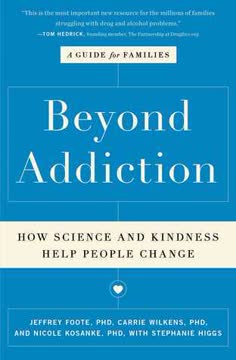
Key Takeaways
1. Embrace the "Invitation to Change": Science and Kindness Guide Helping
The most effective methods for helping someone with a substance problem go by several different names, but they boil down to two key ingredients: science and kindness.
Challenge traditional advice. Many families are told there's nothing they can do, or to practice "tough love" until their loved one "hits rock bottom." The "Invitation to Change" (ITC) approach counters these unhelpful and often damaging notions, offering a compassionate roadmap for families and friends. It blends evidence-based tools with clinical experience, emphasizing that family involvement is a powerful predictor of positive outcomes.
Family involvement matters. Research consistently shows that family engagement significantly increases a loved one's willingness to seek treatment and reduce substance use. ITC empowers you to be an active, positive force for change, rather than feeling helpless or blamed for "enabling." It provides practical strategies to lessen tension, improve communication, and support your loved one's journey while also caring for yourself.
A new perspective. ITC helps you view your loved one's behavior differently, seeing it as serving a purpose for them, which opens new avenues for understanding and collaboration. This approach is built on the foundation of science—drawing from therapies like Community Reinforcement and Family Training (CRAFT), Motivational Interviewing (MI), and Acceptance and Commitment Therapy (ACT)—and kindness, which acts as the "glue" for meaningful and sustainable change.
2. Understand Why Problematic Behaviors Make Sense to Your Loved One
Simply put, substance use is reinforced in one of two ways (or both): it adds something good to life, like human connection or pleasure, or it takes something uncomfortable away, such as anxiety, depression, boredom, physical pain, or withdrawal symptoms.
Behaviors serve a purpose. Any repeated behavior, including substance use, serves a function for the individual. People don't use substances because they are "bad" or "crazy"; they use them because they derive some form of immediate, consistent, and meaningful reinforcement. This could be to feel good, reduce anxiety, alleviate boredom, or cope with physical pain.
Functional analysis is key. Understanding the "why" behind your loved one's substance use is crucial for helping them change. By analyzing the triggers (what happens before) and consequences (what happens after), you can identify what reinforces the behavior. This perspective helps you:
- See a different way forward by identifying alternative coping mechanisms.
- Lower your distress by making the behavior seem less random.
- Increase empathy and connection, making you more likely to help.
Immediate rewards dominate. The power of reinforcement is strongest when it's immediate, consistent, and meaningful. Substances often provide quick, reliable relief or pleasure, making them powerful reinforcers. Recognizing this helps you understand why stopping is difficult and how to introduce alternative behaviors that offer competing positive outcomes.
3. Reject One-Size-Fits-All Solutions; Every Path to Change is Unique
Ultimately, if you’re seeking a cut-and-dried response to the question “What should I do if someone I care about is drinking or using drugs?” the answer is that it doesn’t exist.
Uniqueness is paramount. Traditional views often lump everyone struggling with substances into a single category, prescribing generic solutions like "rehab or nothing" or "hit rock bottom." However, every individual and family situation is unique, influenced by a complex interplay of biological, psychological, and social factors. What works for one person may not work for another.
Generic advice backfires. Imposing a single path or insisting on a specific way of thinking about the problem often increases resistance to change. Labels like "addict" or "codependent" are unhelpful, stigmatizing, and can shut down productive dialogue. Instead, ITC encourages you to trust your own knowledge and instincts about your loved one and family's specific needs, resources, and values.
Tailored options empower. Providing a range of options that resonate with your loved one's unique circumstances—such as individual therapy, peer support groups, or addressing underlying issues like anxiety or employment—increases their buy-in and motivation. This personalized approach fosters greater ownership of the change process, making sustained recovery more likely.
4. Accept Ambivalence as a Normal, Expected Part of Change
Feeling ambivalent at any point in a process of change does not mean someone is being stubborn or “in denial”—it means they’re remembering, and perhaps turning back to, what has worked in the past.
Ambivalence is natural. Change is rarely a straight line; it's a process marked by small steps, some forward, some sideways, some backward. When giving up a behavior that has provided some form of positive reinforcement, it's normal to experience mixed feelings or ambivalence. This isn't a sign of failure or stubbornness, but a natural human response to letting go of something that once served a purpose.
Cost-benefit analysis. Your loved one constantly weighs the pros and cons of using substances versus changing. While the negative consequences may be clear to you, the immediate positive effects (or the memory of them) still hold sway. Understanding this internal struggle helps you avoid judgmental reactions and instead approach their ambivalence with empathy.
Empathy fosters progress. Reacting to ambivalence with arguments, lectures, or accusations often causes your loved one to defend their current behavior, shutting down conversation. By acknowledging their mixed feelings without judgment, you create a safe space for them to explore their own reasons for change. This empathetic response can transform ambivalence from a roadblock into an opportunity for deeper reflection and commitment.
5. Anchor Your Efforts in Self-Awareness and Core Values
Being aware of you helps you help them; starting there, painful as it may be, brings compassion into your invitation to change, which is an invitation more likely to be accepted.
Self-awareness is foundational. Loving someone with a substance problem is incredibly stressful, often leading to emotional exhaustion, reactivity, and a loss of self. Self-awareness involves checking in with your feelings, thoughts, physical reactions, and, crucially, your core values. This internal check-in is the difference between reacting impulsively and responding intentionally.
Proactive, not reactive. When you understand your own emotional state and what truly matters to you, you can choose responses that align with your values, even in difficult moments. This creates space between triggers and reactions, allowing you to act constructively rather than lashing out or shutting down. It's about choosing who you want to be as a helper and a person.
Reconnect with your "why." Beyond daily struggles, self-awareness helps you reconnect with your deeper values—the love, hope, and connection that motivate your desire to help. This anchor sustains you through pain and disappointment, reminding you of the purpose behind your efforts. It's a vital step in building resilience and becoming a more effective, compassionate helper.
6. Cultivate Willingness to Embrace Pain, Not Avoid It
Willingness is an invitation to yourself—“Are you willing to allow for the vulnerability and pain that come with caring?”
Pain and values are linked. Your pain and your caring are two sides of the same coin; you hurt because you love. It's human nature to avoid discomfort, but attempts to control pain—either by controlling your loved one's behavior or by shutting down yourself—are often ineffective and can damage relationships. Willingness offers a different path.
Meaningful suffering. Willingness is the conscious choice to accept all your feelings, even the painful ones, because they allow you to stay connected to what you care about most. This transforms meaningless suffering into meaningful suffering, as your pain becomes a clue that you are in territory that truly matters to you. It's not about "sucking it up," but about choosing to pursue your deeper values despite discomfort.
A choice, not an obligation. Being willing is a choice, not a moral imperative. It means continuing to work towards positive change even when you're angry, tired, or scared. This approach allows you to stay connected to your loved one and your values, fostering greater resilience and connection. Small acts of willingness, like pausing before yelling, are the building blocks of real, sustainable change for both you and your loved one.
7. Practice Self-Compassion to Sustain Yourself and Combat Shame
Self-compassion brings kindness and care to you, to sustain you through an invitation to sustainable change in your loved one.
Self-care is not selfish. When a loved one struggles, feelings of worry, anger, fear, and shame can be consuming. Self-compassion, comprising mindfulness, self-kindness, and common humanity, is the antidote. It's not about pampering, but about acknowledging your own needs and treating yourself with the same kindness you'd offer a friend. This bolsters your endurance for the long, challenging journey of helping.
Combatting shame and isolation. Shame is a particularly toxic emotion, often leading to isolation and self-blame ("This is my fault"). Self-compassion directly counters shame by fostering self-acceptance and reminding you that your struggles are part of the common human experience. Reaching out to others who share similar experiences can break the cycle of isolation and provide much-needed support and energy.
Model healthy behavior. By practicing self-compassion—taking care of your physical and emotional well-being, allowing for mistakes, and connecting with supportive communities—you not only sustain yourself but also model the very behaviors you hope your loved one will adopt. This creates a healing environment where both you and your loved one can grow and change.
8. Master Collaborative Communication: Turn Red Lights Green
Communication that is collaborative instead of controlling, confrontational, one-sided, or dismissive of your loved one’s perspective decreases defensiveness and invites conversations that support change.
Words create reality. How you communicate profoundly impacts your relationship and your loved one's openness to change. Stress and high emotions often lead to unproductive arguments or shutdowns. Collaborative communication, built on love, respect, and empathy, creates safety and trust, fostering deeper connection and making productive conversations possible.
Heed conversational signals. Just like traffic lights, your loved one gives "red lights" (e.g., crossed arms, "not now," walking away) and "green lights" (e.g., lingering, asking questions). Pushing through red lights leads to crashes and reinforces resistance. Paying attention to these signals, and being willing to pause, allows you to navigate conversations more effectively and avoid common "conversational traps" like lecturing or blaming.
Use LOVE and OARS. The LOVE strategy (Listening, Offering Information, Validating, Empathizing) and its component OARS skills (Open-ended questions, Affirming, Reflecting back, Summarizing) are powerful tools. They help you truly hear your loved one, acknowledge their perspective without judgment, and offer information in a way that is received, not rejected. This approach reduces defensiveness and encourages them to listen to you in return.
9. Strategically Invite Help, Tailoring Options to Your Loved One's Needs
Speak directly to your loved one’s interests, even if you have a specific idea about what kind of support would be best.
Beyond "treatment or nothing." While formal treatment is an option, many paths to help exist, including reducing use independently, peer support groups (like SMART Recovery), or counseling for underlying issues like anxiety or employment. Understanding these diverse options allows you to make informed, less intimidating recommendations that resonate with your loved one's specific needs and goals.
Motivational hooks are key. When inviting your loved one to seek help, frame your suggestions around what is most meaningful to them. Instead of focusing solely on stopping substance use, connect help to their interests:
- Improving mood or energy levels.
- Addressing employment problems.
- Reconnecting with friends or family.
- Reducing anxiety or depression.
Timing and delivery matter. Choose opportune moments when your loved one is receptive, perhaps feeling remorse or expressing interest in change. Use the "information sandwich" (ask permission, provide information, check back) and SURF communication skills to offer options without pressure or judgment. If they say "no," respect their decision and remember that this is a marathon, not a sprint; keep the conversation open for future invitations.
10. Shape Behavior by Reinforcing the Positive, Not Just Punishing the Negative
Science has shown that if we notice someone’s positive behaviors when they happen, and let them know we see them, we can support, strengthen, and increase those behaviors, which helps them along the path to change.
Water the flowers, not the weeds. It's natural to focus on negative behaviors, but constantly criticizing or punishing can make your loved one feel hopeless and less likely to change. Positive reinforcement, like watering the flowers in a garden, involves intentionally noticing, acknowledging, and responding to desired behaviors. This strengthens positive actions and helps your loved one experience rewards unrelated to substance use.
Reinforcement works. Research consistently demonstrates that positive reinforcement is highly effective in helping people change their relationship with substances. When you reinforce constructive behaviors—like coming home sober, helping with chores, or expressing honesty—you increase the likelihood of these behaviors recurring. This builds their self-worth and shows them that positive outcomes are possible without substances.
Strategic, not enabling. Positive reinforcement is distinct from "enabling." It's about selectively rewarding the behaviors you want to see more of, not ignoring or excusing problematic ones. Rewards can be free (attention, affirmations, affection) or tangible (a favorite meal, a gift card), but they must be desired by your loved one, consistent, and delivered immediately after the positive behavior.
11. Allow Natural Consequences and Set Compassionate Limits
Behaviors that aren’t rewarding or that have significant undesirable natural consequences tend to decrease or stop.
Let the world teach. While positive reinforcement encourages desired behaviors, allowing natural consequences helps reduce unwanted ones. Natural consequences are the organic, unwanted costs of substance use (e.g., hangovers, missed work, financial problems) that occur without your interference. Shielding your loved one from these outcomes inadvertently reinforces their problematic behavior by removing its downside.
Distinguish from punishment. Natural consequences are not "tough love" or punishment delivered by you. They are the world's lessons. By allowing them to unfold, you shift the focus from you as the "bad guy" to your loved one's own choices and their direct outcomes. This empowers them to connect their actions with real-world costs, fostering greater personal responsibility.
Set limits for safety and self-respect. Some consequences are too harmful to allow (e.g., driving intoxicated). In these cases, setting clear, compassionate limits is crucial. This involves defining unacceptable behaviors, planning your response (removing a specific reinforcer), communicating it clearly using SURF, and consistently following through. Limit-setting protects you emotionally, reduces unwanted behaviors, and removes your loving presence as an unintentional reinforcer for negative actions.
12. Practice Consistently: Change is a Process of Mastery, Not Perfection
Change is a process of mastery, which takes time, patience, compassion, and practice.
Embrace the learning curve. Behavior change is complicated, uneven, and takes time. Just like learning a new skill, applying ITC strategies will feel awkward and challenging at first. Expect ups and downs, setbacks, and moments of frustration. This understanding fosters empathy for your loved one's struggles and patience for your own learning process.
Integration through practice. The true power of ITC emerges as you consistently practice and integrate its various components: understanding, awareness, and action. Over time, these skills combine intuitively, allowing you to respond with greater skill and effectiveness. For example, reinforcing a sober evening becomes more meaningful when you understand their struggle and align it with your values.
Persistence yields results. You won't get it right every time, and that's okay. Giving up after a few failed attempts guarantees no change. Instead, learn from missteps, adjust your approach, and keep trying. This persistent effort, coupled with self-compassion, builds confidence and creates a foundation for substantive, long-lasting improvements in your well-being, your loved one's journey, and your entire family's life.
Last updated:
Similar Books