

Key Takeaways
Judge the repeated private pattern, not the charming reputation others see
Look beneath the image. Mirza describes covert narcissism as narcissistic traits concealed behind a likable, humble, or caring public persona. The person may seem attentive to friends and admired at work, while someone close to them experiences control, criticism, and emotional neglect. Because the contrast is so stark, the harmed person may doubt their own account, especially when others praise the person causing harm.
Track behavior, not labels. The book refers to DSM-IV criteria for narcissistic personality disorder, then explains how the traits may appear less openly in a covert presentation. Its central practical point is to notice recurring behavior and its effects, rather than treating a checklist as proof of a diagnosis. Amy, whose marriage lasted more than 30 years, began making sense of her experience when she compared her husband’s public kindness with his private treatment of her.
The distinction between public reputation and private conduct is especially useful in relationships where outsiders see only a polished performance. It gives a reader permission to take their own experience seriously without needing an audience to agree. At the same time, a label can become a shortcut that replaces careful observation. The strongest use of Mirza’s framework is therefore descriptive: identify specific actions, their repetition, and their impact. That approach can guide decisions even when nobody can confidently determine a person’s diagnosis or motives.
Treat fast intimacy and gradual criticism as a pattern to investigate
A cycle, not a calendar. Mirza describes three recurring phases: idealization, when the person seems unusually attentive and compatible; devaluing, when criticism and disregard creep in; and discard, when the relationship ends abruptly or the person withdraws. The phases may overlap and repeat. She says the early idealization commonly lasts six months to a year, though this is not a fixed timetable.
Notice what changes. A survivor named Sara recalled a partner who seemed to share her values, welcomed therapy, and drew out her compassion. Over time, she explained away hurtful behavior because she remained attached to the caring person she had first encountered. The book argues that early mirroring and intimacy can make later mistreatment harder to recognize. Rather than treating an intense beginning as proof of deep compatibility, watch whether respect, care, and accountability remain consistent.
The phases make confusing changes easier to narrate. Instead of asking why a relationship that once felt wonderful now feels painful, a reader can compare behavior across time and look for recurring shifts. The caution is that relationship stages are a map, not a universal sequence. Many relationships begin intensely or deteriorate without manipulation. The map is most valuable when it helps someone describe concrete events, identify what they need, and seek outside perspective, not when it is used to predict another person’s intentions.
Unpredictable kindness can keep you working for affection that never stabilizes
Uncertainty can bind. Mirza calls inconsistent affection intermittent reinforcement: warmth and approval arrive unpredictably among periods of withdrawal, criticism, or tension. The recipient may try harder to regain the closeness they remember, then feel relief when kindness returns. That relief can be mistaken for evidence that the relationship is improving, even when the underlying pattern stays the same.
A behavioral parallel. The book recounts an experiment in which monkeys learned to press a lever for a reward. When rewards became unpredictable, the animals continued working intensely for the chance of receiving one. Mirza uses this to illustrate why a relationship’s occasional loving moments can be powerful. The practical question is not whether affection happens, but whether care is dependable, reciprocal, and present when one person is vulnerable.
This account helps explain why leaving or setting limits can feel emotionally difficult even when the painful episodes are clear. A relationship can be sustained by hope for the return of earlier warmth, not only by present-day satisfaction. The animal experiment is an analogy for the pull of uncertain rewards, not direct evidence about any particular couple. Readers can use the idea without assuming that every inconsistent partner is deliberately conditioning them: the effect on wellbeing matters whether the inconsistency is intentional or not.
When conversations scramble memory, document events and compare words with actions
Recognize reality-undermining tactics. Mirza uses gaslighting to describe repeated denial, blame, or deflection that leads someone to question their memory and judgment. Other patterns in the book include projecting one’s own faults onto a partner, giving apologies without changing behavior, and making indirect insults that can be dismissed as jokes. A person may speak calmly and confidently while the other leaves confused and apologizing.
Create an outside reference. Mark, one interviewee, was repeatedly told that events he remembered had not happened. He began doubting his memory. Mirza recommends education, supportive conversations, and reviewing journals as ways to regain perspective. A practical record can note what happened, what was said, and what followed. Comparing those notes with subsequent actions can reveal a pattern more clearly than trying to resolve every bewildering conversation in the moment.
Documentation can serve as a stabilizing tool when conflict makes events hard to recall or explain. It shifts attention from debating someone’s interpretation to examining observable details over time. That does not mean every disagreement about memory is manipulation; ordinary people misremember, and records can also be incomplete. The key distinction is the broader pattern: repeated denial, retaliation for raising concerns, refusal to address impact, or pressure to distrust one’s own judgment. A trusted, impartial professional can help assess that pattern.
Your empathy is not a flaw, but boundaries must protect it
Good traits can be exploited. In Mirza’s interviews, many survivors describe themselves as caring, self-reflective, loyal, and willing to take responsibility. Those qualities can help relationships thrive, but they can also make someone more likely to accept blame, excuse mistreatment, or work harder to restore harmony. The book rejects the idea that these traits make the survivor responsible for another person’s harmful behavior.
Keep compassion in proportion. One woman continued caring for her husband after he became abruptly incapacitated during an argument in which she had stopped defending herself against his accusations. Mirza interprets the episode as a diversion that redirected attention to him. Whatever the explanation for an individual event, the broader lesson is to notice whether care consistently flows one way. Compassion does not require accepting disrespect, managing another adult’s emotions, or abandoning one’s own needs.
This framing avoids a common trap: telling harmed people that they must become less trusting or less kind. The more useful goal is discernment, keeping generosity while noticing whether it is reciprocated and whether boundaries are respected. Self-reflection can support growth, but it becomes self-erasure when one person examines every fault while the other accepts none. A fair relationship needs room for both people’s feelings and responsibility. That standard is more actionable than trying to decide whether a survivor’s temperament made them a target.
Evaluate parents and bosses by private conduct, not public praise
The setting changes, the pattern can persist. Mirza describes similar dynamics in families and workplaces. A parent may be admired by neighbors yet leave a child feeling unseen, anxious, or responsible for the parent’s moods. Some children receive special attention for pleasing the parent, while siblings are criticized or ignored. In adulthood, the child may still struggle to trust their own decisions.
Workplace charm can isolate. One employee, Tom, admired his boss and socialized with him and their families. When the boss began undermining him, coworkers dismissed his concerns because they regarded the boss as wonderful. Other workplace examples include taking credit for ideas, disrupting meetings, and framing a capable employee as unreliable. The book’s practical test is to compare a leader’s reassuring words with how they treat people who depend on them, especially when there is no audience.
The same public-private split can make abuse hard to name in families and organizations, where the person with more status often controls the story. A child or employee may have less freedom to challenge that version without risking belonging, income, or support. This makes outside perspective particularly important. At the same time, not every disappointing parent or unfair manager fits a narcissism framework. Naming concrete conduct, such as retaliation, favoritism, or appropriation of work, can be useful even without a personality label.
Treat sexual distress and body alarms as clues, not diagnoses
Listen without self-blame. Survivors in the book describe low desire, feeling used, pressure to perform, and years without sexual pleasure. Some assumed they were the problem because their partner portrayed the issue that way. Mirza argues that sexual experiences can reveal whether someone feels respected and emotionally safe in a relationship. She also recounts an Iowa card experiment in which participants’ physical stress responses appeared before they could explain which choices were risky.
A clue needs context. The book connects distress and physical symptoms with the strain of hidden abuse, and encourages readers to take their bodies seriously. A bodily reaction can be a reason to pause, reflect, and seek help. It cannot, by itself, establish what another person intends or diagnose the cause of an illness. Sexual pain, changes in desire, fatigue, and anxiety can have many contributing factors, so medical or therapeutic support may be appropriate.
The book’s attention to bodily experience counters the tendency to treat only articulate explanations as credible. Tension, dread, or shutting down during intimacy may signal that something deserves care and investigation. The limit is crucial: the body reports an experience, not a definitive account of its cause. Symptoms can arise from health conditions, stress, medication, past experiences, or relationship dynamics. Treating them as evidence to explore, rather than a verdict about a partner, preserves both self-trust and room for accurate assessment.
In separation, trade emotional debate for documentation, support, and limited contact
Prepare for practical conflict. Mirza warns that separation from a manipulative partner can involve abrupt abandonment of responsibilities, financial pressure, hostile messages, and attempts to recruit relatives or friends against the survivor. She describes people being left to manage children, housing, and bills while trying to make major decisions in distress. She recommends seeking legal counsel familiar with high-conflict dynamics and getting a clear-headed supporter involved.
Keep contact functional. Where children require ongoing communication, the book advises sticking to logistics, using written channels where possible, and avoiding personal arguments that invite further confusion. It also cautions against assuming ordinary cooperative-divorce advice will fit every situation. Children should not be used as messengers or emotional confidants, though they may need calm reassurance and clear boundaries about disrespectful behavior. The emphasis is on planning, support, and protecting decision-making under stress.
This is a useful shift from seeking emotional closure from someone who may not offer it to managing concrete needs. Written records, independent advice, and practical boundaries can reduce opportunities for disputes about what was agreed. The book’s assertion that an amicable divorce is impossible is broader than any one reader can know in advance. A better application is to plan for difficult interactions while remaining responsive to actual circumstances. Legal and safety advice should be tailored to the case, not copied from a general relationship guide.
Recovery begins when you stop explaining the abuser and rebuild your own reference points
Turn attention back to yourself. Mirza argues that trying to solve why someone behaves abusively can keep a survivor focused on the other person and delay recovery. Understanding history may matter, but it does not excuse harm or make the survivor responsible for fixing it. She recommends support groups, knowledgeable therapists, time away from the person when possible, and space for grief, anger, and uncertainty.
Relearn what care feels like. The book calls steady, loving relationships “constants”: people, animals, or even places that provide a reliable sense of safety. It also describes a writing exercise: list accusations made against you, assess them with a trusted person, consider whether they reflect the accuser, then write down what you know to be true about yourself. Recovery is presented as uneven, with progress measured partly by recovering more quickly after a painful reminder.
The shift from analyzing the other person to rebuilding one’s own standards is a strong ending because it makes recovery an active process rather than a final verdict on the past. Trusted relationships can help restore perspective through repeated experiences of respect and consistency. Still, healing is not a test of optimism or speed. Trauma-informed care, practical stability, and time may all be necessary, and setbacks do not erase progress. If despair includes thoughts of self-harm, support from a qualified professional or urgent crisis service is important.
Analysis
Mirza’s book is best understood as a survivor-centered recognition guide, not a clinical manual. Its central achievement is narrative: it gives readers language for a disturbing mismatch between a person’s admired public image and a loved one’s private experience. The interviews make subtle patterns legible. Forgotten commitments, affection that alternates with contempt, withheld praise, and conversations that end with the harmed person apologizing can seem trivial in isolation. Placed side by side, they may reveal a consequential pattern of control or disregard. That is why the book’s insistence on taking private experience seriously can be validating.
The framework also needs careful limits. “Covert narcissist” is presented as a recognizable type, but the book’s anecdotes and interviews cannot establish how common it is, reliably diagnose a person, or prove that every described action comes from narcissism. A diagnostic checklist is not a substitute for a clinician’s assessment, and a covert presentation should not be treated as a standalone diagnosis simply because the term is compelling. The book sometimes makes categorical claims about empathy, love, motives, and recovery that exceed what a reader can infer from a partner’s behavior. Its three-phase cycle is a useful interpretive map, not a universal law.
The most durable application is behavioral rather than diagnostic. Ask what repeatedly happens, how it affects wellbeing, whether the person takes responsibility, and whether boundaries change the pattern. Keep records when memory or agreements are disputed. Seek informed support, especially when children, money, health, or safety are involved. The same discipline applies to bodily signals: they deserve attention, but they are not lie detectors or medical explanations. Read this book as a source of language and questions, not as a tool for assigning a disorder. A person does not need a particular label for their treatment to be harmful, or for them to deserve support and protection.
Review Summary
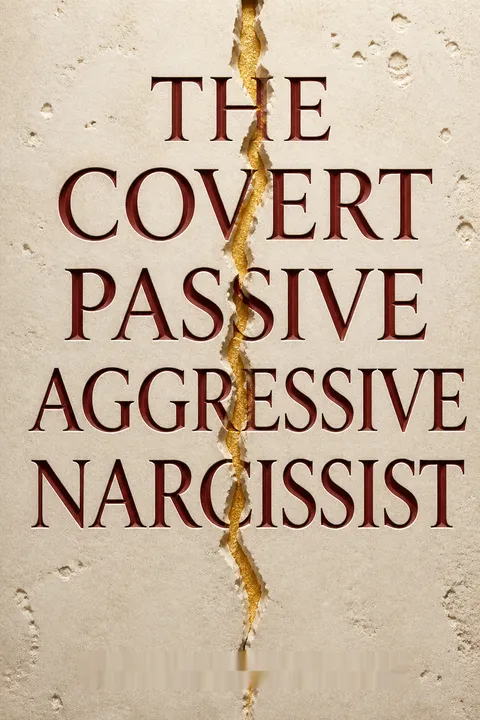
The Covert Passive Aggressive Narcissist received mixed reviews. Many readers found it insightful and helpful in recognizing covert narcissistic behavior, praising its clarity and empathetic approach. Some appreciated the author's personal experiences and felt validated by the content. However, critics noted a lack of academic rigor, repetitive writing, and overly emotional tone. Some readers found the constant affirmations and assumptions about the reader's victim status off-putting. Despite these criticisms, many still recommended the book as a useful resource for those dealing with covert narcissists.
People Also Read




Glossary
Covert Passive-Aggressive Narcissist
Concealed narcissistic behaviorMirza’s term for a person she describes as having narcissistic traits while hiding them behind a socially appealing, modest, or caring presentation. In her account, indirect criticism, manipulation, and concern for reputation make the harmful behavior difficult for close others to recognize. The term is used as the book’s descriptive framework, not as a reader-administered diagnosis.
Love Bombing
Intense early idealizationThe early relationship period in which a person appears exceptionally attentive, affectionate, and compatible. Mirza says this can include mirroring a partner’s interests and offering unusual amounts of praise or emotional closeness. The survivor may later compare subsequent treatment with this beginning and excuse harmful behavior in hopes of returning to the earlier connection.
Devaluing
Gradual erosion of worthA pattern of criticism, disregard, silence, indirect insults, or broken commitments that communicates that the other person’s needs and contributions matter less. In Mirza’s account, these behaviors may be interspersed with affection, making them hard to identify as a pattern. Over time, the recipient may blame themselves and lose confidence.
Discard
Abrupt rejection or endingThe stage Mirza describes when a partner ends the relationship, withdraws from it, or treats the other person as disposable. The survivor may experience the change as sudden and encounter hostility, blame, or emotional coldness after years of apparent closeness. The term is part of the book’s relationship-cycle model, not a formal clinical term.
Gaslighting
Undermining trust in perceptionA form of manipulation that repeatedly encourages someone to doubt their memory, interpretation, or judgment. In the book, examples include denying events, shifting blame, and dismissing concerns as oversensitivity. The result may be confusion and increased reliance on the other person’s account. A single disagreement about memory is not, by itself, proof of gaslighting.
Intermittent Reinforcement
Unpredictable rewards sustain effortA pattern in which affection or approval arrives inconsistently among periods of withdrawal or hurtful treatment. Mirza uses the concept to explain why someone may keep trying to regain earlier warmth, even when the relationship is painful. Her example of unpredictable rewards in an animal experiment illustrates the principle, but does not establish the motives behind any individual’s behavior.
Triangulation
Using a third party to divideA tactic in which someone brings another person into a conflict or relationship to shape perceptions, create insecurity, or increase tension. Mirza describes examples such as relaying alleged criticism between relatives or partners, or invoking a third party who supposedly agrees that the survivor is at fault. The term refers to the pattern, not every instance of seeking outside advice.
Hoovering
Pulling someone back into contactMirza’s name for behavior intended to draw a former or distancing partner back into a relationship or sphere of influence. In her examples, renewed apologies, affection, and promises appear after the survivor pulls away, followed by a return to earlier hurtful conduct. The term is a popular relationship-abuse label rather than a formal diagnosis.
Flying Monkeys
Allies acting on someone’s behalfA colloquial term Mirza uses for people who support the alleged abuser’s account and may pressure, criticize, or undermine the survivor. Some may knowingly participate; others may believe a distorted version of events. The term draws attention to the wider social effects of conflict, while leaving room to assess each person’s actions individually.
Cognitive Dissonance
Conflict between held beliefsThe psychological discomfort of holding two beliefs that seem incompatible. In the book, a survivor may believe a loved one is kind and trustworthy while also experiencing cruel or controlling behavior from that person. The contradiction can produce confusion and self-doubt, particularly when outsiders continue to praise the person whose private behavior is troubling.
Constants
Reliable sources of safetyMirza uses this term for people or other sources of dependable care that help a survivor remember what respectful connection feels like. A constant might be a longtime friend, a family member, or, in the absence of such a person, an animal or a calming place. These reliable reference points can help counter isolation and confusion.
Word Salad
Confusing, disorienting talkA phrase cited in the book for conversations that overwhelm or disorient the listener through rapid shifts among accusations, partial truths, insults, compliments, and self-pity. The listener may struggle to answer one claim before another arrives. The term describes how a conversation feels and functions for the recipient, not a clinical speech disorder.
FAQ
What's "The Covert Passive Aggressive Narcissist" about?
- Understanding Covert Narcissism: The book by Debbie Mirza explores the traits and behaviors of covert passive-aggressive narcissists, who are often difficult to identify due to their subtle and hidden nature.
- Phases of Abuse: It outlines the three phases of a relationship with a covert narcissist: love bombing, devaluing, and discarding, providing insights into how these stages manifest.
- Impact on Victims: The book delves into the psychological and emotional impact on victims, helping them recognize the signs of covert narcissistic abuse.
- Path to Healing: It offers guidance on healing and recovery, emphasizing the importance of self-care and understanding the abuse to regain one's sense of self.
Why should I read "The Covert Passive Aggressive Narcissist"?
- Awareness and Recognition: The book helps readers identify covert narcissistic behaviors that are often overlooked, providing clarity and understanding.
- Validation for Survivors: It offers validation for those who have experienced covert narcissistic abuse, helping them realize they are not alone.
- Practical Guidance: Debbie Mirza provides practical advice and exercises for healing and rebuilding one's life after abuse.
- Empowerment: The book empowers readers to trust themselves and set boundaries, fostering personal growth and resilience.
What are the key takeaways of "The Covert Passive Aggressive Narcissist"?
- Covert Traits: Covert narcissists are manipulative, lack empathy, and often appear charming and humble, making them difficult to identify.
- Emotional Manipulation: They use tactics like gaslighting, triangulation, and intermittent reinforcement to control and confuse their victims.
- Healing Process: Recovery involves recognizing the abuse, understanding its impact, and engaging in self-care and supportive relationships.
- Trusting Intuition: The book emphasizes the importance of trusting one's instincts and setting boundaries to protect oneself from future abuse.
How does Debbie Mirza define a covert passive-aggressive narcissist?
- Hidden Nature: A covert passive-aggressive narcissist hides their narcissistic traits behind a facade of humility and kindness.
- Manipulative Tactics: They use subtle manipulation and control tactics, such as gaslighting and triangulation, to maintain power over their victims.
- Lack of Empathy: Despite appearing empathetic, they lack genuine concern for others and are primarily self-focused.
- Emotional Abuse: Their behavior leads to emotional and psychological abuse, leaving victims feeling confused and devalued.
What are the three phases of a relationship with a covert narcissist according to the book?
- Love Bombing: Initially, the narcissist showers the victim with attention and affection, creating a strong emotional bond.
- Devaluing: Over time, the narcissist subtly undermines the victim's self-worth through criticism and manipulation.
- Discarding: Eventually, the narcissist abruptly ends the relationship, often leaving the victim feeling blindsided and devastated.
- Cycle of Abuse: These phases can repeat multiple times, keeping the victim trapped in a cycle of emotional turmoil.
What are some common traits of targets of covert narcissists?
- Empathetic and Caring: Targets are often empathetic, nurturing, and self-reflective individuals who are easily manipulated by narcissists.
- Trusting Nature: They tend to trust others and may overlook red flags due to their optimistic view of people.
- Self-Doubt: Over time, they may develop self-doubt and question their own perceptions and worth.
- Strong and Resilient: Despite the abuse, targets are often strong and resilient, capable of healing and rebuilding their lives.
How does "The Covert Passive Aggressive Narcissist" suggest healing from narcissistic abuse?
- Recognizing Abuse: The first step is acknowledging the abuse and understanding its impact on one's life and self-esteem.
- Self-Care Practices: Engaging in self-care activities, such as therapy, meditation, and physical exercise, is crucial for healing.
- Building Support Networks: Surrounding oneself with supportive friends, family, and support groups can provide validation and encouragement.
- Reclaiming Identity: The book encourages readers to rediscover their true selves and set boundaries to protect against future abuse.
What are some control and manipulation tactics used by covert narcissists?
- Gaslighting: They make the victim question their reality and memory, leading to confusion and self-doubt.
- Triangulation: Involving a third party to create conflict and maintain control over the victim.
- Intermittent Reinforcement: Providing inconsistent affection and attention to keep the victim emotionally dependent.
- Deflection and Blame: Shifting responsibility onto the victim to avoid accountability for their actions.
What role does cognitive dissonance play in relationships with covert narcissists?
- Conflicting Beliefs: Victims experience cognitive dissonance when they hold conflicting beliefs about the narcissist's behavior and their perceived kindness.
- Emotional Turmoil: This psychological conflict leads to confusion, anxiety, and difficulty trusting one's own perceptions.
- Manipulation Tool: Narcissists exploit cognitive dissonance to maintain control, as victims struggle to reconcile the narcissist's actions with their words.
- Healing Process: Overcoming cognitive dissonance is a key part of healing, requiring education and support to see the truth clearly.
What are some common illnesses experienced by survivors of covert narcissistic abuse?
- Chronic Stress: Prolonged exposure to emotional abuse can lead to stress-related illnesses, such as anxiety and depression.
- Physical Symptoms: Survivors may experience physical symptoms like chronic fatigue, fibromyalgia, and digestive issues.
- Psychosomatic Illnesses: The body often manifests emotional trauma through physical ailments, signaling the need for healing.
- Importance of Self-Care: Addressing these illnesses involves both medical treatment and emotional healing practices.
What are the most dangerous traits of a covert narcissist according to Debbie Mirza?
- Lack of Empathy: Their inability to empathize with others makes them capable of causing significant emotional harm.
- Manipulative Behavior: They use subtle manipulation tactics to control and confuse their victims, often going undetected.
- Emotional Disconnection: Their emotional disconnection prevents genuine relationships, leaving victims feeling isolated and devalued.
- Facade of Kindness: Their ability to maintain a facade of kindness and humility makes them particularly dangerous and difficult to identify.
What are the best quotes from "The Covert Passive Aggressive Narcissist" and what do they mean?
- "You have experienced the illusion of love, not the real thing." This quote highlights the deceptive nature of covert narcissists, who create a false sense of love and connection.
- "Your body knew before your conscious mind became aware." It emphasizes the importance of trusting one's instincts and bodily reactions to detect abuse.
- "You are not a mess. You are a feeling person in a messy world." This quote reassures survivors that their emotional responses are valid and a natural reaction to abuse.
- "You have a chance now. No one is controlling you anymore." It encourages survivors to embrace their newfound freedom and take control of their healing journey.
Download PDF
Download EPUB
.epub digital book format is ideal for reading ebooks on phones, tablets, and e-readers.








