

Key Takeaways
Treat sensitivity as an early-warning system, not a character flaw
Sensitivity is a trait. The book describes highly sensitive people, or HSPs, as unusually responsive to emotional and sensory information. It cites Elaine Aron’s estimate that 15 to 20 percent of people have this trait, and studies finding stronger brain responses to emotionally evocative images. HSPs may notice subtle shifts in tone, expression, or atmosphere that others overlook. The same responsiveness can also make conflict and overstimulation harder to manage.
Use your signals carefully. A bodily sense of unease can be a reason to pause and observe, not proof that someone is dangerous. The author’s central reframing is that sensitivity can help people notice patterns when they stop automatically dismissing themselves as overreactive. Childhood adversity can compound distress, but sensitivity alone does not mean someone is traumatized or incapable of coping.
The useful shift is from treating sensitivity as a defect to treating it as information. That resembles good risk assessment: an alert deserves attention, then checking against observable behavior. This avoids two common errors, ignoring discomfort to keep the peace and treating every uneasy feeling as a verdict. The book’s neuroscience makes the trait feel concrete, but brain activity cannot establish that a particular person’s intuition is accurate. The most robust practice is to combine felt signals with repeated evidence, time, and outside perspective.
Judge patterns and responses to limits, not labels or charming promises
Toxicity has degrees. The book distinguishes everyday boundary-crossers, attention-seekers, and emotionally demanding people from more dangerous, persistently manipulative behavior. One friend, for example, repeatedly sought support for her romantic troubles but abandoned the author during a bereavement. The point is not that every selfish act makes someone malignant. Context, repetition, impact, and willingness to respond to feedback matter.
Watch what follows a limit. A person who hears a concern, takes responsibility, and changes behavior is different from someone who denies the pattern, retaliates, or repeats it. The book cautions that labels such as narcissist or psychopath can distract from the practical question: Is this behavior harming someone, and is it safe to remain engaged? Boundaries should reflect the actual pattern and level of risk, not a speculative diagnosis.
This behavior-first approach is both more actionable and more cautious than casual diagnosis. Clinical labels require qualified assessment, while anyone can notice repeated boundary violations or coercion. The response to a reasonable limit is especially informative because it tests whether the relationship permits mutual influence. A limitation remains: people can react badly once without having a fixed character pattern, and some may improve. That is why the book’s emphasis on repetition, context, and sustained change is more reliable than deciding who someone is from one incident.
Stop confusing compassion with a duty to rehabilitate someone
Empathy can be exploited. HSPs may feel another person’s distress intensely and assume that person shares their own conscience. In a healthy relationship, care and conscientiousness support mutual aid. With a manipulative person, those same traits can become leverage: the target excuses harmful conduct, takes responsibility for the other person’s feelings, or keeps trying to teach them empathy.
Notice the pity cycle. A person may appear remorseful, explain mistreatment through hardship or circumstances, then return to the same behavior. If sympathy does not secure forgiveness, blame or anger may follow. The author’s practical lesson is to assess conduct and its consequences alongside someone’s painful story. Understanding why a person acts badly does not make the target responsible for absorbing the harm or fixing the person.
Compassion is strongest when paired with discernment. In caregiving and helping professions, empathy without limits can produce exhaustion rather than effective support; the same principle applies in private relationships. A person’s history can explain behavior without excusing its impact. At the same time, a single failed apology is not conclusive evidence of manipulation. The meaningful distinction is whether remorse develops into accountable, durable change, or repeatedly functions as a reset button that restores access without changing the underlying pattern.
Write down events when someone keeps disputing your reality
Gaslighting attacks self-trust. The book uses this term for deliberate behavior that persistently denies or distorts another person’s perceptions and experiences, leaving them unsure of their memory or judgment. A person might repeatedly deny a hurtful remark, call the other person irrational for objecting, and redirect attention from the conduct to the complainant’s supposed flaws. Over time, the repetition itself can make a false account feel familiar and plausible.
Create an outside anchor. Record what happened, how it affected you, and what was said afterward. Preserve relevant messages or emails when appropriate, and discuss the pattern with a trusted, informed person. The aim is not to win an argument with someone committed to denial. It is to restore a clear account, spot repetition, and make decisions using more than the other person’s version of events.
Written records serve two functions: they preserve evidence and reduce dependence on memory during emotionally charged interactions. This is a practical form of reality-testing, similar to checking a contemporaneous log against later claims. It is important, however, not to equate every disagreement about the past with deliberate gaslighting. Memory is imperfect on all sides. The stronger signal is a recurring pattern of denial, invalidation, and control, especially when the person refuses reasonable clarification and the target increasingly doubts their basic judgment.
Recognize hot-and-cold affection as conditioning, not proof of deep love
Unpredictable rewards bind attention. The book describes intermittent reinforcement as a pattern in which affection or approval arrives unpredictably amid withdrawal or mistreatment. Like a gambler hoping for another win, a person may become more preoccupied with recovering the rare warm moments. Love bombing, or intense early attention and praise, can accelerate investment; later affection may keep hope alive even as devaluation and neglect recur.
The bond is not a verdict. The author calls the attachment trauma bonding when intense, harmful experiences become entangled with loyalty to the person causing them. Brain chemicals and stress responses may contribute to craving and fixation, but these accounts should not be mistaken for a precise diagnosis of an individual relationship. Feeling pulled back does not prove the relationship is healthy, nor does it mean the person lacks judgment or willpower.
The learning-theory explanation helps make an otherwise baffling attachment understandable: unpredictability can keep attention engaged because the next reward is uncertain. That perspective replaces shame with a useful question: what pattern is the relationship training someone to wait for? The book’s addiction analogies are vivid, but romantic attachment is not identical to substance dependence, and simplified claims about particular hormones can overstate what neuroscience establishes. The practical insight remains strong without them: judge the recurring relationship, not the intensity of the occasional repair.
Use different boundaries for clumsy people and dangerous manipulators
Match the response to the risk. With a person who is basically receptive, explain the problem, state the limit, and say what practical change is needed. A colleague who talks too long may respond to a brief, direct request. Then follow through consistently if the behavior continues. The book packages this sort of constructive conversation in its CLEAR UP framework, intended for people who can listen and negotiate.
Do not negotiate with danger. A persistently abusive person may use disclosed vulnerabilities as ammunition or escalate when challenged. In that situation, prioritize a safety plan, outside support, documentation, and reduced contact over a perfectly worded confrontation. If there is an immediate threat, seek professional or emergency help. Boundary-setting is not always a speech; sometimes its clearest form is leaving safely.
This distinction corrects the popular assumption that better communication can solve every interpersonal problem. Communication skills are useful when both parties recognize the other’s agency; coercion changes the task from negotiation to risk reduction. The approach also preserves room for ordinary human clumsiness, which need not be treated as predation. Because outsiders cannot reliably forecast escalation from a label alone, decisions should be grounded in observed threats and circumstances, with specialist support where safety is uncertain.
Choose distance over sunk costs, then build a life beyond the bond
Past investment is not a reason to stay. The sunk cost fallacy is continuing to invest because time, effort, or money has already been spent, even when those costs cannot be recovered. In an unhealthy relationship, a person may keep waiting for the early warmth to return because leaving seems to waste years of effort. The book argues that staying can add new costs without repairing the old ones.
Make distance practical. The author proposes trying at least 90 days of no contact as an initial period of separation and recovery when feasible. Where work, parenting, or family obligations make that impossible, low contact can restrict communication to necessary, manageable channels. Replacing contact with supportive people, enjoyable activities, and meaningful goals gives attention somewhere healthier to go. If there is danger, leaving should be planned with appropriate support rather than announced impulsively.
The sunk-cost lens is useful because it turns regret into a forward-looking decision: the unrecoverable past should not dictate the next choice. Distance can also interrupt the cues and routines that keep an attachment active. Still, a fixed 90-day period is a suggested exercise, not a universal clinical threshold or guarantee of recovery. No contact may be impossible or unsafe for some people. The important principle is to reduce harmful access in a way that fits the person’s safety, responsibilities, and available support.
Pair self-care with trauma-informed help when symptoms disrupt daily life
Recovery needs more than insight. The book recommends practical ways to steady attention and emotion, including journaling, movement, sleep routines, social support, and grounding practices. It also describes established therapies such as cognitive behavioral therapy, dialectical behavior therapy, and EMDR, while encouraging readers to find a qualified professional who understands trauma and relationship abuse. Different approaches suit different people, and the book does not present one universal treatment.
Treat serious symptoms seriously. Persistent panic, flashbacks, dissociation, self-harm, suicidal thoughts, addiction, or difficulty functioning call for professional support, not just a checklist or affirmation. Recovery can include grief, setbacks, and ambivalence. Basic care matters, but it is not a substitute for clinical help when someone needs it. The goal is to rebuild self-trust, agency, and relationships that offer reciprocity rather than chronic confusion.
The book is strongest when it treats recovery as both relational and embodied: people need safety, social validation, and ways to regulate distress, not simply a new interpretation of events. This fits trauma-informed practice, where choice and pacing matter because some exercises can be activating. The menu of modalities is best read as options to discuss with a clinician, not as proof that every complementary practice has equal evidence. A careful match between symptoms, preferences, and qualified care is more useful than chasing a single cure.
Analysis
This book is a practical guide for highly sensitive people who may minimize their own distress while trying to understand manipulative relationships. Its central contribution is not a diagnostic theory of narcissism. It is a shift in what the reader attends to: repeated conduct, responses to limits, and the effect of a relationship on safety and self-trust. The opening account of sensitivity as both vulnerability and perceptiveness gives the argument its emotional logic. The chapters then move from recognizing harmful patterns to setting differentiated boundaries, reducing contact, and rebuilding daily life.
That structure is effective because it meets a common survivor dilemma: the target can sense that something is wrong yet feel unable to prove it, explain it, or leave. Concepts such as gaslighting and intermittent reinforcement provide names for confusing experiences, while journaling, documentation, and support make those concepts actionable. The distinction between ordinary boundary-crossing and potentially dangerous abuse is especially important. It prevents the advice to communicate better from being applied indiscriminately to coercive situations.
The framing also needs care. Highly sensitive person is presented as a trait, not a diagnosis, and research on sensitivity should not be treated as a test of whether someone’s intuition is correct. Similarly, terms such as narcissist, sociopath, and psychopath are used broadly in popular discussion but refer to complex clinical constructs. Readers can protect themselves without diagnosing a partner. The book’s neurochemical descriptions help explain why an attachment can feel compelling, but claims about hormones and addiction can sound more definitive than the evidence warrants. Its advice is most persuasive when grounded in observable behavior, not biological shorthand.
The adaptation’s most durable message is therefore behavioral and humane: sensitivity is worth listening to, compassion does not require self-abandonment, and a boundary is meaningful only when paired with action appropriate to the risk. Recovery is not a test of toughness. It is the gradual restoration of choice, trustworthy support, and a life no longer organized around another person’s volatility.
Review Summary
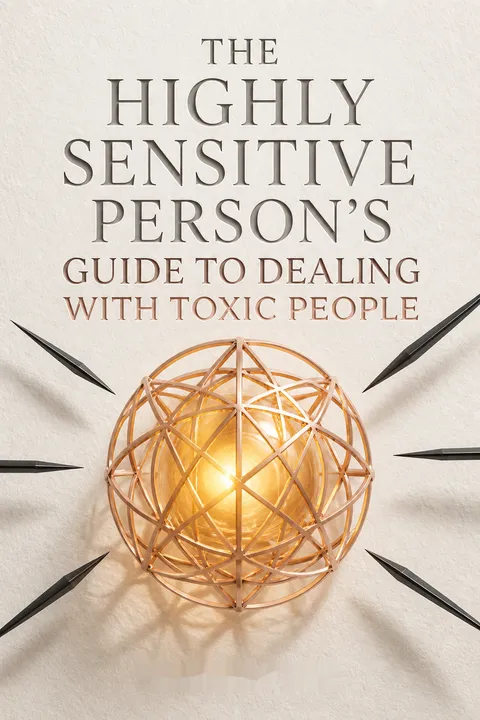
The Highly Sensitive Person's Guide to Dealing with Toxic People receives mostly positive reviews for its insightful content on recognizing and handling toxic relationships. Readers appreciate the practical advice, strategies, and explanations of narcissistic behaviors. Many find it helpful for understanding their own experiences and setting boundaries. Some critics note repetition and overuse of acronyms. The book is particularly praised for its focus on highly sensitive people, though some feel it could have delved deeper into this aspect. Overall, it's recommended for those dealing with toxic relationships or seeking to understand narcissistic behavior.
People Also Read


Glossary
Sensory processing sensitivity
heightened response to stimuliA temperamental trait involving deeper processing and stronger responsiveness to emotional and environmental stimuli. The book associates it with greater awareness of subtle cues, as well as increased risk of overstimulation. It is not presented as a mental disorder, and it does not guarantee that every intuitive impression is accurate.
Trauma bonding
attachment amid harmful treatmentAn intense attachment that can develop within a relationship marked by fear, harm, and efforts to appease or change the person causing the harm. The book uses the concept to explain why someone may defend or return to an abusive person despite recognizing the relationship’s damaging effects.
Betrayal bond
bond with an exploiterA term used for an attachment formed in an exploitative relationship, where the person being harmed remains emotionally aligned with the person causing the harm. The book links this bond to efforts to make the exploiter understand or change, self-blame when those efforts fail, and difficulty trusting one’s own perceptions.
Intermittent reinforcement
unpredictable reward patternA pattern in which rewards or affection are delivered irregularly rather than consistently. In a harmful relationship, occasional warmth among periods of rejection or mistreatment can keep a person trying to regain approval. The book compares this to gambling, where unpredictable wins can sustain repeated attempts despite losses.
Love bombing
intense early attentionAn early display of unusually intense praise, affection, attention, or promises that encourages rapid emotional investment. The book describes it as a possible manipulation tactic when it is used to create premature intimacy or gather personal information, particularly when the intensity is not matched by steady, respectful behavior over time.
Gaslighting
deliberate reality distortionA pattern of denying, distorting, or invalidating another person’s experiences in a way that erodes their confidence in their memory, perceptions, or judgment. The book distinguishes deliberate gaslighting from ordinary misunderstanding by its recurring, controlling pattern and its effect of making the target doubt themselves.
Hoovering
attempt to restore contactRepeated attempts by a toxic person to regain access after a boundary or relationship ending. The book describes approaches such as affectionate messages, claims of change, provocative contact, fabricated crises, or indirect messages through other people. It recommends considering the prior pattern rather than assuming renewed contact proves love or remorse.
Gray rock method
neutral, minimal responsesA strategy for unavoidable interactions in which a person keeps responses brief, factual, and emotionally unengaging. The book presents it as a way to reduce the reaction or attention that a manipulative person may seek. It is not a substitute for a safety plan, and it may not be appropriate in every situation.
Destructive conditioning
joy linked with punishmentThe book’s term for a pattern in which a toxic person repeatedly responds to someone’s accomplishments, interests, or happy events with criticism, sabotage, or conflict. Over time, the target may avoid activities that once brought satisfaction because they have come to expect punishment or disruption.
CLEAR UP
boundary conversation guideA communication framework the author proposes for setting limits with people who are capable of listening. It organizes a boundary conversation around describing the situation, explaining its impact, stating a limit, reinforcing respectful behavior, repeating the point, considering workable alternatives, and communicating confidently. The book cautions against using this approach as a confrontation strategy with someone who may be dangerous.
BOUNDARIES
self-protection frameworkThe author’s framework for making limits practical and sustainable. It emphasizes self-worth, agency, personal values, nonnegotiable limits, assertive communication, consistent follow-through, safety, and leaving when boundaries are repeatedly violated. Its application differs according to the other person’s behavior and the level of risk.
CREATES
distress coping checklistA framework the author offers for coping with distress by reconnecting with community, taking a temporary reprieve, evaluating progress, choosing an action that helps regulate emotion, regaining practical control, finding enjoyment, and engaging the senses. It is intended as a flexible set of prompts, not a replacement for therapy or crisis care.
VIBRANT
present-moment support frameworkA self-care framework the author presents for moments of emotional overwhelm. It prompts the reader to use visualization, inspiration, a wider perspective, physical or mental release, help from others, nourishment, and time away from immediate conflict. The steps are adaptable and are meant to support, not replace, professional care when needed.
FAQ
What's "The Highly Sensitive Person's Guide to Dealing with Toxic People" about?
- Focus on HSPs: The book is designed to help highly sensitive people (HSPs) navigate relationships with toxic individuals, such as narcissists and manipulators.
- Empowerment and Healing: It provides strategies for reclaiming power and healing from the effects of toxic relationships.
- Scientific and Practical Approach: Shahida Arabi combines scientific research with practical advice to offer a comprehensive guide for HSPs.
- Understanding Toxic Dynamics: The book delves into the dynamics between HSPs and toxic people, offering insights into why HSPs are often targeted.
Why should I read "The Highly Sensitive Person's Guide to Dealing with Toxic People"?
- Targeted for HSPs: If you identify as a highly sensitive person, this book offers tailored advice to help you manage interactions with toxic individuals.
- Evidence-Based Strategies: The book is grounded in research and provides evidence-based strategies for dealing with narcissistic abuse.
- Practical Tools: It offers practical tools and exercises to help you set boundaries and protect your well-being.
- Empowerment Focus: Reading this book can empower you to reclaim your life and fulfill your true potential despite past toxic encounters.
What are the key takeaways of "The Highly Sensitive Person's Guide to Dealing with Toxic People"?
- Understanding Toxicity: Learn about the different types of toxic personalities and how they operate.
- Boundary Setting: The importance of setting and maintaining boundaries to protect yourself from toxic influences.
- Healing and Recovery: Strategies for healing from the trauma of toxic relationships and reclaiming your power.
- Empathy as a Strength: How to use your sensitivity and empathy as strengths rather than weaknesses.
What are the best quotes from "The Highly Sensitive Person's Guide to Dealing with Toxic People" and what do they mean?
- "Empower our empathy": This quote emphasizes the book's focus on using empathy as a tool for empowerment rather than a vulnerability.
- "Reclaim your power": A central theme of the book, encouraging readers to take back control of their lives from toxic influences.
- "Toxicity exists on a spectrum": Highlights the book's nuanced approach to understanding different levels of toxic behavior.
- "Your sensitivity is a superpower": Reinforces the idea that being highly sensitive is a strength that can be harnessed for personal growth and protection.
How does Shahida Arabi define a Highly Sensitive Person (HSP) in the book?
- Genetic Trait: HSPs have a genetic trait that makes them more emotionally and physically responsive to their environment and relationships.
- Heightened Empathy: They possess heightened empathy and can easily absorb the emotions of others, making them more vulnerable to toxic people.
- Deep Processing: HSPs process stimuli more thoroughly, which can lead to overstimulation but also offers the benefit of being highly discerning.
- Population Percentage: According to research, HSPs make up about 15 to 20 percent of the population.
What strategies does the book offer for dealing with narcissists?
- Emotional Detachment: The book advises maintaining emotional distance and not reacting to provocations from narcissists.
- Documentation: Keeping records of interactions can be crucial, especially in professional settings or legal situations.
- Boundary Enforcement: Setting firm boundaries and sticking to them is essential when dealing with narcissists.
- Exit Strategies: The book provides guidance on safely exiting relationships with narcissists, including making a safety plan if necessary.
What is the "CLEAR UP" method mentioned in the book?
- Context: Clearly describe the situation to provide context for the boundary you are setting.
- Lay Down the Law: Explain why the behavior is problematic and how it affects you.
- Exercise Boundaries: Set clear boundaries and communicate them assertively.
- Repetition and Unity: Be consistent in enforcing boundaries and seek unity in resolving conflicts.
How does the book suggest breaking the biochemical bonds with toxic people?
- Novelty and Productivity: Engage in new activities and focus on productivity to replace the dopamine highs from toxic relationships.
- Social and Solitude Balance: Balance social interactions with solitude to recharge and find joy without toxic influences.
- Physical Touch and Compassion: Use safe physical touch and community outreach to replace oxytocin bonds with healthier connections.
- Mindful Self-Care: Practice self-care techniques like yoga, meditation, and exercise to manage stress and reduce cortisol levels.
What are the five types of toxic people identified in the book?
- Garden-Variety Boundary-Steppers: These individuals habitually cross boundaries but may not be aware of their impact.
- Crazy-Makers and Attention-Seekers: They create drama and seek attention, often at the expense of others.
- Emotional Vampires: These people drain your energy with their constant demands and neediness.
- Narcissists: Self-absorbed individuals who lack empathy and often engage in manipulative behaviors.
- Sociopaths and Psychopaths: The most dangerous type, lacking remorse and often engaging in deceitful and harmful behaviors.
How does the book address the concept of "gaslighting"?
- Definition: Gaslighting is a manipulation tactic that aims to make you doubt your reality and perceptions.
- Impact: It can cause victims to question their sanity and become dependent on the gaslighter for validation.
- Defense Strategies: The book suggests documenting experiences, seeking third-party validation, and reaffirming your reality.
- Awareness: Recognizing gaslighting is the first step in countering its effects and regaining control over your perceptions.
What role does empathy play in the dynamics between HSPs and toxic people, according to the book?
- Empathy as a Target: HSPs' heightened empathy makes them attractive targets for toxic individuals who seek to exploit it.
- Empathy as a Strength: The book encourages using empathy as a strength to discern healthy relationships and set boundaries.
- Empathy and Healing: Empathy can be a tool for healing, allowing HSPs to connect with supportive communities and practice self-compassion.
- Empathy and Self-Protection: By understanding their empathetic nature, HSPs can better protect themselves from emotional manipulation.
What are some healing modalities recommended in the book for HSPs?
- Traditional Therapies: Cognitive Behavioral Therapy (CBT), Dialectical Behavior Therapy (DBT), and Eye Movement Desensitization and Reprocessing (EMDR) are suggested for processing trauma.
- Alternative Methods: Yoga, meditation, and acupuncture are recommended for their calming and restorative effects.
- Creative Outlets: Journaling and expressive writing can help HSPs process emotions and create a cohesive narrative of their experiences.
- Community Support: Group therapy and support groups provide validation and social accountability for healing.
About the Author
Other books by Shahida Arabi

Download PDF
Download EPUB
.epub digital book format is ideal for reading ebooks on phones, tablets, and e-readers.








