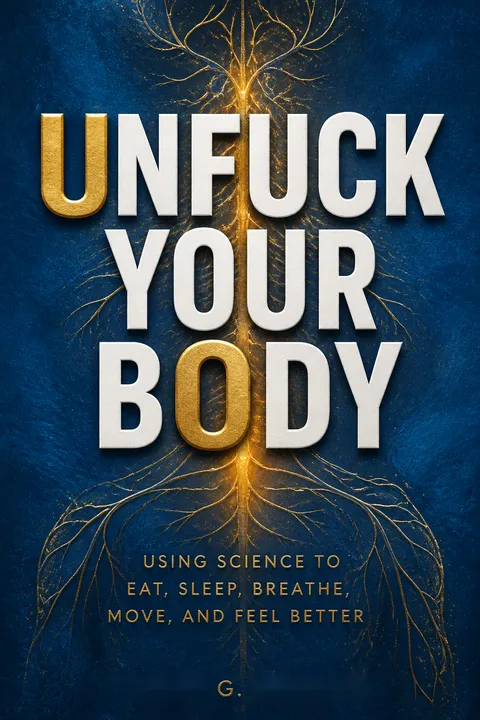


Key Takeaways
Treat the body and brain as one feedback system, not separate departments
Signals travel both ways. Harper’s central idea is that bodily and emotional health are intertwined. The vagus nerve, a long nerve linking the brain with major organs and the gut, helps carry information in both directions. The book cites a roughly four-to-one imbalance in messages traveling from body to brain compared with brain to body. That means sensations such as a racing heart or unsettled stomach can shape what the brain perceives and feels, not merely reflect thoughts already formed.
Safety changes the response. Harper uses three broad autonomic states: social engagement and relative calm, mobilization through fight or flight, and shutdown through freeze or collapse. These are presented as survival responses, not character flaws. The point is practical: a body that detects danger may not be persuaded by logic alone to feel safe.
What's striking is the shift from treating emotion as a private mental event to viewing it as a whole-body process. This resembles systems biology, where feedback between components matters as much as any single component. The model can reduce shame: a stress reaction is not simply a bad attitude. Still, the vagus nerve is one important pathway, not a master cable explaining every physical or psychological condition. Its states work best as a map for noticing patterns, not as a complete diagnostic theory.
Read persistent symptoms as signals, not proof that you lack discipline
Injury includes adversity. Harper argues that trauma, chronic stress, and inflammation can affect the body as well as mood and memory. Adverse childhood experiences, or ACEs, include abuse, neglect, and serious household challenges before age 18. The CDC and Kaiser Permanente study linked higher ACE exposure with greater risk of later health problems. The book reports that even one ACE was associated with twice the likelihood of depression and several chronic diseases. These are population-level associations, not predictions about any one person.
Exposure is not always personal. Harper describes pollutants traveling into Arctic ecosystems and accumulating in foods eaten by Inuit communities, leaving some Indigenous people with high chemical burdens despite traditional diets. She calls the cumulative pressure from stressors, including toxins, total load. The lesson is to consider biology and environment alongside habits, rather than reduce illness to willpower.
This framing connects trauma-informed care with public health: health reflects not just individual choices, but the conditions in which people live and the risks imposed on them. It also challenges the tendency to interpret fatigue, pain, or difficulty caring for oneself as laziness. The caution is that inflammation and trauma are not universal explanations. ACE scores describe risk, not destiny, and similar symptoms can have many causes. Respectful care keeps both ideas in view: context matters, and careful medical assessment still matters.
Learn your body's warning signs before trying to talk yourself out of them
Notice internal cues. Interoception, which Harper also calls the felt sense, is awareness of sensations inside the body, such as tension, pressure, temperature, or a fluttering stomach. The book’s window of tolerance is a state in which a person can think, manage emotion, and connect with others without becoming overwhelmed. When the body shifts out of it, signs might include fast breathing and muscle tension, or numbness and withdrawal.
Practice in small doses. A simple check-in is to soften the gaze and notice where the body feels pressure, moving air, tension, or heat. The goal is not to explain every sensation or force it to change. It is to recognize what is happening and identify what helps. Harper encourages readers to note which activities and people support a return to steadiness, so those resources are easier to reach when needed.
The useful move here is from vague distress to observable information. This is compatible with emotion-regulation approaches that distinguish noticing a feeling from reacting automatically to it. Small, concrete prompts can make body awareness less abstract, especially for people who feel disconnected from sensation. But inward attention is not calming for everyone. For some, close body scanning can intensify fear or trauma memories. Choice matters: an external sound, an open-eyed look around the room, or a trusted person may be a better starting point.
Start with breath awareness, then choose practices your body tolerates
Breathing can alter arousal. Breath is unusual because it runs automatically but can also be changed deliberately. Harper explains that slower, mindful breathing can influence heart-rate regulation and support a shift toward the parasympathetic state associated with rest and connection. One example is breathing in for four counts, pausing for seven, and exhaling for eight. If that feels uncomfortable, the timing can be shortened. Another starting point is simply noticing each breath without trying to control it.
Make practice trauma-sensitive. Breathwork and meditation can feel activating for people with trauma histories. The book recommends keeping eyes open if that feels safer, changing position, taking a break, or focusing on something outside the body. Mindfulness does not require an empty mind. It involves noticing when attention wanders and gently returning it to an anchor, such as the breath or a sound.
The emphasis on adaptation is important because wellness advice often assumes that quiet, closed-eye attention feels safe to everyone. A practice is not successful merely because someone follows instructions; it must be tolerable enough to repeat. Breathing techniques also differ in their effects, and breath holds or forced deep breathing may feel unpleasant for some people. Starting with observation, then experimenting cautiously, respects individual variation better than prescribing one supposedly universal calming method.
Treat stress as mobilizing energy, without pretending every burden is optional
Stress signals importance. Harper defines stress as the body allocating resources to meet a demand. It can help with a meaningful challenge, but prolonged demand without enough resources can become distress. The book cites research in which people reporting high stress and believing stress harmful had a 43% higher risk of premature death. That finding is an association, not proof that changing a belief alone prevents illness.
Reinterpret the surge. Instead of demanding that anxiety disappear, mindset training asks whether the same physical activation can be understood as readiness or excitement. The book describes research in which people told their performance could improve under pressure did better on a task. This is not a denial of hardship. Harper explicitly warns that a new perspective cannot repair exhaustion or remove an unsafe job, poverty, or other ongoing stressors.
Reappraisal can change how a person uses arousal: a pounding heart may be interpreted as preparation rather than evidence of imminent failure. That distinction can help someone act under pressure instead of spending energy fighting the body’s response. The limit is equally important. Positive interpretation cannot create time, money, safety, or adequate support where those are absent. A humane stress strategy combines personal coping with changes to the conditions producing chronic overload.
Protect seven to nine hours because sleep is active recovery, not downtime
Sleep does essential work. Harper describes sleep as a period when the brain sorts memories, strengthens useful connections, processes emotion, and clears waste. Non-rapid-eye-movement sleep is more prominent earlier in the night, while REM sleep becomes more prominent closer to waking. Cutting sleep short at either end can reduce different parts of this cycle. The book cites a 2013 study finding that the brain’s glymphatic waste-clearance system is much more active during sleep.
Build a real opportunity. Adults are generally advised to get seven to nine hours, and the book reports that roughly two-thirds of adults in the United States get less than seven hours on weeknights. Harper recommends consistent bed and wake times, a cool and dark room, and getting out of bed briefly if wakefulness turns into frustrated clock-watching. Persistent insomnia or breathing problems deserve medical attention; they are not simply failures of discipline.
Sleep is a useful foundation because it affects attention, mood, and physical recovery at once. It also exposes a mismatch between productivity culture and biology: people can underestimate how impaired they have become when chronically short on sleep. Yet sleep advice should not imply that everyone can control their schedule or bedroom conditions. Shift work, caregiving, housing, illness, and sleep disorders can make the usual routine difficult. Practical support must account for those constraints rather than turn rest into another performance standard.
Choose movement for regulation and enjoyment, then pace it around pain
Movement is more than calories. Harper encourages people to reclaim physical activity as play, connection, or capability rather than punishment for how a body looks. The book describes evidence linking exercise with improved mood and stress regulation, including a study in which people receiving depression treatment reported symptom relief after establishing a regular walking routine. Outdoor movement can add daylight exposure, too.
Respect pain signals. Chronic pain can flare when someone starts exercising, even though appropriately paced movement may help over time. Harper recommends finding an intensity and duration the body can manage, with options such as swimming, gentle yoga, tai chi, or walking. Strength training may also suit people seeking a stronger sense of physical capability. The practical test is not whether a workout looks impressive, but whether it supports a more livable and sustainable relationship with the body.
The book’s strongest contribution here is separating movement from weight loss and moral judgment. Enjoyment can make activity easier to sustain, while gradual practice may help rebuild confidence in a body associated with pain or threat. Chronic pain complicates simple slogans about exercise: evidence of long-term benefit does not mean every session feels good or that every person should push through a flare. Pacing, clinical guidance, and accessible choices make movement a form of care rather than another demand.
Stop treating BMI as a verdict on an individual body
A metric has a history. The body mass index began as a statistical measure devised by Adolphe Quetelet to describe an average man, not as an individual health diagnosis. Later, a study of about 7,500 men compared BMI with other measures of body fat and found it imperfect. Harper reports that it classified obesity accurately only about half the time. In 1998, US definitions of overweight and obesity changed, reclassifying many people without any change in their bodies.
Look beyond size. Harper argues that BMI can obscure differences in sex, race, body composition, and health, while weight-focused care can distract from a person’s actual complaint. She also emphasizes socioeconomic conditions, including access to healthcare, nutritious food, and safe environments. BMI may have uses as a broad screening measure, but it cannot by itself tell whether an individual is healthy or explain what treatment they need.
This history makes a larger point about measurement: a convenient proxy can acquire authority far beyond what it was designed to support. In clinical settings, a number can become a shortcut that displaces listening, especially when weight stigma shapes which symptoms are taken seriously. The critique does not require pretending that body composition never relates to health. It asks for better questions and fuller evidence, including symptoms, function, medical history, and the conditions affecting a person’s options.
Change the food defaults, not just your willpower at the grocery store
Price and policy shape diets. Harper argues that food choices are constrained by what is affordable and available. From 1995 to 2010, she notes, federal farm subsidies directed $170 billion toward major commodity crops, many of which become ingredients in inexpensive packaged foods. The book cites estimates that ultra-processed products supply 61% of the typical US adult diet. These industrial formulations often include ingredients difficult to reproduce in a home kitchen.
Make practical changes. The book distinguishes these products from foods that are simply cooked, frozen, canned, or otherwise processed. It suggests reading labels, choosing options with less added sodium or sugar, and changing one part of a familiar meal rather than demanding a total dietary overhaul. Harper also recommends local and seasonal foods when accessible, while recognizing that fresh ingredients can cost more. Personal choice matters, but it does not erase the policy and economic forces shaping the food supply.
This is a valuable move from individual blame to the political economy of eating. When inexpensive, heavily marketed foods dominate the available options, nutrition advice that ignores price and time can become a disguised accusation. Label reading and small substitutions are useful because they meet people within real constraints. Still, individual shopping cannot by itself fix subsidies, wages, or food access. The strongest version of this argument pairs household strategies with public changes that make nourishing choices easier to obtain.
Use supplements as carefully as prescriptions, never as automatic substitutes
Investigate before adding. Harper presents a broad sequence for considering health supports, beginning with lifestyle and food, then supplements, medications, and surgery. It is a way to consider context, not a reason to delay necessary care. Prescription drugs can have side effects and interactions, while supplements can be mislabeled, poorly tested, or unsuitable for a particular person. The book recommends reviewing medications with a clinician and tracking symptoms, food, sleep, movement, and new products in a health journal.
Quality and safety matter. Harper advises checking supplement testing and discussing possible interactions with a knowledgeable prescriber, especially when taking other medication, pregnant, or managing a medical condition. She is not opposed to medication and cautions against stopping or changing a prescription without the prescriber’s guidance. The broader lesson is to treat every substance as an active intervention: ask what it is for, what evidence supports it, and how its effects will be monitored.
This section usefully resists two familiar extremes: assuming that a prescription is always the first answer, and assuming that a plant-based product is automatically safe. The hierarchy encourages attention to upstream conditions, but it should remain flexible. Severe symptoms may require medication or urgent care before lifestyle changes are feasible. Supplements also vary widely in evidence, dose, and quality. A clinician who reviews the whole medication list can help turn experimentation into monitored care rather than guesswork.
Analysis
Unfuck Your Body is a practical health guide organized around a systems-level claim: bodily states shape emotional life, and emotional history can influence bodily function. Its path runs from a model of brain-body communication, through trauma, inflammation, stress, and environmental exposure, toward practices involving awareness, breathing, sleep, movement, food, and treatment choices. The argument’s most useful feature is not any single technique. It is the insistence that symptoms should be understood in context rather than automatically assigned to weak character or poor discipline.
The book also widens the frame from private habits to public conditions. Its discussion of food subsidies, toxic exposure, weight stigma, and unequal access to care shows why health advice can fail when it treats everyone as having the same options. That social analysis supports the book’s practical message: a sustainable plan must fit the person’s body, resources, history, and preferences.
The main interpretive caution is that the book moves among claims with different levels of certainty. Sleep’s role in memory and recovery, the value of exercise for some mood symptoms, and the risks of supplement interactions are not equivalent in evidential status to broader claims about the vagus nerve, gut microbes, or chronic inflammation as explanations for complex illnesses. A plausible biological pathway does not establish a single cause or guarantee a treatment effect. Likewise, concepts such as the window of tolerance can help people notice experience, but should not replace clinical assessment.
Read the book, then, as an invitation to become a more informed participant in care, not as a substitute medical textbook or a universal protocol. Its strongest advice is to observe carefully, make manageable changes, honor adverse reactions, and seek qualified support. The result is a humane alternative to shame-based wellness: curiosity about what a body is responding to, combined with humility about what any one explanation can prove.
Review Summary
Readers found Unfuck Your Body informative but flawed. Many praised the scientific content on the vagus nerve and stress response, while criticizing the book's editing, typos, and occasional pseudoscience. The audiobook received particular criticism for poor production quality. Some appreciated the author's no-nonsense approach and practical advice on topics like sleep and nutrition, while others found the content too basic or repetitive. Overall, opinions were mixed, with readers acknowledging both valuable insights and significant shortcomings in the book's presentation and depth.
People Also Read






Glossary
Vagal tone
Vagus nerve activityHarper uses vagal tone to describe the activity and effectiveness of communication through the vagus nerve. The book associates stronger vagal communication with better physical and emotional regulation, and discusses heart rate variability as a way researchers estimate this activity. The term is used as a practical model, not as a complete measure of health.
Window of tolerance
Manageable arousal rangeA state in which a person can stay sufficiently calm and alert to think, process feelings, and connect with other people. When perceived danger or overwhelm pushes someone outside this range, they may become highly activated through fight or flight, or shut down through freeze or collapse. The book uses the concept to help readers recognize and respond to shifts in their state.
Interoception
Awareness of internal sensationsThe perception of signals arising inside the body, including sensations such as pressure, temperature, tension, breath, hunger, or a fluttering stomach. Harper also uses the term felt sense for this inward awareness. Practices that direct attention toward these sensations can help a person notice changes in their state, though inward focus may not feel safe or useful for everyone.
ACEs
Adverse childhood experiencesAn abbreviation for adverse childhood experiences, including abuse, neglect, and household challenges that occur before a person turns 18. The book discusses research associating greater ACE exposure with increased risk of later physical and mental health problems. An ACE score describes exposure and population-level risk; it cannot predict an individual’s future or explain every illness.
HPA axis
Stress hormone systemThe hypothalamic-pituitary-adrenal axis is a communication system connecting parts of the brain with the adrenal glands. It helps coordinate the hormonal response to stress, including the release of cortisol. Harper describes short-term activation as useful for meeting demands, while persistent activation may contribute to problems involving mood, sleep, digestion, and other aspects of health.
HPA-D
HPA axis dysregulationHarper uses HPA-D as a term for hypothalamic-pituitary-adrenal dysregulation associated with prolonged stress. The proposed idea is that a system adapting to repeated stress may change how it produces stress hormones and respond less effectively to new demands. HPA-D is not the same as medically diagnosed adrenal insufficiency, and the book notes that symptoms alone cannot establish a diagnosis.
Total load
Combined system stressorsThe combined pressure of stressors affecting a person at a given time, including psychological stress, environmental toxins, illness, and other demands. In Harper’s account, the accumulated burden can exceed an individual’s capacity to adapt, with susceptibility and exposure differing from person to person. The concept emphasizes that health can reflect several interacting pressures rather than one isolated cause.
Ultra-processed foods
Industrial food formulationsA category of foods made through industrial formulations that commonly contain ingredients, additives, or combinations difficult to recreate in a home kitchen. The book distinguishes these products from foods that are merely cooked, frozen, canned, or otherwise processed. Harper focuses concern on ultra-processed products as a substantial part of modern diets and discusses their relationship to health and food policy.
Mindset training
Reframing stress responsesA practice of interpreting stress-related bodily activation in a way that supports action rather than panic or avoidance. For example, a person may regard anxiety before a meaningful task as energy for meeting the challenge. Harper stresses that this is not pretending a harmful situation is acceptable; it is a way to use available agency without denying external burdens.
CBT-I
Insomnia-focused cognitive therapyCognitive behavioral therapy for insomnia is a short-term treatment that combines cognitive behavioral methods with sleep routines and relaxation practices. Harper presents it as a professional option for persistent insomnia after medical causes such as sleep apnea have been considered. The goal is to change patterns that keep sleep disrupted, rather than relying only on sedating medication.
FAQ
What's Unfuck Your Body about?
- Mind-Body Connection Focus: Unfuck Your Body by Faith G. Harper explores the relationship between the body and mind, highlighting the role of the vagus nerve in their communication. It examines how factors like trauma and stress impact this connection.
- Holistic Health Approach: The book emphasizes a holistic approach to health, integrating physical and emotional well-being. It encourages readers to create personalized wellness plans.
- Practical Healing Strategies: Harper provides actionable advice on improving health through breathwork, mindfulness, movement, and dietary changes, empowering readers to take control of their wellness journey.
Why should I read Unfuck Your Body?
- Empowering Knowledge: The book offers scientific insights and practical tools to help readers understand and improve their health. Harper's engaging style makes complex concepts accessible.
- Addressing Common Issues: It tackles common health problems like stress and inflammation, providing actionable steps for management. Readers can find hope and strategies for their health challenges.
- Support for Mental Health: The book focuses on mental health, offering techniques to cope with anxiety and trauma, promoting self-awareness and self-care as essential healing components.
What are the key takeaways of Unfuck Your Body?
- Vagus Nerve Importance: Understanding the vagus nerve's role in the body-mind connection is crucial, as it influences emotional and physical health.
- Impact of Trauma: Trauma affects both mental and physical health, often leading to chronic conditions. Recognizing and addressing trauma is essential for healing.
- Holistic Healing Practices: The book advocates for practices like breathwork and mindfulness to enhance well-being, helping regulate the nervous system and improve health.
How does trauma affect the body according to Unfuck Your Body?
- Physical Manifestations: Trauma can lead to chronic pain, inflammation, and digestive issues, as the body often holds onto trauma, manifesting in physical discomfort.
- Stress Response Activation: Trauma activates the body's stress response, causing anxiety and hypervigilance, creating a cycle of stress and trauma.
- Long-Term Health Risks: Unresolved trauma can increase the risk of chronic conditions like heart disease, making addressing trauma vital for long-term health.
What is the "Window of Tolerance" mentioned in Unfuck Your Body?
- Definition: The "Window of Tolerance" is the optimal zone of arousal where individuals can manage stress and emotions effectively without being overwhelmed.
- Signs of Activation: Outside this window, individuals may experience fight/flight or freeze responses, making it crucial to recognize these signs for coping strategies.
- Expanding the Window: The book provides techniques to expand the Window of Tolerance, improving emotional regulation and resilience against stress.
What role does mindfulness play in Unfuck Your Body?
- Awareness and Presence: Mindfulness involves being present and aware of thoughts, feelings, and bodily sensations, promoting emotional regulation.
- Stress Reduction: Mindfulness practices can reduce stress and improve mental health, leading to lasting changes in brain function and resilience.
- Practical Applications: Harper offers mindfulness exercises for daily life, helping manage anxiety, improve focus, and enhance well-being.
How does Unfuck Your Body address inflammation?
- Chronic Inflammation Risks: Chronic inflammation can result from trauma and stress, linked to health issues like autoimmune diseases and mental disorders.
- Healing Strategies: Harper discusses dietary changes, movement, and stress management to reduce inflammation, promoting healing and balance.
- Mind-Body Connection: Understanding the mind-body connection is crucial for managing inflammation, addressing emotional factors to reduce physical symptoms.
What specific methods does Harper recommend for improving sleep?
- Sleep Hygiene Practices: Establishing a bedtime routine and creating a conducive sleep environment, like limiting screen time and ensuring darkness, is recommended.
- Sleep Opportunity: Harper advises allowing enough time to fall asleep, suggesting going to bed 7.5 hours before waking for adequate rest.
- Weighted Blankets: Using weighted blankets can help those with anxiety or sleep issues by providing deep touch pressure, promoting relaxation.
What dietary changes does Harper suggest in Unfuck Your Body?
- Focus on Whole Foods: Harper encourages prioritizing whole, nutrient-dense foods over processed options for better health.
- Mindful Eating: The book promotes mindful eating, listening to the body, and eating intuitively to foster a healthier relationship with food.
- Addressing Food Sensitivities: Identifying and addressing food sensitivities through elimination diets can help determine adverse reactions.
What are some practical strategies from Unfuck Your Body?
- Breathwork Techniques: Techniques like the 4-7-8 breathing pattern help regulate the vagus nerve and manage stress.
- Mindfulness Practices: Simple mindfulness exercises encourage present-moment awareness and emotional regulation.
- Movement Recommendations: Gentle movements like yoga or tai chi promote physical and mental health, releasing tension and fostering safety.
What are the best quotes from Unfuck Your Body and what do they mean?
- "Your feelings are real.": This quote emphasizes acknowledging emotional experiences as valid and worthy of attention.
- "Unfuckening is a completely possible thing.": It conveys hope and empowerment, suggesting healing and improvement are achievable.
- "The body does not differentiate how it responds to physical and emotional trauma.": This highlights the interconnectedness of physical and emotional health, underscoring the need to address both for effective healing.
How does Unfuck Your Body address the relationship between trauma and physical health?
- Trauma's Impact: Trauma can lead to chronic inflammation and health issues, emphasizing the need to address emotional trauma for better physical health.
- Mind-Body Connection: The book highlights the importance of sleep in managing the body's response to inflammation, underscoring holistic healing.
- Practical Strategies: Harper provides strategies like mindfulness and physical exercises to help process trauma and improve health.
About the Author
Other books by Faith G. Harper






Download PDF
Download EPUB
.epub digital book format is ideal for reading ebooks on phones, tablets, and e-readers.








