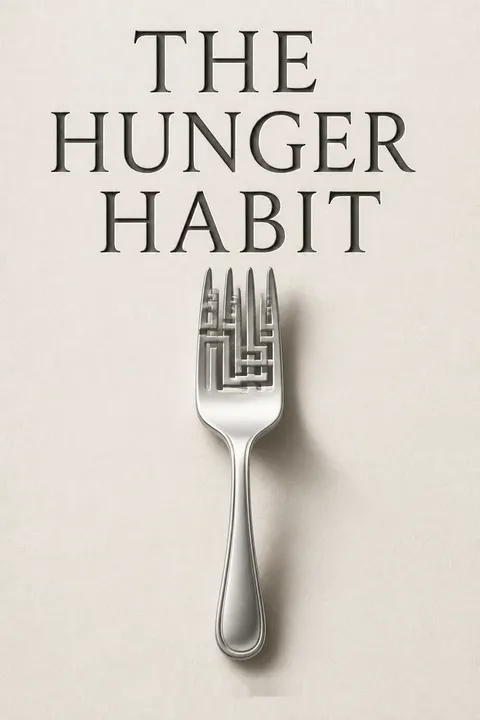


Key Takeaways
Treat eating struggles as learned habits, not proof of a defective character.
A cycle, not a flaw. Jacqui spent years restricting food to pursue an ideal body, then bingeing to escape painful feelings, then judging herself for bingeing. The cycle made her feel broken, but the book reframes it as learned behavior, not a character defect. Eating can become a quick way to seek pleasure or blunt distress, even when it causes problems afterward.
A different route. The proposed 21-day program moves from noticing patterns, to examining their rewards, to finding more satisfying choices. In one smoking-cessation trial, mindfulness training outperformed the comparison treatment by fivefold. A study of the Eat Right Now program reported a 40 percent drop in craving-related eating. These results are promising, not a guarantee of weight loss or a substitute for care. The book is not intended for people with anorexia or bulimia, who should seek clinical support.
The shift from moral failure to learned pattern is more than comforting language. It changes the problem from an identity verdict into something observable and potentially revisable, a move that also appears in behavioral therapies. That distinction can reduce shame, which often drives concealment and avoidance. Still, compassionate framing should not imply that every eating difficulty has the same cause or can be resolved through self-guided practice. The book appropriately marks serious eating disorders as requiring professional care. Its strongest claim is narrower: habitual eating can be approached without making weight the sole measure of success.
Ask whether your stomach needs food or your mood wants relief.
Two different urges. Homeostatic hunger is the body’s need for energy. Hedonic hunger is the learned desire to eat for pleasure, comfort, or distraction, whether or not the body needs food. Tracy discovered that she crunched carrots while studying statistics, not because she was hungry, but because the repetitive eating soothed anxiety. A healthier snack did not address the feeling underneath it.
Try the hunger test. Notice signs such as stomach rumbling, light-headedness, stress, boredom, or restlessness. Then consider how long ago you ate and whether the sensation fits physical hunger, emotion, habit, or a mix. The author offers four to five hours as a rough reference point, not a universal schedule. If the answer remains unclear, eating while paying attention can help rebuild the link between bodily sensations and food.
This distinction makes an often vague urge more investigable: the same feeling of wanting food may arise from different bodily and emotional conditions. That resembles interoceptive work, which trains attention to internal signals rather than relying only on external rules. The practical caution is that hunger cues can be affected by medication, illness, stress, or a history of restriction. The test is a prompt for noticing, not a diagnostic instrument. Its value lies in adding a pause and more information, not in turning every snack into an interrogation.
Map the trigger, the eating response, and what happens afterward.
Make the pattern visible. A habit loop links a trigger to an action and its result. Jack noticed that seeing Corn Nuts prompted automatic eating; anxiety, sadness, or simply having food nearby could trigger other patterns. Mapping the why, what, and how of eating helps separate physical hunger from mood, food choice, and eating style.
Start with observation. Record what was happening before eating, what you ate and how, and what followed in your body and mood. One of the author’s patients, Rob, noticed that eating to ease anxiety often left him more anxious. He reported losing 14 pounds after beginning the mapping work, though the point of the exercise is insight, not a promised weight change. The author advises starting with the loop itself rather than assuming that uncovering its earliest cause is required.
Mapping is a compact form of functional analysis: behavior is considered in context, including what seems to reinforce it. This can reveal that a snack briefly distracts from stress but worsens discomfort afterward, a consequence easy to miss in the moment. The method is especially useful because it generates personal observations rather than generic dietary rules. Its limit is equally important: identifying a loop does not remove barriers such as food insecurity, exhausting work schedules, or trauma. Those conditions may need practical or clinical support alongside awareness.
Trade food rules and calorie targets for usable body feedback.
Rules can rebound. Strictly forbidding a food may make it more mentally prominent. If a person then breaks the rule, the abstinence violation effect can turn one lapse into an all-or-nothing return to the old behavior. Jacqui described this pattern: after restricting, she would treat a broken rule as permission to binge. The book calls the resulting spiral the f ck-its.
Numbers can mislead. Food or exercise tracking may feel reassuring because it reduces uncertainty, but a target can displace the original aim of health. Goodhart’s law describes how a measure becomes less useful when treated as the goal. Someone may chase a step count or calorie limit while ignoring fatigue, hunger, or fullness. Measurement can still serve a purpose, but the author cautions against letting it overrule lived bodily feedback.
The critique is strongest when aimed at rigid targets, not at measurement itself. A metric can help with a specific medical or training need, while also becoming a source of compulsive checking when it stands in for well-being. This distinction matters because self-tracking is not inherently harmful; its effects depend on the person, purpose, and surrounding pressures. The book’s emphasis on body feedback counters the false precision of numbers, but bodily signals are also imperfect. A flexible combination of clinical guidance, context, and subjective experience is more defensible than treating either data or intuition as infallible.
Pay attention until food’s real reward replaces its remembered promise.
Wanting changes. The brain can remember a food as rewarding even when eating it no longer feels good. In a chocolate experiment led by Dana Small, participants kept tasting their preferred chocolate and rating whether they wanted more. Their responses shifted from wanting another piece to feeling that more would be unpleasant, sometimes after 16 pieces and sometimes only after 74. The point is not that chocolate is bad, but that liking a food and wanting more are different experiences.
Find the stopping point. The pleasure plateau is the point where enjoyment and desire begin to fade as enough food has been eaten. Paying attention to each bite, and allowing time for fullness signals to register, can make that point easier to notice. Mindful eating need not be slow or ceremonial. It means bringing attention to taste, sensation, and satisfaction instead of eating entirely on autopilot.
This approach makes appetite a process to observe rather than a rule to obey. It also clarifies a useful distinction in reward science: wanting can persist even as pleasure declines. The chocolate experiment gives that distinction a memorable physical demonstration. Yet individual responses vary, as the wide range of pieces suggests, and fullness signals do not arrive on a perfectly reliable timetable. Mindful attention is therefore best treated as added evidence, not a precise measuring device. Its practical advantage is that it can reveal changes in enjoyment before discomfort becomes the only signal to stop.
Record how eating feels, then replay that evidence before acting.
Collect immediate evidence. The craving tool asks a person to notice why they want food, attend to eating, then check how their body, emotions, and thoughts feel afterward. This helps distinguish short-lived relief from lasting contentment. The second part uses memory: imagine eating the food or amount, then recall the likely result. If the memory is vague, return to eating with attention and gather more information.
Use the replay. Retrospectives revisit an eating episode after it ends. Jack recalled feeling uncomfortably full after finishing a large salad, despite noticing he had had enough. Recalling the physical discomfort helped him see that stopping would have felt better. In one study described by the author, participants’ reward ratings for a target behavior fell below zero after roughly 10 to 15 uses of the craving tool. That finding is encouraging, not a timetable for every person.
The tool turns a broad intention to eat differently into a prediction that can be tested against experience. That is close to how learning systems update expectations when outcomes differ from what was anticipated. Retrospection is valuable because attention is often weakest during an emotionally charged moment. The evidence claim deserves careful boundaries: the reported change comes from specific program studies and should not be read as a universal dose. Still, the method offers a low-cost way to turn a lapse into information, provided the review stays curious rather than becoming another occasion for self-punishment.
Let cravings crest through curiosity instead of resisting or obeying them.
A craving is an experience. The author adapts RAIN as a way to meet an urge: recognize it and relax, allow it to be present, investigate its sensations, and note what changes. Instead of fighting the craving or immediately satisfying it, a person might notice tightness, restlessness, or heat as it rises and falls. Noting means labeling an experience simply, such as thinking, fear, or tingling, rather than getting absorbed in its story.
Practice on the wave. Jacqui used RAIN while parked outside a grocery store, where she would usually buy food to binge. She let herself feel hurt and upset, observed the craving, and found the urgency easing without acting on it. A study of the Eat Right Now program reported a 40 percent reduction in craving-related eating. RAIN does not promise that distress vanishes; it creates room to choose while distress is present.
RAIN shares a core principle with acceptance-based therapies: making room for an uncomfortable sensation can loosen its control over action. This is different from distraction, which may offer temporary relief while leaving the trigger untouched. The practice also avoids turning calm into a performance goal, since demanding that a craving disappear can become another form of resistance. There are limits: cravings tied to withdrawal, trauma, or severe psychiatric symptoms may call for professional treatment. The book’s account is most useful as a skill for ordinary urges, not as a claim that mindful observation replaces care.
Retire self-judgment by making kindness the more rewarding response.
Shame feeds the loop. After bingeing, Tasha judged herself, felt guilty and ashamed, then binged again to escape those feelings. The book treats self-criticism as another learned habit: it may feel like taking action, but can leave a person worse off. Noticing the judging voice as a thought, rather than a verdict, can create distance from it.
Try a kinder response. Kindness is not the same as giving every craving what it asks for. It means responding to distress with care instead of punishment. The author’s lab asked participants to rank different mental states and behaviors; kindness ranked just below joy. Tasha practiced self-kindness and eventually stopped bingeing almost entirely, learning to enjoy a piece of pizza without treating it as a moral failure. Progress came through repeated practice, not a demand to feel positive on command.
Self-compassion is often mistaken for lowering standards, but the distinction here is between accountability and humiliation. A person can acknowledge that a behavior caused harm while refusing to turn that behavior into a permanent judgment of identity. That distinction supports learning because shame tends to narrow attention toward concealment and escape. The chapter also recognizes that kindness can initially feel unfamiliar or even threatening to people accustomed to harsh self-talk. It should not be imposed as a cheerful script. Its usefulness depends on finding a form of care that feels credible and safe to the individual.
Meet the need beneath a craving with a freely chosen better option.
Find the better offer. The bigger better offer is the choice that feels more rewarding than an old habit while better meeting the person’s needs. The author compared gummy worms with blueberries: both answered a desire for sweetness, but mindful attention showed that blueberries were easier to stop eating and left him feeling better. The broader lesson is to discover, rather than prescribe, which foods and amounts work for an individual.
Ask what is needed. A craving for chocolate might point to hunger, but a drive for quick energy could also mask tiredness or a need for rest. Curiosity keeps the question open; kindness makes the answer easier to face. For trauma-related eating, the book suggests grounding and professional support when needed. A protective behavior may once have served a purpose, and changing it should not require denying that history.
The emphasis on a freely chosen alternative is more durable than swapping one rigid rule for another. It fits research on autonomy and motivation, where people are more likely to sustain actions they experience as personally meaningful. The needs question also broadens the intervention beyond food: sometimes the more useful response is sleep, connection, or a pause from stress. That choice is not equally available to everyone. Work, income, culture, and access to food shape what alternatives are realistic, so individual awareness should complement, not erase, attention to those constraints.
Analysis
The book’s central contribution is a change in the unit of analysis. Instead of asking whether a person has enough discipline, it asks what a particular eating behavior does in a particular moment, and what happens after it. This turns eating from a moral referendum into a learnable feedback pattern. The sequence is practical: map the pattern, attend to its immediate and delayed consequences, then let experience support a different choice. The stories make the mechanism concrete: Jacqui’s restrict and binge cycle, Tracy’s anxiety-driven crunching, Jack’s automatic snacking, and Rob’s eating to dampen panic each reveal different triggers and rewards.
The framework is strongest where it connects attention to reward learning. A person may know abstractly that eating to soothe anxiety does not solve the source of anxiety, yet that knowledge may not compete with the immediate relief. Attending to bodily and emotional consequences supplies information that an abstract rule lacks. Retrospectives and imagined outcomes extend that learning beyond the moment itself. Kindness matters because shame can become another trigger in the same loop.
The neuroscience is best understood as a useful explanatory model, not a complete map of eating. Brain regions such as the orbitofrontal cortex participate in distributed processes rather than acting as a single chooser. Reward learning also sits within a food environment deliberately shaped by marketing, availability, and cost. The book acknowledges some of these pressures, but a habit-focused solution cannot by itself solve food insecurity, trauma, or medical causes of appetite change. Nor do program studies establish that each reader will experience the same outcomes.
The most persuasive promise is therefore not effortless control or guaranteed weight loss. It is increased freedom to notice what is happening, distinguish need from learned urge, and respond without automatically adding shame. That makes the approach both modest and powerful: modest about outcomes, powerful in replacing self-condemnation with usable evidence.
Review Summary
The Hunger Habit offers a fresh perspective on eating habits, focusing on mindfulness and brain science rather than traditional diets. Readers appreciate Brewer's compassionate approach and practical tools for addressing emotional eating and cravings. While some find the content repetitive or lacking novelty, many praise its insights into the psychology of eating. Critics note concerns about fat-phobia and oversimplification of complex issues. Overall, the book is seen as a helpful resource for those seeking to improve their relationship with food through awareness and self-compassion.
People Also Read







Glossary
Reinforcement learning
Learning from outcomesA process through which the brain learns whether to repeat or avoid a behavior based on what follows it. Eating can be reinforced by pleasure, such as enjoying a sweet food, or by relief, such as temporarily escaping an unpleasant emotion. Repeated links between a cue, an action, and its result can make the action habitual.
Reward hierarchy
Ranking learned rewardsThe brain’s learned ordering of behaviors according to how rewarding they seem in a given context. When choosing what to do, a person may favor the option that has previously offered more pleasure or relief. Paying attention to a behavior’s actual outcome can change its perceived value and its position in this ranking.
Negative prediction error
Worse than expectedA mismatch in which an experience turns out to be less rewarding than the brain predicted. For example, a snack remembered as satisfying may taste less appealing than expected or leave the person uncomfortable. When noticed, this mismatch can lower the snack’s learned reward value and reduce the tendency to repeat the behavior.
Homeostatic hunger
The body’s energy needHunger driven by the body’s need for energy and nourishment. It may involve an empty or rumbling stomach, low energy, irritability, or difficulty concentrating. These signs can overlap with stress and other experiences, so the book recommends considering bodily sensations and time since eating rather than treating any single sign as conclusive.
Hedonic hunger
Eating for pleasure or reliefThe desire to eat for pleasure, comfort, distraction, or emotional relief rather than in response to the body’s energy needs. It may be triggered by boredom, anxiety, sadness, food cues, or habit. Eating can briefly soothe or distract, while leaving the underlying emotion or need unresolved.
The craving tool
Study an urge’s outcomeA practice for learning what an eating urge actually delivers. The first part involves eating with attention, then noticing bodily, emotional, and mental effects. The second part uses memory to imagine eating and predict those effects before acting. Repeated observations help update the learned reward value of a food or eating pattern.
RAIN
A practice for meeting urgesA mindfulness practice adapted in the book for cravings. The steps are to recognize the urge and relax, allow it to be present, investigate its sensations with curiosity, and note what is happening. The practice does not require suppressing the craving or making it disappear; it helps create space between the urge and an automatic response.
Pleasure plateau
The fading point of enjoymentThe point during eating when enjoyment and the desire for more begin to decline after enough food has been eaten. Noticing changes in taste, wanting, and fullness can help a person stop before continued eating becomes uncomfortable. It is an individual experience, not a fixed portion size or universal threshold.
Disenchantment databank
Memories of disappointing outcomesA store of remembered experiences showing that a familiar eating behavior was less rewarding than expected. The information may include taste, discomfort, mood, or regret after eating. Recalling these experiences can help a person make a more informed prediction when the same urge returns, without relying only on willpower.
Bigger better offer
A more rewarding alternativeA freely chosen behavior that offers more genuine satisfaction or better meets a person’s needs than an established habit. It might be a food that feels nourishing and satisfying, an amount that avoids discomfort, or a nonfood response to a need such as rest. The alternative is discovered through attention to experience, not imposed as a universal rule.
Noting
Label present experienceA mindfulness practice of briefly naming what is most noticeable, such as seeing, hearing, thinking, fear, or a bodily sensation. The label helps a person observe an experience without becoming fully absorbed in it. In the book, noting is used during cravings and self-judgment to support perspective and reduce automatic reactions.
FAQ
1. What is The Hunger Habit by Judson Brewer about?
- Focus on eating habits: The book explores why people eat when they’re not hungry, emphasizing that unhelpful eating behaviors are rooted in habitual brain patterns rather than lack of willpower or knowledge.
- Neuroscience and mindfulness: Brewer combines cutting-edge neuroscience with practical mindfulness techniques to help readers understand and change their relationship with food.
- Structured 21-day program: The book offers a 21-day challenge to map, interrupt, and replace old eating habits, aiming for lasting change and self-compassion.
2. Why should I read The Hunger Habit by Judson Brewer?
- Science-backed, compassionate approach: The book provides a neuroscience-based, non-judgmental method to break free from emotional eating, bingeing, and restrictive dieting.
- Empowerment through understanding: Readers learn how the brain forms habits and how awareness can rewire these patterns for improved mental and physical health.
- Holistic and practical: It addresses emotional, psychological, and behavioral aspects of eating, offering daily exercises and tools for sustainable change.
3. What are the key takeaways from The Hunger Habit by Judson Brewer?
- Habits drive eating: Eating behaviors are driven by habit loops—triggers, behaviors, and rewards—rather than conscious choice or willpower.
- Mindfulness is essential: Awareness and curiosity are more effective than willpower for changing eating habits and reducing cravings.
- Kindness over self-judgment: Self-compassion and kindness are crucial for breaking cycles of shame and emotional eating.
- Practical tools provided: The book offers actionable exercises like the craving tool, RAIN, and mindful eating practices to support real change.
4. How does Judson Brewer explain habit formation and eating behaviors in The Hunger Habit?
- Reinforcement learning: Habits form through positive and negative reinforcement, creating automatic behaviors around food.
- Trigger-behavior-reward loops: A cue triggers a behavior (eating), which leads to a reward (pleasure or relief), reinforcing the cycle.
- Brain regions involved: The survival brain seeks immediate rewards, while the planning brain predicts outcomes; the orbitofrontal cortex ranks behaviors by reward value.
- Explore vs. exploit: The brain balances trying new behaviors and sticking with known rewards, which can lead to getting stuck in unhelpful eating patterns.
5. Why does Judson Brewer argue that diets and willpower don’t work in The Hunger Habit?
- Willpower is unreliable: The book explains that willpower is not a dependable tool for controlling eating, especially when habits are deeply ingrained.
- Abstinence violation effect: Breaking a diet rule often leads to giving up entirely, resulting in bingeing and self-judgment.
- Biological resistance: Caloric restriction triggers the body’s starvation response, making sustained dieting difficult and increasing hunger.
- False sense of control: Tracking calories or steps can disconnect people from their body’s natural signals, leading to obsession and shame.
6. What is the 21-day challenge in The Hunger Habit by Judson Brewer and how does it work?
- Three-phase structure: The challenge involves mapping habit loops, interrupting them with awareness, and creating healthier habits (the “bigger, better offer”).
- Daily, manageable steps: Each day introduces a specific practice or concept, such as mindful eating or the hunger test, for gradual change.
- Emphasis on self-compassion: The program encourages kindness and curiosity, reducing self-judgment and supporting sustainable progress.
- Not a quick fix: Brewer stresses patience, noting that habits take time to change, but 21 days can help reset and build momentum.
7. How does The Hunger Habit by Judson Brewer define and use mindfulness for eating?
- Mindfulness as awareness: Mindfulness is defined as paying attention, in the present moment, on purpose, and non-judgmentally, to eating experiences.
- Practical mindful eating: Exercises like the raisin ritual and focusing on sensory experiences help break automatic eating patterns.
- Flexible practice: Mindful eating can be done in any setting, not just in isolation or slowly, by simply paying attention to urges and the act of eating.
- Benefits: Mindfulness helps identify pleasure plateaus, reduces overeating, and fosters a healthier relationship with food.
8. What is the “hunger test” in The Hunger Habit and how does it help distinguish true hunger from cravings?
- Purpose of the hunger test: It helps differentiate between biological hunger and emotional or habitual urges to eat.
- Stepwise assessment: The test involves checking physical and emotional symptoms, noting time since last meal, and scoring indicators to clarify the urge’s origin.
- Rebuilding awareness: Regular use recalibrates the brain-body connection, reducing mindless or emotional eating.
- Integrated support: The hunger test is also part of Brewer’s Eat Right Now app for habit change.
9. What is the craving tool in The Hunger Habit by Judson Brewer and how does it work?
- Two-part process: The craving tool involves mindfully eating and rating contentment, then imagining eating and predicting outcomes to assess the true reward.
- Building disenchantment: Repeated use helps the brain recalibrate the reward value of foods, leading to disenchantment with unhealthy habits.
- Evidence-based change: Studies show that using the craving tool 10-15 times can significantly reduce cravings and shift behavior.
- Focus on awareness: The tool encourages paying attention to thoughts, emotions, and bodily sensations before, during, and after eating.
10. How does The Hunger Habit by Judson Brewer explain the difference between “liking” and “wanting” food?
- Liking vs. wanting: Liking is the actual pleasure from food, while wanting is the craving or urge to eat, which can persist even when pleasure fades.
- Craving mechanisms: Cravings (wanting) can drive overeating even when the food is no longer enjoyable (liking).
- Mindful uncoupling: Mindful awareness helps separate wanting from liking, allowing responses to true hunger and satisfaction rather than automatic cravings.
- Reducing habitual overeating: Recognizing this difference is key to breaking the cycle of mindless eating.
11. What is the “bigger, better offer” (BBO) principle in The Hunger Habit by Judson Brewer?
- Definition of BBO: The BBO is the idea that the brain will choose the most rewarding option available, so healthier, more satisfying alternatives can replace old habits.
- Unforced choice: Sustainable change comes from freely made choices, not from willpower or external rules.
- Building enchantment: Awareness and curiosity help create positive experiences with healthier behaviors, making the BBO more appealing.
- Supports lasting change: The BBO principle is central to replacing unhelpful eating habits with more rewarding ones.
12. How does kindness and self-compassion play a role in breaking eating habits in The Hunger Habit by Judson Brewer?
- Kindness over self-judgment: The book shows that self-judgment fuels shame and guilt cycles, perpetuating emotional eating, while kindness offers a healing alternative.
- Neuroscience of kindness: Brewer’s research indicates that kindness practices quiet brain regions involved in craving and self-criticism, supporting healthier behavior change.
- Practical kindness exercises: Guided meditations and small acts of kindness toward oneself and others help build a “kindness enchantment databank.”
- Essential for sustainable change: Kindness and self-compassion are presented as essential companions to awareness for breaking unhelpful eating habits.
About the Author

Download PDF
Download EPUB
.epub digital book format is ideal for reading ebooks on phones, tablets, and e-readers.








