

Key Takeaways
Treat anxiety as a habit loop, not a problem you can think away
Anxiety can hide in plain sight. Psychiatrist and neuroscientist Judson Brewer recalls denying his own anxiety as a college student, even while stomach cramps and urgent bathroom trips shaped his daily running routes. Anxiety can appear as panic, irritability, overplanning, bodily distress, or persistent worry. Its disguises make it easy to mistake a repeated pattern for personality or a physical problem alone.
The loop keeps itself going. Anxiety can prompt worrying, avoidance, or distraction. Those actions may bring brief relief, which teaches the brain to repeat them. But relief fades, and the original anxiety often returns stronger. Brewer’s central proposal is practical: understand the loop, notice what its behavior actually delivers, then learn a more rewarding response. This is not a claim that anxiety is imaginary or always harmless. It is a way to see how coping behaviors can unintentionally train it to persist.
The useful shift is from asking what anxiety says about a person to asking what pattern it is reinforcing. That resembles functional analysis in behavioral psychology, where a behavior is understood by its triggers and consequences rather than treated as a character defect. It can reduce shame and make change more observable. The framing also needs a boundary: anxiety may signal genuine danger, illness, or chronic hardship. Mapping a loop should clarify a response, not persuade someone that every alarm is false or that self-guided mindfulness replaces appropriate medical care.
When fear meets uncertainty, your planning brain turns possibilities into threats
Fear protects; worry extrapolates. An immediate danger can trigger a fast survival response. Once the danger passes, the brain learns from what happened. Anxiety is different: when the future is uncertain and information is incomplete, the planning mind tries to fill gaps with predictions. During early COVID-19, unclear risks and conflicting reports gave those predictions plenty of material. More information did not necessarily mean more certainty, especially when it arrived as a flood of alarming or contradictory claims.
The response can spread socially. Brewer describes panic buying during the pandemic: seeing another shopper’s overflowing cart could make a person stock up on supplies they already had. The book also questions the popular idea that moderate anxiety reliably improves performance. A review it cites found only 4 percent of examined studies supported the familiar inverted-U claim, while 46 percent found stress related to worse performance.
This account connects anxiety to predictive processing: the mind does not merely register events, it continually forecasts what comes next, and uncertainty makes forecasts less dependable. The shopping example also shows how social signals can substitute for evidence. A crowded cart feels like proof of danger even when it is only proof that someone else is worried. Still, uncertainty is not always a thinking error. In real crises, obtaining reliable information and taking precautions matter. The helpful distinction is between information that changes a decision and repetitive checking that mainly supplies temporary reassurance.
Treat worry, scrolling, and stress-eating as learned rewards, not character flaws
Relief can reinforce a habit. A habit loop links a trigger, an action, and a result. A stressful thought might trigger checking a news feed; checking briefly distracts from the feeling; that short-term relief makes checking more likely next time. The same pattern can drive procrastination, shopping, drinking, or eating. The behavior may cause problems over time yet still feel rewarding in the moment because it interrupts discomfort.
Modern design intensifies the loop. Brewer points to two forces: unpredictable rewards and easy access. A notification might bring praise, a useful message, or nothing important, so the brain keeps checking. A store or app can also turn an impulse into an immediate purchase. The survival learning system that once helped people remember where food was found now operates amid engineered prompts and instant rewards.
The model usefully separates the immediate payoff from the eventual cost. In behavioral economics, this resembles present bias: immediate relief tends to outweigh a delayed consequence, even when a person sincerely prefers the long-term outcome. The book also highlights that habits are not formed in a neutral marketplace. Products can be deliberately optimized to capture attention, so blaming individual discipline alone misses the design of the environment. At the same time, not every frequent behavior is an addiction. The relevant question is whether repetition continues despite meaningful harm and whether the person feels unable to choose otherwise.
Map trigger, behavior, and payoff before trying to change the habit
Make the pattern visible. Brewer calls the first stage first gear: identify the trigger, behavior, and result of a repeated response. John, a patient drinking six to eight drinks most nights, saw that anxiety about unfinished work prompted him to avoid the work, then drink to numb the guilt. Mapping also revealed a separate loop in which a change in his wife’s tone triggered fear of conflict, followed by yelling and more conflict.
Start with observation, not repair. Seeing the chain helped John respond more calmly and recognize that alcohol was worsening the very anxiety he was trying to escape. The exercise is not a demand to diagnose every cause or immediately force a new behavior. It is a way to notice what happens in real situations, including the impulse to criticize oneself or rush into a fix. For people drinking heavily, stopping suddenly can be dangerous; medical advice is important.
A simple map is powerful because it converts a vague identity claim, such as being an anxious person, into a sequence that can be observed and tested. That is compatible with clinical behavior analysis and with the practical value of self-monitoring: a pattern becomes easier to discuss once its parts are named. The map also invites questions about context, such as workload, relationship dynamics, or access to alcohol. These factors matter because a behavior may be reinforced by real conditions, not merely by an internal habit. Awareness creates leverage, but it does not by itself resolve every underlying problem.
Update the habit's felt reward instead of ordering yourself to stop
The brain learns from outcomes. Brewer describes reward value as the brain’s learned estimate of how worthwhile a behavior is. In his account, the orbitofrontal cortex helps combine past experience, feelings, and context into this estimate. A habit can keep repeating because its reward value reflects old experience, even when the behavior no longer feels good. The second stage, second gear, means paying close attention to what happens during and after the behavior and letting that current experience revise the old estimate.
Notice, do not lecture yourself. In a chocolate experiment, participants who kept eating their favorite chocolate rated it as less pleasant over time, eventually finding it unpleasant. Brewer’s lab also reported that, in app-based studies of smoking and eating, repeated use of a mindful craving exercise reduced measured reward value toward zero after roughly 10 to 15 repetitions. These findings suggest a mechanism, not a guaranteed timetable for every person or habit.
This is the book’s strongest mechanistic idea: behavior change may follow updated experience more reliably than verbal commands. It echoes prediction-error models of learning, in which a gap between expected and actual outcomes signals that an old expectation needs revision. Attending to the body can make that discrepancy harder to ignore. Yet the lab findings should not be mistaken for a universal clinical prescription. Reward learning varies by person, context, and behavior, and substance dependence can involve withdrawal or other medical risks. Awareness can support treatment without being treated as a substitute for it.
Replace anxious escape with curiosity, a reward available wherever you are
Choose a better offer. Brewer calls a more rewarding alternative a bigger, better offer, or BBO. A substitute that merely distracts, such as endless puppy videos, may preserve the pattern of escaping every uncomfortable feeling and can lose its appeal with repetition. Curiosity offers a different response: instead of fleeing anxiety, notice its sensations and investigate them. The book distinguishes interest curiosity, the pleasure of exploring, from deprivation curiosity, the restless urge to close a specific information gap.
Interest can become its own reward. A brief internal question, such as what a sensation feels like right now, does not require a purchase, a phone, or another person’s availability. Brewer describes teaching a group of Olympic water polo players to use a soft mental “hmm” as a prompt for direct observation. In his framing, curiosity feels more open than anxious urgency and can interrupt the urge to fix or flee.
Curiosity changes the task from obtaining certainty to gathering experience. That distinction matters because anxiety often asks an unanswerable question about the future, while sensory investigation returns attention to something observable now. Research on curiosity and learning broadly supports the idea that interest can sustain attention and memory, though it does not establish that curiosity will soothe every episode of distress. A person who feels overwhelmed may find investigation difficult at first. The approach is most credible as an invitation to try a small shift, not as a rule that discomfort must become fascinating.
Ride anxiety's body sensations without turning them into a forecast
Let the wave be specific. RAIN is a mindfulness practice Brewer adapts for urges and anxiety. It asks the person to notice what is arising, allow it to be present, investigate sensations and thoughts, and label what changes from moment to moment. For example, someone in a difficult meeting might silently notice a fast heartbeat or facial heat rather than concluding that the meeting is going badly. The purpose is not to force calm, but to stay with immediate experience without adding a catastrophic story.
A panic attack is not automatically a disorder. Brewer recounts waking with panic symptoms during medical residency and noting them without immediately worrying about their return. He explains that panic disorder involves persistent worry about future attacks or substantial behavior changes related to them. Dave, by contrast, avoided highways and restaurants to prevent panic. Learning to observe sensations and check the present for actual danger helped him resume activities.
The method resembles exposure-based approaches in one important respect: a person learns that an uncomfortable sensation can be experienced without the feared outcome automatically following. Labeling sensations can also create distance between bodily arousal and its interpretation. The distinction between an attack and a persistent fear of another attack is clinically useful, but panic symptoms can overlap with medical problems. New or severe symptoms warrant appropriate evaluation. RAIN is best understood as a way to relate differently to sensations once immediate safety has been considered, not as a substitute for that safety check.
Turn setbacks into information, not another reason to punish yourself
Shame can restart the behavior. Brewer describes an echo loop: after a binge, guilt becomes another painful trigger, and eating again briefly numbs it. A patient with binge-eating also found that judging her appearance fed isolation and depression, even as the bingeing began to ease. In the book’s approach, a setback can be reviewed without self-attack: what happened, what followed, and what did the experience teach?
Kindness changes the response. Loving kindness, also called metta, is a practice of directing sincere well-wishing toward oneself and others. It is not forced positive thinking. Brewer describes using it after drivers honked at him while he bicycled, replacing anger with a wish for both himself and the driver to be well. The shift left him less tense. His patient later reported that she could enjoy a single slice of pizza and had lost weight.
This section brings self-compassion into the learning process rather than treating it as a sentimental reward after success. That fits research-informed models of emotion regulation: harsh self-criticism can increase distress, while a less punitive response may preserve the capacity to reflect and try again. The distinction between accountability and self-punishment is essential. Kindness does not erase harm or remove the need to repair relationships; it can make repair more possible by preventing shame from consuming attention. The patient’s outcome is an illustration, not evidence that the practice alone produces the same result for everyone.
Practice in brief moments; anxiety changes through repetitions, not deadlines
There is no universal 21-day reset. A study Brewer cites found that new behaviors took 18 to 254 days to reach automaticity, a wide range that depends on the behavior and the person. His practical instruction is to practice in small, frequent moments, using everyday triggers to notice a loop, assess its payoff, or return attention to breathing. The three gears describe this progression: map a pattern, learn from its actual result, and practice a more rewarding response.
Work with the moment at hand. Brewer calls this anxiety sobriety: instead of demanding a promise to feel calm tomorrow, practice not feeding the anxiety loop for the next few minutes. His lab reported a 63 percent reduction in anxiety scores in a two-month app-based study of people with generalized anxiety disorder, alongside usual care. That is an encouraging study result, not a promise or a replacement for professional treatment.
Brief, repeated practice is compatible with how skills become available under pressure: rehearsal in ordinary settings makes a response easier to retrieve when emotions rise. The emphasis on the next few minutes also reduces the cognitive burden of imagining permanent recovery. Still, repetition is not the same as guaranteed progress, and app-based outcomes depend on study design, participant characteristics, and adherence. The most balanced reading is experimental: collect evidence from personal experience while seeking clinical support when symptoms are severe, persistent, or disabling.
Analysis
The book’s central move is to treat anxiety not only as a feeling to suppress, but as behavior shaped by learning. This turns a sprawling emotional problem into a tractable sequence: uncertainty prompts anxiety, anxiety prompts a response, and the response is strengthened if it brings even momentary relief. Its most useful contribution is therefore not a clever relaxation trick, but a change in the unit of analysis. Instead of asking, “How do I stop feeling this?”, the reader can ask what the mind is doing, what that action produces, and whether another response is more rewarding.
The three-gear progression gives that insight a memorable practical structure. Mapping makes automatic responses observable. Attention to consequences corrects outdated expectations. Curiosity and kindness offer alternatives that do not depend on buying, checking, or escaping. Dave’s gradual return to driving gives the method a human arc: the aim is not merely lower symptom scores, but a larger range of lived activity.
The science is strongest when it supports specific mechanisms, such as reinforcement learning and the role of attention in revising expectations. The clinical percentages are promising, but they describe particular trials and should not be generalized into guarantees. The book’s old-brain and new-brain language is accessible, though it can make brain systems sound more separate and simple than they are. Anxiety also has social and material sources, including unsafe conditions, illness, and economic strain. Individual mindfulness cannot fix those conditions.
Read as a self-help guide, the book is most persuasive when its practices are treated as experiments rather than commandments. A person can test whether checking, worrying, or avoiding actually helps, then notice whether curiosity or compassionate attention changes the experience. That approach respects both the adaptability of learning and the fact that people differ in what they need. For severe or persistent anxiety, mindfulness can complement professional care, not replace diagnosis, therapy, or medical treatment.
Review Summary
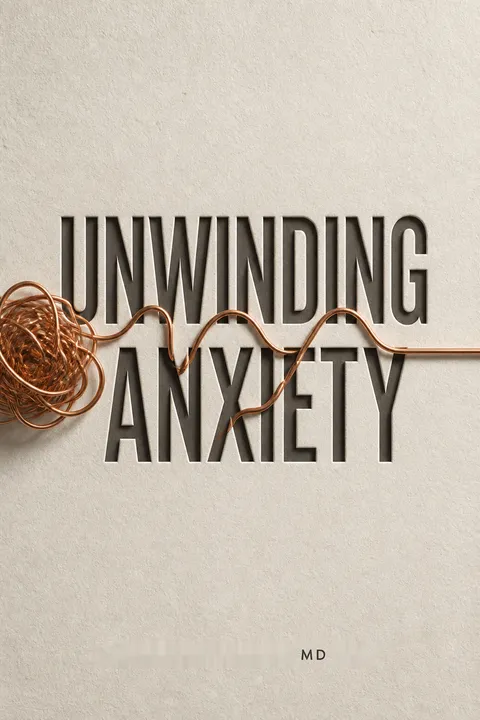
Unwinding Anxiety receives mixed reviews. Some readers find it informative and helpful, praising its scientific approach and practical strategies for managing anxiety. Others criticize it for focusing too much on addiction and habits rather than anxiety specifically. The book's repetitive nature and writing style are points of contention. Many appreciate the mindfulness techniques and habit-breaking methods presented, while some feel the content could have been condensed. Overall, readers value the insights into brain function and anxiety management, but opinions vary on its effectiveness and relevance.
People Also Read








Glossary
Habit loop
Learned trigger-action-result patternA repeated sequence in which a trigger prompts a behavior and the behavior produces a result. If that result feels rewarding, including temporary relief from distress, the brain becomes more likely to repeat the behavior when the trigger returns. Brewer applies this model to anxiety, worry, avoidance, eating, drinking, and other habits.
Three gears
Three stages of habit changeBrewer’s framework for changing anxiety-related habits. First gear means mapping triggers, behaviors, and results. Second gear means paying close attention to what the behavior actually delivers so the brain can revise its learned reward value. Third gear means using a more rewarding alternative, such as curious awareness, to step out of the old pattern.
Reward value
Learned worth of a behaviorThe brain’s learned estimate of how rewarding an action, experience, or outcome is. Brewer describes it as shaped by sensory experience, emotion, context, and past behavior. Because the estimate can reflect older experiences, a habit may continue even when it no longer feels good. Attending to current results can update that estimate.
Bigger, better offer
More rewarding alternative responseBrewer’s term for a response that feels more rewarding than an established habit and can help a person step out of its loop. For lasting change, he favors an internally available alternative, such as curiosity or kindness, rather than a substitute that simply distracts or reinforces the urge to escape discomfort.
RAIN
Mindful response to difficult experienceA practice for meeting urges, anxiety, and other uncomfortable experiences. The practitioner recognizes what is happening, allows it to be present, investigates sensations, thoughts, and emotions, and notes what changes. The method aims to support clear observation rather than suppression, distraction, or forced relaxation.
Interest curiosity
Pleasure in exploringOne of two forms of curiosity described in the book. Interest curiosity is the enjoyment of learning or exploring something without needing to resolve a specific information gap. Brewer presents it as an internally available reward that can redirect attention from anxious urgency toward open observation.
Deprivation curiosity
Restless need to knowA form of curiosity driven by missing information, such as not knowing who sent a message or how long a delay will last. Finding the answer can relieve the discomfort of not knowing. Brewer distinguishes it from interest curiosity, which centers on the enjoyable process of exploration rather than relief from a specific information deficit.
Anxiety sobriety
Practice calm in the presentBrewer’s adaptation of the recovery idea of taking one day at a time. Rather than making a sweeping promise to remain calm indefinitely, a person practices not feeding the anxiety loop in the present moment, or for a short interval. This makes the task feel more manageable and reduces worry about an uncertain future.
FAQ
What's Unwinding Anxiety about?
- Focus on Anxiety: Unwinding Anxiety by Judson Brewer delves into the science of anxiety, its habit-forming nature, and how it can be managed through mindfulness.
- Mindfulness Techniques: The book offers practical mindfulness tools to help readers understand and manage their anxiety triggers.
- Neuroscience Insights: Brewer integrates neuroscience research to explain how anxiety develops in the brain and how it can be rewired.
Why should I read Unwinding Anxiety?
- Practical Solutions: The book provides actionable steps to manage anxiety and break free from harmful habits.
- Expert Guidance: Judson Brewer, a psychiatrist and neuroscientist, combines clinical experience with scientific research for a comprehensive approach.
- Empowerment Through Knowledge: Readers gain a better understanding of their minds and learn to take control of their anxiety.
What are the key takeaways of Unwinding Anxiety?
- Anxiety as a Habit: Anxiety is presented as a habit loop that can be mapped and understood.
- Mindfulness is Essential: Mindfulness is crucial for breaking the cycle of anxiety by observing thoughts and feelings without judgment.
- Reward-Based Learning: Understanding how our brains learn through rewards is key to changing habits and reducing anxiety.
How does Judson Brewer define anxiety in Unwinding Anxiety?
- Anxiety Defined: Brewer describes anxiety as a feeling of worry or unease about uncertain outcomes.
- Anxiety as a Habit Loop: It often manifests as a habit loop, where triggers lead to anxious thoughts and behaviors.
- Connection to Fear: Anxiety is linked to fear, becoming maladaptive when it spirals out of control.
What is the significance of mindfulness in Unwinding Anxiety?
- Mindfulness as a Tool: Mindfulness helps manage anxiety by allowing individuals to observe their thoughts and feelings without judgment.
- Awareness and Curiosity: It involves awareness and curiosity about experiences, leading to healthier coping strategies.
- Neuroscientific Basis: Mindfulness practices can change brain activity, particularly in areas associated with anxiety and reward.
How can I map my anxiety habit loops as suggested in Unwinding Anxiety?
- Identify Triggers: Recognize what triggers your anxiety, such as specific thoughts or situations.
- Document Behaviors: Note the behaviors that follow your triggers, like avoidance or worry.
- Evaluate Rewards: Assess the outcomes of these behaviors to identify which habits to change.
What is the RAIN method in Unwinding Anxiety?
- Recognize: Identify the emotion or urge as it arises to create mental space between trigger and reaction.
- Allow: Permit the emotion to be present without pushing it away, reducing its intensity.
- Investigate: Explore the physical sensations, thoughts, and emotions associated with the experience.
- Note: Observe the experience without judgment, reinforcing mindfulness and compassion.
How does Unwinding Anxiety address the relationship between anxiety and addiction?
- Anxiety as a Common Factor: Anxiety often underlies many addictive behaviors, suggesting that addressing it can help reduce addiction.
- Habit Loops in Addiction: Both anxiety and addiction can be viewed as habit loops, where triggers lead to compulsive behaviors.
- Mindfulness as a Solution: Mindfulness helps manage both anxiety and addiction by fostering awareness and curiosity.
What role does curiosity play in Unwinding Anxiety?
- Curiosity as a Superpower: It allows individuals to explore emotions and experiences without judgment, leading to greater self-awareness.
- Shifting Focus: Curiosity shifts focus from anxiety to the present moment, reducing the intensity of anxious feelings.
- Building New Habits: Encourages the creation of new, healthier habits that replace old, unhelpful ones.
What is the significance of the "bigger, better offer" (BBO) concept in Unwinding Anxiety?
- Finding Alternatives: Encourages seeking more rewarding behaviors to replace unhelpful habits.
- Internal vs. External Rewards: Emphasizes finding internally based rewards, like curiosity and kindness, for sustainable change.
- Long-Term Change: Focus on BBO helps create lasting change in habits and reduces anxiety.
How does Unwinding Anxiety address self-judgment?
- Self-Judgment Habit Loops: Self-judgment can create negative habit loops that perpetuate anxiety.
- Cultivating Kindness: Emphasizes self-compassion and kindness to overcome self-judgment.
- Awareness and Acceptance: Cultivating awareness and acceptance reduces the power of self-judgment.
What are some practical exercises from Unwinding Anxiety?
- Mapping Habit Loops: Encourages mapping out habit loops to gain insight into triggers and behaviors.
- RAIN Practice: A practical exercise to navigate emotions and urges, leading to greater self-awareness.
- Curiosity Journaling: Keeping a journal to explore thoughts and feelings with curiosity, reinforcing mindfulness skills.
About the Author


Download PDF
Download EPUB
.epub digital book format is ideal for reading ebooks on phones, tablets, and e-readers.








