

Key Takeaways
Recognize depression by lost pleasure, not by a bad day
More than sadness. Harper separates depression from ordinary sadness and grief. A painful loss can be devastating, and grief can contribute to depression, but depression is marked by a broader loss of the ability to enjoy life. Its central symptom is anhedonia, meaning reduced or absent capacity for pleasure. Someone may still feel anger, guilt, shame, or despair while feeling little joy, connection, or gratitude.
A stress response. The book describes depression as a biochemical learned-helplessness response: the brain and body begin to act as though effort cannot improve anything. Harper stresses that the precise biological mechanism remains unsettled. The practical distinction is not whether a person feels bad, but whether pleasure and functioning have become persistently difficult.
The distinction matters because casual use of the word can blur the difference between a temporary reaction and an illness that deserves care. Anhedonia also explains why advice to simply do something enjoyable can feel absurd to someone who cannot access enjoyment. A useful clinical question is not only whether sadness is present, but what has changed in sleep, motivation, relationships, and the capacity to feel reward. The book’s stress-response framing is compassionate, though it should not be mistaken for a complete biological explanation.
Track the depression funnel before daily life narrows to survival
A narrowing pattern. The depression funnel is Harper’s model for how stress and depressive symptoms can progressively shrink a person’s life. At first, someone may manage stress while still keeping space for sleep, nourishing food, movement, hobbies, and social contact. As energy and motivation fall, those activities can seem optional and be dropped first, even though they help sustain wellbeing.
Find your early signs. With fewer sources of support and pleasure, daily life can become dominated by demands and distress. The book recommends identifying what being well looks like for you, what changes first, and what signals that symptoms are worsening. Those signs can become prompts for practical action, such as restoring a sleep routine or asking someone for help.
The funnel is memorable because it turns relapse prevention into observation rather than self-blame. It resembles feedback loops in systems thinking: shrinking resources make each new stressor harder to absorb, which can shrink resources further. The model is a map, not a universal sequence. One person may first lose sleep, another may withdraw socially, and some people have symptoms that change abruptly. Its value lies in identifying an individual pattern early enough to respond.
Treat inherited risk as vulnerability, not destiny
Nature and nurture interact. Harper presents depression as arising from a mix of biological predisposition and environmental stressors, such as trauma or major life events. In discussing epigenetics, she describes how environmental conditions can influence whether some genes are active. This makes family history relevant, but it does not mean a person is guaranteed to develop depression or that every family pattern has a known biological explanation.
The chemistry remains uncertain. Neurons communicate across small gaps called synapses using neurotransmitters. The book connects depression with dopamine, serotonin, and norepinephrine, while explicitly cautioning that experts do not know exactly what goes wrong or whether the problem is simply too much or too little of a chemical. Depression cannot be reduced to a settled, single-chemical story.
This framing usefully replaces the false choice between biology and life experience with an interaction between the two. It also guards against moralizing: vulnerability is not a character flaw. The epigenetic discussion deserves careful boundaries, however. Environmental effects on gene activity are well established in general, while claims about specific trauma effects being transmitted across generations in humans remain complex and difficult to establish. Family history can inform a conversation with a clinician without serving as a forecast.
Use diagnosis to guide care, never to define a person
A tool for communication. The book treats diagnosis as shorthand that helps providers identify symptom patterns and discuss treatment options. It is not a complete account of a person. A diagnosis may bring relief by naming a real problem, but Harper warns against turning the label into an identity. What matters clinically includes how symptoms affect work, school, relationships, hobbies, and other important parts of life.
Similar symptoms need context. Major depression and persistent depressive disorder can share symptoms, with differences in duration, intensity, and pattern. The book notes that major depression involves a sustained period of symptoms, while persistent depressive disorder can feel like long-running low mood and reduced interest. Substance use, anxiety, postpartum changes, and physical illness can also contribute to or resemble mood symptoms, so a full history matters.
Diagnosis can open doors to treatment, accommodations, and a shared vocabulary, yet it can also flatten a complicated life into a category. The book’s emphasis on function helps keep the label tied to its purpose: understanding distress and choosing support. Symptoms that look alike can have different causes, so this is not a do-it-yourself sorting exercise. Thorough assessment is especially important when medication, physical health, substance use, or a history of elevated moods may affect care.
Check for manic highs before calling every low depression
Ask about the full history. Bipolar disorder includes depressive episodes and periods of mania or hypomania, which are unusually elevated or irritable states. The book describes possible signs such as racing thoughts, fast speech, needing little sleep, distractibility, impulsive behavior, and risky decisions. Hypomania is less extreme than mania but can still disrupt life and may signal a need for prompt evaluation.
A depression-only view can miss it. Harper cites an estimate that up to 20 percent of people seeking treatment for major depression may actually have bipolar disorder. She emphasizes asking about past highs, not only current lows, because depressive symptoms may occupy much more time and hypomania may be mistaken for feeling better. Medication decisions should account for this history and be monitored by a qualified prescriber.
This is a vital diagnostic safeguard: a person’s current mood does not reveal the whole course of an illness. A timeline of sleep, energy, judgment, and behavior can be more informative than a snapshot of sadness. The cited percentage should be understood as the book’s estimate, not a universal rate for every setting. The practical lesson remains strong: disclose periods of unusually high energy or reduced need for sleep before treatment decisions are made.
Build a treatment mix, not a search for one cure
Different tools address different needs. Harper supports medication when it helps, while arguing that it is often not the only useful support. She discusses talk therapy, including work on trauma and triggers, alongside exercise, nutrition, meditation, and social support. She also describes complementary options such as light therapy, acupuncture, massage, biofeedback, and weighted blankets. These approaches do not all have the same evidence base or suit every person.
Treatment can take persistence. The book cites research estimating that up to 39 percent of people diagnosed with depression still meet criteria a year later. That difficulty is not proof of personal failure. Medication may take time to work, cause side effects, or need adjustment; therapy and other supports can address needs medication alone may not. Changes to prescribed medication should be discussed with the prescriber.
The strongest feature of this approach is its rejection of treatment shaming. Medication is not a moral failure, and a walk or a supplement should not be presented as a universal substitute for clinical care. A treatment mix also invites collaboration: the person receiving care can report what helps, what harms, and what remains unresolved. The necessary caution is that complementary methods vary considerably in evidence and safety, so openness should be paired with informed evaluation.
Treat supplements as medicine, not harmless food
Quality is inconsistent. Harper notes that tests of some herbal products found missing or unlisted ingredients. A label may not reliably tell a buyer what is in a supplement, and different products can vary in quality. She recommends researching products and involving a qualified provider rather than assuming that a natural product is automatically safe or effective.
Interactions matter. Some herbal supplements can interact with prescription medication, and the book urges readers to tell prescribers what they take. It discusses whole-food supplements and herbs as possible supports, including adaptogenic herbs, which are described as intended to support physiological balance. That category does not make every product appropriate for every person. The source’s practical advice is to check both the product and its compatibility with other care.
This is a useful corrective to two opposite errors: dismissing every supplement as worthless and treating anything labeled natural as benign. Product quality, dose, and interactions are part of the treatment question, not fine print. The book’s enthusiasm for some supplements should be read more cautiously than its core advice to verify contents and consult providers. Evidence for individual products is uneven, and supplements should not delay assessment or established treatment when symptoms are severe.
Protect body care and connection before they disappear
Keep basic supports in reach. The funnel model explains why sleep, food, movement, and enjoyable activities are often abandoned just when they matter most. Harper frames self-care as ordinary maintenance, not a luxury: rest, clean clothes, journaling, art, music, or a walk can all count. Movement should be chosen for tolerability or enjoyment, not used as punishment for eating or feeling unwell.
Let other people help. The book stresses the value of friends, family, peers, and support groups. Peer supporters may bring understanding drawn from similar experience, while clinicians can offer assessment and treatment. If reaching out feels difficult, the advice is to start small and seek connection around an interest or activity. Support is not a replacement for professional care, but it can make daily recovery less solitary.
The emphasis on low-glamour routines is psychologically astute. Depression often makes actions feel pointless before their effects can be felt, so a small routine can function as scaffolding rather than a test of motivation. Social support also makes care more practical: another person can notice change, accompany someone to an appointment, or help reduce an overwhelming task. These steps are not cures, and limited money, disability, caregiving, or unsafe relationships can make them harder to access.
Test depressive thoughts without denying the feelings underneath
Notice the mind’s shortcuts. Harper calls recurring unhelpful patterns distorted thinking styles. Examples include filtering out everything positive after one criticism, assuming a setback proves permanent failure, or deciding that another person’s behavior must be about you. The book suggests noticing the pattern and asking what you would say to a close friend who was judging themselves the same way.
Meditation is attention practice. It is not a demand to empty the mind. The point is to notice thoughts, including self-critical ones, and return attention to the present. Harper also offers slow breathing as a way to focus attention and settle the body. Neither practice requires feeling calm immediately. They can help a person observe thoughts as thoughts rather than automatically treating every thought as a fact.
This approach joins cognitive therapy’s habit of examining interpretations with mindfulness’s habit of observing mental events. The combination can create a pause between a harsh thought and a consequential decision. It is important, however, not to turn the exercise into forced positivity. Some negative conclusions accurately describe abuse, discrimination, illness, or material hardship. The task is to test whether a thought is complete and useful, not to deny real conditions or blame a person for having painful feelings.
Budget energy with spoons instead of judging yourself lazy
Make capacity visible. Spoon theory, created by Christine Miserandino and used here as a planning metaphor, represents energy as a limited daily supply. Illness or depression can leave someone with fewer spoons than a healthy observer expects. Basic tasks may use most of that supply, leaving little for optional activities or unexpected demands.
Plan by cost and return. Harper suggests noticing which activities consume energy and which restore it. If an activity takes effort but leaves someone feeling more capable afterward, it may be worth protecting space for it. The metaphor also gives people simple language for communicating limits, such as choosing one activity rather than two. It does not measure energy scientifically; it helps make invisible capacity easier to discuss and plan around.
Spoon theory translates an invisible limitation into a shared planning language. Its strength is social as much as personal: it can help explain why someone declines an invitation without having to defend their character. Like any metaphor, it simplifies. Capacity fluctuates, and people may not be able to predict the cost or benefit of an activity accurately. Used flexibly, it encourages pacing and realistic choices rather than comparison with someone whose circumstances are different.
Write a crisis plan before depression steals your options
Prepare while steadier. Harper recommends writing down steps to follow when distress rises, because it can be hard to remember helpful options during a crisis. A plan can start with identifying what is upsetting you, listing safe actions, checking whether thoughts have become distorted, and choosing a personally meaningful activity. It should name trusted people and include their contact information.
Make escalation explicit. The plan should also include a crisis line, care providers, and the emergency department or emergency service to contact if you cannot stay safe. Harper suggests repeating the initial coping steps once before escalating, but safety takes priority whenever danger is immediate. The essential point is to make the plan personal, concrete, and easy to find, rather than relying on memory when concentration and hope are compromised.
A written plan is a form of advance decision-making: it lets a person choose supports when clear-headed, so fewer choices must be made under acute distress. It can also help friends or family understand how to respond. The plan should be reviewed when contacts or services change, and it cannot guarantee safety or replace professional help. If someone is in immediate danger, contacting local emergency services or a crisis resource takes precedence over following a checklist.
Analysis
Harper’s central achievement is to make depression legible without making it sound like a personal defect. The book moves from the lived experience of anhedonia, through biology and diagnostic distinctions, to a practical recovery toolkit. Its most useful organizing idea is the depression funnel: distress can reduce the very routines and relationships that help a person withstand further distress. This shifts attention from willpower to patterns, capacity, and timely support.
The book also resists two common forms of treatment dogma. It rejects the idea that medication is shameful, and it rejects the opposite idea that medication alone must solve every problem. That pluralism is humane and useful, particularly when treatment takes repeated adjustments. Its advice to ask about bipolar symptoms and possible physical or substance-related contributors reinforces the need for careful assessment rather than assuming every low mood has the same cause.
Some scientific claims need more qualification than the book’s brisk, confident voice always supplies. Depression is not well captured by a simple neurotransmitter imbalance, a point Harper herself partly acknowledges. Epigenetics is a legitimate field, but specific claims about inherited trauma require caution and should not be presented as a settled explanation for an individual’s illness. Likewise, supplements and complementary therapies vary widely in evidence, regulation, and risk. The author’s call to consult knowledgeable providers is stronger than treating all listed options as equally established.
The book is most persuasive when it offers usable questions rather than universal answers: What changes first? What costs energy? Who can help? What should happen if safety becomes uncertain? Those questions turn an overwhelming diagnosis into a set of observable decisions. The lasting message is neither that recovery is simple nor that it is guaranteed. It is that suffering deserves serious care, and a person can build a path from more than one kind of support.
Review Summary
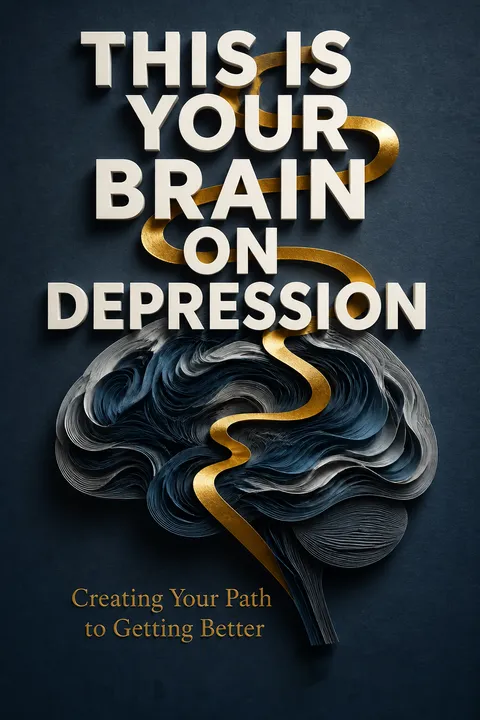
Reviews for "This Is Your Brain on Depression" are mixed. Many praise its accessible style and humor, finding it relatable and informative. Readers appreciate the holistic approach to treatment options. However, some criticize the overuse of curse words and slang, feeling it detracts from the message. There are concerns about pseudoscientific claims and credibility. Overall, it's seen as a good introduction to depression, particularly for younger readers or those newly diagnosed, but may not offer enough depth for those seeking more comprehensive information.
People Also Read

Glossary
Anhedonia
Reduced capacity for pleasureAnhedonia is a reduced or absent ability to experience pleasure or interest. In this book, it is presented as a central feature of depression: a person may still feel distress, guilt, anger, or shame while finding little enjoyment in activities, connection, or experiences that once mattered.
Depression funnel
A pattern of narrowing lifeThe depression funnel is Harper’s model for how stressors and depressive symptoms can reinforce one another. As energy, sleep, and motivation decline, people may drop routines and activities that nourish them. Life can then narrow around demands and distress, making the next stressor harder to manage. The model encourages identifying personal early warning signs.
Epigenetics
Environment influencing gene activityEpigenetics refers to processes that affect how genes are expressed without changing the underlying DNA sequence. The book uses the term to discuss how experiences and conditions may interact with biological vulnerability. It does not establish that a particular person’s depression was caused by inherited trauma or by one specific epigenetic change.
Cognitive vulnerability
A tendency to personalize setbacksCognitive vulnerability is the tendency to interpret negative events as evidence of personal failure or as signs that future events will also go badly. The book presents this pattern as one possible contributor to depression risk, especially when ordinary setbacks become linked to harsh conclusions about the self.
Distorted thinking styles
Habitual unhelpful thought patternsDistorted thinking styles are recurring ways of interpreting events that can intensify distress. Examples in the book include filtering out positive information, all-or-nothing judgments, overgeneralizing from one setback, assuming what others think, and treating feelings as proof. Noticing a pattern can help a person assess whether an interpretation is complete or useful.
Spoon theory
A metaphor for limited energySpoon theory, developed by Christine Miserandino, uses a limited number of spoons to represent the energy available to someone living with illness or disability. Tasks consume spoons, and some activities may restore capacity. Harper uses the metaphor to support pacing, explain invisible limits, and plan around energy rather than comparing oneself with others.
Natural Supports
People who offer personal supportNatural Supports are the friends, family members, colleagues, teachers, and other people who care about someone beyond a formal service role. In the book, they can offer practical help, companionship, and encouragement during recovery. The term does not assume everyone has safe or available support, and the book suggests seeking new connections when needed.
5-8-9 breathing pattern
A timed breathing exerciseThe 5-8-9 breathing pattern is a technique described in the book: breathe in for five counts, hold for eight, and breathe out for nine. Harper presents the longer exhale and attention to breathing as ways to focus attention and settle the body. The counts can be adjusted if the pattern feels uncomfortable.
FAQ
What is "This Is Your Brain on Depression" by Faith G. Harper about?
- Accessible Guide to Depression: The book is a straightforward, no-nonsense guide to understanding depression, its causes, symptoms, and treatment options, written in an irreverent, conversational style.
- Focus on Empowerment: Dr. Faith G. Harper aims to demystify depression, reduce stigma, and empower readers to take charge of their mental health.
- Comprehensive Coverage: It covers the science behind depression, different types of mood disorders, treatment options (both medical and holistic), and practical self-care strategies.
- Part of a Series: This book is part of the "5 Minute Therapy" series, designed to provide quick, digestible mental health advice.
Why should I read "This Is Your Brain on Depression" by Faith G. Harper?
- Relatable and Honest Tone: The author uses humor and candid language to make complex mental health topics approachable and less intimidating.
- Practical Tools and Advice: Readers get actionable steps for managing depression, from medication to self-care, therapy, and alternative treatments.
- Validation and Support: The book normalizes the experience of depression, emphasizing that readers are not alone or broken, and offers hope for improvement.
- Resource-Rich: It includes resources, crisis lines, and further reading for those seeking more help or information.
What are the key takeaways from "This Is Your Brain on Depression"?
- Depression Is Biochemical and Complex: Depression is not just sadness; it's a learned helplessness response to stress, involving neurotransmitter misfiring and genetic/environmental factors.
- Diagnosis Is a Tool, Not an Identity: Labels like depression, dysthymia, and bipolar disorder help guide treatment but do not define a person.
- Treatment Is Multifaceted: Effective management often combines medication, therapy, lifestyle changes, and complementary therapies—there is no one-size-fits-all solution.
- Self-Care and Support Matter: Building a support network, practicing self-care, and challenging negative thinking are crucial for recovery and relapse prevention.
How does Faith G. Harper define depression in "This Is Your Brain on Depression"?
- More Than Sadness: Depression is described as a "biochemical learned helplessness response to stress," not just feeling sad or grieving.
- Anhedonia as Core Symptom: The inability to feel pleasure (anhedonia) is highlighted as the most consistent and defining symptom.
- Physical and Emotional Shutdown: Depression is portrayed as a shutdown of joy, pleasure, and connectedness, leaving only negative emotions like guilt, shame, and hopelessness.
- Not Always Linked to Loss: While grief and trauma can trigger depression, it can also arise without a clear cause, due to underlying brain chemistry.
What causes and triggers depression according to "This Is Your Brain on Depression"?
- Nature and Nurture: Both genetic predisposition (family history) and environmental triggers (trauma, stress) are necessary for depression to develop.
- Epigenetics: Traumas experienced by previous generations can activate genes that increase vulnerability to depression.
- Neurotransmitter Misfiring: Problems in brain communication, especially involving dopamine, serotonin, and norepinephrine, are central to depression.
- Spiraling Effect: Once depression starts, negative thinking and withdrawal reinforce the condition, making it harder to break the cycle.
What is the "depression funnel" concept in "This Is Your Brain on Depression"?
- Funnel Analogy: The depression funnel illustrates how life stressors and symptoms narrow a person's ability to cope, leading to further depletion.
- Loss of Nourishing Activities: As depression worsens, people drop self-care and enjoyable activities, which ironically are the things that help most.
- Self-Reinforcing Cycle: The narrowing of the funnel makes it harder to recover, as only stressors remain while sources of joy are lost.
- Personalized Warning Signs: Recognizing one's own funnel pattern is key to early intervention and preventing full depressive episodes.
What types of depression and mood disorders are explained in "This Is Your Brain on Depression"?
- Major Depressive Disorder (MDD): Characterized by daily anhedonia and other symptoms for at least two weeks, with significant impact on functioning.
- Dysthymia (Persistent Depressive Disorder): A chronic, less severe but longer-lasting form of depression, often with fluctuating intensity.
- Bipolar Disorder: Involves cycles of depression and mania/hypomania, with two main types (Bipolar I and II) and high rates of misdiagnosis.
- Other Diagnoses: The book also discusses cyclothymic disorder, postpartum depression, mood disorder NOS, and the interplay with anxiety and medical conditions.
What treatment options does Faith G. Harper recommend in "This Is Your Brain on Depression"?
- Allopathic (Prescription) Medications: SSRIs, SNRIs, atypicals, and others can be life-saving but are not a cure-all; medication should be tailored and monitored.
- Naturopathic and Complementary Therapies: Herbal supplements, whole food nutrition, acupuncture, massage, light therapy, and energy healing are explored as supportive options.
- Talk Therapy: Traditional therapy, especially trauma-informed approaches, is emphasized as highly effective, often in combination with medication.
- Self-Care and Lifestyle Changes: Exercise, mindful movement, meditation, sleep hygiene, and building support networks are essential components of recovery.
How does "This Is Your Brain on Depression" address self-care and relapse prevention?
- Self-Care as Essential: The book stresses the importance of daily self-care, not just as pampering but as basic maintenance (e.g., hygiene, rest, nutrition).
- Mindful Movement and Exercise: Physical activity is shown to release endorphins and reduce symptoms, with an emphasis on enjoyable, non-punitive movement.
- Challenging Negative Thinking: Identifying and counteracting cognitive distortions is a key strategy for preventing relapse.
- Crisis Planning: Creating a personalized crisis plan and monitoring early warning signs (the funnel) help manage setbacks and maintain progress.
What are the main cognitive distortions discussed in "This Is Your Brain on Depression," and how can they be challenged?
- Common Distortions: Filtering, polarized thinking, overgeneralization, mind reading, personalization, control fallacies, blaming, shoulds, emotional reasoning, and more are detailed.
- Impact on Depression: These thinking errors reinforce negative beliefs and perpetuate depressive cycles.
- Awareness and Reframing: The book encourages readers to notice these patterns and challenge them as they would for a friend, using self-compassion and logic.
- Therapeutic Tools: Techniques from cognitive-behavioral therapy (CBT) are recommended for retraining the brain and reducing vulnerability to depression.
What are the most important resources and support systems highlighted in "This Is Your Brain on Depression"?
- Natural and Peer Supports: Family, friends, peer support groups, and recovery coaches are vital for emotional support and accountability.
- Professional Help: Finding the right therapist, prescriber, or alternative practitioner is crucial; the book provides questions to ask when seeking care.
- Crisis Lines and Hotlines: A comprehensive list of national crisis and support lines is included for immediate help in various situations.
- Further Reading and Online Resources: The appendices offer book recommendations and websites for ongoing education and community.
What are the best quotes from "This Is Your Brain on Depression" by Faith G. Harper, and what do they mean?
- "Depression is a MOTHERFUCKER." – Sets the tone for the book’s candid, unfiltered approach to discussing mental health.
- "Depression is a biochemical learned helplessness response to stress." – Emphasizes that depression is not a character flaw but a physiological and psychological reaction.
- "You are not your diagnosis." – Reminds readers that labels are tools for treatment, not definitions of identity.
- "Depression can be tamed, leashed, and trained to not dominate every waking moment of your existence." – Offers hope that, while depression may be chronic, it can be managed and does not have to control one’s life.
- "If we can turn [epigenetic switches] on, then we might be able to turn them back off again." – Suggests that healing and change are possible, even for inherited or long-standing mental health issues.
About the Author
Other books by Faith G. Harper






Download PDF
Download EPUB
.epub digital book format is ideal for reading ebooks on phones, tablets, and e-readers.








