

Key Takeaways
Treat anxiety as an overactive alarm, not a personal failure
An alarm with a purpose. Anxiety is a whole-body state of disequilibrium that demands attention. Fear usually responds to a specific threat; anxiety can react to uncertain, anticipated, or perceived danger. Either way, the response evolved to protect, not to prove that someone is weak or irrational. It can bring racing thoughts, muscle tension, nausea, sleeplessness, or panic because the body is mobilizing for action.
The signal can misfire. A protective system becomes exhausting when it stays on guard without a clear, immediate danger. The goal is not to shame the alarm into silence, but to understand what sets it off and learn ways to respond. Anxiety may be useful information, but its intensity is not proof that catastrophe is imminent.
This framing replaces a moral judgment with a useful question: what is the alarm responding to, and is its response proportionate to the present situation? That distinction can reduce shame without dismissing real danger. The book also resists treating calmness as the only healthy state. Alertness has value; the problem is when vigilance becomes the default and crowds out choice. A practical caution follows: anxiety can exaggerate risk, but it cannot establish that a threat is imaginary. Listening and checking are wiser than either obeying every alarm or ignoring them all.
Chronic stress can keep your threat system stuck in high gear
Stress spends resources. The book describes stress as the body’s response to demands, whether those demands are welcome, such as finishing school, or painful, such as illness or job loss. Distress begins when available resources no longer meet the demands. Anxiety and stress overlap: ongoing stress can heighten sensitivity to anxious sensations, and fear can make ordinary stress harder to manage.
The body affects thinking. The HPA axis links the brain and hormone systems in the stress response. Adrenaline helps prepare the body for action; cortisol rises and clears more slowly. The book explains that sustained activation can disrupt sleep and make clear thinking more difficult. In a UCLA poll asking whether people felt overwhelmed by all they had to do, responses rose from 18% in 1985 to 41% in 2017.
The resource model clarifies why advice to simply relax can feel insulting: a person may be coping with demands that exceed what they can reasonably carry. It also connects bodily strain with reduced mental flexibility, rather than treating anxious thinking as a character flaw. The poll offers a snapshot of rising perceived overload, not proof that one social trend causes every anxiety disorder. Individual biology, circumstances, and available support still matter. The useful implication is to assess both the alarm inside the body and the demands surrounding it.
Ask what your environment is demanding before blaming your brain
Context shapes distress. Anxiety can involve inherited vulnerability, personal history, present conditions, or several at once. Harper argues that discrimination, financial insecurity, and exclusion can repeatedly disrupt a person’s sense of safety and belonging. Relational Cultural Theory, discussed in the book, emphasizes that people need connection and that relationships can support well-being, rather than independence being the only measure of health.
Symptoms have cultural meanings. The book contrasts a U.S. fear of chest tightness as a possible heart problem with a Cambodian concept of a potentially fatal wind attack. The bodily experience may be similar even when the explanation differs. It also describes a Japanese and Korean form of social anxiety centered on offending or embarrassing other people. A clinician who hears only familiar symptom language may miss what a person is actually experiencing.
This perspective prevents a common error: locating all distress inside the individual when the person may be reacting to instability, discrimination, or social rules that genuinely constrain them. It also improves communication. A symptom label is never the experience itself; it is one way of organizing and explaining that experience. At the same time, social context should not erase individual variation. Two people exposed to similar pressures may respond differently, and a culturally informed conversation should invite the person’s own account rather than assign one on their behalf.
Measure anxiety by lost freedom, and check for medical causes
Impact matters more than a label. Anxiety becomes a clinical concern when worry, avoidance, or physical symptoms interfere with work, school, home life, or relationships. The book describes several forms, including generalized anxiety, panic disorder, phobias, agoraphobia, and social anxiety. Their patterns differ, so a single list of symptoms cannot settle what is happening. The OASIS questionnaire can help someone review anxiety and its effects over the previous week, but it has no magic cutoff for diagnosing a disorder.
Bodies need a fair hearing. Hormonal, neurological, nutritional, infectious, medication-related, and other medical issues can resemble or amplify anxiety. The book offers the THINC MED mnemonic as a prompt for considering possible physical contributors. New or unfamiliar chest pain, breathing difficulty, or other alarming symptoms should not automatically be written off as anxiety; medical evaluation may be needed.
Function is a humane diagnostic anchor because it asks what a person can and cannot do, rather than whether they appear anxious enough to qualify. It also keeps screening tools in their proper role: a starting point for reflection or a conversation, not a verdict. The differential diagnosis point is especially important when physical symptoms dominate. Conversely, medical testing should not become an endless search for certainty that intensifies fear. The aim is proportionate assessment, followed by care that addresses the specific pattern and its consequences.
Track patterns, then interrupt panic with a practiced physical cue
Make triggers visible. When the cause of anxiety is unclear, a simple mood tracker can record the day, situation, mood, intensity from 0 to 100, and symptoms. Looking across entries may reveal patterns tied to particular situations or times. The point is not to monitor every sensation forever; it is to gather enough information to make the experience less mysterious.
Prepare for the surge. In the moment, the book suggests slow breathing, progressive relaxation, a set of reminder cards, or naming anxiety as a character so it feels less like an unquestionable truth. It also recommends sitting with the feeling briefly instead of immediately avoiding it. Ice can provide a sharp sensory interruption, including as an alternative to snapping a rubber band. If symptoms are new or could signal a medical emergency, seek appropriate care rather than relying on a coping exercise.
A tracker turns an impression into a pattern that can be discussed with a clinician or tested in daily life. The short-term tools work partly by redirecting attention and giving the body a different task, which can make them easier to use when abstract reassurance is not persuasive. No single technique suits everyone, and some bodily exercises can feel uncomfortable or unsafe for particular people. Rehearsal matters: a cue selected while calm is more accessible during panic than a complicated plan invented at its peak.
Change your relationship to anxious thoughts, not just their content
Notice thought habits. Cognitive defusion, a technique associated with Acceptance and Commitment Therapy, means recognizing a thought as something the mind is producing rather than treating it as the whole truth about oneself. For example, noticing a thought about being inadequate creates a little distance from identifying as inadequate. The thought need not disappear before a person can choose what to do.
Practice a fuller response. The book also presents Seligman’s ABCDE model: identify the adversity, beliefs, and consequences, then dispute unhelpful beliefs and notice the resulting energization. Disputation can test evidence, consider alternatives, examine whether an outcome is truly catastrophic, and ask whether a belief is useful. For stress, the book describes reframing bodily activation as excitement rather than trying to force calm, especially when the situation matters and action is needed.
These approaches target the secondary struggle around anxiety: the fear of having a thought, the effort to suppress it, and the self-judgment that follows. That shift can restore agency without demanding that a person prove every anxious prediction false. It also avoids the trap of compulsory positivity. Reframing stress is not a reason to celebrate harmful conditions or deny exhaustion. Its strongest use is narrower: when a challenge is meaningful and manageable, activation may be treated as energy for engagement rather than evidence of incapacity.
Build nervous-system capacity with sustainable movement and basic care
Support is foundational. The book treats sleep, nutrition, and movement as supports for anxiety care, not guaranteed cures. It discusses possible links between anxiety and nutrient deficiencies, inflammation, gut health, and caffeine sensitivity. Rather than treating food like a prescription, it recommends sustainable changes, including reducing ultra-processed foods where feasible and noticing whether caffeine worsens symptoms. Supplement quality and interactions require care, ideally with a knowledgeable health professional.
Move in a way you can repeat. Harper argues that enjoyable physical activity occupies attention, can reduce rumination in the moment, and may strengthen the ability to redirect attention over time. The specific activity matters less than finding one that is tolerable and sustainable. Lifestyle changes can support therapy or medication, but the book explicitly does not present them as sufficient treatment for every anxiety disorder.
The value of this section is its refusal to split mental health from bodily maintenance. Movement, food, and sleep can change the conditions in which anxious systems operate, while also offering daily routines that are more concrete than an abstract demand to feel better. The limits deserve equal emphasis: nutrition and supplement claims vary in strength, and individual needs differ. A lifestyle suggestion becomes harmful when it is framed as a substitute for effective care or as proof that someone caused their own symptoms.
Choose treatment with a provider, not by one-size-fits-all rules
Methods address different needs. The book surveys cognitive behavioral therapy, exposure therapy, dialectical behavior therapy, acceptance and commitment therapy, metacognitive therapy, and somatic approaches. Exposure therapy practices approaching feared situations so new learning can occur. Metacognitive therapy focuses on habits such as rumination and threat-monitoring, rather than only disputing the anxious thought. The book presents the working relationship with a provider as central to choosing and using these tools.
Ask how treatment works. Medication may be part of care. The book describes benzodiazepines as fast-acting but potentially habit-forming, with particular danger when combined with opioids. Antidepressants commonly used for anxiety take longer to have noticeable effects. A patient can ask what a medication is intended to treat, how long it may take to work, what risks or interactions matter, and how it fits a broader plan. Medication changes should be discussed with the prescriber.
A menu of approaches is more realistic than a universal recipe because anxiety varies in form, severity, history, and practical constraints. The emphasis on asking questions also turns treatment from passive compliance into shared decision-making. Yet choice is not unlimited: cost, access, side effects, and provider availability can narrow the options. A good treatment conversation should acknowledge those limits and make a workable plan, rather than treating a poor fit or lack of access as a failure of motivation.
Accept practical help without surrendering your boundaries
Self-care is ongoing work. In the book, it includes ordinary maintenance, such as appointments and budgeting, as well as restorative activities. Talking about anxiety can mean explaining what is happening and naming one useful next step, rather than unloading everything at once. Specific requests, such as asking someone to accompany you to an appointment, give supporters a clearer way to help.
Support should preserve agency. Natural supports include friends, family, coworkers, and others who care; peer supports bring lived experience and practical understanding. When helping someone else, ask what would be useful instead of taking control. Harper cautions against working harder for another person than they are working for themselves. Boundaries matter too: a supporter can care deeply while being honest about what they can and cannot provide.
The book’s relational view makes support a skill with two parts: allowing care in and respecting the other person’s autonomy. Specific requests reduce the guesswork that often turns concern into frustration. Boundaries are not a withdrawal of compassion; they protect relationships from the resentment that grows when one person silently overextends. This is especially useful when anxiety disrupts shared plans or household life. Support works best as collaboration, not rescue, and it cannot replace professional care when that level of help is needed.
Analysis
The book’s most useful move is to connect three explanations that are often kept apart: anxiety as a bodily alarm, as a pattern of attention and interpretation, and as a response to social conditions. That combination matters because each explanation suggests a different intervention. A breathing practice may help with acute arousal; cognitive defusion may loosen the grip of rumination; a reliable relationship or safer environment may reduce the pressures that keep the alarm active. Treating these as competing theories would miss the book’s central practical point: a person may need several kinds of support at once.
Its strongest corrective is the rejection of shame. Calling anxiety protective rather than defective does not make suffering trivial. It creates a more workable starting point: understand the response, assess its impact, and select care accordingly. The attention to culture and privilege also challenges the assumption that distress can be interpreted accurately through a narrow set of diagnostic expectations.
The evidence is not equally strong across the book’s wide range of recommendations. Established psychotherapies and medication have different evidence bases from some supplements and complementary treatments. A reader should distinguish a promising practice, a personal clinical observation, and a well-supported intervention, rather than treating every option as interchangeable. The book is most convincing when it encourages informed questions, collaboration with qualified providers, and attention to medical contributors. It is less secure when a biological explanation or proposed remedy is presented more confidently than its evidence warrants.
The resulting model is neither cure-by-willpower nor cure-by-one-technique. It is a process of restoring choice: notice the alarm, understand what may be feeding it, respond to immediate distress, and build durable support around the life the person wants to live. That process respects both personal agency and the fact that not every source of anxiety is under individual control.
Review Summary
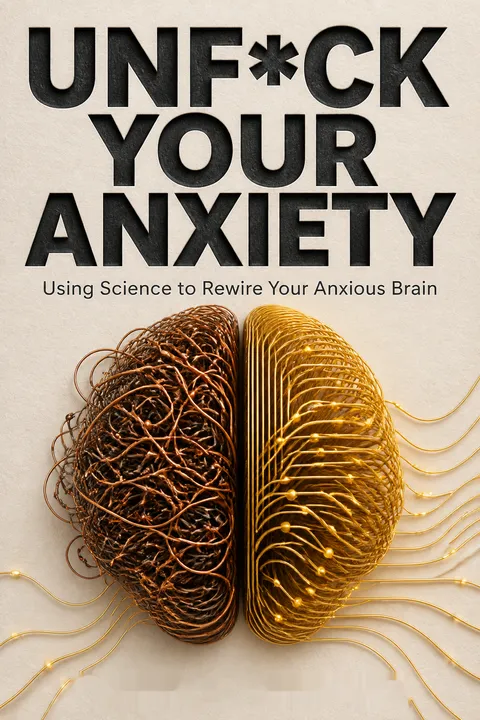
Unf*ck Your Anxiety receives mixed reviews, with an average rating of 3.54 out of 5. Many readers find it informative and easy to read, appreciating the straightforward approach and humor. Some praise the practical advice and relatable explanations of anxiety. However, others criticize it for being too basic, repetitive of the author's previous works, or lacking depth. The book's casual language and use of profanity is polarizing, with some enjoying the style while others find it off-putting. Overall, it's seen as a quick read that may be helpful for those new to anxiety management.
People Also Read


Glossary
Disequilibrium
Whole-body alarm stateHarper’s term for anxiety as a full-body state of imbalance intense enough to demand attention and corrective action. It can arise in response to a real or perceived threat, whether present or anticipated. The term emphasizes that anxiety is not only a set of worried thoughts; it can also be a powerful physical experience.
Anxiety sensitivity
Fear of anxiety symptomsA heightened tendency to become alarmed by the sensations and effects of stress or anxiety themselves. The book describes a reinforcing pattern: chronic stress can leave someone exhausted and more reactive to anxious sensations, and that reaction can intensify distress. It is presented as one factor that may increase vulnerability to an anxiety disorder.
HPA Axis
Brain-body stress pathwayThe hypothalamic-pituitary-adrenal axis is the interacting system through which the brain and endocrine system coordinate aspects of the stress response. In the book’s account, signaling through the hypothalamus and pituitary prompts the adrenal glands to release hormones including cortisol. The pathway helps prepare the body to respond to demands, while prolonged activation can contribute to strain.
OASIS
Anxiety impact questionnaireThe Overall Anxiety Severity and Impairment Scale is a brief questionnaire that asks about anxiety over the previous week, including its frequency, intensity, avoidance, and interference with daily and social life. The book presents it as a research-supported tool for self-reflection or starting a conversation with a provider, not as a test with a definitive diagnostic cutoff.
THINC MED
Medical-cause reminderA mnemonic described in the book for prompting consideration of physical contributors that can resemble or amplify anxiety symptoms. Its letters refer to tumors, hormones, infectious diseases, nutrition, central nervous system issues, miscellaneous conditions, electrolyte abnormalities and environmental toxins, and drugs. It is a checklist for discussion and evaluation, not a diagnostic tool.
ABCDE model
Belief-reframing exerciseA learned-optimism exercise associated with Martin Seligman. It asks a person to identify an adversity, the beliefs they formed about it, and the consequences in feelings and behavior. They then dispute the beliefs by testing evidence, alternatives, implications, and usefulness, and notice any change in energy or response. The model structures reflection; it does not require pretending that a real problem is harmless.
Cognitive defusion
Distance from a thoughtA technique associated with Acceptance and Commitment Therapy that helps a person notice thoughts and feelings as experiences they are having, rather than as complete definitions of who they are or unquestionable facts. The book illustrates the shift by adding language that marks a judgment as a thought. The aim is greater choice in responding, not necessarily eliminating the thought.
Felt sense
Bodily sense of a situationA term associated in the book with Eugene Gendlin’s focusing approach. It refers to an inner, bodily sense of how a whole situation is affecting a person, before that experience is fully translated into words or a specific emotion. Attending to this sense can help someone recognize reactions and develop a response without being driven solely by immediate anxiety.
FAQ
What's "Unf*ck Your Anxiety" about?
- Overview: "Unf*ck Your Anxiety" by Faith G. Harper is a guide to understanding and managing anxiety using scientific insights and practical strategies.
- Purpose: The book aims to help readers rewire their anxious brains by providing a mix of scientific explanations and actionable advice.
- Approach: It combines humor, personal anecdotes, and evidence-based techniques to make the topic accessible and engaging.
- Audience: It's part of the 5 Minute Therapy Series, targeting individuals seeking quick, effective ways to manage anxiety.
Why should I read "Unf*ck Your Anxiety"?
- Practical Tools: The book offers a variety of tools and strategies for managing anxiety, from lifestyle changes to therapeutic techniques.
- Scientific Insights: It provides a deep dive into the science behind anxiety, helping readers understand the biological and psychological aspects.
- Relatable Tone: Dr. Harper uses a conversational and humorous tone, making complex topics more relatable and less intimidating.
- Empowerment: The book emphasizes self-care and self-advocacy, encouraging readers to take control of their mental health.
What are the key takeaways of "Unf*ck Your Anxiety"?
- Understanding Anxiety: Anxiety is a natural response, but it can become overwhelming and require management.
- Science of Anxiety: The book explains the neurocircuitry of anxiety and its overlap with stress responses.
- Management Strategies: It covers both short-term and long-term strategies, including lifestyle changes, therapy, and medication.
- Cultural and Personal Contexts: Anxiety can manifest differently based on cultural and personal backgrounds, and treatment should be tailored accordingly.
How does Dr. Faith Harper define anxiety in "Unf*ck Your Anxiety"?
- Definition: Anxiety is described as a state of full-body disequilibrium demanding immediate attention and corrective action.
- Physical and Emotional: It involves both physical symptoms (like increased heart rate) and emotional responses (like excessive worry).
- Survival Mechanism: Anxiety is a survival skill, but chronic anxiety can lead to disorders that require management.
- Cultural Influence: The book discusses how cultural shifts and societal pressures contribute to anxiety.
What are the best quotes from "Unf*ck Your Anxiety" and what do they mean?
- "Stop being anxious has never worked in the history of ever." This highlights the futility of simply telling someone to stop feeling anxious without addressing underlying causes.
- "Anxiety is a state of full body disequilibrium." It emphasizes the comprehensive impact of anxiety on both mind and body.
- "The brilliant thing about anxiety is it allows us the opportunity to anticipate and plan." This quote reframes anxiety as a tool for preparation rather than just a hindrance.
- "Your brain is busting its ass to protect you." It underscores the idea that anxiety is a protective mechanism, albeit one that can become maladaptive.
What are the main strategies for managing anxiety in "Unf*ck Your Anxiety"?
- Short-Term Management: Techniques like deep breathing, progressive relaxation, and creating coping cards are suggested for immediate relief.
- Lifestyle Changes: The book recommends dietary adjustments, regular movement, and reducing processed foods to support mental health.
- Therapeutic Approaches: It discusses various therapies, including cognitive-behavioral therapy, exposure therapy, and metacognitive therapy.
- Medication and Supplements: The book covers the role of anxiolytics, antidepressants, and supplements in managing anxiety.
How does "Unf*ck Your Anxiety" explain the science behind anxiety?
- Neurocircuitry: The book details how anxiety disorders are linked to the brain's fear circuits, involving areas like the amygdala and prefrontal cortex.
- Stress Response: It explains the overlap between stress and anxiety responses, highlighting the role of the HPA axis and cortisol.
- Chronic Stress: Chronic stress is linked to anxiety sensitivity, which can exacerbate anxiety symptoms.
- Biological Processes: The book discusses how brain function, inflammation, and oxidative processes are involved in anxiety.
What lifestyle changes does "Unf*ck Your Anxiety" recommend for anxiety management?
- Dietary Adjustments: Emphasizes the importance of nutrients like B vitamins, magnesium, and omega-3 fatty acids.
- Movement: Encourages regular physical activity to improve attention control and reduce anxiety symptoms.
- Caffeine Reduction: Advises reducing caffeine intake due to its impact on anxiety through the adenosine receptor system.
- Whole Foods: Recommends decreasing ultra-processed foods to improve overall health and reduce anxiety.
What role do cultural and personal contexts play in anxiety according to "Unf*ck Your Anxiety"?
- Cultural Norms: Anxiety can manifest differently across cultures, influenced by societal norms and expectations.
- Ethnophysiology and Ethnopsychology: The book discusses how cultural beliefs and language can affect the perception and expression of anxiety.
- Minority Stress: Lack of societal power and privilege can increase anxiety rates among minority groups.
- Personal History: Individual experiences and backgrounds can shape how anxiety is experienced and managed.
How does "Unf*ck Your Anxiety" address the use of medication for anxiety?
- Anxiolytics: Discusses the use of benzodiazepines for short-term relief, highlighting potential side effects and dependency risks.
- Antidepressants: Covers the use of SSRIs, SNRIs, and other antidepressants for long-term anxiety management.
- Beta-Blockers: Mentions their use for situational anxiety, such as public speaking or social events.
- Supplements: Suggests supplements like GABA and adaptogenic herbs as complementary treatments.
What complementary therapies does "Unf*ck Your Anxiety" suggest for anxiety?
- Acupuncture and Acupressure: These therapies are recommended for their potential to regulate the nervous system and reduce anxiety.
- Biofeedback and Neurofeedback: These techniques help individuals gain control over physiological responses to anxiety.
- Energy Healing: Practices like reiki and reflexology are suggested for their potential to release trauma and promote relaxation.
- Weighted Blankets: Recommended for their calming effect, helping to soothe anxiety and improve sleep.
How does "Unf*ck Your Anxiety" suggest supporting someone with anxiety?
- Open Communication: Encourages asking open-ended questions to understand the person's needs and struggles.
- Boundaries: Emphasizes the importance of maintaining healthy boundaries while offering support.
- Practical Help: Suggests offering specific forms of assistance, like accompanying them to appointments or helping with daily tasks.
- Empathy and Patience: Stresses the need for empathy and patience, recognizing that anxiety can be overwhelming and unpredictable.
About the Author
Other books by Faith G. Harper





Download PDF
Download EPUB
.epub digital book format is ideal for reading ebooks on phones, tablets, and e-readers.








