

Key Takeaways
Use the emotional overreaction as a clue, not a verdict about someone else.
A reaction points inward. A trigger is a person, event, word, or memory that rapidly sets off a strong feeling. The response can seem to belong entirely to the person who caused the moment, but Richo argues that many triggers are catalysts: they activate unfinished pain, beliefs, or expectations already present. A friend’s move away, for instance, can bring up grief and also revive an old fear of abandonment, even when the friend is not rejecting anyone.
Keep responsibility precise. The trigger may reveal work to do, such as grieving a loss or speaking up about a boundary. But this does not mean every reaction is irrational or self-caused. Violence and abuse can directly cause distress, and grief after a death is a normal response. The useful question is not simply, “Who is to blame?” but, “What happened, what did it stir in me, and what response protects me now?”
The distinction between catalyst and cause is a strong antidote to reflexive blame, especially in close relationships. It resembles the difference between an event and its appraisal: a cue gains meaning through a person’s history and present context. Yet the idea must not be used to dismiss a real injury as merely someone’s “unfinished business.” Interpersonal accountability and self-inquiry can coexist. A partner can own harmful conduct while the hurt person also explores why the moment carried extra force. That dual view preserves agency without turning emotional insight into victim-blaming.
A present-day cue can make an old danger feel current.
The body remembers first. Richo describes trauma as an experience of helplessness that can be stored in bodily and emotional memory. A sound, tone, or gesture resembling an earlier threat may prompt fear before a person has time to assess what is happening now. The adult may know they are safe, yet feel suddenly small, mute, or ready to flee, fight, or freeze. The reaction is not proof of weakness; it can be a survival response learned under earlier conditions.
Restore room to respond. The book uses Dan Siegel’s “window of tolerance” for the capacity to stay present with difficult feelings without becoming overwhelmed. A trigger can narrow that capacity. Breathing, grounding, trusted support, and carefully paced therapy can help make an experience manageable. Richo emphasizes that trauma work should proceed at a tolerable pace, and that some experiences require help from a trained therapist.
This account helps explain why reassurance alone may fail when someone is highly activated. A nervous system responding to threat is not simply waiting for a better argument. Modern trauma-informed practice similarly emphasizes pacing, safety, and bodily regulation before detailed interpretation. The brain description is best treated as a useful map rather than a literal on-off switch between the emotional and rational mind. These systems interact continuously. That nuance supports the book’s practical point: first restore enough steadiness to think, then decide what the cue means.
Name the trigger before deciding what it means or what to do.
Create a pause. Richo recommends listing familiar triggers and the reactions they tend to produce. Naming a pattern makes it easier to notice the difference between the facts and the meaning assigned to them. If a friend does not answer a message, the fact is that no reply has arrived; the feared interpretation might be that the friendship is ending. That interpretation could be right, but it needs checking rather than instant obedience.
Turn reaction into practice. The book’s sequence is to address, process, and resolve: identify what is happening, feel and understand the emotions involved, then choose a useful change or conversation. A journal can record the cue, the usual response, and alternatives. Mindfulness adds a moment of witnessing, while a slow breath or delayed reply can prevent an impulse from becoming an action. The aim is not to feel nothing, but to regain options.
Naming works partly because it converts a vague alarm into something that can be examined. In cognitive behavioral approaches, separating an observation from an interpretation is a similar way to interrupt automatic conclusions. The method also turns self-awareness into preparation: a familiar trigger can have a planned response rather than a surprise response. Its limit is that analysis can become rumination. The journal is useful when it leads to a concrete next step, a boundary, a conversation, or support, not when it becomes a courtroom for prosecuting the self.
Grieve what childhood lacked instead of demanding a partner repair it.
Name the missing care. Richo organizes early needs through the Five As: attention, acceptance, appreciation, affection, and allowing. They describe forms of care that help a child feel seen, valued, loved, and free to develop with reasonable limits. Childhood may have lacked some of these because caregivers could not provide them, or because they withheld them. The distinction can help clarify pain without requiring parents to have been perfect.
Become a steadier caregiver. An adult may keep seeking from a partner the reassurance or tenderness that was missing earlier. Richo suggests that this demand cannot fully undo the past. Grieving the loss, learning to offer oneself care, and asking a partner directly for present-day needs can loosen that old expectation. The task is not to excuse harm or deny the need for intimacy. It is to stop treating a current relationship as a chance to recreate and finally win an earlier one.
The Five As make a broad idea, secure care, concrete enough to examine in memory and relationships. Attachment research likewise treats reliable responsiveness as important, while recognizing that people can form meaningful bonds beyond childhood. The framework is most useful as a reflective guide, not a diagnostic scorecard for parents or partners. Adult relationships cannot supply a perfect correction to every early loss, but they can offer genuine care now. Self-parenting and mutual support are complementary, not competing, sources of repair.
Let sadness, anger, and fear inform you instead of silencing them.
Feelings carry information. Richo presents sadness, anger, and fear as common parts of grief. Sadness responds to loss, anger to perceived unfairness, and fear to threat. A person who allows these emotions to be felt can learn what has been lost, what needs defending, or what danger requires attention. Suppressing a feeling may block that information and leave the underlying experience unresolved. Feelings can rise and fall; they do not have to dictate behavior.
Mourning takes its own course. After a death, people may feel numb, exhausted, guilty, anxious, or spiritually empty. Richo describes bereavement as uneven and individual, not a process that follows a tidy timetable. Support can mean talking about the loss, accepting company without talking, maintaining basic care, or seeking therapy. The book also distinguishes grief related to life events from chemical depression, for which medical care may be important.
Treating emotion as information avoids two common errors: obeying every feeling as a command, or treating distress as a malfunction to eliminate. Emotion regulation is not the same as suppression; it involves noticing an emotion and choosing how to act while it is present. This is especially important in grief, where social pressure to “move on” can make ordinary sorrow feel like failure. The framework remains a guide, not a substitute for care: persistent or dangerous symptoms deserve professional attention rather than a demand to process them alone.
Express anger as information, and treat intimidation as a safety problem.
Anger can invite dialogue. Richo distinguishes anger, a feeling that can be expressed assertively, from abuse, which intimidates, threatens, or tries to silence another person. Saying plainly that a behavior hurt or frightened someone can make room for repair. In an example from his counseling work, a staff member faced an intimidating visitor by setting a limit, naming his fear, and asking what the visitor needed. The visitor eventually responded more respectfully, though the book does not present that outcome as guaranteed.
Safety outranks technique. A raised voice or disagreement is not automatically abuse, and a strong feeling does not justify threats or violence. When behavior becomes menacing, leaving and seeking help may be safer than attempting dialogue. In a trustworthy relationship, a hurt person can describe the impact and expect it to be taken seriously. The goal is neither retaliation nor forced forgiveness, but a clear boundary and a safer interaction.
This distinction is valuable because anger is often mislabeled as inherently destructive, while intimidation is excused as “just being angry.” The focus on behavior and its impact is more reliable than guessing another person’s intent. Still, a conversational script should never be treated as a universal de-escalation tool. Power imbalances, coercive control, and immediate danger change the calculation. Assertiveness is not a duty to remain present with an aggressor. A sound approach protects the person at risk first and considers dialogue only when conditions allow it.
Face fear without letting it dictate your next move.
Separate feeling from forecast. Fear can signal real danger, but it can also project an old threat onto an uncertain situation. Richo’s practice begins by admitting fear plainly and allowing its bodily sensations without immediately escaping them. Then the response depends on what is controllable: act despite fear when a useful action is possible, or accept uncertainty and trust available support when the outcome cannot be controlled.
Use the body as an anchor. For fear held in the stomach or throat, the book suggests placing a hand there, breathing slowly, and pairing each breath with acceptance of the present and trust in one’s ability to cope. A medical test illustrates the distinction: fear need not prevent taking the test, while waiting for results may require accepting uncertainty. The purpose is not to promise that everything will turn out well. It is to keep fear from making the decision by itself.
This approach distinguishes courage from the absence of fear. That distinction matters because people often wait to feel confident before doing something necessary, when confidence may follow action rather than precede it. The controllable versus uncontrollable split also echoes practical decision theory: invest effort where it can change an outcome, and avoid spending all available energy trying to guarantee what cannot be guaranteed. Acceptance should not be confused with passivity. When a threat is real and action can reduce it, protective action is part of responding wisely.
Look beneath the repeated argument for the relationship pattern it protects.
Arguments have layers. Richo describes relationship conflict at three levels: the event that happened, the argument over whose account is right, and the less conscious motive that may keep the same conflict recurring. One partner may withdraw during difficult talks; the other may pursue harder. Their fight can repeat an old fear of abandonment or engulfment, while both remain focused on proving who started it. Asking what repeatedly happens after the argument can reveal the pattern more clearly than debating each detail again.
Make the hidden need speak. A person who needs space can request it directly and say when they will reconnect, rather than creating distance through silence or provocation. Partners can share trigger points, respect one another’s impact, and work toward repair without assigning total blame. But repeated contempt, manipulation, or refusal to change matters. Self-reflection should not become a reason to remain in a damaging relationship.
The three levels shift attention from courtroom logic to interaction patterns. This resembles systems thinking: each person’s response becomes part of the conditions that evoke the other’s next response. That perspective can support change because the target becomes the cycle, not a villainous personality. It also requires care. Mutual patterns do not imply equal power or equal responsibility. A relationship may be reciprocal in its arguments yet coercive in its control. Looking for a hidden agenda is most useful when it increases honesty and choice, not when it encourages suspicion or excuses mistreatment.
Practice compassion repeatedly, while keeping support and boundaries in reach.
Resources grow through use. Richo describes inner resources as learned or innate capacities for handling distress, including self-soothing, clear communication, resilience, and compassion. Mindfulness helps a person notice a reaction without being carried by it. Loving-kindness, or metta, extends goodwill from oneself to loved ones, neutral people, difficult people, and all beings. Tonglen, a Tibetan Buddhist practice, uses imagery of breathing in suffering and breathing out care, turning attention toward compassion rather than avoidance.
Practice is not self-sufficiency. Richo connects repeated attention and spiritual practice with the brain’s capacity to change, while emphasizing that growth also comes through relationships, therapy, and what he calls grace, help not produced by willpower alone. Resources include asking for assistance when personal reserves are not enough. Compassion does not require unlimited availability: boundaries protect the capacity to care without being consumed by another person’s needs.
The book’s spiritual practices are presented as habits of attention and conduct, not merely as comforting beliefs. That makes them compatible with a practical view of learning: repeated responses can become easier to access under stress. The outward movement of loving-kindness also counters the narrowing effect of fear, which can make another person seem only like a threat or obstacle. The necessary qualification is that compassion must include the self and the harmed. Care without limits can reinforce dependency or exploitation, while boundaries make sustained care more possible.
Analysis
Richo’s central move is to turn the trigger from a label for someone else’s power into a doorway to greater choice. The sequence is not simple self-control: a cue evokes a bodily reaction, the reaction carries personal history, and resources can gradually create room for a response. This narrative lets psychological inquiry, relationship practice, grief, and spirituality reinforce one another. Naming a trigger supports reflection; grieving helps metabolize what it recalls; boundaries translate reflection into action; compassion keeps the process from becoming self-punishment.
The book is strongest when it holds two truths together. Many reactions are intensified by old wounds, yet present-day harm can be real and demands protection. Emotional pain can teach, but no one is obliged to treat abuse as a personal growth exercise. That balance is essential because language about taking responsibility for reactions can otherwise be misused to shift responsibility away from a person causing harm. Richo’s repeated distinction between assertive anger and abuse helps counter that risk, as does his recommendation to seek trained support for severe trauma.
Some neuroscientific explanations are deliberately accessible rather than comprehensive. Describing the amygdala as taking over while the prefrontal cortex goes offline clarifies the felt loss of perspective, but emotional regulation involves interacting networks, not two isolated commanders. The practical lesson remains sound: intense arousal can make flexible thinking harder, so settling the body can precede interpretation.
The book’s breadth is both its strength and its limitation. It offers many psychological, relational, Buddhist, and Christian resources, but readers may need to choose a few rather than attempt every practice. Its most durable contribution is a disciplined question: What is the present event, what history or need has it activated, and what would a safe, values-consistent response look like? That question preserves insight without demanding invulnerability.
Review Summary
Readers generally found Triggers insightful and helpful for understanding emotional reactions and healing from trauma. Many appreciated the Buddhist and spiritual perspectives, though some felt it was too religious. The book's practical advice and tools for self-reflection were praised, particularly for those dealing with past traumas. Some readers found it dense or boring at times, while others considered it life-changing. Critics noted a lack of scientific evidence and an oversimplification of complex issues. Overall, the book received mixed reviews but was largely seen as valuable for personal growth.
People Also Read







Glossary
Trigger
Cue for strong reactionA person, word, event, memory, or other stimulus that rapidly evokes a strong emotional response. In Richo’s account, a trigger often acts as a catalyst for unresolved feelings or earlier experiences rather than fully causing the reaction. The distinction has limits: direct abuse or violence can be a cause of distress, not merely a catalyst.
Inner resources
Capacities for copingThe learned and innate abilities that help someone handle feelings, events, and relationships without being overwhelmed by them. Richo includes psychological capacities such as self-soothing, assertiveness, and communication, as well as spiritual capacities such as compassion, mindfulness, and service. When these resources are insufficient, seeking help from others is itself a resource.
The Five As
Five forms of careRicho’s framework for core experiences of care: attention, acceptance, appreciation, affection, and allowing. The terms describe ways caregivers and partners can respond to a person’s feelings, identity, worth, need for tenderness, and developing autonomy. The framework is used to examine childhood experience, express relationship needs, and practice care toward oneself and others.
window of tolerance
Range for manageable distressA term associated in the book with trauma therapist Dan Siegel. It describes the range in which a person can experience distress while retaining enough steadiness to think, regulate feelings, and respond. A trigger can narrow this range, making overwhelm or shutdown more likely. Supportive conditions and regulation practices can help restore the capacity to stay present.
transference
Past feelings placed on othersThe unconscious carrying of feelings, expectations, or needs associated with an important person from the past onto someone in the present. Richo uses the term to explain why a current partner, friend, or authority figure can evoke reactions shaped by earlier relationships. Recognizing the transfer can clarify what belongs to present circumstances and what recalls unfinished history.
S.E.E.
Three sources of reactionRicho’s mnemonic for examining whether a trigger involves the shadow, an inflated ego, or early-life experience. The shadow refers to disowned traits projected onto others; an inflated ego reacts from entitlement or threatened status; early-life experience can return through memory or transference. The check is intended to prompt inquiry, not to prove that a person’s current grievance is mistaken.
metta
Practice of loving-kindnessA Pali term for benevolence or well-wishing, used in the book for a Buddhist practice of extending goodwill. The practitioner begins with the self and includes loved ones, neutral people, difficult people, and all beings. Richo presents metta as a way to counter fear and narrow self-protection with a wider orientation toward care.
tonglen
Breathing with sufferingA Tibetan Buddhist practice whose name Richo translates as “send out and let in.” In an imaginative exercise, a person breathes in awareness of suffering and breathes out healing or well-being. It can be directed toward personal distress, another person’s pain, or suffering more broadly. The practice aims to cultivate compassion rather than avoidance.
FAQ
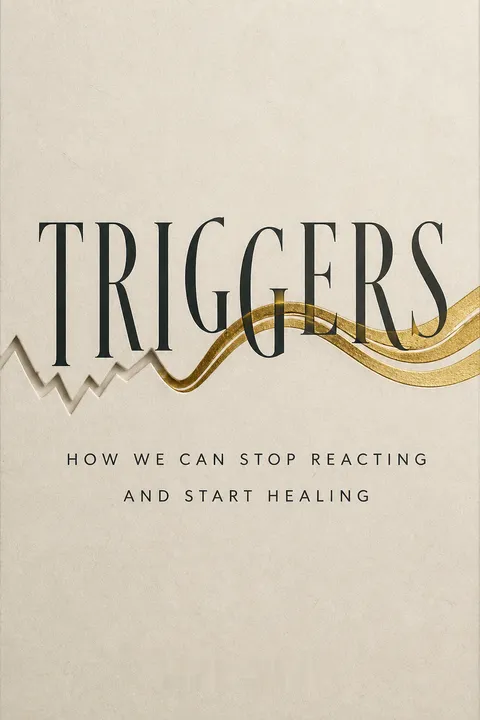
What is "Triggers: How We Can Stop Reacting and Start Healing" by David Richo about?
- Understanding Emotional Triggers: The book explores what emotional triggers are—stimuli that provoke immediate, often disproportionate emotional reactions such as sadness, anger, fear, or shame.
- Origins and Impact: Richo examines how triggers are rooted in past experiences, especially childhood wounds and traumas, and how they affect our present-day relationships and well-being.
- Path to Healing: The book provides practical tools and psychological and spiritual resources to help readers move from automatic reactions to mindful responses, fostering healing and personal growth.
- Integration of Psychology and Spirituality: Richo blends insights from neuroscience, psychotherapy, and Buddhist teachings to offer a holistic approach to managing triggers and building resilience.
Why should I read "Triggers" by David Richo?
- Gain Self-Awareness: The book helps readers identify their unique triggers and understand the underlying causes, leading to greater self-knowledge.
- Practical Tools for Change: Richo offers actionable strategies and exercises to transform reactive patterns into resourceful responses.
- Improve Relationships: By learning to handle triggers, readers can communicate more effectively, set healthy boundaries, and foster deeper connections.
- Holistic Healing: The integration of psychological and spiritual practices provides a comprehensive path to emotional healing and personal empowerment.
What are the key takeaways from "Triggers" by David Richo?
- Triggers Are Universal: Everyone experiences emotional triggers, and they are often linked to unresolved past experiences.
- Reaction vs. Response: There is a crucial difference between reacting automatically and responding mindfully; inserting a pause allows for healthier choices.
- Inner Resources Matter: Building psychological and spiritual resources—such as mindfulness, self-compassion, and assertiveness—can reduce the power of triggers.
- Healing Is Ongoing: While triggers may never disappear completely, their impact can be lessened through conscious work, self-reflection, and support.
How does David Richo define a "trigger" in "Triggers"?
- Immediate Emotional Reaction: A trigger is any word, person, event, or experience that provokes an instant emotional response, often disproportionate to the situation.
- Stimulus-Response Mechanism: Triggers activate the limbic system in the brain, leading to automatic reactions like fight, flight, or freeze.
- Rooted in the Past: Most triggers are linked to unresolved issues or traumas from earlier in life, especially childhood.
- Not Always Negative: While the book focuses on negative triggers, Richo notes that triggers can also evoke positive emotions like joy or nostalgia.
What are the most common types of triggers discussed in "Triggers" by David Richo?
- Personal and Relationship Triggers: These include feeling self-conscious, being discounted, feeling controlled, being taken advantage of, and boundary violations.
- Emotional Triggers: Sadness, anger, and fear are highlighted as the primary emotional responses to triggers.
- Internal Triggers: Sometimes, triggers arise from within, such as memories, self-criticism, or unconscious patterns like transference.
- Collective and Societal Triggers: Events in the wider world, such as news or historical traumas, can also trigger strong emotional responses.
How does "Triggers" by David Richo explain the connection between childhood wounds and adult triggers?
- Childhood as Foundation: Early experiences, especially unmet needs for attention, acceptance, appreciation, affection, and allowing (the "five As"), shape our trigger points.
- Trauma and Conditioning: Childhood traumas and repeated negative experiences are stored in the body and brain, making us more susceptible to being triggered later in life.
- Transference: We often unconsciously transfer feelings and expectations from our parents onto current relationships, leading to overreactions.
- Healing Through Awareness: Recognizing these connections allows us to grieve past losses, let go of blame, and begin self-parenting to meet our own needs.
What practical tools and methods does David Richo recommend for handling triggers in "Triggers"?
- Naming and Journaling: Identifying and recording triggers and typical reactions helps bring awareness and prepares for mindful responses.
- Mindfulness Practice: Witnessing triggers without immediate reaction creates space for choice and reduces their power.
- Self-Advocacy and Affirmations: Using positive self-talk and affirmations counters the inner critic and builds self-trust.
- Simmering and Self-Soothing: Allowing time before reacting and using calming techniques (like deep breathing) help regulate emotions.
- Therapeutic Support: For deep or persistent triggers, Richo recommends seeking professional help, including trauma-informed therapies.
How does "Triggers" by David Richo address the role of the shadow, ego, and early life in triggering reactions?
- Shadow Projection: We often react strongly to traits in others that reflect disowned parts of ourselves (our "shadow").
- Ego Inflation: An inflated ego leads to entitlement and overreaction when our self-image is threatened.
- Early Life Transference: Unresolved issues from childhood are projected onto current relationships, intensifying trigger responses.
- SEE Practice: Richo suggests asking if a trigger is related to Shadow, Ego, or Early life (S.E.E.) to gain insight and choose healthier responses.
What are the "five As" and how do they relate to healing triggers in "Triggers" by David Richo?
- Attention: Being seen and heard without judgment.
- Acceptance: Being valued for who we are, not who others want us to be.
- Appreciation: Feeling cherished and recognized for our unique qualities.
- Affection: Receiving appropriate physical and emotional warmth.
- Allowing: Having the freedom to express ourselves and pursue our own path.
- Role in Healing: When these needs are unmet in childhood, they become sources of triggers; healing involves giving the five As to ourselves and others.
How does "Triggers" by David Richo integrate spiritual practices into healing from triggers?
- Mindfulness and Meditation: Spiritual practices help calm the mind, increase self-awareness, and create space between stimulus and response.
- Loving-Kindness (Metta): Extending compassion to oneself and others reduces fear and fosters connection.
- Tonglen Practice: Breathing in pain and sending out healing is a Buddhist technique for transforming suffering.
- Embracing Impermanence: Accepting change and uncertainty as part of life is a spiritual resource for resilience.
What are the best quotes from "Triggers" by David Richo and what do they mean?
- "A trigger can dead-end by leading only to a reaction, with no resource that would allow us to cope with our reaction." – Highlights the importance of developing resources to move beyond automatic reactions.
- "We are turtles, not birds. We take our childhood home with us wherever we go. We cannot fly away from it." – Emphasizes the lasting impact of childhood experiences on adult life.
- "May I say yes to all that happens to me today as an opportunity to love more and fear less." – Encourages embracing reality and using every experience as a chance for growth and love.
- "The best news...is that every trigger shows us what our psychological or spiritual work is." – Suggests that triggers are not just problems but opportunities for healing and self-discovery.
What is the overall message and promise of "Triggers" by David Richo?
- Triggers as Teachers: Emotional triggers are not just obstacles but valuable signals pointing to areas needing healing and growth.
- Empowerment Through Resources: By building inner psychological and spiritual resources, we can move from being victims of our triggers to empowered responders.
- Healing Is Possible: While we may never eliminate all triggers, we can reduce their impact, reclaim our power, and live with greater self-trust and resilience.
- Integration of Mind and Spirit: True healing involves both psychological insight and spiritual practice, leading to a more compassionate, connected, and authentic life.
About the Author
Other books by David Richo





Download PDF
Download EPUB
.epub digital book format is ideal for reading ebooks on phones, tablets, and e-readers.








