

Key Takeaways
Treat speaking as a trainable performance, not a cure you acquire once.
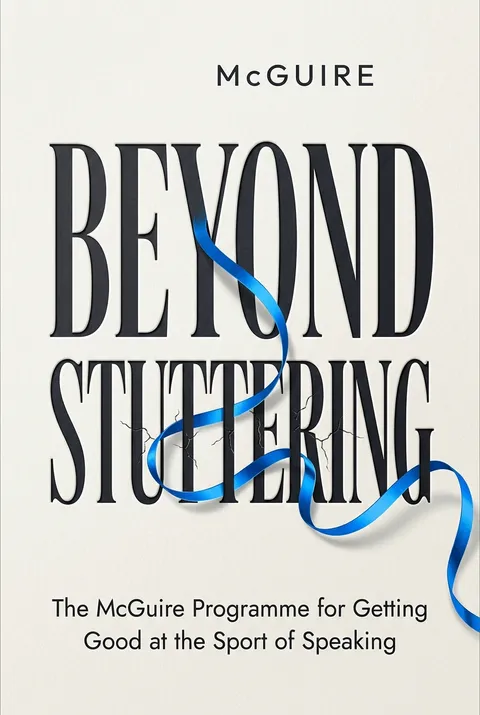
Fluency takes practice. Dave McGuire’s method treats speaking like a sport: technique, practice, courage, and coaching matter more than a promise of permanent cure. The aim is not simply to avoid stuttering, but to become articulate and, ideally, enjoy speaking. McGuire describes learning from psychologist Joe Sheehan, then relapsing after failing to maintain the work. A later breathing technique brought him strong fluency, but that, too, faded within weeks. The reversals changed his view: progress needed to be maintained, much like a performance skill.
A route, not a guarantee. McGuire presents the programme as a demanding process, not a magic fix. He says some readers may improve by practicing alone, but most will benefit from personal instruction and ongoing support. The book suggests trying the approach seriously for six months before judging whether it is helping.
What's striking is the shift from a cure story to a skill-acquisition story. That framing makes setbacks less mysterious: a lapse can signal a need to adjust practice rather than prove that change is impossible. Motor learning also supports the value of coached repetition, especially when a skill must hold under pressure. The sports analogy has limits, however. Stuttering is not simply a performance defect, and some people may prioritize ease, participation, or self-acceptance over fluent speech. The most useful version of this model keeps the reader's goals central and treats fluency as an option, not an obligation.
Break the panic loop by dropping concealment and word avoidance.
Fear feeds the block. The book describes a Cycle of Panic: fear of being seen as someone who stutters creates confusion and holding back, which can lead to a speech block, shame, and more fear. McGuire connects this to an approach-avoidance conflict: a person wants to communicate, yet fears the reaction their speech may provoke. Hiding can mean substituting words, using physical tricks, or avoiding situations altogether.
A hidden cost. One member, Andreas, used to tell his mother that the bakery had run out of the bread she wanted, because he feared ordering it. After beginning the programme, he returned and asked for it directly. The point is not that every feared word has one cause, but that concealment can preserve the fear by preventing new experiences of speaking openly.
This account connects speech difficulty with threat learning: situations avoided remain unfamiliar, and unfamiliarity can sustain anticipation. The bakery story makes the cost concrete, since avoidance reshaped a small routine and required a lie to protect appearances. Still, exposure is not the same as forcing disclosure in every setting. A person may reasonably choose privacy, and not every communication strategy is harmful. The useful question is whether a choice expands agency or narrows it through fear. That distinction respects both the programme's push toward openness and the speaker's right to set boundaries.
Rehearse a dependable speech routine before pressure tests it.
The Big 4. McGuire groups four physical techniques as the Big 4: Costal Breathing, Hit and Hold, Block Release, and a Deep and Breathy Tone. Costal Breathing is the programme's practice of expanding the ribs to support airflow. Hit and Hold means starting a word's first sound clearly and sustaining it briefly. If a block begins, Block Release means letting the air out, pausing, and trying again. A deep, breathy tone is intended to keep the voice relaxed.
Build coordination. The book advises practicing these components separately, then combining them in speech and using recordings or coaching to notice habits. It presents them as tools to rehearse, not a guaranteed explanation or cure. McGuire also warns that a book cannot replace hands-on instruction for everyone.
Breaking a complex act into observable components is a familiar strategy in music, athletics, and rehabilitation. It can give a speaker something specific to attend to instead of monitoring only whether a word comes out fluently. The critical issue is fit: a technique that helps one person may feel awkward or counterproductive to another. The book's detailed breathing account should be read as the programme's model, not settled physiology. Individual assessment matters, particularly when a method changes breathing or vocal effort. A coach can help distinguish useful structure from unnecessary strain.
Repeat feared words in manageable settings until they lose their charge.
Overkill means repeated exposure. In McGuire's vocabulary, Overkill is repeatedly practicing a feared word or sound in real interactions until speaking it feels routine rather than alarming. The programme uses short phone calls and conversations with strangers, beginning in easier situations and building toward harder ones. It describes progress as moving from panic, through manageable fear and fun, to a boring level of confidence.
Quantity is a prescription. The book recommends as many as 100 brief contacts a day during early, high-fear practice, while acknowledging that the work is demanding. McGuire recounts needing several rounds and hundreds of calls over two weeks to make his surname feel ordinary. These numbers describe the programme's approach, not a universal dose or a promise that repetition will work identically for everyone.
The logic resembles exposure-based learning: repeated contact can create experiences that contradict a feared prediction. The emphasis on short interactions also targets the uncertain first moments that longer, friendlier conversations may not reproduce. Yet the proposed volume is intense, and sheer repetition is not automatically therapeutic. Graded difficulty, consent, fatigue, and the person's own goals matter. A hundred contacts may be motivating for one participant and overwhelming for another. The more transferable principle is to practice the feared task in a deliberate, tolerable way, then use evidence from experience to revise expectations.
Use disclosure and peer support to make practice less isolating.
Let the listener in. The programme recommends telling people plainly that a speaker is working on stuttering and may need time to concentrate. McGuire argues that disclosure reduces the pressure of pretending to be a fluent speaker and gives listeners context for pauses or deliberate techniques. Deliberate Dysfluency, in this method, means intentionally making a controlled speech technique noticeable on easier words to show that the speaker is working on speech, rather than trying to hide the effort.
Practice with allies. The programme developed peer coaches, follow-up calls, refresher courses, and support groups. McGuire says this community counters isolation and helps members keep practicing. One member who had hidden his stutter described the programme's friendships and coaching as part of the change, alongside speech work and taking on more speaking opportunities.
Disclosure can change the social conditions of a conversation. It reduces the need for a listener to guess what a pause means, and it can replace private shame with a shared, ordinary explanation. Peer support adds accountability and models ways to cope with difficulty. These benefits are strongest when disclosure is chosen rather than demanded. Some settings may not feel safe, and a speaker need not educate every listener. The broader insight is that support works best when it increases control: the person speaking decides what to reveal, to whom, and for what purpose.
Train for consequential conversations, not only low-stakes drills.
Practice must transfer. Calls to strangers and quick street conversations let members rehearse technique with limited ongoing consequences. But McGuire distinguishes those exercises from high-stakes situations such as interviews, presentations, conversations with a boss, or meeting a partner's family. He urges readers to prepare for these encounters rather than waiting for them to arrive, using similar but less intimidating situations as practice.
A real-world test. Kevin Phelps, a teacher who had once left a job interview in distress, later prepared for a deputy headship interview by disclosing his stutter, warming up, and using pauses and eye contact. He reports that a panel of 15 selected him unanimously. His account illustrates how preparation and technique can support participation in an important event, though a personal story cannot establish that the same result will follow for everyone.
The distinction between drills and consequential performance is central to skill transfer. A person can execute a routine in a safe setting yet struggle when status, evaluation, or time pressure changes the task. Rehearsing progressively closer approximations of the real event is therefore a useful bridge. Phelps's account also shows that communication includes preparation and self-presentation, not only sound production. At the same time, success should not be measured only by winning a job or appearing fluent. Showing up, conveying ideas, and making a chosen disclosure can matter even when the external outcome is uncertain.
Treat a stumble as a prompt for repair, not proof of defeat.
Respond to the first slip. McGuire calls Cancellation the act of correcting a return to an old trick or avoidance pattern, ideally by revisiting the same word or situation soon afterward. The book argues that a small lapse can gather momentum when ignored. Its story of the word dit shows the author blocking repeatedly on a short Dutch word, then making practice calls and using it again in stressful situations over three days.
Repair, then continue. The practical lesson is to notice what happened, avoid turning it into a verdict about the whole method, and make a deliberate attempt to speak the word or enter a similar situation again. The author treats prompt action as a way to rebuild confidence and prevent a temporary difficulty from becoming a reason to withdraw.
The repair principle is psychologically valuable because it separates an event from an identity. A difficult exchange does not have to become evidence that all progress has vanished. Returning to the word or situation can also restore a sense of agency. The book's language of strict laws and immediate correction, however, risks making ordinary lapses feel catastrophic. A sustainable practice should allow recovery without self-punishment. The strongest version of Cancellation is not perfectionism; it is a compassionate reset that turns a setback into information about what support or practice may be needed.
Align intention, behavior, and self-belief to make speech change durable.
The Hexagon maps a system. John Harrison's Hexagon, adopted by the book, links six parts of a person: intentions, behaviors, emotions, physical state, perceptions, and beliefs. The model suggests that these parts influence one another. For example, a clear intention to practice has limited value if behavior repeatedly avoids the task; that mismatch can affect emotions and beliefs about whether change is possible.
Progress has stages. McGuire describes movement from uncontrolled stuttering, through disciplined and sometimes mechanical speech, toward more spontaneous and articulate speaking. A burst of fluency may arrive before technique is reliable, so he cautions against mistaking an early good period for permanent mastery. His final goal, Articulate Eloquence, combines clear speech with expressing ideas and feelings fully, while self-development remains part of the work.
The Hexagon gives a useful systems perspective: speech is shaped by more than mouth movements, and bodily state, expectations, and social context can alter performance. It also discourages treating a single fluent moment as proof that every contributing condition has changed. The model is a practical map rather than a validated causal theory, and its six components may not capture every person's experience. Still, it invites a productive review after a difficult conversation: What was intended, what was done, what was felt, and what belief did the experience strengthen? That inquiry can guide adjustment without reducing the person to speech.
Analysis
Beyond Stuttering is a practical manual built around a sharp change in metaphor. McGuire first frames stuttering as a threat cycle, then reframes speech as a sport requiring technique, repetition, coaching, and performance under pressure. Its most memorable stories are not triumphs alone. McGuire's own relapses, the bakery order, and the three-day struggle with a single word show that progress can be temporary and that small acts of avoidance can carry a large personal cost. The book's strongest contribution is its insistence that communication is not merely a matter of sound. Concealment, fear of judgment, social isolation, and the consequences of speaking all shape the task.
The account needs careful boundaries. The author says the cause of stuttering has not been scientifically established, then offers a breathing-centered explanation involving the crural and costal diaphragm. That mechanism is presented as the programme's theory, not a settled account of stuttering. Similarly, intensive exposure routines and claims about fluency should not be treated as universally appropriate prescriptions. The member narratives document meaningful personal change, but they are testimonials, not controlled evidence of typical outcomes. A fair reading distinguishes the practical insights, such as making feared situations more manageable and seeking support, from claims that require independent clinical evaluation.
The book is also shaped by a particular value system: assertiveness, discipline, non-avoidance, and an aspiration toward eloquence. For readers who want greater fluency, that ambition may feel liberating. Others may prefer acceptance, reduced communication pressure, or a different relationship to stuttering. The adaptation's central lesson is therefore not that every person should pursue the same speech ideal. It is that deliberate practice, honest self-assessment, and chosen support can help people move toward their own communication goals, while setbacks remain information rather than a final judgment.
People Also Read


Glossary
Cycle of Panic
Fear that intensifies blockingMcGuire's model of how fear of being perceived as someone who stutters can lead to confusion and holding back, then to a speech block, shame, and more fear. The cycle describes a self-reinforcing interaction between emotional distress and speech behavior. It is the book's explanatory framework, not a universally established account of stuttering's causes.
Costal Breathing
Rib-expanding breathing practiceA breathing technique central to the McGuire Programme. The speaker expands the ribs to draw a full breath and uses the resulting airflow while speaking. The programme contrasts this with breathing it associates with abdominal movement and proposes that the technique can help speakers maintain airflow under pressure. The book presents this as its method and theory, not as a guaranteed treatment.
Big 4
Four core speech techniquesThe McGuire Programme's name for its four primary physical techniques: Costal Breathing, Hit and Hold, Block Release, and Deep and Breathy Tone. Together, they are intended to give a speaker a repeatable way to begin speech, respond when a block starts, and keep the voice relaxed. The book recommends practicing the techniques until they can be used in more demanding conversations.
Hit and Hold
Sustain a word's first soundA technique in which the speaker begins the first sound of a feared word clearly and sustains it briefly rather than avoiding or rushing past it. In the book, this is paired with Costal Breathing and is meant to counter the habit of holding back. The method asks speakers to practice different sounds and apply the technique without struggling or distorting them.
Block Release
Reset after a block beginsA response to the start of a speech block. The speaker releases the remaining air, pauses, takes another Costal Breath, and tries the sound or word again. The programme presents this as an alternative to escalating physical struggle or using a speech trick. It can also be combined with Hit and Hold.
Deliberate Dysfluency
Visible, intentional speech practiceA McGuire technique for openly demonstrating that a person is working on stuttering. The speaker intentionally exaggerates a practiced technique, such as sustaining a sound, on words that are not especially feared. The stated purpose is to reduce the pressure to conceal stuttering and to practice assertive self-acceptance, rather than to imitate an uncontrolled block.
Overkill
Repeated practice with feared wordsThe programme's term for repeatedly using a feared word or sound in real interactions until it no longer provokes strong fear. Practice commonly starts with short phone calls or street conversations and moves toward more challenging situations. McGuire describes the goal as reaching a stage where the word feels boring, meaning the speaker experiences confidence rather than panic.
Cancellation
Repair an avoidance lapseA practice of returning to a word or situation after using a speech trick or avoidance behavior. The speaker tries the difficult word again, often in the same or a similar context, rather than leaving the lapse unaddressed. In the book, prompt Cancellation is meant to interrupt the return of old habits and restore confidence.
The Hexagon
Six-part personal systemA model associated with John Harrison that links intentions, behaviors, emotions, physical state, perceptions, and beliefs. The book uses it to show how a change in one area can affect speech and the speaker's wider experience. It encourages people to examine how preparation, bodily state, emotion, and expectations combine during communication.
Articulate Eloquence
Clear, expressive communicationThe McGuire Programme's goal of speaking clearly and precisely while communicating ideas and feelings with engagement. It goes beyond simply avoiding stuttering. The book connects this ideal to practiced speech technique, confidence, self-awareness, and a willingness to express oneself, while emphasizing that the process requires ongoing effort rather than promising a permanent cure.
Download PDF
Download EPUB
.epub digital book format is ideal for reading ebooks on phones, tablets, and e-readers.








