

Key Takeaways
Build an ordinary life alongside the extraordinary one
Fame did not cancel adolescence. At fourteen, while playing Draco, Felton joined friends in trying to steal an adult DVD from a record shop. He volunteered, botched the attempt, and was caught. His friends fled, leaving him to travel home alone and worry that the story would reach his family or the film studio. The episode is comic, but it shows the strain of trying to be a regular teenager when a conspicuous blond haircut makes blending in difficult.
Normality needed deliberate space. Felton attended an ordinary school, fished with his brothers, and spent time with friends who were often uninterested in his acting. That indifference could feel deflating, but it also kept his identity from shrinking to one famous role. His teenage misjudgments were not proof he was Draco; they were part of an imperfect, recognizable childhood.
The memoir’s useful distinction is between ordinary life and an untroubled life. Felton’s normality includes embarrassment, peer pressure, and risk, not a sanitized retreat from fame. Developmental psychology often treats identity as something built across several roles and relationships, rather than fixed by one achievement. The danger of a child star’s public identity is role engulfment, when one role crowds out the rest. Still, ordinary settings do not automatically protect young performers; family support and practical privacy matter. The point is not to imitate teenage recklessness, but to preserve relationships and activities that make a person larger than a public image.
Let children explore passions without turning every interest into a contract
Support made experimentation safe. Felton’s mother encouraged his shifting enthusiasms, from violin to yoyo, without demanding that every new interest become a lifelong commitment. She worked several jobs to help provide what the boys wanted. His father showed support differently: he built equipment for their hobbies and, when Felton was nine, encouraged him to explore Amsterdam independently, trusting him to find his way back.
The family was loving, not flawless. Three older brothers gave Felton a grounding mix of creativity, fishing, music, humor, and rough affection. Their family life also included divorce and mental-health struggles. His brother Ash spent time in hospital as a teenager, an early reminder that distress can exist inside a close, supportive home. The family did not make his life predictable; it gave him people to return to while he explored.
This is a vivid account of autonomy support: adults provide encouragement and room to choose without turning a child’s interests into tests of character. Research associated with self-determination theory suggests that autonomy, competence, and relatedness help sustain motivation. Felton’s mother protected choice, while his father encouraged competence through manageable independence. Neither approach is a universal formula. A child’s changing interests can also strain family resources, as the memoir’s careful father understood. The transferable lesson is to distinguish support for a child from investment in a particular outcome. Encouraging exploration need not mean pretending that time, money, or commitment are unlimited.
Let spontaneity reveal what over-rehearsal can conceal
Playfulness opened doors. Felton’s childhood auditions often rewarded his reactions more than polished technique. In one commercial audition, another child responded to the imagined arrival of Mr. Bean by shouting an unexpected phrase and collapsing. Felton’s astonished reaction helped him land the job. At the Harry Potter auditions, he knew little about the story and joked his way through a question about a fictional location. When the director dropped a prop egg during a scene, Felton laughed instead of forcing a rehearsed response. His relaxed, adaptable presence helped make him a plausible Draco.
Instinct still needs preparation. As an adult, Felton arrived unprepared to audition opposite Anthony Hopkins and produced an answer so embarrassing he cannot recall it. The contrast matters: spontaneity helps someone respond to what is happening, but it cannot replace knowing the material.
Felton’s examples distinguish responsiveness from mere improvisation. In performance research, skilled improvisation is not the absence of preparation; it is the ability to adapt when reality departs from the plan. A relaxed child can offer casting directors useful evidence of directability, while an unprepared adult may simply be exposed. The practical application is to prepare enough that attention can shift outward, toward a scene partner, a surprise, or the room. There is also a selection effect: one memorable audition story cannot establish a reliable rule for getting work. The memoir makes a more credible case for curiosity than for winging it.
Let mentors shape the conditions where young people can do good work
The environment did some of the acting. Director Chris Columbus understood that a room full of children would not become convincing by being ordered to look amazed. He kept the Great Hall set hidden until the first-year students filmed their entrance, so their astonishment was genuine. His playful style made the work enjoyable, while assistant director Chris Carreras used a whistle and firm rules to keep the busy production on schedule.
Example taught more than lectures. Felton watched established actors work without demanding special treatment. Alan Rickman insisted he receive a proper chair alongside the adults, and treated crew members with the same basic respect as fellow performers. Together, these experiences taught Felton that a film set could be playful without becoming careless, and professional without becoming needlessly intimidating.
The Great Hall scene illustrates a principle from learning science: environments can cue the response a teacher or director hopes to see, reducing the need for explicit instruction. Columbus paired that design with Carreras’s boundaries, a useful correction to the idea that creativity requires permissiveness. Psychological safety is not the absence of standards; it is a setting where people can participate without fear of humiliation. Rickman’s small gesture also shows how status can be used to include, not merely command. The memoir’s account is rooted in a film set, but the same combination of thoughtful conditions, clear limits, and visible respect applies to classrooms and workplaces.
Meet fans with empathy without surrendering the boundary between actor and role
A fictional character can feel personal. After the first Potter film, a young fan angrily told Felton that Draco was cruel. Felton initially misunderstood the remark, then recognized that the child’s reaction meant the performance had worked. Some fans also treated the actor as though he were the character. At a convention, Felton first described the uncomfortable mechanics of broomstick scenes and saw a child’s excitement fade. He learned to answer in a way that preserved the story’s sense of wonder.
Connection requires judgment. Fan letters reminded him that the films mattered deeply to people, including a woman who felt she had adopted the young cast. Yet fame could also become intrusive: strangers appeared at his school, and crowds could make public places feel unsafe. Empathy helped him understand fans, but it did not make every approach harmless or every boundary unnecessary.
The memoir captures the emotional force of parasocial relationships, in which an audience feels close to performers or characters without knowing them personally. That closeness can be meaningful: stories may offer comfort, continuity, and shared language. It can also blur boundaries, especially for young performers who have little control over public attention. Felton’s shift from literal disclosure to preserving a child’s imaginative experience is not simply a choice between truth and deception; it is a judgment about context. The lesson has limits. Protecting wonder should not require an actor to accept unwanted contact or conceal the difference between performance and person.
Treat fame as an environment, not evidence that you are thriving
Access looked like happiness. After Harry Potter, Felton moved into a Hollywood world of borrowed luxury cars, designer clothes, exclusive entrances, and people eager to praise his prospects. The attention felt flattering, and for a while he treated it as normal. But he began to miss fishing with his brother, making music, and talking with people who had no interest in his celebrity. Conversations seemed to carry hidden agendas, and he felt increasingly detached from his own opinions.
The setting shaped the problem. Felton describes drinking and drug use amid loneliness, not as a simple consequence of fame but as part of a wider struggle that included mental-health difficulties in his family. His story resists the idea that privilege guarantees well-being. The more glamorous life became, the less connected he felt to the ordinary relationships and routines that had once anchored him.
Status can distort self-assessment because visible rewards are easy to count while belonging and agency are harder to see. Self-determination theory offers a useful lens: autonomy, competence, and relatedness matter alongside external rewards. Felton had access and praise, but felt he was outsourcing decisions and losing authentic connection. That does not make Hollywood uniquely harmful, nor does the memoir establish a single cause for his distress. The sharper insight is contextual: a life that looks successful to outsiders can still erode the conditions that make someone feel like themselves. Regular checks on choice, connection, and purpose are more informative than perks.
Take concern seriously before your life looks dramatic enough
A crisis can be hard to recognize from inside it. Felton describes drinking regularly and using marijuana while insisting that his situation was not serious because it did not resemble more extreme addictions. People close to him arranged an intervention, and a lawyer told him that several people from earlier interventions had died. The warning broke through his comparisons, though the surprise and coercion left him angry. He resisted entering treatment and felt misplaced in the first facility.
Concern was not the same as a perfect plan. Felton came to understand that the people in the room cared about him, even though the first placement did not feel right. That distinction matters: accepting help does not require pretending every intervention or treatment setting is appropriate. In his account, the intervention interrupted a pattern he had been explaining away and created space to reconsider what was happening.
The memoir shows why comparison can delay help: someone may dismiss their own risk because another person appears worse. Yet an intervention is not automatically wise simply because it is urgent. Coercion can provoke resistance, and treatment needs to fit the person and the problem. The section’s strongest point is narrower and more defensible: concern from trusted people deserves serious attention before a crisis becomes undeniable. In clinical practice, that conversation is most useful when paired with assessment and options, rather than shame. Felton’s experience makes room for both truths: others may see danger more clearly, and the person seeking care still needs an appropriate path.
Use structure, service, and honest conversation to interrupt emotional numbness
Recovery brought rhythm and connection. In a smaller treatment centre, Felton followed a daily schedule that included group sessions, counselling, cognitive behavioural therapy, and shared conversations. He also volunteered with a food service for unhoused people. Helping alongside other volunteers gave him a sense of purpose beyond monitoring his own problems. He describes caring about fellow patients and being useful to strangers as a welcome change from the isolation he had felt.
The process was not linear. He was discharged after repeatedly breaking the centre’s rules, but says the time there had restored emotions that had felt blunted. Later, when numbness returned and even small tasks became difficult, he sought help again. He also describes setting tiny daily goals and talking openly about difficult feelings. These practices supported him; they are not a universal substitute for clinical care.
Structure can reduce the number of decisions demanded by a distressed person, while service can redirect attention toward meaningful action. Behavioral activation, a therapeutic approach that schedules manageable activities, similarly uses action to help rebuild engagement rather than waiting for motivation to appear first. Social connection matters too: Felton’s account presents recovery as something shared, not achieved by willpower alone. But volunteering and routine should not be romanticized as cures. Depression and substance problems vary, and effective care may require professional assessment, medication, or sustained therapy. The useful principle is modest: build supportive actions into the day and seek help when they are not enough.
Measure wealth by who helps when status stops being useful
The hardest night changed the definition of rich. After leaving treatment without money, a phone, or a plan, Felton walked along the Malibu coast hoping to reach a familiar bar. At a gas station, an attendant gave him water and his last twenty-dollar bill. A driver then took him toward Los Angeles without charging the full fare, and the bar’s bouncer, Nick, offered him a place to stay and listened as he talked through his life. None of them asked for celebrity access in return.
Care helped him see clearly. With Nick, Felton recognized that his relationship with Jade had changed and that he needed to be honest with her and himself. The stranger’s question about whether he was rich reframed his money and fame against family, friendship, and generosity. His conclusion is not that money is worthless, but that it cannot substitute for being known and cared for.
The three encounters make an abstract claim about wealth concrete: resources matter, but they are not the same as security, belonging, or mutual care. Social support is associated with resilience because practical help and attentive listening can reduce isolation at moments of vulnerability. The scene also depends on extraordinary generosity from strangers, which should not be mistaken for a reliable safety net. A person in crisis needs more than a lucky encounter. The broader point is still powerful: prestige cannot guarantee intimacy, while ordinary acts of help can restore a sense of human connection. The memoir ends by judging success through relationships, not access.
Analysis
Beyond the Wand is a memoir about the gap between public identity and private life, told through the unusual case of a child actor who could step in and out of a globally recognized role. Its narrative shape matters. Early comic scenes establish Felton as a mischievous boy rather than a precocious star; the later Hollywood chapters then reveal how celebrity can unsettle the ordinary relationships that once made him feel grounded. The movement from the film set to Los Angeles to recovery is not a tidy rise-and-fall plot. It is a story of repeated adjustment, including the return of depression after an apparently successful period of rebuilding.
The book’s strongest insight is that context helps explain behavior without excusing it. Felton’s teenage misconduct, his awkwardness with fans, and his substance use emerge within relationships, pressures, and opportunities. His account of filmmaking also gives unusual weight to the working environment: directors, crew members, and veteran actors shape a child performer’s experience as much as the script does. This makes the memoir more than a behind-the-scenes tour. It is an account of how identity is socially made, and how respect and routine can keep a person connected to a self beyond a role.
Its claims about recovery remain personal testimony, not a universal treatment model. The first intervention felt coercive, one facility was a poor fit, and a later one offered connection and structure. That unevenness is a strength because it resists presenting help as a single revelation or a straight path. The memoir also acknowledges inherited vulnerability without reducing a person to family history. Its final measure of richness, expressed through family and strangers who offer care, is persuasive precisely because the book has shown the limits of money, fame, and professional success. The wand matters, but it cannot do the work of friendship, honest self-examination, or appropriate support.
Review Summary
Beyond the Wand offers a nostalgic journey through Tom Felton's life, focusing on his Harry Potter experiences. Readers praise Felton's candid storytelling, humor, and behind-the-scenes anecdotes. The audiobook, narrated by Felton himself, receives particular acclaim. While some find early chapters superficial, the later sections addressing mental health and addiction are lauded for their honesty. Most reviewers appreciate Felton's warmth, humility, and insights into the Harry Potter world, making it a delightful read for fans of the series.
People Also Read







Glossary
Spidey-sense
early warning of riskFelton’s informal name for the heightened awareness he developed in public. He describes sensing when someone might recognize him and when a setting could become uncomfortable or unsafe. The term refers to personal vigilance shaped by experience, not a formal technique or a guarantee that danger is present.
three kings
three strangers who helpedFelton’s name for the three men who assisted him during a night walk from Malibu toward Los Angeles. A gas station attendant gave him water and money, a driver took him toward his destination, and a bouncer offered him a place to stay and listened. The phrase frames their unasked-for kindness as a turning point.
the chicken and the duck
a metaphor for belongingA metaphor Emma Watson uses to describe feeling pressured to fit an identity that does not feel true. She compares being treated as one kind of bird while inwardly identifying as another to being misunderstood by the surrounding world. For Felton, the image captures their mutual recognition as people who felt different in compatible ways.
breath of fresh air
a smoking breakA recurring euphemism Felton and others used on the Potter sets for stepping outside to smoke. The phrase could refer to cigarettes or marijuana in different episodes. Its use reflects the casual language of the cast and crew, rather than a formal practice or a health recommendation.
FAQ
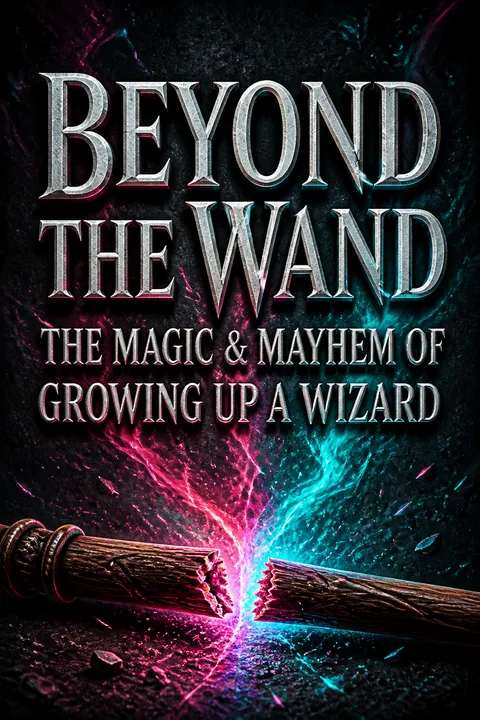
What is Beyond the Wand: The Magic & Mayhem of Growing Up a Wizard about?
- Personal Journey, Public Life: Tom Felton's memoir chronicles his life from a normal childhood to becoming a global star as Draco Malfoy in the Harry Potter films. It explores the challenges of balancing a public persona with personal growth.
- Behind-the-Scenes Insights: The book offers a behind-the-scenes look at the Harry Potter films, including auditions, set life, and interactions with fellow cast members. It reveals the complexities of fame and the impact on his family.
- Self-Discovery and Reflection: Beyond the fame, the memoir delves into Tom's personal struggles, including his mental health, relationships, and the search for authenticity. It's a story of self-discovery and finding purpose beyond the wizarding world.
Why should I read Beyond the Wand: The Magic & Mayhem of Growing Up a Wizard?
- Unique Perspective: Readers gain a unique perspective on the Harry Potter phenomenon from someone who was both an insider and an outsider. Tom Felton's experiences offer a fresh take on the beloved series.
- Honest and Vulnerable: The memoir is praised for its honesty and vulnerability, as Tom Felton openly discusses his personal struggles and triumphs. This makes the book relatable and engaging for readers.
- Inspirational Journey: Beyond the fame, the book is an inspirational story of self-discovery and finding purpose. It encourages readers to embrace their authentic selves and pursue their passions.
What is the background of Beyond the Wand: The Magic & Mayhem of Growing Up a Wizard?
- Personal Memoir: The book is a personal memoir, drawing heavily on Tom Felton's own experiences and reflections. It's not a historical or political analysis, but a personal narrative.
- Cultural Context: The book is set against the backdrop of the Harry Potter phenomenon, a major cultural event that shaped the lives of many. It explores the impact of this phenomenon on a young actor's life.
- Contemporary Influences: The memoir also touches on contemporary issues such as mental health, addiction, and the challenges of growing up in the digital age. It reflects the cultural landscape of the 21st century.
What are the most memorable quotes in Beyond the Wand: The Magic & Mayhem of Growing Up a Wizard?
- "Like I said, I tried very hard to be a regular teenager.": This quote encapsulates Tom Felton's struggle to balance his normal life with his fame as Draco Malfoy. It highlights the central theme of the book.
- "You know that person in your life who makes you feel seen? That person who is somehow a witness to all that unfolds?": This quote from Emma Watson's foreword speaks to the deep connection and understanding she shares with Tom Felton. It emphasizes the importance of genuine relationships.
- "The magic is in the making, and that process is a discreet unit of time in the past.": This quote reflects Tom Felton's understanding of the fleeting nature of film production and the importance of cherishing the present moment. It highlights the theme of time and change.
What writing style, narrative choices, and literary techniques does Tom Felton use?
- Conversational and Humorous: Tom Felton employs a conversational and humorous writing style, making the memoir feel like a personal chat with the reader. He uses self-deprecating humor to engage the audience.
- Anecdotal and Reflective: The narrative is largely anecdotal, with Tom Felton sharing personal stories and reflections on his life experiences. This approach makes the book relatable and engaging.
- Honest and Vulnerable: Tom Felton is praised for his honesty and vulnerability, openly discussing his personal struggles and triumphs. This creates a sense of intimacy and authenticity in the memoir.
Hidden Details & Subtle Connections
What are some minor details that add significant meaning?
- The HMV Shoplifting Incident: This seemingly minor teenage transgression reveals Tom's desire to fit in and his struggle to reconcile his public and private lives. It foreshadows his later struggles with identity.
- The Red Puffer Jacket: The red puffer jacket from his first commercial shoot becomes a symbol of his early acting experiences and the excitement of being on set. It represents a time before the complexities of fame.
- The Fishing Job: Tom's weekend job at a local fishery highlights his desire for normalcy and his connection to his family. It also shows his down-to-earth nature despite his growing fame.
What are some subtle foreshadowing and callbacks?
- Macaulay Culkin Mix-Up: Being mistaken for Macaulay Culkin foreshadows Tom's future fame and the challenges of being recognized. It also hints at the director Chris Columbus's role in his career.
- The Mother Goose Girl: The "Mother Goose" audition story is a callback to Tom's early acting experiences and his approach to auditions. It highlights his ability to react spontaneously and not overthink.
- The Ginger Mullet: The ridiculous ginger mullet from "The Borrowers" is a callback to the many unusual haircuts Tom has had throughout his career. It also foreshadows the iconic bleached hair of Draco Malfoy.
What are some unexpected character connections?
- Jim Broadbent and Mark Williams: Tom's early work with Jim Broadbent and Mark Williams in "The Borrowers" foreshadows their later roles in the Harry Potter films. It highlights the interconnectedness of the acting community.
- Chris Columbus and Macaulay Culkin: The connection between Chris Columbus and Macaulay Culkin, who Tom was mistaken for, is an unexpected link that highlights the small world of Hollywood and the serendipitous nature of casting.
- Alan Rickman and Robin Hood: Tom's admiration for Alan Rickman's role in "Robin Hood: Prince of Thieves" adds an unexpected layer to their relationship on the Harry Potter set. It shows how real-life influences can shape on-screen interactions.
Who are the most significant supporting characters?
- Tom's Brothers: Tom's three older brothers, Jonathan, Christopher, and Ashley, each play a significant role in shaping his character and providing a sense of normalcy. They represent different aspects of his personality and offer a grounding influence.
- Emma Watson: Emma Watson's friendship with Tom is a central theme in the book. Her support and understanding are crucial to Tom's personal growth and self-discovery.
- Chris Carreras: Chris Carreras, the first assistant director, represents the strict but necessary structure on the Harry Potter set. His role highlights the balance between creativity and discipline in filmmaking.
Psychological, Emotional, & Relational Analysis
What are some unspoken motivations of the characters?
- Tom's Desire for Normality: Tom's actions often stem from a deep-seated desire to be seen as a normal teenager, despite his fame. This motivation drives his rebellious behavior and his attempts to fit in.
- Draco's Need for Approval: Draco Malfoy's actions are often driven by a need for approval from his father and a desire to maintain his family's status. This unspoken motivation reveals the character's vulnerability.
- Emma's Desire for Connection: Emma Watson's initial pursuit of Tom's attention reveals her desire for genuine connection and friendship. This motivation underscores the importance of relationships in her life.
What psychological complexities do the characters exhibit?
- Tom's Internal Conflict: Tom Felton exhibits a complex internal conflict between his desire for normalcy and the pressures of fame. This struggle leads to moments of rebellion and self-doubt.
- Draco's Internal Struggle: Draco Malfoy's character is marked by psychological complexities, as he grapples with his family's expectations and his own moral compass. This internal struggle makes him a more nuanced and relatable character.
- Emma's Self-Awareness: Emma Watson demonstrates a high level of self-awareness, navigating the challenges of fame with grace and intelligence. Her ability to reflect on her experiences and relationships highlights her emotional maturity.
What are the major emotional turning points?
- The End of "The Borrowers": The end of filming "The Borrowers" marks a major emotional turning point for Tom, as he experiences the bittersweet feeling of loss and the passing of time. This moment foreshadows his later experiences with the Harry Potter films.
- The Night of Crisis: The night of crisis in Los Angeles is a major emotional turning point for Tom, as he confronts his inner demons and begins a journey of self-discovery. This experience leads to a profound shift in his perspective.
- The Table Read: The table read for the Harry Potter films is a major emotional turning point for Tom, as he realizes the scale of the project and the talent he is surrounded by. This moment marks the beginning of his journey into the wizarding world.
How do relationship dynamics evolve?
- Tom and His Brothers: The relationship between Tom and his brothers evolves from childhood teasing to a deep bond of support and understanding. They provide a grounding influence and a sense of normalcy.
- Tom and Emma: The relationship between Tom and Emma evolves from initial awkwardness to a deep friendship based on mutual respect and understanding. Their bond is a source of support and camaraderie.
- Tom and Jason: The relationship between Tom and Jason Isaacs evolves from a professional connection to a mentorship. Jason's guidance and support help Tom navigate the complexities of the film industry.
Interpretation & Debate
Which parts of the story remain ambiguous or open-ended?
- The Nature of Fame: The book leaves open the question of how fame truly affects an individual. While Tom Felton shares his experiences, the reader is left to ponder the long-term impact of growing up in the public eye.
- The Future of Relationships: The book does not provide a definitive answer to the future of Tom's relationships, particularly with Emma Watson. It leaves the reader to speculate on the nature of their bond and its potential evolution.
- The Meaning of Success: The book challenges the traditional definition of success, leaving the reader to question what truly matters in life. It suggests that success is not solely defined by fame or fortune, but by personal growth and genuine connections.
What are some debatable, controversial scenes or moments in Beyond the Wand: The Magic & Mayhem of Growing Up a Wizard?
- The HMV Shoplifting Incident: Tom Felton's teenage shoplifting incident is a controversial moment that raises questions about his judgment and the pressures of fame. It sparks debate about the line between normal teenage behavior and public responsibility.
- The Mother Goose Audition: The "Mother Goose" audition story is a controversial moment that highlights the challenges of child acting and the potential for exploitation. It raises questions about the ethics of casting and the pressures placed on young performers.
- The Relationship with Jade: Tom's relationship with Jade is a controversial topic, as it raises questions about the nature of love, dependency, and the challenges of maintaining relationships in the public eye. It sparks debate about the complexities of personal relationships and the impact of fame.
Beyond the Wand: The Magic & Mayhem of Growing Up a Wizard Ending Explained: How It Ends & What It Means
- Embracing Authenticity: The book ends with Tom Felton embracing his authentic self and finding purpose beyond the wizarding world. He acknowledges his past mistakes and commits to living a more mindful and genuine life.
- The Power of Human Connection: The ending emphasizes the importance of human connection and the transformative power of kindness. Tom's relationships with his family and friends are a source of strength and support.
- A Journey of Self-Discovery: The ending is not a conclusion, but a continuation of Tom Felton's journey of self-discovery. It suggests that life is a process of constant growth and change, and that the pursuit of authenticity is a lifelong endeavor.
Download PDF
Download EPUB
.epub digital book format is ideal for reading ebooks on phones, tablets, and e-readers.








