

Key Takeaways
Read Collins and de Valera as rival political methods, not heroes and villains.
Two childhoods, two temperaments. De Valera was born in New York in 1882 and sent to relatives in Bruree at age two. His mother stayed in America, and his stern uncle put him to work on the family’s small farm. Collins, the youngest of eight, grew up in a warm West Cork household until his father died when he was six. Their early lives offer clues to the contrasting styles that followed, but not a complete explanation of them.
Differences came early. Collins gravitated toward organization and action; de Valera became a careful politician who sought coalitions and public legitimacy. Their famous nicknames, the Big Fellow and the Long Fellow, can make them seem like fixed characters. Dwyer instead traces how their careers repeatedly intersected, and how political differences existed well before the Treaty split.
What's valuable here is the refusal to turn biography into destiny. Early separation may help explain de Valera's reserve, while Collins's close family life may help contextualize his confidence, but childhood cannot prove why either man made particular political choices. The stronger use of biography is comparative: it shows that leaders can share a national aim while acquiring different instincts about risk, authority, and persuasion. Those instincts matter most when a movement faces decisions for which no inherited rule can provide an easy answer.
A failed revolt can win public sympathy when the state overreacts.
A confused rising. In Easter Week 1916, British arms never reached the rebels, and the Irish Volunteers' chief of staff tried to cancel the operation. De Valera's unit had about 120 men where plans had counted on 500. Collins fought at the General Post Office, while de Valera's force held positions around Boland's Bakery. The rebellion was militarily defeated, and more civilians than combatants were killed: 262 civilians, 141 Crown forces, and 62 rebels.
A political reversal. Britain executed fifteen rebels and imprisoned many more. That response helped change public feeling toward the insurgents. The uprising's failure became a powerful political event because the state treated a defeated rebellion as a threat requiring sweeping punishment. Collins learned that romantic courage could not replace planning; de Valera's prominence grew from his command and survival.
The episode illustrates a familiar problem in statecraft: force can suppress an immediate challenge while making the government's authority look less legitimate. That does not mean repression automatically creates sympathy. The effect depends on whether the public sees punishment as indiscriminate, disproportionate, or unjust. Here, executions and mass arrests helped turn a small, confused revolt into a wider national grievance. The distinction between military success and political success is crucial: the rebels lost the battlefield, but the British response weakened the political case for continued British rule.
Turn imprisonment into an organizing school, not a pause in the struggle.
Frongoch became a network. After the Rising, Collins was interned at Frongoch, a camp in Wales holding more than 1,800 Irish prisoners. The men organized classes, military instruction, sports, and internal committees. Collins helped rebuild the Irish Republican Brotherhood, or IRB, and formed ties with people who would become influential in the independence movement. The camp was not merely a place to endure confinement; it became a setting where activists learned skills and built trust.
Resistance had a practical side. Prisoners smuggled letters and information past the authorities, sometimes by using guards or visitors. Collins also learned from the Rising's mistakes and saw how organization could outlast a failed operation. After release, his work for a prisoners' aid fund let him travel, meet activists, and help rebuild the movement.
Frongoch shows how organizations preserve capacity when ordinary political work is blocked. Confinement brought activists into sustained contact, while shared routines and small acts of resistance created channels for coordination. This is a more durable form of preparation than simply praising courage: relationships, information, and practiced procedures can be reused when circumstances change. The danger is romanticizing the camp as a revolutionary university. The same close networks that help a movement survive can also concentrate power in insiders who are difficult for the wider public to oversee.
Target the enemy's information network when its army cannot be beaten head-on.
Collins chose an asymmetric strategy. He concluded that Ireland could not defeat Britain's larger military forces in a conventional war. As director of intelligence, he built a network of informants, postal and railway contacts, and police sources. Ned Broy, a typist in Dublin's detective division, passed him reports; other contacts supplied police codes and details of officials' movements. Collins focused on disrupting the intelligence system that helped the British locate and arrest republicans.
The method carried a cost. Collins created a full-time assassination unit, known as the Squad, and authorized attacks on detectives and suspected informers. The killings damaged the effectiveness and morale of Dublin's police intelligence, but they also involved deliberate political violence, sometimes on uncertain evidence. British reprisals and further killings deepened the cycle. His strategy was operationally effective, but its consequences were not morally or politically clean.
The strategic insight is precise: an unequal force can seek leverage by attacking the opponent's ability to gather information, rather than trying to match its weapons. But this approach makes intelligence quality and accountability decisive. A mistaken target is not a clerical error when the response is assassination. The book's account also complicates the image of a purely disciplined strategist: covert violence can weaken an adversary while eroding the distinctions between defense, intimidation, and revenge that a future government needs to establish.
Use international ideals for leverage, but don't confuse crowds with influence.
De Valera took the case abroad. In 1919 he went to the United States to seek recognition for the Irish Republic, raise funds, and mobilize public opinion. He appealed to President Woodrow Wilson's language of self-determination and used the League of Nations debate to argue that Ireland should not be treated as part of Britain's imperial possessions. In his first three weeks he made seventeen major speeches to crowds totaling an estimated half-million people.
Publicity was not recognition. His tour brought Irish affairs unusual attention and helped raise more than $5 million for the cause. But the United States did not recognize the Irish Republic. De Valera's effort to steer Irish-American political activity also alienated leaders such as Daniel Cohalan, who believed he was interfering in American politics. He won attention and money, but not the diplomatic outcome he wanted.
De Valera's appeal worked because it framed Irish independence as a test of principles American leaders had already proclaimed. That is a powerful form of political translation: connect a local claim to an audience's own public commitments. Yet an enthusiastic audience is not the same as a government willing to pay the cost of acting. Diaspora communities also have their own political loyalties and strategic interests. The episode distinguishes influence from control, and explains why persuasive language can raise a cause's profile without delivering the formal recognition that its advocate seeks.
Treat a negotiated foothold as leverage, not the final measure of freedom.
The Treaty was a compromise. Signed in December 1921, it created an Irish Free State with dominion status, while retaining a formal link to the Crown and allowing Britain to keep strategic ports. Northern Ireland could opt out, with a Boundary Commission expected to review the border. Collins argued that the agreement gave Ireland practical room to build self-government, even though it fell short of a republic.
The alternatives overlapped. De Valera's proposed External Association would have linked Ireland to the Commonwealth without making it a conventional dominion. His Document No. 2 accepted much of the same practical arrangement, including defence and partition provisions, but rejected the Treaty oath and the formal constitutional link to the Crown. Dwyer's point is not that the difference was meaningless, but that it was narrower in practical terms than the ensuing conflict suggested.
The Treaty reveals a recurring negotiation problem: symbolic terms can carry consequences beyond their immediate legal effect. For Collins, dominion status created institutions and room for future change. For de Valera, the oath and Crown connection risked legitimizing British authority. Both positions had strategic logic, but neither could guarantee how the new powers would be used. The most useful distinction is between a settlement's present terms and the political capacity it creates. A foothold can enable progress, but only if institutions remain accountable and later choices remain genuinely open.
A leader cannot invoke majority rule only when the majority agrees.
The Treaty passed narrowly, then decisively at the polls. The Dáil approved it by 64 votes to 57. De Valera rejected the result, while Collins argued that the elected representatives and then the people should decide whether to accept the agreement. The June 1922 election gave the pro-Treaty side a clear advantage. Anti-Treaty candidates received less than 22 percent of the first-preference vote, although some were elected without opposition.
Neither camp was perfectly democratic. De Valera had demanded political control of the army before the Treaty split, then defended armed opponents who rejected the Dáil's authority. Collins invoked the people's verdict while also relying on secret violence and later accepting an election pact that blunted a direct vote on the Treaty. Their conduct shows that democratic language can become a weapon rather than a constraint.
Majority rule is not a complete theory of democracy, but a movement that claims popular sovereignty cannot disregard an unfavorable result without a compelling and consistent justification. De Valera's reversal weakened his case. Collins's conduct also exposes a different problem: popular legitimacy cannot simply erase coercion or clandestine control. The distinction is between winning an argument about who has authority and building procedures that opponents can trust. When leaders treat democratic norms as tactics, they may win a vote while leaving the underlying conflict ready to reignite.
Civil war made personal rivalry fatal, and left no clean victory.
The split became armed conflict. Anti-Treaty forces occupied the Four Courts in Dublin in April 1922. After the June election and the assassination of British Field Marshal Henry Wilson, the Provisional Government attacked the building on 28 June. Collins became the central military leader of the Free State forces. The conflict continued into 1923, with executions and reprisals, including the killing of nine Republican prisoners in an explosion at Ballyseedy.
Collins died in the field. On 22 August 1922, his convoy was ambushed near Béal na Bláth in County Cork. He was shot and died on the return journey to Cork. The identity of the individual who fired the fatal shot remains uncertain in the accounts Dwyer reviews, and the evidence does not support the more elaborate conspiracy theories. His former comrades were now enemies, and the war had no victory that could restore the movement's earlier unity.
Civil war is especially destructive when each side sees itself as defending the same nation against illegitimate rule. Shared identity does not moderate conflict once competing leaders define compromise as betrayal. Collins's death removed a central figure, but the deeper loss was institutional: the movement had no trusted mechanism for settling its dispute without force. The account also resists the seductive certainty of assassination myths. In chaotic violence, incomplete evidence is common; refusing to invent a mastermind is part of taking the history seriously.
Never mistake a promised border review for a guaranteed national reunion.
Partition was the Treaty question left unresolved. The agreement created a Boundary Commission to adjust the border between Northern Ireland and the Free State. Collins believed the commission could transfer substantial nationalist areas and make Northern Ireland difficult to sustain. De Valera had also accepted the possibility of partition in his own alternative proposals, though he later made the issue central to his political attack on the Treaty.
Expectation outran the mechanism. The commission ultimately proposed only limited changes, and the border remained. Dwyer finds no firm evidence that Britain had promised Collins a large transfer of territory, although British leaders allowed him to hope for one. Collins was more consistently committed to unity than de Valera, but his tactics in the North, including covert destabilization, were also risky and counterproductive.
A commission can defer a political dispute without resolving the assumptions that created it. Here, the boundary process carried competing expectations, and each side could imagine a favorable outcome without securing a binding guarantee. That ambiguity helped make agreement possible in the short term, but it also made later disappointment likely. The episode offers a broader lesson in institutional design: when a settlement depends on an independent body, its mandate, standards, and likely consequences must be clear enough that political leaders cannot sell incompatible promises to different audiences.
Use a treaty's institutions to remove its limits, one by one.
The Free State became a platform for change. After coming to power in 1932, de Valera's government abolished the Treaty oath, curtailed the Crown's role, and adopted a new constitution in 1937. Ireland became a republic in 1949, after a later coalition government passed the Republic of Ireland Act. Dwyer argues that these steps vindicated Collins's belief that the Treaty offered a route toward greater sovereignty, even though Collins did not live to see it.
That vindication has limits. De Valera also proved that Britain would accept changes that would have been difficult to win in 1921. But the Treaty did not reunite Ireland, and the border remained. The book's final judgment is therefore divided: Collins was broadly right about the Treaty as a means of expanding freedom, while his expectations about the boundary and his Northern tactics were far less successful.
This outcome shows why transitional agreements should be judged both by their immediate compromises and by the political space they leave open. De Valera used institutions created under the Treaty to dismantle many of its constraints, which supports Collins's incremental argument. But later success does not prove that every concession was harmless or that the same path was available in 1921. Political settlements are contingent: leaders inherit powers, public support, and international conditions that change over time. Sovereignty advanced; territorial unity did not.
Analysis
Dwyer's joint biography is most persuasive when it shifts the Civil War story away from a simple clash between republican purity and practical compromise. The central conflict was over method and authority: should Irish independence be pursued through international advocacy, constitutional legitimacy, and negotiation, or through organized force and the leverage it might create? De Valera and Collins each used both approaches, but their emphases differed. Their public positions were also shaped by private rivalries and by uncertainty about who had the right to speak for Ireland.
The Treaty was not merely a set of legal clauses. It was a political instrument whose ambiguity enabled agreement while leaving room for incompatible expectations about the Crown, military autonomy, and partition. Collins viewed its institutions as usable machinery for gaining more freedom. De Valera feared that formal symbols and oaths would convert coercion into legitimate authority. The eventual removal of many Treaty restrictions supports Collins's view of the agreement's potential, but the survival of partition limits any claim that his judgment was wholly vindicated.
The book also exposes a severe inconsistency shared by both men. De Valera invoked popular sovereignty, then resisted the electoral verdict. Collins defended the people's choice while having helped create a clandestine campaign of political killing and later manipulating political conditions. Neither inconsistency makes their differences trivial. It shows that democratic legitimacy is more than a stated principle: it depends on procedures that remain binding when one's own side loses.
Dwyer's strongest corrective is to treat both leaders as consequential and fallible. His psychological explanations, especially the links between childhood and adult temperament, are suggestive rather than conclusive. The narrative also relies on memories from participants whose accounts were formed after the fact and amid partisan conflict. That uncertainty is not a flaw to erase. It is part of the subject: the men fought over a future, then left behind rival stories about what their choices meant.
Review Summary
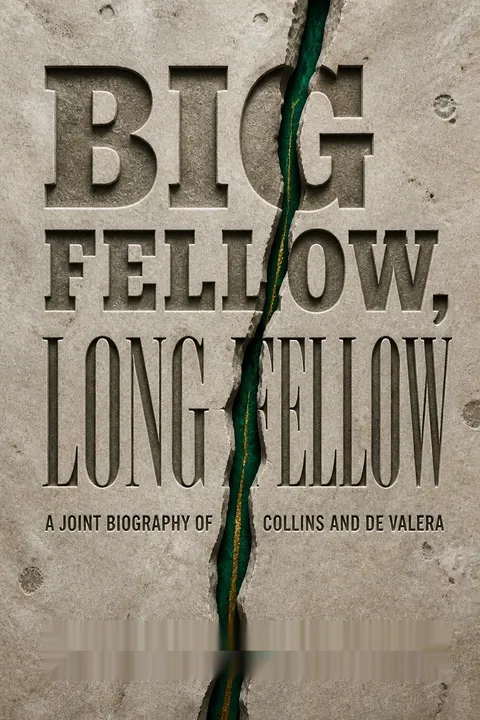
Big Fellow, Long Fellow offers a well-researched dual biography of Michael Collins and Eamon de Valera, focusing on their roles in Ireland's struggle for independence from 1916 to 1923. Reviewers praise Dwyer's mastery of sources and balanced approach, though some note the abundance of detail. The book is seen as a fair assessment of both leaders, highlighting their contributions and shortcomings. Readers appreciate the insights into Irish history, particularly the Treaty negotiations and subsequent civil war. Overall, it's considered a valuable read for those interested in Irish history.
People Also Read
Glossary
Irish Republican Brotherhood (IRB)
Secret republican organizationA secret, oath-bound nationalist organization committed to establishing an Irish republic. Before the Easter Rising, it exercised substantial influence within the Irish Volunteers and other nationalist organizations. Michael Collins joined the IRB in London, helped rebuild it after imprisonment, and later became its leading figure.
Frongoch
Welsh internment campA former prisoner-of-war camp in Wales where Irish nationalists arrested after the 1916 Rising were interned. More than 1,800 men passed through it. Prisoners organized classes, military training, and political networks there, making the camp an important meeting ground for activists who later served in the independence movement.
Dáil Éireann
Irish republican parliamentThe parliament established by Sinn Féin after its 1918 election victory, when elected members refused to take their seats at Westminster. It declared itself the national government and became the political authority claimed by the Irish republicans. Disagreement over whether the Dáil or an armed minority held legitimate authority became central to the Treaty split.
External Association
Association without dominion statusDe Valera's proposed relationship between Ireland and the British Commonwealth. Ireland would be recognized as a sovereign state and linked to the Commonwealth externally, rather than governed as a conventional dominion under the Crown. The proposal sought to preserve Irish sovereignty while allowing an agreed relationship with Britain and the other dominions.
Document No. 2
De Valera's Treaty alternativeDe Valera's alternative proposal during the Dáil debate on the Anglo-Irish Treaty. It called for External Association and rejected the Treaty oath, while retaining much of the practical arrangement on defence and partition. De Valera argued that its differences from the Treaty were small in practical terms but essential to Irish sovereignty.
Boundary Commission
Proposed border-review bodyA commission provided for in the Treaty to adjust the boundary between Northern Ireland and the Irish Free State. Its work was to take account of inhabitants' wishes alongside economic and geographic conditions. Collins expected substantial transfers of territory; the eventual outcome involved only limited changes, and the border largely remained as it was.
Black and Tans
Recruited British police forceA force recruited by the British government during the War of Independence, largely from former soldiers, to reinforce the Royal Irish Constabulary. Their mixed uniforms gave rise to the name. Some members became notorious for reprisals and attacks on civilians, which further alienated Irish opinion from British rule.
Cairo gang
British intelligence agentsA group of British intelligence agents sent to Dublin to identify and capture republican leaders, especially Collins. They were associated with the Cairo Café, where some gathered. Collins's network tracked them, and a coordinated operation on 21 November 1920 killed eleven suspected agents, an event known as Bloody Sunday.
Download PDF
Download EPUB
.epub digital book format is ideal for reading ebooks on phones, tablets, and e-readers.








