


Plot Summary
Prologue
In 1979, young RUC constable Sean Duffy searches Belfast Lough for Louise Keeley, a missing teenager, then is sent to the scene of a trainee nurse’s brutal murder. While the Shankill Butchers command the department’s attention, Duffy learns the girl’s mother is being beaten by her husband.
Newly promoted and exhausted, he enters the man’s house and threatens him with his service revolver, then recoils at how quickly authority has turned into intimidation. At midnight, he discovers the decade has changed while he was working. The case leaves him with an early lesson: official priorities can abandon the people who most need help.
The opening makes Duffy’s later investigation feel less like an unexpected assignment than a return to an old moral injury. In the past, a missing girl receives only a perfunctory search because a notorious murder case takes precedence. Duffy’s intervention for the abused family shows both his compassion and the danger in his methods: he uses the force of his office before he fully understands what that power can do to him. His promotion arrives alongside exhaustion and a city saturated with violence. The prelude therefore establishes the book’s central tension in miniature: Duffy wants the law to protect people, but he knows the institution and the detective himself can fail them.
Jerusalem's Failed Apocalypse
On New Year’s Eve 1989, Duffy and his partner Beth are in Jerusalem with Beth’s Presbyterian father, Hector, who expects the world to end at midnight. Nothing happens except late fireworks and a message from Duffy’s colleague John McCrabban. A fifteen-year-old Traveller, Katrina McAtamney, has vanished, and Carrickfergus’s chief inspector has already decided the police should do nothing.
Duffy is due to leave full-time service, move his family to Scotland, and finish only enough reserve duty to secure his pension. Still, he tells McCrabban he will return to investigate. He has spent years watching institutions dismiss the vulnerable; he cannot let this last case begin with another abandoned girl.
The failed apocalypse sets up an ironic contrast: the end of the world never arrives, but Duffy’s old world is ending anyway. He is trying to leave a dangerous career without abandoning the obligations that made it meaningful. The missing-person case tests whether retirement is a genuine choice or a fantasy of moral release. Duffy’s decision is not driven by confidence that he can solve the disappearance. It comes from his refusal to accept the chief inspector’s calculation that a Traveller girl matters less than the department’s convenience. His attention begins as an act of correction, and the novel asks how far that duty can carry him.
The Two Page Case File
After flying back from Israel, Duffy reunites with Beth and their young daughter, Emma, then goes to Carrickfergus to inspect the file his young successor, Alex Lawson, has prepared. It contains little more than Katrina’s mother’s statement and a database entry.
The questions are vague, no photograph has been collected, and no one has followed up. Duffy explains that the family is leaving Northern Ireland because Beth wants Emma raised somewhere safer, while he plans to keep working part-time until his pension is secure.
The new home does not erase his obligations. He takes charge of the neglected inquiry and insists that Lawson join him, making the younger detective confront the difference between processing a report and investigating a person.
The thin file is a concrete measure of institutional indifference. Katrina has not disappeared from a fully documented life; she has been allowed to become almost invisible because the systems that normally make people legible have missed her. Duffy’s mentorship of Lawson matters here. He does not merely repair a bad report; he makes Lawson see that procedure can reproduce prejudice unless a detective chooses to ask better questions. At the same time, Duffy’s plan to move his family reveals the cost of the work he is defending. He can no longer pretend that professional duty and private safety are compatible without sacrifice.
A Girl's Other Clients
At the Kilroot caravan site, Katrina’s mother, Eileen, tells Duffy that her daughter has lived independently in an old caravan, left school after bullying, and once disappeared to Dublin before returning.
Eileen names photographer Jordy Hardcastle as a man who paid Katrina and whose house she visited. At the nearby Tourist Inn, the bartender says Katrina met several older, well-dressed men there and left with them. Duffy suspects she was being exploited, though he cannot yet prove it.
Hardcastle insists he only arranged catalogue modelling and denies supplying drugs or taking compromising photographs. His denials do not explain the men. Duffy circulates Katrina’s photograph, but the press shows little interest in a missing Traveller teenager.
The investigation shifts when Katrina’s disappearance no longer resembles an ordinary runaway case. The bartender’s account suggests a hidden economy around her, yet the adults who might clarify it either protect themselves or see no reason to help. Duffy’s uncertainty is important: he recognizes the danger without treating his suspicion as proof. The book also makes visibility a practical problem. A photograph can help find Katrina, but news editors and police systems decide whose face deserves attention. Duffy’s persistence begins to counter that erasure, although it cannot restore the days lost before anyone took the report seriously.
Across the North Channel
As the movers carry Beth and Emma to their new home in Portpatrick, Duffy remains tied to Carrickfergus by the case and his part-time service. When Beth calls to say their neighbour, Ryan McCallan, frightened her after a minor parking collision, Duffy takes the ferry back to Scotland that night. He pays for the damaged bumper, then fights Ryan and forces an apology.
The encounter exposes the violence he has carried home from Belfast, even as he tells Beth the matter was settled peacefully. Back in Carrickfergus, Lawson discovers that Katrina had a provisional driving licence obtained with a false age. The discovery gives the search a new direction: a car can be traced even when its young driver cannot.
The move makes Duffy’s divided loyalties physical: his family crosses the water while his work keeps drawing him back. His response to Ryan is not a clean act of protection. He uses violence to restore Beth’s sense of safety, then hides the truth from her, carrying the habits of the Troubles into the domestic life he hoped would escape them. Lawson’s discovery offers a more constructive model of intervention. Instead of force, he follows an overlooked record and finds a concrete lead. The contrast asks whether Duffy can protect others without making fear and coercion his first tools.
The Ford Beneath the Bann
Lawson traces Katrina’s white Ford Escort to a previous owner in Ballintoy, where horse and car dealer Cecil McCullough confirms that she bought it herself. Soon afterward, two boys find the Escort in the River Bann. Duffy examines the tracks leading into the water and notices boot prints that could mean someone pushed the car, but forensic officers cannot establish when those prints were made.
The river has stripped the vehicle of useful traces, and Katrina is gone. A small purse recovered from the car is identified by Eileen as her daughter’s. The evidence makes foul play plausible, but the worn gearbox could also have slipped during an accident. Duffy has a possible murder and no body, no reliable timeline, and no certainty.
The river turns evidence into a contest between interpretation and certainty. The car is real, the purse belongs to Katrina, and the boot prints fit Duffy’s suspicion, but none of those facts alone establishes how she entered the water. Lawson’s more ordinary accident theory remains possible. The detective’s instinct may identify a pattern before proof catches up, yet instinct can also become a way of protecting a preferred story. The case’s central difficulty is therefore not simply finding a killer. Duffy must distinguish a persuasive narrative from one that can survive scrutiny, even as the river has erased the physical record he needs.
The Names in Kat's Diary
Fishing boys discover Katrina’s red coat downstream, with a water-damaged diary that preserves three phone numbers: Johnny Dunbar, Terry Jones, and Charles McCawley. Dunbar is a violent former UVF man with a record of serious crimes.
Jones is a senior civil servant and a lonely intellectual who admits paying Katrina for companionship and sex, though he says he believed she was eighteen. McCawley, a university lecturer, describes a paid, supposedly nonsexual relationship and has no convincing independent alibi.
Hardcastle admits passing clients’ names and messages to Katrina. Duffy and his team question the men, but their stories do not establish who was with her on December 30. Duffy grows more aggressive during interviews, especially with Hardcastle, and still leaves without the proof he needs.
The diary converts a diffuse suspicion into a bounded investigation, but its names do not sort guilt from vulnerability. Each man has access to Katrina and something to conceal, though their motives and social positions differ. The men’s willingness to describe her as older, or to minimize what they bought from her, exposes how easily adult self-interest turns a child into a convenient fiction. Duffy’s impatience is understandable, but his rough handling of Hardcastle also reveals the risk of letting moral certainty outrun evidence. The case now demands both pressure and restraint, and Duffy is increasingly struggling to maintain the second.
Folk Park to Penny Building
After the interviews produce no breakthrough, Duffy realizes a brown Mercedes has been following him. At the Ulster Folk and Transport Museum, a hidden shooter fires at him, but he escapes through a reconstructed well before the sniper can finish the attack.
Soon afterward, a confidential tip claims Katrina is alive in a fourth-floor squat in Rathcoole. Duffy takes Lawson, McCrabban, and WPC Warren to the abandoned Penny Building. Gunmen fire from both ends of the corridor, trapping the officers between them.
Duffy and McCrabban return fire while the others shelter in a flat. The attackers withdraw when emergency crews and soldiers arrive. Everyone survives, but the ambush proves someone considers Duffy’s investigation dangerous enough to stop by force.
The threats change the scale of the case. Duffy had been treating the suspects as men who might lie or evade; now an organized force is trying to kill the investigators. The supposed sighting of Katrina becomes especially cruel because it offers hope before turning into a trap. The siege also tests the team’s different kinds of courage. Lawson freezes, Warren holds her position, and McCrabban remains steady while Duffy takes responsibility for the choices that brought them inside. Survival does not solve the case, but it makes continued neutrality impossible. Someone outside the interview room has a stake in what Duffy uncovers.
The Guns Point to Moscow
Forensic officer Frank Payne identifies AK-74 casings among the weapons fired at the Penny Building. The rare Soviet ammunition points toward an old cache associated with the Official IRA, an organization that has been inactive for years.
Duffy asks MI5 to investigate his suspects and their connections. Special Branch then reveals that Dunbar is one of its informants and supplies an alibi: during the night Katrina vanished, he was overseeing the torture of two suspected joyriders. Dunbar is therefore a brutal man, but not Duffy’s killer.
The remaining focus falls on Jones, whose diplomatic career included postings in Moscow and other sensitive capitals. Duffy suspects his access to government information may explain why a dormant armed network attacked the detectives.
The weapon evidence pulls the investigation away from a local crime and into the machinery of state secrecy. Dunbar’s role as an informant does not make him innocent in any larger moral sense; it only gives Duffy a reason to exclude him from this particular murder. That distinction is characteristic of the book’s grim politics, where the state tolerates violence when it serves intelligence aims. Duffy recognizes that his own work with a compromised source puts him inside the same moral structure. His suspicion of Jones may be speculative, but the attack gives the speculation urgency and makes institutional loyalties part of the evidence.
The Spy Who Wasn't Killer
MI5 traces Jones’s secret calls to a Belfast phone box near the Soviet consulate and watches him make what appears to be an emergency contact after Duffy questions him. When officers arrest him, Jones admits that the KGB recruited him years earlier through a staged scandal in Moscow.
He says he was seeing Katrina, but insists he did not kill her; he also gives an account of spending the critical evening with a Soviet cultural official, an alibi the investigators must still check. Jones says his handler promised to deal with Duffy after the detectives kept pressing him, suggesting a link to the ambush. He cannot identify who killed Katrina. MI5 takes custody of Jones, leaving Duffy to return to the other remaining suspect.
Jones’s confession resolves one mystery while widening another. His espionage began through shame and fear, not a grand ideological conversion, and he has spent years preserving a compromised life by concealing the truth. Yet his secret does not make him the killer. Duffy must accept that a suspect can be guilty of serious crimes and still be innocent of the crime under investigation. Jones’s account of his handler’s threat offers a plausible route to the attack, but not a complete explanation. The revelation also mirrors Duffy’s own relationship with intelligence work: both men have allowed secrecy to become a way of managing consequences.
Carol's River Confession
With Dunbar and Jones no longer viable suspects, Duffy confronts Charles McCawley and his wife, Carol, at their home. He accuses Carol of being in Katrina’s car and invents forensic certainty he does not possess, claiming that hair and boot evidence will identify her. Carol first denies involvement, then admits she forced Katrina to drive to the Bann and planned to drown her after becoming jealous of her husband’s attention.
She believed the car and river had killed the girl. Charles is horrified to learn what his wife has done. Duffy records Carol’s admission and arranges for her to make a formal statement the next morning. At last, he believes he has found the person responsible for Katrina’s disappearance.
The confession is obtained through a mixture of insight and deception. Duffy correctly recognizes that Carol’s attachment to Charles may explain why she has protected him, but he manufactures evidentiary pressure to make her speak. Her motive is intimate and possessive, yet the act she describes is carefully planned rather than an uncontrollable flare of jealousy. The scene offers a satisfying answer to the detective’s immediate need for closure, while quietly leaving an ethical question: does a confession become reliable simply because it confirms what the detective believes? Carol’s certainty that Katrina is dead will soon prove as mistaken as Duffy’s confidence that the case is finished.
A Case Closed Too Soon
Carol gives a full statement, admits planning the drowning, and pleads guilty at her first court appearance. Duffy does not oppose bail, and the case appears to be over. A prosecutor then tells him of earlier troubling incidents in Carol’s life, including a friend’s death in the woods and accusations of violence in past relationships.
The details deepen concern about Carol but do not prove what happened to Katrina. Duffy is exhausted, ready to return to Scotland, and still responsible for one final task: accompanying MI5 officer Oliver Carson to a meeting with Duffy’s nervous informant, John Strong. Duffy leaves the station believing he has delivered the case to justice, unaware that his most consequential decision is still ahead.
The legal system rewards the appearance of resolution: confession, plea, bail, file closed. Yet the new information about Carol complicates rather than settles the moral picture. Her past may suggest a pattern, but it cannot substitute for evidence about Katrina’s fate. Duffy’s fatigue makes closure attractive, and the narrative lets that temptation become visible without making him careless by nature. The final intelligence assignment also reminds him that the police case never existed in isolation. He is about to step from one compromised institution into another, carrying the same habits of loyalty, suspicion, and intervention that have shaped his work.
Duffy Runs Toward the Manse
At the Donegal meeting, IRA internal-security officer Trevor McGurk and an accomplice accuse John Strong of betraying the organization and begin beating him. The listening team loses its connection. MI5 officer Oliver Carson argues that they cannot intervene without authorization, but Duffy refuses to wait for a specialist unit. He runs across the bog to the Manse as the gunmen fire at him.
McGurk shoots at Duffy while the second man reloads an assault rifle. Duffy kills both attackers and finds Strong alive, tied to a chair. He frees him, then leaves the intelligence officers to manage the aftermath. The rescue costs Duffy another life-threatening fight, but it honors the responsibility he believes the service owes to its own sources.
Duffy’s choice is both courageous and morally compromised. He rejects bureaucratic delay because he can hear a man being tortured, but his solution is lethal force and he knows he is good at it. The scene strips away the self-image of the cultured detective who uses music, literature, and reason to order chaos. Those qualities remain real, yet they do not cancel the part of him that moves toward violence and can take pleasure in surviving it. Strong is saved not because he deserves uncomplicated loyalty, but because Duffy refuses to let an institution abandon someone it has used.
The Stone Keeps Its Secret
Back in Northern Ireland, Duffy visits Eileen McAtamney’s caravan and finds two postcards: one from Cecil McCullough saying he sent Katrina on her way, the other from the Stone of Divisions at Uisneach saying she is safe. A child tells Duffy that Katrina is an exceptional swimmer. At Ballintoy, Cecil finally admits that she escaped the submerged car and reached him, cold and exhausted; he helped her hide.
Duffy drives to Uisneach and finds Katrina living with the Traveller community and Robert Patterson. She will not return to testify, and Duffy does not force her. He ensures the charge against Carol becomes attempted murder, tells Lawson the case is his now, and returns to Beth and Emma in Scotland.
The postcards turn the landscape into a message system that works where official channels failed. Katrina’s survival depends on abilities and relationships the police never knew to ask about: her swimming, Cecil’s kinship, and the protection offered by a community beyond the department’s reach. Duffy’s final act is not to reclaim her as evidence but to respect her choice about returning. That restraint marks a genuine change from his earlier willingness to threaten, bluff, and impose his own solution. He leaves Lawson with the office and returns to his family, not as a man free of violence, but as one who has chosen a more limited kind of responsibility.
Analysis
The novel’s central mystery is built around a question the police initially fail to ask properly: what happened to a girl whose life is poorly documented and whose disappearance seems convenient to everyone except her family? Katrina’s social invisibility is not a decorative theme. It shapes the two-page case file, the press’s indifference, the time lost before anyone searches seriously, and the difficulty of interpreting her relationships with adult men. The investigation’s errors grow from the same conditions that make her vulnerable.
Duffy’s detective work is a struggle between intuition and proof. He often senses that something is wrong before he can demonstrate it, but his confidence can become coercive. He threatens a witness, invents forensic evidence to prompt Carol’s confession, and repeatedly risks the lives of colleagues through decisions made at speed. The novel does not present these acts as uncomplicated heroism. His instincts help him recognize a dangerous pattern, while his methods can distort the truth he wants to uncover. The discovery that Katrina survived forces him to confront the cost of believing his own narrative too soon.
The book also treats state violence as a system of bargains rather than a simple conflict between good and evil. Dunbar’s role as an informant, Jones’s relationship with the KGB, the Official IRA weapons, and Duffy’s own work with John Strong all show institutions tolerating or concealing wrongdoing for strategic reasons. Duffy is not outside that machinery; he benefits from it and is compromised by it. His rescue of Strong demonstrates both the loyalty it can demand and the violence it can unleash.
The ending offers neither a clean retirement nor a purified hero. Duffy still has to cross borders, carry weapons, and make choices with incomplete knowledge. But when he finds Katrina, he allows her to choose whether to return and testify. That restraint is a meaningful change. He cannot undo the failures that made her disappear, yet he can stop treating her as merely the missing person in his case and recognize her as someone entitled to decide what happens next.
Review Summary
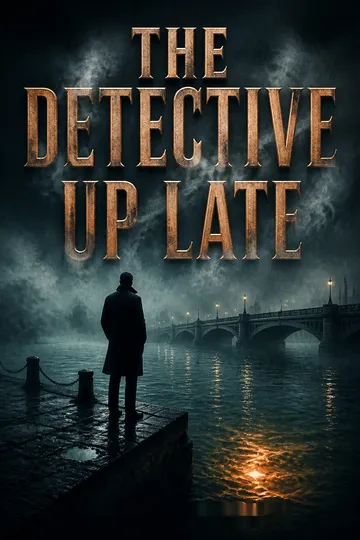
The Detective Up Late is the seventh installment in Adrian McKinty's Sean Duffy series, set in 1990 Northern Ireland. Readers praise Duffy's wit, dark humor, and determination as he investigates a missing teenager case while preparing for semi-retirement. The novel's atmospheric depiction of Belfast and complex plot garnered mostly positive reviews, with some critics calling it the best in the series. A few readers found the writing style challenging, but overall, fans appreciated the satisfying continuation of Duffy's story and eagerly anticipate future installments.
People Also Read





Characters
Sean Duffy
The stubborn Belfast detectiveDuffy is a Catholic detective in the RUC, a musician and reader whose intelligence is matched by a reckless appetite for danger. Years of policing during the Troubles have left him suspicious of authority, alert to social prejudice, and unable to stop himself from investigating people others dismiss. He loves his partner Beth and their daughter Emma, and wants to leave Belfast for their safety, yet duty repeatedly pulls him back. Duffy is funny, observant, and capable of tenderness, but he also knows that violence comes easily to him. His central struggle is not whether he cares, but whether he can act on that care without becoming another source of fear.
Katrina McAtamney
The missing Traveller teenagerKatrina is a fifteen-year-old Traveller girl who has grown up moving between places and families. She is attractive, self-possessed, and far more capable than the sparse police file suggests. She reads, speaks several languages, and has learned to navigate adults who mistake her confidence for maturity. Her independence is not simple freedom: limited schooling, poverty, and the attention of older men leave her exposed to exploitation. Katrina’s reserve makes it difficult for those around her to know what she wants, but she is not merely an object of other people’s plans. Her decisions, skills, and judgment shape the investigation even when Duffy does not yet know it.
Alex Lawson
The ambitious young detectiveLawson is Duffy’s intelligent, eager successor in Carrick CID. He is analytical and quick with official procedure, but early in the case he accepts a thin report because it seems to fit the routine explanation. Duffy challenges him to look beyond statistics and ask what has not been recorded. Lawson responds by finding the vehicle record that changes the inquiry’s direction, and his willingness to question Duffy’s assumptions becomes increasingly important. He is ambitious without being cold, and he wants responsibility even when he understands its cost. His relationship with Duffy combines apprenticeship, friction, and mutual respect.
Beth
Duffy's clear-eyed partnerBeth is Duffy’s partner and Emma’s mother, an educated and practical woman who has made a life beyond the Belfast police world. She wants their daughter to grow up somewhere safer and secures a teaching position in Scotland, forcing Duffy to confront the difference between loving his work and exposing his family to it. Beth understands Duffy’s habits well, but she also expects him to participate in ordinary family life. Her steadiness is not passivity: she makes a major decision about where the family will live and asks Duffy to build a future with her.
Emma
Duffy's observant young daughterEmma is Duffy and Beth’s young daughter. Curious, verbally precocious, and fond of books, she notices the adults around her and asks questions that bring Duffy back from his spiraling thoughts. Her presence gives the move to Scotland its emotional stakes: Duffy is not only trying to leave a job, but to give Emma a childhood less shaped by checkpoints and violence. She represents a future Duffy cannot secure through policing alone.
John McCrabban
Duffy's steadfast colleagueMcCrabban, usually called Crabbie, is Duffy’s older colleague and close friend in Carrick CID. A practical, reserved detective and dairy farmer, he brings steadiness to Duffy’s improvisations. He values loyalty and duty but does not confuse them with grand gestures; when Duffy needs help, Crabbie shows up. His dry humor and quiet courage make him a counterweight to Duffy’s restless intensity, while his own plan to leave full-time policing reflects the toll the job takes.
Eileen McAtamney
Katrina's hard-pressed motherEileen is Katrina’s mother, a Traveller woman raising a large family in difficult circumstances. She has a history of petty theft and a complicated life, but Duffy finds her attentive to her children and genuinely worried about Katrina. Eileen knows some parts of her daughter’s life and not others, a gap widened by Katrina’s separate caravan and independence. Her reluctance to attract public attention reflects the risks of exposing a family already judged by outsiders.
Jordy Hardcastle
The opportunistic photographerHardcastle is a photographer who offers Katrina a brief chance at catalogue modelling and has connections to men seeking her company. He is vain, defensive, and practiced at presenting his own involvement as harmless. His apartment and professional contacts give him a respectable surface, but his business depends on exploiting the ambitions and vulnerabilities of young women. He is a useful early lead precisely because his claims are neither wholly false nor fully candid.
Johnny Dunbar
The militant local powerbrokerDunbar is a former UVF criminal with a record of arson, attempted murder, and paramilitary violence. He presents himself as a changed man with political ambitions, but his past gives Duffy ample reason to doubt him. Dunbar is shrewd enough to control what he admits and forceful enough to move between criminal and community roles. His presence shows how authority in Northern Ireland can belong simultaneously to the police, paramilitaries, and the secret arrangements between them.
Terry Jones
The lonely civil servantJones is a senior civil servant with an impressive diplomatic background and a private life marked by isolation. His classical learning and cultivated manners do not prevent him from making damaging choices. He is drawn to Katrina’s attention and conversation, and his attempts to frame the relationship as companionship reveal how easily loneliness can become an excuse for exploitation. Jones is a useful study in the gap between public competence and private judgment.
Charles McCawley
The idealistic university lecturerMcCawley is a geography lecturer and urban-planning critic whose work argues for humane alternatives to car-dominated cities. He is intelligent and socially awkward, with a complicated marriage that leaves him isolated inside a grand home. His attraction to Katrina grows from the attention she gives his ideas, but his self-description as a lonely man does not erase the imbalance in their relationship. He embodies the way intellectual sensitivity can coexist with serious failures of responsibility.
Carol McCawley
The guarded aristocratCarol is Charles’s wife and the daughter of a powerful landowning family. She is a painter with an observant eye and a guarded manner, accustomed to the protections and expectations of her class. Her marriage is strained, but she remains emotionally attached to Charles and fears losing her place in her family. That mixture of affection, insecurity, and privilege makes her difficult to read. She is more perceptive than she first appears, especially when she studies Duffy’s face.
John Strong
The high-ranking RUC officerStrong is a senior RUC officer whose position puts him close to sensitive information and competing loyalties. He is nervous, suspicious, and prone to imagining that danger is closing in, but his anxiety is not always misplaced. He trusts Duffy more than the intelligence officers assigned to manage him, creating a difficult relationship built on dependence and resentment. Strong’s vulnerability complicates the idea that rank or authority can protect anyone in Belfast.
Oliver Carson
The cautious MI5 officerCarson is a young MI5 officer from Manchester who handles intelligence sources in Northern Ireland. He is educated, quick to assess risk, and more comfortable with procedure than Duffy is. His work with Strong requires patience and constant reassurance, even as he sometimes dismisses the source’s fears too readily. Carson and Duffy share a professional alliance, but they disagree over how much danger warrants immediate action.
Cecil McCullough
The Traveller horse traderCecil is a Traveller dealer in horses and cars who lives near Ballintoy. He is shrewd, practical, and protective of his extended family, though he has little interest in making his life legible to the police. Duffy first meets him while tracing Katrina’s car. Cecil’s knowledge of vehicles and Traveller networks gives him a distinct place in the investigation, and his guarded manner reflects the community’s long experience of being watched and judged.
WPC Warren
The composed policewomanWarren is a police constable who joins Duffy’s team during the dangerous search in Rathcoole. She is capable, steady under pressure, and unwilling to let others decide for her whether she should remain with the team. Duffy sees her as a promising detective and imagines her working alongside Lawson in the future. She represents a younger generation of officers whose competence is already clear, even if the institution has not yet given them room.
Ryan McCallan
The intimidating neighbourRyan is Duffy and Beth’s neighbour in Portpatrick, a physically imposing man with a quick temper. A minor parking accident gives him an excuse to frighten Beth, exposing Duffy’s difficulty leaving his Belfast reflexes behind. Ryan serves as a test of whether Duffy can protect his family without resorting to the violence he has spent years using at work.
Plot Devices
The neglected missing-person file
Makes neglect visibleKatrina’s file contains almost no detail because she is a Traveller, has run away before, and has no influential family pressing the police. The sparse record gives Duffy a reason to reopen the case and forces Lawson to see how institutional assumptions shape investigative effort. It also makes the case harder: the detectives lack a reliable timeline, a recent photograph, and basic information about Katrina’s daily life. The file is more than paperwork. It is evidence of the social conditions that made her disappearance easy to ignore.
The Ford in the river
Creates ambiguous evidenceKatrina’s white Ford Escort is recovered from the Bann with her purse inside, but no body. The boot prints near the river suggest that someone may have pushed the vehicle into the water, yet forensic work cannot prove when they were made. A worn gearbox leaves open the possibility of an accident. The river removes traces that might have settled the question, turning the car into both the strongest physical clue and a source of uncertainty. Duffy must build his theory while accepting that the evidence can support more than one account.
The waterlogged diary
Narrows the suspect poolFound in Katrina’s coat downstream from the car, the damaged diary preserves three phone numbers that identify men from her hidden life. Its condition means nearly everything Katrina wrote is lost, but a small surviving section gives Duffy a path to Dunbar, Jones, and McCawley. The device is effective because it offers just enough information to redirect the case without explaining the relationships behind the names. Each suspect’s answer creates another question, and the limited page becomes the hinge between a missing-person inquiry and a homicide investigation.
The AK-74 casings
Connects crime to intelligenceForensics finds ammunition from the uncommon Soviet AK-74 among the casings at the Penny Building. The weapon points toward a long-dormant Official IRA cache and gives Duffy a reason to involve MI5. It does not identify the shooters or prove which suspect ordered the attack, but it changes the investigation’s scale. The casings show that the team has crossed into a world where intelligence sources, paramilitary networks, and police investigations overlap. Their significance lies in directing Duffy toward Jones and the secret-service history surrounding the case.
The postcards from Uisneach
Reveals the missing girl's trailTwo postcards left in Eileen’s caravan link Cecil McCullough to Katrina and point toward the Stone of Divisions at Uisneach. One carries Cecil’s brief assurance that he sent her onward; the other tells her family she is safe. Together with the swim cap in Katrina’s caravan and a child’s account of her swimming ability, the cards make Duffy question the river’s apparent verdict. The clues are personal and easy to overlook, unlike the police databases and forensic reports that have failed to find her. They lead Duffy to seek Katrina herself rather than treat her as a body to recover.
Detective Sean Duffy Series



About the Author



Download PDF
Download EPUB
.epub digital book format is ideal for reading ebooks on phones, tablets, and e-readers.








