

Plot Summary
A Case Before Midnight
Sean Duffy, a Catholic inspector in the part-time RUC reserve, expects only a poetry reading and a quiet pint before taking the ferry home to Scotland. Instead, Belfast erupts after an Orange Order march is blocked, and Duffy threads his BMW through armed Loyalist roadblocks while police retreat from the streets.
He reaches Carrickfergus shaken but intact, then learns that Chief Inspector McArthur has been searching for him. A man has been shot outside his house, and the station's regular detectives are away. Duffy has spent a year longing to leave police work behind, yet the thought of Larne CID bungling the murder brings him back. He calls his partner Beth, accepts the case, and summons his old colleague John McCrabban.
The opening makes Duffy's return a conflict between chosen retirement and an identity built around danger. The riot shows that his supposed withdrawal is conditional: he can avoid street violence only until a threat enters his own patch. His wife and daughter live safely across the water, but fatherhood has increased his fear rather than extinguished his appetite for action. Accepting the case is therefore both professional duty and self-recovery. The unpaid, diminished officer wants to feel useful again, even as he understands what that desire may cost.
The Shotgun Tells
At the loughside house, Duffy and McCrabban find Quentin Townes beneath a sheet, killed by two close-range blasts from a twelve-gauge shotgun. Forensics sees a joyride gone wrong, but the scene troubles the detectives: the assailant took the shell casings yet left a wallet full of cash, and the second blast appears to have been fired while Townes was already on the ground.
No shattered car glass lies nearby to support a panicked shooting beside the Jaguar. Duffy suspects the killer staged a carjacking to disguise an execution. The victim carries no identification, and the expensive handmade jacket on his body suggests a life far removed from the modest painter neighbors thought they knew.
Duffy's first useful act is refusing the easiest explanation. The evidence matters not because it immediately names a killer, but because small inconsistencies expose the story imposed on the scene. A joyrider might panic, yet collecting casings while abandoning money requires a different kind of deliberation. The mismatch between Townes's apparent occupation and his clothing adds a second disturbance: the dead man's public identity may be as carefully arranged as the crime scene. Duffy's returning confidence grows from attention to particulars, not from certainty.
A Man Without Records
Mrs. Franklin, the observant neighbor who heard the shots, remembers Townes as a courteous portrait painter who kept to himself. Her husband adds that Townes paid every bill in cash, had no identification, and never spoke of relatives. Duffy and McCrabban search the rented Edwardian house, finding no letters, receipts, passport, or ordinary trace of a private life.
The studio contains unremarkable local portraits, but two small Picasso prints hang above the living-room bookcase. Townes's wallet holds sterling, Irish pounds, and French francs, while his bespoke clothes and Jaguar imply means his painting cannot explain. Phone records deepen the mystery: nearly half his calls connect with one public telephone box in Dundalk.
Townes's absence is not a blank but a pattern. Cash payments, missing records, no visitors, and foreign currency all remove the ordinary links by which a person becomes legible to others. His neighbors read discretion as harmlessness, a familiar social error in a place where privacy can be mistaken for respectability. The Picassos complicate the portrait further: the man who produced dull local canvases chose radically different art for his own home. Duffy's investigation shifts from asking who killed Townes to asking which life Townes had concealed.
Dundalk Calls Back
Art dealer Archie Simmons identifies the Picasso prints as valuable signed aquatints, then traces them to a 1987 auction. Meanwhile, Duffy and McCrabban take Townes's jacket to its Dublin tailor, who recognizes the workmanship, but the shop owner blocks access to client records.
In Dundalk, Garda Inspector Thomas O'Neill explains that the phone box sits outside a bowling club used by Brendan O'Roarke, a senior IRA figure. O'Neill agrees to check surveillance records. When auctioneer Charlie Bannion searches his ledger, he supplies the purchaser's name: Alan Locke.
Police records and photographs link Locke to Townes, revealing a former army sniper with a history of arrests and suspected political violence. A supposed hobby painter has become a vanished soldier with an alias.
The investigation advances through institutions that keep records for different reasons: auction provenance protects art, police files track suspects, and surveillance watches political power. Their fragments combine because Duffy refuses to treat any one source as complete. The tailor's obstruction makes ordinary privacy feel suspicious, while O'Neill's cooperation reveals how a quiet bowling club can sit beside the machinery of an insurgency. Locke's identity does not solve the murder; it changes its scale. The case now involves a trained soldier and an IRA leader, not merely a stolen car.
The Caravan's Empty Racks
A property search places Alan Locke at a Traveller caravan site, where Duffy and McCrabban find a stranger already stripping his trailer. The man opens fire with an AK-47, then escapes in a green Range Rover. Duffy gives chase on a borrowed motorcycle through rain-dark country roads; the gunmen shoot at him, and he crashes into a hedge before limping back.
The caravan's gun racks are empty, but their smell of oil and cordite confirms that weapons have just been removed. Young thief Killian later reports seeing a black Norton Commando near the trailer before the murder, then identifies its rider at Belfast Airport. The killer has been watching Locke's hidden base, and the trail now points to a skilled outsider.
The caravan turns absence into evidence. Empty racks, fresh gun oil, and a hurried escape show that somebody has removed a working arsenal, while the site itself explains how Locke kept his public and clandestine lives apart. Duffy's pursuit makes his body part of the investigation: he is no longer an observer measuring danger from a safe distance. Yet the crash also reveals the limits of his old self-image. Courage and recklessness are difficult to distinguish when the pursuit is physical, and McCrabban must take charge when Duffy returns injured.
A Bug in the Telephone
After returning to Coronation Road, Duffy discovers that someone has entered his house and carefully replaced his belongings. A transmitter hidden inside his telephone confirms that the intruder was listening, not stealing. Duffy photographs the device and consults Jill Dumont, his former Special Branch colleague.
She identifies it as expensive surveillance equipment associated with the CIA's paramilitary arm, though she cannot say who placed it or why. Duffy suspects the break-in is connected to Locke and O'Roarke, but he keeps the discovery from the normal chain of command so he can use the bug rather than expose it. He is again working in the shadow world he thought he had left, with no reliable way to tell who is watching whom.
The bug reverses Duffy's usual position. The detective who watches others becomes an object of observation, and his home, the fragile refuge shared with his family, is no longer private. His choice to conceal the device is tactical, but it also repeats the isolating habits that have shaped his career: he trusts his own instincts more than institutions, then bears the risk alone. Jill's cautious response offers knowledge without certainty. Technology identifies a powerful class of watcher, but it cannot reveal motive or allegiance.
The List in the Toaster
Duffy accepts dinner from Rachel Melville, his attractive new neighbor, and comes close to betraying Beth before a call from McCrabban interrupts them. At Locke's caravan, the detectives find a paper list of prominent IRA figures hidden inside a toaster.
Duffy reads it as a possible assassination list and realizes Locke may have been waiting for orders in a larger internal struggle. He tells McArthur that an informant will meet him at Knockagh Monument, hoping the listener on his telephone will take the bait.
Rather than wait for help, Duffy goes alone, armed and drinking, convinced he can draw out the watcher. Rachel's invitation, the list, and the false meeting all expose the same weakness: Duffy keeps choosing secrecy and impulse over the people who might steady him.
This section makes private and political betrayal echo without equating them. Duffy's near infidelity is a smaller, intimate failure, while the list suggests violence within an organization that claims collective purpose. In both cases, he is drawn toward the drama of transgression and only interrupted by consequence. The hidden list transforms Locke from a mysterious former soldier into a possible instrument of a planned purge. Duffy responds by staging his own deception, but his choice to act alone turns a rational tactic into an emotionally charged gamble.
Knockagh Goes Loud
At the monument, Duffy waits in darkness for the Norton rider. When the man arrives, Duffy identifies himself and orders him to surrender; the suspect answers with two pistols and escapes on the motorcycle. Duffy fires back without hitting him, then drives home drunk and furious.
The next morning he tells McCrabban enough for Special Branch to become involved, but the damage between the partners is already done: McCrabban is angry that Duffy ignored his judgment and endangered himself.
Superintendent Anthony Clare takes custody of the sensitive evidence, including the kill list, and restricts Duffy's role. The failed sting does not catch the assassin, but it ends Duffy's illusion that he can still control a dangerous investigation by relying on nerve alone.
Duffy's failed ambush is a collision between competence and self-deception. He believes he has engineered a controlled encounter, but his drinking, isolation, and misplaced confidence give the opponent the advantage. The emotional cost lands most sharply in his partnership with McCrabban, whose anger reflects care as well as professional judgment. Special Branch's intervention is not simply a bureaucratic defeat; it exposes the consequences of Duffy's refusal to share control. The man who has spent years mistrusting authority now needs institutional protection and resents receiving it.
A Wake with Armed Men
When McCrabban hears that Locke's bowling club is holding a wake, Special Branch declines to send a team. Duffy and McCrabban travel to Dundalk in plain clothes, leave their weapons in the car, and enter among mourners who know Locke as an IRA comrade. Duffy edges close to O'Roarke's table and challenges the assumptions behind the group's talk of death and loyalty.
When he identifies himself as the detective investigating Locke's murder, the room turns hostile. O'Roarke's bodyguard carries him outside, and the confrontation deepens the danger without producing evidence. McCrabban tells Duffy he is disappointed in him on the drive back, a judgment that hurts more than the threats. Duffy has reached his suspect, but not his understanding.
The wake is a community ritual that also functions as a political test. Duffy enters as an outsider, and his badge makes visible the divided loyalties that the mourners would rather keep implicit. O'Roarke's control of the room is social before it is physical: people watch his reactions, and the bodyguard's removal of Duffy restores that hierarchy. McCrabban's rebuke matters because it comes from a friend who knows Duffy's courage and its costs. The scene shows that moral audacity can become vanity when it ignores the risks imposed on companions.
The Skillet's False Story
Special Branch calls Duffy to a South Belfast house where Eileen Cavanagh, a suspected IRA sniper, has been beaten to death with a skillet. Clare's team believes a burglar surprised her, but Duffy notices that the kitchen knife in her hand was placed there after death. He reasons that a trained killer would have removed the weapon by her bed, controlled her, and staged a struggle to make the murder resemble a break-in.
The pattern links Cavanagh to Locke: both were living under assumed identities, and both had ties to O'Roarke. Duffy concludes that someone is eliminating O'Roarke's operatives while disguising each death as ordinary crime. Special Branch listens, though Clare remains skeptical.
Duffy's insight rests on reconstructing intention from physical arrangement. The knife is not merely a clue; its unnatural placement reveals the killer's desired audience and the story he wants investigators to believe. The two murders now form a campaign, but Duffy's reasoning also shows why his intuitions can be difficult to trust: he sees a pattern before he can prove its author. Special Branch's hesitation underscores a tension between analytical caution and experiential knowledge. Neither method is sufficient alone, especially when the opponent is actively manufacturing appearances.
O'Roarke Names No One
After Alex Lawson returns from holiday, he joins Duffy, McCrabban, Clare, and other officers for an interview with O'Roarke in Dundalk. The IRA leader denies knowing Cavanagh and minimizes his connection to Locke, while his lawyers block any recorded statement that could incriminate him. Duffy warns that O'Roarke's own people may be targeted, but O'Roarke treats the warning as an insult and dismisses the group.
On the journey north, a false road diversion sends the police convoy onto the narrow Ferryhill Road. The delay and the route leave the officers exposed in a place where armed attackers can strike from the surrounding heights. O'Roarke gives them no confession, but his hostility does nothing to calm Duffy's suspicion.
The interview is less an exchange of information than a contest over who has the right to define reality. O'Roarke denies every connection while using the room's political history to place Duffy among enemies. His refusal keeps the case legally thin, but his anger confirms that the investigation has touched a nerve. The false diversion then turns the interview's verbal stalemate into physical vulnerability. Authority, in this world, is not guaranteed by a badge or a title; it depends on who controls the route, the record, and the ground beneath the conversation.
Ferryhill Road Ambush
IRA gunmen hit both Land Rovers with rocket-propelled grenades, then rake the wrecks with machine-gun fire and mortars. Duffy and McCrabban drag themselves into a roadside ditch; Lawson, two trainees, and eventually two Special Branch officers join them.
Chief Inspector Stan Preston dies from shrapnel, while Clare disappears from the immediate fight in search of help. With radios destroyed and no quick rescue possible, Duffy organizes a diversion using tear-gas canisters and the surviving officers' weapons.
He and McCrabban draw fire while Lawson leads the others toward the border. The group reaches British territory and an Ulster Defence Regiment patrol. They survive, but Preston's death and the unanswered question of Clare's actions turn escape into a moral and professional reckoning.
The ambush strips away institutional protections and leaves leadership as a sequence of bodily decisions: who moves, who covers, and who is sent toward safety. Duffy's authority becomes credible because he accepts danger while directing others, not because of his rank. The escape depends on cooperation, especially McCrabban's steadiness and Lawson's quick thinking. Yet survival does not create a clean victory. Preston is dead, Clare's conduct is uncertain, and the police will later shape an official account. The physical border protects the survivors while leaving the ethical questions on both sides.
The Case Leaves Carrick
Clare takes over the investigation, and Duffy is told that the ambush inquiry will proceed without his testimony in person. When Clare requests the Picassos, Duffy has a forger make convincing copies and transfers those instead, keeping the originals for himself. Back in Scotland, a nightmare about O'Roarke threatening his family drives him to return to Dundalk.
Duffy visits O'Roarke at home, admits that he has left the case, and asks him not to target Beth or Emma. O'Roarke promises he will not pursue them and admits that he does not know who is killing his men. Duffy has no formal authority left, but the meeting makes the danger personal and leaves him unable to settle into retirement.
Duffy's withdrawal is compromised by two opposite impulses: he evades an institution he distrusts, then seeks a personal guarantee from a man he considers dangerous. Keeping the Picassos is a petty act of defiance and a private claim to something beautiful amid a case being absorbed by bureaucracy. His visit to O'Roarke is more revealing. Duffy wants a boundary around his family, but he knows the promise depends on the honor of someone whose politics he rejects. The scene replaces investigative control with negotiation and fear.
Killian Finds America
Back in Portpatrick, Duffy receives an ominous message from Michael Forsythe, a former Belfast youth now in America, then meets Killian at the local horse fair. Killian explains that a man he recognized from the Norton trail caught him and his partners stealing at Belfast Airport, then unexpectedly let them go. The traveler flew under the name John Smith to Knock.
Duffy follows the route through hotel records and security footage: the man used successive names to travel from Ireland to Inverness and then Reykjavik. At the Hotel Borg, a receptionist recognizes him as Emmet Wilson and provides an address in Virginia. Duffy is no longer officially assigned to the case, but he buys a ticket across the Atlantic and follows the clue himself.
Killian's evidence arrives through a criminal's attention to faces, not a police database. His practical intelligence contrasts with Duffy's habit of treating official systems as the main map of reality. The airport sequence then turns identity into movement: each borrowed name buys the traveler another stretch of distance, while Duffy follows the residue left by ordinary encounters. Forsythe's warning adds unease without explaining it. Duffy hears danger and interprets it as a reason to continue, showing how persistence can serve both justice and compulsion.
Peace in the Basement
In Virginia, Duffy watches Wilson travel to CIA headquarters, then breaks into his house to search it. Wilson returns unexpectedly, captures Duffy, and takes him to the basement. Duffy frees himself with a hidden lock pick, wounds Wilson, and records his confession.
The man is CIA operative Kevin Donnelly, sent to kill Locke, Cavanagh, and a third assassin because they were preparing to help O'Roarke derail secret negotiations to end the Troubles.
Duffy ties Donnelly up, keeps the recording as leverage, and warns O'Roarke that he may be targeted next. He returns to Scotland with his family safe, destroys his case notes, and keeps the Picassos. The peace remains uncertain, but Duffy chooses silence backed by evidence rather than another pursuit.
The final revelation makes the murders part of an undeclared state operation: violence is being used to prevent violence on a larger scale. Donnelly's justification does not erase the victims or the danger he posed to Duffy, but it makes simple moral judgment impossible. Duffy's leverage is a recording, not institutional authority; it protects his family while threatening to expose the very negotiations meant to secure peace. Destroying his notes is an act of restraint, though not innocence. He has intervened, profited privately, and finally accepted limits he cannot enforce.
Analysis
The novel's central tension is not simply whether Duffy can identify a killer, but whether he can discover the truth without being absorbed by the institutions that manage it. The RUC, Special Branch, the Garda, the IRA, and the CIA all hold partial knowledge and pursue agendas that exceed the murder case. Duffy's advantage is his attention to physical detail and social geography: he knows how a local street behaves, reads a staged scene, and follows a face across airports. His weakness is the same independence that makes him effective. He hides information from colleagues, pursues danger alone, and confuses persistence with control.
The murders become morally unstable when the final explanation arrives. Donnelly has killed to prevent an IRA faction from derailing secret negotiations, so violence is presented as an instrument of a possible peace. That rationale may be strategically persuasive, but it does not make extrajudicial killing innocent. Duffy's recording preserves the contradiction rather than resolving it: he can expose the operation, protect his family, or allow the political outcome to proceed, but he cannot restore the dead or make the state's methods clean.
Home and work sharpen this ethical problem. Beth and Emma give Duffy something tangible to protect, while McCrabban offers the rare friendship capable of challenging his self-image. Duffy's near affair with Rachel and his concealment of the Picassos reveal smaller versions of the same impulse to take what he wants while telling himself the larger cause justifies it. By destroying his notes, he chooses not to turn private knowledge into public catastrophe. The ending offers neither triumph nor absolution. Duffy returns to family life with evidence, secrets, and a fragile hope that the political violence may finally diminish.
Review Summary
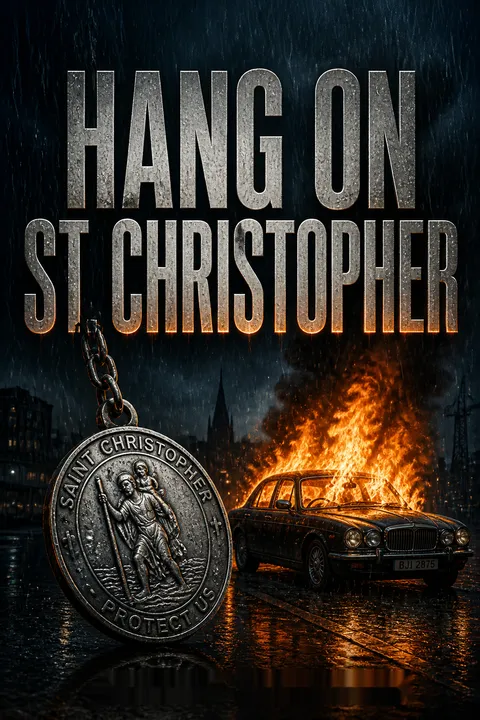
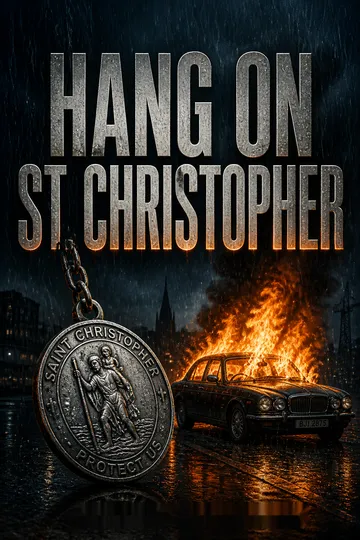
Hang on St. Christopher, the eighth Sean Duffy novel, receives mostly high praise (4.42/5 stars). Set in 1992 Belfast during the Troubles, part-timer Detective Inspector Duffy investigates what appears to be a carjacking but uncovers an IRA assassin's murder involving CIA, MI5, and Special Branch operations. Readers praise McKinty's dark humor, Gerard Doyle's audiobook narration, and the vivid atmospheric setting. Duffy's character—impulsive, tenacious, and culturally literate—resonates strongly. Some note McKinty's altered writing style with staccato sentences. Most consider it a strong return to form, though a few find it weaker than earlier installments.
People Also Read


Characters
Sean Duffy
Restless RUC detectiveA Catholic detective inspector serving only part time, Duffy divides his life between dangerous Northern Ireland and a quieter home in Scotland with Beth and their daughter, Emma. He is observant, funny, widely read, musically obsessive, and far less emotionally composed than his verbal wit suggests. He distrusts authority but still wants the authority to act, and he is drawn to cases partly because danger restores a sense of purpose he cannot find in retirement. His loyalties are real, though not always expressed wisely. Duffy's central tension is between care for his family and the conviction that looking away from violence would make him complicit.
John McCrabban
Duffy's steadfast partnerKnown as Crabbie, McCrabban is a reserved Presbyterian sergeant who shares Duffy's part-time status and his experience of Northern Ireland policing. He farms when he is away from the station, values duty, and rarely wastes words. His dry humor and practical intelligence often make him Duffy's quiet counterweight: he notices risk, respects procedure, and will still follow his partner into danger. McCrabban's loyalty is not passive agreement. He can challenge Duffy sharply when recklessness threatens their work or their friendship, because his care is expressed through honesty rather than reassurance.
Beth
Duffy's anchor at homeBeth is Duffy's partner and Emma's mother, living with their daughter in Scotland while Duffy crosses to Northern Ireland for his monthly police shifts. She understands that detective work gives him purpose, but she also sees the strain and danger he tries to keep from her. Her warmth is paired with clear judgment: she can support his choices without mistaking his appetite for risk as proof that he is well. Beth represents a domestic life Duffy genuinely loves, not merely an escape from the Troubles.
Emma
Duffy's young daughterEmma is Duffy and Beth's young daughter. Her jokes, breakfast rituals, and ordinary needs give Duffy a vivid reason to return home and a responsibility he cannot reduce to professional duty. She is not an abstract symbol of innocence to him; she is a child whose presence changes the consequences of every risk he takes.
Alex Lawson
Carrick's rising detectiveLawson is the full-time head of Carrickfergus CID and a younger officer with a strong command of current investigative practice. He is conscientious and capable, but his advancement unsettles Duffy, who sees the newer methods as a judgment on his own fading career. Lawson's professionalism does not make him cold; under pressure he makes quick decisions and takes responsibility for colleagues. His relationship with Duffy mixes respect, rank, and the awkwardness of succeeding a detective who is not ready to feel superseded.
Brendan O'Roarke
Hardline IRA organizerO'Roarke is a powerful Republican figure based in Dundalk, a building contractor whose political influence extends far beyond his business. He is feared, strategically minded, and committed to a version of Irish liberation that leaves little room for compromise. His public manner can turn from genial to threatening without warning, and he treats loyalty as a test that others must continually pass. Duffy sees in him a man whose ideological certainty has hardened into a personal way of life, though the private grief and history beneath that certainty are not easily visible.
Quentin Townes
Solitary painter and renterTownes is a polite, private man who rents an elegant house near Carrickfergus Lough and presents himself as a painter of portraits and local landscapes. He keeps no obvious family circle and pays his expenses in cash, details his neighbors interpret as eccentric rather than alarming. His modest canvases sit uneasily beside expensive clothes, a Jaguar, foreign currency, and valuable prints. The gap between the life he displays and the one suggested by his possessions makes him the central mystery of Duffy's investigation.
Alan Locke
Soldier with a hidden pastLocke is the name attached to a former British paratrooper whose service included combat and sniper training. His official record is interrupted by years of unexplained absence, arrests, and suspected political activity. He is connected to the identity Townes uses in Carrickfergus, but the people around him see only fragments: an isolated renter, an artist, a man with weapons and a carefully controlled life. His history makes him difficult to classify as either a conventional soldier or a straightforward criminal.
Eileen Cavanagh
Secretive Republican operativeCavanagh is a woman with a reputation in Special Branch files for involvement in serious Republican violence. She has learned to live under an assumed identity and to keep her private world difficult to penetrate. Duffy encounters her through the evidence surrounding a violent crime scene, where her training and guarded way of life become central to understanding the wider threat.
Killian
Streetwise Traveller informantKillian is a young Traveller with a long history of theft, a sharp eye for people and horses, and a shrewd sense of what information is worth. He bargains hard and mistrusts police, yet he follows his own code about what he will exploit. His knowledge of informal networks and his ability to remember faces give Duffy leads that conventional records cannot supply.
Jill Dumont
Special Branch intelligence chiefDumont is Duffy's former colleague, now a senior Special Branch officer with responsibility for intelligence and strategy. Ambitious and disciplined, she knows the agency's systems and the political price of disclosing sensitive information. Her history with Duffy gives their exchanges a personal edge, but she is careful not to confuse old debts with present obligations. She offers him expertise while warning him that his instincts can carry him beyond his capacity to control events.
Anthony Clare
Special Branch commanderClare is a polished Special Branch superintendent who takes charge when the investigation touches national security. He is orderly, self-assured, and more comfortable with formal procedure than Duffy is. Clare's position gives him access to evidence and authority that Carrick CID lacks, but his confidence can shade into defensiveness. He represents the professional institution Duffy needs and distrusts at the same time.
Thomas O'Neill
Dundalk Garda liaisonO'Neill is a Garda inspector who coordinates with the RUC across the border. Friendly but pragmatic, he understands the political sensitivities around Dundalk and its IRA connections. He helps Duffy pursue records and access that Northern police cannot simply demand, while remaining wary of overstepping legal boundaries. His cooperation is an important bridge between two forces that share information unevenly.
Archie Simmons
Cunning art dealerSimmons is an elderly dealer and art forger whose expertise is matched by opportunism. He knows how to authenticate prints and trace their commercial history, but he also sees every police request as a chance to negotiate protection or money. Duffy uses his knowledge while understanding that the bargain is never purely charitable.
The American traveler
Elusive foreign visitorThe traveler appears in a series of airport records and borrowed names, moving quietly through Ireland, Scotland, and Iceland. He is disciplined, self-contained, and practiced at avoiding attention, yet ordinary encounters leave traces that Duffy can follow. His careful routines suggest a life arranged around secrecy. He remains a distant figure in the early investigation, defined by the routes he takes and the identities he leaves behind.
Plot Devices
The staged crime scenes
False stories at the sceneThe killer disguises the deaths of two covert operatives as unrelated crimes: a carjacking and a burglary. Duffy and McCrabban identify discrepancies between the apparent stories and the physical evidence, including removed shell casings, the position of the victim, and a knife placed in a dead woman's hand. The scenes do more than conceal the killer's identity. They buy time and keep the investigation from immediately connecting the victims to the same political network.
The Picasso aquatints
Art becomes an identity trailTwo signed Picasso prints distinguish Townes's quiet, low-income public persona from the wealth suggested by his possessions. Their provenance leads Duffy through Archie Simmons, an auction ledger, and the name Alan Locke. Later, the prints become a test of Duffy's distrust of Special Branch: he arranges for convincing copies to be transferred in place of the originals and keeps the genuine works. Their beauty, monetary value, and questionable custody make the art both evidence and a measure of Duffy's private defiance.
The telephone bug
The watcher is watchedA sophisticated transmitter hidden in Duffy's telephone confirms that someone has entered his house to monitor his conversations. Jill Dumont identifies the device as equipment associated with American intelligence, but neither she nor Duffy can establish who placed it or what the listener wants. Duffy leaves it in place and tries to turn the surveillance into an advantage by feeding a false meeting location through the line. The bug makes the investigation feel unstable: every call may be evidence, bait, or a leak.
The Norton Commando
A motorcycle links the murdersA heavy motorcycle's tire mark near the burned Jaguar points the detectives toward a Norton Commando. The bike is common enough to frustrate an immediate search, but Killian notices its rider near Locke's caravan and later recognizes him at Belfast Airport. The machine becomes the one physical thread connecting the initial murder, the weapons cache, and the elusive traveler. Its conspicuousness is also a clue to the killer's confidence, since he continues using it after police begin looking for it.
The kill list
A hidden list exposes a plotA sheet naming prominent Republicans and giving their addresses is hidden inside a toaster at Locke's caravan. The placement suggests that Locke was not merely hiding weapons but waiting for a larger operation to begin. Once Special Branch sees the document, it takes control of the case, sharply reducing Duffy's independence. The list also changes the danger from a murder inquiry into a possible purge within the IRA, although its meaning remains uncertain until Duffy confronts the American operative.
Detective Sean Duffy Series

Download PDF
Download EPUB
.epub digital book format is ideal for reading ebooks on phones, tablets, and e-readers.








