


Plot Summary
The Ship of Death
On a wet November night in 1985, Inspector Sean Duffy joins a multinational operation waiting for the Our Lady of Knock, a ship bringing American gunrunners toward the Derry coast. He has contributed a tip, but senior officers ignore his advice to make a clear, controlled arrest. Their premature approach sends the armed Americans running for the surf, and gunfire erupts between them and the police.
A Zodiac overturns, ammunition explodes, and the beach becomes a scene of confusion and injury. Duffy leaves before the operation is over, unwilling to watch a preventable fiasco continue. His contempt for the RUC's tangled command structures is already familiar; tonight gives it fresh evidence.
Cocaine at the Brothel
Back in Carrickfergus, Duffy is summoned to the Eagle's Nest, an illegal high-end brothel, where his new boss, Chief Inspector McArthur, has stumbled into a celebrity assault case. Actor David Dwyer has attacked a sex worker after she refused cocaine. Duffy uses the threat of prosecution to force an apology and compensation, then lets Dwyer leave with a caution rather than invite scrutiny from powerful people.
At the station, Duffy weighs the seized cocaine, records only part of it, and hides the rest in his shed. Exhausted and wired on drink, he finally lies down, only to be called back into duty at dawn. His private corruption now shadows the investigation he is about to enter.
Two Chairs, Three Shots
Detective Sergeant Dan McCrabban calls Duffy to a fortified house in Whitehead, where bookmaker Ray Kelly and his wife have been shot dead at close range. The couple sit facing the television, with no sign of forced entry; their licensed nine-millimeter pistol is missing. Their twenty-two-year-old son, Michael, has disappeared with his Mercedes.
The housekeeper reports bitter arguments between father and son, making Michael an obvious suspect, but Duffy sees clean, precisely placed wounds and wonders whether a furious young man would have killed so efficiently. A quarrel with Larne RUC over jurisdiction gives McCrabban the lead on the case. Duffy steps back, while advising him to track Michael and investigate the family's enemies.
The Cliff's Convenient Ending
At a church singles event, Duffy meets Belfast Telegraph reporter Sara Prentice just as McCrabban reports that Michael's car has been found near Blackhead cliff. Michael's body has been recovered from the rocks below, and a short note in his car appears to confirm suicide.
Sara persuades Duffy to take her to the scene, where he studies the note beside Michael's Oxford philosophy notebook. The handwriting seems similar, but Duffy cannot forget the missing murder weapon, the professional-looking shots, or the son's unexplained departure from university shortly before graduation.
He asks McCrabban to examine Michael's friends and reasons for quitting Oxford. Sara publishes the apparent murder-suicide, then shares dinner with Duffy, beginning a relationship built around danger and mutual curiosity.
A Girlfriend Holds Back
McCrabban brings Michael's new girlfriend, barmaid Sylvie McNichol, in for questioning, and Duffy watches the inexperienced detectives handle the interview. Sylvie says she barely knew Michael, never heard from him on the night his parents died, and accepted the public belief that he had snapped.
Duffy catches a flicker of hesitation when he asks whether she truly thinks Michael killed them, but her father's murder as a suspected informer gives her reason to distrust the police.
Meanwhile, the investigation appears to be closing: the parents' business has no obvious enemies, and Michael's relatives in Australia have alibis. Duffy urges McCrabban not to close the file too soon. He cannot yet identify what Sylvie is withholding, only that the neat answer leaves something unsaid.
The Agreement Ignites
Sara learns that Thatcher and the Irish government are about to announce the Anglo-Irish Agreement, a plan for cross-border consultation and a possible Northern Irish assembly. Unionists read it as a betrayal, and the announcement brings demonstrations, strikes, attacks on police, and days of riots.
Operation Black pulls Duffy, McCrabban, and their new detectives, Helen Fletcher and Alexander Lawson, away from homicide work. During a diversion in the Ardoyne, an RPG strikes their Land Rover, concussing Duffy and Fletcher.
Fletcher decides to resign after the attack, choosing marriage and children over a job that has already put her in danger. The crisis exposes how little room Duffy has to investigate ordinary crimes when the political conflict threatens to consume the whole force.
Kate's Exit Offer
On a rare day off, Duffy receives Kate Albright, his MI5 contact, and her colleague Kendrick. They offer him a post as an agent handler, arguing that the RUC has quietly blocked his advancement while the Security Service values his judgment and local knowledge.
Kate explains that informers have penetrated the IRA deeply, though the work may involve tolerating crimes to protect sources and strategy. Duffy recoils from the moral compromises, even as the salary, intellectual freedom, and chance to influence events appeal to him.
Kate also warns that his drinking and drug use are becoming visible. Their attraction complicates the offer, while Sara's growing workload and Duffy's unease strain their new relationship. He agrees to consider the job, not yet ready to leave policing.
Death in Sylvie's Garage
A week after Sylvie's interview, McCrabban finds her dead in a car in her garage, apparently having used exhaust fumes to kill herself. A note claims she could not live without Michael.
Lawson notices that Sylvie carefully blocked the driver's window with a jumper but left the broken passenger window open, a detail inconsistent with a deliberate attempt to seal the car. At autopsy, the medical examiner finds cotton wool in her throat containing chloroform, suggesting someone subdued her before staging the death.
The evidence later becomes uncertain when the lab questions whether contamination explains the result, leaving the case vulnerable again. Lawson supplies a stronger lead: Michael left Oxford after Anastasia Coleman, a minister's daughter, died from an overdose at an exclusive student party.
The Oxford Third Man
Duffy and Lawson travel to Oxford and find Thames Valley Police reluctant to reopen Anastasia Coleman's overdose case. Count Gottfried Habsburg, who hosted the party, finally explains that a third man was present when Anastasia died and that Oxford police already knew his identity.
He names Alan Osbourne, a Conservative Central Office researcher whose family is politically connected. Osbourne confirms he was there, but denies involvement in Anastasia's death or Michael's later murder.
He also reveals that Michael was an accomplished organizer of the Antiquarian Gun Club, a fashionable society whose members included future defense and government figures. Through the club, Michael bought and sold weapons and arranged visits to a military firing range. Osbourne recalls Michael's Belfast friend Nigel, who had links to Shorts, the missile manufacturer.
Vardon and the Missiles
Back in Northern Ireland, Sylvie's flatmate Deirdre Ferris says she saw a tall man near their home on the night Sylvie died, though she cannot identify him. She names Michael's friend as Nigel Vardon, a recently dismissed Shorts employee responsible for plant security.
Duffy, McCrabban, and Lawson find Vardon defensive and short of money, but he denies knowing about the murders or missing weapons. Special Branch officers interrupt the inquiry, angry that Duffy has approached their missile-theft suspect.
They explain that six Javelin systems have disappeared from Shorts, and that Vardon's former colleague Tommy Moony, a powerful union official with a violent Loyalist past, may have had the access to move them. The murder inquiry and the weapons case now overlap, but neither Vardon nor Moony offers a confession.
The American Has No Name
A call from Vardon leads Duffy to John Connolly, an American staying at the US consul's residence who claims to be on classified government business. Duffy arrests him after discovering that his Irish passport and name are fabricated, but Connolly refuses to answer questions about the Kelly murders or his connection to Vardon.
The Assistant Chief Constable orders Duffy to release him, and Connolly leaves after threatening consequences. Kate investigates and tells Duffy that the operation reaches the White House, beyond even MI5's knowledge.
Soon afterward, armed Americans abduct Duffy, beat him in the countryside, and warn him to stop investigating institutions more powerful than himself. The warning makes his danger unmistakable, but also confirms that the deaths and stolen missiles touch a secret international scheme.
The December Seventh Deal
After recovering from the beating, Duffy visits Vardon in his burned-out home with cash and cocaine, hoping to buy his cooperation. Vardon confirms that Michael arranged a deal with foreign buyers for Javelin systems, while Vardon supplied access and Moony's men handled the theft. When the Shorts inventory exposed the missing weapons, Moony demanded a larger share.
Michael refused, and Moony's threat escalated into the killings of Michael's parents, Michael, and Sylvie. Vardon has no proof, but he knows the missiles are due to leave Northern Ireland on December 7. He refuses to testify or wear a wire, fearing Moony will find him, and accepts Duffy's money and drugs in exchange for passing the shipment date to the Confidential Telephone.
Portmuck Under Fire
On December 7, Duffy's small team watches an associate of Moony drive a van north while Special Branch waits for Moony at home. Duffy follows despite their hesitation, tracing the van to the isolated harbor at Portmuck.
There, Moony and armed Loyalists unload crates as a black helicopter approaches from the sea. A soldier is spotted, and gunfire and grenades tear apart the wall sheltering Duffy's team. Duffy orders them to return fire. A UDR soldier kills Moony, another gunman dies charging the police, and the last crashes the van while trying to escape.
The helicopter disappears before the exchange is complete. The crates hold the stolen Javelins, but Moony is dead, leaving Duffy without the confession that could prove who ordered the murders.
The Helicopter He Missed
The recovered missiles do not bring a prosecution for the Kelly murders, and the case goes onto the cold file shelf. Soon afterward, Duffy intervenes in a domestic assault on his street; the abuser knocks him down the stairs, breaking his arm and ankle. While he recovers, Kate renews the MI5 offer, and Duffy agrees to be vetted and prepare his resignation from the RUC.
His injuries prevent him from joining her intelligence conference by helicopter. The Chinook crashes on the Mull of Kintyre, killing Kate, Kendrick, and the senior intelligence officers aboard. Duffy loses both the woman who recruited him and the chance to leave on his own terms. The RUC case ends unresolved, while the institution he nearly joined is devastated.
Epilogue
A year and a half later, Duffy recognizes Connolly on television during a Senate inquiry into the Iran-Contra affair. The man is actually Lieutenant Colonel Colin Wilson, a Marine seconded to the White House, who had tried to acquire missiles through Irish contacts.
Duffy understands why the American operation was protected, but he and McCrabban decide not to reopen the Kelly murders. He has learned that knowing the explanation does not guarantee justice, and that some truths arrive only after the people who could have acted on them are gone.
The revelation recasts the local murders as collateral damage in a national security scheme. Wilson was neither an omnipotent mastermind nor a conventional criminal, but a government operator whose access allowed him to move through Ireland while ordinary police were ordered aside. That distinction matters: the conspiracy's force comes from institutional protection, not flawless planning. Duffy's decision not to reopen the case is neither simple surrender nor forgiveness. The evidence is incomplete, the principal actors are dead or beyond reach, and the truth cannot restore the victims. His restraint marks a change from the younger detective who believed persistence could force institutions to answer.
Analysis
The novel's central tension is not simply between police and criminals, but between kinds of knowledge. Duffy can read a crime scene, detect hesitation, and recognize when a suicide story is too convenient. Yet the evidence that would convert insight into justice is repeatedly withheld, contaminated, buried, or made politically untouchable. His failure to secure a prosecution is therefore not a failure to understand what happened. It is the consequence of a system in which proof and power do not travel together.
That divide appears at every scale. Michael's Oxford circle protects a name through status and institutional discretion. Moony's authority rests on the factory floor, union membership, and a history of violence. Connolly's access comes from the American state, which can overrule local police without explaining itself. The novel refuses to make these forces equally culpable, but it shows how each can render ordinary accountability ineffective. Even Duffy's own compromises, including stealing cocaine from evidence and bending procedure for a celebrity, echo the habits he condemns: he also believes that circumstances sometimes justify exceptions.
The personal plot sharpens this contradiction. Sara offers connection within the life Duffy already has; Kate offers a way to become more influential by accepting a more strategic and morally compromised form of policing. Neither relationship supplies an uncomplicated refuge. Duffy's career choice is overtaken by accident, and the helicopter crash makes the machinery of state power suddenly intimate: a collection of officers and analysts can disappear in one moment, leaving the work unfinished.
The closing revelations deepen rather than repair that unfinishedness. Knowing that Connolly served a White House operation explains the protection around him, but does not resurrect the dead or create admissible evidence against their killers. Duffy's decision to leave the files closed is a sober recognition that truth is not the same as justice. The book asks what a conscientious investigator owes the dead when every available route to accountability has been blocked, and answers without consolation: sometimes he can only remember accurately, refuse a false ending, and survive the knowledge.
Review Summary
Gun Street Girl is the fourth book in Adrian McKinty's Sean Duffy series, set in 1985 Northern Ireland during the Troubles. Readers praise the atmospheric setting, dark humor, and complex plot involving murders, conspiracies, and historical events. Duffy, a Catholic detective in the Protestant-dominated police force, investigates while navigating political tensions and personal vices. Many consider it the best in the series so far, appreciating McKinty's writing style, character development, and incorporation of real historical elements. The audiobook narration by Gerard Doyle also receives high praise.
People Also Read

Characters
Sean Duffy
The compromised inspectorA Catholic detective inspector in the overwhelmingly Protestant RUC, Duffy works in Carrickfergus while carrying the habits of a man who expects a bomb beneath his car. He is perceptive, funny, combative, and often more honest about other people's motives than his own. His appetite for whiskey, cocaine, and cigarettes sits beside a stubborn professional conscience, so his moral failures are not separate from his investigative skill. He distrusts institutions yet wants to believe his work can restrain violence. Sara's attention and Kate's recruitment offer expose his longing for intimacy and significance, while his colleagues' loyalty gives him reasons to stay. Duffy's central tension is between personal agency and the compromises required to work inside systems he cannot control.
Dan McCrabban
The steady sergeantMcCrabban is Duffy's dour, conscientious detective sergeant, a Free Presbyterian whose caution is often mistaken for lack of imagination. He values procedure, family, and fairness, and he takes the Kelly investigation seriously even when Duffy warns that its apparent solution is too neat. His friendship with Duffy crosses the sectarian divide without pretending that the divide has vanished. McCrabban's seriousness steadies Duffy's improvisation, while Duffy's experience helps him lead beyond the limits of his own certainty. His approaching fatherhood gives the violence around them a personal measure: the future he hopes to build is constantly exposed to the same disorder they police.
Alexander Lawson
The observant new detectiveLawson is a young, intelligent detective constable with strong academic instincts and a habit of asking what does not fit. His education and quickness can make him seem overconfident, but he earns Duffy's respect by noticing the flaw in Sylvie's supposed suicide and by tracing Michael's departure from Oxford to Anastasia Coleman's death. He is still learning the difference between a persuasive theory and evidence that can survive scrutiny. Duffy alternately needles and mentors him, recognizing the promise he once might have had himself. Lawson's presence makes generational change tangible: he represents a more methodical police service, though one no less vulnerable to intimidation and institutional failure.
Kate Albright
The MI5 recruiterKate is an MI5 officer who knows Duffy's history, weaknesses, and professional abilities well enough to make a persuasive offer. She thinks strategically, valuing informers and long-term intelligence networks over the visible arrests that preoccupy police detectives. Her attraction to Duffy is real, but it does not erase her institutional discipline or her belief that he belongs inside the Security Service. She offers him a future with greater influence while asking him to accept morally compromised methods. Kate's confidence can look like intimacy because she understands him, yet her understanding is also a form of recruitment. She embodies the uneasy merger of personal allegiance and state interest.
Sara Prentice
The ambitious reporterSara is a Belfast Telegraph reporter who meets Duffy at a church singles event and recognizes that proximity to a detective can open doors to stories. She is attractive, quick-witted, and ambitious, but not reducible to her professional appetite: she listens closely to Duffy and tries to imagine a life with him amid the city's danger. Her work intensifies as the Anglo-Irish Agreement provokes unrest, and the demands of reporting compete with the fragile relationship. Sara's curiosity mirrors Duffy's investigative impulse, though she must turn events into public narrative while he works inside the police. Their connection exposes how difficult it is to separate affection from the uses each person makes of the other.
Michael Kelly
The missing Oxford dropoutMichael is the twenty-two-year-old son of wealthy bookmaker Ray Kelly. After leaving Oxford without completing his degree, he returns to a home marked by arguments about his future and his father's expectations. He is remembered as charming, socially connected, and more capable than his academic record suggests. At Oxford he moves among exclusive clubs and develops a serious interest in firearms, using social ease and practical knowledge to build networks that reach beyond university life. His motives remain difficult to read because the people around him know different versions of him: dutiful son, waster, loyal friend, and aspiring operator. The gap between those reputations drives the mystery.
Sylvie McNichol
The wary barmaidSylvie is a young Whitehead barmaid who dates Michael briefly and keeps her private life guarded. She presents herself as hard-edged and irreverent, but her father's killing as a suspected informer has given her a reason to treat police questions as dangerous rather than helpful. Her knowledge of Michael is partial, shaped by a short relationship and by the neighborhood's appetite for rumor. Duffy senses that she is withholding something, but her reticence cannot be separated from the history of violence surrounding her family. Sylvie's role shows how silence can be both self-protection and an obstacle to justice in a community where cooperation with police carries its own risks.
Nigel Vardon
The frightened insiderVardon is a former Shorts security manager and an old friend of Michael's, now unemployed and living in the countryside with guard dogs. He is handsome, defensive, and accustomed to explaining his troubles as other people's failures. His knowledge of factory security and his association with Michael make him relevant to both the murder inquiry and the missing missiles. Yet he lacks the nerve to trust the police or to risk a formal statement. Fear, self-interest, and resentment compete in him, making his cooperation conditional. Vardon is a portrait of a compromised intermediary: not the most powerful person in the scheme, but someone whose limited access makes him valuable and whose vulnerability leaves him exposed.
Tommy Moony
The union power brokerMoony is the shop steward who commands loyalty at Shorts and whose authority extends beyond the factory floor. A former Loyalist militant with a family steeped in paramilitary history, he presents himself as a religiously transformed family man. He is articulate about workers' rights and the industrial decline of Belfast, and his arguments can sound more persuasive than the police's suspicions. That combination makes him difficult to read: his political past, labor power, and public piety coexist without neatly explaining one another. Moony represents the way local authority can be built from several sources at once, including union organization, community ties, and a reputation for violence.
John Connolly
The guarded AmericanConnolly appears in Belfast as a fit, self-assured American with diplomatic access and a claimed government mission. He speaks in the language of classified work and uses legal bluster to deter police questioning. His presence unsettles the usual hierarchy: local officers can investigate him, but powerful institutions can quickly shut that investigation down. Connolly's refusal to explain himself makes him less a conventional suspect than a visible boundary around what the state permits Duffy to know. He embodies the danger of a seemingly ordinary official whose authority is protected by distance, secrecy, and the assumption that local law should yield.
Gottfried Habsburg
The Oxford scapegoatHabsburg is a German student from an aristocratic family whose Oxford home becomes the setting for Anastasia Coleman's fatal overdose. The press makes him an easy target because of his wealth, sexuality, and eccentric reputation, while Michael's decision to stay and help him suggests a more generous side to the younger man. Habsburg is courteous and conscious of honor, even when loyalty has left his own reputation damaged. His willingness to explain what Oxford police concealed gives Duffy a crucial opening into the past. He also illustrates how class privilege can both expose a person to public spectacle and protect someone else from it.
Deirdre Ferris
The reluctant witnessDeirdre, Sylvie's flatmate and fellow barmaid, is sharp enough to understand how little the police can guarantee and practical enough to bargain for safety. She offers an account of a man near the house on the night Sylvie died only when facing a serious assault charge of her own. Her terms reveal a survival calculus shaped by Belfast's distrust and violence, not a simple desire to help. Deirdre can be unreliable in detail, and the investigators cannot turn her sighting into a firm identification. Her testimony nevertheless gives the case a direction and demonstrates how fragile witness cooperation becomes when protection is difficult to keep secret.
Helen Fletcher
The new CID officerFletcher is one of Carrickfergus CID's new detectives, a young officer who initially follows procedure quietly and earns McCrabban's confidence. Her early reserve contrasts with Lawson's eager theorizing, though she is capable of asking pointed questions in the Kelly inquiry. The police work exposes her to physical danger almost immediately, forcing her to weigh the career she wanted against the personal future she and her fiancé imagine. Fletcher's presence adds pressure to Duffy's mentorship: protecting recruits means confronting the cost of asking them to serve in a conflict that can injure them before their careers begin.
Peter McArthur
The anxious station chiefMcArthur is Carrickfergus RUC's young chief inspector, a polished career officer who wants to rise through the ranks without inviting avoidable scandal. He is out of his depth during the brothel incident and relies on Duffy to manage it, then later worries about how political unrest and staff departures will look to senior command. His instincts favor caution and institutional reputation, while Duffy's favor blunt action. McArthur is not simply incompetent; he reflects a bureaucratic culture in which managing appearances can become as urgent as solving the underlying problem.
Alan Osbourne
The protected Oxford insiderOsbourne is a former Oxford student who now works as a Conservative Central Office researcher. He is socially confident and politically well connected, but his composure falters when Duffy and Lawson question him about Anastasia Coleman's death. He confirms his presence at the party while insisting that he has little useful knowledge of Michael's murder. His account opens a window onto the elite clubs and professional networks that helped Michael build a life beyond university. Osbourne's position makes him a useful witness and a reminder that access to institutions can shape which names become public and which remain protected.
David Dwyer
The volatile actorDwyer is a famous American actor whose money and status complicate a police response after he assaults a sex worker at the Eagle's Nest. He reacts to refusal with entitlement and aggression, then relies on his assistant to negotiate his way out of prosecution. The encounter reveals how readily Duffy can bend procedure when influence is involved, and how celebrity can function as a kind of local immunity.
Bobby Cameron
The neighborhood commanderCameron is a local Loyalist paramilitary commander who runs protection rackets and enjoys the authority that comes from solving problems the police cannot. Duffy treats him as both a threat and a familiar neighbor, bargaining with him over intimidation in the estate. Cameron is shrewd, theatrical, and attentive to the limits of violence when those limits serve his control. Their uneasy exchanges show how paramilitary power can coexist with ordinary neighborhood life.
Colin McNichol
Sylvie's murdered fatherSylvie's father was killed in 1974 after being suspected of informing for the police. Though he appears only through her memories and the old case file, his death explains why Sylvie treats police attention with caution. His unresolved murder carries the Troubles into the younger generation's choices.
Plot Devices
The apparent suicides
False closureMichael's fall from Blackhead appears to confirm a murder-suicide, while Sylvie's death in her car initially resembles an act of grief. The notes and circumstances offer investigators a tidy conclusion, but details keep resisting it: Michael's missing gun, his cleanly executed parents' murder, Sylvie's unsealed car window, and the disputed trace of chloroform. The paired deaths test how readily police accept a plausible story when evidence is incomplete and the pressure to close a case is high. The uncertainty also has practical consequences, since the case remains difficult to prosecute even after the larger conspiracy comes into view.
The Confidential Telephone
Anonymous intelligenceThe Confidential Telephone gives members of the public a way to pass information to police without identifying themselves. It is used to publicize Deirdre's description of a suspicious man and later to relay Vardon's warning about the planned shipment of missiles. Its usefulness depends on people trusting a system that the community has strong reasons to distrust. It can generate leads, but cannot guarantee that a source is accurate or willing to testify. In the novel, it becomes a narrow channel between paramilitary silence and police action, and ultimately helps direct Special Branch toward the shipment without securing courtroom proof of the murders.
The missing Javelins
A weapons trailSix Javelin missile systems vanish from Shorts, linking factory security, union power, international arms buyers, and the Kelly murders. The weapons matter not only for their destructive force but for the technical knowledge they contain: buyers can reverse-engineer the systems. Their disappearance gives Duffy's homicide inquiry access to a larger political and intelligence struggle, while forcing him to cooperate with Special Branch, which treats the case as its own. The planned shipment creates the deadline for the climax, but the recovered weapons do not solve the central evidentiary problem of who ordered Michael's and Sylvie's deaths.
The Oxford third man
A buried connectionAnastasia Coleman's overdose seems like a separate Oxford tragedy until Lawson discovers Michael's presence at the party. The unnamed third man becomes a point of pressure: Habsburg says police knew his identity, while the coroner's questioning kept it from the public. Duffy and Lawson follow the connection to Alan Osbourne and then to Michael's gun-club network. The device expands the investigation from a local family crime into a story about privilege and access, but it does not yield a simple motive. Instead, it shows how a name can be hidden through institutional choices without requiring a grand, perfectly coordinated conspiracy.
The Anglo-Irish Agreement
Political pressureThe Agreement announces a new form of cooperation between the British and Irish governments and immediately intensifies Unionist anger. Its arrival shifts police resources into Operation Black, putting Duffy's homicide work on hold and exposing the RUC to attacks from multiple directions. The agreement does not cause the Kelly murders, but it changes the conditions under which Duffy investigates them: fewer officers, more public hostility, and greater dependence on Special Branch. It also gives the novel's local crime story a political clock, showing how a single policy announcement can alter daily policing before its long-term effects are known.
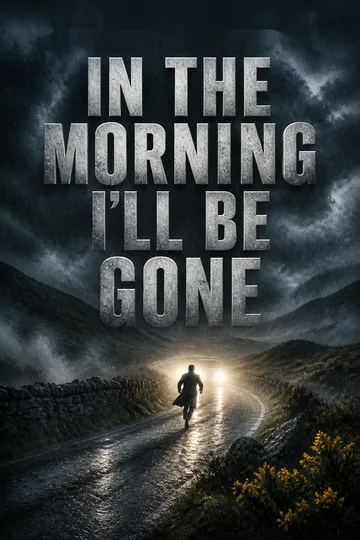
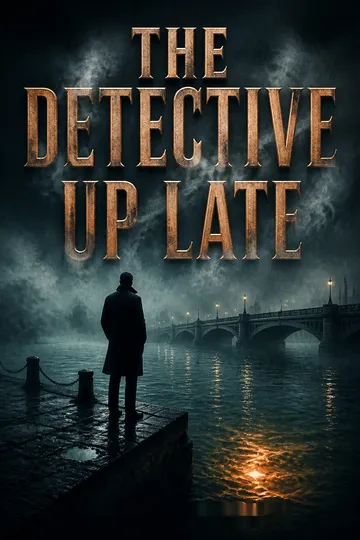
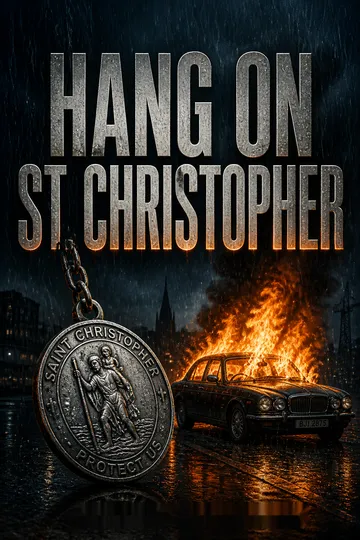
Detective Sean Duffy Series

About the Author



Download PDF
Download EPUB
.epub digital book format is ideal for reading ebooks on phones, tablets, and e-readers.








