

Plot Summary
Prologue
In Belfast, nineteen-year-old Michael Forsythe helps replace windows shattered by a bomb at the Europa Hotel. A newspaper photograph of the repair crew catches him working while claiming unemployment benefits.
The resulting fraud conviction cuts off his support, leaving him dependent on his grandmother Nan and with no steady work. His cousin points him toward a job in New York with Darkey White, an Irish-American racketeer. Michael does not want to go, but poverty makes the choice for him.
The first job is both ordinary and politically charged: Michael earns a few pounds repairing a city damaged by violence, then loses his benefits because the evidence of his labor becomes public. The photograph turns work into incrimination, while the bomb’s aftermath shows how destruction can briefly create wages for the unemployed. Michael’s departure is therefore not a dream of America so much as an economic shove. His practical intelligence has not yet become freedom; it is a resource he must sell to someone more powerful.
Belfast Sends Him West
At nineteen, Michael has already tried a Belfast street gang and the British Army, then walked away from both. He lives with Nan, reads constantly, and expects little from the future. When the benefits office prosecutes him for working on the Europa Hotel repairs while claiming unemployment support, he pleads guilty and loses his only income.
Nan cannot support him on her pension. His cousin arranges a passage to New York and a job with Darkey White, an Irish-American racketeer. Michael dislikes the plan and distrusts the man he will work for, but he has no money, no benefits, and no better offer. He leaves Belfast carrying old habits of violence into a city where they will become useful.
Michael’s move is not framed as a bold immigrant’s pursuit of reinvention. It is a constrained decision made after welfare enforcement closes off even precarious survival. His history already contains two failed institutions, the gang and the army, but his capacity to observe and adapt remains intact. New York offers work only by converting those capacities into violence. The prologue’s accidental photograph foreshadows a life in which visibility can be dangerous, while the journey west begins with the same problem that will follow him: he needs income, but the available employers demand more than labor.
Shovel Pays for Andy
Michael works for Darkey alongside Scotchy Finn, Fergal, and Andy, a fellow Irishman who has been beaten unconscious. Scotchy decides that Shovel, a local racketeer, is responsible and takes Michael and Fergal to Shovel’s apartment without waiting for Darkey’s approval. They force their way inside and knock Shovel’s wife down.
Scotchy beats Shovel while demanding an explanation; Shovel insists he is innocent. Michael holds him still and then shoots him repeatedly in the limbs, following Scotchy’s instruction to leave him alive but crippled. The violence horrifies Michael, yet he masks his revulsion with a performance of calm. He returns to the bar with blood on his clothes, having crossed a line he cannot pretend he did not see.
Michael’s first major act for Darkey is also an act of obedience to Scotchy’s unverified story. The group treats suspicion as proof, and retaliation as a way to restore standing. Michael’s composure is partly tactical: by appearing less shaken than the others, he gains influence within the crew. But his inner recoil shows that the performance has not yet become conviction. The scene establishes a crucial split in him: he can carry out brutality with precision while continuing to judge it. That division will let him function in criminal life, but it also gives him a growing supply of memories he cannot easily file away.
Bridget's Dangerous Orbit
Darkey celebrates the attack by dragging the exhausted crew through Manhattan clubs and bars. Michael meets Rachel Narkiss, an Israeli student, but Darkey insists he join the group for a late meal, and Michael never follows up.
He fights Scotchy after a taunt, then submits to a forced reconciliation when Sunshine intervenes. The next morning Bridget, Darkey’s young girlfriend, comes to Michael’s apartment; their attraction becomes an affair, though she continues to imagine a future with Darkey.
Soon after, Michael encounters Rebecca, Shovel’s wife, at the hospital. Instead of fleeing her anger, he comforts her, then spends the night with her. Michael’s tenderness and appetite coexist with his violence, but neither affair gives him a clear way out of Darkey’s circle.
The intimate entanglements are not a respite from criminal life; they deepen its danger. Bridget’s relationship with Darkey makes desire a breach of hierarchy, while Michael’s encounter with Rebecca grows from the very violence that injured her household. His erotic life repeatedly offers the fantasy of escape, but he rarely accepts the responsibilities that would make escape real. Rachel is lost to fatigue and obedience, Bridget remains attached to Darkey, and Rebecca offers a moment of mutual need rather than a stable future. Michael can imagine a different life more easily than he can choose one.
A Barroom Cease-Fire
Five days after the attack on Shovel, Darkey’s crew confronts Dermot Finoukin, a bar owner who owes money and is secretly producing crack cocaine. Dermot’s men open fire before the visitors can settle the dispute. Michael is hit in the hand by a ricochet, while Sunshine panics and Scotchy and Fergal are pinned down.
Michael persuades Dermot’s men that police are coming and negotiates a pause, then helps the others escape as the attackers flee. Dermot has been killed in the confusion, apparently by his own side. The crew steals a safe and reaches the Four Provinces before police arrive. Darkey rewards Michael, but Scotchy soon announces a supposedly restorative trip to Cancún, and Michael senses that the timing is wrong.
Michael’s instinct for language becomes a survival skill: while others rely on weapons or panic, he reads the opposition’s incentives and offers them a way to stop fighting. Yet his success cannot undo the dead man or the failed intelligence that put the crew there. The episode also shows how criminal organizations reward useful conduct without offering security. Darkey praises Michael, then the crew is sent abroad under the language of leisure. His foreboding registers a change in tone: this time the next assignment is not simply dangerous, it has been kept from him.
The Cancún Sting
In Cancún, Scotchy and Big Bob take the crew to a meeting in a half-built neighborhood. The men are given old pistols and told to stand by while money changes hands for packets of cocaine. Masked officers burst in, and the Mexican sellers draw weapons as the visitors are ordered down. Michael is struck and arrested with Scotchy, Fergal, and Andy.
Captain Martínez shows him a recording of the deal and forged confessions bearing the others’ names, offering a reduced sentence if Michael signs. Michael refuses and demands consular help. The guards instead load the four men into a van and deliver them to an isolated prison. Big Bob is absent, supposedly being handled separately because he is an American citizen.
The arrest converts the crew’s trust in its own chain of command into a trap. The staged paperwork gives the authorities an appearance of procedure while denying the prisoners any meaningful access to protection. Michael’s refusal to sign is less a confident legal strategy than a refusal to accept a script designed by people who control the room. Bob’s separate treatment becomes a troubling absence, but the others still hope that Darkey can reach them. Their predicament exposes the limits of belonging: they have served the organization, yet the organization is nowhere in the prison cell with them.
A Cell Without Doctors
The prison keeps Michael, Scotchy, Fergal, and Andy chained inside a filthy cell, with food arriving irregularly and no medical care. On their first exercise day, other prisoners attack them and steal their shoes. Andy, already hurt from his earlier beating, suffers severe injuries and dies in the cell while the guards ignore the men’s pleas.
Fergal files a crude pick from his belt buckle and eventually frees the leg and wrist restraints. When he tries to question an older prisoner about escape routes, another inmate stabs him in the chest. Scotchy and Michael are left with the pick and no reliable information. Fergal’s work has freed their bodies, but it has cost them the person who made escape seem possible.
The prison removes the ordinary supports that let people interpret suffering as temporary: there is no doctor, no appeal, and no reliable knowledge of how long confinement will last. Andy’s death makes neglect itself an active force, while Fergal’s ingenuity creates agency only to expose its limits. His fatal attempt to gather information is especially painful because it arises from practical caution, not recklessness. Michael and Scotchy are left with a tool but no teacher. The turn from cooperation to survival sharpens the novel’s central question: what does loyalty demand when every institution around the men has already abandoned them?
Razor Wire, One Survivor
After Fergal’s death, Scotchy teaches himself to open the restraints, and the two men break through the cell roof. They drop into what looks like grass, only to discover a swamp that nearly pulls them under. Scotchy shows Michael how to move on his back, and together they reach the outer fence. As they climb the razor wire, guards spot them and open fire.
Scotchy is shot and caught in the coils; Michael reaches the far side alone, badly cut and bleeding. A hurricane sweeps across the region, and he staggers through flooded jungle with fever, hunger, and hallucinations. When his strength fails, villagers find him near their pigs and carry him into a hut. His escape has saved him from prison, but not from the damage already done.
The escape is a victory measured in inches, not freedom. The swamp turns the prison’s landscape into an unmarked security system, and the wire makes survival depend on bodily pain. Scotchy’s death leaves Michael without the companion who had once supplied both direction and excuses. The hurricane then strips away the remaining social world, forcing him to continue through fever and hallucination. His rescue arrives through people outside the criminal networks that have governed his life. Survival here is neither triumph nor moral cleansing; it is an unfinished obligation carried by a body that will never be whole again.
The Village Surgeon
Pedro, María, and Jacinta nurse Michael in their village, while a doctor known as Príncipe decides that his infected, badly injured foot must be removed. Once he can travel, Príncipe arranges for him to be taken toward the United States, warning him that Mexican authorities have portrayed him as a murderer and rapist.
Michael passes through a fugitive camp, rides with truckers, and eventually crosses the border with other migrants. In Nevada, a sympathetic sheriff lends him bus fare after hearing his invented construction accident story.
Michael reaches New York with little money and one leg, then finds Ratko, who gives him shelter. He has survived prison and the jungle, but the kindness of strangers has not returned him to the person he was before Cancún.
The villagers’ care is practical, communal, and costly: they feed Michael, treat him, and accept the risk of helping a fugitive whose story they cannot verify. Príncipe’s amputation confronts Michael with survival stripped of romantic language. The long journey north depends on small acts of generosity from people who owe him nothing, sharply contrasting with the transactional loyalty of Darkey’s crew. Michael returns to New York not as a conquering avenger but as a dependent man learning to move again. The help he receives complicates his later insistence that violence is the only debt he can repay.
Ramón Offers a Place
Ratko tells Michael that Darkey’s people believe he died in Mexico and that Sunshine removed his belongings from his old Harlem apartment. Michael finds a way to obtain a prosthetic foot and practices until he can walk without drawing attention.
He takes a bar job at the Blue Moon, where Ramón Hernández, a Dominican crime boss, recognizes him from the Dermot shooting and offers him work. Ramón gives Michael an apartment, money, weapons, and a place in his organization, while carefully avoiding any direct explanation of his interest.
Michael suspects Ramón knows why he returned and wants help against Darkey. He accepts anyway. The new arrangement offers comfort and a route toward his old crew, but it also places him inside another criminal enterprise.
The prosthesis is both a tool of mobility and a disguise: it allows Michael to re-enter public life while making the injury legible only to him. His return is not a clean restoration, since every step depends on practice, pain, and concealment. Ramón’s offer similarly mixes care with calculation. The apartment and medical help make him seem generous, but his organization runs on the same coercive economy Michael has fled. Michael accepts not because he trusts Ramón, but because the offer aligns with his private aim. The act of rebuilding therefore becomes inseparable from preparing for violence.
Bob's Long Drive
Ramón tells Michael that Darkey’s crew will gather at the Four Provinces, where Big Bob appears after months away. Michael follows Bob from the Bronx into Queens and across Long Island, stealing a car when his own pursuit requires one. At Bob’s home in Oyster Bay, he holds him at gunpoint and asks how the Cancún deal was arranged.
Bob admits that Sunshine offered him a share of a hundred thousand dollars to carry out the transaction, though the plan came together only days before the trip. Bob claims he did not understand that the others were being sacrificed. Michael hears enough to connect the arrest to Darkey’s effort to remove him from Bridget’s life. He shoots Bob twice, then abandons the car and throws the gun into the Hudson.
Bob’s confession gives Michael a causal story for Cancún, but not a morally complete one. Bob participated and profited, yet he insists that he did not know the full design. Michael has little interest in distinguishing degrees of complicity once the old crew becomes the object of revenge. The long drive delays the killing and gives him time to imagine abandoning it, but the imagined escape collapses into the act itself. His revenge is thus both deliberate and resistant: he chooses it, while also mourning the alternative as he drives toward Bob’s house.
Two Men Beneath the Bridge
After Michael’s killing of Bob, Ramón’s young bodyguard Cuba visits with food and hints that the organization expects Michael to continue his revenge. Michael argues with Ramón about being discussed as a weapon, then crosses the George Washington Bridge alone.
Two men follow him into the Palisades. Michael listens for their footsteps, ambushes them on a wooded path, and kills both. The older man, Boris, gives him Sunshine’s home address before Michael shoots him too.
A black Lincoln follows the stolen car afterward, so Michael abandons it near a Kentucky Fried Chicken and escapes by subway. He reaches Woodside with the address, having learned that his return is no longer secret and that both Darkey’s people and the police may be closing in.
The ambush shows Michael’s military training functioning as a form of attention: he survives by listening before acting, rather than by overpowering his pursuers. Yet competence does not make the killings clean. He extracts the information he needs from Boris, then kills him despite the man’s cooperation. Cuba’s visit and Ramón’s expectation make Michael feel claimed by another organization even as he tries to insist on independence. The scene shifts the story from private revenge toward a broader pursuit, with police surveillance joining criminal retaliation. Michael’s skill keeps him moving, but every successful escape narrows the space in which he can live unobserved.
Sunshine's Last Bargain
At Sunshine’s Woodside home, Michael waits until the former lieutenant returns and orders him to explain the Mexico scheme. Sunshine says Darkey designed it and that he opposed the plan, offering Michael money and a chance to disappear. He also insists he meant to bring Michael in safely rather than kill him. Michael does not believe the distinction can undo what happened.
He says he must keep a promise made to Scotchy and refuses the offer. Sunshine panics, begs, and tries to persuade him that they could take Darkey’s money together. Michael shoots him in the heart. He now has two of the men he blames dead, but the killings have not quieted his anger or brought his lost crew back.
Sunshine’s defense is psychologically plausible: he separates objection from responsibility and rescue from betrayal. Michael refuses that accounting because it asks him to treat intention as compensation for consequences. Yet his appeal to Scotchy’s promise also shields him from examining his own choice. The scene turns loyalty into a binding mechanism, stronger than money or self-preservation, but not necessarily wiser. Michael’s decision is emotionally consistent and ethically compromised. By killing the man who claims he wanted to save him, he closes off any chance to test whether confession, remorse, or a different form of justice might have mattered.
The Watch in Peekskill
As Christmas approaches, Michael calls Nan in Belfast and learns that men who did not look like police have been asking about him. The warning unsettles his belief that he has stayed hidden. After a day of drinking, he is arrested for striking an officer, then escapes when the officers are distracted, reaching Ramón for help.
He later buys camping gear, studies Peekskill, and watches Darkey’s house from a concealed position in the winter woods. He tracks the guards’ routines, notices Bridget coming and going, and waits for a night when the security is thin. Michael’s preparation is painstaking, but his plan leaves no room for the feelings he still has for Bridget or for the possibility that she might choose Darkey over him.
The call to Nan reconnects Michael to the ordinary obligations he has postponed, but it also makes his danger tangible in the one place he had left behind. His drunken arrest shows how quickly a self-image of control can dissolve; escape restores his confidence without resolving the recklessness beneath it. The winter surveillance reverses his earlier helplessness in Mexico: now he studies routines, terrain, and timing. Yet the object of observation is not merely Darkey. Michael watches Bridget too, preserving an attachment that his revenge narrative cannot absorb. His careful plan is therefore built around a blind spot he already knows exists.
Christmas at Darkey's
On Christmas morning, Michael slips into Darkey’s Peekskill house, kills guard David Marley, and binds another guard while knocking out two more. He enters the bedroom and finds Darkey beside Bridget. Michael says he will not hurt him, but when Bridget shoots Michael in the side, he knocks her unconscious and fires into Darkey.
He then cuts Darkey’s throat, takes money and a car, and drives back to Harlem while bleeding. Danny the Drunk helps him reach St. Luke’s hospital, where doctors treat the wound. Michael survives the operation, but the confrontation has destroyed any remaining fantasy that Bridget would leave Darkey for him. His revenge has reached its target without bringing him home.
The climax collapses Michael’s competing stories about himself. He enters as judge and executioner, yet Bridget’s intervention exposes that he has mistaken proximity for intimacy and desire for allegiance. Her choice is not a twist that erases his pain; it is evidence that he never controlled the relationship as fully as his private fantasies implied. Killing Darkey fulfills the promise to Scotchy, but the act cannot restore the dead or secure Bridget. Danny’s unexpected assistance briefly interrupts the criminal logic of exchange, carrying Michael to care without asking for allegiance in return.
Epilogue
Eleven years later, Michael lives in Los Angeles under a new life, but an intruder approaches after his girlfriend, Linnie, has been coerced into drugging his orange juice. Michael recognizes the danger, hides, and kills the five-man crew as they enter the house.
In the leader’s papers, he finds notes in Bridget’s handwriting and understands that she has arranged the attack. After years of waiting for the old conflict to find him, Michael calls his former handler and asks to return to the protection program. He remains alive, but the past has located him again.
The coda refuses to treat distance as absolution. Michael has built a quieter life, yet the habits that once kept him alive remain instantly available, and the old network can still reach him through someone he trusts. Bridget’s handwriting makes the past intimate rather than merely historical: the person he imagined rescuing now appears to be directing violence toward him. His request to re-enter protection acknowledges that private vigilance has limits. The ending leaves him with survival, not closure, and makes safety depend once more on an institution whose terms he cannot fully control.
Analysis
The novel treats organized crime less as a ladder than as a system for converting vulnerability into labor. Michael enters Darkey’s operation because legal work and public assistance have failed him; later, the same organization can dispose of him when his private life threatens its arrangements. His competence earns wages and praise, but it never grants security. The Mexican prison intensifies that logic by stripping away law, medicine, and even reliable speech, leaving survival dependent on comradeship, invention, and chance.
Michael’s voice complicates the violence it recounts. He is alert to history, geography, literature, and the self-deceptions of the men around him, yet insight rarely stops him from acting. His intelligence functions as both ethical awareness and tactical advantage. He can identify hypocrisy in Darkey or Ramón while building his own account of revenge as necessary. The gap between what he knows and what he chooses is more revealing than any claim that violence has made him numb.
The book also makes place active. Belfast’s political violence shapes Michael before New York gives him new criminal work; Harlem’s neglect and Washington Heights’ changing population make rival organizations appear within a larger history of migration and economic displacement. The journey through Mexico subjects him to landscapes that cannot be mastered by bravado, while the final winter surveillance turns terrain into a military problem. Across these settings, institutions often fail the poor and protect the powerful, but that failure does not make private retaliation just. Michael’s longing for Bridget and his attachments to Nan, Scotchy, and the crew repeatedly promise a route back to ordinary belonging. Yet he tends to treat intimacy as something that should confirm his private story. Bridget’s refusal of that role exposes the limits of his romantic self-understanding. The coda extends the pattern: survival gives him another life, not a clean ending. The novel’s hard question is not whether revenge can feel meaningful, but whether a person can keep calling it loyalty after it has consumed the very relationships that made loyalty matter.
Review Summary
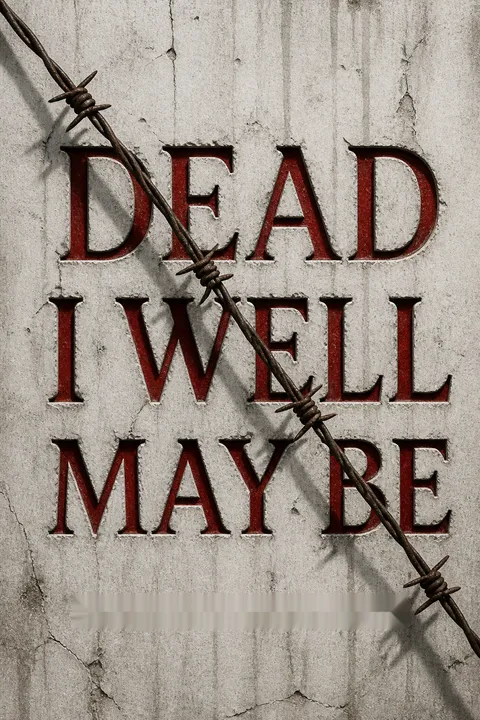
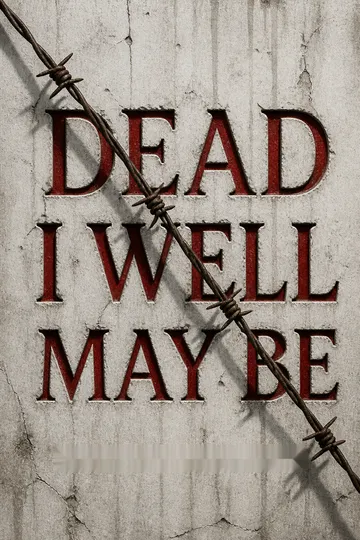
Dead I Well May Be is a gritty, violent noir thriller set in 1990s New York. Readers praised McKinty's vivid writing style, dark humor, and complex characters, particularly the protagonist Michael Forsythe. While some found the pacing uneven and violence excessive, many enjoyed the atmospheric portrayal of criminal underworld life. The book's themes of loyalty, revenge, and survival resonated with readers. Overall, it's viewed as a strong debut that showcases McKinty's storytelling talent, though some prefer his later Sean Duffy series.
People Also Read


Characters
Michael Forsythe
The Belfast-born enforcerMichael is a sharp, bookish young man from Belfast whose quick wit and military training make him useful to a criminal crew. He watches people closely, jokes to manage fear, and often thinks through an action even as he carries it out. His intelligence does not make him morally detached: he notices the pain he causes and the excuses others use, but he struggles to turn that knowledge into restraint. He wants intimacy, education, and a life beyond violence, yet he repeatedly chooses the immediate demands of loyalty and survival. His narration is vivid and self-questioning, though his explanations can be self-serving. The tension between his reflective mind and his capacity for brutality defines how he moves through the story.
Darkey White
The Irish crime bossDarkey, whose given name is Terence, runs a New York operation built partly on Irish immigrant labor and connections. He is charismatic, theatrical, and capable of making his employees feel noticed, while remaining calculating about power and loyalty. His relationship with Bridget gives his authority a domestic face, but his business instincts shape even personal decisions. He enjoys being the center of a room and wants to be seen as a fair, durable leader. Michael both fears and resents him, yet recognizes the force of his presence. Darkey represents the older criminal order that hopes to convert street control into respectable wealth and civic standing.
Bridget
The boss's belovedBridget is a young woman with a vivid presence and a life closely entangled with Darkey’s. She is affectionate and impulsive, but not simply a prize in the competition between men. She can imagine a future beyond New York and is drawn to the Irish heritage Michael shares with her, while also valuing the material security and attention Darkey offers. Michael reads her moods intensely but often interprets them through his own longing, mistaking shared desire for shared plans. Her choices expose the gap between his romantic self-image and her independent attachments. Bridget’s mixture of tenderness, loyalty, and guardedness makes her relationship with Michael emotionally real but structurally dangerous.
Scotchy Finn
The reckless crew chiefScotchy is Michael’s volatile colleague, an Irish expatriate who presents himself as a veteran operator and often pushes the crew into action before consulting Darkey. His bluster covers insecurity, but he is not merely a coward or a fool: under pressure he can be brave, resourceful, and fiercely loyal. He treats authority as a performance and uses insults, drinking, and stories to hold his place among stronger personalities. Michael both mocks and depends on him. Their friendship is built from shared work, rivalry, and the uneasy affection of men whose most reliable bond is formed inside a violent hierarchy.
Sunshine
The calculating lieutenantSunshine is Darkey’s slender, watchful right hand, a university-educated organizer who manages information and keeps the operation functioning. He prefers planning to spectacle and often acts as a stabilizing counterweight to Darkey’s impulsiveness. His loyalty is intense, but his intelligence also makes him alert to threats and capable of shaping events from behind the scenes. Michael finds him more approachable than Darkey, even while remaining wary of how much Sunshine knows. He sees himself as practical rather than cruel, a distinction that reveals how people inside criminal systems preserve a decent self-image while helping those systems endure.
Ramón Hernández
The rival's strategistRamón is a Dominican crime boss who presents himself as thoughtful, restrained, and unusually ambitious. He treats street-level drug dealing as a temporary source of capital for a future in construction, real estate, and public respectability. His charm is quiet rather than theatrical, and he is skilled at making people feel that he understands more than they have said. Michael is both drawn to his intelligence and repelled by his moral rationalizations. Ramón’s interest in Michael mixes strategic calculation with something like genuine concern, leaving their relationship difficult to reduce to simple employment. He embodies the newer criminal order taking shape in neighborhoods where Darkey’s influence is fading.
Andy
The injured loyalistAndy is a large, good-natured member of Darkey’s crew and Bridget’s former boyfriend. Immigration problems and insecure work weigh on him, but he remains eager for the approval of his friends. He is not especially reflective and often misreads danger, yet his warmth makes him an emotional counterpoint to the crew’s harder men. He wants ordinary things, companionship, stability, and a chance to enjoy himself, even as criminal work repeatedly puts those desires at risk.
Fergal Dorey
The ingenious lockpickerFergal is a tall, anxious Irishman with a thief’s practical skill and an unexpectedly gentle temperament. He can handle danger when forced, but violence is not his natural language. His careful attention to mechanisms and details contrasts with Scotchy’s impulse and Michael’s improvisation. Fergal wants connection and admiration, sometimes placing his hopes in implausible romances or escape plans. His competence is real, though the people around him do not always give it the respect it deserves.
Big Bob
The compromised courierBig Bob is a broad, self-assured member of Darkey’s organization who handles work beyond the roughest duties assigned to Michael’s crew. He enjoys status, food, and the appearance of success, but his confidence can conceal a willingness to follow a profitable arrangement without asking what it will cost others. Michael sees him as both a colleague and a reminder that criminal loyalty often ends where self-interest begins.
Rebecca
The battered survivorRebecca, known to Michael initially through her husband Shovel, is observant and more resilient than her quiet manner suggests. She approaches Michael in the aftermath of violence and recognizes that he is not simply the monster her husband’s circle might describe. Their brief intimacy grows from grief, loneliness, and the need to be seen rather than from a secure shared future. Rebecca retains a clear sense of the harm around her, even when she is drawn toward people implicated in it.
Nan
Michael's Belfast anchorNan is Michael’s grandmother and the person who gives him a modest home after his earlier failures. She is generous, affectionate, and bluntly practical, with a strong faith in ordinary routines and folk knowledge. Michael loves her but avoids contact when his life becomes difficult, partly because he cannot explain himself without exposing danger. Her concern reminds him that he belongs to a world beyond criminal loyalties, even when he has spent months trying to forget it.
Ratko Yalovic
The exiled landlordRatko is Michael’s Serbian neighbor, a warm and talkative man who offers food, drink, and shelter. He enjoys stories about his homeland and treats friendship as something expressed through hospitality. His family life is complicated, and his wife is wary of the trouble Michael brings, but Ratko repeatedly tries to help without demanding a full explanation. His generosity gives Michael a temporary refuge from the transactional world around him.
Cuba
The young bodyguardCuba, whose given name is Devo, is a young Cuban bodyguard in Ramón’s organization. He is physically imposing but uncertain about the life he has entered, and he considers a future in the Marines as an alternative. His conversation with Michael moves between politics, popular culture, and anxiety about the gang’s direction. He is one of the few people in Ramón’s circle willing to spend time with Michael as a person rather than as a useful weapon.
Rachel Narkiss
The missed possibilityRachel is an Israeli student and former military engineer whom Michael meets during a late-night bar crawl. Clever, multilingual, and curious, she offers the possibility of an attraction based on conversation rather than shared danger. Michael is drawn to her, but his obligations to Darkey interrupt the evening, and he fails to follow through when she leaves town.
Captain Martínez
The polished jailerCaptain Martínez is the elegantly dressed Mexican official who interrogates Michael after the Cancún arrest. He presents forged confessions and a video recording as leverage, using calm procedure to make coercion appear inevitable. His polished manner contrasts with the prison’s brutality, revealing that abuse can be bureaucratic as well as physical.
Príncipe
The village surgeonPríncipe is the doctor who treats Michael after villagers find him in the jungle. He is stern, practical, and limited by the lack of proper medical facilities, yet he makes the difficult decision needed to keep Michael alive. He later helps arrange a safer route away from the village, aware that Michael’s presence could endanger the people sheltering him.
María
The village caregiverMaría helps care for Michael in the village, bringing water, food, and patient attention while he drifts in and out of consciousness. She and her family teach him basic Spanish and make his recovery feel communal rather than clinical. Her kindness is concrete and unshowy, offered to a stranger who cannot repay it.
Pedro
The village carpenterPedro is the villager who helps Michael recover and carves him a crutch before arranging for his onward journey. He is cautious about the danger Michael may bring, but his actions show a practical compassion that eventually outweighs his suspicion.
Jacinta
The elder caregiverJacinta, María’s mother, helps nurse Michael through fever and recovery. She offers food, comfort, and steady attention in a small village with few medical resources. Her care gives Michael a human connection at a moment when he is close to surrendering to pain and delirium.
David Marley
The hired guardMarley is a driver and security guard who works around Darkey’s operation. Michael remembers him from earlier jobs and later recognizes him as part of the protection around Darkey’s home. His ordinary, workmanlike presence connects the crew’s casual social world with the violence that its business requires.
Mr. Duffy
The distant patronMr. Duffy is the powerful Irish-American patron above Darkey in the criminal hierarchy. He rarely appears directly, but his money, connections, and authority shape the choices available to the men below him. To Michael, he represents the larger organization whose reach extends beyond the street crews.
Jim
The Harlem bartenderJim owns the Harlem bar where Michael finds work after returning to New York. He is wary of strangers but responds to Michael’s persistence and gives him a chance. His small act of employment provides Michael with a foothold outside the criminal organization before Ramón approaches him.
Plot Devices
The newspaper photograph
The accident of exposureA photograph of Michael working at the bomb-damaged Europa Hotel gives the benefits office evidence that he earned wages while claiming support. It forces him to plead guilty and leave Belfast for work in New York. The image introduces a recurring vulnerability: other people can define Michael’s story from what they see, while he is often left trying to manage the consequences. It also links physical labor to political violence, since the bomb creates the work that becomes the reason he loses his benefits.
The prison lock pick
A tool made from scarcityFergal files a belt buckle into a crude pick that opens the prisoners’ leg and wrist restraints. The tool converts practical knowledge into a narrow form of agency inside a prison where the men have no lawyer, doctor, or reliable information. Its success does not solve the larger problem of the locked cell or the prison perimeter, but it makes later escape possible. After Fergal is gone, Michael and Scotchy depend on the knowledge attached to the tool, showing how a small object can carry the work and ingenuity of someone who is no longer there.
The ceiling world
Imagination against confinementWhile locked in the prison cell, Michael turns cracks, water stains, and shadows on the ceiling into a map of imagined continents and wars. The invented world gives time a structure when the real prison offers only repetitive meals, illness, and waiting. Its wars sometimes echo memories of Belfast, allowing private history to surface without a conventional flashback. The device does not free Michael or make suffering harmless. Instead, it shows how attention and imagination can keep a mind active when the body has been reduced to a fixed space.
The artificial foot
Mobility through concealmentAfter losing his foot, Michael obtains a prosthetic through a hospital visit under a false identity. He practices walking alone, enduring falls and sores until the device lets him move through New York without openly announcing his injury. The foot is practical equipment, but it also represents the effort required to make a damaged body socially legible as ordinary. It later becomes part of his disguise and his planning, while reminding him that survival has permanently altered the way he moves through the world.
The blood-feud promise
A private rule for revengeMichael’s sense of obligation to Scotchy helps him turn grief into a sequence of targets. The promise gives him a rule when formal justice is absent and criminal loyalties have failed, but it also lets him frame further killing as duty rather than choice. Each act narrows his options and makes the next one easier to justify. The device is psychologically potent because it joins affection to violence: Michael’s loyalty to a dead friend becomes the argument that keeps him moving, even when he recognizes that vengeance cannot restore the people he has lost.
Dead Trilogy Series
About the Author





Download PDF
Download EPUB
.epub digital book format is ideal for reading ebooks on phones, tablets, and e-readers.








